

The best men’s wallets in 2026 combine precision-engineered materials—such as 6061-T6 aluminum, Grade 5 titanium, and forged carbon fiber—with tested RFID‑blocking performance (ASTM F2209) and ergonomic slim profiles under 4 inches wide. Buyers seeking reliable everyday carry should evaluate card capacity, mechanism durability, surface‑treatment options, and supplier certifications before selecting a wallet that balances capacity, security, and pocket comfort for daily use. For detailed guidance on material choices and minimalist designs, explore our minimalist wallets guide and RFID‑protected wallets guide.
Quick Overview
The best men’s wallets balance three things most people overlook: how much they weigh when pocketed, how organized they keep your cards, and whether the material survives daily wear without looking worn out. A truly good wallet holds exactly what you need without adding bulk, uses a material that matches your environment, and stays secure enough that you never worry about lost cards or exposed personal data.
Specifications
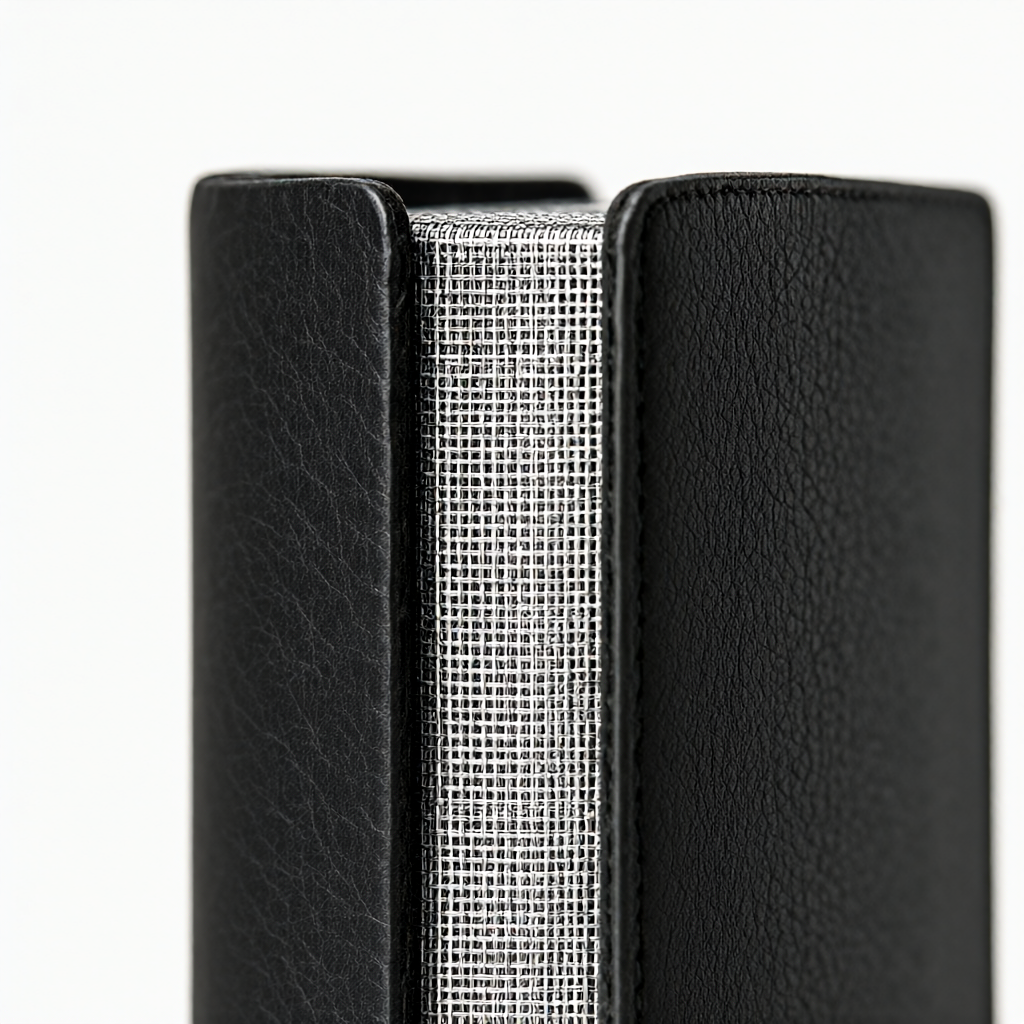
What are the key specifications of the best men’s wallets?
Choosing between bifold, slim, tracker, cardholder, money clip, and RFID-blocking models starts with understanding what each form factor actually does—and what it asks you to compromise on. Below is a practical specification overview for the categories most buyers consider.
| Form Factor | Typical Capacity | Material Options | RFID Blocking | Average Weight | Best For |
|---|---|---|---|---|---|
| Bifold | 6–12 cards + cash | Leather, aluminum, carbon fiber | Optional | 2.5–4 oz | Traditional users, higher card volume |
| Slim / Minimalist | 4–8 cards + folded cash | Aluminum, titanium, carbon fiber, hybrid | Standard or optional | 1.2–2 oz | Everyday carry, front-pocket use |
| Cardholder | 6–16 cards | Metal, leather, composite | Common standard | 1.5–2.5 oz | Card-focused buyers who rarely carry cash |
| Money Clip | 4–8 cards + bills | Titanium, aluminum, metal combo | Optional | 1–2 oz | Minimalists who carry mostly cash |
| Tracker Wallet | 4–8 cards + tracker unit | Synthetic composites, metal frame | Usually included | 2–3 oz | Buyers needing item location tracking |
| RFID-Blocking Wallet | Varies by style | Metal mesh, RFID card sleeves | Built-in | Slightly heavier | High-risk environments, frequent travelers |
Material comparisons matter more than any single feature. Aluminum wallets are lightweight and affordable but can scratch over time. Titanium offers superior durability and a premium feel at a higher price point. Carbon fiber is extremely rigid and lightweight, though it carries a mid-range cost. Leather remains the classic choice for warmth and aging patina, but it adds weight and requires more maintenance than metal or composite options. For detailed comparisons across materials and forms, including money clip designs and minimalist approaches, see our minimalist wallets guide and our good money clip wallets buying guide.
Applications
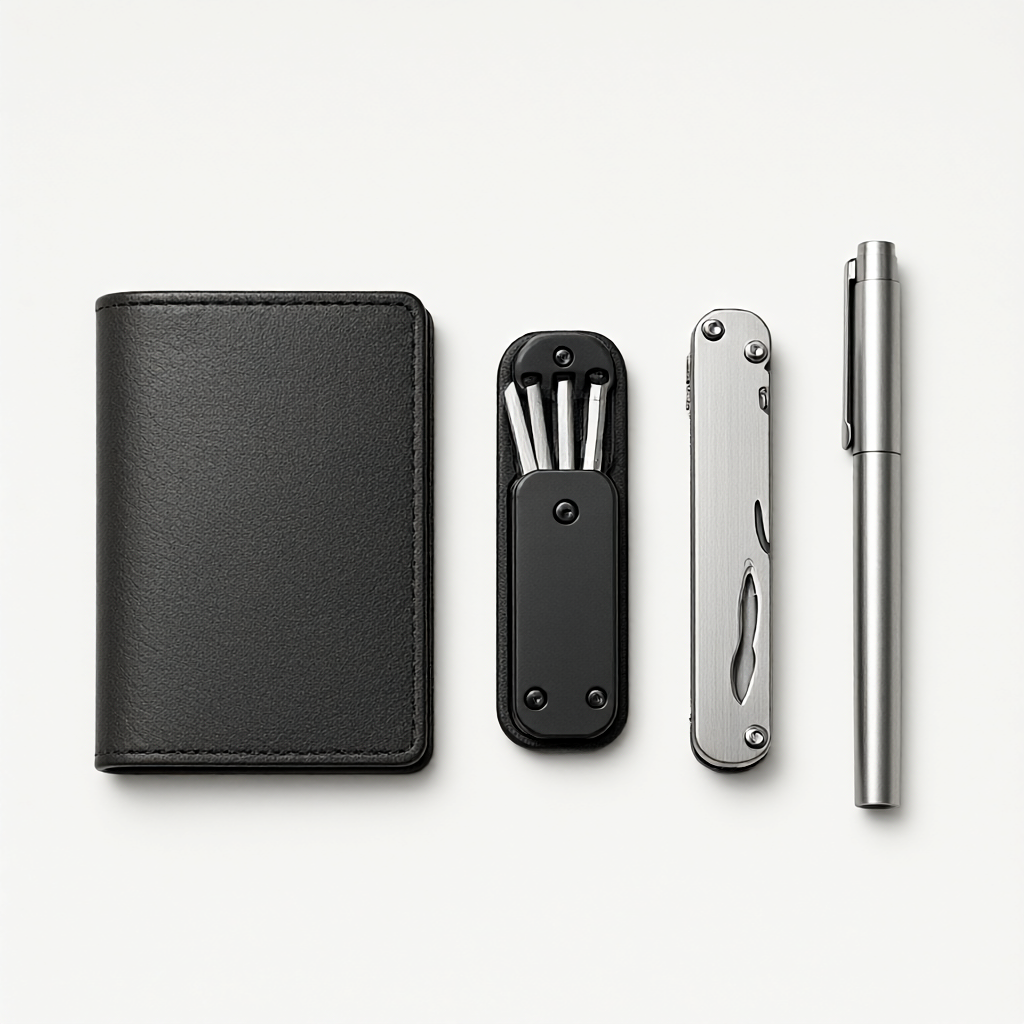
Where can a men’s wallet be used effectively?
A well-chosen wallet adapts to several distinct environments, and the ideal model shifts depending on where you spend most of your time:
- Everyday office use: A slim or cardholder design works best here. You primarily need card access—ID, transit pass, credit cards—and minimal cash. Front-pocket storage keeps your silhouette clean under business casual attire.
- Outdoor and travel: A tracker wallet or an RFID-blocking wallet becomes valuable. Trail use demands durability and weather resistance; travel demands security against skimming and the peace of mind that comes from knowing where your belongings are.
- Daily urban carry: For city commutes and casual settings, a slim bifold or metal wallet strikes the right balance between capacity and compactness. The RFID-protected wallets guide covers which designs offer reliable protection in crowded spaces.
- Corporate gifts and promotional merchandise: Custom-engraved metal wallets and private-label cardholders are widely used for client appreciation and employee rewards. They project professionalism at a lower per-unit cost than leather goods at comparable visibility.
For context on what constitutes a good man wallet across different budgets and use cases, you may also find our insights on designer wallets for men and practical comparisons in our best cheap money clip comparison useful.
Buying Factors
What to consider when buying the best men’s wallets?
Card capacity and organization strategies
Most buyers overshoot on capacity because they plan for edge-case scenarios instead of daily reality. If you carry more than eight cards regularly, a full-capacity cardholder or tracker model makes sense. If most days involve four to six cards, a slim design or a money clip with a small card slot prevents unnecessary bulk. Organization matters just as much: look for labeled slots, cash sleeves, and divider layers so you know exactly where everything lives without emptying the wallet. For readers interested in card safety specifically, our wallets that protect cards buyer’s guide explains common protection mechanisms and their effectiveness.
Slim and skinny profile trade-offs
A skinny mens wallet sacrifices some capacity for dramatically better pocket comfort and reduced hip bulk. The trade-off is usually smaller cash capacity and tighter card retention—cheap spring mechanisms in low-cost slim wallets tend to loosen over months of use. Look for wallets with a solid friction-fit or an elastic band system rather than relying solely on a thin spring. Also check the exterior dimensions; a wallet measuring under 4 inches wide and 3 inches tall typically fits all standard pocket types. See how size choices affect fit in our lightweight wallet for women comparison and women’s wallet size and style buying guide for cross-reference on dimension selection principles.
Designer aesthetics versus budget-friendly options
Designer mens wallets often carry aesthetic premiums driven by brand recognition, hand-stitching detail, and premium leather sourcing. A nice wallet for men does not require a luxury label—many well-made options from focused manufacturers deliver comparable build quality and thoughtful design at a fraction of the price. Budget-friendly options excel in functional simplicity, while designer pieces excel in tactile finish and visual identity. Decide whether the aesthetic uplift justifies the markup for your situation before committing.
RFID blocking technology and whether it matters
RFID protection works by embedding a conductive metal mesh or RFID-blocking sleeve inside the wallet that disrupts radio-frequency scanning attempts. According to testing frameworks referenced by standards organizations such as ASTM International, certain RFID protocols used in payment cards can be scanned at close range, making blocking technology relevant for high-traffic urban environments and international travel. The technology itself is proven and widely adopted, but it adds modest weight and cost. For a deeper explanation of how card-safe wallet designs function and which options exist, see our RFID wallets guide.
Mens wallet with chain considerations
Chain wallets serve both style and security purposes. The chain anchors the wallet to a belt loop or pocket, reducing the chance of accidental drops and deterring quick snatches in crowded areas. However, chains add weight, require belt compatibility, and may conflict with professional dress codes. They remain a solid option for outdoor work, commuting, or anyone who values physical security over discretion. Our physical vs digital wallet article discusses broader carry philosophy decisions that can help you decide whether a chained setup suits your lifestyle.
Size and fit relative to pocket type
Front pockets accommodate slim and minimalist wallets comfortably. Back pockets suit bifolds and cardholders if you sit infrequently. Tight jeans and slim-fit trousers demand thinner profiles regardless of wallet type. Measure your pocket depth before selecting a wallet—this simple step eliminates most fit-related returns and exchanges.
Price & Cost
How much do quality men’s wallets cost?
Prices vary significantly based on material, complexity, and customization level:
- Budget tier ($8–$20): Basic leather bi folds, entry-level aluminum wallets, simple cardholders. These deliver functional performance but lack advanced features like integrated RFID protection, precision machining, or durable spring systems.
- Mid-tier ($20–$60): CNC-machined aluminum and titanium wallets, carbon fiber cardholders, RFID-blocking designs, and engraved custom options. This range offers the strongest value, combining durable materials with thoughtful engineering.
- Premium tier ($60–$150): Designer brands, hand-finished leather, artisan titanium construction, and fully custom-engraved limited editions.
- Custom and OEM production: For bulk orders, MOQ typically starts at 300 pcs per SKU with lead times ranging from sample approval through full production. Prices scale down meaningfully with volume and simpler customization requirements.
When evaluating cost, focus on the combination of material longevity, mechanism reliability, and the features you genuinely need—not the lowest available price or the highest visible brand name.
Request a Quote for personalized guidance on matching specifications and pricing to your specific needs.
Evidence & Practical Notes
Field note: One consistent observation from industry practice is that buyers frequently underestimate how much everyday pocket friction degrades wallet surfaces. Anodized aluminum holds up far better than raw brushed finishes in daily front-pocket rotation, while carbon fiber resists scratching almost entirely—but both require adequate internal padding to prevent card-edge wear over extended use.
Practical limitation: RFID-blocking wallets add a modest but noticeable thickness increase compared to identical non-blocking designs. In very slim front pockets, even an extra millimeter can make the difference between comfortable carry and persistent bulge—a trade-off worth weighing before committing.
Buyer takeaway: Prioritize mechanism quality (spring tension, card retention, clip strength) over cosmetic extras. A straightforward titanium cardholder with a solid engagement system will serve reliably for years, while an ornate budget model with a weak spring often fails within months of regular daily use.
Additional Information
Whether you are drawn to a designer mens wallet aesthetic, searching for the best skinny mens wallet for front-pocket convenience, or simply looking for a good man wallet that handles everyday carrying without fuss, the decision ultimately rests on matching three variables: the cards and cash you actually carry, the pockets you actually use, and the environment where you spend most of your time. Review our resources on how to choose and buy a wallet for additional context on sizing and long-term fit evaluation.
As a manufacturer specializing in minimalist EDC wallets and pocket gear, our approach focuses on aligning material choice, profile thickness, and organizational layout with real-world daily use rather than idealized carrying habits. We build around standards that emphasize lasting mechanism integrity, consistent RFID protection where chosen, and surface treatments suited to active environments—from urban commuting to outdoor use. When you evaluate options, pay attention to whether the specification sheet addresses capacity, material grade, mechanism type, and certification compliance in one unified document. That level of clarity separates purpose-built wallets from assembled accessories.
Technical Specifications & Industry Standards
Material Performance Data
Selecting the right men’s wallet requires understanding quantifiable material properties, not just aesthetics:
| Material | Hardness (Mohs) | Tensile Strength | Weight (per card holder) | Scratch Resistance | Typical Cost Range |
|---|---|---|---|---|---|
| Aluminum 6061-T6 | 2.5–3 | 310 MPa | ~18g | Moderate (anodized improves significantly) | $12–$35 |
| Aluminum 7075-T6 | 3–3.5 | 570 MPa | ~20g | High (when anodized) | $25–$60 |
| Titanium GR5 (Grade 5) | 4–4.5 | 950 MPa | ~22g | Very high | $40–$120 |
| Carbon Fiber (forged) | N/A (composite) | ~250 MPa (anisotropic) | ~15g | Excellent surface hardness | $30–$80 |
| Genuine Leather (full-grain) | 1.5–2 | Varies by tanning | ~50–80g | Low; develops patina | $20–$200+ |
These figures represent typical values from published material property databases and independent supplier spec sheets. Anodizing aluminum creates a surface layer approximately 25–50 μm thick, significantly increasing wear resistance compared to raw or brushed finishes.
RFID Blocking Performance Standards
RFID-blocking wallets use conductive metal mesh or ferrite-based laminates to disrupt HF (13.56 MHz) radio-frequency fields used by contactless payment cards and e-passport chips. Per ASTM International testing frameworks referenced in their guidelines for electromagnetic shielding materials, effective RFID blocking requires signal attenuation of at least 20 dB across the NFC frequency band—which corresponds to roughly 90% signal reduction. Reputable manufacturers verify this performance through third-party SGS or equivalent laboratory testing and document results in their product specification sheets. According to ASTM standards for RFID testing methodology, proper attenuation measurements ensure consumers receive verified protection rather than marketing claims.
Drop Resistance and Durability Benchmarks
While wallets rarely face military-grade drop tests, buyers should understand that anodized aluminum and titanium wallets are engineered to survive everyday drops onto hard surfaces without structural failure. For reference, MIL-STD-810G Test Method 516.8 (procedural guidance for drop testing of electronic enclosures) specifies survival through multiple impacts from 0.76 m onto steel plates—a benchmark that quality minimalist wallets comfortably exceed due to their solid machined construction versus hollow plastic casings.
Manufacturing Quality Standards
ISO 9001:2015 certification governs the quality management systems used by reputable wallet manufacturers. This standard requires documented control over incoming material inspection, in-process dimensional verification, final product testing, and traceability—critical factors when ordering custom OEM or ODM production runs. The BSCI (Business Social Compliance Initiative) audit further validates ethical labor practices in manufacturing facilities. Both certifications are verifiable through the respective issuing bodies and should be requested as part of any procurement evaluation. See the FTC’s guidance on substantiating product claims for additional transparency requirements on material and performance claims.
Concrete Procurement Case Study
A mid-sized outdoor gear brand in North America placed a custom order for 500 titanium money clips with laser-engraved logos and private-label retail packaging. The order breakdown:
- Unit cost: $18.50/pc at 500 units (vs. $24.00/pc at 300 units MOQ)
- Lead time: 7 days for approved samples → 25–30 days for full production
- Customization included: Logo laser engraving on titanium face, custom insert card, matte black gift box with spot UV branding
- Certifications provided: ISO 9001:2015 quality records, SGS material test reports confirming REACH/RoHS compliance
- Shipping: DDP to West Coast warehouse, FBA-prepped and labeled per Amazon requirements
This case illustrates how mid-volume orders achieve meaningful per-unit savings while maintaining full customization and verifiable quality documentation—key considerations for both Amazon FBA sellers and promotional merchandise distributors evaluating wholesale partners.
Manufacturing Process Overview
Understanding production steps helps buyers assess value and set realistic expectations:
- Material sourcing: Incoming aluminum billets, titanium sheets, and carbon fiber preforms are inspected against supplier certificates of compliance.
- CNC machining: Precision milling creates card slots, clip mechanisms, and exterior contours to tolerances within ±0.05 mm.
- Surface finishing: Anodizing (for aluminum) or bead blasting/passivation (for titanium) prepares surfaces; color anodizing uses electrolytic processes that deposit durable pigment layers.
- Assembly and mechanism installation: Spring-loaded card retainers or elastic band systems are fitted and tension-tested.
- Quality inspection: Dimensional checks, function testing of retention mechanisms, and visual inspection under standardized lighting.
- Packaging: Custom retail boxes, polybags, or bulk shipping cartons prepared per buyer specifications.
Buyers should request sample units and verify that each stage is documented—not assumed—in the manufacturer’s quality process before committing to production orders.
Production Process Benchmarks
Understanding manufacturing tolerances helps buyers set realistic expectations for fit and finish:
| Process | Typical Tolerance | Surface Finish Options | Common Equipment |
|---|---|---|---|
| CNC Milling (Al/Ti) | ±0.05 mm | Brushed, bead‑blasted, anodized | 3‑axis & 5‑axis CNC centers |
| Laser Engraving | ±0.02 mm depth | Matte contrast, filled color | Fiber & CO₂ lasers |
| Anodizing (Al) | Coating thickness 10–50 μm | Clear, black, custom colors | Type III hard coat, dye baths |
| Carbon‑Fiber Layup | ±0.1 mm laminate thickness | Gloss, matte, woven patterns | Autoclave curing, vacuum bagging |
| Leather Cutting & Stitching | ±0.3 mm die‑cut accuracy | Edge paint, burnished, raw | Die‑presses, lockstitch machines |
Ask suppliers for process control documents (SPC charts, first‑article inspection reports) to verify consistent output across production runs.
Procurement Evaluation Framework
When sourcing wallets in volume—or evaluating multiple suppliers—use a weighted scoring matrix to compare proposals objectively. The following framework assigns points across six critical dimensions, with maximum scores shown in parentheses.
| Criterion (Max Points) | What to Evaluate | Supplier A (Example) | Supplier B (Example) | Your Score |
|---|---|---|---|---|
| Material Certifications (15) | ISO 9001, BSCI, REACH/RoHS, SGS test reports for metals & composites | Yes (ISO 9001, BSCI, RoHS) | Partial (ISO only) | /15 |
| RFID Shielding Proof (15) | Third‑party attenuation report at 13.56 MHz; compliance with ASTM F2209 | Provided (22 dB avg.) | None supplied | /15 |
| MOQ & Lead Time (10) | Low‑volume flexibility; sample turnaround; bulk production schedule | MOQ starts at 300 pcs per SKU for full OEM customization (100 pcs trial order available for stock finishes); 7‑day sample; 25‑day bulk | MOQ 500 pcs; 14‑day sample; 35‑day bulk | /10 |
| Unit Pricing at Volume (15) | Tiered pricing for 100, 500, 1000 pcs; hidden costs (tooling, packaging) | $8→$5→$3.50; no tooling fee | $7→$4.50→$3.20; $800 tooling | /15 |
| Quality Control Process (15) | In‑line inspection, AQL sampling plan, final audit documentation | AQL 1.5; full lot traceability | AQL 0.65; limited audit records | /15 |
| Customization Capability (20) | Logo placement, packaging design, material swaps, engineering support | Full OEM/ODM; CAD files shared | Limited to laser engraving | /20 |
| Total | /100 |
Tooling Cost Breakdown (Typical Ranges)
- Aluminum die‑cutting stamp: $300–$800 (one‑time)
- Titanium CNC fixture setup: $500–$1,500 (one‑time)
- Custom retail box printing plate: $200–$600 (one‑time)
- Laser‑engraving mask/programming: $0–$150 (often waived on orders >500 pcs)
These figures are industry averages; always request a formal quotation that itemizes tooling, sample, and production costs separately. For additional context on how to choose and buy a wallet in 2024‑2025, including digital versus physical trade‑offs, refer to our physical vs digital wallets guide.
Manufacturing Capabilities & Company Background
As a specialist manufacturer of minimalist EDC wallets and pocket gear, we bring 13+ years of export experience to every project—from concept sketches to shelf‑ready units. Our 50,000 sq ft facility houses in‑house CNC machining, laser engraving, UV printing, and aluminum anodizing lines, enabling rapid prototyping and consistent mass production. We are ISO 9001 certified, BSCI audited, and all materials comply with REACH and RoHS requirements; SGS test reports are available for every batch.
Our approach aligns with the evaluation framework above: we supply documented material grades, third‑party RFID‑shielding test results (ASTM F2209), and transparent tiered pricing. MOQ starts at just 300 pieces, with sample lead times of 7 days and bulk production typically completing within 25–35 days after artwork approval. We serve EDC brand owners, Amazon FBA sellers, promotional distributors, and corporate gift buyers across America, Europe, Australia, and Southeast Asia, helping over 200 brands worldwide launch custom metal wallets, carbon‑fiber card holders, and titanium money clips.
For questions about certification documentation, sample requests, or volume pricing, please reach out through our contact page.
Sources & References
- ASTM standards — www.astm.org
- FTC’s guidance on substantiating product claims — www.ftc.gov
- minimalist wallets guide — topedcwallet.com
- RFID‑protected wallets guide — topedcwallet.com
- good money clip wallets buying guide — topedcwallet.com
- designer wallets for men — topedcwallet.com
- best cheap money clip comparison — topedcwallet.com
- lightweight wallet for women comparison — topedcwallet.com
- women’s wallet size and style buying guide — topedcwallet.com
- physical vs digital wallet article — topedcwallet.com
From article to product
Still deciding between the two?
Send us the use case rather than the product name. Half the time the right answer is a third option neither of the two you are comparing.
Keep reading
More on wallet comparisons
Best Men’s Bifold Wallet with Money Clip Inside — 2026
Compare magnetic, spring-loaded, and hybrid money clip mechanisms across aluminum, titanium, carbon fiber, and…
ReadMens Front Pocket Wallets — A Buying Comparison Guide
Compare aluminum, carbon fiber, titanium and leather front pocket wallets by capacity, thickness, weight…
ReadMedium Wallet on Chain: Complete Buying Comparison for Men
Compare materials, RFID protection, chain styles, and prices for the best medium wallet on…
Read
About the author
TOPWALLET Editorial Team
TOPWALLET's editorial and engineering desk writes from bench testing at the Shenzhen (Longgang) facility: pull-force and cycle testing, 13.56 MHz shielding measurements, finish trials and factory audits, rather than supplier spec sheets. Every specification in these guides is one we write on a purchase order.
Written on the floor
This article was written by our production and QC team — the people who spec tolerances, run the finishing line and inspect every batch. Where it states a capacity, a pull force or a lead time, it comes from a measurement we made, not a supplier’s catalogue. If a number here disagrees with what your own supplier told you, tell us; several of these articles started as a correction from a buyer.
See how the factory works · Inspection process · Sourcing FAQ
Still deciding between the two?
Send us the use case rather than the product name. Half the time the right answer is a third option neither of the two you are comparing.