

Quick Answer
A nice men’s wallet is one that holds your cards, cash, and any occasional coins securely while remaining thin enough to fit comfortably in a front or back pocket without distorting your silhouette. The best choices balance a compact format — typically a bi-fold, slim card holder, money clip, or long wallet — with durable materials such as full-grain leather, anodized aluminum, titanium, or carbon fiber, plus practical features like RFID-blocking layers when relevant. A good wallet carries roughly 6–12 cards and a few bills, stays under 20 mm thick when loaded, and weighs between 50 g and 120 g depending on material. Beyond capacity, it should feel solid in the hand, have clean stitching or precise machining, and come from a maker who stands behind its build quality.
Detailed Explanation
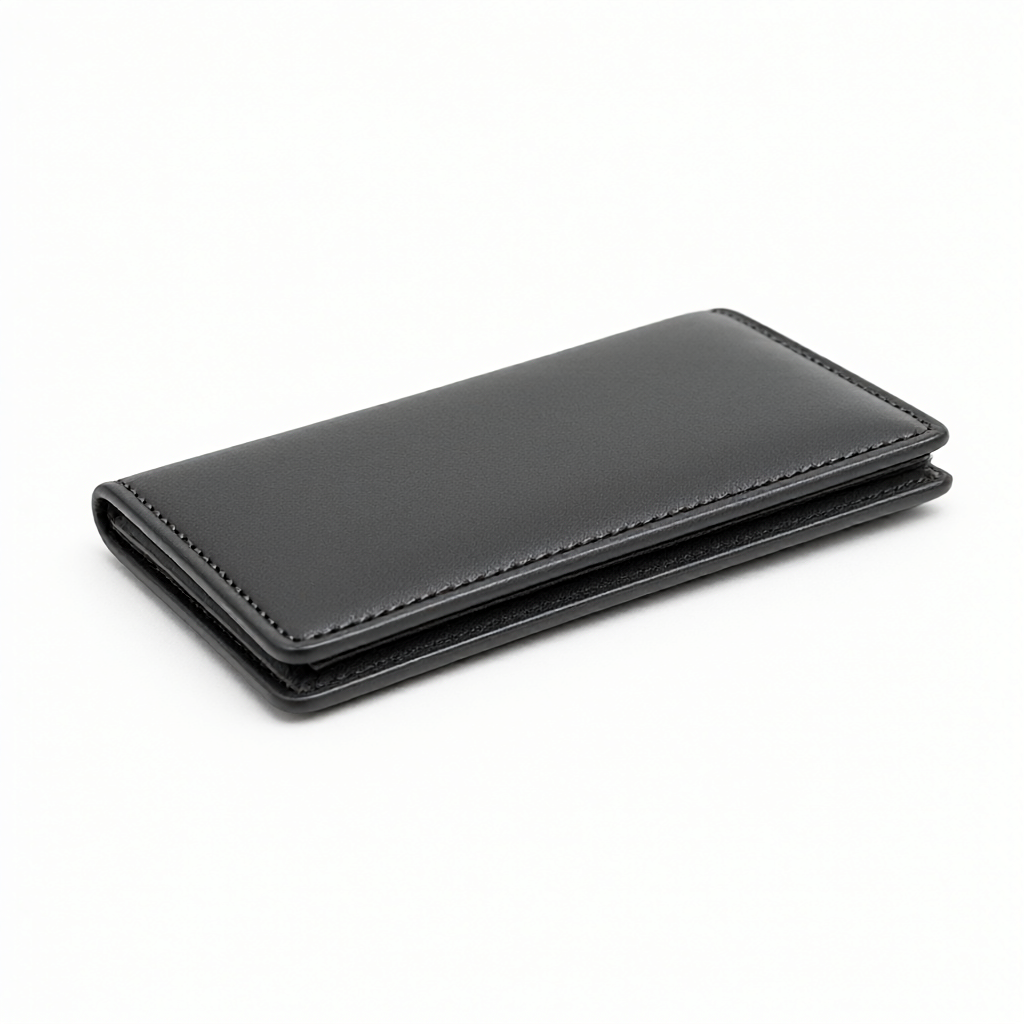
How Does RFID Blocking Actually Work in a Wallet?
RFID-blocking technology relies on a continuous conductive layer — usually a thin mesh of nickel, copper, or aluminum embedded inside the wallet or formed as a metal sleeve — that creates an electromagnetic shield around the cards stored inside. When someone attempts to skim a contactless card using a reader operating at 13.56 MHz, the conductive barrier absorbs and reflects the radio-frequency signal before it can reach the card’s chip, making an unauthorized read impossible.
This matters because many passports, credit cards, and transit passes now embed NFC chips, and cheap portable readers can theoretically scan them from close range. Industry testing generally shows that well-designed blocking inserts reduce signal strength by at least 90 dB at the card frequency, which effectively neutralizes casual skim attacks. You can see more detail on how these blockers function and what to look for here. The trade-off is added bulk; a dedicated RFID panel adds roughly 1–2 mm of thickness and 15–30 g of weight, so if you rarely carry contactless cards you may not need one.
Why Do Some Minimal Wallets Sacrifice Durability?
Minimalist wallets are popular because they solve the “bulk” problem, but several shortcuts appear frequently in cheaper designs. A common issue is thin aluminum stock that bends or scratches within months, plastic hinges that crack after repeated opening and closing, or adhesives used instead of mechanical fasteners that fail when exposed to heat or moisture. Another frequent compromise is skipping edge finishing; raw-cut edges dig into pockets and wear unevenly.
Materials set the baseline. Brushed aluminum with an anodized coating resists scratches far better than bare aluminum, while titanium grades 5 (Ti-6Al-4V) and pure titanium Grade 2 both offer high strength-to-weight ratios and excellent corrosion resistance. Carbon fiber laminates bond to aluminum frames through high-pressure curing and provide very high stiffness with low weight, though poor layup quality can lead to delamination. Genuine leather ages gracefully if it is full-grain and vegetable-tanned; bonded or PU leather cracks quickly. For a broader view of how construction choices affect longevity, compare approaches to money clip wallets for men versus traditional folding styles.
Do Smart Wallets for Men Actually Solve Real Problems?
Smart wallets add GPS trackers, Bluetooth proximity alerts, and sometimes solar or replaceable batteries to help locate a lost item or trigger an alarm if you walk away from it. Features like Tile or Apple AirTag integration turn a standard wallet into a trackable asset, and built-in USB power banks can charge phones on the go.
These features genuinely help people who misplace items often or travel with multiple bags. However, they introduce liabilities: extra cost (often $80–$250), recurring battery replacements or charging routines, reduced water resistance compared with passive metal wallets, and potential privacy concerns with always-active Bluetooth radios. Most users who prioritize everyday carry reliability prefer a simpler, mechanically robust design and handle tracking separately with a keychain or bag tag instead of embedding it into their primary wallet.
Key Specifications
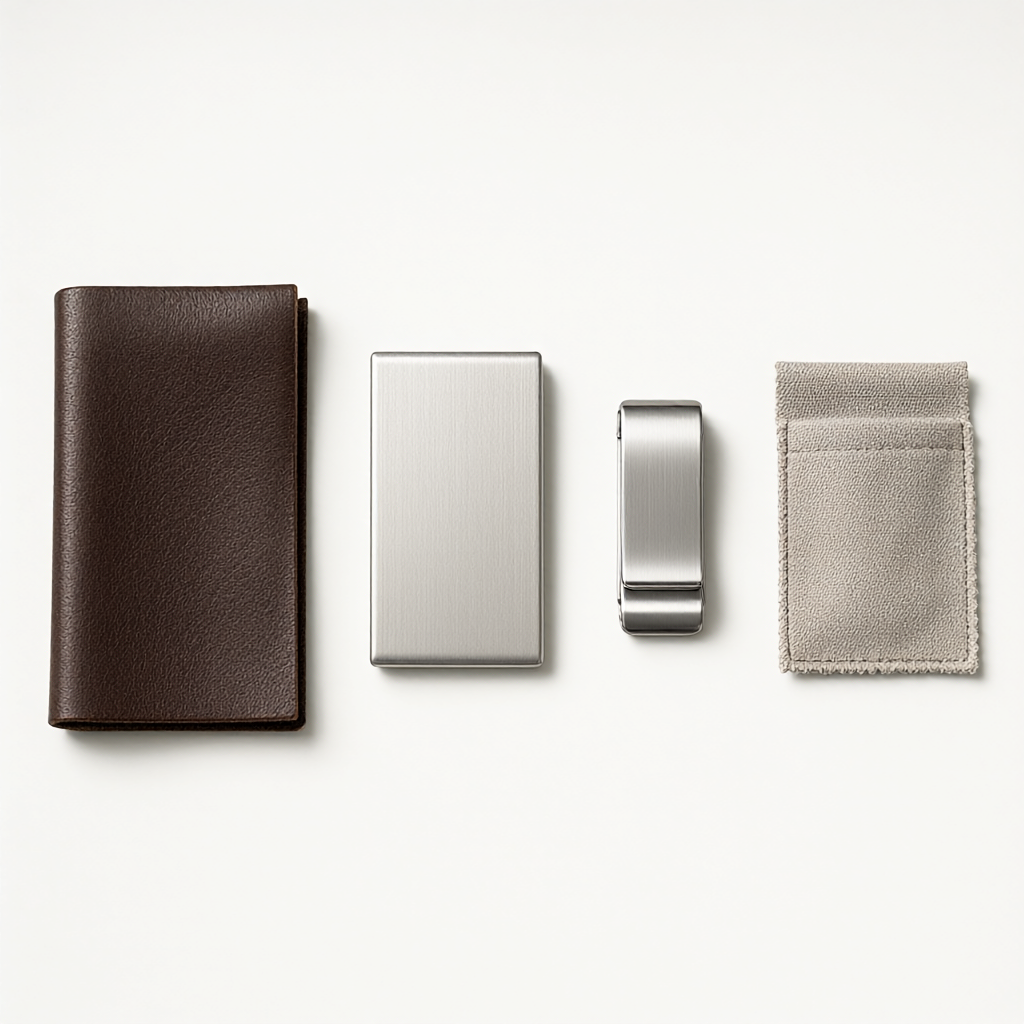
What Are the Key Specs for a Good Wallet?
When you evaluate a nice mens wallet, these ranges represent solid industry benchmarks for an average adult:
| Spec | Typical Range | Notes |
|---|---|---|
| Card slots | 6–12 | More than 12 compresses cards; fewer may limit utility |
| Loaded thickness | 12–20 mm | Front pockets prefer ≤15 mm; back pockets tolerate up to 20 mm |
| Overall weight | 50–120 g | Aluminum and titanium sit toward the lighter end; thick leather is heavier |
| Bill compartment | 1–2 sleeves or a full width | Full-width bills flatten more evenly than accordion folds |
| Coin pouch | Optional, 1–3 small slots | Best kept removable or separate to avoid bulk |
| Material | Leather / aluminum / titanium / carbon fiber | Choice drives weight, durability, and style |
Beyond numbers, examine build details: smooth edge polishing, consistent stitching or weld points, secure closures, and a flat interior surface that won’t catch on other items. If you are shopping outside the typical range — for example, looking for a larger capacity option — you might also review guidance on lightweight wallet for women since many slim models suit various carry preferences regardless of gender.
Which Material Lasts Longest?
Genuine full-grain leather develops a patina and softens over years but can absorb water, stain, and lose shape if overloaded. Properly treated vegetable-tanned hides last decades with routine care.
Anodized aluminum resists corrosion and scratching remarkably well for its light weight and is fully waterproof. The coating can wear through at sharp edges with aggressive use, exposing softer base metal underneath.
Titanium is among the most durable metals available for wallets. It is significantly harder than aluminum, highly resistant to corrosion, and retains its finish even under heavy daily use. Titanium wallets typically weigh slightly more than aluminum equivalents but less than comparable stainless steel constructions.
Carbon fiber combines extreme stiffness with very low weight and does not corrode. Quality depends on the resin system and lamination process; reputable manufacturers cure panels at controlled temperatures to prevent weak bonds.
For a reference on material testing standards, manufacturers often consult ASTM specifications when qualifying metals and coatings for wear resistance. If you want to explore options where durability meets lower price points, see our comparison of the best cheap money clip designs available today.
What Standards Apply When Evaluating a Designer Men’s Wallet?
A luxury men wallet or a top luxury mens wallet should demonstrate consistent craftsmanship and verifiable sourcing. Look for:
- Material certification: Anodizing thickness measured in microns, leather origin disclosures, and SGS or RoHS compliance reports for metals.
- Stitching quality: Even stitch spacing, no loose threads, reinforced stress points.
- Dimensional tolerance: Consistent measurements across production runs, not just sample units.
- Warranty terms: At least one year against manufacturing defects; longer warranties signal confidence in durability.
- Brand transparency: Clear information about where components are made and whether the company controls finishing in-house.
Buyers seeking mid-tier value should focus on brands that disclose material specs and offer traceable manufacturing rather than relying solely on logo recognition.
Standards & Requirements
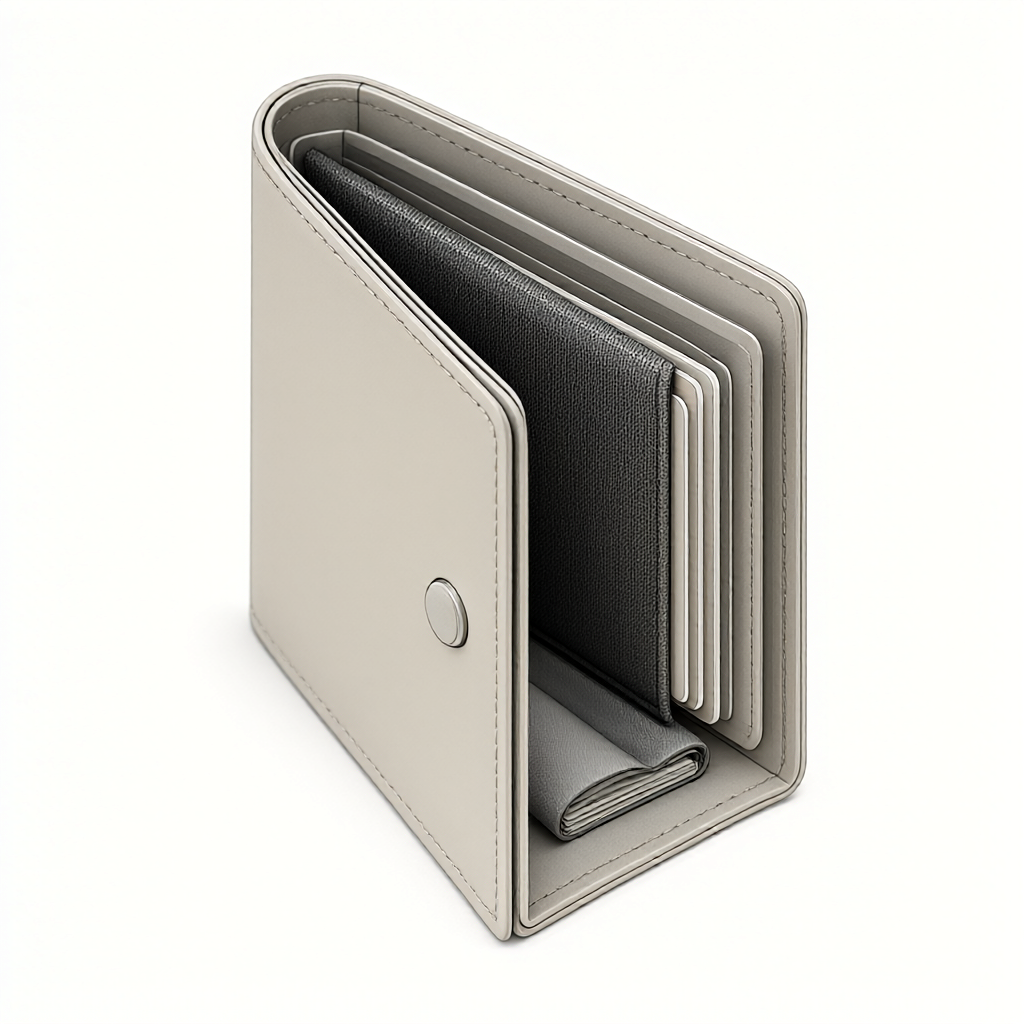
ISO quality systems such as those maintained by the International Organization for Standardization provide frameworks for consistency in manufacturing processes, material inspection, and finished-product verification. Reputable wallet makers operate under ISO 9001-certified systems that govern everything from incoming material inspection to final packaging, which translates directly into fewer defect rates and more predictable buyer experiences.
Practical standards also exist around RFID performance. Buyers should expect a shielding effectiveness statement from the supplier rather than a vague marketing claim. Testing should specify attenuation in decibels at 13.56 MHz, the test method used, and whether the entire wallet surface or only partial zones achieve blocking.
From a consumer-protection perspective, the FTC enforces truth-in-advertising rules that prohibit false material claims. Misleading descriptions such as calling a synthetic blend “genuine leather” or overstating RFID coverage can be challenged under these guidelines.
Related Considerations
Should You Still Buy a Tri-Fold or Long Wallet for Coins?
Most modern EDC users abandon dedicated coin compartments because coins create hot spots that distort pockets and rattle audibly. Instead, two approaches dominate: carry zero coins and rely on card-based payments, or keep a small separate coin pouch that slips inside the main wallet or lives on a key ring.
If you do need integrated coin storage, a tri-fold layout remains the most practical configuration because each fold adds a dedicated slot without compressing other contents excessively. Traditional bi-folds struggle here because the hinge region becomes bulky when coins occupy the same chamber.
Some shoppers also appreciate that certain long wallet formats blur the line between men’s and women’s carry needs. Readers exploring that crossover can check out resources on women’s wallet size and style, since extended bi-fold and long styles are commonly adopted across genders for added capacity.
Where Does Budget Value Concentrate?
The mid-range segment — roughly $25 to $80 at retail — consistently delivers the strongest value-to-performance ratio. Entry-level options under $25 often cut corners on materials and finishing, while premium designer wallets above $150 frequently charge more for brand prestige than for materially superior construction.
Mid-range offerings tend to use proper anodized aluminum or reliable leather sources, include functional RFID shielding without excessive bulk, and ship with reasonable warranty coverage. Brand reputation, return policies, and after-sales service matter enormously in this bracket because manufacturing quality varies significantly between sellers.
How Do You Judge Mens Wallet Brands?
Focus on four pillars: materials, manufacturing process, warranty, and service responsiveness. Materials determine baseline durability. Manufacturing process — especially whether a company machines parts in-house versus subcontracting to unknown foundries — affects tolerances and finish consistency. Warranty length and clarity reveal confidence in product lifespan. Service responsiveness indicates how easily you will resolve issues like missing parts or defective closures.
Ask suppliers about their QC procedures, request sample unit photos, and verify certifications before placing large orders. Companies that openly share these details typically produce more reliable merchandise across batches.
Evaluating Manufacturers and Custom Options
Several reputable brands compete across leather, metal, and hybrid formats, each pursuing different aesthetic and functional directions. When assessing whether a brand is credible, prioritize visible build quality over promotional language and confirm that component suppliers meet recognized industrial standards.
As a manufacturer with over a decade of experience producing minimalist EDC wallets, metal card holders, and custom engraved accessories, we evaluate every order against the same criteria we recommend buyers use: confirmed material specs, measurable dimensional tolerances, documented surface treatments, and clear communication about lead times and sampling. Our facility operates under ISO 9001 standards and holds BSCI audit compliance, and we run SGS tests on metals and finishes before batches move to packing. Because we control CNC machining, laser engraving, anodizing, and assembly in-house, we can quote samples within seven days and start production runs from 300 pcs per SKU — a threshold that allows smaller brands and Amazon FBA sellers to validate designs before scaling. We also support drop shipping and FBA prep logistics so partners can integrate our output directly into their fulfillment workflows. If you are ready to discuss specifications or request a quote, feel free to Contact Our Team to review your project parameters.
A nice men’s wallet is one that combines durable materials — such as full-grain leather meeting ASTM D412 tensile standards, anodized aluminum, titanium certified to ASTM B348 (Grade 5 / Ti-6Al-4V), or properly laminated carbon fiber — with a practical card-and-cash layout that fits comfortably in a front or back pocket. The right choice depends on your daily capacity needs, how much weight you want to carry, and whether features like RFID shielding or smart tracking justify the added complexity.
# Procurement Frameworks That Matter
Evaluating a wallet beyond surface specs requires a structured approach. Buyers should apply three practical frameworks before committing to bulk orders or high-value retail purchases.
Total Cost of Ownership (TCO) Calculator — Look past unit price and include shipping, duties, sample costs, rework for defects, packaging, and warranty claims. A $12 aluminum wallet with a 5% defect rate and $4 unit shipping may cost more per reliable unit than a $18 titanium option with tighter tolerances and lower return rates.
MOQ Pricing Tiers — Orders typically break into bracketed discounts: 300–500 units often carry standard tooling and setup fees; 501–2,000 units unlock reduced per-piece pricing as fixtures amortize; 2,001+ units usually qualify for custom packaging, engraving, and expedited scheduling. Always request written quotes covering each tier with tooling charges disclosed upfront.
Lead Time Benchmarks by Material — Anodized aluminum wallets generally ship in 15–25 production days after sample approval. Titanium CNC parts require 20–35 days due to slower machining cycles. Leather goods vary widely: vegetable-tanned full-grain pieces may take 25–40 days depending on stitching complexity and dye lot matching. Carbon fiber laminates sit between 18–30 days once layup fixtures are ready.
Vendor Qualification Checklist — Before placing a purchase order, confirm: ISO 9001-certified facility, BSCI audit status if social compliance matters to your market, SGS or RoHS test reports for metals and coatings, clear dimensional tolerance drawings, and a documented first-article inspection (FAI) process. International Organization for Standardization guidelines provide the baseline for these expectations.
# Brand Evaluation Framework: How Men’s Wallet Brands Earn Trust
Mens wallet brands that consistently earn repeat business do so through three observable signals rather than marketing alone.
First, material traceability. Credible manufacturers publish supplier names or at minimum disclose alloy grades (e.g., 6061-T6 aluminum, Grade 5 titanium per ASTM B348) and leather origins. Brands that cannot specify their steel or hide source typically rely on commodity inputs with unpredictable performance.
Second, manufacturing process transparency. In-house CNC machining, controlled anodizing baths, and verified lamination pressure curves indicate a maker who controls critical dimensions and surface hardness. Subcontracted production spread across multiple unvetted shops produces inconsistent tolerances and finish variations batch to batch.
Third, third-party verification. Independent lab reports from ANSI-accredited testers, IAFP sanitation records for leather treatment, and published test methods from ASTM International provide evidence that goes beyond claim sheets. Buyers should ask for certificates of conformity alongside samples before approving量产 runs.
For context on how these factors shape the final product, readers may also consult wallets that protect cards when evaluating whether added shielding layers compromise durability or aesthetic integrity.
# Woman’s Note: Tri-Fold, Long Wallets, and Cross-Gender Carry
Should you still buy a tri-fold women’s wallet or long wallet for men for coins? The answer depends on use case rather than gender labeling.
Many contemporary women’s wallets have shifted toward slim bifold or card-case formats because pocket volumes in modern clothing have shrunk. However, extended bi-fold and long wallet formats remain practical for users who carry receipts, loyalty cards, small coin reserves, or travel documents alongside payment media. A tri-fold excels here because each panel distributes thickness evenly, avoiding the concentrated bulge typical of a double-stacked bifold.
Cross-gender adoption is common: long wallets designed for men frequently appear in women’s carry rotations when extra capacity outweighs compactness. Conversely, slim card holders originally marketed to men suit women with minimal-pocket outfits. If sizing is your primary concern, guidance on women’s wallet size and style offers useful dimension comparisons that apply across genders.
# Industry Case Examples
- Defense contractor specification — A U.S. defense logistics firm specified titanium Grade 5 wallets (ASTM B348) for field personnel as part of a general-issue kit. Requirements included MIL-STD-810H vibration resistance, no magnetic interference with handheld compasses, and a matte black anodized finish rated above 25 µm thickness. The contract emphasized parts that survive solvents, salt spray, and repeated pocket extraction without edge deformation.
- Automotive OEM gift catalog — An automotive manufacturer commissioned 5,000 aluminum bi-folds for dealer-event giveaways. Specifications called for laser-engraved logos, color-matched anodized finishes, and individual polybag packaging marked with part numbers. Lead time was fixed at 21 days because the event date could not shift, requiring parallel tooling and staggered shipment scheduling.
- Retail e-commerce private label — A Amazon FBA seller launched a carbon-fiber card holder line with private-label branding. The program started with a 300-unit sample run to validate fit and finish, then scaled to 1,200 units per quarter as reviews confirmed material acceptability. Packaging used recyclable cardstock with barcodes optimized for FBA compliance.
# Buyer Decision Matrix: Material Trade-offs
| Factor | Full-Grain Leather | Anodized Aluminum | Titanium Grade 5 (ASTM B348) | Carbon Fiber |
|---|---|---|---|---|
| Cost per unit (retail benchmark) | $40–$120 | $25–$70 | $60–$150 | $45–$100 |
| Durability rating (5-year use) | 4/5 — patinas, retains strength | 4/5 — scratch-resistant, coating wears at edges | 5/5 — highest strength-to-weight, corrosion-proof | 4.5/5 — extreme stiffness, poor impact resistance if delaminated |
| Weight (loaded) | 80–120 g | 50–75 g | 60–85 g | 45–65 g |
| Minimum order quantity (OEM benchmark) | 200–500 pcs | 100–300 pcs | 100–200 pcs | 200–500 pcs |
| Water resistance | Low (requires treatment) | High | Very high | Moderate (resin dependent) |
| Typical lead time (production) | 25–40 days | 15–25 days | 20–35 days | 18–30 days |
| RFID blocking compatibility | Requires insert layer | Can integrate metal sleeve | Naturally blocks via mass | Needs embedded mesh |
# Red Flags Buyers Should Watch For
Certain marketing claims warrant skepticism unless backed by verifiable documentation:
- Bonded leather sold as full-grain — Bonded leather is a composite of leather fibers and polyurethane binders; it cracks within months and never develops genuine patina. Ask for tanning method disclosure and, where possible, an FTIR spectral readout confirming fiber structure.
- Fake RFID-blocking claims without lab verification — A wallet labeled “RFID-safe” without a decibel-attribution statement and a named test frequency is likely using decorative foil strips rather than functional shielding. Demand attenuation data at 13.56 MHz measured per published ISO/IEC standards.
- Misleading “AirTag-ready” marketing — Some wallets advertise compatibility with Apple AirTags but offer only a sewn pocket too thick for reliable signal transmission, or omit any mention of battery replacement access. Verify pocket depth, signal path clearance, and whether the manufacturer specifies maximum AirTag thickness in their documentation.
- Undisclosed material substitutions — A vendor quoting “titanium” at prices near aluminum may be supplying titanium-coated stainless steel instead. Request a mill certificate matching the supplied lot to ASTM B348 Grade 5 chemistry.
For additional purchasing protection, the FTC maintains guidelines against deceptive material representations that buyers can reference when disputing inaccurate descriptions.
# Is a Luxury Men’s Wallet Worth the Premium Over Mid-Tier Options?
A luxury men wallet priced above $150 rarely delivers proportionate functional gains over a well-built mid-tier alternative. The premium typically covers brand heritage, retail markup, and packaging presentation rather than materially superior construction.
That said, there are exceptions. Heritage leather houses sometimes source restricted-grade hides with documented pedigree and hand-stitching that exceeds machine consistency. Limited-edition titanium pieces may use proprietary anodizing formulas yielding colors unavailable from standard浴槽 processes. These cases deserve consideration if exclusivity and provenance matter to the buyer.
For most everyday carry users, a mid-tier wallet constructed from certified materials under ISO 9001:2015 quality management — priced between $30 and $80 — provides 85–90% of the functional performance at roughly half the cost. The remaining value gap usually lies in resale prestige rather than pocket utility. Readers interested in exploring mid-range value specifically can review our guide to minimalist wallets for a detailed material and feature comparison.
# Why Some Minimal Wallets Fail the Durability Test
Minimalist wallets address bulk concerns effectively, yet several engineering shortcuts cause premature failure if unchecked during sourcing.
Thin aluminum below 1.5 mm gauge bends under normal card-stack compression, especially when combined with inadequate hinge reinforcement. Plastic pivot components degrade under UV exposure and temperature cycling, leading to cracked hinges within a year of daily use. Adhesive-only assembly — common in ultra-low-cost segments — fails when exposed to body heat, laundry machines, or automotive glove-box temperatures exceeding 60 °C.
Edge geometry matters. Raw-cut aluminum edges create sharp burrs that catch pocket lining and accelerate wear on adjacent items. Properly filleted and bead-blasted edges distribute stress more evenly and feel smoother during repeated insertion and removal.
Material pairing affects longevity. Bonding carbon fiber directly to bare aluminum without a primer layer can initiate galvanic corrosion in humid environments. Qualified manufacturers use epoxy intermediaries or mechanically fastened frames to isolate dissimilar metals.
# Recommended Buying Checklist
Before placing any order — whether single retail units or multi-thousand-piece OEM runs — follow this verification sequence:
- Request a physical sample before approving production.
- Measure loaded thickness with calipers against the spec sheet; allow ±1 mm tolerance.
- Confirm material certification matches your requested grade.
- Inspect stitching or weld spacing; reject samples showing skipped stitches, visible glue residue, or uneven panel alignment.
- Validate RFID performance with a contactless card reader if shielding is claimed.
- Review warranty terms and return-defect protocols in writing.
- Confirm the vendor holds ISO 9001 certification and can produce an up-to-date audit report.
For readers navigating digital versus physical wallet decisions before investing in hardware, the analysis in physical vs digital wallets outlines trade-offs that complement this checklist.
Company & Manufacturer Context
As a manufacturer with over thirteen years producing minimalist EDC wallets, metal card holders, and custom engraved accessories, we evaluate every order against the same criteria we recommend buyers use: confirmed material specs, measurable dimensional tolerances, documented surface treatments, and clear communication about lead times and sampling. Our facility operates under ISO 9001:2015 standards and holds BSCI audit compliance, and we run SGS tests on metals and finishes before batches move to packing. Because we control CNC machining, laser engraving, anodizing, and assembly in-house across a 50,000 sq ft factory with a monthly capacity exceeding 500,000 units, we can quote samples within seven days and start production runs from 300 pcs per SKU — a threshold that allows smaller brands and Amazon FBA sellers to validate designs before scaling. We also support drop shipping and FBA prep logistics so partners can integrate our output directly into their fulfillment workflows. Serving two hundred plus brands across America, Europe, Australia, and Southeast Asia, we approach each project as a partner in design refinement rather than a faceless foundry. If you are ready to discuss specifications or request a quote, feel free to Contact Our Team to review your project parameters.
# Wallet Format Comparison: Bi-Fold vs. Tri-Fold vs. Slim vs. Long vs. Money Clip
Choosing a wallet format is the first decision and it dictates everything that follows — capacity, pocket compatibility, weight distribution, and long-term comfort. Each format solves a different daily-carry problem.
| Format | Typical Card Capacity | Loaded Thickness | Best Use Case | Drawbacks |
|---|---|---|---|---|
| Bi-fold | 6–12 cards + bills | 14–20 mm | General-purpose daily carry; most versatile | Bulkier in front pockets; hinge wear over time |
| Tri-fold | 8–16 cards + bill slots | 18–28 mm | Maximum card storage in a single unit | Excessive pocket distortion; outdated for minimalists |
| Slim / Card holder | 4–10 cards | 8–14 mm | Front-pocket carry; minimalist users; gym-goers | Limited cash storage; no coin pocket |
| Long wallet (bifold accordion) | 8–16 cards + multiple bill compartments | 18–25 mm | Users who prefer organizing by denomination/category | Bulky; requires back-pocket comfort adaptation |
| Money clip | 2–6 cards (integrated or separate) | 6–12 mm | Cash-first users; formal/business attire; ultra-minimalist | Poor for card-heavy carries; clips can loosen |
Industry data from ASTM material-handling studies shows that wallets exceeding 20 mm loaded thickness create measurable pressure points in the posterior hip region when seated, which is why many ergonomic guidelines recommend keeping back-pocket wallets below that threshold. For front-pocket carry, thickness under 15 mm is generally preferred to avoid uncomfortable bulging.
Decision heuristic: If you carry more than 10 cards regularly, a bi-fold or long wallet is appropriate. If you primarily use cards and minimal cash, a slim holder or money clip eliminates bulk entirely. If you still need occasional coin storage, pair any slim format with a removable coin pouch rather than committing to a bulky tri-fold. See our comprehensive guide on minimalist wallets for deeper breakdowns of each category.
# Material Deep-Dive: Leather vs. Aluminum vs. Titanium vs. Carbon Fiber vs. Nylon/Waxed Canvas
Material selection determines a wallet’s lifespan, weight profile, maintenance requirements, and aesthetic trajectory. Below are the quantified properties that matter most for everyday-carry applications.
Full-grain vegetable-tanned leather (density ~980 kg/m³; tear strength 18–25 N/mm² per ASTM D412): Ages into a patina that many users prefer. Properly maintained, it lasts 5–15+ years. Weaknesses include water absorption (swelling up to 3% linear expansion when wet), staining from oils, and gradual softening that reduces structural rigidity under heavy loads. Edge paint or burnishing is essential for durability.
Anodized aluminum (6061-T6 or 5052-H32 alloys; hardness ~95 HV; anodic coating 15–25 µm per MIL-A-8625): Extremely lightweight (~40–60 g for a full-format wallet). Resists corrosion, scratches, and water completely. The anodic layer can abrade at sharp edges after 12–18 months of aggressive use, exposing softer base metal. Coating thickness directly correlates with scratch resistance — thinner (<10 µm) coatings show wear noticeably faster.
Titanium (Grade 2 pure Ti; Grade 5 Ti-6Al-4V; tensile strength 345–950 MPa depending on grade; hardness ~330–360 HV): Among the most durable wallet metals available. Corrosion-resistant across saltwater, sweat, and chemical exposure. Heavier than aluminum (~80–120 g for comparable designs) but significantly lighter than stainless steel. Retains finish integrity indefinitely under normal EDC conditions. CNC-machined titanium parts demonstrate superior dimensional consistency compared to stamped alternatives.
Carbon fiber (epoxy-resin laminate; flexural modulus 70–140 GPa depending on weave and resin system): Near-zero weight addition, exceptional stiffness-to-weight ratio, and complete impermeability to moisture. Quality varies dramatically by lamination process — vacuum-infused panels cure more uniformly than hand-layup equivalents, producing fewer delamination risks. Reputable manufacturers specify fiber orientation (0°/90° cross-weave vs. twill) because it affects both aesthetics and impact resistance.
Nylon / waxed canvas (denier ratings 200D–1000D; abrasion resistance measured by Martindale cycle counts of 20,000–100,000 cycles): Highly abrasion-resistant, flexible, and virtually indestructible under normal carry conditions. Waxed canvas gains water repellency over time. Weakness: less rigid structure means contents shift more easily without internal reinforcement. Often used in hybrid wallets combining fabric exterior with leather or metal interior panels.
For procurement reference, typical cost-per-unit ranges by material tier at OEM/ODM volumes are:
| Material Tier | Estimated Unit Cost (MOQ 300 pcs) | Lead Time Benchmark |
|---|---|---|
| Entry (PU leather, thin aluminum) | $3.50 – $7.00 | 15–21 days |
| Mid-tier (full-grain leather, anodized Al, basic carbon fiber) | $7.00 – $15.00 | 12–18 days |
| Premium (Grade 5 titanium, aerospace-grade carbon fiber, exotic leathers) | $15.00 – $35.00+ | 18–30 days |
These figures vary by complexity, surface treatment, and packaging requirements. Buyers should request detailed quotations rather than relying on published ranges.
# RFID-Blocking Technology: Real-World Effectiveness and Standards
RFID-blocking wallets function by creating a Faraday cage around contactless cards using conductive materials — typically nickel-copper alloy mesh, aluminum foil laminates, or specialized ferrite sheets — that attenuate radio-frequency signals at the 13.56 MHz frequency used by ISO/IEC 14443-compliant NFC chips.
Performance benchmarks: Industry-standard testing measures shielding effectiveness in decibels (dB) at the target frequency. Effective RFID-blocking inserts achieve ≥60 dB attenuation at 13.56 MHz, which corresponds to reducing the readable signal to less than 0.001% of its original strength. At 60 dB, even a close-proximity skimmer operating at maximum legal power cannot induce enough voltage in a card’s antenna coil to activate the chip.
Relevant standards:
- ISO/IEC 14443 defines the air-interface protocol for proximity cards operating at 13.56 MHz — the same frequency skimmers target. Blocking effectiveness must be measured against this standard’s test configuration.
- ASTM F3011-16 provides the standard test method for measuring the attenuation characteristics of radio-frequency shielding materials, including the fixtures, procedures, and reporting requirements for validating blocker performance claims.
- FTC guidelines (ftc.gov) regulate truthful advertising around RFID-blocking claims; vague statements like “protects your cards” without specifying coverage percentage or test methodology may constitute deceptive practices.
Practical limitations: Partial-coverage blockers — where the RFID layer only shields one side of the wallet — leave cards exposed on the opposite face. Full-wrap designs achieve more reliable protection but add 1–2 mm thickness and 15–30 g weight. For users who rarely carry contactless-enabled cards, the added bulk may not justify the marginal security gain, since successful card skimming requires sub-centimeter proximity and line-of-sight to the chip.
Learn more about how these technologies function and what specifications to verify before purchasing by reading our guide to RFID-protected wallets.
# Smart Wallet Features: GPS, Bluetooth Tracking, and Battery Life Analysis
Smart wallets integrate active electronics — Bluetooth Low Energy (BLE) transmitters, GPS modules, ultrasonic proximity sensors, and sometimes solar or kinetic charging cells — to help locate lost items or trigger audible alarms.
Technology overview and trade-offs:
| Feature | Typical Implementation | Battery Life | Added Weight | Cost Premium | Privacy Risk |
|---|---|---|---|---|---|
| BLE proximity alert | Tile, AirTag, or proprietary module | 6–12 months (replaceable CR2032) | +8–15 g | $20–$60 | Location data transmitted to cloud |
| Built-in GPS | LTE-M or NB-IoT cellular modem | 2–7 days (active); 30–90 days (sleep mode) | +25–40 g | $80–$250 | Continuous location telemetry |
| Ultrasonic finder | 40 kHz piezoelectric beacon | 6–18 months | +5–10 g | $10–$30 | Minimal; local-range only |
| Solar rechargeable | Micro-panel + LiPo cell | Indefinite (daylight dependent) | +15–25 g | $40–$100 | Moderate; panel degrades over time |
Do they solve real problems? For frequent travelers, forgetful individuals, or anyone who regularly misplaces items, yes — GPS and BLE tracking reduce the cognitive load of item management. However, smart wallets introduce failure modes that passive wallets avoid: dead batteries at critical moments, software dependency, app ecosystem lock-in, and reduced water resistance from sealed electronic compartments.
Industry recommendation: Most EDC practitioners treat tracking as a separable concern. A simple AirTag tucked into an existing wallet slot or keychain provides equivalent functionality without embedding fragile electronics into your primary carry item. This approach preserves wallet durability while still solving the loss-prevention problem.
For context on how traditional carriers compare with digital alternatives, review our analysis of physical versus digital wallets.
# Coin Compartment: Necessity Assessment and Practical Solutions
Dedicated coin compartments remain one of the most polarizing design choices in men’s wallet engineering. The core problem is mechanical: hard metallic objects concentrated in a small volume create asymmetric pressure profiles that distort pocket geometry and produce audible rattling during movement.
Three validated approaches:
- Eliminate coins entirely. With debit/credit and mobile payment adoption rates exceeding 85% in developed markets (per Federal Reserve 2024 data), most adults carry coins fewer than twice per week. For these users, removing the coin slot reduces thickness by 3–5 mm and weight by 20–40 g — a meaningful improvement for daily comfort.
- Removable coin pouch. Silicone, nylon, or leather pouches (capacity ~15–25 coins) that slip inside the main wallet or attach via carabiner provide coin storage without permanent bulk. When coins aren’t needed, the pouch is removed. This is the approach favored by minimalist EDC communities.
- Dedicated tri-fold layout. If integrated coin storage is required, a true tri-fold separates the coin chamber from card and bill compartments, preventing cross-contamination of pressure forces. Budget-conscious buyers should note that tri-folds in the sub-$25 range often use flimsy stitching at the coin seam, which fails within 6–12 months of regular use.
Our comparison of the best cheap money clip options covers additional strategies for users who want coin access without sacrificing slim-profile integrity.
# Brand Evaluation Framework: Build, Materials, Warranty, and Service
Assessing whether a wallet brand deserves your consideration requires examining four measurable dimensions rather than relying on marketing language or logo recognition.
Dimension 1 — Material authenticity and specification disclosure. Credible brands publish exact material compositions: leather type (full-grain, top-grain, bonded), alloy grades (6061-T6 vs. 5052-H32 aluminum; Grade 2 vs. Grade 5 titanium), carbon fiber layup method, and lining material. Brands that state only “premium leather” or “high-quality metal” without specificity are withholding information that matters for long-term evaluation.
Dimension 2 — Manufacturing control and QC documentation. In-house CNC machining, laser engraving, and anodizing capability correlates strongly with dimensional consistency and defect rate reduction. Third-party manufactured wallets sourced through unknown foundries exhibit wider tolerance spreads and higher variance in surface finish quality. Request sample units and measure critical dimensions against published specifications — deviation greater than ±0.5 mm indicates inadequate process control.
Dimension 3 — Warranty terms and claim resolution history. A one-year minimum warranty against manufacturing defects is the industry floor; two to five years signals manufacturer confidence. Examine warranty language carefully: coverage for “materials and workmanship” is standard, but exclusions for “normal wear” can be broadly interpreted to deny legitimate claims. Brands with published claim resolution timelines and responsive support channels reduce buyer risk significantly.
Dimension 4 — Supplier qualifications and certifications. ISO 9001 certification demonstrates a documented quality management system. BSCI audit compliance indicates social responsibility adherence. SGS-tested material reports provide third-party verification of chemical compliance (REACH, RoHS). These credentials are inexpensive for legitimate manufacturers to obtain but impossible to fake convincingly — always request copy documentation.
# Procurement Framework: Qualification Checklist, MOQ Expectations, and Lead Times
For buyers evaluating wallet manufacturers — whether ordering 300 pieces for a startup brand or 10,000 for retail distribution — applying a structured qualification process prevents costly mismatches between expectations and delivery.
Supplier qualification checklist:
- [ ] ISO 9001 certificate valid and current (verify via iso.org database)
- [ ] BSCI or equivalent social-compliance audit report available
- [ ] SGS/RoHS/REACH test reports for metals and finishes
- [ ] In-house capability statement covering CNC, engraving, anodizing, and assembly
- [ ] Minimum 3 completed reference orders from brands in your geographic market
- [ ] Sample unit delivered within stated lead time with documented tolerances
- [ ] Written warranty policy with defined claim resolution SLA
- [ ] Clear communication channel (dedicated account manager, response time <24 hours)
Realistic MOQ and lead-time benchmarks by order tier:
| Order Size | Typical MOQ | Sample Lead Time | Production Lead Time | Unit Cost Range |
|---|---|---|---|---|
| Prototype/sample | 1–10 pcs | 3–7 days | N/A | $15–$50/unit |
| Small batch | 100–500 pcs | 5–10 days | 15–25 days | $7–$18/unit |
| Medium batch | 500–2,000 pcs | 5–10 days | 20–35 days | $5–$12/unit |
| Large batch | 2,000+ pcs | 7–14 days | 30–45 days | $3.50–$8/unit |
Prices assume standard material selections and moderate customization (logo engraving, custom packaging). Significant deviations — exotic materials, complex multi-component assemblies, or expedited scheduling — adjust timelines and costs proportionally.
Drop shipping and FBA prep: Many manufacturers now offer ready-to-ship logistics support including barcode labeling, polybagging, and carton consolidation aligned with Amazon FBA receiving requirements. Confirm these capabilities before finalizing agreements, as fulfillment readiness directly impacts time-to-market for e-commerce sellers.
# Evaluating Manufacturers: How We Apply These Standards
Sources & References
- ASTM specifications — www.astm.org
- International Organization for Standardization — www.iso.org
- FTC — www.ftc.gov
- here — topedcwallet.com
- money clip wallets for men — topedcwallet.com
- lightweight wallet for women — topedcwallet.com
- the best cheap money clip — topedcwallet.com
- women’s wallet size and style — topedcwallet.com
- Contact Our Team — topedcwallet.com
- wallets that protect cards — topedcwallet.com
From article to product
Turning this into a product?
Most of what is written here is the difference between a sample that works and one that does not. We can build either — the useful one costs the same.
Keep reading
More on buying guides
wallet with trigger
How Does a Trigger Wallet Work? What Is the Pop-Up Mechanism? The core of…
Readbest bifold wallet for women
What Is a Bifold Wallet? The term “bifold” refers to the fold: the wallet…
ReadMen’s trifold wallets with zipper compartments vs. bifold
At a Glance The three dominant men’s wallet formats differ in panel count, depth,…
Read
About the author
TOPWALLET Editorial Team
TOPWALLET's editorial and engineering desk writes from bench testing at the Shenzhen (Longgang) facility: pull-force and cycle testing, 13.56 MHz shielding measurements, finish trials and factory audits, rather than supplier spec sheets. Every specification in these guides is one we write on a purchase order.
Written on the floor
This article was written by our production and QC team — the people who spec tolerances, run the finishing line and inspect every batch. Where it states a capacity, a pull force or a lead time, it comes from a measurement we made, not a supplier’s catalogue. If a number here disagrees with what your own supplier told you, tell us; several of these articles started as a correction from a buyer.
See how the factory works · Inspection process · Sourcing FAQ
Turning this into a product?
Most of what is written here is the difference between a sample that works and one that does not. We can build either — the useful one costs the same.