

A thin wallet (also called a slim or minimalist wallet) is a low-profile pocket carry designed to hold essential cards and cash without the bulk of a traditional bi-fold. For B2B buyers — Amazon FBA sellers, EDC brand owners, promotional product distributors, and retail chains — choosing the right thin wallet means evaluating materials, RFID protection, card capacity, and manufacturing quality against clear technical and commercial benchmarks. This guide covers the specifications, standards, customization options, and sourcing considerations you need to make an informed procurement decision.
Thin Wallets: What Is the Quick Answer?
A thin wallet is a low-profile, minimalist pocket carry item designed to hold cards and cash in a compact form factor. Unlike traditional bi-fold wallets that create bulk in the back pocket, a thin wallet — also called a slim wallet, minimalist wallet, or compact wallet — typically holds 1 to 12 cards plus some cash, weighs under 100 grams, and measures between 6 mm and 18 mm thick depending on the mechanism and materials used.
Common construction materials include anodized aluminum, carbon fiber, titanium, and polymer composites, each offering distinct trade-offs in durability, weight, and cost. Many thin wallets incorporate RFID-blocking technology to protect contactless payment cards from skimming, a feature increasingly expected by end consumers. For B2B buyers, thin wallets represent a high-margin product category driven by demand from EDC enthusiasts, corporate gift programs, and marketplace sellers seeking differentiated SKUs.
Thin Wallets: How Does It Work in Detail?
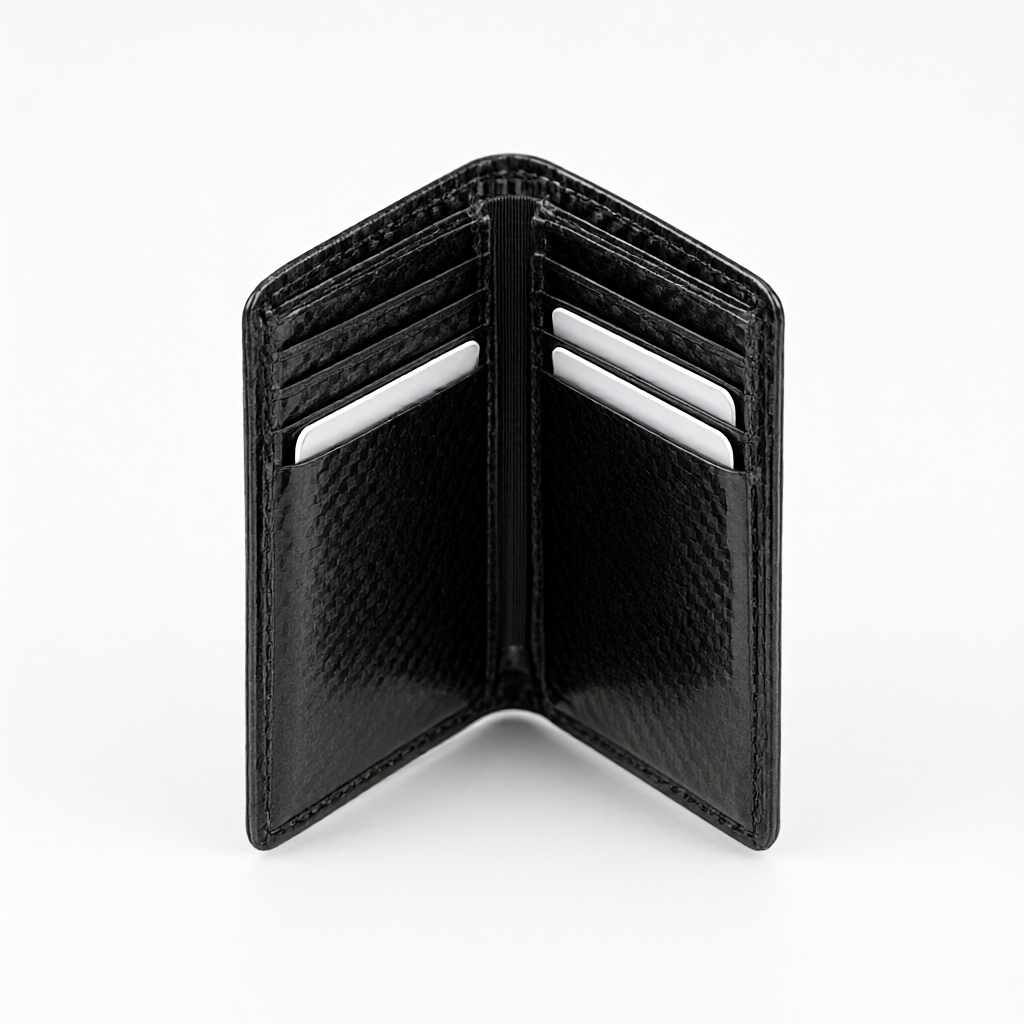
How does a thin wallet work?
Thin wallets achieve their slim profile by eliminating the traditional folded structure and replacing it with one of several mechanisms:
- Spring-loaded card holders use tension to grip a stack of cards, allowing users to push cards forward for one-handed retrieval. These are the most common design and typically hold 4 to 8 cards.
- Hinge mechanisms fold flat like a mini bi-fold but with minimal thickness — often around 10 to 15 mm when closed. Some include a money clip attachment for cash carry.
- Slip-on card holders are the simplest form: a single rigid or semi-rigid sleeve with an open top for inserting and removing cards.
- Cash strap designs use elastic bands to secure bills alongside cards, keeping everything contained without the bulk of a full wallet compartment.
Regardless of mechanism, the design priority is the same: reduce volume while maintaining reliable card access and structural integrity across thousands of open-and-close cycles.
Why do thin wallets matter for B2B buyers?
The shift toward thinner wallets is driven by multiple converging demand factors. Modern clothing — particularly tailored pants, activewear, and travel-oriented apparel — increasingly lacks the room for bulky back-pocket carry. Younger demographics, especially the 25-to-45 segment that dominates EDC communities, favor minimalist aesthetics and functional simplicity over traditional leather bi-folds.
From a commercial perspective, thin wallets offer B2B buyers several advantages. The product has a strong retail margin potential because perceived value is driven by material quality and design — not by expensive components. Aluminum and carbon fiber models can command premium pricing at retail while maintaining competitive manufacturing costs. Additionally, the SKU depth is manageable: a brand can offer 3 to 5 styles in multiple materials and colors without overwhelming inventory.
What is a thin wallet made of, and how do materials differ?
Material selection is the most significant specification decision for a thin wallet. Each material carries distinct performance characteristics and cost implications.
Aluminum wallets are the most widely produced category. Aircraft-grade 6061 or 6063 aluminum is CNC-machined or stamped, then anodized for color and surface hardness. Anodized aluminum wallets typically weigh between 35 and 60 grams, resist scratches better than bare metal, and are available in a wide color range. They offer strong durability at a moderate price point and are the default recommendation for buyers entering the category.
Carbon fiber wallets use layered composite material bonded to a metal or polymer core. They are lighter than aluminum — often 25 to 45 grams — and have a distinctive woven texture that appeals to EDC and tactical segments. Carbon fiber is more expensive to produce but commands higher retail positioning. A key consideration is that the surface can be more prone to visible micro-scratches than anodized aluminum, which some buyers factor into quality expectations.
Titanium wallets occupy the premium tier. Titanium money clips and card holders typically weigh 30 to 55 grams and offer superior strength-to-weight ratio compared to aluminum. The natural brushed or bead-blasted finish is highly regarded in the EDC community. Titanium is significantly more expensive to machine, which translates to higher unit cost and narrower margin potential unless positioned as a luxury SKU.
Hybrid and polymer options combine materials — for example, an aluminum frame with a carbon fiber panel, or a polymer shell with a metal card mechanism. These designs allow brands to differentiate at mid-tier price points while managing tooling complexity.
Are RFID-blocking thin wallets worth the investment?
RFID-blocking technology has transitioned from a niche feature to a baseline expectation in many markets. Contactless payment adoption has accelerated globally, and consumer awareness of card skimming risks has grown accordingly.
A properly engineered RFID-blocking wallet incorporates a conductive metal layer — typically stainless steel mesh or a conductive polymer laminate — positioned between the card slots and the exterior shell. This layer creates a Faraday cage effect that blocks radio frequency identification signals in the 13.56 MHz range used by most contactless cards.
Not all RFID-blocking claims are equivalent. Some manufacturers use thin foil laminates that degrade over time with repeated flexing, while others integrate a more durable stainless steel mesh layer. Buyers should verify that the blocking layer remains effective across the product’s expected lifespan and is tested against recognized standards.
How do thin wallets compare to traditional bi-fold wallets?
The comparison between thin wallets and traditional bi-folds is not simply a matter of preference — it reflects different use cases and user priorities.
Traditional bi-fold wallets typically hold 8 to 16 cards, include multiple cash compartments, and often carry keys, coins, and receipts. They measure 20 to 35 mm thick when loaded and weigh 80 to 150 grams. The trade-off is capacity and organization versus pocket bulk and discomfort.
Thin wallets sacrifice organizational complexity for portability. A typical thin wallet holds 4 to 8 cards and folded bills, measures 6 to 18 mm thick, and weighs 25 to 70 grams. For users who carry only essential cards and prefer front-pocket carry, the thin wallet is functionally superior. For users who need extensive organization — cash reserves, multiple card categories, coins — the traditional bi-fold remains the practical choice.
The B2B implication is clear: thin wallets serve a growing segment that values minimalism, while traditional bi-folds remain relevant for buyers targeting consumers who prioritize capacity over compactness. Many successful brands stock both categories to cover the full demand spectrum.
Thin Wallets: Which Specifications Matter Most?
What are the key specs for thin wallets?
When evaluating thin wallet specifications, the following parameters define product positioning and procurement suitability:
Thickness (loaded): 6 mm to 18 mm. Ultra-thin slip-on designs measure 6 to 10 mm with 2 to 4 cards. Spring-loaded and hinge designs typically range from 12 to 18 mm when holding 6 to 8 cards. Buyers should request thickness measurements taken with cards inserted, not empty — empty measurements are misleading for practical use assessment.
Weight: 25 g to 70 g. Carbon fiber and titanium models tend toward the lower end; aluminum models with complex mechanisms fall in the mid-range. Weight is a differentiating factor for EDC-focused buyers who track every gram.
Card capacity: 1 to 12 cards. Most standard designs hold 4 to 8 cards comfortably. Some spring-loaded mechanisms accommodate up to 12 cards, though retrieval becomes less smooth as capacity approaches the upper limit. Buyers should verify that the manufacturer tests capacity with standard ISO 7810 ID-1 credit card dimensions, as regional variations can affect fit.
Material thickness: Aluminum sheets typically range from 1.0 mm to 2.0 mm for wallet bodies. Thinner gauges reduce weight but may compromise structural rigidity, particularly for hinge mechanisms that undergo repeated stress.
RFID-blocking frequency range: 13.56 MHz, matching the frequency used by most contactless bank cards and transit passes. Effectiveness should be measured in decibel attenuation — quality products achieve 20 dB or greater blocking at the target frequency.
Mechanism cycle life: Reputable manufacturers test spring and hinge mechanisms for 5,000 to 10,000 open-and-close cycles before failure. Buyers should request test reports or third-party verification for mechanical durability claims.
Surface hardness (anodized aluminum): Type II anodizing typically achieves 300 to 500 HV (Vickers hardness), providing good scratch resistance for everyday carry. Type III hardcoat anodizing can reach 600 to 800 HV but is less common due to color limitations.
Thin Wallets: Which Standards and Certifications Apply?
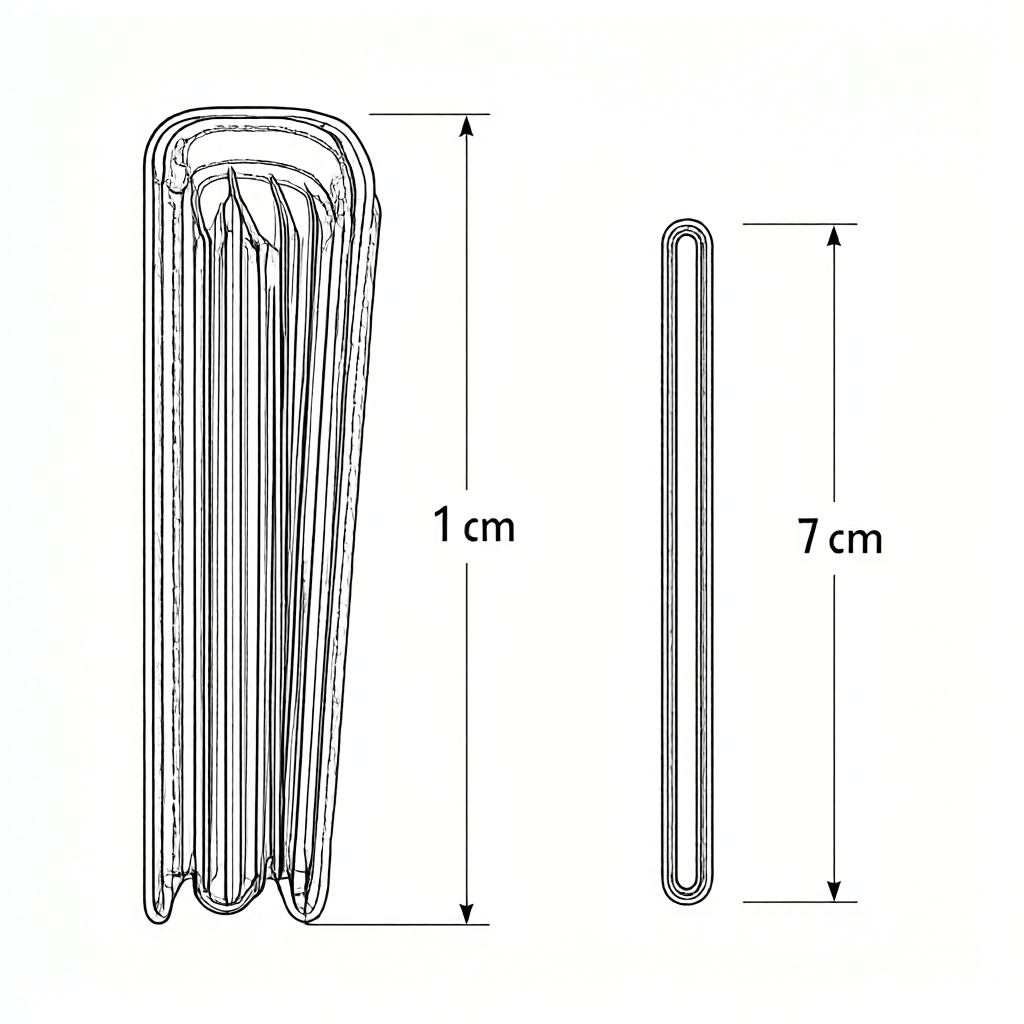
What standards apply to thin wallets?
Several standards and compliance requirements govern thin wallet manufacturing and sales, particularly for international export. Buyers should understand these requirements when evaluating suppliers and specifying products for target markets.
RFID-blocking standards. The most relevant technical standards include ISO/IEC 14443 (identification cards — contactless integrated circuit cards) and FIPS 201 (Federal Information Processing Standard for personal identity verification), which define the frequency ranges and test methods for RFID protection. While FIPS 201 is primarily a U.S. government standard, it is commonly referenced in commercial RFID-blocking product testing. Third-party certification from laboratories such as SGS or TÜV provides verifiable evidence of blocking performance rather than relying on manufacturer self-declaration.
Material compliance standards. For products sold in European markets, REACH (Registration, Evaluation, Authorisation and Restriction of Chemicals) and RoHS (Restriction of Hazardous Substances) compliance are mandatory. These regulations govern the use of certain chemicals in manufacturing processes and materials, including anodizing baths, adhesives, and coatings. Manufacturers should provide current REACH and RoHS compliance declarations.
Quality management standards. ISO 9001 certification indicates that a manufacturer operates a documented quality management system covering design, production, and process control. For thin wallet manufacturers, ISO 9001 certification is particularly relevant because it covers the consistency of anodizing processes, CNC machining tolerances, and final inspection procedures. BSCI (Business Social Compliance Initiative) audit certification addresses social responsibility in the supply chain and is increasingly required by European retailers and distributors.
ASTM standards for material testing. Relevant ASTM standards include those governing aluminum alloy properties and anodized coating performance. For example, ASTM specifications for aluminum alloys define the mechanical properties of 6061 and 6063 temper states commonly used in wallet manufacturing. Buyers should request material test reports when evaluating suppliers for new product development.
Thin Wallets: What Else Should Buyers Consider?
What should you consider when sourcing thin wallets?
Sourcing thin wallets involves evaluating multiple interdependent factors. The following considerations apply across different buyer profiles — from Amazon FBA sellers to EDC brand owners to promotional product distributors.
MOQ and tooling investment. Entry-level thin wallet production typically requires minimal tooling — stamping dies and basic CNC fixtures. MOQs for established product designs start at approximately 300 pieces per SKU, making the category accessible to small brands and marketplace sellers. Custom designs requiring new molds or significant CNC programming will have higher MOQ thresholds, typically 500 to 1,000 pieces. Buyers should clarify whether the quoted MOQ includes logo customization or applies to unbranded base products.
Sample lead time. Fast sample turnaround is critical for B2B buyers evaluating multiple suppliers. A 7-day sample lead time is competitive and allows buyers to receive, inspect, and validate product quality before committing to production orders. Buyers should confirm whether samples include laser engraving and packaging proofing, or if these require separate approval cycles.
Material and finish consistency. Anodized color consistency across production batches is a common quality issue in thin wallet manufacturing. Different aluminum alloys accept anodizing dyes differently, and batch-to-batch variation in anodizing bath chemistry can produce noticeable color shifts. Buyers should request color tolerance specifications and examine physical samples from multiple production batches before approving large orders.
Packaging and retail readiness. Many thin wallet buyers require retail-ready packaging — blister cards, window boxes, or custom-branded cartons suitable for e-commerce and brick-and-mortar display. Packaging design and tooling add cost and lead time. Buyers should determine whether the supplier offers in-house packaging design and whether they can handle Amazon FBA labeling and prep requirements.
Dropshipping and fulfillment capabilities. Amazon FBA sellers and e-commerce brands increasingly require supplier-integrated fulfillment. Suppliers that offer dropshipping, FBA prep, and direct shipping to end customers reduce the buyer’s operational complexity. Buyers should evaluate whether the supplier can handle mixed-SKU orders, custom packaging insertion, and shipping label generation.
What customization options are available for private label and OEM orders?
Customization in the thin wallet category spans several levels, each with different cost and lead-time implications.
Laser engraving is the most common customization method. It can be applied to aluminum, titanium, and carbon fiber surfaces for logos, monograms, or decorative patterns. Line engraving produces fine-detail results suitable for small logos; deep engraving creates tactile marks that resist wear. Buyers should provide vector-based artwork (AI, EPS, or DXF format) for optimal results.
UV printing allows full-color graphics on flat surfaces, suitable for branded designs, camouflage patterns, or photographic imagery. UV-cured inks bond directly to the substrate without requiring heat treatment, making this method compatible with anodized and coated surfaces. Color accuracy depends on the substrate finish — matte anodized surfaces produce more accurate color reproduction than glossy or brushed finishes.
Surface finishing options include bead blasting for a uniform matte texture, brushing for a directional satin finish, and polishing for a mirror-like appearance. Finishing choices affect both aesthetics and functional properties — bead blasting reduces visible scratch visibility, while polished surfaces show wear patterns more readily.
Packaging customization ranges from simple custom poly bags with printed logos to full retail box design with structural engineering. Buyers at the private label stage typically require custom outer packaging with product imagery, specifications, and branding. Buyers at the OEM stage may work from the supplier’s existing packaging templates with minor modifications.
For deeper insights into material selection and sourcing criteria for minimalist wallets, buyers may find the Men’s Minimalist Wallets — Materials, Specs & Sourcing guide useful. Additionally, the EDC Wallets and Minimalist Wallet Manufacturing for B2B Buyers article covers production workflows and supplier evaluation frameworks.
What market trends are driving thin wallet demand?
Several structural trends are expanding the addressable market for thin wallets. Contactless payment adoption continues to accelerate across North America, Europe, and Asia-Pacific, making RFID-blocking functionality a table-stakes feature rather than a differentiator. This trend directly increases the relevance of metal and hybrid thin wallets, which inherently provide more RFID protection than slim leather or polymer alternatives.
The EDC community — consisting of enthusiasts who intentionally curate their daily carry items — remains a high-engagement niche that drives product innovation. EDC buyers evaluate thin wallets on criteria that go beyond basic functionality: weight metrics, material provenance, machining quality, and aesthetic coherence with other carry gear. This segment is willing to pay premium prices for well-engineered products and serves as an early-adopter market that influences broader consumer trends.
Corporate gifting and promotional product channels represent another significant demand driver. Thin wallets in aluminum or carbon fiber position as premium-branded gifts at a manageable cost per unit. Corporate buyers appreciate the perceived value of metal and composite materials, the practicality of a daily-carry item, and the ability to add custom engraving or printing for brand visibility.
For additional context on card holder specifications and sourcing decisions, the What Is a Card Holder? B2B Sourcing Guide covers the relationship between card holders and broader minimalist wallet categories.
What procurement factors should wholesale and bulk buyers evaluate?
Beyond product specifications, B2B buyers should evaluate the following operational factors when selecting a thin wallet manufacturer.
Production capacity and scalability. Verify that the manufacturer can scale from initial pilot orders to full production runs without compromising quality or lead times. A facility with 50,000+ square feet and monthly capacity exceeding 500,000 units can absorb order volume growth without requiring secondary sourcing arrangements.
Quality control procedures. In-process QC checkpoints should include dimensional verification after CNC machining, anodizing thickness and color consistency checks, mechanism cycle testing, and final inspection of finished goods. Buyers should ask about AQL sampling plans and whether reject rates are tracked and reported.
Compliance documentation. Request current certificates for ISO 9001, BSCI, REACH, RoHS, and any third-party RFID-blocking test reports. Documentation should be verifiable — legitimate certificates include issuing body information, certificate numbers, and validity dates.
Communication and project management. Effective OEM and ODM collaboration requires clear communication channels, responsive engineering support, and structured project timelines. Buyers should assess whether the supplier assigns dedicated account management and provides regular production status updates.
Geographic logistics. Lead times and shipping costs vary significantly by destination market. Manufacturers serving the Americas, Europe, Australia, and Southeast Asia should have established logistics partnerships for each region. Buyers should clarify whether pricing is quoted FOB, CIF, or DDP, and whether the supplier handles export documentation.
For specialized product lines such as women’s minimalist wallets or money bag organizers, the Wallets for Women: B2B Sourcing Guide and Money Bag: What It Is, Specs & Sourcing Guide provide additional category context.
If you are evaluating thin wallet specifications for an upcoming order, you can request a bulk FOB quotation with your target volume and material preferences.
Thin Wallets: How Do You Partner With a Manufacturer?
How do we meet these sourcing standards?
As a manufacturer specializing in minimalist EDC wallets and pocket gear since 2014, our approach to thin wallet production is built around the same specifications and standards described above. Here is how our capabilities align with what B2B buyers need.
We operate a 50,000 sq ft in-house factory with CNC machining, laser engraving, UV printing, and aluminum anodizing lines under one roof. This vertical integration allows us to control material selection, finishing quality, and assembly consistency without relying on external subcontractors — a factor that directly impacts defect rates and delivery reliability. Our facility holds ISO 9001 certification and has passed BSCI social compliance audits, and all materials are REACH and RoHS compliant with SGS-tested verification.
Our MOQ starts at 300 pcs per SKU for full OEM customization (100 pcs trial order available for stock finishes) per SKU, which accommodates small-batch brand launches and Amazon FBA test orders without requiring significant upfront inventory commitment. For custom designs, we provide 7-day sample lead times, allowing buyers to validate material quality, mechanism performance, and finish consistency before committing to production volumes.
We support full OEM and ODM workflows — from concept rendering and engineering drawings through prototyping, tooling, and mass production. Common customization services include laser engraving for logos and decorative patterns, UV printing for full-color graphics, anodized color matching to brand specifications, and custom packaging design including retail boxes and FBA-compliant carton preparation. We also offer dropshipping and Amazon FBA prep for buyers who require supplier-integrated fulfillment.
With 13+ years of export experience serving 200+ brands across North America, Europe, Australia, and Southeast Asia, we understand the documentation, compliance, and logistics requirements that international B2B transactions demand. Whether you are an EDC brand owner developing a new product line, an Amazon seller sourcing a differentiated SKU, or a promotional distributor looking for premium corporate gifts, we can support your project from initial inquiry through production and delivery.
To discuss your thin wallet sourcing requirements or request a custom quotation, contact our team with your target specifications and order volume.
Front-pocket vs. back-pocket carry: which matters for thin wallets?
The carry position directly influences which thin wallet design performs best.
Front-pocket carry is the most common recommendation for slim wallets. It distributes weight evenly across the hip, reduces the risk of pocket sitting (which can cause back pain with thick wallets), and makes card access faster and more discrete. Front-pocket-friendly wallets typically measure 6 to 12 mm thick and weigh under 50 grams.
Back-pocket carry remains popular but favors slightly thicker designs that can handle pressure without bottoming out. A wallet over 12 mm thick may create discomfort during long sitting periods. For back-pocket users, hinge-style wallets with a money clip attachment offer a comfortable middle ground — slim when closed but with expandable capacity.
When specifying products for a target market, buyers should consider regional carry preferences. North American and European consumers increasingly favor front-pocket minimalist carry, while some Asian and Middle Eastern markets still show strong preference for traditional back-pocket formats with higher card capacity.
Price tiers and value assessment for thin wallets
Understanding wholesale price tiers helps buyers align product selection with their target retail positioning.
Budget tier ($1.50 – $4.00 FOB): Typically entry-level aluminum stampings with basic spring mechanisms, minimal or no anodizing, and simple polymer or paper packaging. Suitable for promotional products and high-volume marketplace resellers targeting sub-$20 retail.
Mid-tier ($4.00 – $10.00 FOB): CNC-machined aluminum or carbon fiber bodies with proper anodizing (25+ microns per ASTM B580), integrated RFID-blocking layers, and retail-ready packaging. This is the most competitive bracket for private-label EDC brands seeking strong margins at $25–$60 retail.
Premium tier ($10.00 – $25.00+ FOB): Titanium construction, multi-material hybrids, precision hinge mechanisms rated for 10,000+ cycles, and custom packaging with inserts. Positioned at $60–$150+ retail, targeting EDC enthusiasts and luxury gift buyers.
Value assessment should go beyond unit cost. Buyers should evaluate cost-per-cycle (mechanism durability), finish longevity (anodizing thickness and hardness per Vickers scale), and packaging inclusion — all of which affect perceived retail value and return rates.
Organization features: slot layout, cash retention, and card access
Organization design is a key differentiator that directly affects user satisfaction and product returns.
Slot layout configurations vary widely. Common arrangements include:
- Single vertical slot (most minimal, holds 4–6 cards)
- Dual parallel slots (holds 6–10 cards with quick dual-hand access)
- Stacked horizontal slots (maximizes capacity but requires more thickness — typically 14–18 mm)
- Mixed layouts combining card slots with a dedicated cash pocket
Cash retention methods include elastic bands, magnetic closures, leather straps, and rigid clasp systems. Elastic-band designs are the most common in the sub-$10 tier and provide reliable retention for folded bills. Magnetic closures add a premium feel but may weaken over time. Rigid clasp systems offer the most secure cash retention but add complexity and cost.
Card access mechanics also vary. Spring-loaded tension systems provide one-handed retrieval but can loosen over thousands of cycles. Flip-open hinge designs offer direct visual access to every card but add thickness. Buyers should specify minimum cycle-test requirements (5,000+ cycles) and request evidence of retention force consistency after testing.
For B2B buyers, requesting physical samples with different slot configurations is essential before committing to volume orders.
Procurement Framework
Supplier evaluation checklist
Use this checklist when scoring potential thin wallet manufacturers:
- [ ] ISO 9001:2015 certification verified (documented QMS for production consistency)
- [ ] BSCI audit report current and available
- [ ] REACH and RoHS compliance declarations provided
- [ ] In-house CNC machining capability (reduces reliance on third-party tooling)
- [ ] In-house anodizing and surface finishing (ensures color consistency across batches)
- [ ] RFID-blocking test reports from SGS, TÜV, or equivalent third-party lab
- [ ] Mechanism cycle-test data (minimum 5,000 cycles documented)
- [ ] Anodizing thickness specification (target: 25+ microns per ASTM B580)
- [ ] Material test reports for aluminum alloy (6061-T6 or 6063-T5 tensile strength data)
- [ ] Sample lead time confirmed (competitive benchmark: 7 days or less)
- [ ] MOQ flexibility for initial orders (benchmark: 300 pcs/SKU for standard designs)
- [ ] Custom packaging design capability (in-house or partnered)
- [ ] Amazon FBA labeling and prep support available
- [ ] Dropshipping or direct-to-customer shipping options
- [ ] Export history to your target region (America, Europe, Australia, or Southeast Asia)
RFQ template questions
Include these questions in every RFQ to ensure comparable supplier responses:
- What is your MOQ for a standard unbranded thin wallet, and what is the MOQ for a fully custom private-label order including logo engraving and custom packaging?
- Can you provide third-party test reports for RFID-blocking performance (target: 20 dB attenuation at 13.56 MHz)?
- What is your anodizing thickness specification, and do you test it per ASTM B580?
- What aluminum alloy grades do you use, and can you provide tensile strength data sheets?
- Do you perform in-house mechanism cycle testing? If so, what is your pass/fail threshold?
- What is your sample lead time, and does the sample price apply toward a production order?
- Do you offer in-house custom packaging design, and can you produce Amazon FBA-compliant prep and labeling?
- What is your production lead time for an order of [quantity] units with custom laser engraving?
- Can you support mixed-SKU orders and dropshipping to end customers?
- What quality inspection process do you follow before shipment, and do you provide pre-shipment inspection reports?
Unit cost benchmarks by material type
Use these FOB price ranges as baseline benchmarks when evaluating supplier quotations:
| Material | Typical FOB Range (USD/unit) | Target Retail Price |
|---|---|---|
| Stamped aluminum (basic) | $1.50 – $3.50 | $15 – $30 |
| CNC aluminum (anodized) | $3.00 – $6.50 | $25 – $55 |
| Carbon fiber composite | $4.00 – $9.00 | $35 – $70 |
| Titanium (CNC machined) | $8.00 – $22.00 | $60 – $150 |
| Hybrid (aluminum + carbon fiber) | $4.50 – $11.00 | $40 – $80 |
Note: Prices vary by order volume, customization complexity, packaging requirements, and logistics terms. Always request itemized quotations that separate unit cost, tooling, engraving, and packaging.
Technical specifications: materials and processes
Replacing generic material descriptions with verified technical parameters strengthens buyer-seller communication and reduces specification errors.
Anodized aluminum: Aircraft-grade 6061-T6 or 6063-T5 aluminum is standard. Type II sulfuric-acid anodizing produces a coating thickness of 25–35 microns (per ASTM B580), achieving 300–500 HV surface hardness. This provides reliable scratch resistance for everyday carry. For higher-wear applications, Type III hardcoat anodizing reaches 600–800 HV but limits color options to darker shades.
Carbon fiber: Genuine carbon fiber wallets use 2×2 or 3×3 twill-weave prepreg layers (typically 8–16 layers depending on thickness) bonded to a titanium or aluminum core under heat and pressure. Tensile strength of the composite laminate typically exceeds 500 MPa. Buyers should verify that suppliers use genuine woven carbon fiber (not printed vinyl) and request micrograph or cross-section photos.
Titanium: Grade 2 (commercially pure) or Grade 5 (Ti-6Al-4V) titanium is used for money clips and card holders. Grade 5 offers ~950 MPa tensile strength versus ~345 MPa for Grade 2. Surface finishes include bead-blasted (Ra 0.8–1.6 µm), brushed, or polished. Titanium naturally forms a passive oxide layer that provides excellent corrosion resistance without additional coating.
RFID-blocking laminate: Effective RFID shielding uses either a stainless steel mesh (typically 316L grade, woven at 40–60 mesh per inch) or a conductive polymer laminate with sheet resistance below 1 Ω/square. The shielding layer should be tested per ASTM E2411 (standard practice for measuring electromagnetic shielding effectiveness) or EN 541-7 (European standard for RFID protection) and demonstrate ≥20 dB attenuation at 13.56 MHz.
Customization Options for Private Label and OEM Orders
Laser engraving is the most common customization method. It can be applied to aluminum, titanium, and carbon fiber surfaces for logos, monograms, or decorative patterns. Fiber laser engraving on aluminum produces permanent marks at depths of 0.01–0.05 mm with line widths as fine as 0.1 mm. CO₂ lasers are used for polymer and carbon fiber surfaces. Engraving adds approximately $0.15–$0.50 per unit depending on complexity and should be specified in the RFQ to avoid hidden costs.
UV printing allows full-color graphics on flat or slightly curved surfaces. It is commonly used for branded artwork on aluminum wallets but has limited durability compared to laser engraving. UV-printed designs typically require a clear protective top coat to resist scratching during normal carry.
CNC machining enables custom contours, chamfers, and precision-tolerance features that stamping cannot achieve. Custom CNC programs typically require 3–5 days of setup time and may incur a one-time tooling fee of $200–$800 depending on complexity. This is the primary path for truly differentiated product designs.
Surface finishing options include bead blasting (matte texture), brushed (linear grain), polished (mirror finish), and PVD (physical vapor deposition) coating for enhanced color durability and corrosion resistance. PVD coatings can achieve hardness values above 1,500 HV and are recommended for wallets targeting high-wear environments.
Custom packaging is available from simple poly bags to fully designed retail boxes with inserts, window cutouts, and brand-printed outer cartons. In-house packaging design capability is a significant advantage for buyers who need professional shelf-ready presentation without engaging a separate packaging supplier. Amazon FBA-compliant prep — including barcoding, polybagging, and case packing — is also available from manufacturers who support e-commerce fulfillment.
For detailed specifications on materials, tolerances, and sourcing considerations, see our Men’s Minimalist Wallets — Materials, Specs & Sourcing guide. Additional sourcing insights are available in our EDC Wallets: What They Are and How to Source Them article.
Thin Wallets: How Do We Meet These Standards?
As a manufacturer with 13+ years of export experience, our approach to thin wallet production is built around the same technical and quality benchmarks that define the category. Our 50,000 sq ft facility in China operates under ISO 9001:2015 quality management and holds BSCI social compliance certification. All products comply with REACH and RoHS regulations, and we provide third-party SGS test reports for RFID-blocking performance, material composition, and mechanical durability.
We machine wallets in-house using CNC equipment, anodize to 25+ microns per ASTM B580, and test spring and hinge mechanisms for 5,000–10,000 open-and-close cycles before shipment. Our customization capabilities include fiber laser engraving, UV printing, PVD coating, and full custom packaging design — including Amazon FBA labeling and prep. We support low MOQs starts at 300 pcs per SKU per SKU with a 7-day sample lead time, and we serve 200+ brands across America, Europe, Australia, and Southeast Asia.
To explore how we can support your thin wallet product line, get a free quote or contact our team with your specifications.
Thin Wallets: Where Can You Verify the Data and Sources?
- Men’s Minimalist Wallets — Materials, Specs & Sourcing guide — topedcwallet.com
- EDC Wallets and Minimalist Wallet Manufacturing for B2B Buyers article — topedcwallet.com
- What Is a Card Holder? B2B Sourcing Guide — topedcwallet.com
- Wallets for Women: B2B Sourcing Guide — topedcwallet.com
- Money Bag: What It Is, Specs & Sourcing Guide — topedcwallet.com
- request a bulk FOB quotation — topedcwallet.com
Brands moving from slim card holders into premium tiers should read high-end wallets for men.
From article to product
Sourcing minimalist-wallets?
Tell us the format, the quantity and the date you need stock. You get material options, MOQ and a landed-cost range back within one business day.
Keep reading
More on wallet types
Thin Male Wallets: Buying Guide for Slim Minimalist Picks
How to choose a slim wallet for men — thickness thresholds, material trade-offs, capacity…
ReadStashed Wallet: A Minimalist Everyday-Carry Solution
Understand what a stashed wallet is, how minimalist slim wallets work, and what to…
ReadFolding Wallets: Types, Materials & Buying Guide
Learn what makes a folding wallet worth buying, from materials and card capacity to…
Read
About the author
TOPWALLET Editorial Team
TOPWALLET's editorial and engineering desk writes from bench testing at the Shenzhen (Longgang) facility: pull-force and cycle testing, 13.56 MHz shielding measurements, finish trials and factory audits, rather than supplier spec sheets. Every specification in these guides is one we write on a purchase order.
Written on the floor
This article was written by our production and QC team — the people who spec tolerances, run the finishing line and inspect every batch. Where it states a capacity, a pull force or a lead time, it comes from a measurement we made, not a supplier’s catalogue. If a number here disagrees with what your own supplier told you, tell us; several of these articles started as a correction from a buyer.
See how the factory works · Inspection process · Sourcing FAQ
Sourcing minimalist-wallets?
Tell us the format, the quantity and the date you need stock. You get material options, MOQ and a landed-cost range back within one business day.