

Best Card Holder For Women: What Is the Quick Answer?
What is the best card holder for women? The answer depends on three core factors: material durability, RFID-blocking capability, and capacity versus portability balance. For most B2B buyers, a slim aluminum plate wallet or carbon fiber card holder offers the strongest combination of lightweight build, modern aesthetics, and long-term durability — especially when paired with certified RFID-blocking layers and a capacity of 4–8 cards plus a cash strap.
Silicone and leather remain viable alternatives for brands targeting different price tiers or lifestyle segments, but they come with distinct trade-offs in scratch resistance, water exposure, and premium perception. A genuinely well-sourced women’s card wallet should hit roughly 3.5–4.5 inches wide, 2.5–3 inches tall, under 1 inch thick, and between 1.5–3 oz in weight, while meeting recognized RFID safety and REACH/RoHS material compliance standards.
Material Options: Aluminum, Carbon Fiber, Silicone, Leather & Titanium
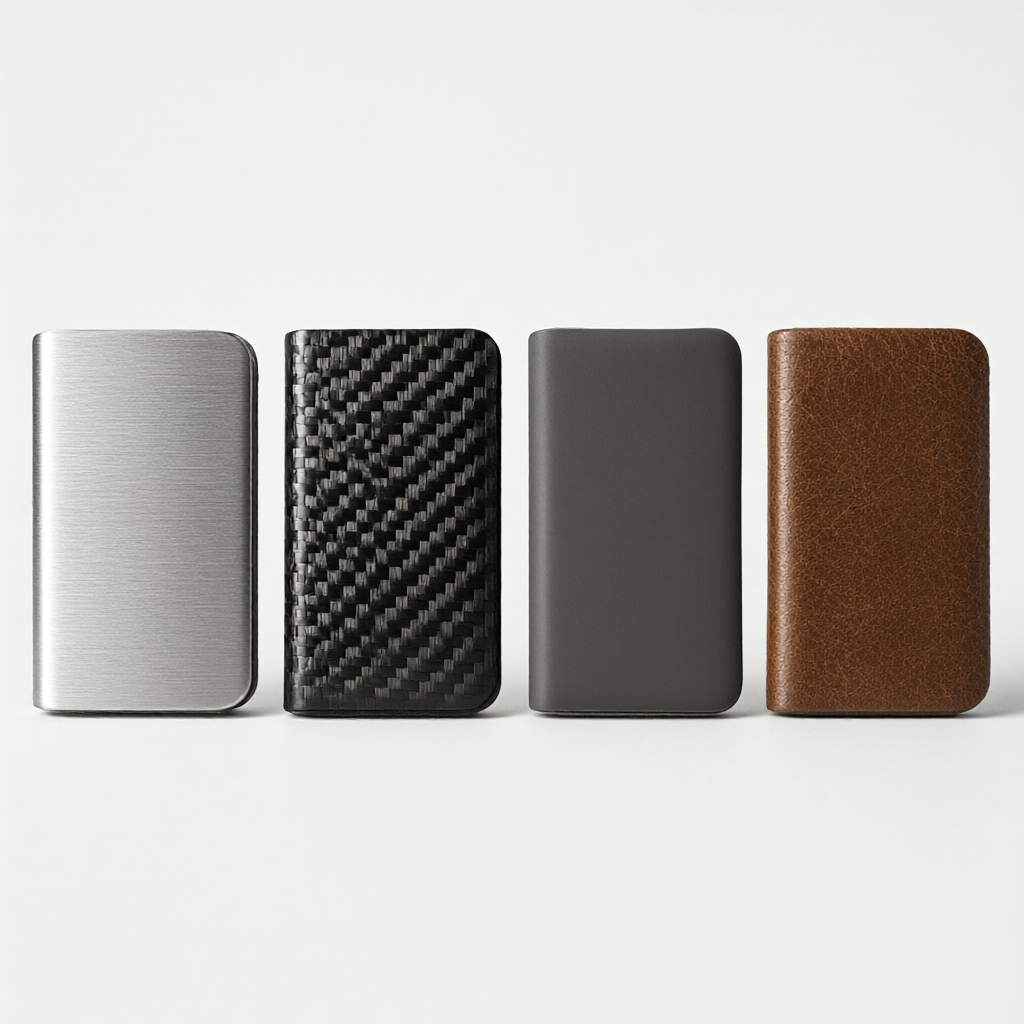
What material should you choose for a women’s card holder?
Material selection is the single biggest driver of perceived quality, unit cost, and end-user satisfaction. Each option serves a distinct market segment.
Aluminum (typically 6000-series) is the most common choice for modern minimalist card wallets. It provides a rigid, lightweight structure that resists bending and scratching better than softer metals. Anodized finishes deliver color consistency and add a hard surface layer that reduces wear over time. Aluminum plate wallets typically weigh between 1.5–2.5 oz and can hold 6–10 cards depending on spring tension design. The finish holds up well against pocket lint and minor abrasion, though sharp impacts can dent the surface.
Carbon fiber sits above aluminum in perceived premium value and scratch resistance. A carbon fiber card holder combines a thin layer of woven carbon epoxy with an aluminum or stainless steel frame, producing a wallet that is lighter than aluminum yet more rigid. Weight ranges from 1.8–3 oz. The visual texture appeals strongly to EDC-oriented buyers, particularly those who value a technical, understated aesthetic. Carbon fiber does not stain and is highly resistant to moisture — an important factor for daily carry across varied climates.
Silicone card cases are soft-touch and flexible, making them easy to insert and remove cards from. They are ideal for budget-conscious private-label programs because tooling costs are lower and lead times shorter. However, silicone attracts dust and lint, scratches more easily than metal or carbon fiber, and has a narrower temperature tolerance range. It performs adequately for light everyday use but shows wear faster in high-friction carry situations. Typical weight: 1–2 oz.
Leather — genuine full-grain or top-grain — remains the traditional premium option. It develops a patina over time and feels familiar to users upgrading from bi-fold wallets. The downside: leather is heavier (2.5–4 oz), requires break-in time, absorbs moisture, and can degrade if exposed to rain regularly. Bonded or “genuine” leather labels often indicate lower-grade material that may delaminate after months of use. For B2B buyers, specifying full-grain or top-grain leather in your purchase order prevents downstream quality complaints.
Titanium money clips and card holders occupy the ultra-premium niche. Titanium offers exceptional strength-to-weight ratio and corrosion resistance, but the raw material cost is significantly higher — often two to three times that of aluminum options. For most women’s card holder lines, titanium is reserved as a limited SKU rather than the primary material offering.
When evaluating material options for your product line, see our minimalist wallets materials and features comparison for deeper specification guidance.
Capacity and Organization
How many cards can a minimalist card holder for women hold?
Capacity ranges from 4 to 12 slots depending on design. The sweet spot for women’s minimalist card wallets is 6–8 card slots plus a cash strap or背面钞票夹层. This accommodates the typical carrying habit: 3–4 credit cards, 1–2 IDs, and a small folded bill or two.
Key organizational features to look for during sourcing:
- Spring-loaded vs. elastic-band retention: Spring mechanisms hold cards securely but require precise tolerance control during CNC machining. Poorly tensioned springs cause cards to fall out; overly tight springs make card insertion frustrating for end users. Request sample evaluation of retention force.
- Cash strap placement: A rubber or silicone band on the back face is standard. Some designs integrate a hidden slip pocket behind the card stack, useful for emergency bills. Ensure the slot depth aligns with your target market’s banknote dimensions.
- ID window: A transparent or cutout ID window is common in travel-oriented models. Verify that the window material is scratch-resistant polycarbonate rather than thin PET, which clouds quickly.
- Magnetic closures: Rare in true minimalist card holders but found in hybrid designs. Magnets can interfere with RFID signal paths and should be evaluated separately from the blocking layer.
For a complete overview of capacity planning and slot configuration, review the best card holder selection guide for B2B sourcing.
RFID-Blocking Technology
How does RFID blocking work in card holders? And is it actually necessary?
RFID (Radio Frequency Identification) skimming exploits the wireless communication between a payment card’s embedded chip and a nearby reader. Most contactless credit and debit cards operate at 13.56 MHz using the ISO/IEC 14443 standard. A passive blocker interrupts this frequency range by incorporating a conductive metal mesh or foil layer inside the wallet body — typically between the outer shell and the card slots.
The blocking layer reflects or absorbs the radio wave before it reaches the card chip, preventing unauthorized reading. Reputable manufacturers validate performance against ISO/IEC 14443 Type A and B protocols using NFC reader testing equipment. Buyers should request a third-party test report rather than accepting a supplier’s claim at face value.
Are there industry standards for RFID-blocking wallet materials?
There is no single mandatory certification for consumer RFID-blocking accessories in most jurisdictions. However, credible suppliers reference the following frameworks:
- ISO/IEC 14443 — defines proximity card operating parameters that the blocker must attenuate
- FIPS 201 / PIV — U.S. government standards for personal identity verification (relevant for defense-adjacent procurement)
- NFC Forum compliance — verifies interoperability with standard contactless payment infrastructure
A practical rule: ask your supplier for test results showing attenuation greater than 20 dB at 13.56 MHz across the full blocker coverage area. Products without any published test data may offer partial or ineffective shielding. For detailed procurement guidance on RFID-blocking products, see our RFID blocking cards selection criteria.
Beyond the technical layer, consider whether your target market values the feature. In North America and Western Europe, consumer awareness of RFID skimming is moderate to high, and it functions as a meaningful differentiator on product listings. In markets where contactless adoption is still emerging, the feature carries less purchasing influence.
Dimensions and Portability
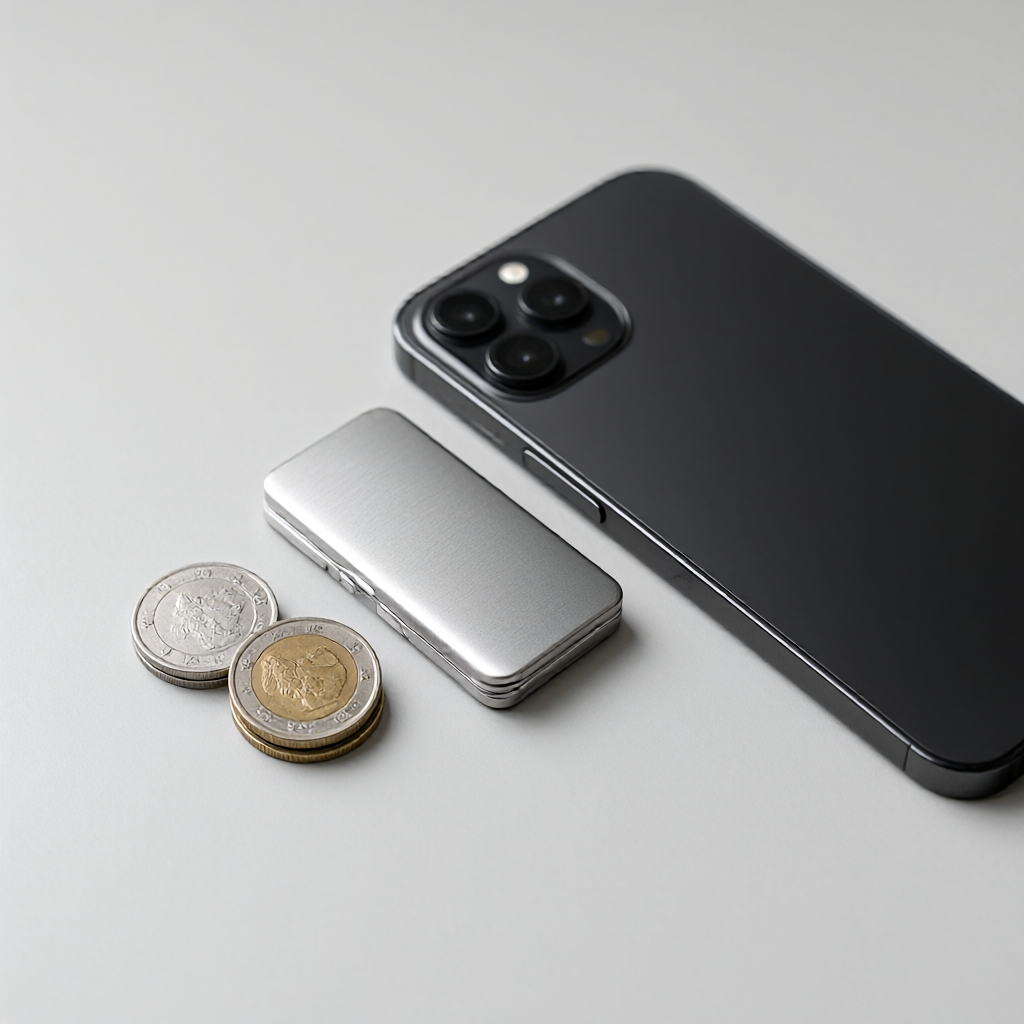
What size should a women’s card holder be?
Women tend to carry fewer cards than the average male EDC profile and prioritize slim profiles that fit in small crossbody bags, clutch purses, or coat pockets. Target dimensions for a competitive women’s card holder line:
| Dimension | Range |
|---|---|
| Width | 88–115 mm (3.5–4.5 in) |
| Height | 63–76 mm (2.5–3 in) |
| Thickness | 6–15 mm (0.25–0.6 in) |
| Weight | 40–85 g (1.4–3 oz) |
Cards themselves measure approximately 85.6 × 53.98 mm. Any wallet narrower than 88 mm risks misalignment with standard card sizes. Widths exceeding 115 mm begin encroaching on slim wallet territory where the minimalist advantage diminishes.
Thickness is the dimension most affected by material choice. Aluminum and carbon fiber constructions typically achieve 6–10 mm with 6–8 card capacity. Silicone cases compress to similar thickness but feel bulkier due to flexibility. Leather models, even when empty, sit closer to 10–15 mm owing to material bulk and stitching layers.
Portability also involves edge rounding and corner radius. Sharp edges dig into pockets and purse linings. A minimum R1–R2mm edge radius is standard in quality CNC-machined products. Silicone and molded leather options naturally meet this requirement.
For hands-on dimensional guidance, refer to the best minimal wallets for B2B sourcing procurement guide.
Durability and Daily-Use Considerations
Which card holder lasts longest in real-world conditions?
Durability expectations vary by material and construction method. A realistic 90-day field assessment framework for B2B buyers includes:
- Surface finish integrity: Anodized aluminum should resist key scratches under normal pocket carry. Verify hardness rating (typical anodized layer: 150–250 HV). Uncoated aluminum shows micro-scratches within weeks.
- Spring tension retention: Metal spring clips should maintain holding force after repeated card insertion cycles. Test by cycling cards in and out 50+ times on samples before approving tooling.
- Corner and edge wear: Inspect corners for coating chipping or carbon fiber delamination after abrasion testing.
- Water and sweat exposure: Aluminum and carbon fiber resist moisture ingress completely. Silicone withstands occasional wet conditions but degrades under prolonged UV exposure. Leather requires conditioning and warps when saturated.
- Colorfastness: Dye penetration in anodized aluminum exceeds surface painting. Carbon fiber color comes from the resin tint and is inherently stable. Silicone dyes migrate under heat; verify lot consistency during sampling.
End users also judge durability through perceived heft and build quality. A card holder that feels flimsy signals low value even if it survives intact. Structural rigidity comes from proper material gauge selection — 0.8–1.2 mm for aluminum plates is typical; thinner gauges flex perceptibly under pressure.
Standards and Requirements
What regulatory and compliance standards apply to card holders for the women’s market?
Several compliance frameworks are relevant depending on your destination market:
- REACH (EU): Restricts certain phthalates, heavy metals, and azo dyes in articles placed on the European market. Applicable to silicone, leather, and any coated or dyed components.
- RoHS: Governs restricted substances in electronic-adjacent products. While RFID blockers are passive, some buyers include RoHS conformance as a baseline quality signal.
- BSCI social compliance: Required by many European retail chains as proof of ethical manufacturing conditions. Facilities audited under BSCI demonstrate responsible labor practices.
- SGS material testing: Independent verification of heavy metal content (lead, cadmium), phthalate levels, and skin-contact safety for direct-carry products.
- ISO 9001: Quality management system certification indicates structured process control across sourcing, production, and inspection — valuable evidence during supplier qualification.
When evaluating potential manufacturers, treat these certifications as table stakes rather than differentiators. Ask for current audit reports and certificates before placing initial orders. Expired or unverified documentation is a red flag in professional sourcing conversations.
Best Card Holder For Women: What Else Should Buyers Consider?
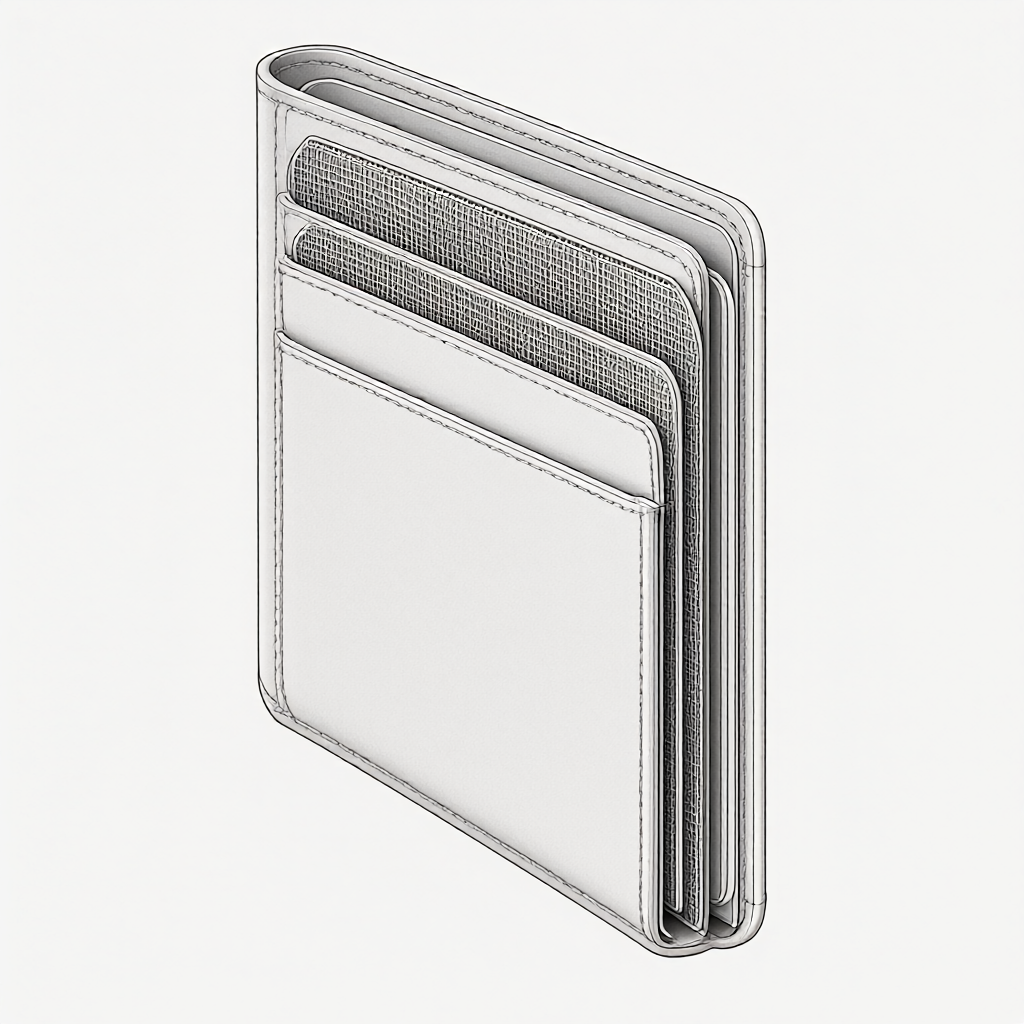
What else should B2B buyers evaluate when sourcing card holders?
Several factors influence long-term procurement success beyond material and compliance:
MOQ flexibility: Minimum order quantities vary widely. Established factories with CNC capabilities often accept MOQs from 300 pcs per SKU per SKU for custom designs, enabling smaller brands and Amazon FBA sellers to test new styles without excessive inventory risk. Very low MOQs below 50 units typically carry significant per-unit cost premiums.
Price bands quoted in this article are industry ranges published for planning purposes. Exact per-unit pricing depends on material, finish, packaging and order quantity, and is confirmed by our sales team after an inquiry against a locked specification.
Sample lead time: Prototyping speed determines how fast you can validate a design before committing to mass production. A 5–7 day sample turnaround is indicative of efficient in-house engineering and quick tooling coordination. Longer sample cycles increase time-to-market for seasonal or trend-driven product lines.
Customization depth: True OEM/ODM capability extends beyond logo placement. Evaluate whether your supplier can modify internal spring geometry, adjust card slot count per your specification, develop unique edge profiles, and support custom packaging from concept to retail-ready box. Brands that source from flexible manufacturers gain margin flexibility and SKU differentiation.
Packaging and presentation: Retail-ready packaging adds perceived value at point of sale. Options include window display boxes, matte-finish lock-fold cartons, and branded tissue wraps. Coordinate packaging specifications early — late-stage changes incur retooling charges.
Drop shipping and FBA prep: Suppliers offering prepped fulfillment — barcoded units, poly bagging, and FBA-compliant carton labeling — reduce your operational overhead as an Amazon seller or e-commerce distributor. Confirm lead time for order fulfillment cycles to avoid stockouts.
Price alone should never drive the sourcing decision. A $2 unit difference per wallet becomes substantial at 5,000-unit order volumes, but cutting corners on RFID test validation, material grade, or quality inspection creates far larger hidden costs through returns and negative reviews.
Ready to move from evaluation to specification? Send us your opening sizes and material preferences for a custom quote.
Sourcing and Manufacturing Quality Indicators
How do you identify a reliable card holder manufacturer?
Three indicators separate established producers from trading companies repackaging generic goods:
- In-house CNC machining and surface finishing. Factories that machine their own aluminum plates, perform anodizing, and handle laser engraving control tolerances end-to-end. Outsourced secondary operations introduce variability and longer communication loops when defects surface.
- Published specifications with measurable targets. A credible supplier documents expected dimensions, weight ranges, material grades (e.g., AL 6063-T5), anodize thickness, and RFID attenuation performance. Vague spec sheets — “high-quality aluminum,” “durable carbon fiber” — signal limited technical transparency.
- Third-party audit history. BSCI audit reports, SGS test records, and ISO 9001 certificates provide independent verification of factory conditions and quality management systems. These documents should be current and match the facility name and address on your purchase agreement.
Quality inspection checkpoints to include in your production agreement: incoming material verification, in-process dimensional checks, RFID blocking layer integrity testing, finished-product appearance inspection, and random function testing (spring retention, cash strap elasticity). A formal AQL inspection plan (typically Level II, AQL 0.65 for major defects) gives you a defined acceptance criterion before shipment.
For additional sourcing evaluation frameworks, see the best wallet for B2B buyers: EDC wallet procurement guide.
Best Card Holder For Women: How Do the Price Tiers Compare by Value?
Price transparency lets buyers align SKU architecture with margin targets. The table below maps five representative price bands to material, feature complexity, and target channel.
| Tier | Price Range (FOB, 1 000 pcs) | Typical Materials | Common Features | Target Channel |
|---|---|---|---|---|
| Entry | $3.50–$6.00 | Polymer-composite, bonded leather, thin silicone | Fixed 4–6 card slots, basic cash strap | Amazon FBA entry-level, promotional goods |
| Mid | $6.00–$12.00 | 6000-series aluminum, real carbon fiber, top-grain leather | RFID blocker (20 dB+), anodized finish, engraved logo | DTC e-commerce, boutique retail, private label |
| Premium | $12.00–$22.00 | Titanium accents, full-grain leather, dual-material hybrids | Multi-layer RFID, custom spring geometry, retail window box | Specialty EDC retailers, corporate gifting |
| Ultra-premium | $22.00–$40.00+ | Grade 5 titanium body, forged carbon, exotic leather | Integrated tracking attachment, magnetic closure, bespoke packaging | Luxury markets, limited-edition drops |
Key cost drivers within each tier:
- RFID blocker type: micro-perforated metal mesh adds $0.30–$0.80/unit versus unblocked construction; solid foil laminates sit at the lower end of that range.
- Anodizing color depth: custom Pantone-matched anodized hues incur color-chamber setup fees of $200–$500 per color on first order; standard black/blue/silver carry no additional charge above MOQ thresholds.
- Custom laser engraving: vector-artwork file preparation averages $50–$150 one-time NRE; per-unit cost impact is negligible at volumes above 500 pcs.
- Packaging: simple OPP bag adds <$0.05/unit; custom lock-fold carton with spot UV adds $0.40–$1.20/unit depending on cardstock GSM and print color count.
When evaluating quotes, insist that pricing breakdowns separate unit cost, tooling/NRE, packaging, and freight so you can model landed cost accurately across multiple SKUs and shipment volumes. For an expanded discussion of value engineering across wallet categories, consult our best wallet for B2B buyers article.
What price ranges should B2B buyers expect for women’s card holders?
Unit pricing depends heavily on material, feature complexity, and order volume. The following ranges reflect typical FOB quotation benchmarks for 2026 and assume standard design configurations:
| Category | Material | Approx. FOB Unit Cost | Typical Use Case |
|---|---|---|---|
| Budget | Silicone, basic aluminum | $1.50 – $3.50 | Promotional items, entry-level private label |
| Mid-tier | Anodized aluminum, carbon fiber laminate | $3.50 – $7.00 | Mainstream Amazon FBA, retail chain, EDC brands |
| Premium | Solid titanium, full-grain leather, complex multi-material builds | $7.00 – $15.00+ | Luxury positioning, corporate gifts, limited editions |
RFID-blocking functionality typically adds $0.30 – $0.80 per unit depending on layer placement and certification requirements. Custom laser engraving contributes negligible marginal cost at volume but requires upfront file preparation. Unique color anodizing or custom packaging runs are one-time NRE investments that amortize across order quantity.
Value analysis should incorporate total landed cost — including freight, customs duties, and any compliance documentation fees — rather than comparing FOB prices in isolation. A slightly higher per-unit cost from a factory with strong QC processes often yields fewer rejects, faster resolution of issues, and stronger long-term partnership reliability than the lowest available quote.
Looking for specific pricing on your target configuration? Request a bulk FOB quotation from our team.
Manufacturer Spotlight: How the Industry Works
Here is how we meet these standards
The card holder category spans a wide spectrum — from promotional giveaways priced at under two dollars to precision-engineered EDC pieces built to industrial tolerances. The difference between a disposable accessory and a product your customers return for usually comes down to three things: material integrity, consistent quality control, and responsiveness during the sourcing process.
We’ve spent over a decade refining our approach to minimalist wallet manufacturing, working with EDC brands, Amazon FBA sellers, and retail distributors across North America, Europe, Australia, and Southeast Asia. Our facility operates under ISO 9001 quality management standards and maintains BSCI audit compliance, with REACH and RoHS conformance verified through SGS testing on our material supply chain.
Our sourcing workflow starts with understanding your target positioning — whether that’s a mid-range aluminum card holder for an Amazon brand or a premium carbon fiber model with custom engraving for a corporate gift program. From there, we coordinate tooling, sample production, material validation, and phased manufacturing. Our in-house CNC machining and laser engraving capabilities keep critical processes under direct supervision, reducing the risk of specification drift between quoted samples and mass-produced units.
Typical sample lead time is around 7 days for standard designs, with custom engineering modifications evaluated case by case. We support order quantities starting at 300 pieces per SKU, allowing newer brands to validate demand before scaling. Full customization runs from logo placement and color selection through retail packaging design, giving private-label buyers a single production partner from concept to shelf.
If you’re evaluating suppliers for a women’s card holder line, we welcome the opportunity to discuss your specifications, target pricing, and volume requirements. Contact Our Team to start the conversation.
Best Card Holder For Women: What Should You Know First?
What is the best card holder for women? The answer hinges on four interrelated criteria that define both end-user satisfaction and B2B procurement viability: material durability under daily friction, RFID-blocking performance backed by verifiable third-party test data, capacity engineered for typical female carrying habits (6–8 cards plus cash retention), and aesthetic breadth across colors, finishes, and gender-neutral palettes. For most brands entering this category, a CNC-machined aluminum plate wallet or woven carbon fiber card holder delivers the strongest balance of lightweight construction, modern finish consistency, and long-term scratch resistance — particularly when paired with an RF-attenuation layer exceeding 20 dB at 13.56 MHz and compliant with REACH, RoHS, and SGS skin-contact safety standards. Silicone and genuine leather remain competitive alternatives for distinct price-tier positioning, though each introduces measurable trade-offs in abrasion tolerance, moisture exposure, and perceived premium value. A well-sourced women’s card holder targeting the core market should measure approximately 3.5–4.5 inches wide, 2.5–3 inches tall, under 1 inch thick, and weighing 1.5–3 oz, while offering customization depth ranging from logo engraving through retail packaging development.
Key Specifications to Evaluate When Sourcing Card Holders for Women
When building a specification sheet for your next card holder program, anchor every line item to three measurable attributes: dimensional tolerance, material gauge, and performance benchmark. Below is the checklist procurement teams should validate against before approving tooling.
Dimensional Checklist
| Spec Item | Acceptable Range | Test Method |
|---|---|---|
| Width | 88–115 mm | Caliper measurement (min 3 points per unit) |
| Height | 63–76 mm | Caliper measurement |
| Thickness (loaded, 6 cards) | 6–15 mm | Caliper under defined compression load |
| Weight | 40–85 g | Digital scale, ±0.1 g accuracy |
| Edge radius | ≥ R1 mm | Visual + profile projector inspection |
| Card slot count | 6–8 primary slots + cash strap/cavity | Physical count verification |
Material Gauge Verification
- Aluminum plates: 0.8–1.2 mm — thinner gauges flex perceptibly; thicker gauges add unnecessary weight.
- Carbon fiber laminates: minimum 2-ply weave with epoxy resin saturation above 35 % by volume for structural integrity.
- Silicone cases: Shore A hardness 40–60 — too soft compromises shape retention; too hard reduces card insertion comfort.
- Leather (full-grain / top-grain): minimum 1.2 mm trimmed thickness; bonded or split leathers below this threshold exhibit premature delamination.
Performance Benchmarks
- RFID attenuation: ≥ 20 dB at 13.56 MHz, measured per ISO/IEC 14443 Type A/B test fixtures, documented in an SGS or TÜV third-party report.
- Anodized aluminum surface hardness: 150–250 HV (Vickers) after Type II sulfuric anodizing — anything below 150 HV indicates insufficient film thickness for daily pocket carry.
- Spring retention force (NFC-enabled test): cards must not eject under 5 g acceleration (simulated bag swing) but must release with < 15 N hand-insertion force.
- REACH conformance: SVHC (Substances of Very High Concern) list current as of import date — silicone and dyed leather components are the highest-risk material categories.
- Biocompatibility (if product contacts skin directly for extended periods): request USP Class VI results for any component labeled “skin-safe” or “hypoallergenic.”
Sourcing Readiness Signals
- Supplier holds ISO 9001:2015 (current certificate, not expired).
- Facility passes BSCI social-audit or equivalent (SMETA, SEDEX) when selling to European retail chains.
- Sample lead time documented at ≤ 7 working days from art-file approval to physical sample delivery.
- Production capacity of ≥ 50 000 units/month indicated — signals enough throughput to absorb quality-control sampling without bottleneck delays.
Style and Aesthetics: Colors, Finishes, and Gender-Neutral Options
Finish selection often drives repeat purchase and SKU differentiation more than material alone. Modern minimalist wallets for women span four aesthetic families, each mapped to a distinct consumer segment.
Brushed Aluminum Finishes
Brushed surfaces scatter light evenly, reducing visible fingerprint smudges compared to mirror-polished alternatives. Standard palette includes:
- Silver native (un-anodized): raw metallic appearance, lowest cost tier.
- Black anodized: Type II sulfuric anodize at 15–25 µm film thickness — the industry baseline for colorfastness.
- Rose gold PVD coating: physical vapor deposition applied over anodized base; offers higher scratch resistance than powder-coated finishes but at elevated tooling cost.
- Midnight blue / army green anodized: popular for gender-neutral positioning; these darker saturated tones command a $0.15–$0.35/unit premium over standard black over bulk orders of 5 000+ pcs.
Carbon Fiber Weave Patterns
- Plain weave (4×4): most common; balanced visual texture, moderate cost.
- Twill weave (2×2): diagonal pattern reads as more technical; slight surface irregularity can affect laser-engraved logo contrast.
- Mimic carbon (printed): lower-cost alternative using UV-printed pattern over aluminum substrate — acceptable for budget-tier private label but does not replicate true carbon fiber tactile feel. Recommend specifying real woven carbon fiber in your purchase order to avoid downstream quality disputes.
Silicone Color Options
Silicone accepts vibrant dye penetration, making it suitable for seasonal color rotations. However:
- Light pastel shades show soil accumulation faster than dark tones.
- Dye lot consistency across production runs requires supplier commitment to ΔE ≤ 2.0 color-delta tolerance, documented with spectrophotometer readings.
- Food-grade platinum-cure silicone carries a 10–15 % cost premium over peroxide-cured variants; specify explicitly if marketing claims target “hypoallergenic” or “skin-safe” positioning.
Leather Finishes and Grain Types
- Full-grain vegetable-tanned: develops patina; high perceived value; premium price point ($18–$35/unit FOB at 1 000 pcs MOQ).
- Top-grain chrome-tanned: more uniform appearance out of the box; lower break-in period; mid-price tier ($12–$22/unit).
- Bonded/reconstituted leather: recycled leather fibers bound with polyurethane adhesive — delamination risk increases sharply after 6–12 months of flex cycling. Always require ASTM D2290 peel-adhesion testing results when bonded leather is specified.
For guidance on matching aesthetic choices to brand positioning, review our best minimal wallets for B2B sourcing comparison matrix.
Customization and Branding Options for B2B Buyers
Customization depth is what separates a commodity reseller from a differentiated brand. Evaluate your prospective manufacturer against the following capability spectrum.
Logo Application Methods
| Method | Minimum Cost Impact | Durability | Best For |
|---|---|---|---|
| Laser engraving (fiber/laser) | Included in most NRE packages | Permanent; survives years of pocket abrasion | Aluminum, titanium, carbon fiber |
| UV printing | $0.05–$0.15/unit | Good; susceptible to aggressive chemical cleaning | Silicone, flat leather surfaces |
| Pad printing | $0.08–$0.20/unit | Moderate; may wear near edges | Curved or textured substrates |
| Emboss/deboss (leather) | $0.10–$0.25/unit | High for premium perception | Full-grain and top-grain leather |
| Metal badgeattachment | $0.30–$0.80/unit | Very high | Premium/tactical lines |
Structural Customization
Beyond surface branding, capable OEM partners can modify:
- Spring tension profiles: adjust holding force for markets where card ejection incidents trigger negative reviews (common in humid tropical climates where swollen cards increase friction).
- Card-slot count and spacing: accommodate non-standard card sizes such as Asian-market credit cards (85.6 × 54 mm vs. ISO 7810 ID-1 85.6 × 53.98 mm — marginal but notable for precision-fit designs).
- Edge-radius variations: sharper radii read as tactical; rounded edges feel approachable — align with your brand voice.
- Cash-strap material: silicone, rubber, or woven textile — each communicates a different lifestyle segment.
Packaging and Unboxing Experience
Retail-ready packaging lifts average selling price perception by 8–15 % in direct-to-consumer channels. Options include:
- Clear PET window display boxes: allow product visibility on shelf while protecting from dust.
- Matte-finish lock-fold cartons with foil-stamped logos: convey premium status without requiring rigid outer sleeves.
- Branded tissue wraps inside poly bags: cost-effective unboxing enhancement for FBA-shipped inventory.
Confirm that your packaging spec sheet addresses drop-test compliance (ISTA 3A or equivalent) if products will endure parcel-sorting automation. Poorly designed retail boxes crack during transit and generate chargebacks from big-box retailers.
Specialized Use Cases
Different carrier environments impose distinct functional demands. Mapping product specs to use case helps buyers construct coherent line architectures rather than launching single generic SKUs.
Everyday Carry (EDC)
Primary requirements: low-profile silhouette, high scratch resistance, consistent card retention. Aluminum plate wallets and carbon fiber constructions dominate this segment because their rigidity survives daily pocket abrasion without deformation. Target users prioritize weight under 2 oz and thickness under 10 mm loaded.
Travel
Frequent bag-opening, airport security screening, and mixed-climate exposure drive different specification priorities:
- Larger cash compartment or hidden slip pocket for boarding passes and foreign currency.
- RFID blocking becomes mandatory due to higher skimming risk in crowded terminals.
- Water-resistant materials (anodized aluminum, sealed carbon fiber) preferred over untreated leather.
- Consider models with quick-access thumb notch for rapid ID extraction at security checkpoints.
Professional / Office Settings
Business-attire carry favors subdued aesthetics and slim profiles that slide into suit jacket pockets or briefcase document compartments without bulging:
- Brushed silver, gunmetal, or deep-blue anodized finishes project professionalism better than bright fashion colors.
- Minimal or no visible branding preserves clean silhouette.
- Capacity of 6 cards max — professionals rarely carry more than essentials.
- Leather options should be top-grain or full-grain in neutral tones (black, brown, charcoal) to coordinate with traditional accessories.
Outdoor / Adventure
Exposure to UV, salt spray, sand, and impact requires accelerated durability validation:
- Titanium or heavily anodized aluminum resist corrosive environments better than bare metals.
- Avoid porous leather unless explicitly waterproofed — repeated wet/dry cycles cause stiffening and cracking.
- Silicone cases provide grip security but attract abrasive particulate; recommend periodic rinsing guidance on product inserts.
Refer to the good wallets for guys: B2B EDC wallet buying guide for cross-demographic specification overlap patterns.
Brand Reputation and Customer Review Indicators
Third-party review aggregation reveals patterns that spec sheets cannot capture. When assessing whether a source brand has earned marketplace credibility, examine these signal clusters.
Review Quantity Thresholds
Products with fewer than 50 verified reviews lack statistical reliability; use them as directional hints only, not decision anchors. Products exceeding 200 reviews with sustained rating stability provide meaningful trend data.
Rating Distribution Analysis
Look for bell-curve consistency (most ratings clustered at 4–5 stars) rather than bimodal distributions indicating polarizing quality issues. A steady 4.3–4.6 star average across 500+ reviews generally signals reliable manufacturng execution.
Negative-Review Pattern Recognition
Common defect themes revealed through aggregated customer feedback include:
- “Cards fall out” → spring-tension failure; check supplier QC documentation for retention-force testing records.
- “Color faded after 3 months” → inadequate anodized film thickness or poor dye penetration; request cross-section microscopy reports.
- “RFID block doesn’t work” → gap in shielding coverage or incorrect metal-mesh placement; verify third-party attenuation reports cover full wallet face area, not just corner samples.
- “Smells like chemicals” → off-gassing from low-quality silicone or solvent-based adhesives in bonded leather; confirm REACH and SGS VOC-emission testing.
Return-Rate Benchmarks
Healthy DTC return rates for minimalist wallets sit below 3 % of shipped units. Rates above 5 % typically indicate systemic quality deficiencies — either in material selection, dimensional tolerances, or RF-blocker performance consistency.
Before committing to a supplier, pull review summaries for their existing branded products (if available) across Amazon, Shopify storefronts, and AliExpress to triangulate real-world performance signals.
Procurement Decision Framework: Material Selection Scoring Matrix
Use the following weighted scoring framework to compare candidate materials objectively when selecting the hero SKU for a new women’s card holder line. Assign each criterion a score of 1–5 (5 = excellent fit for your target segment) and multiply by the weight to derive a weighted score.
| Criterion | Weight | Aluminum (Anodized) | Carbon Fiber | Silicone | Full-Grain Leather |
|---|---|---|---|---|---|
| Perceived premium value | 20 % | 4 | 5 | 2 | 5 |
| Scratch & abrasion resistance | 15 % | 4 | 5 | 2 | 3 |
| RFID-blocking integration ease | 15 % | 5 | 4 | 2 | 2 |
| Color/finish versatility | 10 % | 4 | 3 | 5 | 2 |
| Weight (lighter scores higher) | 10 % | 5 | 5 | 4 | 2 |
| Cost competitiveness @ 1 000 pcs | 10 % | 5 | 3 | 5 | 2 |
| Durability over 12-month carry | 10 % | 4 | 5 | 3 | 3 |
| Sustainability / eco-positioning | 5 % | 3 | 4 | 2 | 4 |
| Customization flexibility (OEM/ODM) | 5 % | 5 | 4 | 3 | 2 |
| Weighted Total | 100 % | 4.35 | 4.20 | 2.95 | 2.95 |
This model positions aluminum and carbon fiber as frontrunners for mainstream women’s minimalist card-holder programs, with silicone reserved for budget-tier sublines and leather earmarked for premium heritage positioning. Adjust weights according to your specific brand strategy — sustainability-focused brands might elevate the eco-column; luxury-segment brands would raise the premium-value weight accordingly.
Red Flags in Supplier Vetting
Certain warning signals appear consistently across problematic sourcing relationships. Recognizing these early prevents costly production-floor failures.
Documentation Gaps
- Supplier cannot produce a current ISO 9001:2015 certificate — request to see the certifying body’s website and verify registration number directly.
- RFID-blocking claims are asserted without third-party test reports showing attenuation curves — verbal guarantees are insufficient for B2B procurement.
- REACH compliance documentation is older than 24 months — the EU SVHC list updates biannually; outdated certificates may mask newly restricted substances.
- No EN 71 test data (EU toy-safety standard, frequently referenced for articles marketed toward younger demographics) when product positioning implies broad age inclusivity.
Physical Sample Defects
- Visible delamination at carbon-fiber laminate edges → epoxy saturation was inadequate; plan for future warranty claims.
- Inconsistent anodized color between sample batches → poor electrochemical process control; flag for production-line monitoring.
- Spring mechanism binds or ejects cards with < 5 N force variation between samples → machining tolerance drift; require ±0.05 mm dimensional audit on critical features.
- Leather edge painting cracks after basic bend-testing → low-quality edge paint formulation; insist on natural burnishing or painted-edge reinforcement.
Commercial Warning Signs
- Quotes substantially below market average (< 70 % of comparable supplier quotations) without transparent cost breakdowns — indicates compromised material grade or skipped QC stages.
- Refusal to share facility audit records (BSCI, SMETA, ISO certificate) — opaque operations hide systemic quality management deficiencies.
- Pressure to pay > 50 % deposit before sample approval — healthy suppliers accept 30 % deposits with the remainder tied to pre-shipment inspection passage.
Always conduct a pre-production sample evaluation protocol covering dimensional audit, functional testing (spring retention, RFID attenuation spot-check), aesthetic inspection (color delta, finish uniformity), and packaging drop-test validation before releasing mass-production authorization.
Here is how the procurement framework translates into practice at TOP EDC Wallet. Our approach starts with understanding that a woman’s card holder must balance slim dimensions, reliable card retention, and finish longevity — all while remaining cost-competitive at private-label price points. As a manufacturer, we build our material-selection guidelines around validated test data rather than assumptions. Our aluminum plate wallets use 6000-series stock at 0.8–1.2 mm gauge with Type II anodized layers meeting 150–250 HV surface-hardness benchmarks, and our carbon fiber constructions employ minimum 2-ply woven laminates with documented epoxy saturation levels. Every RFID-blocking SKU ships with an attenuation report confirming ≥ 20 dB at 13.56 MHz measured per ISO/IEC 14443 Type A/B protocols. We hold ISO 9001:2015 certification, operate a BSCI-audited facility, and support custom designs starting at MOQs from 300 pcs per SKU with sample delivery within 7 working days. If you are developing a women’s card holder line and want to see how these specifications play out on actual parts, submit an inquiry and tell us about your target price band, material preference, and expected annual volume.
Best Card Holder For Women: Where Can You Verify the Data and Sources?
- minimalist wallets materials and features comparison — topedcwallet.com
- best card holder selection guide for B2B sourcing — topedcwallet.com
- RFID blocking cards selection criteria — topedcwallet.com
- best minimal wallets for B2B sourcing — topedcwallet.com
- Send us your opening sizes and material preferences for a custom quote. — topedcwallet.com
- best wallet for B2B buyers: EDC wallet procurement guide — topedcwallet.com
- best wallet for B2B buyers — topedcwallet.com
- good wallets for guys: B2B EDC wallet buying guide — topedcwallet.com
From article to product
Turning this into a product?
Most of what is written here is the difference between a sample that works and one that does not. We can build either — the useful one costs the same.
Keep reading
More on buying guides
wallet with trigger
How Does a Trigger Wallet Work? What Is the Pop-Up Mechanism? The core of…
Readbest bifold wallet for women
What Is a Bifold Wallet? The term “bifold” refers to the fold: the wallet…
ReadMen’s trifold wallets with zipper compartments vs. bifold
At a Glance The three dominant men’s wallet formats differ in panel count, depth,…
Read
About the author
TOPWALLET Editorial Team
TOPWALLET's editorial and engineering desk writes from bench testing at the Shenzhen (Longgang) facility: pull-force and cycle testing, 13.56 MHz shielding measurements, finish trials and factory audits, rather than supplier spec sheets. Every specification in these guides is one we write on a purchase order.
Written on the floor
This article was written by our production and QC team — the people who spec tolerances, run the finishing line and inspect every batch. Where it states a capacity, a pull force or a lead time, it comes from a measurement we made, not a supplier’s catalogue. If a number here disagrees with what your own supplier told you, tell us; several of these articles started as a correction from a buyer.
See how the factory works · Inspection process · Sourcing FAQ
Turning this into a product?
Most of what is written here is the difference between a sample that works and one that does not. We can build either — the useful one costs the same.