

A hard case card holder is a slim, rigid wallet alternative — typically constructed from anodized aluminum, carbon fiber, or titanium — designed to carry credit cards, IDs, and cash in a protective shell while offering built-in RFID-blocking defense against digital skimming. Unlike soft leather bi-folds, a metal card holder maintains its shape under pressure, keeps cards organized in a single plane, and delivers one-handed access with minimal pocket bulk. This guide covers the materials, RFID technology, capacity options, style variations, manufacturing standards, and sourcing frameworks you need to select or commission the right rigid card carrier for personal use or private-label production.
What Is a Hard Case Card Holder?
A hard case card holder is a slim, structured carrier — usually metallic or polymer-based — that holds credit cards, IDs, and occasionally cash or coins in a rigid frame. Unlike soft leather bi-folds, a metal card holder or carbon fiber card holder maintains its shape, resists bending, and keeps cards protected from daily wear. Think of it as a rigid shell that slots your cards in vertically, often with a front mechanism for quick one-handed access. The result is a minimal-profile carry solution that fits cleanly into pockets without adding bulk.
If you want to understand which designs protect your cards best, read our guide on wallets that protect cards for a deeper look at card-safe construction methods.
How Does RFID Blocking Work in Metal Card Holders?
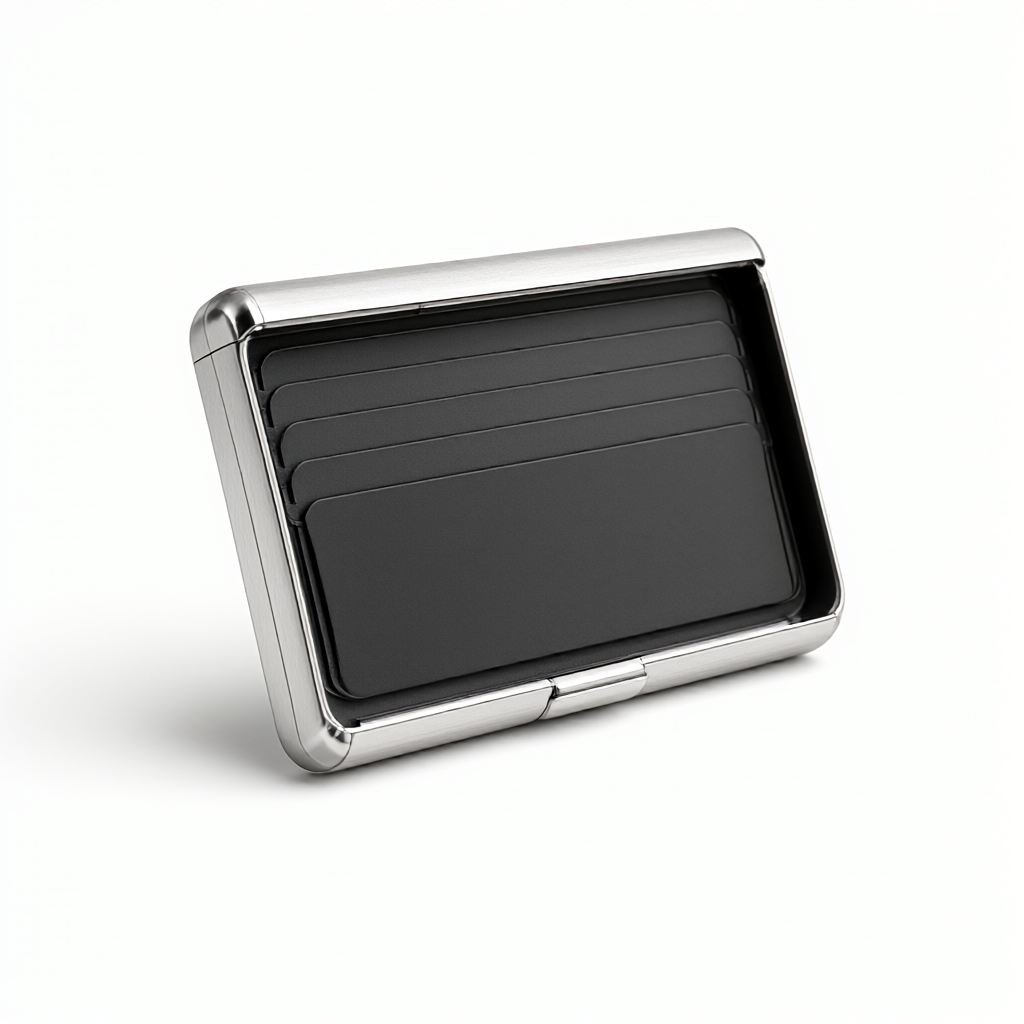
Metallic hard shells — especially those made from aluminum or stainless steel — create a natural Faraday cage effect. When your credit card rests inside the metal enclosure, radio waves from potential skimming devices can’t reach the card’s NFC or RFID chip. That’s why an RFID-blocking metal card holder provides passive protection without batteries or electronic components.
However, not every “metal” wallet truly blocks RFID. Some use thin plating or partial coverage that leaves gaps. According to testing frameworks referenced by the FTC, consumers should verify that the shielding actually encloses all card faces on multiple sides. Full-wrap or multi-layer designs tend to deliver more reliable blocking.
It’s also worth checking whether a given model interferes with wireless charging. Most aluminum and carbon fiber card holders do affect Qi coils if you leave the wallet in your back pocket, but you can simply remove it during charging. See our comparison of minimalist wallets for additional context on everyday carry form factors.
Key Specifications for Choosing a Hard Case Card Holder
Before narrowing down options, know which specs actually matter:
- Card capacity: Standard CR80 cards measure 85.6 × 54 mm. A typical single-layer aluminum holder carries 1–6 cards; a double-layer or spring-loaded model may hold 6–12.
- Material thickness: Anodized aluminum sheets range from about 1.0 to 2.0 mm. Thicker panels resist denting but add slight weight.
- Weight: Aluminum models usually land between 30–60 grams; carbon fiber variants can be lighter at 25–45 grams; titanium sits heavier around 50–70 grams.
- Finish quality: Anodizing hardness, surface smoothness, and edge rounding determine both feel and long-term scratch resistance.
- RFID test results: Reputable suppliers provide third-party verification against ISO/IEC standards rather than marketing claims alone.
For a male buyer seeking a men’s business card holder, look for brushed or matte finishes, a slim silhouette that slides easily into a suit pocket, and enough capacity for a few business cards alongside personal IDs. Options like a black card holder offer versatility across casual and formal settings.
Standards and Requirements for EDC Wallet Manufacturing

Quality hard case card holders follow recognized manufacturing standards rather than loose consumer-label claims:
- ISO 9001 certification ensures the factory operates under a documented quality management system covering materials, processes, and inspections.
- BSCI audits verify social compliance in the supply chain — important for responsible buyers.
- Material safety follows REACH / RoHS compliance, meaning harmful substances like lead and cadmium are restricted in alloys and coatings.
- Independent material testing, such as SGS checks, confirms alloy composition and coating integrity.
When evaluating wallets and card holders for procurement, these certifications signal that a manufacturer takes consistency seriously. The same applies to a card holder and coin purse combo — you still expect metal quality and finish standards even when a small compartment is added.
If you’re comparing construction approaches, our piece on different types of leather wallets highlights how rigid carriers differ structurally from folded leather designs.
Card-Only vs. 2-in-1 Card-and-Coin Holders
A 2 in 1 card holder and wallet combines the rigid card sleeve with a small removable coin pouch or cash slot. This arrangement suits travelers who need transit tickets or emergency bills on hand. However, adding a coin compartment increases thickness and shifts center balance, so you lose some of the flat-presentation advantage that makes a hard case popular in the first place.
A dedicated card holder coin pouch attachment (often magnetic or zippered) preserves modularity — you can clip it on or off depending on the day. Expect an extra 8–15 mm of depth with any coin-added configuration. For daily commuters who rarely carry coins, a pure card-only version remains the slimmest choice.
For size-specific planning, consult our wallet size width and height resource to match dimensions with your pocket layout.
Related Considerations When Picking a Style
Design variety exists beyond material choice. Here are common directions buyers explore:
- Chain accessories: A card holder chain lets you attach the wallet to a belt loop or bag strap, reducing the risk of misplacement and adding a tactical aesthetic.
- Wrist options: A wrist card holder incorporates a strap or loop for secure grip — useful for outdoor activities, cycling, or event venues with crowd movement.
- Color and finish: Beyond a standard card holder black, anodized aluminum offers silver, gunmetal, blue, red, and other tones. Powder-coated or UV-printed surfaces open further palette options.
- Custom branding: Laser engraving or embossing turns a plain unit into branded merchandise — a popular choice for corporate gifts or promotional campaigns.
- Compact carrying: Buyers searching for a green card holder wallet or other accent colors often do so for team kits, events, or visual identification within a group.
If you also need a larger carry solution, check out our overview of the big skinny world wallet for a contrast between slim rigid formats and flexible folio designs. Similarly, our 12 card bifold wallet review covers higher-capacity options for users who still want structure.
Who Should Choose a Hard Case Card Holder Over a Traditional Wallet?
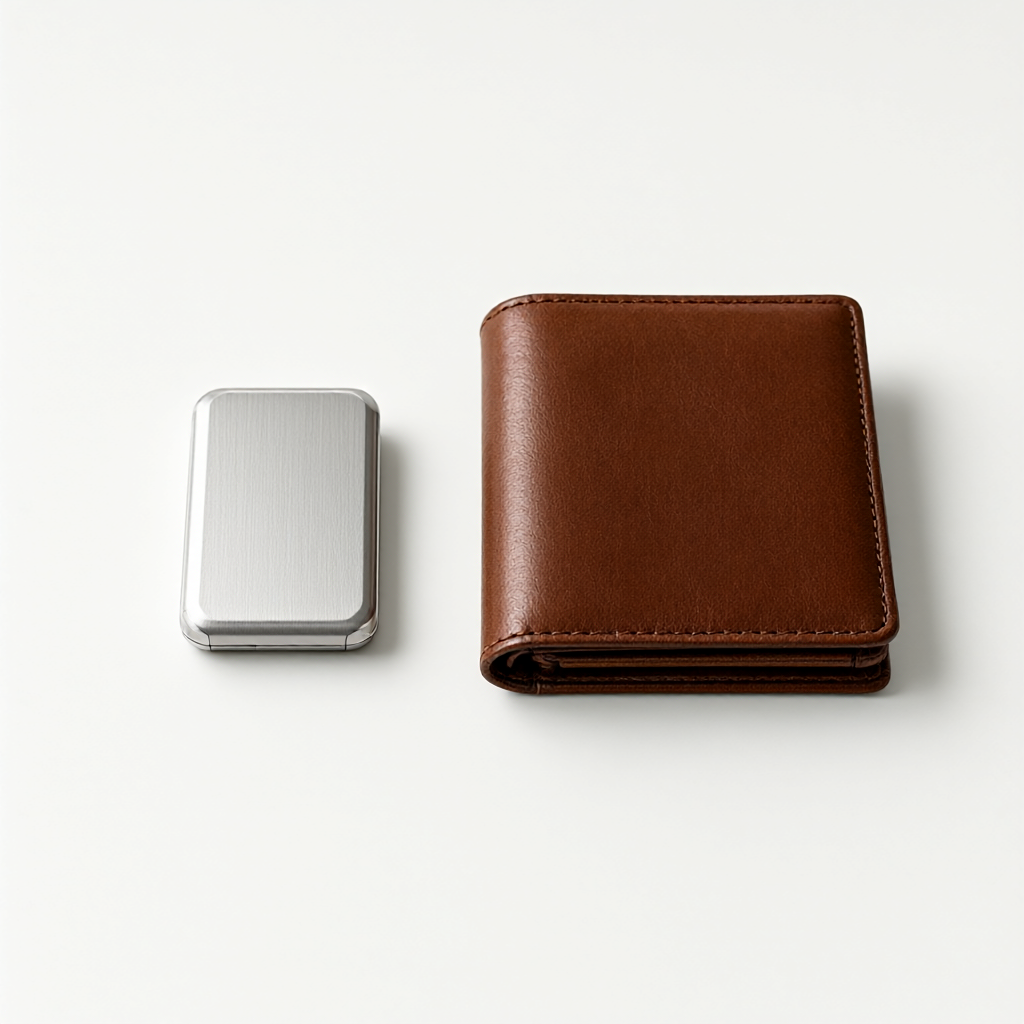
Hard shell card holders suit people who:
- Carry three to six cards regularly and don’t need hundreds of bills stored.
- Want faster one-handed card retrieval without unfolding anything.
- Value scratch resistance and pocket-ready slimness over plush leather texture.
- Need consistent ID visibility in professional environments.
- Require reliable RFID protection without relying on electronic features.
They are less ideal if you routinely carry large stacks of receipts, loyalty cards, folding cash, or travel documents that exceed standard dimensions. In those cases, a hybrid approach — pairing a slim rigid holder with a separate document folder — works better.
How Long Does Custom Manufacturing Take and What Is the Typical MOQ?
For private-label or corporate procurement, turnaround depends on complexity:
- Sample production: Roughly 5–7 days for a prototype in your chosen material and finish.
- Bulk manufacturing: Typically 25–35 days after artwork approval and sample confirmation, varying by order volume.
- Minimum order quantity: Many manufacturers start at around 100 pieces, though tooling setup for engravings or custom molds may justify larger runs for cost efficiency.
Lead times shift if you request unusual alloys, complex surface treatments, or intricate packaging design. Clarify expectations upfront and confirm whether expedited scheduling is available for tight retail windows.
Here’s How the Industry Works — and How We Meet These Standards
As a specialist in EDC wallet manufacturing since 2014, we produce minimalist aluminum wallets, carbon fiber card holders, and titanium money clips for brands, Amazon sellers, and distributors worldwide. Our process covers the full pipeline from concept to shipment.
We machine parts in-house using CNC equipment, handle laser engraving and UV printing for branding, and perform anodizing and surface finishing under controlled conditions. Materials meet REACH and RoHS requirements, and our facility holds ISO 9001 certification with BSCI audit records. Each order goes through inspection steps aligned with standard manufacturing QA practices.
When clients bring a sketch, logo file, or material preference, we translate that into a functional prototype within about a week. From there, pilot runs validate tolerances before scaling to full production. Typical bulk orders ship in roughly a month once sign-off is complete. Packaging, labeling, and FBA prep support are included so the product lands ready for market.
Our export history spans over a decade and 30 countries, with monthly output in the hundreds of thousands of units. Whether you need a simple engraved business card sleeve or a fully customized minimalist wallet line, the path moves from brief to prototype to delivery without unnecessary delays.
How to Evaluate Build Quality and Source with Confidence
When specifying hard case card holders for retail or private label, look beyond aesthetics. The difference between a $3 promotional piece and a $18 premium carrier comes down to materials, tolerances, and supply-chain transparency.
Material Verification and Red Flags
| Checkpoint | What to Request | Red Flag |
|---|---|---|
| Alloy composition | SGS certificate matching EN AW-6061 / 6063 aluminum spec | No material traceability documentation |
| Anodizing thickness | Cross-section measurement showing ≥ 10 µm layer (MIL-A-8625 reference) | Coating peels after basic flex testing |
| Carbon fiber layup | Visual confirmation of 2×2 or satin weave, resin content documented | Bubbles, warping, or uneven gloss indicating poor consolidation |
| Titanium grade | Mill cert showing ASTM B348 Grade 1 or Grade 2 purity | Mislabelled alloy with unexplained magnetic response |
| RF shielding coverage | Test report against ISO/IEC 14443 Type A/B or ISO/IEC 15693 frequency bands | Seller claims “RFID protection” without test data |
| RoHS / REACH compliance | Third-party lab report confirming lead, cadmium, phthalate limits | Reluctance to share chemical safety documentation |
Inability to provide SGS alloy certificates, missing RoHS test reports, or refusal to share factory layout and QC process steps are strong indicators to avoid. Reputable contract manufacturers treat this documentation as table stakes.
Quick Defect-Rate Benchmarks
For mass-produced metal wallets, typical incoming-quality targets are:
- Surface finish defects (scratches, anodize runs): ≤ 2 % per batch
- Mechanism failures (slider stickiness, spring fatigue): ≤ 1 %
- Dimensional variance: within ± 0.3 mm of nominal CR80 card envelope
If a supplier quotes rates above those thresholds without explaining corrective action plans, request a pilot run before committing to volume.
Price Tiers and Budget vs Premium Options
Hard case card holders generally fall into three market brackets based on materials, finishing, and certification depth:
- Entry tier ($2–$5 USD at volume): Basic 1050 or 6063 aluminum with standard anodizing, single-layer card slot, no RFID test documentation. Common in promotional-gift channels.
- Mid tier ($5–$12 USD at volume): 6061 aluminum or入门 carbon fiber construction, confirmed anodizing hardness, visible RFID test results, tighter tolerances, and optional laser branding. This is the most common OEM band for Amazon sellers and DTC brands.
- Premium tier ($12–$25+ USD at volume): Grade 2 titanium, full Faraday-cage geometry, multi-layer carbon fiber with resin infusion, Mil-Spec anodizing, individually serialized QR codes, and full material-plus-RoHS test dossiers. Typical for luxury EDC lines and corporate-gift programs requiring executive-grade presentation.
Target customers at the mid tier usually balance cost competitiveness with verifiable quality signals. The premium segment justifies higher unit costs through longer warranty periods, stricter incoming inspection, and enhanced unboxing experiences.
Capacity and Card Compatibility Notes
Credit and ID cards conform to the ISO/IEC 7810 ID-1 format (85.6 × 54 mm). Buyers should confirm:
- Single-card-slot designs accommodate 1–4 cards comfortably; pushing past six compresses tension springs and may distort card edges over time.
- Double-deck or expandable frames handle 6–12 cards but increase pocket profile by roughly 4–8 mm.
- Business-card formats exceed ISO/IEC 7810 dimensions; rigid sleeves labeled “card holder” may not accept 90 × 50 mm stock without modification.
- Contactless transit cards follow ISO/IEC 14443 Type A/B; full-metal enclosures block these signals entirely, so verify whether travelers need selective open zones near the front face.
Durability and Everyday Carry Use Cases
Rigid wallets excel when carriers prioritize pocket presence, one-handed retrieval, and resistance to bent corners. They are commonly chosen by:
- Commuters who remove their wallet frequently from jacket or pants pockets.
- Outdoor enthusiasts who need gear that survives rain, sand, and pack abrasion better than full-grain leather.
- Corporate teams ordering branded merchandise where logo legibility matters across repeated handling.
- Travelers seeking consistent RFID shielding without battery-dependent electronics.
Drawbacks include slightly higher initial weight versus woven card wallets, reduced bill-carry capacity, and the potential for metal-on-metal noise in quiet environments. Users who regularly carry large stacks of receipts, folding currency, or passport-size documents will find a hybrid approach — pairing a slim rigid holder with a separate document sleeve — more practical than going fully minimalist.
Materials Used in Hard Case Card Holders
The material choice dictates weight, durability, aesthetic finish, RF shielding performance, and unit cost. Below is a practical comparison used by product developers and OEM buyers:
| Material | Weight Range (empty) | Typical Thickness | Anodizing / Finish Options | RFID Shielding | Relative Cost Tier |
|---|---|---|---|---|---|
| Aluminum 6061 / 6063 | 30–60 g | 1.0–2.0 mm | Black, silver, blue, red, gunmetal, matte | Inherent (Faraday cage) | Low – Mid |
| Forged Carbon Fiber | 25–45 g | 1.5–2.5 mm | Gloss black, satin, textured | None unless laminated with metal layer | Mid – Premium |
| Titanium Grade 1 / 2 | 50–70 g | 1.0–1.5 mm | Natural, bead-blasted, anodized colors | Inherent | Premium |
| Stainless Steel 304 | 60–90 g | 0.8–1.5 mm | Brushed, mirror, PVD-coated | Inherent | Mid – Premium |
| Polymer / PEEK Composite | 20–35 g | 2.0–3.0 mm | Custom colors, matte | Requires embedded metal mesh | Low – Mid |
Aluminum remains the dominant material for volume OEM production because it balances affordability, machinability, and natural RF-blocking properties. The anodizing process creates a hard oxide layer (typically ≥ 10 µm per MIL-A-8625 Type II specs) that provides scratch resistance and color consistency.
Carbon fiber offers the highest strength-to-weight ratio but requires lamination with a metal foil or conductive coating to achieve reliable RFID shielding. Pure carbon fiber is non-conductive and does not block NFC or RFID frequencies on its own.
Titanium delivers premium feel and corrosion resistance at a significantly higher raw-material cost. It is inherently biocompatible and does not require anodizing for surface hardness, though coloring anodizes are available.
For readers comparing rigid carriers to traditional folded formats, our article on different types of leather wallets outlines how material choices diverge between leather bi-folds and metal hard cases.
How RFID-Blocking Technology Works in Metal Card Holders
RFID (Radio-Frequency Identification) and NFC (Near-Field Communication) chips embedded in modern credit cards, passports, and access badges operate at two primary frequency bands:
- 13.56 MHz — used by ISO/IEC 14443 Type A and Type B (contactless payment cards, transit cards, boarding passes)
- 860–960 MHz — used by ISO/IEC 15693 and EPC Gen2 (inventory tags, some secure access credentials)
Metal card holders achieve RFID blocking through the Faraday cage principle. When a conductive enclosure fully surrounds an RFID-enabled card, incident radio waves induce eddy currents in the metal that cancel the incoming field, preventing the chip from powering up and responding. Aluminum, stainless steel, and titanium all provide this effect naturally when the enclosure achieves sufficient continuity.
Critical specifications for effective RF shielding:
- Full circumferential coverage: Gaps greater than 2–3 mm on any card-facing side can allow signal leakage at 13.56 MHz.
- Metal thickness: Aluminum sheets of ≥ 1.0 mm provide adequate attenuation (> 40 dB) at payment-card frequencies without flex cracking.
- Joint integrity: Slider rails, hinge points, and screw penetrations must be designed to minimize aperture size; even small openings can degrade shielding effectiveness.
- Multi-layer designs: Some manufacturers laminate a thin copper or nickel foil between carbon fiber layers to add RF blocking where the base material is non-conductive.
Independent verification should reference testing against ISO/IEC 14443 Type A/B protocols at 13.56 MHz and ISO/IEC 15693 at 13.56 MHz. The FTC advises consumers to look for third-party test reports rather than relying on marketing language such as “RFID-safe” or “skim-proof” without supporting data.
It’s also worth noting that most metal card holders will interfere with wireless charging (Qi standard at 110–205 kHz). This is expected behavior — the same conductive shield that blocks RFID also induces heating in a Qi coil. Remove the wallet from your pocket before charging, or choose a polymer-based holder if wireless charging compatibility is a priority.
For additional context on minimalist carry ecosystems, see our minimalist wallets overview.
Material Verification Checklist
| Checkpoint | What to Request | Acceptable Benchmark | Red Flag |
|---|---|---|---|
| Aluminum alloy | SGS certificate matching EN AW-6061 or 6063 | Verified Mg/Si ratio; tensile strength ≥ 240 MPa (T6) | No material traceability |
| Anodizing thickness | Cross-section micrograph or eddy-current measurement | ≥ 10 µm per MIL-A-8625 Type II | Coating flakes after tape test |
| Carbon fiber layup | Visual + resin-content documentation | 2×2 or satin weave; resin ≤ 35 wt% | Visible bubbles, warpage, uneven gloss |
| Titanium grade | Mill cert per ASTM B348 | Grade 1 (≤ 0.2% Fe) or Grade 2 (≤ 0.3% Fe) | Unexplained magnetic attraction |
| RFID shielding | Test report against ISO/IEC 14443 Type A/B | Attenuation ≥ 40 dB at 13.56 MHz | Seller cannot produce test data |
| Chemical compliance | RoHS / REACH lab report | Pb < 1000 ppm, Cd < 100 ppm, specific phthalate limits met | Refusal to share documentation |
Procurement Framework: MOQ, Lead Time, and Cost Analysis
When sourcing hard case card holders through OEM or ODM manufacturers, three parameters dominate purchasing decisions: minimum order quantity, sample-to-production lead time, and per-unit cost at volume.
MOQ Tiers by Configuration
| Configuration | Typical MOQ | Tooling / Setup Cost | Notes |
|---|---|---|---|
| Stock design, no customization | 100–500 pcs | $0 | Ready-to-ship or quick-turn blank units |
| Laser engraving only (logo on existing model) | 100–300 pcs | $0–$150 | No new tooling; artwork file required |
| Custom anodizing color + logo | 300–500 pcs | $200–$500 | Color match requires physical Pantone or RAL reference |
| Fully custom mold / CNC fixture | 500–1,000 pcs | $1,500–$5,000 | New slider mechanism, unique shape, or proprietary closure |
| Multi-material build (carbon + metal sandwich) | 300–1,000 pcs | $800–$2,500 | Lamination tooling and curing fixture required |
Lower MOQs (starting at 100 pcs) are achievable when the manufacturer maintains a library of existing CNC fixtures and stock anodized blanks. Higher MOQs reduce per-unit cost through amortized setup and optimized material yield.
Lead-Time Comparison by Factory Type
| Factory Profile | Sample Lead Time | Bulk Production Lead Time | Typical MOQ | Best Suited For |
|---|---|---|---|---|
| Large-volume Chinese OEM | 7–14 days | 25–40 days | 500+ pcs | Established brands with forecasted demand |
| Mid-tier specialized EDC maker | 5–7 days | 20–30 days | 100–500 pcs | Amazon FBA sellers, DTC startups |
| Small boutique workshop | 10–21 days | 30–45 days | 50–200 pcs | Limited editions, high-complexity custom work |
| In-house prototype shop (no bulk) | 3–5 days | N/A | 1–50 pcs | Design validation, investor samples |
Expedited sampling is often available at a premium (approximately 30–50 % surcharge) when artwork and material selections are finalized before engagement. Confirm expedited scheduling availability during the initial inquiry to protect tight retail launch windows.
Cost-Per-Unit Breakdown by Material (at 500 pcs)
| Component | Aluminum 6061 (~$4.50–$7.00) | Carbon Fiber Laminate (~$6.00–$9.50) | Titanium Grade 2 (~$14.00–$22.00) |
|---|---|---|---|
| Raw material | $0.80–$1.50 | $1.20–$2.50 | $4.00–$7.00 |
| CNC machining | $1.00–$2.00 | $0.50–$1.00 (reduced machining) | $2.00–$4.00 |
| Anodizing / finishing | $0.50–$1.00 | $0.30–$0.80 (if laminated) | $0.20–$0.50 (bead blast) |
| Assembly & mechanism | $0.80–$1.50 | $0.60–$1.20 | $0.80–$1.50 |
| Packaging (retail box) | $0.30–$0.80 | $0.30–$0.80 | $0.50–$1.00 |
| QA / inspection | $0.10–$0.30 | $0.10–$0.30 | $0.15–$0.40 |
These figures represent factory-gate costs in mainland China for orders around 500 pieces. Freight, import duties, and FBA prep services are additional.
Style Variations: Chain, Wrist, Business-Formal, and Color Choices
Design variety in hard case card holders extends well beyond material selection. Buyers and end users commonly evaluate these style dimensions:
- Chain accessories: A card holder chain (typically 14–18 inch braided or rope-style) attaches the wallet to a belt loop, pocket, or bag strap. This reduces misplacement risk and adds a tactical or industrial aesthetic popular in outdoor EDC communities. Chain attachment points are usually reinforced rivets or embedded eyelets within the aluminum frame.
- Wrist options: A wrist card holder incorporates an integrated strap, loop, or adjustable band for secure grip during active use. These are favored by cyclists, hikers, and event staff who need hands-free accessibility. The wrist loop adds approximately 5–10 mm to the wallet’s longest dimension.
- Business-formal finishes: A men’s business card holder typically features a brushed or bead-blasted matte finish in black, gunmetal, or silver. The silhouette is rectangular with rounded corners (radius 2–4 mm) to prevent pocket snagging. Capacity is usually 4–8 cards, with a dedicated slots arrangement for IDs and business cards.
- Color and anodizing: Beyond standard black card holder and natural aluminum silver, anodizing baths can produce blue, red, green, purple, gold, and gradient combinations. A green card holder wallet or other accent colors are frequently selected for team identification, promotional events, or brand-aligned merchandise. UV printing and powder coating offer additional palette expansion but sit atop the anodized layer rather than replacing it.
- Custom branding: Laser engraving (fiber or CO₂) produces permanent markings at depths of 0.05–0.2 mm. UV direct-to-object printing enables full-color logos on flat surfaces. Both methods are compatible with aluminum and titanium; carbon fiber accepts laser marking with careful power adjustment to avoid resin discoloration.
For readers exploring larger-format carry solutions alongside slim rigid options, our review of the big skinny world wallet and our 12 card bifold wallet guide provide useful contrasts between minimalist hard cases and higher-capacity folded designs.
Who Should Choose a Hard Case Card Holder?
Hard shell card holders are best suited for individuals and organizations that:
- Carry three to eight cards regularly and rarely store large stacks of cash or receipts.
- Prioritize one-handed card retrieval and pocket invisibility over plush texture or high capacity.
- Require consistent RFID protection for contactless payment cards and access badges.
- Operate in environments where scratch resistance matters (outdoor work, frequent pocket insertion/removal).
- Need branded merchandise for corporate gifting, promotional campaigns, or retail private label.
They are less appropriate for users who routinely carry 15+ cards, folding currency, loyalty cards, travel documents exceeding CR80 dimensions, or extensive photo collections. In those scenarios, a hybrid strategy — pairing a slim rigid card holder with a separate document folio or money clip — delivers the best of both worlds.
Frequently Asked Questions
How many cards does a hard case card holder realistically hold?
Most metal hard case holders are sized for 5 to 8 cards at a loaded thickness of roughly 12–18 mm, depending on shell gauge and whether the design uses an internal spring plate. Pushing past the stated capacity is what breaks the hinge or stretches the frame, so the useful number is the comfortable load, not the maximum a sample will accept once.
Does a metal hard case block RFID on every side?
Only a fully enclosing shell does. A metal frame with an open face, exposed hinge line or uncovered card slot leaves a path for a reader at close range, so shielding performance depends on the enclosure design rather than the material alone. Ask for attenuation data measured at 13.56 MHz on the finished assembly, not on a flat material sample.
What MOQ and lead time should a B2B buyer expect?
300 pcs per SKU for full OEM customization — shell finish, laser engraving, logo plate and retail packaging — with a 100 pcs trial order available for stock finishes. Sampling runs about 7 to 10 days and bulk production 15 to 25 days after sample approval; both are estimates that vary by finish process and order volume, so book them against your in-store date rather than the fastest quoted figure.
Sources & References
- FTC — www.ftc.gov
- wallets that protect cards — topedcwallet.com
- minimalist wallets — topedcwallet.com
- different types of leather wallets — topedcwallet.com
- wallet size width and height — topedcwallet.com
- big skinny world wallet — topedcwallet.com
- 12 card bifold wallet — topedcwallet.com
- Get a Free Quote → — topedcwallet.com
From article to product
Turning this into a product?
Most of what is written here is the difference between a sample that works and one that does not. We can build either — the useful one costs the same.
Keep reading
More on buying guides
wallet with trigger
How Does a Trigger Wallet Work? What Is the Pop-Up Mechanism? The core of…
Readbest bifold wallet for women
What Is a Bifold Wallet? The term “bifold” refers to the fold: the wallet…
ReadMen’s trifold wallets with zipper compartments vs. bifold
At a Glance The three dominant men’s wallet formats differ in panel count, depth,…
Read
About the author
TOPWALLET Editorial Team
TOPWALLET's editorial and engineering desk writes from bench testing at the Shenzhen (Longgang) facility: pull-force and cycle testing, 13.56 MHz shielding measurements, finish trials and factory audits, rather than supplier spec sheets. Every specification in these guides is one we write on a purchase order.
Written on the floor
This article was written by our production and QC team — the people who spec tolerances, run the finishing line and inspect every batch. Where it states a capacity, a pull force or a lead time, it comes from a measurement we made, not a supplier’s catalogue. If a number here disagrees with what your own supplier told you, tell us; several of these articles started as a correction from a buyer.
See how the factory works · Inspection process · Sourcing FAQ
Turning this into a product?
Most of what is written here is the difference between a sample that works and one that does not. We can build either — the useful one costs the same.