

Credit Card Holder: What Is the Quick Answer?
A credit card holder is a slim, compact pocket organizer designed to carry a small number of cards — typically between 2 and 12 — in a minimalist profile that fits easily into a front or back pants pocket. It strips away the bulk of a traditional bi-fold wallet while keeping daily-carry essentials accessible. For buyers in the EDC (Everyday Carry) space, it is one of the highest-volume, fastest-turnover product categories, driven by consumer demand for simplicity and low-profile design.
A credit card holder differs from a wallet primarily in capacity and form factor. Where wallets hold cash, multiple card slots, coins, and receipts, card holders focus on cards alone, often in rigid or semi-rigid constructions made from aluminum, carbon fiber, titanium, leather, or silicone. They range from passive sleeves that simply wrap cards to active mechanisms with springs, hinges, or弹射 designs that present cards with a thumb flick.
Credit Card Holder: How Does It Work in Detail?
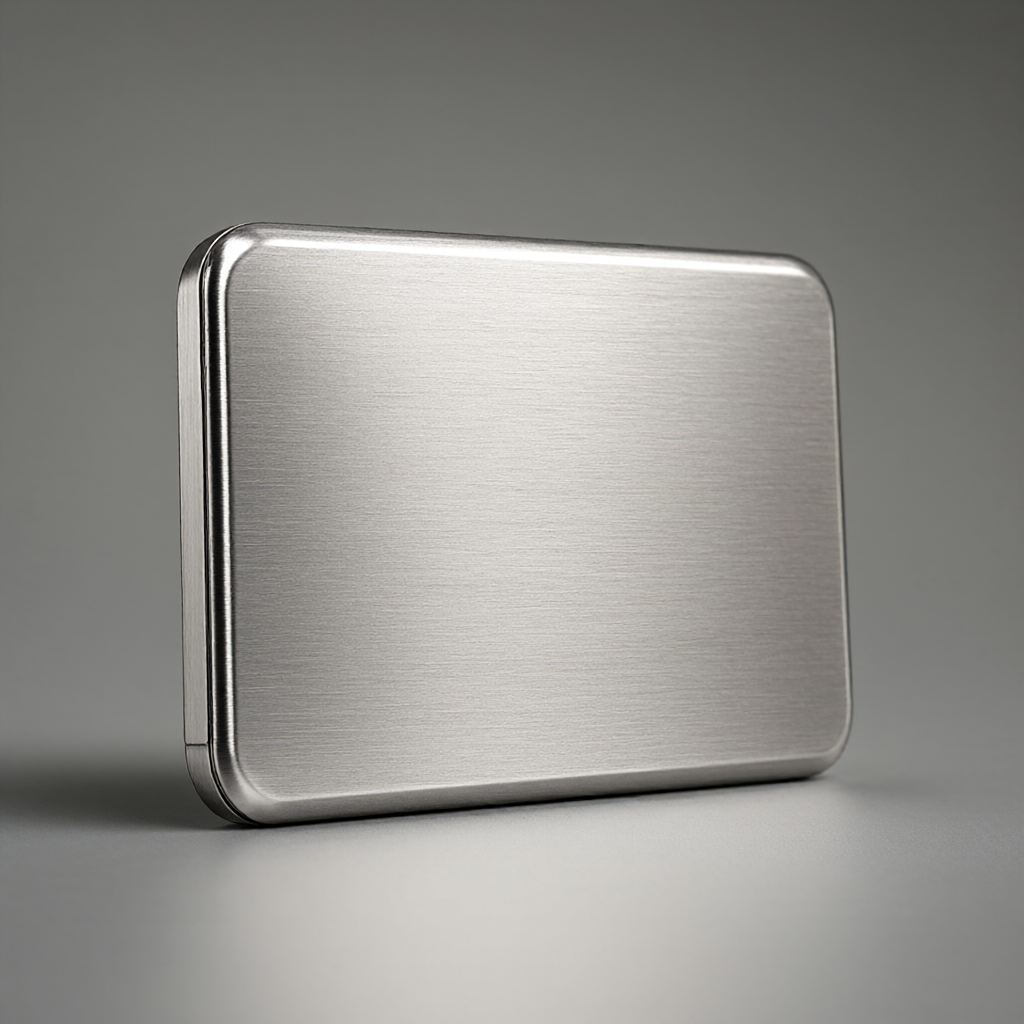
How does a credit card holder work?
Credit card holders operate on a few core mechanical principles. The simplest type is a passive sleeve — a tight-fitting pocket made of leather, silicone, or fabric that holds cards through friction. These have zero moving parts and cost the least to manufacture, but they require the user to dig for cards.
More sophisticated designs use spring-loaded card trays. A metal or polymer plate sits under tension against a stack of cards. When the user pushes the top card upward, the remaining cards follow slightly, making the next card reachable without removing the stack. This is the most common mechanism in minimalist metal wallets and is what most consumers expect when they buy a “card holder” in the EDC space.
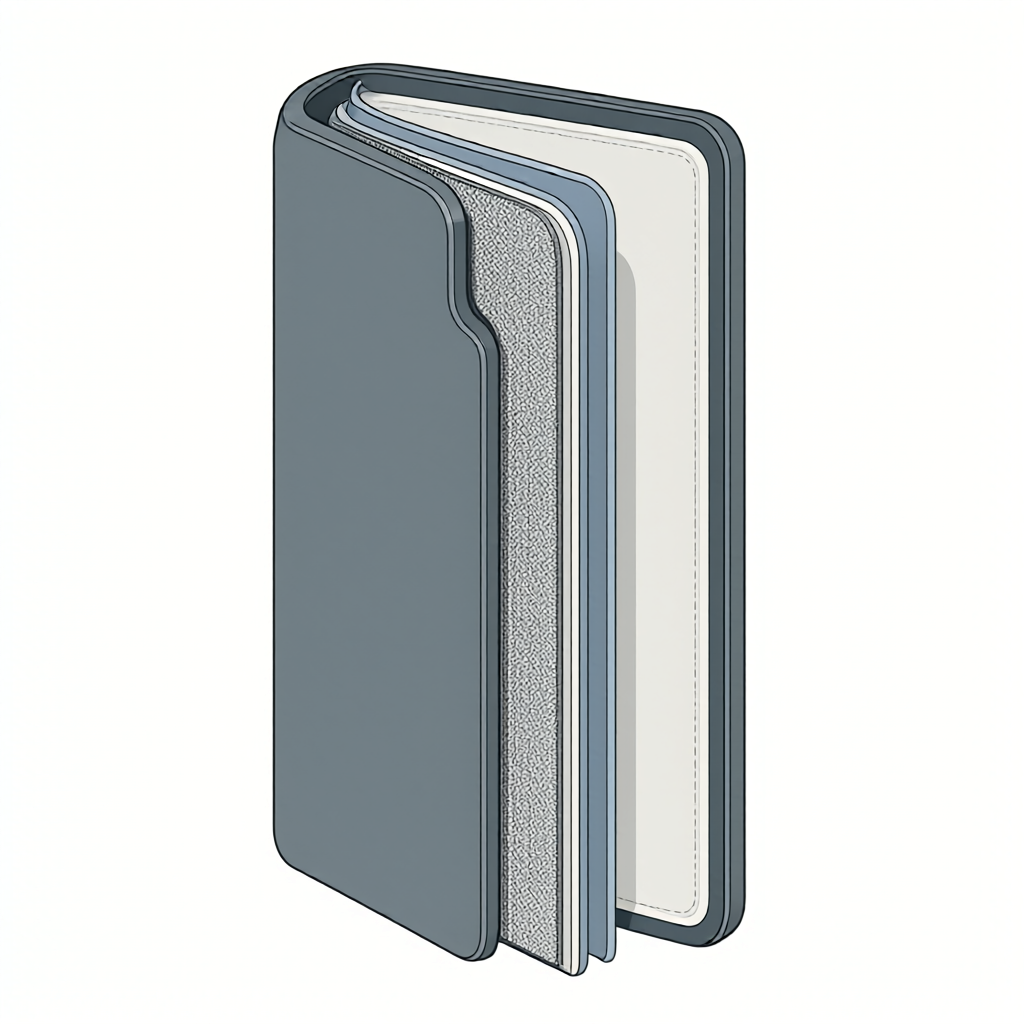
A third category is the hinged flip-open design, where the holder opens like a slim book to reveal cards on both sides. These offer full visibility and easy card access but add a hinge failure point and slightly more bulk than spring-loaded versions.
For B2B buyers specifying products for retail or Amazon FBA channels, the spring-loaded mechanism is the default recommendation unless the brand positioning targets ultra-minimalist users who prefer sleeve-only designs.
What’s the difference between a card holder and a wallet?
The distinction is functional, not semantic. A wallet is designed for maximum storage — cash bills, multiple card slots, a coin pouch, ID window, and often a money clip. It folds into a bi-fold or tri-fold configuration and sits in a back pocket, creating noticeable bulk.
A credit card holder is designed for minimal storage — usually 2 to 10 cards, no cash compartment, no coin pocket. It is engineered to sit flat in a front pocket or slide into a bag insert. The trade-off is clear: card holders sacrifice cash capacity and organization for dramatically reduced thickness and weight.
From a procurement standpoint, this distinction matters because it determines material selection, mechanism complexity, and price tier. Card holders tend to use harder, more structural materials — aluminum, carbon fiber, titanium — because rigidity is required to maintain a slim profile. Wallets can rely on softer materials like full-grain leather because the foldable structure provides inherent flexibility.
For more detail on minimalist wallet categories and how they relate to card holders, see our men’s minimalist wallets materials and specs guide.
Does RFID blocking actually work?
RFID-blocking card holders use a layer of conductive material — typically a thin metal mesh or ferromagnetic film — embedded within the wallet’s construction. This layer creates a Faraday cage effect that attenuates the 13.56 MHz radio frequency used by contactless payment cards, preventing unauthorized scanners from reading card data at close range.
Independent testing using consumer-grade RFID readers has shown that properly constructed blocking layers can reduce signal strength by 20 to 40 dB, which is sufficient to prevent most contactless read attempts within typical scanning distance. However, the effectiveness depends on complete signal coverage — any gap in the blocking layer, such as an open slot or thin seam, can create a leakage point.
Buyers should note that there is no universal certification standard for RFID blocking claims in the consumer goods space. Unlike EMVCo certification for contactless payment terminals, there is no mandatory third-party verification for RFID-blocking wallets sold to end consumers. Reputable manufacturers can provide attenuation test data from independent labs, but buyers should request this documentation rather than accepting marketing claims at face value.
The PCI Security Standards Council outlines requirements for contactless payment security, and while these do not directly regulate wallet accessories, they do establish the technical baseline for the frequencies and protocols that RFID-blocking products aim to counteract. See PCI SSC guidelines for reference.
Credit Card Holder: Which Specifications Matter Most?
What are the key specs for credit card holders?
When evaluating or specifying a credit card holder for a product line, these are the specification parameters that drive cost, manufacturability, and end-user satisfaction:
| Specification | Typical Range | Notes |
|---|---|---|
| Card capacity | 2–12 cards | Most popular: 4–8 |
| Thickness (loaded) | 6–18 mm | Front-pocket friendly under 12 mm |
| Weight | 30–120 g | Aluminum ~60 g, carbon fiber ~40 g, leather ~80 g |
| External dimensions | 85–95 mm × 55–65 mm | Standard credit card size is 85.6 × 53.98 mm |
| Material options | Aluminum, carbon fiber, titanium, leather, silicone, PC | Each has distinct cost and aesthetic profile |
| Mechanism type | Passive sleeve, spring-loaded, hinged | Spring-loaded is industry default for metal holders |
| RFID blocking | Optional, 20–40 dB attenuation | Not universally certified |
| Surface finish | Anodized, brushed, polished, matte | Aluminum anodizing is standard for metal holders |
| Logo application | Laser engraving, UV printing, embossing | Laser engraving is most common for metal and carbon fiber |
Card capacity is the most frequently negotiated spec. Four to six cards is the sweet spot for minimalist users; eight to twelve appeals to users who carry work ID, transit card, and backup payment cards. Exceeding ten cards significantly increases mechanism stress and may require a heavier-duty spring or wider body.
Thickness under load is the critical differentiator between a card holder and a wallet. A well-designed aluminum card holder loaded with six cards should measure under 10 mm. If it exceeds 14 mm, it is competing with wallet territory and losing its minimalist positioning.
Material selection drives both unit cost and perceived value. Aluminum offers the best cost-to-durability ratio for mass-market positioning. Carbon fiber commands a premium price and appeals to performance-oriented EDC users. Titanium sits at the high end for luxury positioning. Leather bridges casual and professional aesthetics but requires different tooling and quality control procedures.
For manufacturing context on EDC wallets and sourcing considerations, see our EDC wallets and minimalist wallet manufacturing guide for B2B buyers.
Credit Card Holder: Which Standards and Certifications Apply?
What standards apply to credit card holders?
Credit card holders are not regulated products in most jurisdictions, but several standards and compliance frameworks are relevant depending on materials, claimed features, and target markets:
Material safety and chemical compliance:
- REACH (EU) and RoHS (EU) apply to metals, plastics, coatings, and adhesives used in consumer goods sold in Europe. Buyers targeting EU markets must verify that supplier materials are REACH-compliant and that restricted substances (lead, cadmium, certain phthalates) are absent from components.
- SGS testing is commonly requested by B2B buyers as independent verification of material safety. A third-party test report covering heavy metals and restricted chemicals is standard procurement documentation.
RFID and contactless payment standards:
- ISO/IEC 14443 defines the physics and signaling for proximity contactless smart cards, including the 13.56 MHz frequency used by credit and debit cards with contactless functionality. This is the technical baseline for understanding what RFID-blocking materials must attenuate. See ISO/IEC 14443.
- EMVCo specifications govern contactless payment card interoperability. While EMVCo does not certify wallet accessories, understanding its framework helps buyers evaluate whether a blocking layer might inadvertently interfere with legitimate contactless payment transactions at point-of-sale terminals.
Quality management:
- ISO 9001 certification for the manufacturing facility indicates a documented quality management system covering production processes, incoming material inspection, and finished-goods verification. This is a baseline expectation for B2B sourcing relationships.
- BSCI (Business Social Compliance Initiative) audit coverage signals that the facility meets recognized labor and ethical manufacturing standards, which is increasingly required by European and North American retail buyers.
Product labeling and marketing claims:
- RFID-blocking claims are unregulated in most markets, but buyers should ensure suppliers provide test data rather than unsubstantiated assertions. Ambiguous claims like “complete RFID protection” can create liability if a consumer experiences a successful scan despite the product.
- Material composition claims (e.g., “genuine leather” vs. “synthetic leather”) are subject to standard consumer protection regulations in major markets and should be verified against actual product construction.
Credit Card Holder: What Else Should Buyers Consider?
What should you consider when choosing a credit card holder?
Buyers evaluating credit card holders for their product line should weigh these factors against their target market positioning:
Mechanism reliability over time. Spring-loaded card holders are subject to repeated cycling — typically 5,000 to 20,000 actuations over the product’s usable life. The spring material (usually stainless steel or music wire) and its heat treatment determine fatigue resistance. Low-cost alternatives may use softer springs that lose tension within months. For a 12-month retail warranty period, the mechanism should demonstrate consistent ejection force throughout that timeframe.
Card damage risk. Metal card holders with sharp edges or tight tolerances can scratch card surfaces or, in rare cases, degrade magnetic stripes on older cards. Smooth, anodized, or rubber-coated interior surfaces mitigate this risk. Cards with embedded chips (EMV) are not affected by contact with metal surfaces, but scratch-resistant interior lining is still recommended for consumer satisfaction.
Material longevity and wear patterns. Aluminum anodized finishes are highly scratch-resistant but can show wear at high-contact edges over extended use. Carbon fiber is extremely durable with minimal cosmetic change over time. Leather develops a patina that some users prefer and others view as degradation — this is a market-positioning decision. Silicone is durable and water-resistant but attracts lint and dust.
Capacity-to-thickness trade-off. Adding cards always increases thickness. A six-card aluminum holder may measure 8 mm unloaded and 11 mm loaded. An eight-card version of the same design may jump to 14 mm. The jump from 11 to 14 mm is perceptible in a front pocket and can shift the product from “minimalist” to “moderate” in consumer perception. This is why four-to-six-card configurations dominate the premium minimalist segment.
Cost-per-year ownership perspective. A $15 budget card holder lasting 18 months has a higher annual cost than a $45 premium holder lasting five years. Mid-range holders priced between $25 and $40 typically offer the best value balance for mass-market EDC brands. Premium titanium or hand-stitched leather holders target niche segments where price sensitivity is lower and differentiation is design-driven.
For procurement guidance on card holders specifically, see our B2B sourcing guide for card holders.
International card size compatibility. While the ISO/IEC 7810 ID-1 standard (85.6 × 53.98 mm) covers credit cards globally, some regional variants exist. Japanese credit cards are slightly narrower, and certain transit cards or loyalty cards may differ in thickness. Card holders designed for the standard dimension accommodate virtually all mainstream payment cards, but buyers targeting specific regional markets should verify compatibility with local card sizes.
Credit Card Holder: How Do We Approach This Category?
As a manufacturer specializing in minimalist EDC wallets and pocket gear since 2014, we see credit card holders as one of the most mechanically interesting segments in the category. The tension between slimness and capacity, the choice between passive and spring-loaded designs, and the material decisions that define perceived quality — all of these are where specification choices compound into real-world performance.
Our approach centers on three areas that matter most to buyers in this space:
Mechanism durability. We specify stainless steel card-ejection springs with controlled temper ratings and validate actuation cycles through internal testing before locking in a design. A spring that loses tension after three months of use is a warranty claim waiting to happen.
Material transparency. Our aluminum holders use 6061-T6 alloy with Type II anodizing, which we verify through thickness measurements and salt-spray testing. Carbon fiber constructions use 3K twill weave with UV-cured resin infusion. We provide material test reports on request rather than making claims we cannot document.
RFID performance data. For our RFID-blocking models, we measure signal attenuation using calibrated equipment and report the results as a range rather than an absolute claim. We note that complete blocking is theoretically impossible with any partial-coverage design, and we avoid marketing language that implies total protection.
If you are evaluating suppliers for credit card holders or similar EDC pocket gear, here is what we recommend as a starting point: define your target capacity, set your maximum loaded thickness, and choose your primary material before evaluating mechanism options. Those three decisions determine everything else in the specification.
Credit Card Holder: Where Can You Verify the Data and Sources?
- ISO/IEC 14443 — www.iso.org
- men’s minimalist wallets materials and specs guide — topedcwallet.com
- PCI SSC guidelines — www.pcisecuritystandards.org
- EDC wallets and minimalist wallet manufacturing guide for B2B buyers — topedcwallet.com
- B2B sourcing guide for card holders — topedcwallet.com
- Get a Free Quote → — topedcwallet.com
From article to product
Turning this into a product?
Most of what is written here is the difference between a sample that works and one that does not. We can build either — the useful one costs the same.
Keep reading
More on buying guides
wallet with trigger
How Does a Trigger Wallet Work? What Is the Pop-Up Mechanism? The core of…
Readbest bifold wallet for women
What Is a Bifold Wallet? The term “bifold” refers to the fold: the wallet…
ReadMen’s trifold wallets with zipper compartments vs. bifold
At a Glance The three dominant men’s wallet formats differ in panel count, depth,…
Read
About the author
TOPWALLET Editorial Team
TOPWALLET's editorial and engineering desk writes from bench testing at the Shenzhen (Longgang) facility: pull-force and cycle testing, 13.56 MHz shielding measurements, finish trials and factory audits, rather than supplier spec sheets. Every specification in these guides is one we write on a purchase order.
Written on the floor
This article was written by our production and QC team — the people who spec tolerances, run the finishing line and inspect every batch. Where it states a capacity, a pull force or a lead time, it comes from a measurement we made, not a supplier’s catalogue. If a number here disagrees with what your own supplier told you, tell us; several of these articles started as a correction from a buyer.
See how the factory works · Inspection process · Sourcing FAQ
Turning this into a product?
Most of what is written here is the difference between a sample that works and one that does not. We can build either — the useful one costs the same.