

What Is the Best Leather Card Holder for B2B Buyers?
The best leather card holder for business buyers is a minimalist, slim-profile card case made from full-grain or top-grain leather that offers reliable RFID-blocking protection, clean edge finishing, and consistent quality across large order runs — paired with a manufacturer who can handle private labeling, custom packaging, and reasonable minimum order quantities without sacrificing material quality.
For B2B buyers, “best” doesn’t mean the most expensive option or the one with the flashiest branding. It means the unit that arrives on time, meets specification, passes compliance checks, and performs consistently batch after batch. The differentiators are usually found in leather grading transparency, RFID verification rather than marketing claims, stitch density, edge sealing quality, and the supplier’s ability to support private label programs at scale.
How Is RFID-Blocking Technology Implemented in Leather Card Holders?
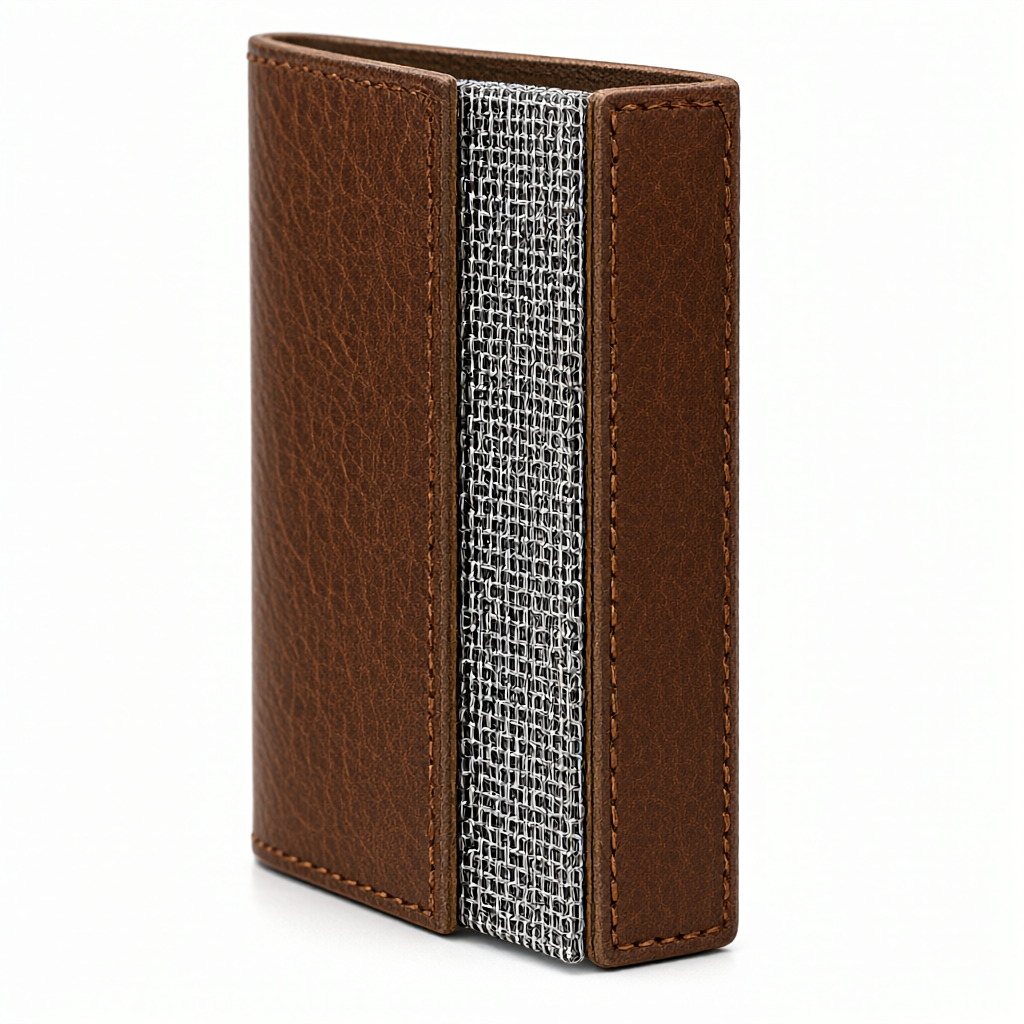
RFID-blocking in leather card holders works by embedding a conductive layer — typically a thin sheet of aluminum, nickel, or ferrite-based material — between leather layers or into the wallet’s interior lining. This conductive barrier creates a Faraday cage effect that disrupts the radio-frequency signal needed for contactless card readers to communicate with a chip.
The protection is most effective against high-frequency RFID signals (13.56 MHz), which is the standard used by payment cards, passports, and many identification cards. When a reader sends out its radio wave, the conductive layer intercepts and dissipates that signal before it reaches the card’s antenna.
However, not every product labeled “RFID-blocking” meets recognized testing standards. Some budget versions rely on insufficient barrier thickness or inconsistent material placement, creating gaps where signals can still pass through. For B2B buyers, it’s worth requesting third-party test reports or independent verification rather than accepting manufacturer claims at face value. According to ASTM E2092, which covers anti-theft and security tagging and related shielding performance principles, any RFID-blocking claim should be backed by measurable attenuation data — typically a reduction of at least 50 dB at the target frequency to be considered effective.
When evaluating a supplier, ask for:
- Test frequency coverage (ideally 13.56 MHz for payment and access cards)
- Signal attenuation figures (a drop of 50+ dB is considered strong shielding)
- Card slot coverage (whether the entire pocket area is shielded or only partial)
This attention to specification detail matters most for buyers targeting retail-conscious consumers who increasingly treat RFID protection as a baseline expectation rather than a premium bonus.
Which Leather Materials Are Suitable for Bulk Production?
Not all leather is created equal — and the terminology can be deliberately misleading. Here’s how the main grades break down for B2B sourcing:
Full-Grain Leather
Full-grain leather is the highest quality grade for card holders. It comes from the top layer of the hide and retains the natural grain structure, including any minor imperfections that give it character. This material develops a rich patina over time and is notably durable. For buyers targeting the premium EDC segment, full-grain leather is the benchmark — though it commands a higher material cost and longer break-in period.
Top-Grain Leather
Top-grain leather has been sanded or buffed to remove surface imperfections, then typically treated with a finish or pigment coating. It offers a more uniform appearance than full-grain and is slightly more water-resistant. For promotional products and corporate gifts, top-grain often represents the better cost-to-quality ratio — it looks polished, cleans easily, and ages gracefully without requiring the same level of care as raw full-grain.
Genuine Leather
“Genuine leather” is widely misunderstood. It’s not a quality grade — it’s a regulatory label indicating the product contains real leather, which could range from split leather to layered bonded material. In practice, “genuine leather” products in the mid-price tier often use split leather with a polymer coating applied for consistency. They work fine for entry-level OEM leather card case programs but will not match the longevity of full-grain or top-grain options. Buyers should clarify exactly what split composition they’re receiving.
Bonded and Recycled Leather
Bonded leather is made from leather scraps bonded together with adhesives and coated with polyurethane. It’s the lowest-cost option and suitable only for short-lifecycle promotional giveaways. It lacks durability, doesn’t age well, and can peel or crack within months of regular use.
For long-term brand positioning, top-grain represents the strongest middle ground for bulk ordering — good appearance, reasonable cost, and acceptable durability. When sourcing, verify the exact leather source and tanning method, as vegetable-tanned leather ages more naturally while chrome-tanned leather offers greater water resistance and color consistency.
To learn more about how material selection affects end-product quality, see our best minimal wallets for B2B sourcing and private label guide.
What Customization Options Are Available for Private Label Orders?
Private label leather card holders offer one of the most cost-effective entry points into branded merchandise. The customization landscape spans three main areas:
Surface branding. Laser engraving is the most common technique for leather — it produces clean, permanent marks without ink or adhesive. Options include logo placement (front face, interior, or both), monogramming, and custom patterns. UV printing is less common on leather due to adhesion challenges but works well on smooth, coated surfaces. Embossing adds a raised logo effect but requires a custom metal die, adding upfront tooling cost.
Material selection. Buyers can choose between leather types (full-grain, top-grain, genuine split), color finishes, and lining materials. Some suppliers also offer mixed-material designs — for example, a leather exterior with an aluminum insert or carbon fiber accent panel. This is where metal wallets and carbon fiber card holders intersect with leather product lines, offering buyers a broader portfolio to present to their end markets.
Packaging. Retail-ready packaging is essential for Amazon FBA sellers and retail chain buyers. Options include clamshell blisters, window boxes, matte or gloss cartons, and custom-printed tissue or inserts. Packaging design significantly affects perceived value — a well-designed box can justify a higher retail price point even when the product itself is mid-tier.
When evaluating suppliers for customization, consider tooling costs (typically $50–$200 for a single logo die), sample lead times, and whether the supplier can handle your volume without compromising quality consistency across production runs.
What Quality Standards Apply to Leather Card Holders for Export?
Quality and compliance vary by destination market. The most relevant certifications and standards for B2B leather card holder procurement include:
ISO 9001 — This is the baseline quality management certification. It confirms the manufacturer operates under documented quality control procedures, which is critical for consistent batch-to-batch quality in bulk production.
BSCI (Business Social Compliance Initiative) — Required or preferred by many European retailers and distributors. It verifies ethical labor practices throughout the supply chain.
REACH / RoHS compliance — Essential for EU market access. These regulations restrict hazardous substances in products, including certain dyes, chromium compounds in leather tanning, and heavy metals in RFID-blocking materials. Buyers should request a Declaration of Compliance.
SGS testing — Independent material testing through SGS or equivalent labs provides verified proof of leather composition, colorfastness, and chemical safety. This is particularly important when making claims about material authenticity.
For RFID-blocking specific claims, there is no universal mandatory certification, but products can be tested against ISO/IEC 14443 (contactless smart card communication standard) to verify signal attenuation performance.
Understanding these standards upfront prevents costly compliance issues during customs clearance and protects against product recalls in regulated markets.
How Should B2B Buyers Evaluate Craftsmanship and Durability?
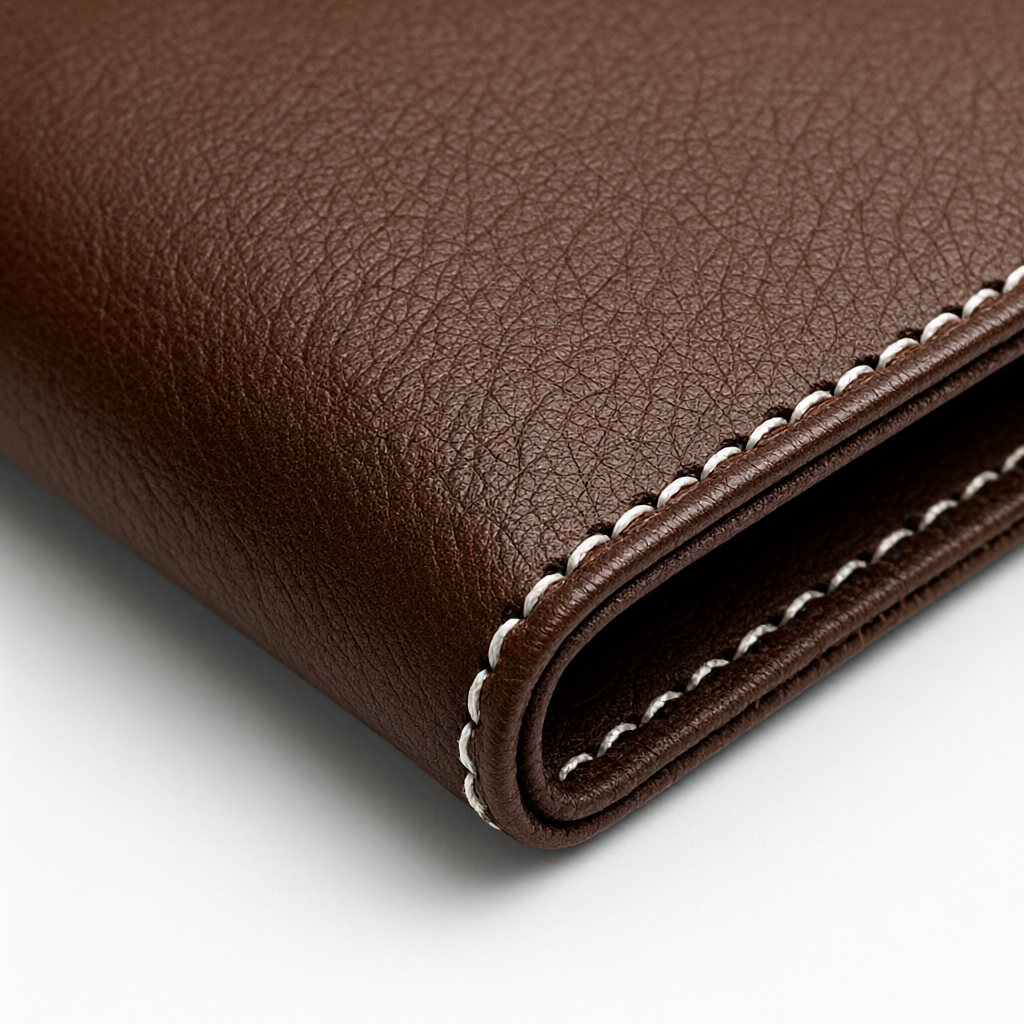
Craftsmanship is where budget leather card holders diverge sharply from premium ones. Two features deserve particular attention:
Stitch density and type. Hand-stitched card holders using waxed thread (typically saddle stitching) are more durable than machine-stitched alternatives. Look for a stitch density of at least 8–10 stitches per inch — lower density indicates corners are likely to fray under regular use. Check that stitch holes are cleanly punched and that threads are properly knotted or backstitched at termination points.
Edge finishing. The exposed edges of a leather card holder are high-wear zones. Quality edge finishing involves multiple layers of edge paint or dye, burnished smooth with a wooden slicker, and sealed to prevent peeling. Cheap products skip this step or apply a single thin coat that chips within weeks. Properly finished edges should feel smooth to the touch and show no visible layer separation.
Structural integrity. A well-made card holder should maintain its shape when loaded with cards — not buckle, warp, or stretch unevenly. The card retention mechanism (whether a friction sleeve, elastic band, or combination) should hold cards securely without requiring excessive force to remove them.
For a broader evaluation framework covering these and additional criteria, see our best card holder selection for B2B sourcing guide.
What B2B Procurement Factors Should You Evaluate Before Ordering?
Several practical considerations separate experienced B2B buyers from those who encounter problems on their first order:
MOQ (Minimum Order Quantity). MOQs vary widely — some suppliers accept orders from 300 pieces, while others require 500 or 1,000. Lower MOQs are valuable for testing markets or launching new private label lines. Higher MOQs typically unlock better per-unit pricing but increase inventory risk if the product underperforms.
Lead time. Standard production runs usually take 20–35 days depending on order size and customization complexity. Sample turnaround is typically 5–7 days. Rush production is often available at a premium. Factor lead times into your quarterly planning, especially if you’re aligning with seasonal retail windows.
Pricing structure. Unit pricing decreases significantly between 100, 500, and 1,000-piece tiers. Tooling and setup fees (for custom logos or packaging) are typically one-time charges. Always request a detailed quotation that separates product cost, tooling, shipping, and any applicable duties or compliance documentation fees.
Quality inspection. Request pre-shipment inspection reports or arrange third-party quality audits for large orders. Clear acceptance criteria — including acceptable defect rates, color tolerance ranges, and functional tests — should be agreed upon before production begins.
Logistics and fulfillment. Many manufacturers now offer drop shipping and Amazon FBA prep services, which simplify fulfillment for e-commerce sellers. Verify whether the supplier can handle packaging labeling, barcoding, and FBA-compliant shipment preparation.
How Do Card Capacity and Slim Design Trade Offs Affect the Purchase Decision?
Slim-profile card holders are designed for front-pocket carry and minimal bulk, but this comes with inherent capacity constraints. Most minimalist leather card cases hold between 4 and 12 cards depending on card thickness and design.
Standard credit cards measure 0.76 mm thick. ID cards are thicker at approximately 0.84 mm. Lanyard or access cards with attached straps add further bulk. A card holder specified for “10 cards” may only accommodate 8 standard cards plus a few folded bills.
Design variations affect capacity differently:
- Friction sleeve designs offer the slimmest profile but limited capacity (4–6 cards)
- Elastic band retention accommodates more cards (6–10) with slightly more bulk
- Hybrid designs combining a card slot with a money clip add versatility but increase thickness
For EDC brand private label programs, offering a range of capacity options — a slim 4-card version and a 10-card version — allows buyers to target different carry preferences. Reference our good wallets for guys: B2B EDC wallet buying guide for additional context on how capacity choices align with different user profiles.
Where Do Leather Card Holders Fit Within a Broader EDC Product Line?
Leather card holders are often positioned as entry-level products in an EDC catalog — they’re affordable, visually appealing, and low-risk for first-time buyers. This makes them ideal for testing a brand or market before committing to larger product lines.
However, buyers should consider how leather card holders complement other products in their portfolio. Customers who purchase a leather card holder are likely candidates for matching products — such as a minimalist aluminum wallet, a titanium money clip, or a tactical pocket organizer. Offering a cohesive product line rather than isolated SKUs increases average order value and strengthens brand recognition.
For a deeper comparison of materials and features across the full EDC wallet spectrum, our best minimalist wallets for B2B sourcing and private label article covers how leather, metal, and hybrid materials perform across different use cases.
How Does Our Manufacturing Approach Align With These Standards?
As a manufacturer, our approach to leather card holders centers on material transparency, verifiable quality control, and flexible private label support. We work with full-grain, top-grain, and certified genuine leather options, providing sourcing documentation so you know exactly what material you’re ordering. RFID-blocking components are tested for signal attenuation against recognized frequency standards before bulk production begins, rather than relying on unverified supplier claims.
Our 50,000 sq ft in-house factory supports consistent quality across production runs, and we maintain ISO 9001 certification and BSCI compliance for buyers who need audited supply chain documentation. We offer low MOQ starts at 300 pcs per SKU for full OEM customization (100 pcs trial order available for stock finishes), 7-day sample lead times, and full customization from logo engraving to retail packaging — including drop shipping and Amazon FBA prep for e-commerce sellers. We’ve exported to 30+ countries across North America, Europe, Australia, and Southeast Asia over 13+ years in the EDC wallet manufacturing space, supporting over 200 brands worldwide.
For detailed procurement guidance and sizing recommendations, review our best wallet for B2B buyers: EDC wallet procurement guide and our best slim wallets for men — B2B sourcing guide.
Leather Card Holder Price Ranges by Tier and Quantity
Understanding pricing structure is critical for B2B buyers planning margin targets and retail positioning. Leather card holder costs vary significantly based on material grade, construction method, and order volume.
Entry-level tier ($1.50–$3.50 per unit at 500+ pcs). These products typically use genuine or split leather with machine stitching, basic edge painting, and minimal or no RFID protection. They are suited for promotional product programs and price-sensitive retail channels where the focus is volume over longevity.
Mid-tier ($3.50–$7.00 per unit at 300–500 pcs). This is the most competitive bracket for private label brands. Products in this range typically feature top-grain leather, improved edge finishing, basic RFID-blocking inserts, and standard private label options including laser engraving. This tier offers the strongest balance of perceived quality and margin potential for Amazon FBA and retail buyers.
Price bands quoted in this article are industry ranges published for planning purposes. Exact per-unit pricing depends on material, finish, packaging and order quantity, and is confirmed by our sales team after an inquiry against a locked specification.
Premium tier ($7.00–$15.00+ per unit at 200–500 pcs). Full-grain leather, hand-stitched construction, advanced RFID verification, and premium packaging define this segment. These products target the EDC enthusiast market and justify higher retail prices through material authenticity and craftsmanship detail.
Tooling and setup costs. Custom logo dies for embossing typically run $50–$200 as a one-time charge. Laser engraving setup is generally lower cost with no physical die required. Custom packaging tooling — particularly for rigid boxes or custom inserts — can add $300–$800 depending on complexity.
Price per unit typically drops 15–30% when moving from 300-piece to 500-piece orders, and another 10–20% at the 1,000-piece tier. Buyers should always request a volume-tiered quotation rather than a single unit price to accurately forecast margins across projected sales volumes.
How Leather Ages and Develops Patina Over Time?
Leather’s aging characteristics are a significant differentiator — particularly for brands targeting the EDC and outdoor enthusiast markets where product longevity is a selling point.
Full-grain leather develops a patina — a subtle surface change that darkens and gains depth with exposure to oils from skin contact, ambient moisture, and regular use. This process typically begins within 2–4 weeks of daily carry and continues evolving over 6–12 months. The resulting surface has a rich, slightly glossy finish that many consumers associate with premium quality. Full-grain leather is vegetable-tanned for optimal patina development, though chrome-tanned variants can also age attractively with a slower, more muted color shift.
Top-grain leather ages more gradually due to its surface treatment or pigment coating. The finish protects against stains and water but limits the depth of patina development. Top-grain cards holders tend to show wear as surface scuffing rather than the rich darkening characteristic of full-grain. For promotional and corporate gift buyers, this predictable aging profile is often preferred — the product maintains a consistent appearance throughout its lifecycle.
Genuine and bonded leather do not develop meaningful patina. Instead, they tend to dry out, crack, or peel at stress points — particularly at fold lines and edges — after 6–18 months of regular use. These materials should not be marketed as aging products.
When communicating product quality to end consumers, brands can differentiate by specifying leather type and expected aging behavior. “Develops a unique patina over time” is a compelling value statement for full-grain products and supports premium pricing.
Best Minimal Wallets for B2B Sourcing and Private Label provides additional context on how leather aging characteristics influence buyer selection across product categories.
Wallet Styles: Minimalist, Bifold, and Money Clip Combos
Leather card holders exist on a spectrum between ultra-slim card-only designs and hybrid styles that incorporate additional storage. Understanding these style categories helps B2B buyers build coherent product lines that serve different customer segments.
Pure minimalist card holders. These are slim friction sleeves or elastic-band cards cases with zero bill storage. Thickness typically ranges from 6–10 mm when loaded. They target front-pocket carry enthusiasts and users who prioritize minimal bulk. Capacity usually runs 4–8 cards. This style commands the highest perceived value per unit due to its precision engineering and compact form factor.
Card holders with a bills pocket. Adding a slip pocket for folded bills increases thickness to approximately 12–18 mm and capacity to 8–12 cards plus cash. This is the most versatile single-product style and represents the best seller in most EDC catalogs. It appeals to buyers who want one item to replace a traditional bifold.
Bifold leather wallets. Traditional two-panel designs with multiple card slots, a bill compartment, and sometimes an ID window. These are thicker (20–30 mm when loaded) and appeal to buyers who prefer back-pocket carry or want maximum organizational capacity. Bifolds are less aligned with the minimalist EDC trend but remain strong performers in the general consumer and corporate gift segments.
Money clip combinations. A leather card holder paired with a metal money clip — either integrated into a single unit or offered as a complementary set — serves buyers who carry both cards and rolled bills. Titanium or aluminum money clips are frequently paired with leather card holders in the EDC space, creating cross-product upsell opportunities.
Offering a coordinated range across these styles allows buyers to capture multiple segments with a unified brand aesthetic. Reference our Best Wallet for B2B Buyers: EDC Wallet Procurement Guide for a comprehensive comparison across wallet formats.
Brand Comparisons and Top Picks in the Leather Card Holder Market
The leather card holder market spans from fast-fashion accessories to purpose-built EDC gear, with significant quality variation across segments. Here’s how major categories compare for B2B buyers evaluating suppliers and product lines.
Premium EDC brands (Ridge, Bellroy, Secrid). These companies have established strong brand recognition and price points typically ranging from $40–$80 at retail. Their products often combine metal frames with leather accents and emphasize RFID protection and modular organization. For B2B buyers, competing directly on brand recognition is challenging; the opportunity lies in offering comparable quality at accessible price points through private label programs.
Heritage leather goods brands (Filson, Allen Edmonds, Saddleback). These brands leverage legacy craftsmanship narratives and full-grain leather at premium price points ($50–$120). Their card holders emphasize durability and traditional construction. B2B buyers seeking the heritage aesthetic can source similar products through OEM manufacturers with appropriate leather grading and hand-finishing capabilities.
Direct-to-consumer and Amazon-focused brands. This segment offers the widest price range ($15–$50) and quality variance. Successful brands in this space typically differentiate through design consistency, packaging quality, and verified material claims. The key risk is over-reliance on a single supplier without vertical integration or quality controls — a gap that experienced manufacturers can fill.
Recommended approach. For B2B buyers building a private label program, the strongest position combines: verified material specs (full-grain or top-grain), independent RFID test data, clean craftsmanship standards, and a manufacturer capable of consistent production at scale. The following manufacturer profile illustrates how these criteria are met in practice.
How TOP EDC Wallet Meets B2B Sourcing Standards?
As a manufacturer, our approach to leather card holder production centers on material transparency, consistent quality control, and flexible private label support. Here is how we meet the standards outlined above:
Material specification. We source full-grain and top-grain leather with documented tanning methods — vegetable-tanned options for patina development, chrome-tanned for color consistency and water resistance. Every material lot is verified for composition and chemical compliance.
Quality certifications. Our facility is ISO 9001 certified and BSCI audited, ensuring documented quality management procedures and ethical labor practices. Products are REACH and RoHS compliant, and materials are SGS-tested for safety and authenticity. These certifications are verified and traceable for export to the US, EU, Australia, and Southeast Asia.
RFID verification. We require measurable signal attenuation data for all RFID-blocking products — targeting the 13.56 MHz frequency band with verified 50+ dB reduction, tested against principles outlined in ASTM standards.
MOQ and lead time. We support orders starts at 300 pcs per SKU, making it accessible for emerging brands and Amazon FBA sellers to test markets. Sample turnaround is 7 days, with standard production runs completed within 20–35 days depending on customization scope.
Customization capabilities. Our in-house CNC machining, laser engraving, and UV printing support full private label programs — from logo placement and monogramming to custom packaging and retail box design. We also offer drop shipping and Amazon FBA prep services.
With 13+ years of export experience and a 50,000 sq ft facility producing 500K+ units monthly, we serve 200+ brands worldwide across the Americas, Europe, Australia, and Southeast Asia.
Leather Card Holders For B2B Buyers: Where Can You Verify the Data and Sources?
- ASTM E2092 — www.astm.org
- best minimal wallets for B2B sourcing and private label — topedcwallet.com
- best card holder selection for B2B sourcing — topedcwallet.com
- good wallets for guys: B2B EDC wallet buying guide — topedcwallet.com
- best wallet for B2B buyers: EDC wallet procurement guide — topedcwallet.com
- best slim wallets for men — B2B sourcing guide — topedcwallet.com
- Get a Free Quote → — topedcwallet.com
From article to product
Turning this into a product?
Most of what is written here is the difference between a sample that works and one that does not. We can build either — the useful one costs the same.
Keep reading
More on buying guides
wallet with trigger
How Does a Trigger Wallet Work? What Is the Pop-Up Mechanism? The core of…
Readbest bifold wallet for women
What Is a Bifold Wallet? The term “bifold” refers to the fold: the wallet…
ReadMen’s trifold wallets with zipper compartments vs. bifold
At a Glance The three dominant men’s wallet formats differ in panel count, depth,…
Read
About the author
TOPWALLET Editorial Team
TOPWALLET's editorial and engineering desk writes from bench testing at the Shenzhen (Longgang) facility: pull-force and cycle testing, 13.56 MHz shielding measurements, finish trials and factory audits, rather than supplier spec sheets. Every specification in these guides is one we write on a purchase order.
Written on the floor
This article was written by our production and QC team — the people who spec tolerances, run the finishing line and inspect every batch. Where it states a capacity, a pull force or a lead time, it comes from a measurement we made, not a supplier’s catalogue. If a number here disagrees with what your own supplier told you, tell us; several of these articles started as a correction from a buyer.
See how the factory works · Inspection process · Sourcing FAQ
Turning this into a product?
Most of what is written here is the difference between a sample that works and one that does not. We can build either — the useful one costs the same.