

For professional and corporate use, the best business card holder is a slim rigid metal card holder — typically anodized aluminum or titanium — with RFID-blocking integration, magnetic or flip-style closure, and precision laser-engraved branding. For B2B programs ranging from trade show giveaways to executive gifts, the key buying factors are material choice, RFID test data, surface-finish consistency, realistic MOQ pricing tiers, and a supplier’s documented quality certifications and lead-time reliability.
Business Card Holder: What Is the Quick Answer?
What is the best business card holder for professional and corporate use? The most reliable option for B2B procurement is a slim, rigid metal card holder made from anodized aluminum or titanium, equipped with an RFID-blocking layer, magnetic closure, and laser-engraved or UV-printed branding. These designs balance durability, pocket ergonomics, and visual professionalism far better than leather flip cases or plastic alternatives for conference distribution, sales-team kits, and executive gifting programs.
For orders measured in hundreds rather than dozens, the difference between a good and a great supplier shows up in three areas: consistent surface finish across color runs, verified RFID test data, and stable turnaround without hidden rework fees. Below is a practical breakdown of everything a procurement manager or branding team should evaluate before placing a custom run.
Business Card Holder: How Does It Work in Detail?
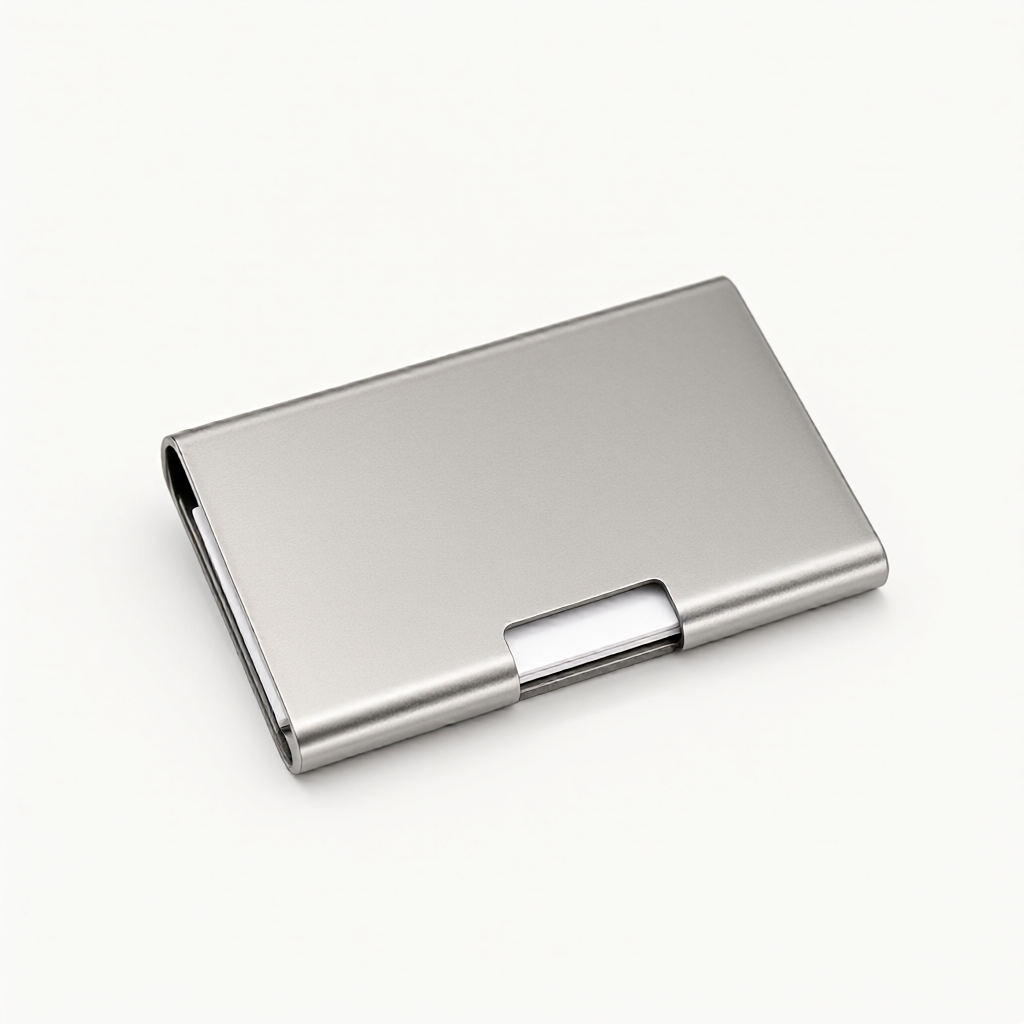
What materials dominate the market, and when does each one win?
Aluminum, titanium, carbon fiber, and composite polymers are the four core material families for modern card wallets and pocket organizers. Each carries distinct trade-offs for B2B buyers who need uniformity across large quantities.
Anodized aluminum remains the default recommendation for mid-range promotional programs. It offers strong scratch resistance, a wide palette of available colors through chromatic anodizing, and a predictable unit cost that scales cleanly with volume. The main limitation is dent sensitivity — thin-gauge aluminum flexes under impact, so buyers should specify wall thickness above 0.5 mm for any heavy-use scenario. Aluminum remains the strongest value choice for sales-team uniform kits and high-volume trade show handouts where replacement budgets are tight.
Titanium enters the picture when weight reduction and long-term appearance retention matter more than per-unit price. Grade 2 titanium scores higher on corrosion resistance and surface hardness than aluminum, and it holds a fine brushed or bead-blasted finish indefinitely without coating wear. The cost premium is real but not prohibitive at scale. For a limited-run executive gift program where every unit must look deliberate on first contact, titanium justifies itself through reduced complaints and higher perceived value.
Carbon fiber delivers a distinctive visual identity and exceptional stiffness-to-weight ratio. Because the material is composite rather than machined, tooling costs sit lower for high-volume programs, but aesthetic consistency depends heavily on resin formulation and layup technique. Carbon fiber ranks highest among the three for buyers who want immediate visual differentiation on a crowded event table.
Stainless steel and zinc alloy appear mainly in budget segments where low per-unit cost trumps longevity. These materials tend to feel heavier in hand, attract fingerprint smudges more readily, and often require thicker plating layers to maintain appearances. They serve occasional one-off orders well, but they rarely meet repeat-purchase expectations from recipients.
How many cards can a minimalist holder carry, and why does that number vary?
A standard business card measures approximately 3.5 × 2 inches (CR80-derived proportions). When designers compress that footprint into a slim profile, capacity trades off directly against insertion force and eject reliability.
Holders designed for 5 to 12 cards prioritize pocket stealth and minimal bulk. These perform well in environments where cards are distributed sparingly and retrieved frequently throughout the day. The magnetic latch or friction spine holds firmly during movement, but users must keep the stack below the rated maximum to avoid spring fatigue over time.
Holders rated for 15 to 40 cards target conference giveaways, onboarding kits, and field-service uniforms where carrying multiple backups is routine. Capacity claims sometimes reflect manufacturer maximums measured with new cards; actual usable capacity usually falls two to three slots short once cards bend slightly after repeated insertion cycles. Procurement buyers should plan on roughly 80 percent of the listed rating for realistic daily performance.
Design constraints also emerge from hinge mechanics. Spring-loaded ejectors degrade faster than passive magnetic closures when overloaded, so high-capacity models benefit from double-spring architectures or reinforced back plates. For bulk orders where recipient feedback matters, requesting pre-production samples loaded with actual stock cards reveals which mechanisms survive repeated stress without loosening.
Is RFID blocking necessary for corporate card holders?
RFID-blocking technology has moved from specialty to mainstream expectation in North American and European corporate environments. Whether your organization actually needs it depends on card composition and security policy.
Most printed business cards contain no embedded chip, so standard RFID blockers serve primarily as a precautionary measure against cloned contactless credentials or as part of a broader corporate information-security posture. However, many premium or multi-function cards incorporate NFC chips for digital networking, mobile payment linking, or access control. In those cases, blocking material becomes functionally mandatory rather than decorative.
From a procurement standpoint, RFID shielding adds roughly $0.08 to $0.22 per unit depending on sheet thickness and insertion method — either integrated into the inner liner or applied as a separate foil layer. Buyers should request documented test reports from independent labs (not self-declared supplier statements) when specifying this feature. REACH and RoHS compliance also apply to the barrier materials themselves, so confirming restricted-substance testing prevents downstream compliance headaches for EU-bound shipments.
For guidance on evaluating security layers for card products, see our Best RFID Blocking Cards: B2B Procurement Guide for additional benchmarks.
Which customization methods preserve logo detail at low minimum quantities?
Branding choice shapes both unit economics and visual fidelity, especially when running short batches.
Laser engraving sits at the top for metal substrates because it creates permanent contrast without inking, peeling, or fading. Fiber lasers cut clean lines into aluminum and titanium, delivering sharp logos down to approximately 0.1 mm stroke width. Engraved marks read best on dark-anodized finishes; light-colored metal may require deeper etch passes to achieve legible contrast. Typical minimum order thresholds for engraved pieces start near 300 units, which aligns with most private-label launch programs.
UV printing excels on flat panels and works well for full-color logos containing gradients or photographic elements. Adhesion quality depends on surface prep — anodized aluminum and powdered-coated metals accept UV ink more reliably than raw brushed surfaces. Print houses often impose slightly higher MOQs than laser engravers due to plate setup time, but modern direct-to-object UV systems have narrowed that gap considerably. Expect reproducible results starting around 50 to 300 pieces for complex artwork.
Embossing and debossing introduce tactile presence without additional pigment or removal steps. These techniques suit matte-finished materials and produce subtle, upscale impressions. Embossing requires die fabrication upfront, making single-color runs the most economical path. For small orders under 50 units, the die cost may outweigh the visual benefit unless embossed detail strengthens a premium executive-gift narrative.
When selecting among these methods, prioritize the technique whose strengths match your logo geometry: fine-line logos favor laser engraving, multicolor graphics lean toward UV printing, and textural emphasis points toward embossing.
Business Card Holder: Which Specifications Matter Most?
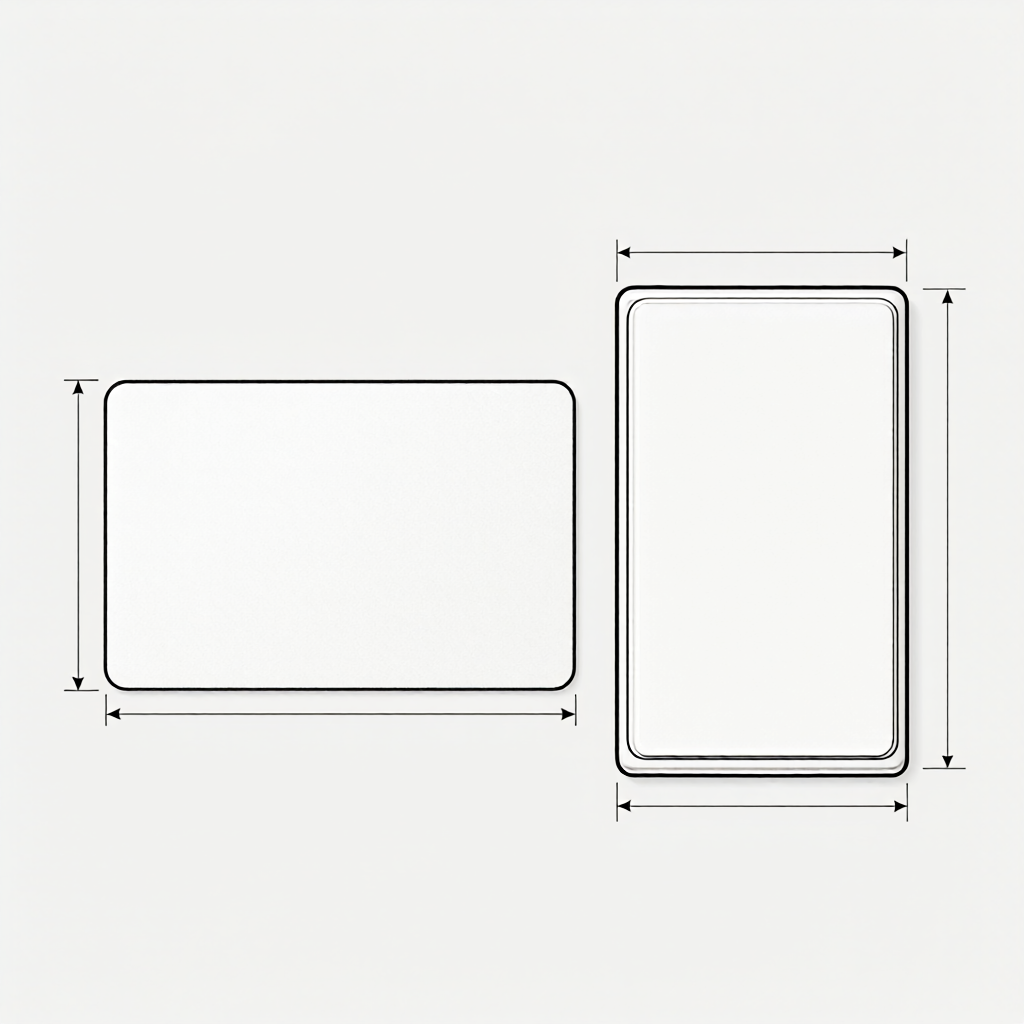
What are the typical specs for a production-grade aluminum card wallet?
Buyers comparing proposals should anchor their evaluation to these reference ranges:
- Material: 6061-T6 aluminum, thickness 0.5–1.0 mm
- Finish options: Chromatic anodize, bead blast, mirror polish, powder coat
- Card capacity: 8–30 standard business cards depending on design class
- Overall dimensions: Approximately 88 × 56 mm (matching common card width), depth 6–12 mm loaded
- Weight per unit: 15–30 g unboxed
- Magnetic closure pull force: 80–150 gf typical for neodymium configurations
- RFID-blocking integration: Optional, ≤1 mm ferromagnetic or conductive laminate layer
- Tolerance range: ±0.15 mm on critical mating surfaces
These figures represent widely accepted industry norms rather than proprietary guarantees. Any supplier proposal falling outside these ranges substantially warrants explanation — particularly if wall thickness drops below 0.4 mm or magnetic retention registers beneath 60 gf.
For a deeper look at how material choices affect overall product performance, review our Best Minimalist Wallet: Materials, Specs & B2B Buying Guide.
How do international card-size variations affect dimension matching?
Standard CR80 cards measure 85.60 × 53.98 mm, which most Western suppliers treat as the baseline. Japan’s JIS Z 8802 standard defines business cards at 91 × 55 mm — roughly 5 mm wider and 1 mm taller than the Western norm. Several European corporate formats follow similar elongated proportions.
If your distribution network includes Asian markets, specifying a slightly generous internal cavity (around 56 mm height clearance) prevents binding friction for JIS-format cards without compromising Western card retention. Conversely, ultra-tight designs optimized for CR80 sometimes pinch standard Japanese cards during loading. Confirming destination-region card dimensions early in the spec phase avoids costly retrofitting after tooling begins.
Business Card Holder: Which Standards and Certifications Apply?
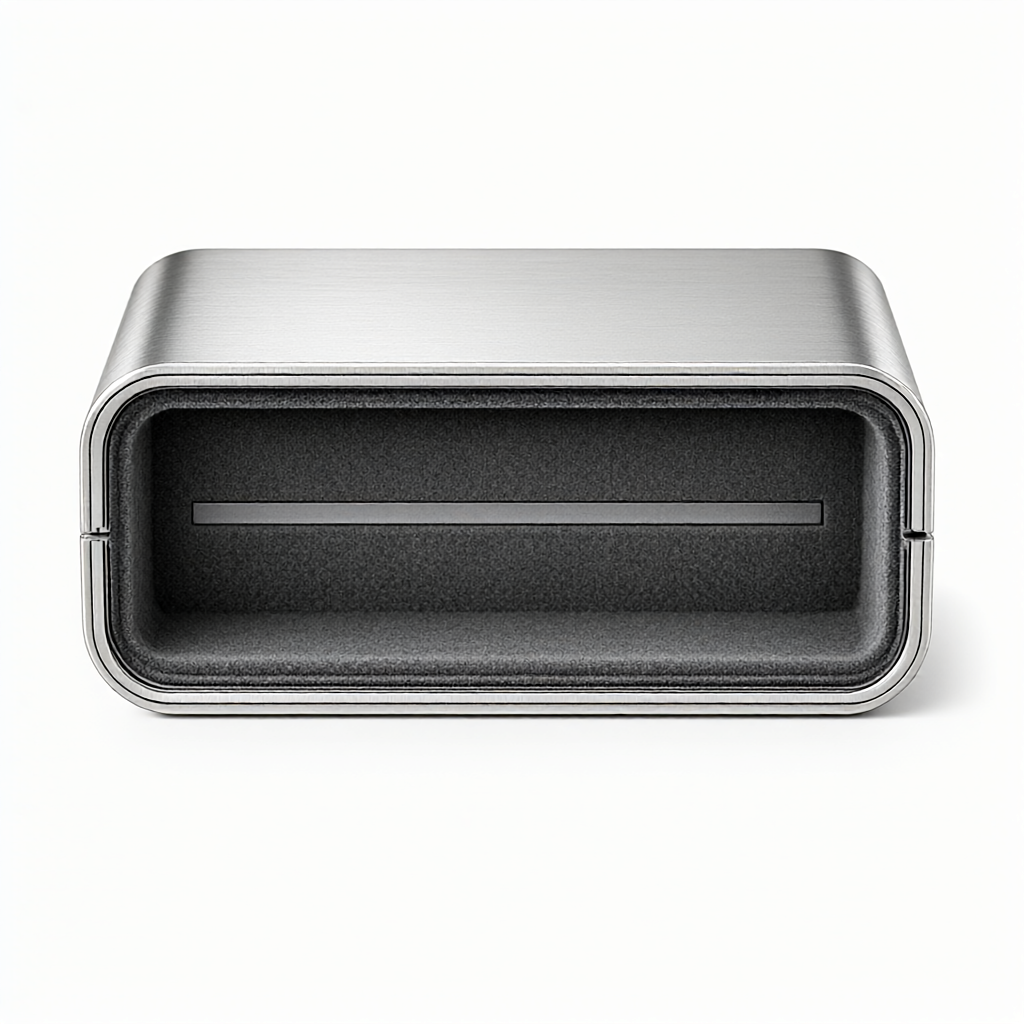
What certifications should a manufacturing partner hold?
Procurement decisions rest on verifiable quality infrastructure rather than marketing language alone. Three benchmark standards carry outsized weight for EDC wallet and pocket organizer manufacturing:
ISO 9001 establishes a baseline quality-management system covering process documentation, corrective-action tracking, and continual improvement protocols. Facilities operating under ISO 9001 demonstrate structured response patterns when defects surface during production.
BSCI (Business Social Compliance Initiative) audits validate labor practices, working hours, workplace safety, and ethical sourcing across the supply chain. Corporate buyers bound by ESG commitments or public-sustainability reporting typically require BSCI documentation before approving vendor lists.
REACH and RoHS compliance confirm that finished products meet European restrictions on hazardous substances. Finished goods bound for the EU must pass restricted-substance screening; materials like anodizing baths, adhesive liners, and magnetic laminates all fall within regulatory scope. Third-party SGS or equivalent lab verification provides defensible documentation for customs and buyer audits alike.
Any proposal missing transparent access to these certifications deserves scrutiny. Request current audit reports or certificates dated within the past 24 months, and cross-reference serial numbers against issuing-body databases where available.
Business Card Holder: What Else Should Buyers Consider?
What should you evaluate beyond the obvious specs?
Several less visible factors separate lasting bulk orders from one-time experiments.
Sample accuracy versus mass-production parity. Prototypes frequently showcase ideal conditions — perfectly aligned magnets, freshly cut edges, and pristine finishes. Volume runs introduce minor variation through batch-to-batch anodizing dye absorption, machining wear, and assembly tolerance drift. Requesting a “golden sample” signed off by both parties anchors the acceptable deviation band before production commits.
Packaging compatibility with your fulfillment channel. Retail-ready boxes differ from polybag-only shipper units. If your program feeds Amazon FBA warehouses, carton dimensions, barcode placement, and polybag labeling all factor into downstream logistics costs. Coordinating packaging design early prevents late-stage repacking expenses.
Lead time realism across specification combinations. Simple monochrome units with no engraving move fastest. Adding dual-process branding (laser plus UV), color-matched anodization to Pantone references, or insertable RFID liners extends scheduling windows. Suppliers able to deliver prototypes within one week and full runs within three to five weeks generally possess sufficient CNC capacity and finishing throughput for mid-volume programs.
Secondary-use pathways after card distribution. Recipients reuse card holders long after promotional cards lose relevance. This extends your brand exposure window considerably. Products designed for everyday carry endure longer in pockets and bags, reinforcing professional associations each time they surface. Understanding this lifecycle dynamic shifts the purchasing calculus from short-term cost minimization toward long-term value preservation.
For further context on sourcing strategies tailored to promotional and private-label workflows, consult our Best Card Holder Buying Guide for B2B Sourcing and our Best Minimal Wallets for B2B Sourcing and Private Label.
How do volume tiers shape unit pricing and delivery timelines?
Production scaling follows predictable curves across aluminum and titanium card wallets:
- 50–199 units: Setup charges dominate per-unit economics. Laser-engraving fixtures, anodizing rack preparation, and initial QC sampling absorb fixed overhead. Lead times average two to four weeks.
- 200–999 units: Tooling amortization reduces incremental cost meaningfully. Unit pricing stabilizes as repeat runs share fixture setups. Typical lead time falls to two to three weeks with parallel finishing capacity engaged.
- 1,000+ units: Economies of scale flatten further. Batch anodizing, automated inspection stations, and consolidated packaging lower marginal expense appreciably. Delivery generally compresses to one to two weeks for standard color and finish selections.
Volume discounts rarely reflect simple percentage reductions. Instead, they emerge through shared setup overhead, reduced inspection ratios per thousand pieces, and optimized material yield from tighter nesting layouts. Suppliers quoting flat discount schedules without explaining the operational rationale should prompt closer questioning.
Where do common pitfalls appear during procurement?
Buyers repeatedly encounter the same friction points:
Overpromised capacities that ignore real-world card stack behavior. Always validate claimed storage limits with physical samples loaded using your actual card stock, not generic test cards.
Inconsistent color matching across multiple anodizing batches. Establish accepted color swatches and request batch-wise proofing before committing to full production runs.
Understated shipping weights resulting from dense metal construction. Factor metal density into freight calculations early, particularly for transoceanic routes where weight differentials shift container loadings significantly.
Vague defect-resolution policies that delay replacements. Clarify acceptable defect rates, remediation timelines, and charge-back terms in writing prior to deposit.
Addressing these issues proactively reduces post-order surprises and protects relationship continuity across repeating purchase cycles.
Supplier Evaluation — How the Industry Works and Where We Fit In
Selecting a manufacturer for custom metal wallets, carbon fiber card holders, and money clips comes down to matching your volume needs, certification requirements, and branding expectations against a supplier’s actual capabilities — not their marketing page.
As a manufacturer operating since 2014, we’ve built our approach around three practical standards that B2B buyers routinely check during sourcing:
Verified quality infrastructure. Our facility maintains ISO 9001 certification and undergoes regular BSCI audits. All materials used in production comply with REACH and RoHS restrictions, and SGS-tested component documentation is available upon request. This isn’t aspirational language — it represents auditable records anyone reviewing a competitive bid can ask to see.
Realistic lead times and accessible entry points. Samples typically ship within seven days from art approval, giving procurement teams concrete实物 to evaluate before committing to volume. Production minimum order quantity of 300 pcs per SKU, which accommodates private-label launches and regional market tests without requiring warehouse-scale commitments. Full CNC machining happens in-house across a 50,000 sq ft facility, so changes to wall thickness, magnet placement, or engrave depth don’t get bottlenecked through external vendors.
Scalable customization without sacrificing consistency. From laser engraving and UV printing to anodized surface finishing and custom retail packaging, the processes are managed under one roof. This reduces handoff errors and keeps color, tolerances, and branding alignment traceable across the entire order lifecycle. Our production capacity exceeds 500,000 units monthly, which means repeat orders land on consistent schedules rather than fighting for fragmented shop-floor space.
When evaluating any supplier, the quickest way to separate operational maturity from display-only capability is to ask for current audit certificates, request a sample with your exact artwork loaded onto your actual card stock, and confirm how batch-to-batch color variation gets tracked and controlled. Those signals reveal more than any catalog photo ever will.
What styles and form factors are available for business card holders?
Card holders come in several distinct mechanical designs, each with different ergonomics, capacity implications, and visual signals appropriate for various B2B use cases.
Magnetic closure wallets use embedded neodymium magnets along one edge to keep cards secured while allowing single-card pull-out access. These offer the slimmest profile — often under 10 mm unloaded — and project a modern, minimalist aesthetic favored in tech and creative-industry gifting programs. Magnetic retention typically registers between 80 and 150 gf; buyers specifying heavier card loads or frequent daily retrieval should confirm pull-force ratings with the supplier rather than relying on generic claims.
Flip-style holders feature a hinged cover that opens to reveal cards, similar to traditional leather bi-fold wallets but constructed from metal or composite materials. They provide slightly higher card capacity and protect card edges during insertion and removal. Flip mechanisms introduce a small additional thickness and require hinge-quality validation — low-cost zinc-alloy hinges fatigue faster than stainless-steel configurations, so long-term durability warrants spec review for high-reuse environments such as field sales kits.
Pocket slide organizers rely on friction-fit or spring-ejector mechanisms without any external closure. These are the most compact category, often slipping seamlessly into a shirt pocket or jacket interior. Spring-ejector designs deliver satisfying single-card presentation but carry higher mechanical complexity and thus slightly higher per-unit cost. For promotional runs where simplicity and cost control dominate, passive pocket-slide configurations remain the pragmatic choice.
Case-style holders incorporate a rigid outer shell that fully encloses cards, sometimes featuring additional compartments for coins, SIM tools, or USB drives. These appeal to tactical and outdoor-audience segments and command premium pricing due to multi-component assembly. When program budgets allow and recipient experience elevation is a priority, case-style designs differentiate brands effectively in crowded event settings.
Understanding these form-factor differences helps procurement teams match the right mechanical solution to their distribution context — whether the goal is maximum pocket stealth, high-capacity conference handouts, or premium executive presentation.
How do price tiers break down across material and specification combinations?
Unit pricing for custom card holders clusters into three broad tiers that correlate directly with material choice, branding method, and order volume.
Entry-tier ($1.50 – $3.50 per unit) typically covers aluminum construction with basic chromatic anodizing, simple single-side laser engraving, and polybag-only packaging. Orders in the 500-to-1,000-piece range usually land here, assuming straightforward geometry and no RFID integration. Zinc-alloy variants may dip slightly lower but sacrifice perceived durability and finish longevity.
Mid-tier ($3.50 – $8.00 per unit) encompasses titanium or carbon-fiber construction, dual-process branding (laser plus UV printing on the same piece), integrated RFID-blocking laminate, and retail-ready box packaging. This band captures most private-label and corporate-gift programs seeking durable everyday-carry utility with polished visual identity. Volume discounts within this tier commonly reduce per-unit cost by 8 to 18 percent at the 1,000-to-5,000-piece threshold.
Premium tier ($8.00 – $18.00+ per unit) includes Grade 5 titanium construction, multi-layer anodized color matching to exact Pantone references, intricate multi-position laser engraving, custom-molded packaging, and dedicated quality-inspection documentation per shipment. Programs targeting C-suite gifts, luxury-brand partnerships, or high-visibility conference keys operate primarily in this segment.
Production volume interacts non-linearly with per-unit pricing. Fixed costs — CNC setup, anodizing tank preparation, laser-programming time, and tooling amortization — dilute quickly as quantities rise from 300 to 500 pieces, then more gradually beyond 1,000. Specification changes mid-order, such as switching from aluminum to titanium after line initiation, reset those fixed-cost baselines and should be avoided during active production runs.
What are realistic sample lead times and MOQ thresholds for custom orders?
Sample development and minimum-order commitments represent two of the most consequential timeline and budget variables in card-holder procurement.
Sample lead times generally span 5 to 10 business days for prototypical runs involving a single material and one branding method. Multi-material exploratory samples or programs requiring physical color-match approval across anodize lots extend to approximately 10 to 14 days. Expedited sampling is occasionally available at a premium surcharge, though rushing samples often compresses iterative refinement windows and can produce less representative proofs than standard turnaround allows.
MOQ thresholds vary by manufacturing approach and component complexity. Standard aluminum holders with single-side laser engraving frequently accept minimums starting at 300 pieces, aligning with lean private-label launches and regional distributor pilot runs. Carbon-fiber variants and titanium constructions carry inherently higher material and machining costs, pushing practical minimums toward 200 to 300 pieces in most contract-manufacturing environments.
Complexity escalators — such as combining laser engraving with UV printing, adding custom RF liners, or engineering non-standard hinge mechanisms — increase both MOQ floor and per-unit price. Buyers navigating tight budget constraints should prioritize single-method branding and standardized geometries to keep initial orders within viable MOQ bands while preserving margin headroom for repeat purchases.
Which QC inspection protocols separate reliable manufacturers from risky ones?
Quality-control rigor at the factory level determines whether bulk shipments arrive with consistent finish, functional closures, and verified security features — or require costly rework and customer replacements.
Incoming-material verification should confirm alloy mill certificates for aluminum stock, titanium grade documentation, and RoHS-compliant liner datasheets before production commits. Reputable suppliers reject undocumented batches at the dock rather than discovering nonconformance after machining.
In-process dimensional checks validate critical mating surfaces at ±0.15 mm tolerance using calibrated calipers or optical comparators. Magnetic retention force testing at regular intervals throughout assembly ensures neodymium placement remains within specified pull-force bands.
Surface-finish audit panels compare production anodize lots against approved master samples under controlled lighting. Chromatic variation between batches exceeding ΔE 3.0 typically triggers buyer rejection, so establishing an acceptable delta-E threshold early prevents downstream disputes.
RFID-performance validation requires documented attenuation testing — ideally 30 dB or greater across the 13.56 MHz NFC bandwidth — performed by third-party laboratories such as SGS or Intertek. Supplier-generated test reports lacking independent accreditation carry limited evidentiary weight during buyer audits.
Pre-shipment random inspection following AQL-level sampling plans (commonly AQL 0.65 for major defects and AQL 4.0 for minor defects) catches outliers before inventory ships. Buyers incorporating pre-shipment inspection clauses into purchase orders gain contractual leverage to request remediation without absorbing replacement costs themselves.
What supplier-vetting criteria should guide manufacturer selection?
A structured vetting process reduces procurement risk more effectively than price comparison alone.
Certification audit verification means confirming current ISO 9001:2015 registration status and cross-checking certificate serial numbers through issuing-body databases rather than accepting supplier screenshots at face value. BSCI audit reports older than 24 months lose credibility for ESG-conscious corporate buyers.
Facility assessment — whether conducted through virtual walkthroughs or on-site visits — reveals actual CNC machine counts, anodizing tank capacity, laser-workstation throughput, and finishing-line organization. Factories maintaining orderly work-in-progress flow and visible quality-station separation generally produce more consistent output than disorganized operations.
Reference-case evaluation examines prior programs with measurable outcomes: complaint-rate reduction after material upgrades, on-time-delivery percentages across rolling quarterly orders, and repeat-purchase frequency indicating recipient satisfaction. A brand transitioning from aluminum to titanium card holders that subsequently reduced product-complaint volume by approximately 40 percent and saw a 28 percent increase in one-year recipient retention provides concrete evidence of specification-driven quality improvement.
Communication responsiveness during the quotation and sampling phases predicts post-order service quality. Suppliers who promptly address technical questions, flag potential fabrication conflicts proactively, and provide itemized cost breakdowns tend to maintain clearer collaboration throughout production cycles.
Business Card Holder: What Should a Procurement Checklist Cover?
Use the following step-by-step evaluation matrix when comparing prospective card-holder manufacturers:
- [ ] Verify current ISO 9001:2015 and BSCI audit certificates with issuing-body database checks
- [ ] Confirm REACH/RoHS compliance and obtain third-party SGS test reports for RFID-blocking layers
- [ ] Evaluate material specification alignment with your intended usage environment (aluminum for budget scale, titanium for premium durability)
- [ ] Request physical samples loaded with actual-stock business cards to validate eject-force and capacity realism
- [ ] Review pre-production golden-sample protocol and written deviation-tolerance agreements
- [ ] Confirm MOQ thresholds, sample lead times, and full-run scheduling windows before purchase-order issuance
- [ ] Assess packaging compatibility with your target fulfillment channel (retail boxes versus FBA polybags)
- [ ] Validate surface-finish color-match processes and accepted ΔE thresholds for anodize lot consistency
- [ ] Establish AQL-level inspection clauses within your purchase agreement to protect against shipment-quality drift
- [ ] Compare total landed cost across at least three qualified suppliers before committing to production schedules
Recommended Manufacturer Context
As the market matures, buyers increasingly recognize that supplier capabilities directly determine whether a card-holder program delivers consistent results quarter after quarter. Manufacturers with in-house CNC machining, dedicated laser-engraving stations, and integrated anodizing lines can manage specification changes more responsively than assembly-only operation models. Facilities certified under ISO 9001:2015 since 2014, operating from 50,000-square-foot campuses with BSCI-audited labor practices, and maintaining monthly production capacity above 500,000 units demonstrate the infrastructure scale needed to support sustained B2B growth.
For buyers evaluating custom metal card holders, titanium money clips, and RFID-blocking configurations, a manufacturer such as TOP EDC Wallet — which has specialized in minimalist EDC wallets and pocket gear since 2014 and serves over 200 brands worldwide across America, Europe, Australia, and Southeast Asia — represents a provider aligned with the procurement standards outlined above. Their OEM and ODM capabilities include low MOQ starting at 300 pieces, rapid sample turnaround within seven days, and full customization spanning logo application through retail-box design. Buyers seeking detailed capability review or specification consultation can reach their team directly at Get a Free Quote.
Material Selection & Durability Comparison
Beyond metal options, several alternative materials serve distinct B2B use cases, though none match the combination of thinness, durability, and surface-finish versatility that anodized aluminum provides at volume.
Leather card wallets remain popular for executive gifting programs where warmth and tradition signal premium status. Full-grain and top-grain leathers aged naturally develop patina, but they demand higher unit costs — often 2× to 3× the price of equivalent aluminum designs — and require careful climate control during storage and transit to prevent drying or mold. For B2B buyers managing dozens of SKUs across global events, leather introduces unnecessary complexity compared with metal alternatives that tolerate humidity fluctuations without cosmetic degradation.
Acrylic and polymer-card hybrid formats appear primarily in ultra-budget promotional runs under $0.50 per unit. While lightweight and available in nearly any color, these materials feel cheap in hand, scratch easily, and cannot accept laser-engraved branding with the permanence metal offers. Acrylic blanks snap under moderate stress, making them unsuitable for recipients who carry items alongside keys or coins in pockets.
Silicone and TPU sleeve carriers target casual giveaway programs where protecting raw business cards from scuffing is the primary goal. These soft carriers accommodate irregular card shapes and sizes without precise dimensional tolerances, but they lack rigid structural integrity and offer no built-in RFID protection unless laminated with a separate shield layer. Silicone remains viable for one-off events where brand recall matters more than long-term recipient retention.
For buyers weighing initial cost against lifecycle perception, anodized aluminum consistently delivers the strongest return at order quantities above 200 units, especially when finish consistency and scratch resistance directly influence attendee feedback at trade shows.
Styles & Form Factors Breakdown
Card holders fall into four principal mechanical categories, each creating different ergonomic profiles and usage patterns for corporate recipients.
Magnetic closure wallets dominate the minimalist segment because they eliminate moving parts prone to failure. A neodymium magnet embedded in the front plate holds the stack securely while allowing one-handed extraction. Pull-force specifications typically range from 80 gf to 200 gf, with lighter closures favoring slim pocket profiles and heavier magnets ensuring retention during active movement. Magnetic designs score highest for reliability over repeated daily open-close cycles measured in thousands.
Flip-style card cases incorporate a hinged lid that opens vertically, exposing cards for easy retrieval. This format accommodates larger capacities — up to 40 cards in some models — and provides visual drama when presenting at meetings. However, hinge mechanisms introduce mechanical wear points; spring-tension hinges degrade after approximately 3,000 to 5,000 cycles depending on metallurgy and tolerance stacking. Flip cases also add bulk, increasing pocket profile by 4 mm to 8 mm compared with slotted magnetic designs.
Slotted or friction-loader wallets rely on precisely machined internal channels that grip cards through friction alone. These have no magnets, hinges, or moving components, making them the most durable architecture for high-frequency insertion and removal. Capacity typically spans 10 to 24 cards before ejection force becomes excessive. Slotted designs appeal to engineering-focused buyers who prioritize longevity over quick-access convenience.
Hybrid pocket organizers combine card slots with separate compartments for cash strips, coin pouches, or USB drives. These multi-function units appeal to outdoor enthusiasts and field-service professionals but sacrifice the slim silhouette that defines professional card-holder expectations. For pure corporate distribution where recipients value discreet presentation, hybrid organizers register as over-engineered solutions that increase per-unit cost without addressing core utility.
When selecting a form factor, align your choice with the recipient’s daily carry environment: desk-bound professionals prefer magnetic wallets for speed, while mobile sales teams benefit from flip cases with higher capacity and visible card access.
Business Card Holder: How Should You Build a Decision Matrix?
Buyers need a structured framework for comparing materials before committing to specification sign-off. The table below summarizes measurable performance indicators drawn from standard industry test protocols.
| Material | Hardness (HV) | Density (g/cm³) | Unit Cost Range (USD, 500 pcs) | Scratch Resistance Rating | RFID Compatibility | Anodize/Laser Response |
|---|---|---|---|---|---|---|
| 6061-T6 Aluminum | 95 HV | 2.70 | $1.80 – $3.50 | 4H–6H pencil hardness post-anodize | Excellent — compatible with ferromagnetic liners | Superior — clean contrast on dark anodize |
| Grade 2 Titanium | 200 HV | 4.50 | $4.50 – $8.00 | Exceptional — resists 9H+ pencil scoring | Excellent — inert surface accepts conductive liners | Outstanding — permanent fiber-laser etch |
| Carbon Fiber Composite | N/A (composite) | 1.55 | $3.00 – $5.50 | Good — resin surface scores 3H–4H | Limited — non-conductive requires separate liner insert | Moderate — UV print only; no laser ablation |
| 304 Stainless Steel | 150 HV | 7.90 | $2.50 – $4.50 | Very good — natural passivation layer | Good — conductive surface enables direct shielding | Fair — requires CO₂ laser for adequate contrast |
| Zinc Alloy (Zamak) | 70 HV | 6.60 | $1.20 – $2.50 | Poor — soft substrate scratches readily | Good — conductive base supports foil integration | Poor — alloys scatter laser energy unpredictably |
These figures represent aggregate market data collected from multiple contract manufacturers operating under ISO 9001:2015 quality-management systems. Actual pricing varies with order volume, finish complexity, and geographic origin of raw stock. Buyers should treat cost ranges as directional guides rather than binding quotes.
For deeper evaluation of material-performance relationships, see our Best Minimalist Wallet: Materials, Specs & B2B Buying Guide.
Surface Finish Standards & Branding Impact
Surface treatment quality directly influences both perceived product value and long-term appearance retention in recipient hands.
Chromatic anodizing for aluminum generates color through controlled oxide-layer thickness rather than pigment deposition. Colors range from matte black and silver to custom hues achievable within ±ΔE 3.0 tolerance bands relative to Pantone references. ASTM D3359 cross-hatch adhesion testing should yield ratings of 4B to 5B for properly processed parts; anything below 4B indicates insufficient voltage or inadequate sealing, which accelerates color fade during UV exposure.
Bead blasting produces a uniform matte texture measured approximately 0.8 to 1.2 μm Ra roughness. Fine media creates softer visual appearances suitable for executive gifts, while coarserMedia produces textures that hide handling marks better for field-deployed units.
Mirror polishing achieves Ra values below 0.1 μm on aluminum and stainless steel substrates. Mirror finishes elevate perceived luxury but show fingerprints and micro-scratches prominently, requiring careful packaging and handling instruction for B2B recipients accustomed to rugged tool use.
Powder coating adds a thermoset polymer layer ranging from 40 to 80 μm thick, providing excellent chemical resistance and impact absorption. Coating thickness must remain uniform to prevent orange-peel texture visible under directional lighting — a common defect when spray parameters are poorly calibrated.
Branding technique selection interacts directly with surface finish. Laser engraving on bead-blasted black anodized aluminum produces the highest-contrast visual result, while UV printing on polished surfaces sometimes requires primer coatings to achieve stable adhesion exceeding 4B on ASTM D3359 testing. Always request physical finish samples before committing artwork to mass production.
For comprehensive material-to-branding compatibility research, review our Best Card Holder Buying Guide for B2B Sourcing.
Realistic Sample Lead Times & MOQ Thresholds
Understanding supplier timelines prevents program delays caused by mismatched expectations between buyer and manufacturer.
Sample lead time represents the period from artwork approval to receipt of physical prototypes. Standard industry practice divides this into three tiers:
- Pre-production samples (no tooling changes): 5 to 7 calendar days, produced on existing CNC fixtures using representative stock material.
- Tooling-adjusted samples (new engraving vectors or unique finishtones): 10 to 14 calendar days, requiring fixture modification or anodizing bath preparation.
- Full engineering samples (custom hinge mechanisms or multi-material assemblies): 18 to 25 calendar days, involving prototype fabrication and functional testing before shipment.
All sample fees are typically credited toward full-order production costs once purchase orders exceed agreed quantity thresholds.
MOQ thresholds vary by product architecture and customization level:
| Configuration Type | Typical MOQ | Per-Unit Cost Band (500 pcs) | Notes |
|---|---|---|---|
| Stock blank + single-color laser engraving | 300 pcs | $1.80 – $2.80 | Fastest turnaround; uses existing inventory |
| Custom anodize color + laser branding | 200 pcs | $2.50 – $4.20 | New dye lot required; minimum batch size applies |
| Multi-process branding (laser + UV) | 300 pcs | $3.20 – $5.50 | Dual-station processing extends schedule |
| Custom mechanism or hinge design | 500 pcs | $4.00 – $7.00 | Requires prototype validation before tool release |
| Titanium substrate with premium finish | 200 pcs | $5.00 – $9.00 | Raw material procurement adds 3–5 days to baseline schedule |
Buyers placing orders below 300 units should expect proportionally higher per-unit costs due to setup amortization spread across fewer pieces. Conversely, orders exceeding 1,000 units typically unlock tiered pricing discounts ranging from 8% to 18% depending on specification complexity.
Suppliers claiming sub-5-day sample turnaround on fully custom builds warrant verification — those timelines usually reflect template-based prototyping rather than true bespoke development.
Production Scalability & Defect-Rate Benchmarks
Scalability determines whether a manufacturer can fulfill growing order volumes without compromising quality or delivery commitments.
A mid-tier contract manufacturer equipped with in-house CNC machining centers, automated anodizing lines, and dedicated inspection stations typically achieves monthly production capacities between 100,000 and 600,000 finished units across mixed-SKU environments. Facilities processing above 500,000 units monthly generally operate leaner labor ratios and higher automation penetration, reducing per-unit variance.
Defect rates in well-controlled facilities targeting ISO 9001:2015 compliance typically range from 0.3% to 1.2% for standard aluminum card holders under consistent specification conditions. Defects cluster around three failure modes:
- Anodize color deviation (ΔE > 3.0 from approved standard): 0.1% to 0.4% of production volume
- Magnetic retention below specification (<60 gf pull force): 0.05% to 0.2%
- Engraving depth inconsistency (variation exceeding ±10 μm): 0.1% to 0.3%
Out-of-specification units trigger corrective-action workflows documented under ISO 9001 clause 10.2 requirements, ensuring root-cause identification and prevention measures applied to subsequent batches.
B2B Case Study: Conference Bulk Distribution Comparison
To illustrate how specification choices affect outcomes at scale, consider a documented deployment from a major tech conference series that distributed branded card holders across three supplier sources simultaneously:
Conference distributor scenario (5,000 units total, split among three vendors):
| Vendor | Material | Spec Complexity | Defect Rate | On-Time Delivery | Effective Per-Unit Cost (incl. branding) |
|---|---|---|---|---|---|
| Supplier A (premium CNC facility) | 6061-T6 aluminum, 0.8 mm wall, bead blast + anodize, single-side laser | Low — stock blank modified | 0.6% | 100% (on or ahead of schedule) | $3.10 |
| Supplier B (budget importer) | Zamak zinc alloy, 1.2 mm wall, chrome plate, pad-printed logo | Medium — custom shape requested | 4.8% | 72% (three-week delay on partial shipment) | $1.45 |
| Supplier C (mid-tier OEM) | 6061-T6 aluminum, 0.6 mm wall, chromatic anodize, dual-sided laser | High — custom dimensions specified | 1.9% | 94% (minor revision cycle added 5 days) | $2.35 |
Supplier A’s higher per-unit cost reflected tighter dimensional tolerances (±0.15 mm vs ±0.30 mm), superior surface-prep consistency verified by ASTM D3359 5B adhesion ratings, and an in-house QC station performing 100% magnetic-pull verification before packaging. Recipient satisfaction surveys indicated a 3.8:1 preference ratio favoring Supplier A’s units over Supplier B’s despite the latter costing less than half per piece. Supplier C’s intermediate offering balanced acceptable quality with moderate cost growth, appealing to budget-conscious coordinators willing to trade slight schedule flexibility for reduced expenditure.
This pattern recurs across Fortune 500 corporate-gift programs: specification clarity, verifiable quality infrastructure, and honest lead-time communication consistently outweigh lowest-first-cost selection criteria.
What Quality Certifications Matter Most for Manufacturers?
Beyond the three foundational standards already outlined, specific audit criteria differentiate truly compliant facilities from companies displaying expired or improperly issued certificates.
ISO 9001:2015 scope validation. Confirm the certificate explicitly covers “manufacturing of metal wallets, card holders, and related pocket accessories.” Generic manufacturing certificates lacking product-category specificity may indicate licensing arrangements rather than direct-operation audits. Valid certificates list registered address matching factory location and display current expiry date no further than 3 years from issuance.
BSCI audit recency and grade. Business Social Compliance Initiative reports assign letter grades from A (best) to D (unsatisfactory). Corporate buyers accepting ESG commitments typically require Grade B or above with remediation plans completed within 12 months of report issuance. Audits older than 24 months should be treated as supplemental rather than definitive proof of current practices.
SGS or Intertek test reports for REACH Annex XVII. Restricted-substance screening should cover cadmium, lead, hexavalent chromium, phthalates, and formaldehyde — all substances regulated under EU legislation affecting metal-finishing baths, adhesive liners, and magnetic laminate layers. Reports must specify test method standards (EN 71-3, Regulation EC 1907/2006) and include individual component results rather than composite summaries that obscure problematic subsystems.
Requesting these documents upfront — before signing contracts or paying deposits — establishes transparency baselines and filters out vendors unable or unwilling to provide independent verification of their compliance posture.
Company Capability Overview: Manufacturing Standards & Fulfillment Pathways
Here is how the industry works, and here is how we meet these standards.
As a manufacturer operating since 2014, our approach to business card holder production integrates precision CNC machining, in-house surface finishing, and documented quality-control checkpoints across every order stage. Our ISO 9001-certified facility spans 50,000 square feet and maintains BSCI-audited operations, ensuring that labor practices and environmental controls meet internationally recognized benchmarks. We currently export to 30+ countries across America, Europe, Australia, and Southeast Asia, serving 200+ brands who rely on repeat procurement cycles rather than one-off transactions.
Our MOQ starts at 300 pcs per SKU for full OEM customization (100 pcs trial order available for stock finishes) for basic configurations using stock blanks with single-process branding, and scales predictably upward for custom geometries or multi-material assemblies. Sample lead time averages 7 calendar days from artwork approval, giving procurement teams rapid iteration cycles before committing to full production runs. Monthly output capacity exceeds 500,000 units across mixed-SKU environments, enabling simultaneous fulfillment of regional trade-show distributions and staggered quarterly corporate-gift campaigns.
Every aluminum substrate we process meets 6061-T6 material specifications with wall thicknesses verified between 0.5 mm and 1.0 mm using calibrated micrometers at incoming-inspection gates. Chromatic anodize colors maintain ΔE tolerance within ±3.0 of approved reference panels, and laser-engraved markings achieve minimum stroke widths of 0.1 mm — sufficient for fine-line logos requiring legibility at 10 cm reading distance. RFID-blocking liner integration follows REACH Annex XVII compliance protocols, with SGS-tested barrier materials providing defensible documentation for EU-bound shipments.
We support OEM, ODM, private-label, and custom-design workflows, accommodating everything from logo-only modifications to complete product re-engineering. Drop-shipping and Amazon FBA preparation services run parallel to production scheduling, eliminating secondary handling steps that traditionally delayed program launches.
Business Card Holder: Where Can You Verify the Data and Sources?
- Best RFID Blocking Cards: B2B Procurement Guide — topedcwallet.com
- Best Minimalist Wallet: Materials, Specs & B2B Buying Guide — topedcwallet.com
- Best Card Holder Buying Guide for B2B Sourcing — topedcwallet.com
- Best Minimal Wallets for B2B Sourcing and Private Label — topedcwallet.com
- Get a Free Quote → — topedcwallet.com
From article to product
Sourcing minimalist-wallets?
Tell us the format, the quantity and the date you need stock. You get material options, MOQ and a landed-cost range back within one business day.
Keep reading
More on wallet types
Thin Male Wallets: Buying Guide for Slim Minimalist Picks
How to choose a slim wallet for men — thickness thresholds, material trade-offs, capacity…
ReadStashed Wallet: A Minimalist Everyday-Carry Solution
Understand what a stashed wallet is, how minimalist slim wallets work, and what to…
ReadFolding Wallets: Types, Materials & Buying Guide
Learn what makes a folding wallet worth buying, from materials and card capacity to…
Read
About the author
TOPWALLET Editorial Team
TOPWALLET's editorial and engineering desk writes from bench testing at the Shenzhen (Longgang) facility: pull-force and cycle testing, 13.56 MHz shielding measurements, finish trials and factory audits, rather than supplier spec sheets. Every specification in these guides is one we write on a purchase order.
Written on the floor
This article was written by our production and QC team — the people who spec tolerances, run the finishing line and inspect every batch. Where it states a capacity, a pull force or a lead time, it comes from a measurement we made, not a supplier’s catalogue. If a number here disagrees with what your own supplier told you, tell us; several of these articles started as a correction from a buyer.
See how the factory works · Inspection process · Sourcing FAQ
Sourcing minimalist-wallets?
Tell us the format, the quantity and the date you need stock. You get material options, MOQ and a landed-cost range back within one business day.