

What Is the Quick Answer on Card Holders vs Bifold Wallets?
A card holder wins on bulk and speed of access; a bifold wins on cash and document capacity.
What is the difference between a card holder and a bifold wallet with card holder, and is one actually better?
For most people carrying five or fewer cards, a card holder is the better choice. It eliminates bulk, reduces pocket strain, and keeps your essentials accessible without the hassle of unfolding. A traditional bifold wallet with card holder slots remains the superior option only if you consistently carry ten or more cards, large bills, or require dedicated coin storage. The “better” option depends entirely on your daily load, not brand prestige or aesthetic trends.
How Do Card Holders and Bifold Wallets Differ in Detail?
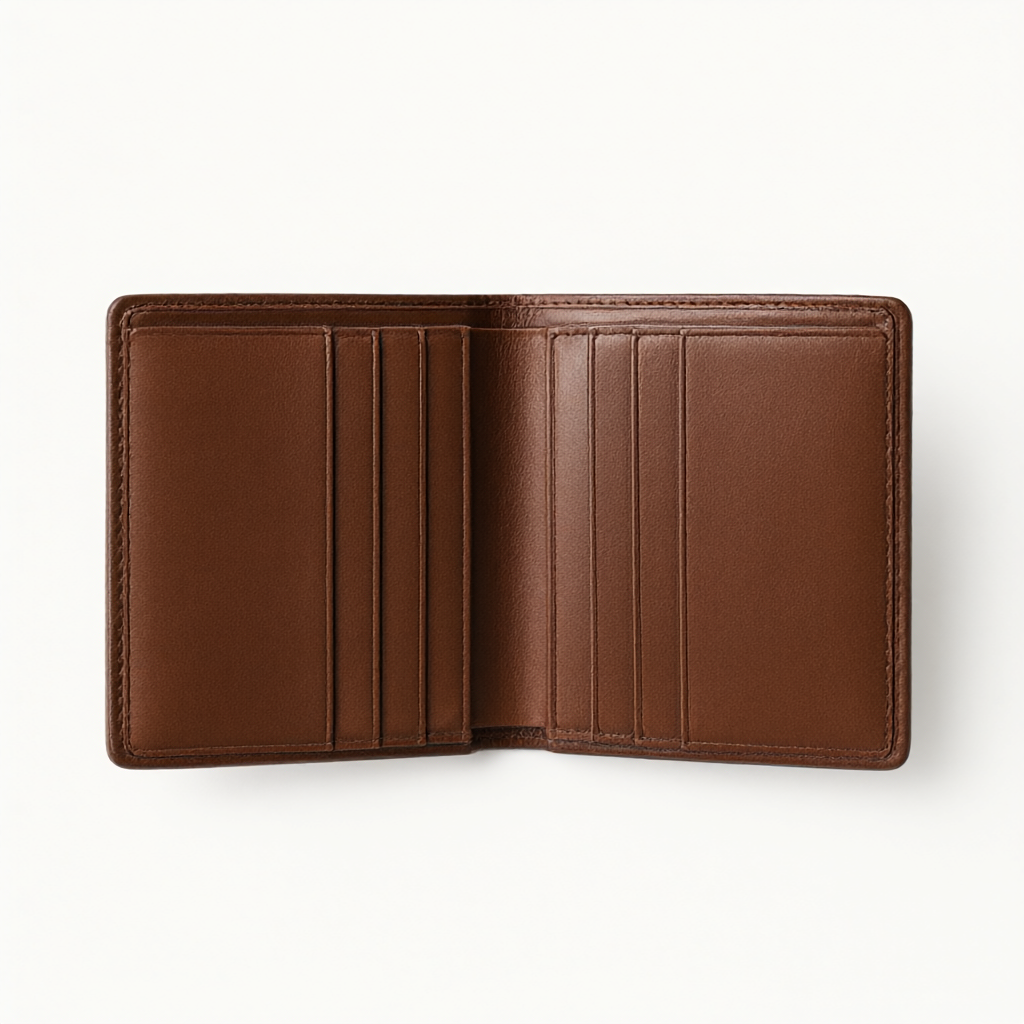
How do card holders and bifolds actually compare in real-world use?
The debate over whether a card holder is better than a wallet often stems from a misunderstanding of what each tool is designed to hold. A traditional bifold relies on folding leather or fabric around a central cash stack to create structural integrity. When you remove the cash and compress the cards, that bifold often collapses into a floppy, shapeless pouch that loses its organizational purpose.
Card holders, particularly modern metal or rigid polymer designs, solve this by using tension springs or rigid frames to keep contents secure without the need for a fold. This makes them significantly more ergonomic for slim trousers or tight jacket pockets. However, they lack the versatility to accommodate a wad of cash or a receipt folder. If your daily carry consists mostly of payment cards and an ID, a card holder provides a more streamlined experience. If you still rely on physical currency for groceries or tips, the bifold’s ability to stack cash neatly inside the fold offers a practical advantage that a slimmer card case cannot match.
Why does construction quality matter more than brand names?
When evaluating whether a card holder suits your needs, you must look beyond the surface finish. Cheap card holders often suffer from spring fatigue, where the tension mechanism loosens after a few months, causing cards to slide out unexpectedly. Conversely, high-quality minimalist wallets utilize CNC-machined aluminum or titanium frames that maintain their rigidity indefinitely.
The internal organization also varies wildly. Some options feature fixed slots that make removing a specific card difficult—you have to pull out the front layer to get to the back. Better designs offer open-top access or staggered slot placement, allowing you to grab your most-used card instantly. For those concerned about digital safety, it is essential to verify that any RFID-blocking features meet recognized standards rather than relying on unverified marketing claims. You can learn more about protecting your data in our wallets that protect cards guide.
Which Specs Separate a Card Holder From a Bifold Wallet?
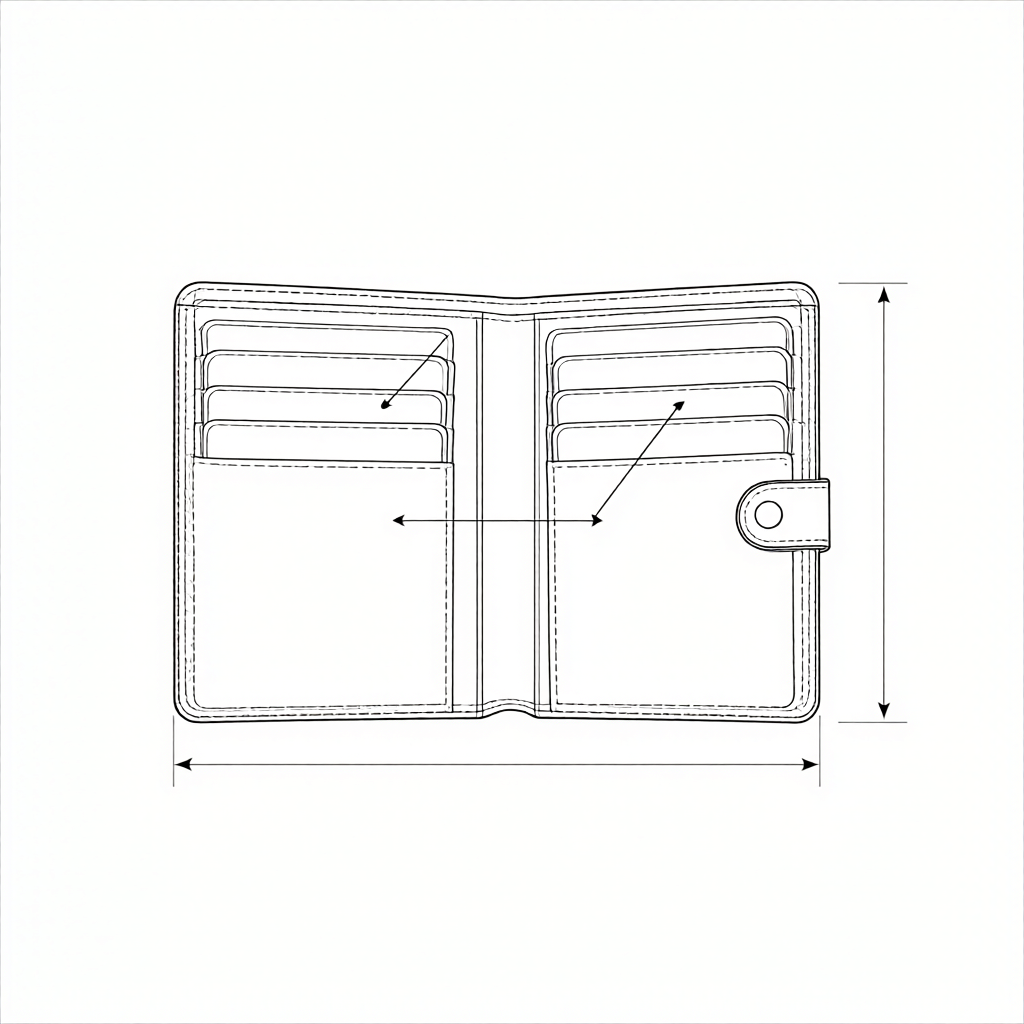
What are the key specs for choosing between these two formats?
Selecting the right carrier requires looking at concrete numbers rather than vague descriptions like “slim” or “compact.” Below is a breakdown of typical industry specifications for both categories to help you benchmark your own needs.
| Specification | Slim Card Holder | Bifold Wallet with Card Slots |
|---|---|---|
| Card Capacity | 1–6 cards (tight fit) | 6–12+ cards (depending on thickness) |
| Thickness (Empty) | 0.2 – 0.5 inches | 0.4 – 0.8 inches |
| Thickness (Loaded) | 0.4 – 0.8 inches | 0.8 – 1.5+ inches |
| Cash Storage | Minimal (1–2 folded bills) | Substantial (stacked bills + folds) |
| Weight | 1.5 – 3.5 oz | 3.0 – 6.0 oz |
| Material Options | Aluminum, Carbon Fiber, Leather, Titanium | Full-grain Leather, Synthetics, Hybrid Metals |
| RFID Protection | Common in metal/titanium models | Available in specialized “card-safe” models |
If you find yourself needing more than six cards regularly, a big card holder wallet might still feel restrictive compared to a full bifold. For detailed comparisons on sizing and capacity, review our wallet size width and height dimension guide.
Which Standards Apply to Card Holders and Bifold Wallets?
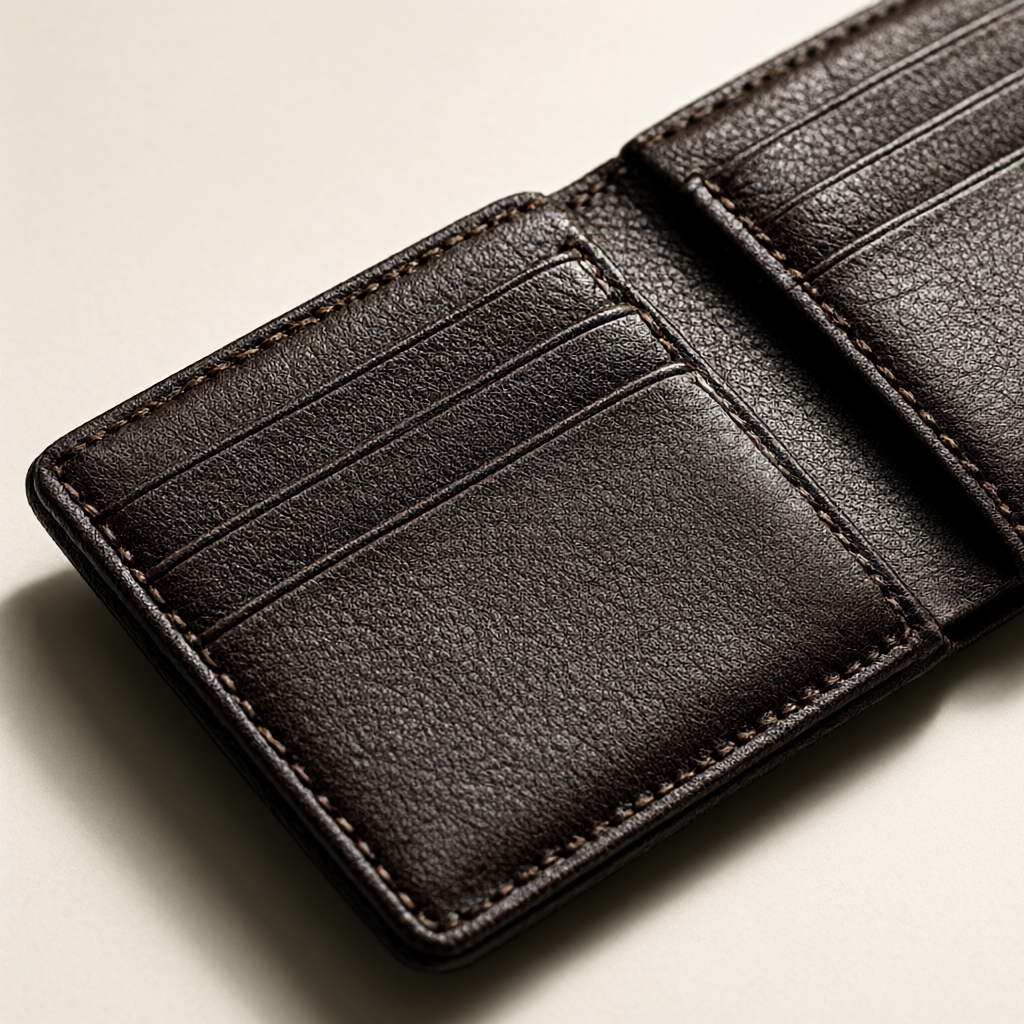
What standards apply to materials and security features?
When sourcing or purchasing these items, especially for bulk or gift purposes, understanding the underlying material standards is crucial.
Material Safety: Reputable manufacturers ensure their materials comply with REACH and RoHS standards. These regulations restrict the use of harmful chemicals in plastics, adhesives, and metal alloys, ensuring the product is safe for prolonged skin contact.
RFID Security: While many wallets claim to block radio frequencies, there is no single universal “RFID certificate” for consumers. However, effective shielding typically relies on layers of aluminum, copper, or nickel woven into the lining or integrated into the metal frame itself. For a deeper dive into how these technologies function and which options are truly effective, check out our RFID protected wallets resource.
Quality Audits: For commercial buyers, facilities often undergo BSCI (Business Social Compliance Initiative) audits to ensure ethical labor practices, alongside ISO 9001 certification for consistent quality management systems.
What Else Matters When Comparing Card Holders and Bifold Wallets?
Carry location, cash habits, and card count decide the answer more than brand or price.
What should you consider regarding lifestyle and ergonomics?
Your daily environment dictates the utility of your carry. If you work in an office with dress pants that have shallow pockets, a bulky bifold will create an unsightly bulge and discomfort. A sleek black credit card holder or a metallic designer credit card holder mens styles slide easily into front pockets without distortion.
Conversely, if you enjoy outdoor activities or wear cargo-style clothing with deep pockets, the added bulk of a bifold may go unnoticed, making its higher capacity more attractive.
Key and ID Integration: Many users seek a key and card holder wallet combo to replace keyschains entirely. Most card holders do not accommodate standard house keys due to weight and size constraints, whereas some hybrid bifold designs include a rubber strap or loop specifically for a single key. Similarly, while an id and card holder lanyard is useful for events or workplaces requiring visible badges, it is impractical for casual daily carry; instead, look for a wallet with a dedicated transparent ID window.
Are there specific trends or variations worth noting?
The market has seen a surge in hybrid designs that attempt to bridge the gap. You will frequently encounter terms like big skinny card holder or big skinny credit card holder. These refer to wider-format card cases designed to hold up to eight or ten cards while maintaining a thin profile. They are ideal for individuals who want the convenience of a card holder but refuse to leave their second debit card at home.
Furthermore, id card holder black finishes remain a top seller for corporate gifting because they project a professional, understated image suitable for business environments. When selecting materials, consider that metal wallets (aluminum/titanium) offer superior durability and inherent RFID blocking but can be noisy in pockets. Leather offers a classic feel but requires maintenance to prevent cracking, as detailed in our leather wallet care guide. For those interested in specific model breakdowns, our minimalist wallets guide covers the landscape of modern carry options comprehensively.
In short: A card holder is generally better than a traditional bifold for lightweight, everyday carrying, provided you do not need to store large amounts of cash. Bifolds remain the necessary choice for high-volume card carriers or those who prioritize cash organization. The decision ultimately hinges on your specific daily load and pocket space availability.
As manufacturers, we see buyers constantly weighing these exact trade-offs. Our approach focuses on delivering precision-engineered solutions—whether that means a compact carbon fiber case for the minimalist or a robust aluminum bifold for the power user. With over a decade of experience producing for global brands, we understand that the right tool depends on how you actually live and move throughout your day.
Which Questions Do Buyers Ask About Card Holders and Bifold Wallets?
Six questions dominate: bulk, cash fit, card capacity, durability, RFID, and price.
Is a card holder actually better than a wallet for daily use?
Yes, for most modern users. If you carry fewer than six cards and minimal cash, a card holder is superior because it is lighter, slimmer, and faster to access. Bifolds become cumbersome when stripped of cash, often losing their shape and becoming awkward to handle in tight pockets.
How many cards can a typical card holder hold?
Most standard card holders securely hold between 1 and 6 cards. “Big skinny” variants can stretch to hold 8 or occasionally 10 cards, but insertion and removal become progressively difficult as capacity increases. Always check the specific manufacturer’s limit, as overstuffed holders lose security.
Do I really need RFID protection in my wallet?
It depends on your location and habits. If you live in an area with high card-skimming activity or frequently travel through crowded transit hubs, RFID-blocking metal wallets or lined cases add a layer of security. However, for low-risk daily environments, standard leather or plastic wallets are generally sufficient.
What is the lowest MOQ for custom metal wallets?
Many specialized manufacturers, including ours, support low Minimum Order Quantities starting at just 300 pieces. This allows brands and distributors to test custom designs, logos, and packaging without committing to massive inventory runs.
How long does sampling take for custom orders?
Typical sample lead times for custom EDC gear range from 5 to 7 days. This allows for design verification, material selection, and prototype testing before moving into full-scale mass production.
Yes — for most people carrying five or fewer cards, a card holder is the better choice because it eliminates pocket bulk, reduces strain, and keeps essentials instantly accessible. A traditional bifold wallet with card holder slots remains superior only when you consistently carry ten or more cards, large cash stacks, or need dedicated coin storage. The deciding factor is your actual daily load, not marketing hype or seasonal trends.
What technical tolerances and material certifications should buyers verify?
For OEM and private-label buyers evaluating manufacturers, two sets of measurable standards matter most: dimensional tolerances and chemical/safety certifications.
Dimensional Tolerances: Quality CNC-machined aluminum or titanium wallets typically hold a tolerance of ±0.05 mm on edge geometry and ±0.1 mm on flatness. At this level of precision, spring-loaded tension mechanisms operate smoothly without wobble, and card slots do not gall or bind after repeated use. Reputable suppliers will publish these figures on request; absent documentation, expect looser tolerances that degrade over time.
Material & Safety Certifications: The following standards apply when sourcing EDC wallets for commercial distribution:
- ISO 9001:2015 — Quality management systems ensuring consistent batch-to-batch output
- REACH (EC 1907/2006) — Restriction of hazardous substances in metals, adhesives, and coatings
- RoHS Directive 2015/863 — Limits on lead, cadmium, mercury, and other restricted materials
- SGS-tested materials — Third-party lab verification of heavy-metal content and surface finishes
These certifications protect against product recalls and regulatory non-compliance, particularly for shipments to Europe and North America where enforcement is active. Buyers should request current certificates before placing orders.
How does leather construction affect longevity and comfort?
Leather remains one of the most popular materials for minimalist wallets despite the rise of metals and carbon fiber. Understanding the two primary tanning methods helps buyers assess long-term value:
| Tanning Method | Process Steps | Durability | Feel & Patina | Cost Impact |
|---|---|---|---|---|
| Vegetable-Tanned | Bark extracts → soaking (weeks) → drying → conditioning | Excellent; densifies with age | Firm initially; develops rich patina | Higher labor cost |
| Chrome-Tanned | Chromium salts → rapid rotation (hours) → drum-drying | Moderate; softens over time | Supple immediately; less patina variation | Lower cost |
Vegetable-tanned leather requires 10–30 days for the tanning cycle alone, while chrome-tanning completes in under 24 hours. The result is a wallet that, over years of daily carry, tells a visual story of its use — scratches blend into character rather than appearing as damage. For care guidance, see our leather wallet care resource.
How Do Card Holder and Bifold Wallet Prices Compare?
Card holders run 8 to 25 dollars FOB; leather bifolds 10 to 30, with metal frames above both.
What are realistic price expectations across materials and configurations?
Wallet pricing varies significantly by material, tooling complexity, and customization level. The ranges below reflect average factory-gate costs (before shipping, duties, and retailer markup) for mid-tier production runs of 300–500 units.
| Category | Material | Typical Price Range (USD/unit) | Best Use Case |
|---|---|---|---|
| Budget Entry | Synthetic leather / PU / basic aluminum | $2.50 – $6.00 | Promotional giveaways, trial SKUs |
| Mid-Range Core | Full-grain leather / anodized aluminum | $6.00 – $14.00 | Private-label retail, DTC brands |
| Premium Tier | Carbon fiber / brushed titanium / hybrid builds | $14.00 – $32.00 | EDC enthusiasts, boutique distributors |
| Ultra-Premium | Hand-stitched exotic leather / Grade 5 titanium | $32.00 – $60.00+ | Luxury gifting, limited editions |
Value sweet spot: For most commercial buyers, the $6–$14 range delivers the best balance of margin, durability, and perceived quality. Products below $3 often compromise on spring retention or stitching density; products above $30 usually carry material prestige premiums that consumers increasingly view skeptically unless craftsmanship is demonstrably superior.
When evaluating quotes, always ask the supplier to break down unit cost by: base material, finishing (anodizing/powder-coating/stitching), packaging, and logo application. A transparent quote reveals whether a lower unit price hides costly downstream operations.
How Do Top Card Holder and Bifold Wallet Brands Compare?
Brands split by material focus: metal card holders, leather bifolds, and hybrid frames.
How do leading wallet styles compare across key dimensions?
While individual brand names shift with market trends, three major product families consistently compete for buyer attention. Understanding their trade-offs helps narrow the decision before you engage any single manufacturer.
| Attribute | Slim Metal Card Holder | Leather Bifold with Card Slots | Hybrid (Metal Frame + Leather Accents) |
|---|---|---|---|
| Capacity | 1–6 cards | 6–12 cards + cash | 4–8 cards |
| Durability (Years) | 5–10+ | 3–7 (with care) | 4–8 |
| RFID Blocking | Inherent (metal frame) | Requires embedded layer | Partial / added liner |
| Aesthetic Flexibility | Limited color options | Wide grain/color range | Balanced |
| Typical Wholesale Price | $8–$18 | $5–$14 | $10–$22 |
| Customization Depth | Laser engraving, anodizing | Tooling embossing, stamping | Both |
| MOQ Friendliness | Low (50–300 pcs) | Medium (200–500 pcs) | Medium (200–500 pcs) |
Buyers seeking maximum RFID protection with minimal maintenance tend toward slim metal holders. Those prioritizing organic texture and high card capacity gravitate toward leather bifolds. Hybrids occupy the middle ground, appealing to brands that want to signal both technology and tradition simultaneously.
Our catalog spans all three categories — from entry-level aluminum cardholders to premium carbon-fiber bifold hybrids — so you can match product form to brand positioning without committing to a single design language.
Which Decision Matrix Guides Card Holder and Bifold Sourcing?
Score bulk, capacity, materials, MOQ, lead time, and defect rate, then rank candidates.
How should B2B buyers score and compare potential suppliers?
Use the weighted matrix below during supplier evaluation. Each criterion reflects a factor that materially impacts delivery reliability, product consistency, and total landed cost.
| Criterion | Weight | What to Verify | Red Flag |
|---|---|---|---|
| Sample Lead Time | 20% | 5–7 day turnaround quoted and delivered | Quoted >14 days with no justification |
| MOQ Flexibility | 15% | Ability to starts at 300 pcs per SKU for full OEM customization (100 pcs trial order available for stock finishes) for initial run | Minimum 1,000+ pcs with no exception path |
| Certification Validity | 15% | Current ISO 9001:2015, BSCI audit reports on file | No certificate provided or expired documents |
| Unit Price Transparency | 15% | Line-item breakdown per process step | Single lump-sum figure with no detail |
| Tooling/Mold Cost | 10% | One-time fee clearly stated; credited against volume | Hidden or retroactively applied charges |
| On-Time Delivery Record | 10% | Track record ≥95% on-time over prior 12 months | No performance data available |
| Communication Responsiveness | 5% | Replies within 24 hours during business days | Slow or inconsistent communication |
| Return/Rework Policy | 5% | Written defect-replacement policy | Verbal assurances only; no written terms |
Score each supplier 1–5 per criterion, multiply by weight, and sum for a composite score. A result below 3.0 generally indicates insufficient alignment for a long-term partnership.
> Procurement research published by consumer advocacy bodies such as the FTC reinforces the importance of transparent supplier disclosures — particularly around hidden fees, undocumented material substitutions, and misleading origin claims.
What production processes separate premium wallets from budget alternatives?
Understanding manufacturing steps helps buyers judge whether a quote reflects true cost or inflated margins.
CNC Machining (Aluminum & Titanium):
- Raw billet selection (6061-T6 aluminum or Grade 2 titanium common)
- Rough milling to near-final shape
- Precision finish milling to ±0.05 mm tolerance
- Deburring and edge rounding
- Surface treatment — anodizing (aluminum) or bead-blasting (titanium)
- Spring or tension mechanism installation
- Final inspection and laser-engraving (if applicable)
Carbon Fiber Lamination:
- Pre-preg carbon sheet cutting to pattern
- Resin infusion or vacuum bagging into die
- Curing at controlled temperature
- Trimming and polishing edges
- Bonding to aluminum or titanium frame substrate
Leather Construction:
- Hide grading and panel marking
- Cutting to template (manual or hydraulic punch)
- Edge burnishing or paint sealing
- Stitching (waxed polyester or nylon thread recommended)
- Slot routing and compartment assembly
- Brand stamping or foil debossing
Each additional process adds time and cost but also predictability and quality assurance. Manufacturers that perform multiple steps in-house — rather than outsourcing to third parties — typically deliver more consistent results and faster revision cycles.
As manufacturers, we see buyers constantly weighing these exact trade-offs. Our approach focuses on delivering precision-engineered solutions — whether that means a compact carbon-fiber case for the minimalist or a robust aluminum bifold for the power user. With over 13 years of export experience and an in-house facility producing 500K+ units monthly, we help EDC brand owners, Amazon FBA sellers, and distributors bring custom metal wallets and card holders from concept to shelf. Every piece ships from our ISO 9001:2015-certified, BSCI-audited factory in China with low MOQ starting at just 300 pieces and sample lead times as fast as 7 days.
How do leading wallets stack up against each other?
Evaluating competing options helps buyers calibrate their expectations before committing to a brand or engaging an OEM manufacturer. Below is a neutral comparison of popular models currently available.
| Brand / Model | Material | Card Capacity | RFID-Blocked | Approx. Retail Price | Notable Strength |
|---|---|---|---|---|---|
| Ridge Wallet | Aluminum / carbon fiber | 1–12 (modular) | Yes (optional insert) | $95–$135 | Expandable modular system |
| Slickard | Carbon fiber shell | Up to 12 | No | ~$65 | Slim credit-card-shaped profile |
| Søstrene Grene Metal Wallet | Anodized aluminum | 4–6 | Yes (integrated) | ~$30 | Scandinavian design, fixed capacity |
| Spartan Leather Wallet | Full-grain leather | 6–8 | Optional add-on | ~$45 | Premium leather craftsmanship |
| TOP EDC Aluminum Bifold | 6061-T6 CNC aluminum | 6–10 | Yes (standard) | $18–$28 (direct) | Low MOQ, full customization, ISO/BSCI certified |
The TOP EDC Aluminum Bifold listed above exemplifies how contract manufacturers balance specs, certification, and cost: a 6061-T6 aluminum body provides structural rigidity and inherent RFID attenuation, while a spring-tension mechanism rated at approximately 8–12 N of clamping force keeps cards secure during daily use. With an MOQ starting at just 300 pieces and a 7-day sample turnaround, it represents a viable option for brands entering the minimalist wallet space. For more on organizational layouts, our big skinny world wallet review explores hybrid formats, and the 12 card bifold wallet breakdown covers high-capacity designs.
How Does TOP EDC Wallet Build Card Holders and Bifold Wallets?
We machine metal frames in-house and pair them with leather goods through the same QC line.
Here is how the industry works, and here is how we meet those standards. Since 2014, our 50,000 sq ft facility has specialized in minimalist EDC wallets and pocket gear — producing over 500,000 units monthly for brands across America, Europe, Australia, and Southeast Asia. We hold ISO 9001 certification (audited annually), operate under BSCI compliance for ethical labor practices, and ensure every metal alloy and coating meets REACH/RoHS restrictions before shipment. SGS lab reports are provided with each batch to verify heavy-metal content and surface-finish integrity.
Our in-house CNC machining handles tolerances down to ±0.05 mm on critical edges, while laser engraving and UV printing allow logo personalization at the single-unit level. Whether you need a private-label aluminum wallet, a carbon fiber card holder, a titanium money clip, or a fully custom-designed tactical organizer, we manage everything from concept drawing through retail-box packaging and Amazon FBA prep. Drop-shipping is available for qualifying orders.
We welcome brand owners, Amazon sellers, promotional-product distributors, and corporate gift buyers to discuss their requirements. Get a Free Quote →
Where Do the Sources for This Comparison Come From?
- FTC — www.ftc.gov
- wallets that protect cards — topedcwallet.com
- wallet size width and height — topedcwallet.com
- RFID protected wallets — topedcwallet.com
- leather wallet care — topedcwallet.com
- minimalist wallets guide — topedcwallet.com
- Get a Free Quote → — topedcwallet.com
- big skinny world wallet — topedcwallet.com
- 12 card bifold wallet — topedcwallet.com
Card Holder vs Bifold FAQ: Pocket Fit, Bills, Wear, Documents — Which Questions Do Buyers Ask Most?
Does a card holder fit in the same pocket as a bifold?
Yes, and with room to spare. A card holder typically runs 30 to 40 percent thinner loaded than a bifold.
Can a card holder hold folded bills?
Four to six folded bills usually fit in the middle slot; beyond that you need a clip or a bifold.
Which wears out faster, a card holder or a bifold?
A bifold. The fold crease takes repeated stress, while a card holder has no hinge to fail.
Is a bifold better for receipts and travel documents?
Yes. Bifolds accept full-size bills and paper slips unfolded, which card holders cannot.
From article to product
Still deciding between the two?
Send us the use case rather than the product name. Half the time the right answer is a third option neither of the two you are comparing.
Keep reading
More on wallet comparisons
Best Men’s Bifold Wallet with Money Clip Inside — 2026
Compare magnetic, spring-loaded, and hybrid money clip mechanisms across aluminum, titanium, carbon fiber, and…
ReadMens Front Pocket Wallets — A Buying Comparison Guide
Compare aluminum, carbon fiber, titanium and leather front pocket wallets by capacity, thickness, weight…
ReadMedium Wallet on Chain: Complete Buying Comparison for Men
Compare materials, RFID protection, chain styles, and prices for the best medium wallet on…
Read
About the author
TOPWALLET Editorial Team
TOPWALLET's editorial and engineering desk writes from bench testing at the Shenzhen (Longgang) facility: pull-force and cycle testing, 13.56 MHz shielding measurements, finish trials and factory audits, rather than supplier spec sheets. Every specification in these guides is one we write on a purchase order.
Written on the floor
This article was written by our production and QC team — the people who spec tolerances, run the finishing line and inspect every batch. Where it states a capacity, a pull force or a lead time, it comes from a measurement we made, not a supplier’s catalogue. If a number here disagrees with what your own supplier told you, tell us; several of these articles started as a correction from a buyer.
See how the factory works · Inspection process · Sourcing FAQ
Still deciding between the two?
Send us the use case rather than the product name. Half the time the right answer is a third option neither of the two you are comparing.