

What Is a Slim Card Holder?
A slim card holder is a minimalist pocket wallet engineered to carry a small number of payment cards — typically one to twelve — in a low-profile, front-pocket-friendly form factor. Unlike traditional bifold or tri-fold wallets that expand into thick pockets, slim card holders maintain a rigid or semi-rigid architecture that sits flush against the hip or in a jacket pocket.
The core value proposition for B2B buyers is straightforward: these products address a clear consumer shift toward minimalism while offering a high-margin accessory category. The manufacturing economics favor small-batch runs, and the SKU simplicity makes them ideal for private-label expansion, Amazon FBA listings, and promotional product programs.
A slim card holder is not a substitute for a full wallet carrying cash, receipts, and photo IDs. It is a targeted solution for buyers who prioritize card access and pocket decluttering. That positioning is exactly what makes the category commercially attractive for distributors and brand owners.
How Are Slim Card Holders Made and What Materials Are Used?
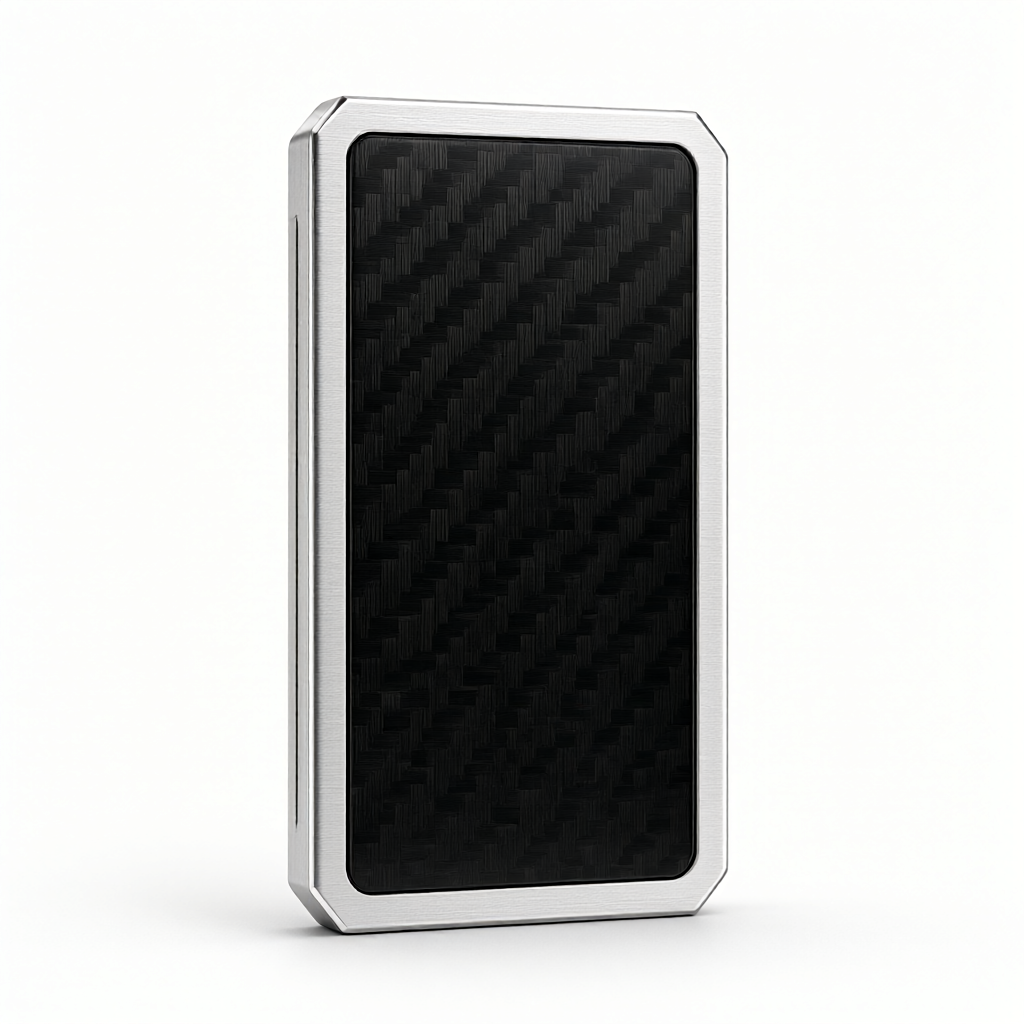
Slim card holders are manufactured primarily from three material families: aluminum alloy, carbon fiber composite, and titanium. Each delivers distinct performance characteristics that directly affect retail positioning, cost structure, and finishing options.
Aluminum
Anodized aluminum remains the most common material for entry-level to mid-tier slim wallets. The process starts with CNC-milled billets or extruded profiles, followed by chemical anodizing that creates a hard, colored oxide layer on the surface. This layer is what provides scratch resistance and color consistency across production runs. The resulting product is lightweight, corrosion-resistant, and cost-effective at volume.
Aluminum card holders typically weigh between 25 and 45 grams and measure roughly 75 by 110 millimeters in standard configurations. The anodized finish accepts laser engraving cleanly, which is why it dominates the corporate-gift and promotional-channel segment.
Carbon Fiber
Carbon fiber card holders use layered sheets of carbon-fiber weave bonded to a polymer or aluminum core under heat and pressure. The result is a material that is significantly stiffer than aluminum at equivalent thickness and far lighter than titanium. The visual appeal of the woven pattern drives strong retail differentiation, particularly in the EDC enthusiast channel.
The trade-off is cost. Carbon fiber raw material and layup labor push unit costs higher than comparable aluminum designs. Buyers targeting premium price points or limited-edition runs find the material justifies the margin. For Amazon FBA sellers competing on price, carbon fiber often requires a higher street price to maintain healthy margins.
Titanium
Titanium card holders occupy the upper tier of the material spectrum. Grade 2 titanium offers excellent corrosion resistance, high strength-to-weight ratio, and a naturally muted metallic appearance that does not require anodizing for basic finishes. When anodized, titanium produces vivid colors through thickness-controlled oxide layers rather than chemical dyes.
Titanium is heavier than aluminum and more expensive to CNC machine due to tool wear. The material commands the highest per-unit cost but also supports the highest retail price. Buyers focusing on the outdoor and tactical EDC segment will find titanium builds align with customer expectations for durability.
For a deeper breakdown of material selection across the full minimalist wallet category, including leather and polymer options, see our men’s minimalist wallets materials, specs, and sourcing guide.
Manufacturing Processes
CNC machining forms the foundation for metal card holders. The primary body, spring mechanism, and card-ejection components are milled from solid stock or formed from sheet metal. A typical aluminum slim wallet requires three to five CNC operations per component, including facing, pocket milling, slot cutting, and edge profiling.
Laser engraving adds branding, serial numbers, or custom artwork. Fiber laser systems produce clean, permanent marks on aluminum, titanium, and carbon fiber surfaces without affecting the surrounding material hardness. Engraving depth typically ranges from 0.02 to 0.10 millimeters depending on material and desired contrast.
UV printing is used primarily on non-metal substrates or as an overlay on anodized surfaces for full-color graphics. It is less durable than laser engraving for high-friction contact areas and is generally reserved for decorative panels that do not see direct card contact.
What Are the Key Specifications for B2B Buyers to Verify?
Before placing an order, buyers should confirm the following specifications with their manufacturer. These are the parameters that directly affect retail performance and customer satisfaction.
Card capacity. Standard credit and debit cards measure 85.6 by 53.98 millimeters with a thickness of approximately 0.76 millimeters. A slim card holder rated for six cards will accommodate six standard cards at roughly 5.4 millimeters of total stack height, excluding the holder body thickness. Premium cards such as metallic loyalty cards or thick driver’s licenses can add 0.2 to 0.4 millimeters per card. Buyers must specify the exact card mix when requesting quotes, as capacity ratings vary significantly with card thickness.
Overall dimensions. A typical slim card holder measures between 70 and 80 millimeters in width and 105 and 115 millimeters in height. The thickness of the empty holder ranges from 6 to 12 millimeters depending on the spring mechanism design and material choice. Thinner profiles under 8 millimeters empty often compromise card retention under heavy loads.
Spring mechanism type. Two dominant designs exist: tension-spring systems that compress cards between two metal plates, and elastic-band systems that grip cards around the perimeter. Tension-spring mechanisms provide more consistent retention over thousands of cycles and are the standard for metal card holders. Elastic-band designs are more common in polymer and hybrid constructions.
Weight. Weight directly affects pocket comfort and shipping cost. Aluminum models typically land between 25 and 45 grams. Carbon fiber versions range from 20 to 35 grams. Titanium models run 40 to 65 grams. These figures assume standard six-card capacity and exclude packaging.
Retention force. A well-engineered slim card holder should maintain secure card retention after repeated insertion and removal cycles. Buyers should request cycle-test data from manufacturers. A reasonable benchmark is 500 full insertion-removal cycles with less than 15 percent reduction in extraction force.
For additional context on how card holder construction varies by target market, review our EDC wallets and minimalist wallet manufacturing for B2B buyers article.
How Does RFID Blocking Work in Metal Card Holders?
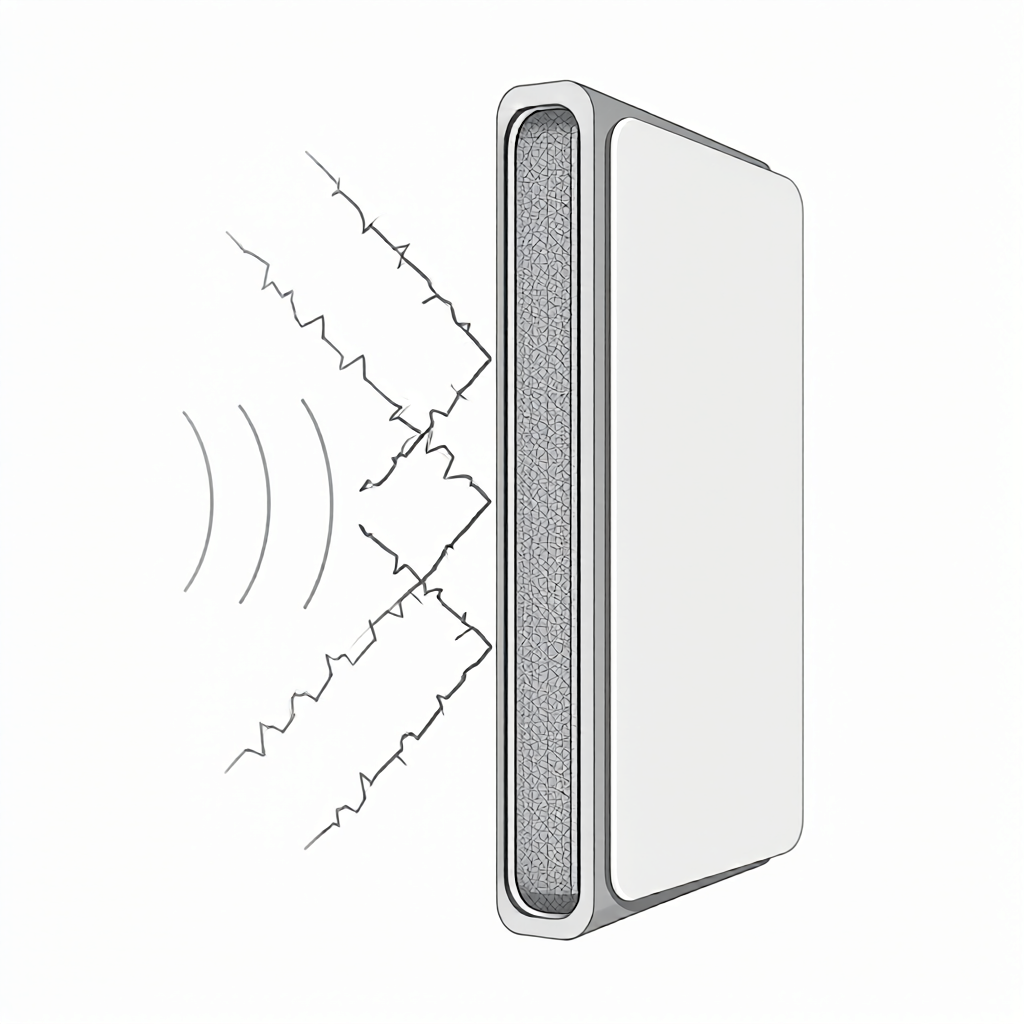
RFID blocking in slim card holders operates through electromagnetic shielding. A continuous conductive layer — typically a metal mesh or foil lining — surrounds the card storage cavity and reflects or absorbs the 13.56 MHz radio frequency signal used by contactless payment cards. This prevents unauthorized scanners from reading card data at close range.
The effectiveness of RFID shielding depends on three factors: material conductivity, layer continuity, and gap coverage. Solid metal bodies such as aluminum and titanium wallets provide inherent shielding because the enclosing case itself acts as a Faraday cage. Composite designs that combine metal frames with polymer inserts require additional shielding layers in the polymer sections to maintain continuity.
Testing follows standards referenced by EMVCo for contactless card security specifications. Independent verification typically measures signal attenuation between 20 and 40 decibels at the NFC frequency band. Attenuation below 20 dB indicates incomplete shielding and potential data exposure. Buyers should request third-party test reports rather than relying on manufacturer claims alone.
It is worth noting that RFID blocking is not universally required. Many card issuers have reduced the reading range of contactless chips, and most consumer fraud involving NFC occurs through physical card skimming devices rather than remote scanning. The feature remains a strong marketing differentiator, particularly in markets with high contactless adoption rates such as Europe and Australia.
What Certifications and Standards Apply?
B2B buyers should verify that their manufacturer holds the following certifications and can provide documentation on request.
ISO 9001. This quality management standard confirms that the manufacturer operates a documented production system with defined processes for incoming inspection, in-process control, and final release. It is the baseline expectation for any contract manufacturer serving retail or e-commerce channels.
BSCI audit. The Business Social Compliance Initiative audit evaluates labor practices, workplace safety, and environmental management within the factory. Retail chains and promotional product distributors frequently require BSCI certification as a condition of purchase.
REACH and RoHS compliance. These European Union regulations restrict hazardous substances in products sold within the EU market. REACH governs chemical substance registration and restriction, while RoHS limits lead, mercury, cadmium, and certain flame retardants in electronic and metal components. Buyers targeting European distribution must verify that both certifications apply to the specific materials and finishes used in the product.
SGS material testing. SGS and similar third-party laboratories provide material composition reports that verify the absence of restricted substances and confirm alloy grades. A SGS report for an aluminum wallet should specify the exact alloy designation (typically 6061 or 6063 for CNC machining) and confirm heavy metal content within acceptable limits.
For a broader overview of certification requirements across wallet categories, see our what is a card holder, B2B sourcing guide for buyers.
What Should You Consider Before Ordering?
First-time buyers of slim card holders commonly make the following mistakes. Understanding these pitfalls before engaging with manufacturers will save time and reduce costly rework.
Material substitution without notification. Some manufacturers quote one alloy or composite and deliver a different material that passes visual inspection but fails performance expectations. Always specify the exact material grade in the purchase order and require a material certificate with each shipment.
Incomplete certification documentation. A manufacturer may hold ISO 9001 or BSCI certification but fail to provide current audit reports upon request. Buyers should treat unverifiable certifications as non-existent and require copies of active certificates before deposit payment.
Overpromising lead times. Lead time claims of three to five days for custom orders are unrealistic for genuine OEM production involving CNC machining, anodizing, and assembly. A reasonable sample lead time is five to seven business days. Production lead time for 500 to 1,000 units typically ranges from 15 to 25 business days depending on material availability and finish complexity.
Ignoring packaging specifications. Retail-ready packaging adds cost and logistical complexity. Buyers should define whether they need retail hang cards, branded boxes, poly bags, or FBA-compliant shipping cartons before quoting. Packaging changes after tooling setup can require重新engineering of the product dimensions and add unforeseen cost.
Underestimating customization scope. Logo placement, engraving depth, and font specification are not minor details. A shallow engraving on an anodized surface can lose contrast during the anodizing process if not accounted for in the workflow. Always confirm the engraving sequence with the manufacturer before approving artwork.
Slim Card Holders: How Do We Approach Manufacturing?
As a manufacturer, our approach to slim card holders follows the same procurement framework described above. We machine aluminum, carbon fiber, and titanium card holders in our in-house facility, validate material certificates against each purchase order, and provide third-party test reports for RFID performance and RoHS compliance on request.
Our MOQ starts at 300 pcs per SKU for full OEM customization (100 pcs trial order available for stock finishes) for standard designs and scales upward for custom tooling requirements. Samples are produced within seven business days, and production lead times follow the ranges outlined in the previous section. Custom packaging, private-label branding, and Amazon FBA prep are handled as part of the standard manufacturing workflow.
If you are evaluating suppliers or refining specifications for your next order, get a free quote with your material preference, card capacity, and target quantity.
Slim Card Holders: Where Can You Verify the Data and Sources?
- men’s minimalist wallets materials, specs, and sourcing guide — topedcwallet.com
- EDC wallets and minimalist wallet manufacturing for B2B buyers — topedcwallet.com
- EMVCo — www.emvco.com
- what is a card holder, B2B sourcing guide for buyers — topedcwallet.com
- get a free quote — topedcwallet.com
From article to product
Sourcing minimalist-wallets?
Tell us the format, the quantity and the date you need stock. You get material options, MOQ and a landed-cost range back within one business day.
Keep reading
More on wallet types
Thin Male Wallets: Buying Guide for Slim Minimalist Picks
How to choose a slim wallet for men — thickness thresholds, material trade-offs, capacity…
ReadStashed Wallet: A Minimalist Everyday-Carry Solution
Understand what a stashed wallet is, how minimalist slim wallets work, and what to…
ReadFolding Wallets: Types, Materials & Buying Guide
Learn what makes a folding wallet worth buying, from materials and card capacity to…
Read
About the author
TOPWALLET Editorial Team
TOPWALLET's editorial and engineering desk writes from bench testing at the Shenzhen (Longgang) facility: pull-force and cycle testing, 13.56 MHz shielding measurements, finish trials and factory audits, rather than supplier spec sheets. Every specification in these guides is one we write on a purchase order.
Written on the floor
This article was written by our production and QC team — the people who spec tolerances, run the finishing line and inspect every batch. Where it states a capacity, a pull force or a lead time, it comes from a measurement we made, not a supplier’s catalogue. If a number here disagrees with what your own supplier told you, tell us; several of these articles started as a correction from a buyer.
See how the factory works · Inspection process · Sourcing FAQ
Sourcing minimalist-wallets?
Tell us the format, the quantity and the date you need stock. You get material options, MOQ and a landed-cost range back within one business day.