

Choosing the right card holder for men as a B2B buyer means more than picking a slim profile — it requires understanding material grades, RFID-blocking performance standards, customization pathways, MOQ thresholds, and common sourcing pitfalls before issuing a purchase order. This guide breaks down every specification you need to evaluate, from minimalist aluminum and carbon fiber options to titanium and leather variants, plus certified supplier requirements and a step-by-step procurement checklist.
What Is a Card Holder for Guys?
A card holder for guys is a slim, pocket-friendly carrying device designed to hold credit and debit cards — and sometimes folded cash — in place of a bulky traditional bi-fold wallet. It typically holds between 3 and 12 cards, fits comfortably in a front or back pocket, and is constructed from materials such as aluminum, carbon fiber, titanium, or leather. The defining feature is minimalism: reduced thickness, lighter weight, and a form factor built for everyday carry (EDC) rather than storage-heavy use.
Unlike a traditional wallet, which often carries 15–20 cards, receipts, coins, and photos, a men’s card holder strips away everything non-essential. This shift reflects broader market trends — younger buyers, professionals who prefer front-pocket carry, and the growing EDC community — all driving demand for simpler, more functional pocket gear. For buyers sourcing these products wholesale or through private label, understanding the full specification landscape is essential before committing to a supplier or product line.
Card Holder For Men: How Does It Work in Detail?
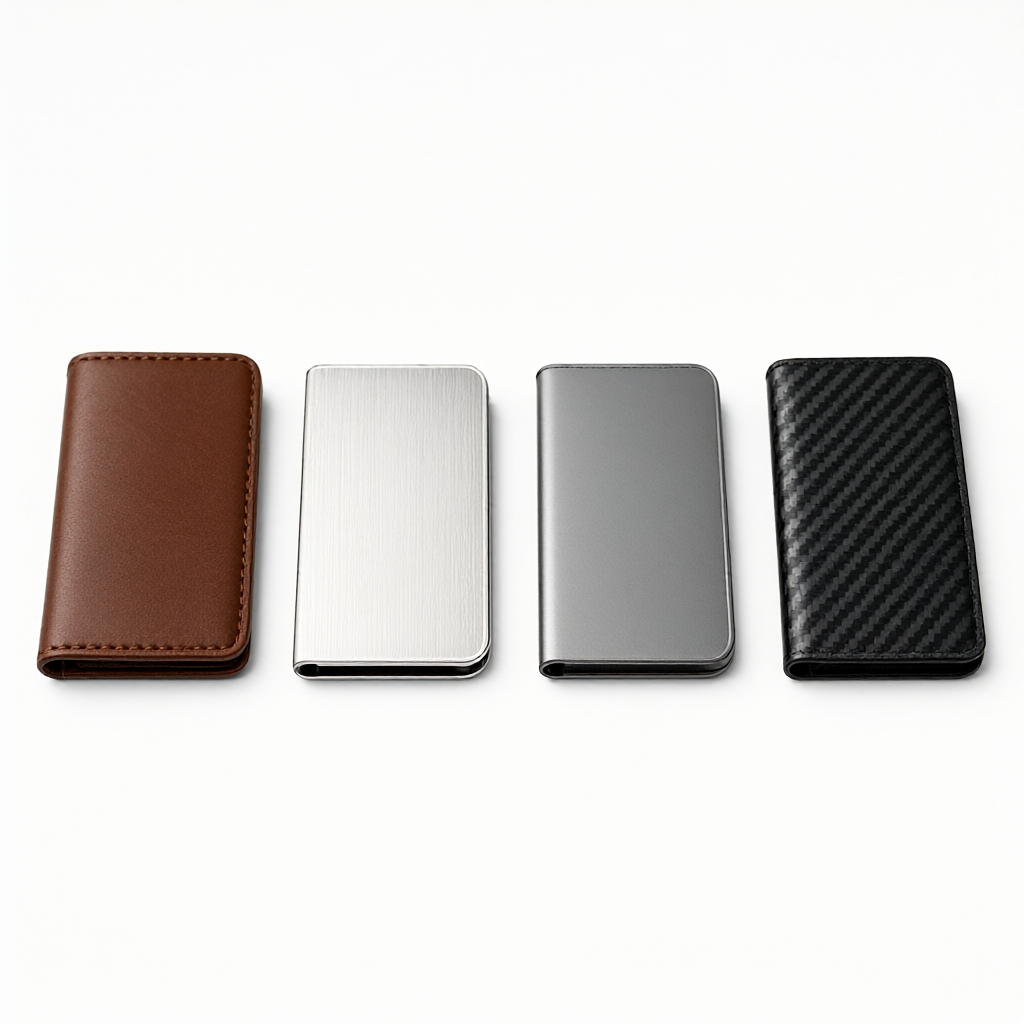
What exactly is a card holder and how does it differ from a traditional wallet?
A card holder is a purpose-built accessory for carrying a small number of cards and, in some designs, a limited cash slot. Its form factor is deliberately constrained: slim profile, lightweight construction, and no coin pockets or zip compartments. A traditional wallet, by contrast, is a multi-compartment organizer designed for maximum storage capacity. The difference matters to B2B buyers because the two product categories serve entirely different use cases, price points, and sourcing requirements.
Card holders — also called card sleeves, slim wallets, or front pocket wallets — appeal to buyers who prioritize portability and speed of access over storage volume. They are especially popular in EDC communities, among travelers who want to reduce pocket bulk, and with consumers looking for a modern, streamlined alternative to the bifold.
What materials are commonly used in men’s card holders?
Material choice is the single most significant specification variable for both product performance and unit economics. The four dominant material categories in the card holder market are:
Aluminum — The most common metal option for budget to mid-range card holders. Aluminum card holders are lightweight, corrosion-resistant, and cost-effective to manufacture via CNC machining and anodizing. Typical thickness ranges from 2–4 mm, with weights between 30 and 60 grams depending on size and finish. Anodized aluminum offers improved scratch resistance and color options, making it a popular choice for branded and promotional products.
Carbon fiber — A premium material favored for high-end EDC card holders. Carbon fiber is exceptionally light, rigid, and scratch-resistant, with a distinctive woven texture that appeals to style-conscious buyers. Manufacturing involves resin infusion and precision cutting, which increases per-unit cost compared to aluminum. Typical weight ranges from 20 to 40 grams, making it one of the lightest card holder options available.
Titanium — The premium tier for metal card holders. Titanium offers superior strength-to-weight ratio, excellent corrosion resistance, and a natural matte finish that does not require anodizing. It is more expensive to machine than aluminum, resulting in higher unit costs. Titanium card holders typically weigh between 30 and 55 grams and are positioned at the upper end of the market price range.
Leather — The traditional material still commanding a significant share of the market. Full-grain and top-grain leather card holders offer a classic aesthetic and natural aging characteristics. Leather is softer than metal options and may stretch over time, affecting card retention. For B2B buyers, leather introduces additional sourcing complexity around hide grading, tanning process compliance (REACH), and consistency between batches.
Each material carries distinct trade-offs between cost, durability, weight, and perceived value. Buyers should align material selection with their target price point and brand positioning rather than defaulting to a single option.
What key specifications should buyers evaluate?
When assessing a card holder for potential procurement, several specifications directly impact product fit, functionality, and end-user satisfaction:
Card capacity — Ranges from 3 cards (ultra-slim) to 12+ cards (high-capacity). Most popular configurations hold 4–6 cards with a cash strap or slip. Capacity claims should always be verified against real card thickness, as standard credit cards vary slightly in dimension and some markets use thicker cards.
Dimensions — Standard card holder sizes approximate the dimensions of a credit card (85.6 mm × 53.98 mm) with slight additions for structural margins. Thickness is the critical dimension: most minimalist card holders fall between 6 mm and 15 mm when loaded. Buyers should specify maximum loaded thickness during product development to ensure pocket compatibility.
Weight — Ranges from approximately 20 grams (carbon fiber, ultra-slim) to 80 grams (heavier aluminum or titanium with extended features). Weight is a key differentiator in the EDC segment and should be specified per material and configuration.
Retention mechanism — Cards must stay secured without being difficult to extract. Common mechanisms include spring-loaded frames, elastic straps, friction-fit slots, and magnetic closures. The retention system affects both user experience and manufacturing complexity.
How does RFID-blocking technology work in card holders?
RFID-blocking card holders incorporate a layer of metal mesh or ferrous material that creates a Faraday cage around the cards, preventing radio-frequency identification scanners from reading the embedded chips in contactless payment cards and passports.
The technical basis for RFID blocking relates to the frequency bands used by contactless payment systems — typically 13.56 MHz for NFC-enabled cards. Effective blocking requires continuous conductive material coverage around the card area; gaps or thin spots can allow signal penetration.
Buyers should be aware that no universal consumer certification exists specifically for RFID-blocking wallets. Some manufacturers reference ISO/IEC 14443 (the standard for proximity card communication) or FIPS 201 (U.S. federal identity credentials) as benchmarks, but these are standards for the cards themselves, not for wallet blocking performance. Reputable suppliers will provide test reports from independent laboratories such as SGS, but buyers should request and verify these documents rather than accepting marketing claims at face value.
Card Holder For Men: Which Specifications Matter Most?
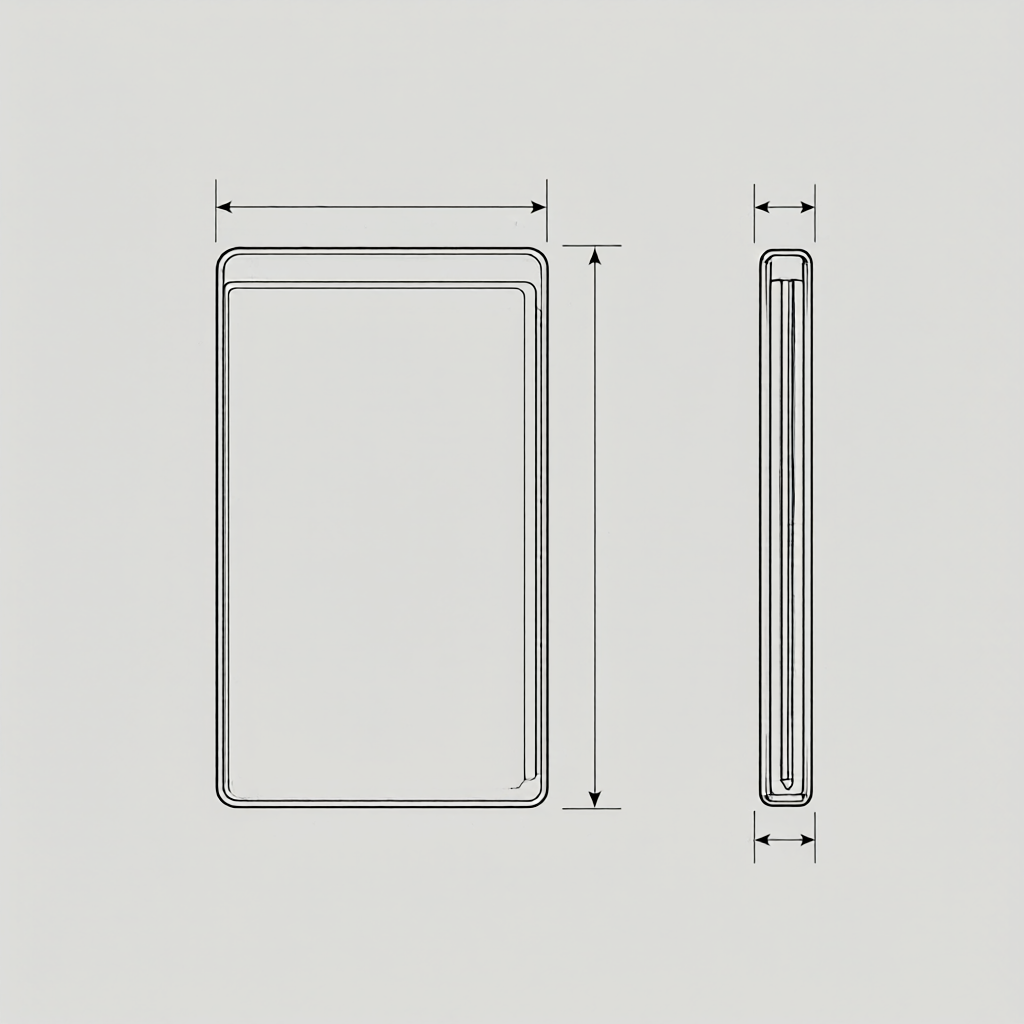
What are the key specifications for sourcing card holders?
B2B buyers should define and confirm the following specifications during the sourcing and product development phase:
- Material: aluminum (6061 or 7075 grade), carbon fiber, titanium (Grades 1–2), or leather (full-grain, top-grain, or synthetic)
- Card capacity: 3, 4, 6, 8, 10, or 12 cards — must match target market expectations
- Loaded thickness: typically 6–15 mm depending on material and capacity
- Weight: 20–80 g depending on material and size
- RFID-blocking: yes or no; if yes, request test documentation
- Finish: anodized (aluminum), natural (titanium), polished (carbon fiber), treated (leather)
- Retention system: spring frame, elastic band, magnetic closure, or friction slot
- Cash accommodation: money clip, slip pocket, or strap — optional
- Logo application: laser engraving, UV printing, embossing, or no branding
- Packaging: retail box, polybag, or custom branded packaging
- Compliance: REACH, RoHS for materials; ISO 9001 for manufacturer quality system
These specifications form the basis of a product development brief that can be shared with manufacturers to generate accurate quotations and samples. For a deeper breakdown of material selections and sourcing considerations, see our men’s minimalist wallets guide covering materials, specs, and sourcing.
Card Holder For Men: Which Standards and Certifications Apply?
What standards and certifications apply to card holders?
Manufacturers producing card holders for international markets should operate under recognized quality and compliance frameworks. The following are the most relevant:
ISO 9001 — The international standard for quality management systems. Certification indicates the manufacturer has documented processes for production control, incoming material inspection, in-process quality checks, and final product verification. Buyers should request a valid ISO 9001 certificate and verify its scope covers the relevant product categories.
BSCI (Business Social Compliance Initiative) — A social audit framework used primarily for European buyers. BSCI certification covers labor practices, working conditions, and ethical sourcing. It is increasingly required by retail chains and distributors operating in EU markets.
REACH and RoHS — European Union regulations governing chemical substances in manufactured goods. REACH restricts the use of certain hazardous substances, while RoHS limits lead, mercury, and other materials in electronic-adjacent products. Since RFID-blocking card holders contain metal layers, RoHS compliance is particularly relevant. Buyers should request material test reports confirming compliance.
SGS and third-party testing — Independent laboratory testing provides verification of material composition, RFID-blocking effectiveness, and chemical compliance. Reputable manufacturers will have these reports available upon request.
What customization options are available for B2B buyers?
Customization is one of the primary advantages of sourcing card holders through OEM or ODM manufacturing. Typical options include:
Logo and branding — Laser engraving is the most common method for metal card holders, producing a permanent, precise mark. UV printing works well for carbon fiber and some leather surfaces. Embossing or debossing is used for leather products. Logo placement, size, and method should be agreed upon during the sampling phase.
Material selection — Buyers can specify aluminum grade, anodized color, carbon fiber weave pattern, titanium grade, or leather type and color. Material choices affect both unit cost and product positioning.
Packaging and retail presentation — Custom retail boxes, blister packs, polybags with printed inserts, and branded tissue paper are all available. Packaging design can significantly impact shelf appeal for retail and e-commerce channels.
Functional variations — Money clip integration, extended card capacity, dual-slot designs, and keychain attachments are common customization requests. Functional additions increase manufacturing complexity and should be evaluated against target pricing.
For context on how EDC wallet manufacturing handles these customization variables in practice, the EDC wallets and minimalist wallet manufacturing guide for B2B buyers covers production workflows and sourcing strategies.
Card Holder For Men: What Else Should Buyers Consider?
What should you consider regarding MOQ, lead times, and sourcing?
Minimum Order Quantity (MOQ) — Most manufacturers set MOQs between 300 and 500 pieces per design for custom card holders. Lower MOQs are possible but typically carry higher per-unit costs due to setup and tooling amortization. Buyers with smaller initial orders should plan for proportionally higher unit pricing or consider starting with stock designs that require minimal customization.
Sample lead time — Sample production typically takes 5–10 business days for standard designs. Custom samples requiring new tooling or material sourcing may take 10–15 business days. Buyers should factor sample time into their product development timeline, especially when planning for seasonal demand or retail launch windows.
Production lead time — Mass production lead times generally range from 15 to 30 business days depending on order volume, customization complexity, and manufacturer capacity. Buyers should confirm lead times in writing and build in buffer for quality inspection and logistics.
Logistics and fulfillment — Drop shipping and Amazon FBA prep services are increasingly available from manufacturers serving e-commerce sellers. These services reduce operational overhead for private label buyers but may carry additional per-unit fees.
What common mistakes should buyers avoid when sourcing card holders?
Several recurring errors cause delays, cost overruns, and product mismatches in card holder procurement:
Underestimating real-world card thickness — Specification sheets often list capacity based on ideal card dimensions, but actual cards vary by issuer and region. A holder rated for 6 cards may only accept 4–5 in practice. Buyers should request samples loaded with their actual cards before approving production.
Over-relying on RFID-blocking marketing claims — Not all RFID-blocking products perform equally. Without independent test documentation, claims may not reflect actual signal attenuation. Buyers should verify blocking effectiveness through lab reports, not product descriptions.
Choosing suppliers based on price alone — The lowest quote rarely represents the best value. Factor in material quality, certification status, sample responsiveness, communication quality, and after-sales support. A slightly higher unit cost from a reliable manufacturer typically results in fewer defects, fewer delays, and a smoother sourcing experience.
Ignoring packaging requirements — Retail-ready packaging is often an afterthought in early sourcing discussions. Define packaging specifications — materials, dimensions, printing, barcodes, and compliance labeling — before sample approval to avoid costly rework.
Failing to specify material grades and finishes — Generic descriptions like “aluminum wallet” or “carbon fiber holder” are insufficient for procurement. Specify alloy grade (e.g., 6061-T6 aluminum), surface treatment (anodized color code), and finish tolerance to ensure consistent quality across production runs.
How does the industry approach these standards and customization in practice?
Understanding how established manufacturers translate specifications into finished products helps buyers set realistic expectations and evaluate supplier capabilities. The card holder market has matured significantly, and experienced producers have developed streamlined processes for handling the variables outlined above — from material sourcing and CNC machining to surface finishing, quality inspection, and packaging.
Manufacturers with long-term export experience typically operate within structured quality management systems that cover incoming material inspection, in-process checks, and final product verification. They understand that B2B buyers need consistency across production runs, accurate documentation for compliance purposes, and responsive communication throughout the sourcing process.
The relationship between specification and product outcome is direct: clear requirements lead to accurate samples, accurate samples lead to correct production, and correct production leads to satisfied end customers. Buyers who invest time in defining their requirements upfront — material, capacity, finish, branding, packaging, compliance — typically experience fewer surprises and faster time-to-market.
As a manufacturer with over a decade of export experience in minimalist EDC wallets and card holders, our approach centers on translating buyer specifications into production-ready products through in-house CNC machining, precision laser engraving, and controlled surface finishing. We work with aluminum, carbon fiber, and titanium materials, offer low minimum order quantities starts at 300 pcs per SKU for full OEM customization (100 pcs trial order available for stock finishes), and provide sample lead times of approximately 7 days. Our facility operates under ISO 9001 and BSCI frameworks, and all materials meet REACH and RoHS requirements. Get a Free Quote
Types of Card Holders for Men
The men’s card holder market spans several distinct form factors, each suited to different carrying preferences and use cases:
Front-pocket card holders — The most popular configuration for everyday carry. These sit flush in the front pocket, reduce hip-bone pressure, and maintain a low profile under shirts and jackets. Minimalist designs typically hold 3–8 cards.
Back-pocket card holders — Bulkier than front-pocket variants but offer higher capacity (6–12 cards). Preferred by buyers whose customers carry larger card collections or require cash storage alongside cards.
Money clip card holders — Combine card slots with an integrated metal clip for folded bills. Popular in the EDC community and among customers who prefer a single-purpose carry solution.
Bifold card holders — Retain a traditional fold-over silhouette but strip away excess compartments. Typically hold 4–10 cards with a single bill compartment. Bridge the gap between minimalist and full wallet buyers.
Slim wallet hybrids — Foldable designs that combine a card section with a small cash compartment and occasional coin storage. Positioned between pure card holders and traditional wallets.
Tactical pocket organizers — Rugged, multi-slot designs with MOLLE compatibility, key holders, and tool integration. Target outdoor enthusiasts and professional EDC users.
Understanding which type your target market prefers is critical before committing to tooling and production. See our EDC wallets and minimalist wallet manufacturing guide for deeper sourcing context.
Style and Design Considerations for Men’s Card Holders
Men’s card holder purchasing decisions are heavily influenced by aesthetics, finish, and perceived ruggedness. Key design variables include:
Color palette — Matte black, silver, gunmetal, and anodized blue dominate men’s EDC preferences. Carbon fiber’s woven texture and titanium’s natural gray appeal to buyers seeking technical aesthetics.
Edge treatment — Beveled edges improve pocket comfort and visual refinement. Sharp edges can feel cheap and may catch on fabric. Edge radius and chamfer specifications should be defined in the tech pack.
Texturing and grip — Brushed, bead-blasted, or knurling finishes reduce slippage and add tactile quality. Smooth polished surfaces look premium but show fingerprints and scratches more readily.
Profile and curvature — Rounded corners and gentle curvature improve pocket comfort. Some buyers specify a slight camber to help cards eject smoothly with one hand.
Hardware integration — Money clips, spring mechanisms, and frame joints should match the primary material aesthetic. Mismatched hardware (e.g., stainless steel clips on anodized aluminum bodies) can undermine perceived quality.
Brand storytelling through design — Engraved patterns, custom line-art, or subtle branding can elevate a generic product into a differentiated offering. Discuss design intent with your manufacturer during the concept phase.
Price Ranges and Value Analysis
Card holder pricing varies significantly based on material, manufacturing complexity, and order volume. B2B buyers should budget within these typical wholesale ranges:
| Material | Unit Cost Range (300 pcs) | Unit Cost Range (1,000+ pcs) | Positioning |
|---|---|---|---|
| Aluminum (anodized) | $3.50 – $7.00 | $2.00 – $4.50 | Budget to mid-tier |
| Carbon fiber | $6.00 – $12.00 | $4.00 – $8.50 | Mid to premium |
| Titanium | $10.00 – $22.00 | $7.00 – $15.00 | Premium to luxury |
| Leather (full-grain) | $4.00 – $9.00 | $2.50 – $6.00 | Mid-tier |
| Leather (top-grain) | $2.50 – $5.50 | $1.50 – $3.50 | Entry-level |
These ranges are indicative and depend on customization complexity, finish requirements, packaging, and order terms. Buyers should request itemized quotations that separate material cost, machining cost, finishing cost, and packaging cost to evaluate true value per component.
Value is not determined by unit cost alone. A $4.00 aluminum wallet with poor edge finishing, inconsistent anodizing, or no test documentation may cost more in returns, replacements, and brand damage than a $6.50 unit from a certified manufacturer with full QA traceability.
For detailed material grade specifications and cost analysis frameworks, refer to our men’s minimalist wallets guide.
Durability and Wear Over Time
Card holders are subjected to daily abrasion, moisture exposure, and repeated card insertion cycles. Understanding expected wear patterns helps buyers set realistic quality expectations and communicate product lifespan to end consumers.
Aluminum — Anodized aluminum resists corrosion and scratching under normal use. However, anodized layers can wear through at high-contact points (edges, corner zones) after 12–24 months of daily use, exposing the base metal. Hard-anodizing (Type III, 0.001″ minimum thickness) extends service life significantly.
Carbon fiber — Resists scratches and UV degradation exceptionally well. The primary wear concern is edge delamination if the resin bond degrades under extreme temperature cycling. Quality manufacturers use vacuum infusion and post-cure processes to minimize this risk.
Titanium — The most durable metal option. Titanium Grade 2 resists corrosion and maintains finish integrity indefinitely under normal carry conditions. It does not anodize as vividly as aluminum but accepts color anodizing through controlled electrochemical processes.
Leather — Full-grain leather develops a patina over 6–18 months of use, which many consumers view as desirable. Top-grain and bonded leather may crack or flake after extended use. Leather card holders require water-resistant treatment for longevity in wet climates.
Retention mechanism longevity — Spring-loaded frames lose tension after approximately 5,000–10,000 cycle tests. Elastic straps degrade with UV exposure and temperature changes. Magnetic closures may demagnetize over extended periods. Mechanical retention systems generally outperform elastic and magnetic options in long-term reliability.
Buyers should request cycle-test data from manufacturers and define acceptable retention force thresholds (minimum 2 kg pull force after 5,000 cycles is a reasonable benchmark) in purchase specifications.
How to Choose the Right Card Holder?
Selecting the correct card holder for your target market requires evaluating five key decision dimensions:
1. Target customer profile — Who carries this product? A corporate gift buyer needs brandable, cost-effective aluminum units. An EDC enthusiast seeks titanium or carbon fiber with precision machining. A fashion retail buyer prioritizes leather and design aesthetics. Define the end user before specifying materials and features.
2. Card capacity requirements — How many cards does your target market actually carry? Market research indicates the average adult carries 4–6 cards daily. Designing for 8–12 cards may create unnecessary bulk for most users. Verify actual usage patterns rather than relying on maximum capacity marketing claims.
3. RFID-blocking necessity — Do your target customers prioritize contactless payment security? RFID-blocking adds $0.50–$2.00 per unit depending on material and construction. If your market doesn’t prioritize this feature, omitting it reduces cost and complexity. When required, insist on verified test documentation.
4. Budget and margin targets — Align material selection and feature set with your target retail price point. A $3.50 aluminum wallet retails for $15–$25. A $12 carbon fiber wallet retails for $40–$65. Work backward from your desired retail price to determine acceptable unit cost, including packaging and logistics.
5. Brand differentiation strategy — Will your product compete on price, design, material quality, or customization? Each strategy demands different manufacturing partners and specification priorities. A private-label brand competing on price should prioritize aluminum and high-volume efficiency. A premium brand should prioritize titanium, custom finishes, and certified quality systems.
RFID-Blocking Standards and Verification
RFID-blocking performance in card holders is measured against specific electromagnetic shielding standards, not the card communication protocols themselves. Understanding the correct standards prevents miscommunication with suppliers and ensures buyers receive products that actually block signals.
Correct RFID-blocking test standards:
- ASTM F2951 – Standard Test Method for Measuring the Radio Frequency Shielding Effectiveness of Personal Protection Materials — The primary test method for evaluating shielding effectiveness of materials used in RFID-blocking products. Results are expressed in decibels (dB) of signal attenuation.
- EN 541-4 – European standard for RFID shielding performance — Specifies test procedures and minimum attenuation requirements for personal RFID protection products.
- ISO/IEC 14443 — This is a proximity card communication standard, NOT a wallet blocking benchmark. Some suppliers incorrectly cite this as proof of blocking performance. It defines how contactless cards communicate at 13.56 MHz, not how well a material blocks that frequency.
What effective shielding looks like: A properly constructed RFID-blocking card holder should achieve at least 30 dB of attenuation at 13.56 MHz (NFC frequency) and 850–950 MHz (RFID frequency bands). This translates to approximately 99.9% signal reduction.
Verification requirements for B2B buyers:
- Request SGS, Intertek, or equivalent third-party lab test reports specifying the test standard used (ASTM F2951 or EN 541-4 preferred)
- Confirm the test report covers the exact product construction (material, thickness, coverage area)
- Reject any supplier that cannot provide documented test results — an unverified RFID-blocking claim provides no liability protection
- Understand that partial coverage (mesh strips with gaps) provides inferior blocking compared to full-wrap conductive layers
For comprehensive sourcing guidance including RFID compliance verification, see our EDC wallets manufacturing guide for B2B buyers.
Procurement Framework: Buyer Checklist and Red Flags
A structured procurement process reduces risk and ensures consistent quality across production runs. Use the following checklist and red-flag framework when evaluating card holder suppliers.
Pre-Sourcing Checklist
- [ ] Define target market and end-user profile
- [ ] Specify material type, grade, and finish requirements
- [ ] Document card capacity, dimensions, and loaded thickness limits
- [ ] Determine RFID-blocking necessity and specify required test standard
- [ ] Set target unit cost and acceptable margin range
- [ ] Define MOQ and confirm supplier can meet volume requirements
- [ ] Specify logo application method, placement, and color requirements
- [ ] Define packaging specifications (retail box, polybag, insert cards)
- [ ] Request ISO 9001 certification and verify scope
- [ ] Request BSCI audit report if selling to European retail chains
- [ ] Request REACH/RoHS material test reports
- [ ] Request SGS or Intertek test reports for RFID-blocking (if applicable)
- [ ] Request production capacity confirmation and lead time commitments
- [ ] Confirm drop-shipping and FBA prep capabilities if applicable
Supplier Evaluation Red Flags
- No test reports available — Reputable manufacturers can produce SGS, REACH, or RoHS test documentation within 48 hours. Refusal or indefinite delays indicate weak quality systems.
- Vague material specifications — “High-quality aluminum” without grade designation (6061, 7075) or finish specification is insufficient for B2B procurement.
- Unrealistically low pricing — Quotes significantly below market rates often indicate material substitution, skipped QC steps, or hidden costs added later.
- No sample policy — Suppliers who cannot provide paid or free samples before bulk production lack confidence in their quality.
- No certification documentation — Claiming ISO 9001 or BSCI compliance without providing valid certificate numbers that can be verified is a serious red flag.
- Unwilling to define lead times in writing — Verbal commitments without written confirmation leave buyers unprotected against delays.
- No customization capability evidence — Suppliers claiming OEM/ODM services but unable to show previous custom work examples may lack actual capability.
Decision Guide: Material Selection
| Priority Factor | Recommended Material | Reasoning |
|---|---|---|
| Lowest cost, good durability | 6061 Aluminum (anodized) | Cost-effective, widely available, suitable for high-volume orders |
| Premium lightweight, scratch resistance | Carbon fiber (epoxy/resin) | Superior strength-to-weight, distinctive aesthetic, mid-range cost |
| Maximum durability, premium positioning | Titanium Grade 2 | Corrosion-proof, long service life, highest perceived value |
| Classic aesthetic, warm feel | Full-grain leather | Natural aging, premium tactile experience, strong retail appeal |
| Budget retail, fashion positioning | Top-grain leather | Lower cost than full-grain, acceptable durability for fashion market |
For a detailed breakdown of each material category and its procurement specifications, review our card holder sourcing guide.
Common Buyer Mistakes and Selection Pitfalls
Several recurring errors cause costly delays and product mismatches in card holder sourcing. Avoid these pitfalls:
Underestimating real-world card thickness — Specification sheets often list capacity based on ideal card dimensions, but actual cards vary by issuer and region. A holder rated for 6 cards may only accept 4–5 in practice. Always test samples loaded with your actual cards before approving production.
Assuming RFID-blocking claims without verification — Not all RFID-blocking products perform equally. Without independent test documentation per ASTM F2951 or EN 541-4, claims may not reflect actual signal attenuation. Buyers should verify blocking effectiveness through lab reports, not product descriptions.
Failing to specify material grades and finishes — Generic descriptions like “aluminum wallet” or “carbon fiber holder” are insufficient for B2B procurement. Specify alloy grade (6061 vs. 7075 aluminum), anodizing type and thickness, carbon fiber weave pattern, and titanium grade to ensure consistent results across production runs.
How TOP EDC Wallet Meets B2B Sourcing Standards?
As a manufacturer specializing in minimalist EDC wallets and pocket gear, we approach card holder production through the same specification-first framework described above. Here is how our capabilities align with the standards and requirements outlined throughout this guide.
Our facility operates under ISO 9001 certification (since 2014) and maintains BSCI-audited production standards, ensuring documented quality control from incoming material inspection through final shipment. All materials used in our card holders are REACH and RoHS compliant, and we provide SGS-tested material reports for every production batch. Our aluminum components are machined from 6061 and 7075-grade stock, anodized to specified thickness, and finished with beveled edges for pocket comfort. Carbon fiber units are vacuum-infused and post-cured to prevent delamination, while titanium models are CNC-machined from Grade 2 billet for consistent dimensional accuracy.
For buyers requiring RFID-blocking performance, we construct full-coverage conductive layers and provide independent laboratory test documentation per applicable shielding standards — not unverified marketing claims. Customization encompasses laser engraving, UV printing, embossing, material selection, and complete retail packaging design, from concept to shelf-ready presentation.
Our production capacity of 500,000+ units monthly across a 50,000 sq ft facility supports orders of any scale, with MOQs starts at 300 pcs per SKU. Samples are delivered within 7 business days, and bulk production lead times are confirmed in writing before order commitment. We serve 200+ brands across North America, Europe, Australia, and Southeast Asia, and our OEM/ODM team works with each client to translate specifications into production-ready products.
If you are evaluating suppliers or developing a new card holder product line, we recommend requesting a sample loaded with your actual cards and verifying all test documentation before placing a production order. For technical specifications, material options, or a detailed quotation, contact our team to discuss your requirements.
Card Holder For Men: Where Can You Verify the Data and Sources?
- men’s minimalist wallets guide covering materials, specs, and sourcing — topedcwallet.com
- EDC wallets and minimalist wallet manufacturing guide for B2B buyers — topedcwallet.com
- Get a Free Quote — topedcwallet.com
- card holder sourcing guide — topedcwallet.com
From article to product
Sourcing minimalist-wallets?
Tell us the format, the quantity and the date you need stock. You get material options, MOQ and a landed-cost range back within one business day.
Keep reading
More on wallet types
Thin Male Wallets: Buying Guide for Slim Minimalist Picks
How to choose a slim wallet for men — thickness thresholds, material trade-offs, capacity…
ReadStashed Wallet: A Minimalist Everyday-Carry Solution
Understand what a stashed wallet is, how minimalist slim wallets work, and what to…
ReadFolding Wallets: Types, Materials & Buying Guide
Learn what makes a folding wallet worth buying, from materials and card capacity to…
Read
About the author
TOPWALLET Editorial Team
TOPWALLET's editorial and engineering desk writes from bench testing at the Shenzhen (Longgang) facility: pull-force and cycle testing, 13.56 MHz shielding measurements, finish trials and factory audits, rather than supplier spec sheets. Every specification in these guides is one we write on a purchase order.
Written on the floor
This article was written by our production and QC team — the people who spec tolerances, run the finishing line and inspect every batch. Where it states a capacity, a pull force or a lead time, it comes from a measurement we made, not a supplier’s catalogue. If a number here disagrees with what your own supplier told you, tell us; several of these articles started as a correction from a buyer.
See how the factory works · Inspection process · Sourcing FAQ
Sourcing minimalist-wallets?
Tell us the format, the quantity and the date you need stock. You get material options, MOQ and a landed-cost range back within one business day.