

A monogrammed card holder is a slim, personalized wallet sleeve — typically built from aluminum, carbon fiber, or titanium — that carries credit cards, IDs, and cash while displaying a custom name, initials, or logo through laser engraving, etching, or stamping. For B2B buyers, these products serve three main channels: private-label EDC brands building their own line, promotional distributors ordering branded card sleeves in volume, and corporate gifting programs looking for premium personalized accessories. The defining feature is not just personalization but the integration of that marking into a hardened metal or composite substrate, which demands specific manufacturing steps and material choices that affect both appearance and long-term durability.
Monogrammed Card Holders For B2B Buyers: What Is the Quick Answer?
Monogrammed Card Holders For B2B Buyers: How Does It Work in Detail?
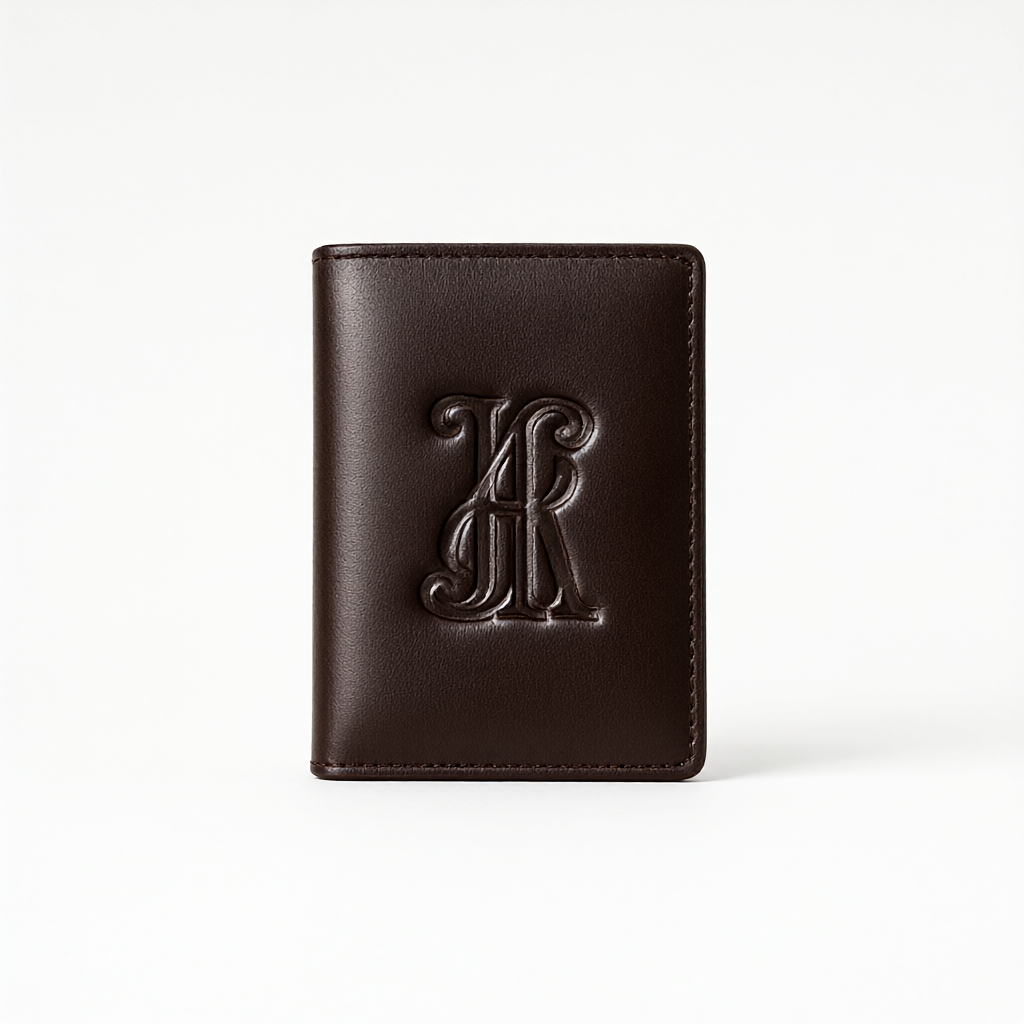
What exactly is a monogrammed card holder?
At its core, a monogrammed card holder is an ID holder wallet or mini bifold card wallet — often called a metal card case or EDC card organizer in industry catalogues — whose surface has been permanently marked with letters, initials, or a brand logo. Unlike decorative monogramming on soft goods, the mark on a card sleeve is cut into or altered on the substrate itself rather than printed onto it. This distinction matters because it determines what looks acceptable over years of carry and which techniques survive hand washing, pocket friction, and exposure to oils.
Typical use cases cluster around promotional merchandising, private-label resale, and corporate gifting. A brand owner might specify a brushed aluminum card holder with a debossed logo for a line run; a distributor might order three-color foil-stamped versions for trade shows; a corporate buyer might select black-anodized units with deep laser-engraved initials for client gifts. Each channel pushes slightly different priorities — consistency across thousands of units versus visual richness on individual pieces — and those priorities shape the technique and material selection that follows.
How does laser engraving work on these products?
Laser engraving remains the dominant technique for permanent marking on metal and carbon-fiber card holders because it produces a clean, durable result without requiring ink, adhesives, or physical contact with the workpiece. The process uses a focused beam — typically a fiber laser for metals and an CO₂ or specialized diode system for composites — to remove or discolor a precise pattern on the surface. On anodized aluminum, the laser strips away the colored oxide layer to reveal the silver base metal underneath, creating a high-contrast mark. On bare titanium, heat-induced oxidation changes the surface color, allowing you to produce dark gray or even rainbow marks without any consumable. Carbon fiber reacts by burning out the resin binder around the fibers, leaving a defined matte pattern against the woven gloss.
There are trade-offs between depth, speed, and finish. A shallow engrave preserves the flatness of the card holder surface and keeps the unit thin, but the contrast may fade faster under heavy abrasion. A deeper engrave reads sharply even after months of pocket wear, yet it adds marginally to overall thickness and can trap lint if the recessed area is too aggressive. Buyers working with multiple font styles or small logos need to confirm whether the engraver can hold tolerances at fine points — something that separates capable shops from ones that merely advertise the service. For guidance on comparing personalization approaches beyond laser, see our best card holder selection guide for a broader framework on finish choices.
Other personalization methods appear alongside laser in sourcing conversations, each carrying distinct pros and cons. Embossing pushes the material upward from behind to create a raised monogram; it works well on softer metals but risks weakening thin gauge stock if done too deeply. Foil stamping applies heated metallic or pigmented film over a raised die impression — visually rich but less durable than true engraving, especially on curved or contoured surfaces. Etching, usually an acid-based or electrochemical process, removes material uniformly across a masked area and delivers smooth fills rather than sharp lines, making it more common on larger panels than on slim card cases. Understanding these differences helps buyers avoid mismatching technique to end use — a foil-stamped logo on a daily carry item will look worn much sooner than a comparable laser-engraved one.
What materials are most popular for monogrammed card holders?
Three materials dominate the market because they each support engraving cleanly while delivering the slim profile that defines the category. Aluminum alloys such as 6061 offer the best balance of cost, machinability, and finish variety. They accept anodizing before or after engraving, hold tight tolerances during CNC cutting, and produce clear contrast when laser-marked. Carbon fiber presents a higher-end aesthetic with natural scratch resistance and very low weight, though engraving removes only the surface resin rather than cutting deep, so contrast relies on the darkened fibrous texture. Titanium stands above both in hardness and corrosion resistance, and it can be laser-engraved or anodized to color, but the material cost and longer machining cycle push per-unit pricing higher.
Selection among these materials depends on the buyer’s budget tier and target audience. Promotional distributors often choose aluminum because the combination of low component cost and reliable engraving quality keeps landed margins healthy at volume. Private-label EDC brands targeting outdoor enthusiasts frequently move toward carbon fiber or titanium for the perception of performance and durability. Corporate gifting programs sit somewhere in between, often selecting anodized aluminum with a premium feel rather than risking damage to reputation with cheaper substrates. Material choice also intersects with finish expectations: a brushed surface hides micro-scratches better than a mirror polish, while a bead-blasted texture provides excellent anchor points for engraved areas regardless of the marking method used.
Monogrammed Card Holders For B2B Buyers: Which Specifications Matter Most?
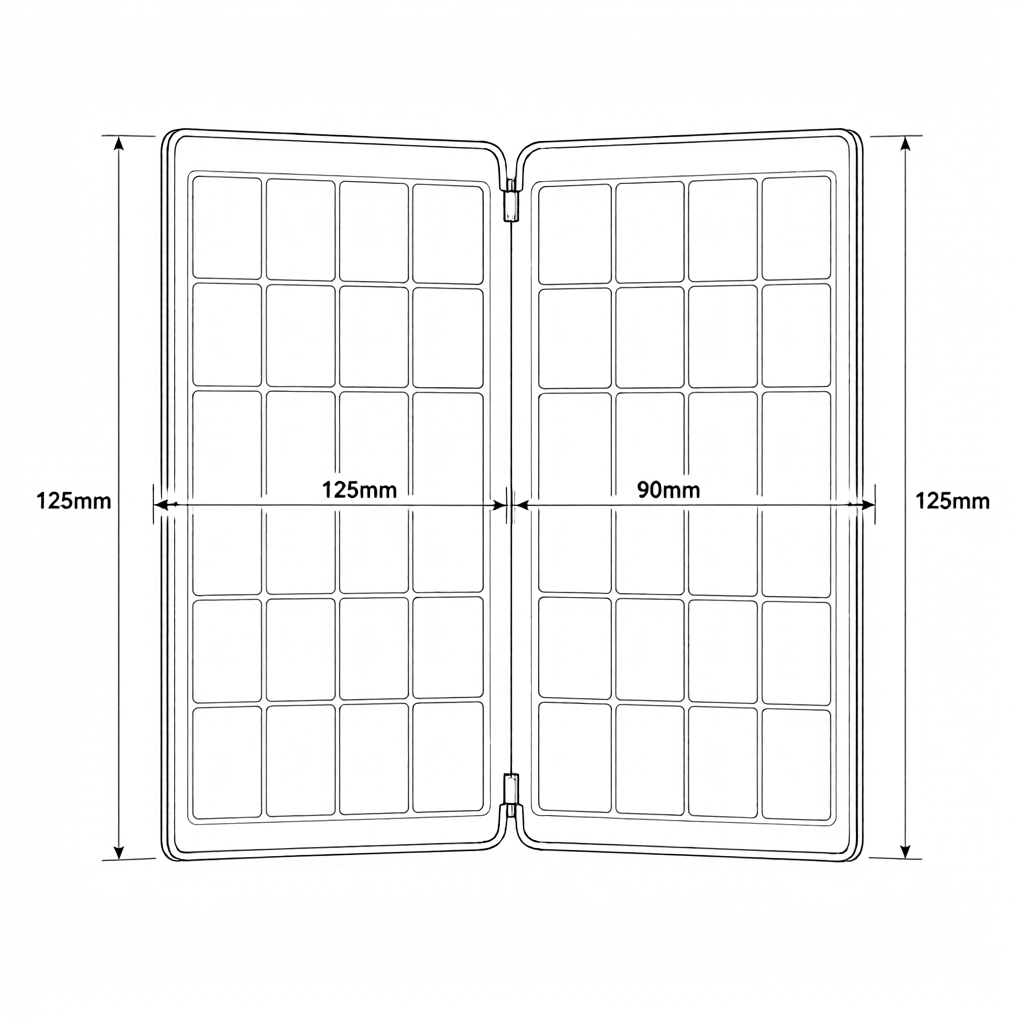
What are the typical specifications for a monogrammed card holder?
Understanding the baseline dimensions and capacities of these products prevents costly mismatches between design intent and functional reality. Most minimalist card sleeves are engineered around standard card widths, which means the finished outer dimension lands near the credit card standard of approximately 85.6 mm by 54 mm, plus any added spine or clip hardware. Thickness ranges from roughly 6 mm for single-layer aluminum builds up to about 10 mm when stacking mechanisms or money clip assemblies are included. Weight varies correspondingly, generally falling between 35 grams for basic aluminum models and 65 grams or more for titanium versions with additional features.
Card capacity deserves careful attention because supplier spec sheets often quote optimistic numbers based on new, thin cards. Real-world loads include driver’s licenses, which add bulk, and cards covered in protective sleeves, which increase stack height quickly. A holder rated for eight cards at factory specification may perform comfortably with five to six thicker items. Buyers should also verify whether the product includes an RFID-blocking layer, since adding a metalmesh or foil laminate changes both thickness and magnetic properties, and it affects how cleanly some marking processes can be applied without disturbing the blocking integrity.
When evaluating size categories, it helps to compare against familiar reference objects. A standard credit card fits flush in most slim holders. A driver’s license sits at nearly the same width but adds slightly more rigidity due to thicker PVC. Business cards exceed the standard width and require a wider opening or a separate slot, which shifts the whole envelope up one size tier. Some manufacturers produce hybrid designs with a dedicated business-card pocket alongside the main card stack, but that architecture introduces another seam and potential failure point. Before committing to a layout, request physical samples loaded with your actual card mix rather than relying on nominal diagrams. For a deeper walkthrough of sizing decisions, review our minimalist wallets procurement guide.
Monogrammed Card Holders For B2B Buyers: Which Standards and Certifications Apply?
What quality standards apply to manufactured card holders?
B2B buyers should expect suppliers to document compliance with recognized quality management and environmental frameworks rather than relying on verbal assurances. ISO 9001 certification signals that the manufacturer operates under a documented quality management system covering process control, incoming inspection, and corrective action procedures — not that any single product passes a particular test. Social compliance audits such as BSCI address labor practices and workplace standards, which matter when the buyer’s own customers or regional regulations require auditable supply chains.
Material safety certifications are equally important for products that remain in prolonged skin contact. REACH and RoHS compliance indicate that restricted substances such as certain phthalates, heavy metals, and hazardous flame retardants have been evaluated and controlled in the materials supplied. SGS testing on raw inputs provides an independent checkpoint that alloy compositions and surface coatings meet declared specifications. When sourcing money clips and similar pocket gear that share manufacturing lines, buyers often cross-reference the same standards — see our money clip sourcing guide for the overlapping specification expectations.
Beyond regulatory baselines, buyers should define acceptance criteria specific to personalization. Engrave depth tolerance, position accuracy relative to the part edge, and consistency across a batch all deserve written specifications in the purchase order. Finish defects such as anodize peeling near engraved zones or uneven coloring on titanium should be agreed upon beforehand, ideally with signed sample approval that establishes the boundary between acceptable variation and rejectable output. Without these written boundaries, returns and rework disputes tend to resolve in favor of whoever wrote the first email.
Monogrammed Card Holders For B2B Buyers: What Else Should Buyers Consider?
What should you consider before placing a bulk order?
Several practical factors determine whether a monogrammed card holder order runs smoothly or requires negotiation mid-production. Start with the personalization method and its constraints. Laser engraving allows complex typography and small logos but may struggle with extremely fine serifs or very light tonal shading. Foil stamping excels at bold colors and metallic effects but requires a flat imprint area and a sturdy substrate. Embossing adds tactile presence but increases part thickness and demands sufficient material gauge to avoid cracking at the bend line. Clarify which technique matches both the design artwork and the chosen material before locking the quote.
Font selection and placement deserve equal scrutiny. A dense script font with heavy flourish can fill poorly at small sizes and read as a smudge after engraving, while a clean sans-serif or geometric typeface holds legibility better across substrates and marking depths. Placement position affects both visibility and card loading — a centered logo on the front face is readable but competes with thumb pressure during daily use, whereas an off-center or lower placement avoids the wear zone while still being identifiable. Ask the manufacturer for mock-up renders showing your exact artwork at full scale before approving production.
Minimum order quantity, sample lead time, and revision policy shape the early stages of any engagement. Low MOQ programs starting at around one hundred units make it feasible to test a design across several material options before scaling. Fast sample turnaround — typically within a week for customized engravable prototypes — lets buyers verify fit, finish, and marking quality without delaying the broader schedule. Revision limits on artwork files matter particularly when the vendor must adjust positioning or scale between rounds; clarify whether changes stay within free adjustments or trigger tooling or setup fees. After initial sampling, the next step is usually confirming packaging, labeling, and shipping method, especially for Amazon FBA sellers who need compliant barcodes and poly bagging that meets marketplace requirements. If you’re weighing fulfillment logistics alongside production, our business card holder sourcing resource covers additional decision points around fulfillment prep.
Capacity planning and delivery timelines also warrant attention. Monthly production throughput varies by configuration complexity and current shop load, so lead times shift between standard and rush schedules. Buyers operating seasonal peaks should lock production windows well ahead of launch dates rather than treating scheduling as an afterthought. Finally, establish a returns and replacement policy tailored to personalized goods, since custom-engraved items typically cannot be resold once marked. Agreeing upfront on defect thresholds and replacement terms prevents disputes when a batch arrives with inconsistent engrave quality or dimensional variance outside the agreed tolerance.
How do we meet these standards in practice?
As a manufacturer, our approach to monogrammed card holders is grounded in matching the right material and engraving technique to the buyer’s actual end use rather than pushing the highest-priced option. We build card sleeves across aluminum, carbon fiber, and titanium using in-house CNC machining and laser engraving, which keeps setup costs manageable and makes short-run validation straightforward. Our process starts with a simple brief — desired material, finish, engraving style, and approximate monthly volume — then moves to a quick sample within about seven days so you can evaluate the mark quality and card capacity with your own items before committing to production. For solid-core design reference, our EDC wallet evaluation guide outlines the same decision logic we apply internally when advising buyers.
Quality documentation accompanies every shipment. Our facility operates under ISO 9001 and maintains BSCI audit coverage, and all materials used in production comply with REACH and RoHS requirements with SGS test reports available on request. Because we handle everything from blank fabrication through finishing and personalization under one roof, we can also spot finish issues such as anodize interaction with engraved zones before the order ships, rather than discovering them after packaging. The result is a narrower gap between sample approval and final delivery, which matters most when you are launching a private-label run or fulfilling a time-sensitive corporate gift order. Buyers exploring the full range of minimalist options may also find our EDC wallet procurement overview useful for aligning card holders with complementary SKUs.
Pricing Tiers by Material and Personalization Depth
How do price ranges break down across common configurations?
Understanding cost drivers helps buyers set realistic budgets before requesting quotes. Entry-level minimalist aluminum wallets with single-sided laser engraving typically land in the $3.50 to $8.00 per unit range for orders above one thousand pieces, depending on alloy grade, anodize color, and engrave complexity. Mid-tier builds using thicker gauge aluminum with dual-side marking, money clip attachments, or integrated RFID-blocking layers usually sit between $8.00 and $18.00 per unit. Premium titanium models with full CNC machining, colored anodizing, and deep-engraved monograms commonly exceed $18.00 per piece even at volume.
Carbon fiber card holders occupy a separate bracket because the raw material and layup process carry inherent cost premiums. Expect baseline models to start around $10.00 and move toward $25.00 or higher when combined with additional features such as spring-loaded ejection mechanisms or custom-molded edges. Surface finish also influences price: a standard woven black pattern is commodity, while proprietary textures like twill, basket-weave, or color-infused resins command tooling or setup fees that shift landed costs upward. Buyers sourcing for promotional campaigns should model total landed cost including packaging, labeling, freight, and any marketplace compliance prep rather than comparing component prices in isolation. For a broader framework on evaluating value beyond unit cost, review our EDC wallets procurement guide.
Monogramming Styles, Fonts, and Placement Options
What design variations are available for branding and personalization?
Monogramming extends well beyond simple name engraving and encompasses a spectrum of visual treatments that each carry distinct aesthetic and functional implications. Letter-style options generally fall into four camps: script and calligraphic fonts that evoke tradition and luxury, sans-serif geometric typefaces suited for modern minimalist branding, serif faces that communicate heritage and formality, and custom logo marks that replace typography entirely with iconography. Font weight and x-height matter enormously at small scale — thin hairline scripts often disappear into the grain of carbon fiber or get lost beneath the brushed texture of anodized aluminum, whereas bold condensed variants maintain legibility across substrates and marking depths.
Placement strategy determines both visibility and longevity. Center-front positioning delivers the strongest brand presence but sits directly under repeated thumb friction during daily card insertion and removal, accelerating engrave wear over months of use. Lower-third or edge-aligned placements avoid the primary contact zone while remaining scannable at arm’s length, making them popular for subtler corporate branding. Back-face engraving preserves the front aesthetics for clean-faced promotional items while still delivering personalization upon closer inspection. Side-edge or spine marking works well for sequential numbering or QR-code-style identifiers intended for inventory tracking rather than display. Confirm with your supplier whether they offer digital mock-up rendering so you can preview exact proportions before committing to production. Additional depth into finish decision-making is available in our best slim wallets sourcing resource.
Gift-Giving Occasions and Audience Pairing
Which configurations resonate with different gifting audiences?
Monogrammed card holders map cleanly onto several recurring gifting cycles, and matching configuration to occasion improves perceived value without inflating unit cost. Corporate client gifts during fiscal-year-end or holiday seasons benefit from premium finishes — anodized titanium with deep-engraved company initials paired with a rigid retail box communicates respect and occasion weight. New-hire welcome packages often favor durable aluminum versions with straightforward logo engraving that survive frequent travel and daily commuting alike. Weddings and anniversaries call for richer material pairings such as carbon fiber with rose-gold foil accents or brushed titanium engraved with intertwined initials, while birthdays and milestone celebrations frequently lean toward bold color-anodized aluminum with celebratory date stamps.
Trade-show swag and promotional giveaways represent a distinct category where volume economics dominate. Here, lightweight aluminum with single-color foil stamping or shallow laser engraving keeps per-unit cost accessible while maintaining brand visibility. The key is avoiding the temptation to over-specify expensive materials for high-volume distribution — a well-placed logo on a $4 unit outperforms a poorly executed attempt at a $20 product when the goal is broad reach. For insights into complementary pocket gear that pairs effectively in bundled gift sets, see our money clips specification guide.
Production Timeframes, Shipping Expectations, and Order Preparation
What timeline realities should buyers plan around?
Production schedules for custom-engraved card holders depend heavily on order volume, material availability, engrave complexity, and concurrent shop load. Standard lead times for established configurations typically range from fifteen to twenty-five business days from artwork approval through shipment readiness. Rush scheduling can compress this window to seven to ten business days but usually carries a percentage premium and may require allocating dedicated machine time away from queued orders. Buyers should treat the sample-approval milestone as the true start of the production clock rather than the initial inquiry date, since artwork revision rounds frequently add days to the calendar before cutting begins.
Shipping method selection materially affects total delivery time and per-unit landed cost. Air freight delivers fastest turnaround — usually three to five additional business days after production close — but adds significant expense for heavier pallet loads. Sea freight remains economical for container-sized commitments but introduces three to six weeks of transit depending on origin port and destination. Express courier services such as DHL, FedEx, or UPS strike a middle ground for smaller shipments requiring tracked delivery within seven to twelve days. Amazon FBA sellers must factor in compliant prep timelines including poly bagging, suffocation warning labels, barcoding, and pallet configuration that meets marketplace receiving standards; these preparation steps typically add two to four business days before the carrier pickup window opens. If you’re mapping fulfillment logistics alongside procurement, our wallets near me resource outlines additional coordination points.
Care Guidelines and Durability Benchmarks
How do different marking techniques age under real-world conditions?
Longevity expectations vary substantially by engraving method and substrate combination, and understanding those trajectories prevents post-purchase dissatisfaction. Laser-engraved marks on anodized aluminum develop their contrast by removing the colored oxide layer; these engravings remain legible for years under normal carry but will gradually soften at the edges if exposed to abrasive detergents, saltwater immersion, or aggressive polishing compounds. Bare titanium engravings through heat-induced oxidation similarly persist but may exhibit slight tonal drift when subjected to sustained high temperatures such as left-on-dashboard exposure in direct sunlight. Carbon-fiber engraves preserve their matte textural contrast exceptionally well against scratch and chemical exposure but can accumulate surface residue in the recessed areas that dulls appearance until cleaned with a soft brush and mild solvent.
Routine maintenance extends visible lifespan across all material classes. Wiping the surface with a microfiber cloth after heavy sweating or outdoor exposure prevents acidic residues from settling into engrave recesses. Storing units in a dry environment rather than tossing them loosely into pockets alongside keys and coins reduces accidental edge abrasion that gradually blurs fine lettering over extended periods. Avoid ultrasonic cleaners and浸泡-based washing methods, which can compromise adhesive bonds in multi-layer constructions and disturb anodize integrity near engraved boundaries. When comparing durability claims across suppliers, ask for abrasion-test data measured in cycle counts rather than accepting qualitative assertions — reputable manufacturers can typically provide numbers demonstrating thousands of friction cycles before measurable contrast degradation occurs. Additional perspectives on material longevity appear in our good wallets for guys buying guide.
How We Meet These Standards in Practice?
As a manufacturer specializing in minimalist EDC wallets and pocket gear, our approach to monogrammed card holders focuses on matching the right material and engraving technique to each buyer’s actual end use rather than defaulting to the highest-cost option. We operate a fifty-thousand-square-foot facility equipped with in-house CNC machining, fiber laser engravers, and UV printing lines, supported by aluminum anodizing capacity and full surface-finishing workflows. Our ISO 9001 certification since 2014 and BSCI audit compliance reflect documented quality management systems covering incoming inspection, process control, and corrective action procedures. We maintain REACH and RoHS compliance across all supplied alloys and coatings, with SGS-tested material documentation available for every batch.
Engrave precision is managed through registered fixturing that holds position tolerances within plus-minus zero-point-two millimeters across typical card-holder envelopes. Font rendering is validated at full scale via digital mock-ups before artwork release, and we limit revision rounds to include minor scaling and positioning adjustments within our standard sampling fee. Custom packaging, retail box design, and Amazon FBA prep — including poly bagging, suffocation warnings, and barcode application — are handled in-house so branded orders ship marketplace-ready without third-party dependency.
Minimum order quantities begin at one hundred pieces for most configurations, enabling brands to validate material finishes and engrave contrast before committing to larger runs. Sample lead time averages seven business days from approved artwork to shipped prototype, allowing iterative refinement without derailing production calendars. With monthly throughput exceeding five hundred thousand units and export experience spanning thirty-plus countries across America, Europe, Australia, and Southeast Asia, we support everything from tight private-label drops to sustained promotional distribution programs. Every claim above reflects auditable capability rather than marketing language — if a specification matters to your order, we welcome the opportunity to demonstrate it against signed sample approval before production commitment.
Monogrammed Card Holders For B2B Buyers: What Should You Know First?
A monogrammed card holder is a slim, personalized wallet sleeve — typically constructed from aluminum, carbon fiber, or titanium — designed to carry credit cards, IDs, and cash while displaying custom initials, names, or logos through techniques such as laser engraving, etching, or stamping. For B2B buyers, these products serve three primary channels: private-label EDC brands building their own product line, promotional distributors ordering branded card sleeves in volume, and corporate gifting programs seeking premium personalized accessories. The defining characteristic is not merely surface decoration but the permanent integration of a marking into a hardened metal or composite substrate, which requires specific manufacturing steps, material science knowledge, and quality controls to ensure the result remains legible and intact after years of daily pocket carry.
Monogramming styles, placement options, and visual trade-offs
Monogramming style determines both aesthetic tone and functional longevity. Industry buyers typically encounter four families of mark-making, each suited to different substrates and end-use scenarios.
Laser engraving produces the sharpest detail across metal and composite surfaces. On anodized aluminum, the beam strips away the colored oxide layer to expose the bright base alloy beneath, yielding a high-contrast silver-on-color mark that measures approximately 0.05 to 0.15 mm in depth depending on power settings. On bare titanium, controlled heat oxidation creates marks ranging from straw-yellow through deep blue without removing material, allowing engraving depths under 0.02 mm — thin enough to preserve the part’s original slim profile. Carbon fiber responds by graphitizing the epoxy resin around exposed fibers, producing a matte dark pattern against the woven gloss background. Minimum line width achievable on reliable equipment is roughly 0.1 mm, though fonts thinner than 0.3 mm height tend to fill or break apart during post-processing handling.
Embossing raises the substrate from behind a die press. It works well on aluminum gauges of 0.5 mm and above but introduces a relief height of 0.2 to 0.5 mm that adds to overall thickness at the marked zone. Deep emboss on thin stock below 0.4 mm risks cracking at bend lines, particularly on repeated flex cycles typical of pocket insertion and removal. Buyers specifying embossed marks should require strain-test validation on production-representative samples before locking tooling.
Foil stamping deposits pigmented or metallic film onto a thermally formed die impression. The process delivers vibrant color density and metallic sheen unmatched by dry engraving alone, but the resulting bond sits atop the substrate rather than being integral to it. Under abrasive pocket wear, foil can delaminate within six to twelve months of heavy daily use, making it appropriate primarily for low-rotation corporate gifts or promotional events rather than permanent EDC carry items.
Debossing and acid/electrochemical etching remove material uniformly within masked boundaries. Debossing produces a sunken negative image with smooth filled areas, while etching achieves consistent depth across large logo fields without localized stress concentration. Both methods increase effective part thickness marginally because surrounding material remains unrecessed, creating a stepped edge that can catch on fabric pockets.
Placement strategy follows similar risk-assessment logic. A centrally located monogram on the front face maximizes visibility but occupies the primary thumb-contact zone, accelerating abrasion on high-traffic carrying patterns. Off-center or lower-placement positioning shifts the mark out of the dominant wear path while retaining identification readability at arm’s length. Edge-aligned placements reduce engraving area but preserve maximum flat surface for card loading mechanics. Regardless of style choice, buyers should request full-scale artwork mock-ups showing the exact font weight, line spacing, and placement coordinates at 1:1 scale before signing off — screen-rendered previews consistently overstate perceived clarity compared to photographed production samples.
For a comparative framework extending beyond monogram-specific decisions, review our best card holder buying guide to understand how finish selection interacts with broader durability expectations.
Material quality tiers: aluminum, carbon fiber, titanium, and alternative substrates
Material selection drives cost, appearance, engraving response, and lifetime performance. While aluminum, carbon fiber, and titanium dominate the minimalist card holder category, understanding where each tier sits relative to alternatives prevents specification mismatches.
Aluminum (6061-T6) remains the volume leader. The alloy offers tensile strength around 310 MPa after heat treatment, machines cleanly on CNC equipment, and accepts Type II anodizing at 12 to 20 micrometers thickness — sufficient for scratch resistance in everyday conditions without compromising dimensional tolerances. Anodized colors range across the full spectrum, with black, silver, gold, and blue representing roughly 70 percent of unit shipments. Post-anodize laser engraving reveals crisp contrast against any color field. Per-unit component cost typically falls between $1.80 and $4.50 at volume, depending on finish complexity and order quantity.
Carbon fiber (UD or woven layup) delivers the highest perceived value per gram. Standard aerospace-grade Toray T700 or T800 prepreg sheets provide flexural strength exceeding 1,500 MPa while weighing approximately 1.6 g/cm³ — roughly one-third the density of aluminum. Engraving exposes the characteristic woven texture, producing a distinctive matte-dark pattern that reads as premium even without additional coloring. Sheet-stock sourcing variability means some suppliers blend recycled or lower-modulus fibers into cheaper laminates; buyers should request material certificates confirming fiber grade and resin system when specifying carbon fiber for brand-responsible programs. Component cost generally ranges from $4.00 to $9.00 per unit at volume.
Titanium (GR2 or GR5) represents the upper performance tier. Commercially pure Grade 2 titanium provides yield strength near 275 MPa with outstanding corrosion resistance, while Grade 5 (Ti-6Al-4V) raises yield to approximately 880 MPa for applications requiring higher mechanical safety margins. Laser color-anodizing on titanium creates thermally stable oxides that resist fading, scratching, and chemical exposure far better than surface-applied coatings. However, machining hardness slows cycle times significantly — expect 2 to 3 times longer CNC operation versus equivalent aluminum parts. Per-unit cost typically spans $8.00 to $18.00 depending on geometry and finishing requirements.
Alternative substrates appear in market discussions but require careful qualification. Genuine leather card holders offer tactile warmth and natural patina development, yet embossing depth is limited to 0.3 mm before fiber撕裂 occurs, and moisture exposure accelerates aging unpredictably. Vegan leather (polyurethane or microfiber composites) avoids animal-origin claims but sacrifices long-term abrasion resistance; embossed or printed markings degrade noticeably faster than laser-engraved metal alternatives after six to eight months of daily pocket friction. Fabric-wrapped variants introduce decorative appeal but complicate marking compatibility — adhesives used to affix wraps can interfere with laser absorption characteristics, requiring process recalibration.
When comparing final product cost against application, promotional distributors targeting trade-show giveaways often select aluminum at the lowest tier, private-label EDC brands aiming for outdoor-performance perception prefer carbon fiber or titanium, and corporate gifting programs occupy the middle band where anodized aluminum with premium packaging satisfies both budget and presentation requirements.
Price range benchmarks and occasion-based sourcing guidance
Pricing for monogrammed card holders follows a predictable hierarchy tied to material, personalization method, and order scale. Understanding these tiers helps buyers align procurement strategy with end-market positioning.
At the entry level, bulk-produced aluminum card holders with single-color anodizing and basic laser engraving typically land between $1.80 and $3.50 per unit at quantities of 500 to 1,000 pieces. These configurations suit promotional distribution, charity auction items, and budget-tier retail assortments where margin preservation outweighs premium finish requirements.
Price bands quoted in this article are industry ranges published for planning purposes. Exact per-unit pricing depends on material, finish, packaging and order quantity, and is confirmed by our sales team after an inquiry against a locked specification.
Mid-range offerings — including multi-tone anodized aluminum, carbon fiber construction, or combined engraving-and-debossing treatments — generally fall in the $3.50 to $7.00 per-unit band at comparable volumes. This bracket captures most private-label EDC brand launches and mid-tier corporate gift programs requesting visible brand presence without luxury pricing signals.
Premium tiers encompass titanium construction, intricate multi-element engravings, selective color anodizing, or hybrid assemblies incorporating money clips and spring-loaded card ejection mechanisms. Per-unit costs range from $7.00 to $18.00+ depending on feature complexity. These configurations target flagship product lines, executive-level gifting, and boutique retail channels where material storytelling reinforces brand positioning.
Occasion alignment further refines selection logic. Wedding-party favors commonly pair rose-gold anodized aluminum with delicate script monograms in runs of 50 to 200 units. Corporate anniversary gifts favor darker anodized finishes with geometric or serif typography arranged in tighter character spacing for a refined appearance. Birthday and holiday gifts often incorporate personal initials alongside small iconography — mountain silhouettes, compass motifs, or coordinate markers — that benefit from deeper engrave profiles for visual definition. Trade-show giveaways prioritize speed and cost efficiency, making standard aluminum with quick-turn laser marking the default configuration.
For comprehensive sizing and layout decision frameworks applicable across occasions, consult our minimalist wallets procurement resource.
Lead time expectations and the sampling-to-production pipeline
Understanding the timeline from artwork submission to shipped inventory requires separating sampling activities from full production scheduling, since each phase carries distinct duration drivers.
Prototype sampling follows a compressed cycle. Upon receipt of finalized artwork files — preferably vector-based AI or SVG formats containing exact dimensions, font specifications, and placement coordinates — manufacturers typically produce physical samples within five to seven business days. Samples verify engrave depth, alignment accuracy, surface finish acceptance, and functional fit with actual card stacks. One to two revision rounds are standard before samples receive formal approval; additional iterations beyond that threshold often trigger nominal setup re-fees rather than wholesale schedule resets.
Production lead time depends on order quantity, material availability, and concurrent shop workload. Standard aluminum configurations at quantities below 500 units commonly ship within 15 to 20 business days from approved samples. Volumes between 500 and 2,000 units extend to 20 to 30 business days. Runs exceeding 2,000 units may require phased delivery schedules to accommodate CNC queue management and anodizing batch sequencing. Rush productions compressing standard timelines into ten to fourteen business days are frequently available at 15 to 30 percent surcharge, depending on current capacity allocation.
Air freight expressions and partial shipment arrangements offer flexibility for buyers managing launch calendars or seasonal demand peaks. When synchronizing production with Amazon FBA inbound appointment windows, buyers should confirm that packaging configurations meet marketplace compliance requirements — barcode placement, poly bag suffocation warnings, and box dimension tolerances — during the sampling approval stage rather than discovering incompatibilities after bulk manufacture completes. Our business card holder sourcing reference addresses fulfillment preparation considerations that intersect with production scheduling decisions.
Why choose TOP EDC Wallet for your monogrammed card holder program?
The landscape of EDC wallet manufacturing rewards buyers who evaluate partners on documented capability rather than marketing language alone. Here is how industry expectations translate into practical sourcing decisions — and how we meet them.
As specialists in minimalist EDC wallets and pocket gear with over thirteen years of export experience, our approach centers on repeatable precision rather than occasional craftsmanship. Our ISO 9001-certified facility — audited under BSCI social compliance standards — operates a fifty-thousand-square-foot factory equipped with in-house CNC machining, fiber laser engraving systems, UV printing stations, and aluminum anodizing lines. Materials undergo SGS testing for REACH and RoHS compliance before entering production, and every finished lot exits through incoming inspection checkpoints tracking engrave depth tolerance, positional accuracy, and anodize adhesion integrity.
Our production model accommodates varying buyer profiles. Low minimum order quantities starting at one hundred pieces allow emerging private-label brands to validate designs across multiple material options before committing to scale. Fast sample turnaround — typically seven days for customized engravable prototypes — keeps evaluation cycles short without sacrificing verification rigor. Full OEM and ODM customization covers everything from logo geometry and font selection through packaging design, retail box engineering, and Amazon FBA prep documentation.
We currently serve over two hundred brands across North America, Europe, Australia, and Southeast Asia, supplying aluminum wallets, carbon fiber card holders, titanium money clips, tactical pocket organizers, RFID-blocking metal wallets, and custom laser-engraved wallet accessories. Each product line shares the same quality management framework, meaning switching between categories never requires renegotiating fundamental supplier standards.
If you are evaluating manufacturers for monogrammed card holder programs — whether for promotional distribution, private-label resale, or corporate gifting — the decision ultimately rests on documented capability, verified compliance records, and transparent communication throughout the sampling-to-shipment pipeline. Contact Our Team to discuss your project specifications, request material samples, or review our current capacity calendar.
Monogrammed Card Holders For B2B Buyers: Where Can You Verify the Data and Sources?
- best card holder selection guide — topedcwallet.com
- minimalist wallets procurement guide — topedcwallet.com
- money clip sourcing guide — topedcwallet.com
- business card holder sourcing resource — topedcwallet.com
- EDC wallet evaluation guide — topedcwallet.com
- EDC wallet procurement overview — topedcwallet.com
- Get a Free Quote → — topedcwallet.com
- best slim wallets sourcing resource — topedcwallet.com
- wallets near me resource — topedcwallet.com
From article to product
Turning this into a product?
Most of what is written here is the difference between a sample that works and one that does not. We can build either — the useful one costs the same.
Keep reading
More on buying guides
wallet with trigger
How Does a Trigger Wallet Work? What Is the Pop-Up Mechanism? The core of…
Readbest bifold wallet for women
What Is a Bifold Wallet? The term “bifold” refers to the fold: the wallet…
ReadMen’s trifold wallets with zipper compartments vs. bifold
At a Glance The three dominant men’s wallet formats differ in panel count, depth,…
Read
About the author
TOPWALLET Editorial Team
TOPWALLET's editorial and engineering desk writes from bench testing at the Shenzhen (Longgang) facility: pull-force and cycle testing, 13.56 MHz shielding measurements, finish trials and factory audits, rather than supplier spec sheets. Every specification in these guides is one we write on a purchase order.
Written on the floor
This article was written by our production and QC team — the people who spec tolerances, run the finishing line and inspect every batch. Where it states a capacity, a pull force or a lead time, it comes from a measurement we made, not a supplier’s catalogue. If a number here disagrees with what your own supplier told you, tell us; several of these articles started as a correction from a buyer.
See how the factory works · Inspection process · Sourcing FAQ
Turning this into a product?
Most of what is written here is the difference between a sample that works and one that does not. We can build either — the useful one costs the same.