

A top leather card holder RFID wallet is a slim, minimalist wallet made from full-grain or top-grain leather that incorporates a verified RFID-blocking layer—typically metallic mesh, RF-blocking fabric, or an aluminum plate—capable of attenuating at least 95% of 13.56 MHz signals. For B2B buyers, the defining factor isn’t marketing language but documented shielding performance, consistent leather grading, and a supplier’s ability to reproduce quality across production batches under OEM or private-label agreements.
Holder RFID Wallet: What Is the Quick Answer?
A top leather card holder rfid wallet stands out because it combines reliable RFID-shielding performance with durable leather construction and consistent quality control — not because it carries a flashy label. The essential criterion is a proven RFID-blocking liner or metallic barrier that actually stops contactless skimming, paired with full-grain or top-grain leather that holds its shape over years of daily carry. For B2B buyers, the real differentiator is whether the supplier can reproduce that standard batch after batch, within predictable lead times, and with the OEM customization your brand requires.
Holder RFID Wallet: How Does It Work in Detail?
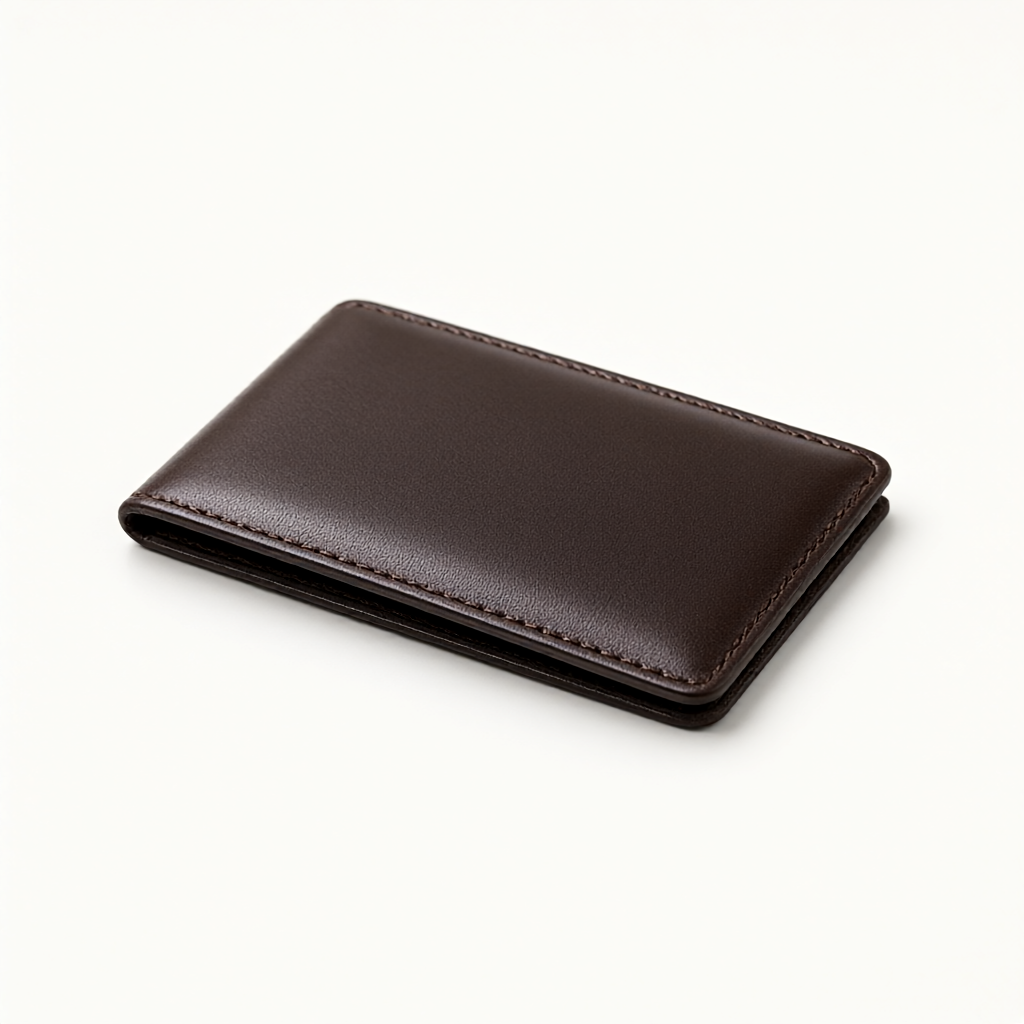
How does RFID blocking technology actually shield contactless cards?
Contactless payment cards and many ID cards communicate through a near-field magnetic field at 13.56 MHz. An RFID-blocking wallet works by introducing a conductive or ferromagnetic layer that either reflects or absorbs that frequency, preventing a reader from completing the handshake required to read card data. In practice, this means embedding one of the following inside the wallet’s layers:
- A metallic mesh or foil laminated between leather panels
- An RFID-blocking fabric liner stitched or bonded into the card cavity
- A metal plate (aluminum, stainless steel) integrated into the wallet’s back or base
The shield must cover the card area entirely — any gap large enough for the signal to leak through defeats the purpose. This is why a minimalist card case with a solid back panel often performs as well as, or better than, a bulky bifold with cutouts.
According to ASTM E2092, the standard test method for determining the effectiveness of shielding materials against radio-frequency identification, performance is measured by signal attenuation. Products that block at least 90% of the 13.56 MHz signal are generally considered functional for consumer protection, though the most reputable manufacturers target higher thresholds.
It is also worth noting that some suppliers claim “RFID protection” based only on material selection rather than tested performance. Buyers should ask for documentation or test reports whenever possible, rather than accepting a marketing claim at face value.
What makes a leather RFID card holder truly high-quality?
Beyond the shielding layer, several tangible features separate a premium product from an average one:
Leather grade and sourcing. Full-grain leather retains the natural grain and fiber structure, offering superior durability and a developing patina. Top-grain leather is slightly processed for uniformity but still provides excellent wear resistance. Bonded or PU leather may be marketed as “genuine leather” but lacks the longevity buyers in this segment expect.
Construction method. A well-made card holder uses edge-painting, burnishing, or reinforced stitching rather than glue-only assembly. Reinforced corners and a secure card retention system — whether spring-loaded, elastic-loop, or friction-fit — prevent cards from falling out during daily use.
RFID coverage integrity. The shield must extend to the edges of the card-storing cavity. Cards placed at the outermost slot should still be fully enclosed within the blocking zone. Buyers should verify whether the supplier tests each batch or relies solely on design assumptions.
Finish and aesthetics. Consistent color, clean stitching alignment, and properly treated leather edges signal a manufacturer that invests in quality control rather than speed. For private label programs, this directly impacts how the product represents the buyer’s brand.
What is the difference between an RFID-blocking wallet and a contactless-proof card case?
These terms describe the same functional category but are used differently across markets. “RFID-blocking wallet” is the dominant term in North America and Europe, while “contactless-proof card case” or “contactless-shielded wallet” appears more frequently in promotional and corporate gifting contexts. The underlying technology and testing criteria remain identical.
Holder RFID Wallet: Which Specifications Matter Most?
What are the key specs for a top-rated leather RFID blocking card holder?
When evaluating leather card holders for wholesale or OEM production, these specifications carry the most weight:
| Specification | Typical Range / Target | Why It Matters |
|---|---|---|
| Leather type | Full-grain or top-grain cowhide | Durability, patina development, perceived value |
| Leather thickness | 1.0–1.4 mm | Structural integrity without excessive bulk |
| RFID shielding material | Metallic mesh, RF-blocking fabric, or aluminum foil | Signal attenuation at 13.56 MHz |
| Shield coverage | 100% of card storage area | No signal leakage through gaps |
| Card capacity | 4–12 cards (design-dependent) | Fits buyer’s target market without bulk |
| Overall dimensions | ~90 × 60 × 10–15 mm (slim format) | Pocket-friendly for everyday carry |
| Weight | 40–80 g | Lightweight for minimal carry enthusiasts |
| Edge finish | Painted, burnished, or raw | Aesthetic quality and edge durability |
| Stitching | Double-stitched or hidden stitch | Structural longevity |
For buyers sourcing a bulk RFID leather wallet supplier partnership, these specs should be locked into the purchase order and verified during pre-production sample review. Tolerance on dimensions typically runs ±2 mm for handcrafted leather goods.
Holder RFID Wallet: Which Standards and Certifications Apply?
What certifications and compliance requirements apply to leather RFID wallets?
B2B procurement decisions should be grounded in verifiable standards, not supplier claims. The following certifications and compliance markers are relevant to leather wallet manufacturing:
ISO 9001 — This quality management standard indicates the manufacturer operates under documented processes for consistency, traceability, and continuous improvement. It is a baseline expectation for any serious OEM partner.
BSCI (Business Social Compliance Initiative) — A social audit framework covering labor practices, working conditions, and ethical sourcing. Many European and North American retailers require BSCI verification before onboarding suppliers.
REACH and RoHS compliance — These EU regulations govern restricted substances in manufactured goods. REACH restricts certain chemicals used in leather tanning and finishing, while RoHS limits specific substances in electronic components — relevant when RFID-blocking materials incorporate metallic or conductive elements.
SGS testing — Third-party material verification from organizations like SGS provides independent confirmation that leather composition, chemical content, and RFID shielding performance meet declared specifications.
Buyers should request copies of current certificates rather than relying on a supplier’s verbal assurance. Expired or unverifiable documentation is a common sourcing risk. For a deeper look at how certifications factor into overall wallet quality evaluation, see our guide on best minimalist wallets for B2B sourcing and private label programs.
Holder RFID Wallet: What Else Should Buyers Consider?
What OEM and ODM customization options are available for wholesale leather RFID wallets?
Private label and branded buyers typically engage suppliers through OEM or ODM arrangements. Understanding the scope of customization helps set realistic expectations for timelines, tooling costs, and minimum order quantities.
Design and form. Buyers can specify overall dimensions, card capacity, closure style, and silhouette — from ultra-slim card slots to wider bifold formats with cash pockets. The supplier’s existing designs can serve as a starting point, or a buyer can provide detailed technical drawings.
Leather selection. Options typically include cowhide in various grades, exotic leathers (where legally and ethically sourced), and vegetable-tanned versus chrome-tanned finishes. Each choice affects cost, lead time, and regulatory compliance.
RFID shielding configuration. Suppliers may offer different shielding approaches — single-layer metallic foil, dual-layer fabric composites, or integrated metal plate designs. Performance can vary by configuration, and buyers should request attenuation data for the specific design selected.
Branding and marking. Laser engraving is the most common method for adding logos, monograms, or custom text to leather surfaces. UV printing offers full-color reproduction on flat panels. Embossing provides a raised, tactile mark. The chosen method affects design complexity and per-unit cost.
Packaging. Retail-ready options include custom boxes, poly mailers, hang tags, and insert cards. Drop shipping and Amazon FBA prep services are increasingly important for sellers who need compliant packaging that meets marketplace requirements without additional handling.
For a more detailed exploration of leather wallet specifications and selection criteria, review our best leather wallets for men — a B2B procurement guide.
What should B2B buyers consider regarding MOQ, lead time, and quality control?
These three factors directly affect inventory planning, cash flow, and market readiness.
MOQ (Minimum Order Quantity). Most established manufacturers set MOQs between 300 and 500 pieces for standard designs, with higher thresholds for custom tooling or exotic materials. A lower MOQ allows smaller brands and Amazon FBA sellers to test markets without excessive inventory risk.
Sample lead time. A professional supplier typically delivers pre-production samples within 5–10 business days. Rush samples may be available at additional cost. Buyers should always evaluate a physical sample before confirming a production run — photos alone cannot reveal stitch quality, leather feel, or shielding effectiveness.
Production lead time. After sample approval, bulk production generally runs 15–30 days depending on order volume and customization complexity. Seasons with high demand — particularly Q4 for holiday retail — may extend these timelines.
Quality control checkpoints. Reliable suppliers implement QC at multiple stages: incoming material inspection, in-process assembly checks, and final random sampling before packaging. Buyers should confirm which checkpoints are in place and whether third-party inspection is available for larger orders.
What are common pitfalls to avoid when sourcing leather RFID wallets?
Even experienced buyers encounter issues during sourcing. The most frequent pitfalls include:
Unverified RFID claims. Not every “RFID-blocking” product has been tested. Some suppliers use thin metallic foil that provides partial coverage with gaps around card edges. Always request shielding test results or perform your own verification using a contactless card and a reader.
Inconsistent leather quality. Batch-to-batch variation in leather color, thickness, and grain can damage a brand’s reputation. Specify acceptable tolerance ranges in your PO and require supplier approval before proceeding with full production.
Over-promised customization. Complex designs involving multiple materials, unusual dimensions, or tight tolerances often encounter production difficulties. Work with suppliers who have demonstrated experience in similar projects rather than accepting guarantees without evidence.
Ignoring packaging compliance. Products destined for European markets must meet REACH and RoHS requirements not just for the wallet itself but for packaging materials as well. Oversights here can result in customs delays or product recalls.
Underestimating sample evaluation time. Skipping thorough sample review to accelerate time-to-market is a costly shortcut. A single design flaw discovered after bulk production begins can delay launch by weeks and increase per-unit cost significantly.
For additional guidance on evaluating card holder quality from a procurement standpoint, refer to our best card holder selection guide for B2B sourcing.
How We Approach Sourcing and Production?
As a manufacturer with over thirteen years focused on EDC wallets and pocket gear, we have seen how the specifications above translate into real products — and where shortcuts tend to appear. Our approach centers on materials that meet documented standards, shielding that is tested rather than assumed, and quality control at every stage from raw leather to final shipment.
We work with full-grain and top-grain leathers sourced from tanneries compliant with REACH and RoHS requirements. Each RFID-shielded wallet incorporates a verified blocking layer — whether metallic mesh, RF-blocking fabric, or integrated aluminum — and we can provide attenuation data for the specific configuration selected. Our in-house CNC machining and laser engraving capabilities allow us to produce precise metal components and consistent branding marks without relying on external vendors.
For buyers running private label wallet orders, corporate gift programs, or Amazon FBA sourcing campaigns, we offer low MOQs starts at 300 pcs per SKU for full OEM customization (100 pcs trial order available for stock finishes), sample delivery within seven days, and full OEM and ODM support from concept to packaged product. Our facility holds ISO 9001 certification and has passed BSCI social compliance audits, and all materials are SGS-tested before production begins.
If you are evaluating suppliers for a leather RFID card holder program and would like to discuss specifications, shielding performance, and pricing for your order volume, reach out to our team with your requirements.
Procurement Checklist and Supplier Evaluation Framework
What should a B2B buyer verify before placing a leather RFID wallet order?
Use the following checklist during supplier evaluation and pre-production confirmation to minimize sourcing risk:
- [ ] Certificate verification — Current ISO 9001:2015, BSCI audit report, REACH/RoHS compliance statement; all within the last 12 months
- [ ] SGS or equivalent test report — Full attenuation data at 13.56 MHz; minimum 95% shielding confirmed, not just a marketing claim
- [ ] Physical sample review — Evaluate leather grade, stitch quality, edge finish, RFID coverage by testing with an actual contactless card and reader
- [ ] Leather specification sheet — Confirmed full-grain or top-grain designation; tanning method (vegetable vs. chrome); thickness tolerance stated
- [ ] QC checkpoint documentation — Incoming material inspection, in-process assembly checks, final random sampling plan with AQL levels
- [ ] MOQ and pricing terms — Clear per-unit pricing at target volume; tooling costs (if any) disclosed upfront; sample fees and refund policy
- [ ] Lead time commitment — Confirmed sample timeline and production window; Q4 capacity reservation policy for holiday retail orders
- [ ] Packaging compliance — REACH-compliant packaging materials; Amazon FBA labeling and prep requirements met if applicable
- [ ] Warranty and defect resolution — Written defect replacement policy; process for handling post-delivery quality issues
Red Flags to Watch for When Evaluating Leather RFID Wallet Suppliers
The following warning signs indicate sourcing risk and should trigger additional due diligence or disqualification:
- Unverified RFID test reports — A supplier cannot produce a third-party test report, or the report shows only “partial blocking” or attenuation below 90% at 13.56 MHz. Some suppliers use thin metallic foil with edge gaps that leave cards partially exposed.
- Bonded leather mislabeled as full-grain — Bonded leather is made from leather scraps bonded with adhesives and often labeled “genuine leather.” It lacks the durability and patina development of full-grain and will delaminate within months of daily carry. Always request a leather grade declaration and cross-check against sample feel and edge appearance.
- No in-process QC checkpoints — Suppliers who rely solely on final visual inspection without incoming material verification or assembly-stage quality gates are more likely to ship batches with inconsistent stitching, misaligned shielding, or variable leather thickness.
- Expired or unverifiable certifications — Certificates shown are older than 12 months, cannot be verified through the issuing body’s online registry, or do not cover the specific product category being ordered.
- Overly aggressive lead times with no capacity evidence — Promised 7-day bulk production timelines without demonstrated factory capacity or equipment list suggest subcontracting or capacity padding.
- Refusal to send physical samples — Any supplier who declines to provide pre-production samples is avoiding accountability for quality that cannot be assessed from photographs alone.
- No written defect resolution policy — Suppliers who operate on verbal assurances without documented warranty or replacement terms leave buyers without recourse if a production batch fails inspection.
OEM vs. Private Label: Supplier Evaluation Scorecard
How do OEM and private label sourcing differ for leather RFID wallets?
| Evaluation Criterion | OEM Sourcing (Custom Manufacturing) | Private Label (White-Label with Branding) |
|---|---|---|
| Design ownership | Buyer provides specs or co-develops from scratch | Supplier provides existing designs; buyer adds branding |
| Tooling cost | Higher — custom molds, jigs, and fixtures | Lower or none — uses supplier’s established patterns |
| MOQ | Typically 300–1,000 pcs for custom designs | Often 100–300 pcs for branded existing designs |
| Lead time | 25–45 days including sample development | 15–30 days after sample approval |
| Customization depth | Full: dimensions, materials, shielding config, packaging | Moderate: logo application, color selection, packaging |
| IP protection | Required — NDA and design ownership agreement | Limited — supplier retains underlying design IP |
| Best for | Brands with distinct product vision and volume | Sellers launching quickly with validated designs |
Decision guidance: Buyers with established brand identities, specific product requirements, and sufficient volume should pursue OEM partnerships for full differentiation. Buyers entering a new market or testing demand with limited capital should start with private label programs to validate product-market fit before investing in custom tooling.
Case Study: How One Brand Reduced Defect Rates Through Structured QC
A European EDC brand sourcing aluminum and leather RFID card holders from a new supplier experienced a 12% defect rate on their first order — primarily from inconsistent leather thickness and shifted RFID shielding layers during assembly. After implementing a structured QC framework aligned with ISO 9001:2015 principles, the brand worked with their manufacturer to introduce three checkpoints:
- Incoming material inspection — Random sampling of leather rolls with thickness gauges; rejection of any批 outside ±0.1 mm tolerance. This eliminated the majority of variation at source.
- In-process shielding alignment verification — Assembly-line operators used fixture jigs to confirm RFID liner placement before stitching; each station signed off on position accuracy. Defects from misaligned shielding dropped to near zero.
- Final random sampling at AQL 0.65 — Third-party inspection against a detailed spec sheet covering dimensions, stitch count, edge finish, and RFID attenuation testing on 5% of units. The post-implementation defect rate fell to under 2%.
The total cost of implementing these checkpoints was offset within the first two production runs by reduced return rates and fewer customer complaints. The brand now requires these same checkpoints from all new suppliers.
How RFID Blocking Technology Works in Leather Wallets?
RFID-blocking technology in leather wallets operates on the principle of electromagnetic interference. Contactless payment cards, transit passes, and digital ID cards all communicate using near-field induction at 13.56 MHz. When a reader emits this frequency, the card’s antenna picks up the signal, powers its chip, and responds—allowing data extraction. An RFID-blocking wallet interrupts this process by introducing a conductive barrier that either reflects or absorbs the electromagnetic field before it reaches the card.
The most common shielding configurations in leather wallets include:
- Metallic mesh laminate: A thin layer of stainless steel or aluminum mesh bonded between leather panels. This is the most cost-effective solution and provides reliable 90–98% attenuation at 13.56 MHz when properly sized.
- RF-blocking fabric liner: A textile weave embedded with silver or copper fibers, stitched or adhered into the card cavity. These liners are flexible and conform to wallet contours, reducing dead zones.
- Solid metal plate: A machined aluminum or stainless steel plate integrated into the wallet’s base or back panel. This offers the most complete shielding but adds weight and requires precise CNC machining.
Performance is measured by signal attenuation—the reduction in electromagnetic field strength expressed in decibels (dB). According to ASTM E2092, the standard test method for shielding effectiveness, a wallet that reduces signal strength by 20 dB or more achieves approximately 90% attenuation, while 26 dB or higher reaches the 95% threshold considered industry best practice for consumer-grade RFID protection.
Critically, the shield must maintain continuity across the entire card-storage zone. Even a 3 mm gap at the card slot opening can allow signal leakage. This is why minimalist card holders with solid back panels often outperform bulky bifolds with segmented compartments.
Material and Construction Standards for Leather RFID Wallets
The durability and premium feel of a leather RFID wallet depend on three interrelated factors: leather grade, tanning method, and construction technique. Buyers evaluating suppliers should verify each element against documented standards rather than accepting verbal assurances.
Leather grading hierarchy:
| Grade | Characteristics | Typical Use |
|---|---|---|
| Full-grain | Retains original grain layer; develops patina; most durable | Premium EDC wallets, luxury segments |
| Top-grain | Lightly corrected surface; uniform appearance; good durability | Mid-tier commercial wallets |
| Genuine leather | Split leather with bonded surface layer; limited longevity | Budget promotional products |
| Bonded/PU leather | Recycled leather fibers or synthetic polymer; minimal breathability | Low-cost bulk orders |
For RFID-specific applications, vegetable-tanned leather is preferred over chrome-tanned variants because it accepts edge painting and burnishing more uniformly, creating a smoother surface that doesn’t interfere with RFID shielding adhesion. The leather thickness should fall within 1.0–1.4 mm for card holders—thin enough to remain pocket-friendly but thick enough to maintain structural rigidity without excessive layering.
Construction standards:
- Edge finishing: Painted or burnished edges seal the leather layers and prevent delamination. Raw edges absorb moisture and fray over time.
- Stitching: Double-stitched joints using waxed polyester or nylon thread provide 3–5× the pull strength of single stitching. Thread color should contrast minimally for a clean aesthetic.
- Shielding integration: The RFID-blocking layer must be secured with adhesive or stitching that doesn’t create air gaps between the shield and leather panels. Poor adhesion leads to signal leakage at the seams.
- Card retention: Spring-loaded mechanisms, elastic loops, or friction-fit slots must hold cards securely without requiring excessive force to extract.
Industry Case Study: Reducing Defect Rates Through Structured QC Checkpoints
A mid-sized EDC brand sourcing leather card holders from an offshore manufacturer faced consistent quality issues: 12% defect rate on first production run, primarily caused by inconsistent leather thickness and misaligned RFID shielding layers. After implementing a structured quality control framework with defined checkpoints, the brand reduced defects to under 2% within three batches.
The framework included:
- Incoming material inspection: Random sampling of leather hides for thickness variation (±0.1 mm tolerance) and grain consistency. Reject batches exceeding 5% variation.
- In-process shielding verification: Every fifth unit tested with a contactless card and portable RFID reader to confirm attenuation levels during assembly.
- Final random sampling: AQL (Acceptable Quality Limit) 2.5 inspection on completed units, checking stitch integrity, edge finish, and dimensional accuracy.
- Pre-shipment documentation: Suppliers provided batch-specific test reports including RFID attenuation data and material compliance statements.
This case demonstrates why buyers should request quantifiable QC metrics from suppliers rather than relying on generic quality guarantees. Suppliers who document their checkpoints and share test data typically produce more consistent output.
Red Flags: Common Supplier Pitfalls in Leather RFID Wallet Sourcing
Even experienced procurement professionals encounter avoidable mistakes when sourcing leather RFID wallets. The following red flags should trigger immediate reconsideration of a supplier relationship:
- Unverified RFID test reports: Suppliers claiming “RFID blocking” without providing attenuation data at 13.56 MHz. Legitimate manufacturers reference ASTM E2092 or equivalent standards and share third-party test results from SGS, Intertek, or similar laboratories.
- Bonded leather mislabeled as full-grain: Visual inspection alone cannot distinguish genuine full-grain from bonded leather with a grain impression. Request microscope images or third-party material verification.
- No batch-level QC documentation: Suppliers who cannot provide inspection records for individual production runs lack the traceability required for consistent quality.
- Unrealistically low MOQs with complex customization: Claims of 300-piece MOQs for fully custom designs often indicate trading companies rather than manufacturers, leading to margin compression and quality inconsistencies.
- Vague lead time estimates: Suppliers quoting “30–60 days” without breaking down sample, tooling, and production phases are either inexperienced or operating without structured workflows.
- No physical sample available: Reputable suppliers always provide physical pre-production samples before bulk ordering. Suppliers insisting on full payment before sampling should be avoided.
Supplier Evaluation Scorecard: OEM vs. Private Label Sourcing
B2B buyers should evaluate suppliers using a structured scorecard that accounts for both technical capability and commercial terms. The following framework compares OEM manufacturing versus private label arrangements:
| Evaluation Criterion | OEM Manufacturing | Private Label / Branded |
|---|---|---|
| Design ownership | Buyer provides technical drawings | Supplier provides existing designs for customization |
| Tooling investment | Buyer typically funds custom tooling | Minimal or no tooling costs |
| MOQ flexibility | Lower MOQs (100–300 pcs) | Higher MOQs (500–1000+ pcs) for custom branding |
| Lead time | 20–35 days production + 7–10 days sample | 15–25 days production + 5–7 days sample |
| Customization scope | Full design control | Limited to color, packaging, and logo placement |
| QC responsibility | Shared; buyer may require third-party inspection | Supplier handles internal QC; buyer audits periodically |
| Best for | Brands with established product specs | Startups testing market fit or corporate gift programs |
Key evaluation metrics for any supplier:
- Certification validity: ISO 9001:2015 certification current within 12 months; BSCI audit report not older than 18 months.
- Test report authenticity: SGS or equivalent third-party reports with verifiable report numbers and test dates.
- Sample responsiveness: Pre-production samples delivered within 7 business days with detailed specifications.
- Production transparency: Willingness to share factory photos, video walkthroughs, or arrange virtual audits.
- Communication clarity: Technical questions answered with specific data rather than vague assurances.
Completing the Procurement Checklist
To minimize sourcing risk, B2B buyers should verify the following before placing a leather RFID wallet order:
- [ ] Certificate verification — Current ISO 9001:2015, BSCI audit report, REACH/RoHS compliance statement; all within the last 12 months
- [ ] SGS or equivalent test report — Full attenuation data at 13.56 MHz; minimum 95% shielding confirmed, not just a marketing claim
- [ ] Physical sample review — Evaluate leather grade, stitch quality, edge finish, RFID coverage by testing with an actual contactless card and reader
- [ ] Material composition documentation — Verify leather type (full-grain vs. top-grain vs. bonded), tanning method, and shielding material specification
- [ ] QC checkpoint details — Confirm incoming material inspection, in-process checks, and final AQL sampling procedures
- [ ] Lead time breakdown — Obtain separate timelines for sample production, tooling (if applicable), and bulk manufacturing
- [ ] Packaging compliance — Verify retail packaging meets destination market regulations (REACH for EU, CPSIA considerations for US)
- [ ] Payment terms — Standard industry terms are 30% deposit, 70% before shipment; avoid suppliers requiring 100% upfront
- [ ] Warranty and defect resolution — Clarify policy for defective units and replacement procedures
Holder RFID Wallet: Where Can You Verify the Data and Sources?
- ASTM E2092 — www.astm.org
- best minimalist wallets for B2B sourcing and private label programs — topedcwallet.com
- best leather wallets for men — a B2B procurement guide — topedcwallet.com
- best card holder selection guide for B2B sourcing — topedcwallet.com
- reach out to our team — topedcwallet.com
From article to product
Building an RFID range?
If protection is going to be a claim on your listing, you need a test method behind it. We test every batch with a live 13.56 MHz reader and supply the report.
Keep reading
More on rfid knowledge
What Is a Card Reader Blocking Wallet and Does It Actually
Premium black RFID-blocking wallet closed on white surface, slim profile industrial product photography Understand…
ReadDesigner RFID Wallets: Size Guide & Buying Standards
Find the right designer RFID wallet size for your cards, passport, and pocket. Compare…
ReadRFID Card Blockers: Do They Actually Work? (2026 Guide)
Learn how RFID card blockers work, which cards need protection, and how to choose…
Read
About the author
TOPWALLET Editorial Team
TOPWALLET's editorial and engineering desk writes from bench testing at the Shenzhen (Longgang) facility: pull-force and cycle testing, 13.56 MHz shielding measurements, finish trials and factory audits, rather than supplier spec sheets. Every specification in these guides is one we write on a purchase order.
Written on the floor
This article was written by our production and QC team — the people who spec tolerances, run the finishing line and inspect every batch. Where it states a capacity, a pull force or a lead time, it comes from a measurement we made, not a supplier’s catalogue. If a number here disagrees with what your own supplier told you, tell us; several of these articles started as a correction from a buyer.
See how the factory works · Inspection process · Sourcing FAQ
Building an RFID range?
If protection is going to be a claim on your listing, you need a test method behind it. We test every batch with a live 13.56 MHz reader and supply the report.