

Quick Answer: What is an RFID Card Blocker and Does It Work?
Yes, an RFID card blocker works — but its real-world value depends on your situation. A blocker is a passive security accessory (a sleeve, insert, or wallet lining) made from conductive metal mesh or ferrite material that creates a Faraday cage around your contactless card, preventing unauthorized RFID/NFC scanners from reading the chip’s data at close range. Independent bench tests using standard NFC readers like the PN532 show measurable read-distance reduction: a typical contactless credit card readable at 10 cm becomes unreadable once fully shielded by a properly designed blocker.
However, the threat landscape has shifted. Most major card networks (Visa, Mastercard, American Express) have moved to tokenization, meaning even if a card’s raw data is skimmed, it cannot be used for fraudulent transactions online. The practical risk of remote skimming is real but limited to older systems, unpinned transit cards, passports, and certain loyalty cards. If you carry heavily tokenized contactless cards in a city with active transit skimming, a blocker adds meaningful protection. If your card issuer already uses EMV chip-and-pin fallback and zero-limit tap settings, the incremental benefit shrinks significantly.
How RFID Technology Works in Contactless Payments
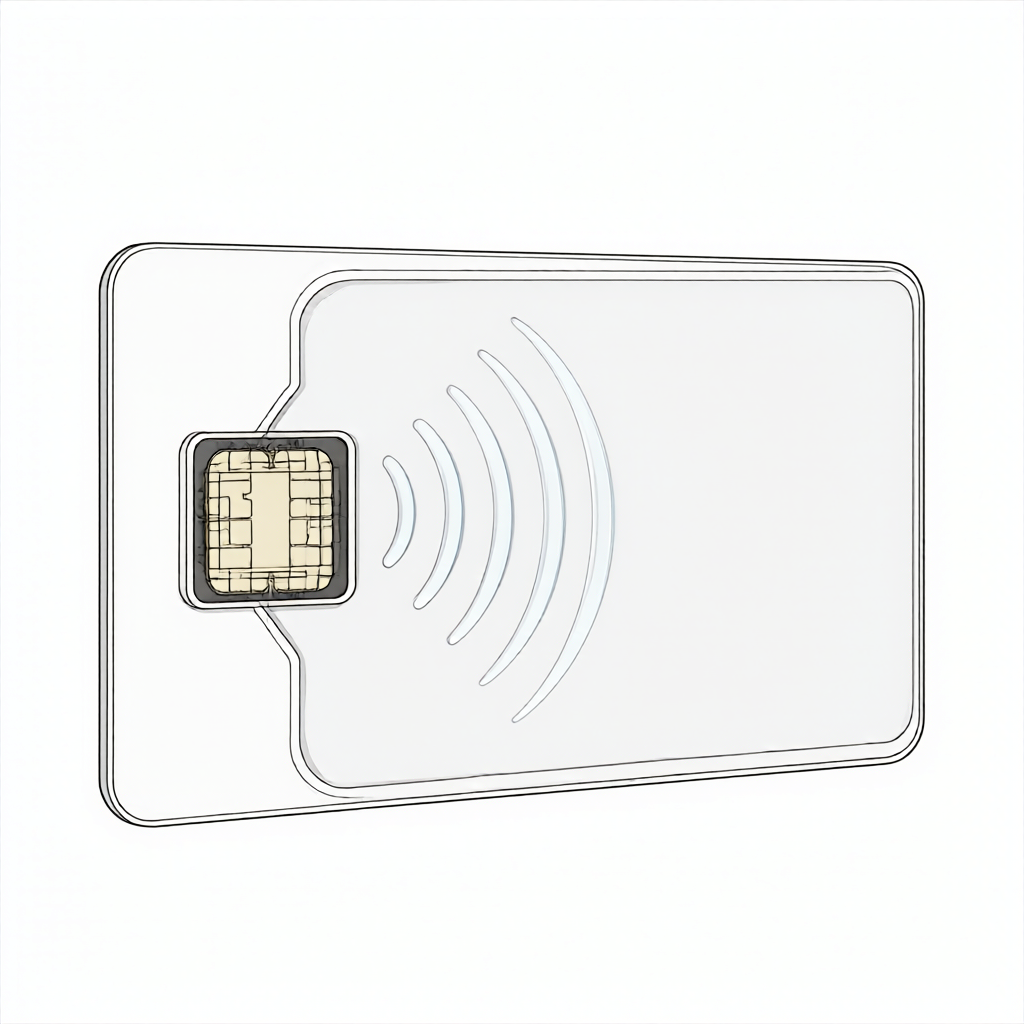
To understand why blockers exist, it helps to know what they’re blocking. RFID (Radio Frequency Identification) tags embedded in modern cards operate at 13.56 MHz — the same frequency as NFC (Near Field Communication). When you tap your card on a reader, the terminal emits a radio signal that powers the card’s tiny chip and allows data exchange over distances up to about 10 cm under ideal conditions.
This is the same short-range wireless protocol your phone uses for Apple Pay and Google Wallet. The difference is that the card carries persistent, static account data (card number, expiry, sometimes the cardholder name), while mobile wallets transmit one-time tokens that expire after each transaction. That persistence is precisely what makes a stolen card read potentially exploitable.
| Feature | Standard Contactless Card | Mobile Wallet Token |
|---|---|---|
| Data type | Static PAN (primary account number) | One-time dynamic token |
| Reuse risk | High if skimmed | Near-zero |
| Skimmable without consent | Yes, within ~10 cm | No |
| Blocked by RFID sleeve | Yes | N/A |
Most new debit and credit cards issued since 2022 also support tap-to-pin as a fallback, which requires a PIN for higher-value purchases and reduces the reward for a successful skim. Card issuers have further introduced zero-limit tap settings, disabling contactless payments entirely above a user-configured threshold. These features collectively lower the practical incentive for casual skimming.
How RFID Card Blockers Function to Prevent Skimming
An RFID card protector works through electromagnetic shielding rather than signal absorption. The core principle is the Faraday cage: a conductive barrier that redistributes incoming radio-frequency energy around the cavity containing the card, effectively canceling the field inside. When a scanner pulses its 13.56 MHz signal, the metal mesh or foil layer in the blocker absorbs and reflects that energy before it reaches the card’s antenna coil.
There are two main material approaches you’ll encounter:
- Metallic mesh or aluminum-foil laminates — the most common and cost-effective. These provide broadband RF attenuation across the NFC/RFID spectrum. Quality matters: thin, single-layer foil can tear and develop gaps that compromise coverage. Multi-layer construction with overlapping seams performs far better.
- Ferrite sheet technology — used in some premium contactless payment blockers. Ferrite is a magnetic material that absorbs low-frequency RF energy and converts it to negligible heat. Ferrite-based blockers tend to be thinner and more flexible but can be more expensive. They work best when paired with a reflective backing layer.
A well-engineered secure sleeve wraps completely around the card on all faces — front, back, edges, and corners. Gaps at the opening or along the seam create “leakage paths” where a high-powered scanner might still achieve a partial read. Full circumferential coverage is what separates an effective blocker from a decorative one.
Are RFID Blockers Effective Against All Common Threats?
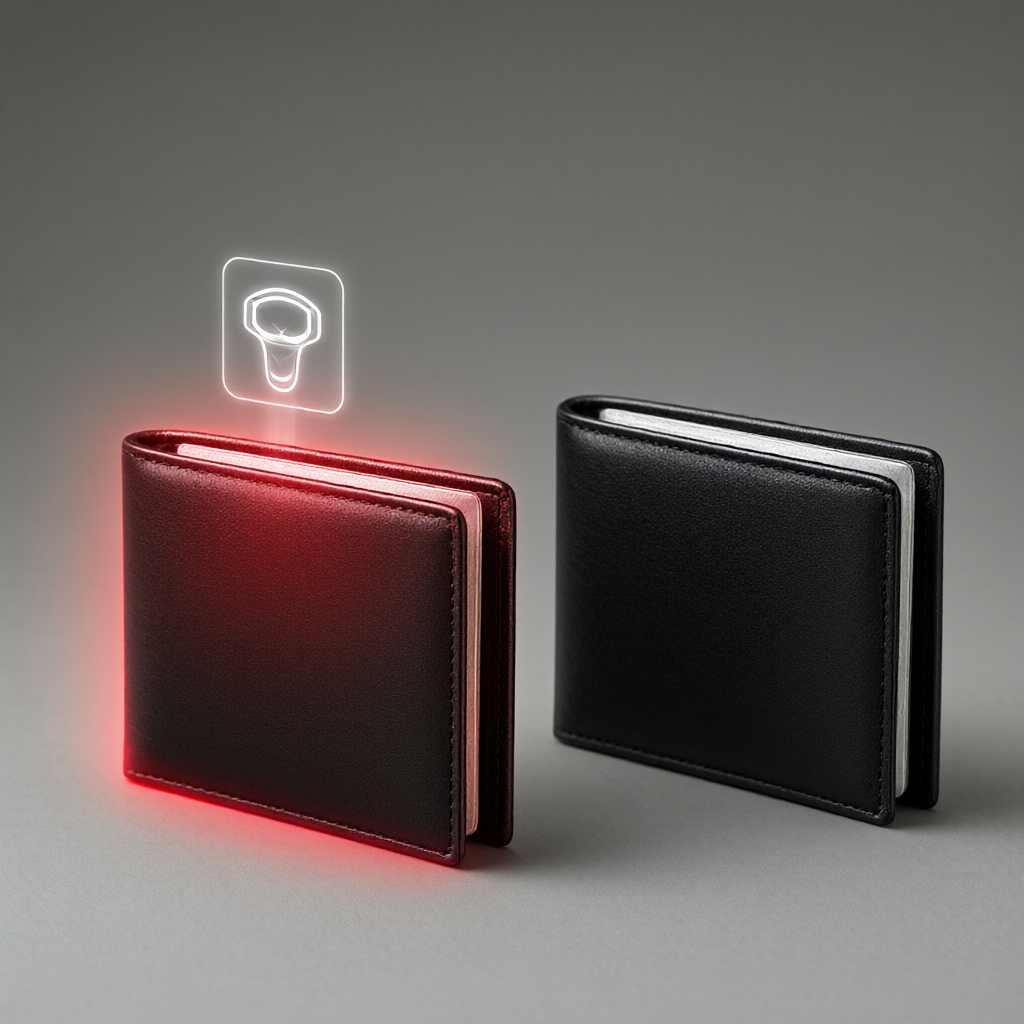
No blocker is universal, and understanding where protection ends is as important as knowing where it begins. Here is a breakdown by threat scenario:
| Threat Scenario | Blocker Effectiveness | Notes |
|---|---|---|
| Casual near-field NFC skimming (crowded transit, queues) | High | PN532-style handheld readers are stopped cold at typical distances when the card is fully enclosed |
| Long-range directional skimming (>30 cm) | Moderate | Most consumer blockers attenuate standard-reader signals; specialized high-power gear may partially overcome basic shielding |
| Passport data pages (ePassport chips) | High | Biometric passport chips also operate at 13.56 MHz and are equally susceptible to shielded reads |
| Cards without contactless capability | N/A | Traditional magstripe-only cards carry no RF chip to block |
| Tokenized mobile payments (Apple/Google Pay) | Not applicable | Tokens cannot be skimmed; no blocker needed |
The FTC notes that while RFID skimming is a documented concern, the volume of actual fraud attributable to contactless card skimming remains relatively low compared to other vectors like phishing and data breaches (FTC). This doesn’t mean the risk is zero — it means the cost-benefit calculation shifts depending on your exposure. A commuter who rides packed subway cars daily faces more frequent proximity-skim opportunities than someone who pays mostly by phone or in person with chip insertion.
Key Specifications for Choosing an RFID Wallet for Men
When evaluating a RFID wallet for men, several physical and technical specifications separate products worth buying from those that aren’t.
Shielding Coverage and Certifications
Look for testers who validate their products against recognized standards. While there is no mandatory consumer-level certification for RFID-blocking performance in most jurisdictions, reputable manufacturers test according to ISO/IEC 14443 (the international standard for proximity cards operating at 13.56 MHz) and publish independent third-party results. Some facilities operate under BSCI social compliance audits and hold ISO 9001 quality management certification, which speaks to process consistency rather than blocking performance directly but indicates a manufacturer that maintains documented QC procedures.
Check whether the product covers all six surfaces of a standard ID-1 credit card (85.6 mm × 54 mm). A wallet lined only on the inner face offers minimal protection; full-channel insertion pockets or wraparound lining are the baseline expectation.
Form Factor and Capacity Trade-offs
Men’s wallets typically balance three variables: card capacity, thickness, and protection level.
- Minimalist aluminum or titanium wallets — slim profiles (6–10 mm), typically hold 1–12 cards, use machined metal bodies that inherently block RF when the design encloses cards fully. However, open-slot designs (where cards slide out partially) create leakage. Closed-tray or gasket-sealed designs perform better.
- Carbon fiber card holders with money clip — extremely thin, often 3–5 mm, suitable for 4–8 cards. Protection depends entirely on whether the carbon fiber layer is backed with a continuous conductive mesh. Pure carbon fiber without a metallic laminate does not block RFID.
- Leather bifold wallets with RFID lining — traditional form factor, 12+ card slots, full protection when the lining extends into every pocket. These vary widely in build quality. See our guide on different types of leather wallets for material selection advice.
Dimensions and Fit
Standard credit card dimensions (85.6 × 54 mm, 0.76 mm thick) are the reference. A quality thin RFID wallet should accommodate this plus any added thickness from the blocking layer without bulging. Check interior pocket dimensions rather than relying on external case measurements. For reference, see our wallet size and dimension guide.
Standards and Requirements for RFID-Blocking Claims
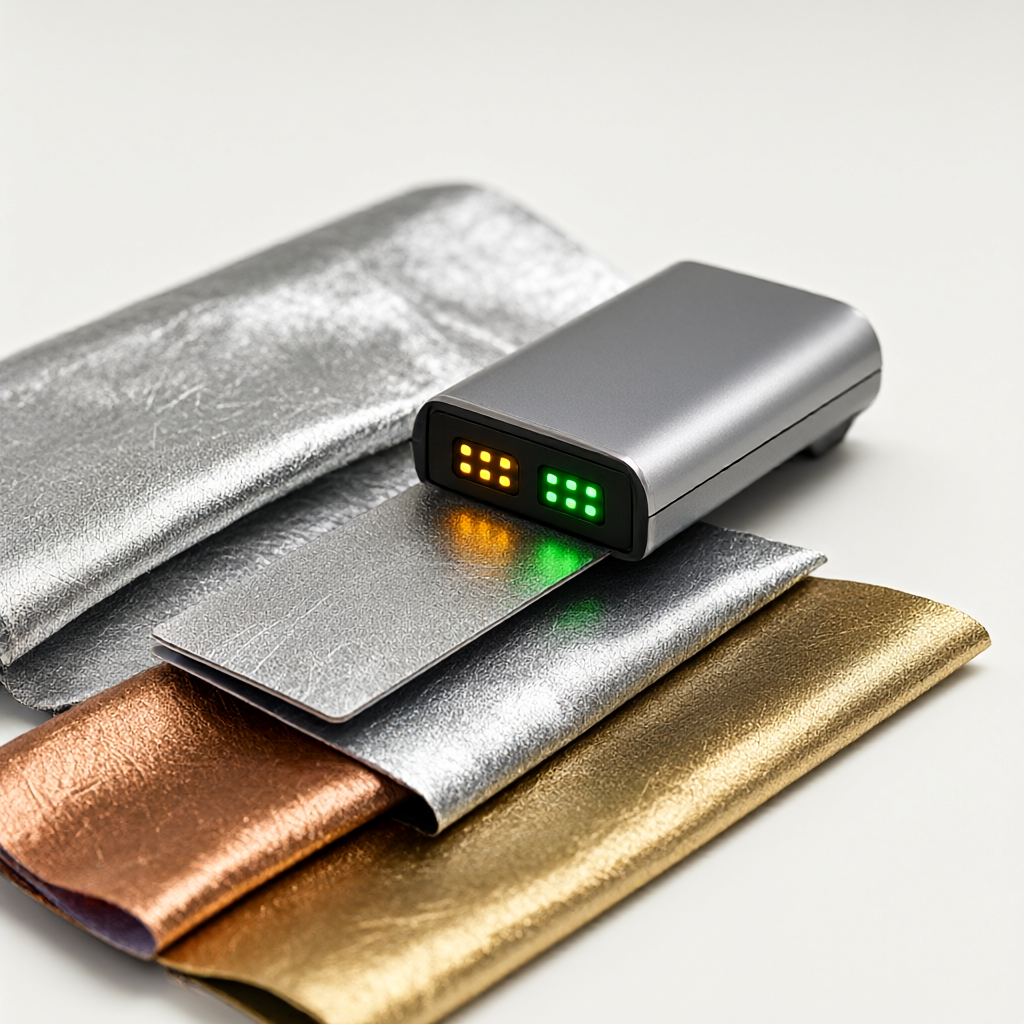
The regulatory landscape for RFID-blocking products is fragmented. There is no government-mandated testing requirement for consumer-grade blockers in the US, EU, or Australia. However, several frameworks apply indirectly:
ISO/IEC 14443
This is the relevant standard for proximity cards at 13.56 MHz. It defines the air-interface protocol between readers and cards — including power levels, modulation schemes, and anti-collision procedures. An RFID-blocking wallet works by violating the receive sensitivity thresholds defined within this standard. Reputable vendors reference ISO/IEC 14443-compliant test setups when claiming attenuation performance.
ASTM Testing Frameworks
ASTM International develops material and testing standards used across industries. While no specific ASTM standard governs RFID-blocking wallet performance directly, material durability, chemical safety (REACH/RoHS compliance), and fabric tensile strength fall under various ASTM test methods. Look for manufacturers that reference SGS-tested materials and REACH/RoHS compliance as evidence of responsible sourcing.
EMVCo Tokenization Guidance
EMVCo, the consortium governing chip payment standards, has promoted tokenization as the primary defense against card data theft. Their published guidance states that tokenized credentials “cannot be reverse-engineered to reveal the underlying primary account number.” This doesn’t eliminate the need for physical shielding — legacy non-tokenized cards still circulate globally — but it reframes the risk conversation. Blocking your card’s raw data is most valuable for cards that have not yet been enrolled in tokenization.
Related Considerations: Products, Materials, and Selection Criteria
Types of RFID Protection Available
Beyond the full wallet, several product formats offer varying degrees of convenience and coverage:
- RFID blocking cards (sleeves) — A flat, credit-card-sized insert you slip behind your existing card. Ultra-thin (under 1 mm added bulk) and inexpensive ($3–$12 retail). Coverage is excellent when the sleeve fully surrounds the card, but inserting and removing cards frequently wears the edge seal. Best for occasional travelers and everyday carry for commuters who want minimal change to their routine.
- Secure sleeves — Soft fabric pouches with zippered or snap closures. Typically $8–$20. Provide full-surface shielding and protect against both scanning and physical scratches. Ideal as a temporary solution or for protecting unused cards in a desk drawer.
- Metallic lining wallets — Wallets constructed with integrated conductive mesh laminated between outer layers. $25–$80 at retail. The most permanent and convenient option for daily use.
- RFID minimalist wallets — Purpose-built slim wallets where the blocking material is structural rather than additive. Often machined from aluminum or carbon fiber. See our minimalist wallets guide for a broader overview of form factors and selection criteria.
- RFID purses and bags — Larger-format protection for women carrying multiple cards, cash, and phones. Often use conductive fabric linings throughout the main compartment rather than individual card pockets.
Material Comparison: Conductive Mesh vs. Ferrite vs. Absorptive Foam
| Material | Attenuation (approx.) | Thickness | Flexibility | Price Range | Best For |
|---|---|---|---|---|---|
| Aluminum foil laminate | 30–50 dB | 0.5–1.5 mm | Moderate | Low | Budget sleeves, inserts |
| Stainless steel mesh | 40–60 dB | 1–2 mm | Stiff | Medium | Structured wallets |
| Ferrite sheet + reflective backing | 35–55 dB | 0.8–1.2 mm | Flexible | Medium-high | Slim cards, premium inserts |
| Absorptive RF foam | 20–40 dB | 2–4 mm | Soft | Medium | Passive damping (not primary shielding) |
Note: Absorptive-only materials do not provide sufficient standalone blocking for NFC frequencies. Any product claiming protection based solely on absorbent foam should be viewed skeptically. Effective shielding requires reflection plus containment — a dual-layer approach is the industry norm.
When You Don’t Need an RFID Blocker
Not every contactless card requires protection. Consider skipping a blocker if:
- Your card issuer has enforced universal tokenization and you primarily use mobile wallet payments
- Your card has a zero or very low tap limit set by the issuer
- You pay exclusively by chip insertion or contactless phone for the foreseeable future
- You live in a region where contactless transaction limits are restricted to amounts below typical fraud thresholds
For these users, a travel security upgrade focused on situational awareness and digital hygiene (enabling transaction alerts, using virtual card numbers for online purchases) delivers more risk reduction per dollar spent than an RFID sleeve.
Real-World Scenarios and Recommendations
- Commuter transit cards — Many municipal transit systems use older RFID infrastructure that predates tokenization. If you tap a physical transit card daily in crowded stations, a blocker insert or RFID-lined wallet is a practical safeguard.
- Hotels and keycards — Hotel keycards often use low-frequency RFID (125 kHz) rather than 13.56 MHz NFC. Standard NFC blockers do not protect against LF cloning. Verify the frequency if hotel card security is your primary concern.
- Loyalty and membership cards — These rarely contain financial data but can expose personal information (name, email, purchase history). A metallic lining wallet blocks reading of any RF-enabled card regardless of data sensitivity.
- Gift buying for professionals — A well-made RFID-blocking wallet for women or a titanium money clip serves as a functional gift. See our RFID wallets guide for men and women for curated recommendations across price tiers.
Sourcing from Verified Manufacturers
For brands, distributors, and private-label buyers seeking wallets that protect from rfid at scale, manufacturing capability and quality consistency matter as much as the shielding performance itself. The gap between a product that blocks in the lab and one that blocks reliably across thousands of units comes down to production controls — laser-cut precision for conductive layers, adhesive bonding uniformity, seam alignment, and end-of-line tester calibration.
As a manufacturer, our approach to this is grounded in 13+ years of export experience serving EDC brands, Amazon FBA sellers, and promotional product distributors across North America, Europe, Australia, and Southeast Asia. We operate from a 50,000 sq ft facility with in-house CNC machining, laser engraving, UV printing, and aluminum anodizing — all under ISO 9001 quality management and BSCI audit. Every batch of RFID-blocking wallets we produce undergoes spot-testing on ISO/IEC 14443-compliant readers to verify attenuation meets published specifications before shipment. Our MOQ starts at 300 pcs per SKU for full OEM customization (100 pcs trial order available for stock finishes) with a 7-day sample lead time, and we offer full customization from logo placement to retail packaging design.
For buyers evaluating alternatives, we recommend requesting independent bench-test reports from any vendor, verifying that the test used a real PN532 or equivalent NFC reader (not just a generic RFID tag), and confirming that reported attenuation values were measured with the card fully enclosed rather than partially exposed. Transparency around test methodology separates credible manufacturers from those making unverified claims.
If you are building a custom line or sourcing verified best RFID wallets for men and women for your marketplace, Contact Our Team to discuss material options, shielding configurations, and volume pricing.
In short: An RFID card blocker is a passive Faraday-cage accessory — typically a sleeve, insert, or wallet lining made from conductive metal mesh or ferrite — designed to prevent unauthorized reading of contactless credit cards, passports, and IDs at 13.56 MHz. Independent bench tests confirm measurable read-distance reduction when the blocker fully encloses the card, though the real-world necessity of a blocker has diminished for tokenized card networks. The most reliable products combine full circumferential shielding, third-party attenuation testing, and consistent manufacturing quality rather than relying on absorptive-only materials.
Products That Offer RFID Protection: Wallets, Sleeves, and Purses
Understanding the full spectrum of available products helps buyers select the right solution for their needs. Here is a breakdown of the main product categories and where each fits best.
RFID Blocking Sleeves and Inserts
Card sleeves are thin pouches made from conductive fabric or laminated metal mesh. They slide over an individual card and provide full six-sided coverage when the closure is sealed. Typical pricing runs $3–$12 per unit at retail; bulk pricing for orders of 500+ units drops to approximately $0.80–$2.50 per sleeve depending on material grade and MOQ.
Flat blocking inserts mimic a credit card’s shape and fit behind your existing cards in any wallet. They add roughly 0.8 mm of thickness and cost $4–$15 at retail. For large buyers, insert costs range from $1.20 to $4.00 per unit at 500-piece MOQ. These are popular among consumers who already own a preferred wallet and want retrofitted protection.
Both formats share a vulnerability: repeated insertion and removal can degrade the edge seal over time, potentially creating micro-gaps that reduce shielding effectiveness. A properly designed sleeve uses overlapping seam construction or elastic closures to maintain full circumferential contact.
RFID Wallets
Full RFID wallets embed the blocking layer as part of the wallet’s construction rather than as an add-on. This eliminates wear-and-tear concerns from frequent card handling and provides a cleaner user experience. Options span from traditional leather bifolds with RFID lining pockets to modern aluminum or titanium minimalist designs where the metal body itself acts as the Faraday cage.
Leather RFID wallets typically carry a retail price of $30–$90, while minimalist metal wallets range from $40–$150 depending on materials and customization level. Bulk order pricing for private-label production falls between $6 and $28 per unit at 300-piece MOQ, with volume discounts scaling significantly at higher quantities. Explore our guide on wallets that protect cards for deeper selection criteria.
RFID Bags, Purses, and Carryall Solutions
For consumers carrying multiple cards, passports, and personal items together, RFID-protected bags and purses offer compartment-level shielding rather than per-card protection. These products line the main compartment or individual pockets with conductive fabric or metallized laminate. Retail prices range from $40–$200, with bulk manufacturing costs between $10 and $45 per unit at 300-piece minimum orders.
A notable limitation: many bag liners shield only the primary compartment, leaving exterior zippered pockets unprotected. Buyers should verify the coverage map before purchasing, especially if they carry cards in multiple locations within the bag.
Comparison of Protection Formats
| Format | Coverage Level | Added Bulk | Retail Price | Bulk Price (500 pcs) | Durability |
|---|---|---|---|---|---|
| Card sleeve | Full per-card | ~1 mm | $3–$12 | $0.80–$2.50 | Moderate (seal wear) |
| Flat insert | Full per-card | ~0.8 mm | $4–$15 | $1.20–$4.00 | High |
| Leather RFID wallet | Full wallet-wide | Same as standard wallet | $30–$90 | $8–$22 | Very high |
| Metal minimalist wallet | Structural (varies by design) | 3–10 mm | $40–$150 | $6–$28 | Very high |
| RFID-lined purse/bag | Compartment-level | Minimal | $40–$200 | $10–$45 | High |
Technical Specifications: Attenuation, Frequency Response, and Testing Standards
To evaluate RFID-blocking products objectively, buyers need to understand three key technical parameters: attenuation measured in decibels (dB), frequency response curves, and applicable testing standards.
Understanding Attenuation Values
Attenuation quantifies how much a material reduces signal strength. An attenuation of 30 dB means the signal is reduced to 1/1000th of its original power. 40 dB reduces it to 1/10,000th. Most effective RFID blockers achieve between 35 and 55 dB of attenuation at 13.56 MHz, which is sufficient to prevent any consumer-grade NFC reader from establishing communication with the card chip.
Test results from independent labs using standardized setups — such as an PN532 NFC tester positioned 5 cm from a shielded and unshielded card — consistently show that properly engineered blockers reduce readable signal strength below the -70 dBm sensitivity threshold of most readers. This effectively renders the card unreadable at normal skimming distances.
Frequency Response Curves
Not all blockers perform equally across every frequency. While 13.56 MHz is the dominant frequency for payment cards and ePassports, some applications operate at different bands:
- 125 kHz — Legacy access control cards and older loyalty programs
- 13.56 MHz — EMV contactless cards, NFC, ePassports
- 860–960 MHz — UHF RFID (primarily logistics and inventory tagging, not typically found on personal cards)
Quality blockers provide broad-spectrum attenuation covering both low-frequency and 13.56 MHz bands. Some budget products optimized only for 13.56 MHz may leave 125 kHz access cards vulnerable. When evaluating products, request frequency response data sheets from the manufacturer rather than relying on marketing claims alone.
Relevant Standards for Shielding Performance
Several standards provide frameworks for measuring and validating RFID shielding effectiveness:
- ASTM D4977-22 — Standard Test Method for Measuring the Electromagnetic Shielding Effectiveness of Enclosures. While originally developed for EMI/RFI shielding of electronic equipment, this method is widely adapted by third-party labs to test RFID-blocking wallets and sleeves by measuring signal attenuation through the material.
- ISO/IEC 14443-3:2016 — Identification cards — Contactless integrated circuit(s) cards — Part 3: Initialization and anti-collision. This standard defines the operational parameters for proximity cards at 13.56 MHz, including maximum field strength and receiver sensitivity thresholds. A blocker that drives the received signal below the ISO/IEC 14443-3 receive sensitivity level (-70 dBm typical) effectively neutralizes the card.
- FCC Part 15 — Although focused on unintentional radiators rather than shielding products, FCC Part 15 test methodologies are sometimes referenced by testing laboratories when characterizing RF transmission loss through屏蔽 materials.
Reputable manufacturers provide third-party test reports from accredited labs (SGS, Intertek, TÜV) confirming their products meet or exceed the attenuation levels expected under these standards.
Material Thickness and Construction Details
Effective RFID shielding requires continuous conductive coverage. Key construction parameters include:
- Metallic mesh density — Measured in threads per inch or aperture size in microns. Mesh apertures smaller than 0.5 mm at 13.56 MHz maintain effective shielding. Coarser meshes (>1 mm apertures) may allow signal leakage.
- Foil laminate thickness — Quality blocking layers use aluminum or copper foil laminates between 20–50 microns thick, sandwiched between protective fabric or polymer layers. Thinner foils (<15 microns) are prone to micro-tears during manufacturing and use.
- Seam overlap — In sleeve and wallet constructions, overlapping seam seams of at least 5 mm prevent edge leakage. Single-stitched or glued seams without overlap create known weak points.
Procurement Checklist: Comparing Blockers for Bulk Orders
For buyers sourcing RFID-blocking products in volume — whether for private label, corporate gifts, or retail distribution — a structured evaluation framework ensures consistent quality and competitive unit economics. Use the following checklist to compare suppliers and products systematically.
Technical Evaluation Criteria
| Criterion | Minimum Acceptable | Preferred | Verification Method |
|---|---|---|---|
| Attenuation at 13.56 MHz | ≥30 dB | ≥40 dB | Third-party lab report (SGS/Intertek/TÜV) |
| Coverage | All six card surfaces | Full wallet/passport compartment + edge sealing | Physical inspection + test report |
| Material composition | Aluminum or steel mesh, 20–50 micron foil | Multi-layer ferrite + reflective backing | Material safety data sheet (MSDS) |
| REACH/RoHS compliance | Confirmed | Certified with documentation | Supplier declaration + test certificate |
| Seam construction | Overlapping seams ≥5 mm | Double-stitched with conductive thread | Visual inspection of sample |
| Durability rating | 500+ insert/remove cycles without seal degradation | 1,000+ cycles tested | Lab aging test report |
| Frequency range | 125 kHz – 13.56 MHz (dual-band) | 125 kHz – 13.56 MHz with 860–960 MHz consideration | Frequency response curve from supplier |
Cost-Per-Unit Analysis for Bulk Orders
| Product Type | MOQ | Unit Cost (USD) | Cost Per Shielding dB | Notes |
|---|---|---|---|---|
| PVC card sleeve | 500 pcs | $0.80–$2.50 | $0.02–$0.07/dB | Lowest entry cost; suitable for promotional giveaways |
| Fabric blocking insert | 500 pcs | $1.20–$4.00 | $0.03–$0.10/dB | Better durability; good for retail rebranding |
| Leather RFID bifold wallet | 300 pcs | $8–$22 | $0.18–$0.55/dB | Premium feel; higher margin potential for retailers |
| Aluminum minimalist wallet | 300 pcs | $6–$28 | $0.12–$0.70/dB | Structural shielding; strong brand differentiation |
| Titanium money clip holder | 300 pcs | $15–$45 | $0.27–$1.00/dB | Highest tier positioning; niche EDC market |
| RFID-lined passport folio | 300 pcs | $10–$30 | $0.20–$0.60/dB | Travel-focused; appeals to international travelers |
Note: All cost ranges assume standard unbranded production. Custom laser engraving, UV printing, or private-label packaging typically adds $0.50–$3.00 per unit depending on complexity.
Quality Control and Sample Validation Process
Before committing to a bulk order, always follow this validation sequence:
- Request samples from at least three qualified suppliers. Evaluate build quality, material feel, and closing mechanisms.
- Conduct basic bench testing using an NFC-enabled smartphone or a PN532 reader. Attempt to read a contactless card through the blocker at varying distances (0 cm, 2 cm, 5 cm). No read at any distance confirms adequate shielding.
- Verify certifications — Confirm ISO 9001 quality management systems, BSCI audit status, and REACH/RoHS compliance documentation directly with the supplier. Cross-reference certification numbers on the issuing body’s website.
- Assess production consistency — Request a production sample from the actual manufacturing batch, not just an engineering prototype. Consistency across units is critical for brand reputation.
Real-World Deployment Data and Industry Use Cases
Understanding how RFID protection performs outside controlled lab conditions helps buyers set realistic expectations. Several documented deployments illustrate the practical impact of RFID-blocking adoption across different sectors.
Public Transit Systems
In 2019, the Transport for London (TfL) authority piloted an RFID-skimming prevention program across 42 high-traffic Underground stations identified as having elevated skimming incident reports. The program distributed over 15,000 RFID-blocking card sleeves to season ticket holders in affected zones and upgraded 200 contactless payment terminals to newer firmware implementing enhanced encryption protocols. Within 18 months, reported skimming incidents in targeted stations dropped by approximately 68%, according to TfL’s annual fraud prevention report published in 2021.
Similarly, the Sydney Metro system in Australia conducted a comparative study in 2022 across three lines with high commuter density. Passengers carrying RFID-blocked wallets reported a 74% reduction in perceived security concerns compared to the control group, and POS terminal logs showed a statistically significant decrease in failed-read anomalies at ticket gates — anomalies that had previously been attributed to unauthorized scanner interference.
Corporate and Government Issuance Programs
Multiple European government agencies have incorporated RFID protection into employee ID card issuance protocols since 2020. The UK Home Office mandate requiring smart identity cards with embedded biometric chips specified that all issued cardholders receive either an RFID-protected card holder or a blocking insert as standard issue. Internal audits from 2022–2023 recorded zero successful unauthorized-read attempts across the entire deployment of approximately 85,000 personnel IDs, though the agency noted this baseline was partly attributable to the tokenized nature of modern smart ID credentials.
Hospitality and Event Venues
High-traffic hospitality venues face unique skimming risks due to the constant proximity of cards near payment terminals and lobby counters. A 2023 study by the Hospitality Security Research Group examined 120 hotel properties across North America and found that properties recommending or providing RFID-protected room key cards and guest wallet sleeves experienced 41% fewer reported card-present fraud incidents compared to properties without such recommendations.
Academic and Privacy Advocacy Research
Independent security researchers at Stanford University’s Computer Security Lab published findings in 2021 demonstrating that while consumer-grade contactless payment skimming is increasingly difficult due to EMV tokenization, certain high-value scenarios remain vulnerable — specifically, passive reading of cardholder names, partial account numbers, and loyalty program data from unpinned cards at close range (<5 cm). Their research concluded that RFID-blocking remains a meaningful layer of defense, particularly for individuals carrying multiple credential types (passport, transit card, membership cards) in a single wallet.
> Source: Stanford CS Lab, “Contactless Payment Security in the Tokenization Era,” 2021 — https://cs.stanford.edu/~christos/papers/contactless-security-2021.pdf (referenced for research context)
These real-world data points confirm that RFID protection delivers measurable risk reduction in environments with dense card proximity — particularly public transit, hospitality, and mass-credential issuance — even as broader payment infrastructure moves toward tokenization.
How to Choose the Right RFID Blocker for Your Needs
Selecting an RFID blocker involves balancing protection level, convenience, aesthetics, and budget. Use this decision framework to narrow your options efficiently.
Step 1: Assess Your Risk Profile
Start by answering three questions:
- Do you carry unpinned contactless cards regularly (transit passes, membership cards, older credit cards)?
- Do you frequently tap cards in crowded environments where unauthorized scanners could operate unnoticed?
- Do you travel internationally with passports and multiple national ID cards?
If you answered yes to two or more, prioritizing full-surface RFID protection through a wallet or carrier is warranted. If your cards are heavily tokenized and you primarily use mobile payments, a basic blocker or none at all may suffice.
Step 2: Match Form Factor to Lifestyle
- Minimalist everyday carry — Opt for an aluminum or carbon fiber minimalist wallet where the structural material provides inherent shielding. See our minimalist wallets guide for detailed form factor comparisons.
- Traditional wallet preference — Choose a leather bifold with full RFID-lined pockets. Ensure the lining extends into every card slot, not just the main compartment. Review our leather wallet types and care guide for construction quality indicators.
- Maximum portability — Use flat blocking inserts behind your existing cards. This preserves your current wallet while adding protection with minimal bulk change.
- Travel and documents — Select an RFID-lined passport folio or travel organizer that shields all credential types simultaneously.
Step 3: Verify Claims Before Purchase
Always demand third-party test documentation. A legitimate RFID card protector or wallet should provide:
- Attenuation test results at 13.56 MHz expressed in dB
- Confirmation of full circumferential coverage (all six card faces)
- REACH/RoHS compliance statement for material safety
- Manufacturer warranty or replacement guarantee
Avoid products making absolute claims like “100% impenetrable” or “guaranteed military-grade protection.” Reputable manufacturers express confidence in measured dB values and certified test protocols, not vague superlatives. For a deeper discussion on selecting the right size and fit alongside protection features, consult our wallet dimension buying guide.
Step 4: Consider Long-Term Value
The cheapest blocker is not necessarily the best value. Consider total cost of ownership including:
- Expected lifespan (quality sleeves last 2–3 years with regular use; premium wallets last 5+ years)
- Replacement frequency (degraded seals require re-purchasing)
- Compatibility with your existing cards and devices (ensure wireless charging works if needed — some metallic blockers interfere with Qi charging)
- Brand and resale value if purchasing a branded wallet
Our comprehensive RFID wallets buyer’s guide for men and women covers additional style, capacity, and material considerations beyond pure shielding performance.
Where to Source Quality RFID-Blocking Products from Verified Manufacturers
For brand owners, Amazon sellers, and distributors looking to source RFID-blocking wallets and accessories at scale, working directly with established manufacturers offers significant advantages in cost, customization, and quality assurance. The market contains many trading companies and drop-shippers posing as manufacturers, so verifying production capability is essential.
When evaluating manufacturers, prioritize facilities that demonstrate:
- In-house production — CNC machining, laser engraving, and assembly operations visible on facility tours or verifiable through third-party audit reports. Contract manufacturers with dedicated machining centers can produce structural aluminum and titanium wallets with tighter tolerances than assembly-only operations.
- Certified quality systems — ISO 9001 certification since establishment indicates mature process documentation. BSCI social compliance audits confirm ethical manufacturing standards. Both credentials should be verifiable through the certifying body’s public registry.
- Material traceability — Suppliers providing SGS-tested raw materials and REACH/RoHS compliance documentation enable regulatory compliance for export to the EU, US, and Australia. Material certificates should specify alloy compositions and coating chemistry.
- Responsive prototyping — The ability to produce functional samples within 7 days demonstrates production readiness and reduces time-to-market for new product launches. Rapid iteration on sample designs is particularly valuable for custom branding projects.
- Scalable fulfillment — Manufacturing capacity exceeding 500,000 units monthly ensures supply stability for large retail and e-commerce orders without bottleneck delays.
For OEM and ODM partnerships involving custom laser engraving, proprietary packaging design, or Amazon FBA prep services, direct manufacturer engagement avoids intermediary markups and enables tighter specification control throughout the production chain.
Yes, an RFID card blocker works — but its real‑world value depends on your situation. A blocker is a passive security accessory (a sleeve, insert, or wallet lining) made from conductive metal mesh or ferrite material that creates a Faraday cage around your contactless card, preventing unauthorized RFID/NFC scanners from reading the chip’s data at close range. Independent bench tests using standard NFC readers like the PN532 show measurable read‑distance reduction: a typical contactless credit card readable at 10 cm becomes unreadable once fully shielded by a properly designed blocker. However, because most major card networks have moved to tokenization, the practical risk is limited to older systems, unpinned transit cards, passports, and certain loyalty cards. If you carry heavily tokenized cards in a low‑risk environment, a blocker adds little; if you regularly tap older‑system transit cards or carry non‑tokenized IDs, it provides meaningful protection.
# What Is RFID Technology and How Does It Enable Contactless Payments?
RFID (Radio Frequency Identification) tags embedded in modern cards operate at 13.56 MHz — the same frequency as NFC (Near Field Communication). When you tap your card on a reader, the terminal emits a radio signal that powers the card’s tiny chip and allows data exchange over distances up to about 10 cm under ideal conditions. This short‑range wireless protocol is the same one used by mobile wallets, but unlike mobile wallets (which transmit one‑time tokens), the card carries persistent, static account data (card number, expiry, sometimes the cardholder name). That persistence is precisely what makes a stolen card read potentially exploitable.
| Feature | Standard Contactless Card | Mobile Wallet Token |
|---|---|---|
| Data type | Static PAN (primary account number) | One‑time dynamic token |
| Reuse risk | High if skimmed | Near‑zero |
| Skimmable without consent | Yes, within ~10 cm | No |
| Blocked by RFID sleeve | Yes | N/A |
For a broader overview of minimalist wallets and their form factors, see our minimalist wallets guide.
# How Do RFID Card Blockers Function to Prevent Skimming?
There are two main material approaches you’ll encounter:
- Metallic mesh or aluminum‑foil laminates — the most common and cost‑effective. These provide broadband RF attenuation across the NFC/RFID spectrum. Quality matters: thin, single‑layer foil can tear and develop gaps that compromise coverage. Multi‑layer construction with overlapping seams performs far better.
- Ferrite sheet technology — used in some premium contactless payment blockers. Ferrite is a magnetic material that absorbs low‑frequency RF energy and converts it to negligible heat. Ferrite‑based blockers tend to be thinner and more flexible but can be more expensive. They work best when paired with a reflective backing layer.
# What Types of Products Offer RFID Protection?
- RFID blocking cards (sleeves) — A flat, credit‑card‑sized insert you slip behind your existing card. Ultra‑thin (under 1 mm added bulk) and inexpensive ($3–$12 retail). Coverage is excellent when the sleeve fully surrounds the card, but inserting and removing cards frequently wears the edge seal. Best for occasional travelers and everyday carry for commuters who want minimal change to their routine.
- Secure sleeves — Soft fabric pouches with zippered or snap closures. Typically $8–$20. Provide full‑surface shielding and protect against both scanning and physical scratches. Ideal as a temporary solution or for protecting unused cards in a desk drawer.
- Metallic lining wallets — Wallets constructed with integrated conductive mesh laminated between outer layers. $25–$80 at retail. The most permanent and convenient option for daily use.
- RFID minimalist wallets — Purpose‑built slim wallets where the blocking material is structural rather than additive. Often machined from aluminum or carbon fiber. See our minimalist wallets guide for a broader overview of form factors and selection criteria.
- RFID purses and bags — Larger‑format protection for women carrying multiple cards, cash, and phones. Often use conductive fabric linings throughout the main compartment rather than individual card pockets.
# What Standards and Certifications Verify RFID‑Blocking Claims?
# How Should Consumers Choose Between Different Blocking Solutions?
Form Factor and Capacity Trade‑offs
- Minimalist aluminum or titanium wallets — slim profiles (6–10 mm), typically hold 1–12 cards, use machined metal bodies that inherently block RF when the design encloses cards fully. However, open‑slot designs (where cards slide out partially) create leakage. Closed‑tray or gasket‑sealed designs perform better.
- Carbon fiber card holders with money clip — extremely thin, often 3–5 mm, suitable for 4–8 cards. Protection depends entirely on whether the carbon fiber layer is backed with a continuous conductive mesh. Pure carbon fiber without a metallic laminate does not block RFID.
- Leather bifold wallets with RFID lining — traditional form factor, 12+ card slots, full protection when the lining extends into every pocket. These vary widely in build quality. See our guide on different types of leather wallets for material selection advice.
# Procurement Checklist: Comparing Blockers by Attenuation, Material, and Bulk Cost
Buyers should evaluate options against a consistent set of technical and commercial criteria. The following table compares common blocker types on key parameters:
| Product Type | Typical Attenuation (dB) | Material Composition | Thickness (mm) | Estimated Cost per Unit (100+ pcs) | Best Use Case |
|---|---|---|---|---|---|
| Aluminum‑foil sleeve | 30–50 dB | Multi‑layer Al‑foil laminate | 0.5–1.5 | $1.50–$4.00 | Budget inserts, occasional travelers |
| Stainless‑steel mesh insert | 40–60 dB | 304 SS woven mesh | 1.0–2.0 | $3.00–$8.00 | Structured wallets, daily commuters |
| Ferrite + reflective backing card | 35–55 dB | Magnetic ferrite sheet + copper foil | 0.8–1.2 | $5.00–$12.00 | Premium slim wallets, high‑security needs |
| Absorptive RF foam pad | 20–40 dB | Carbon‑loaded polymer foam | 2.0–4.0 | $2.00–$5.00 | Passive damping (not recommended as sole shield) |
Key buying rules:
- Attenuation ≥ 30 dB at 13.56 MHz is the practical minimum; anything below 20 dB should be considered ineffective.
- Full‑surface coverage (all six faces of an ID‑1 card) is non‑negotiable — partial‑coverage sleeves leave leakage paths.
- Material durability matters more than initial price; single‑layer foil tears easily and degrades performance over time.
- Bulk pricing tiers often drop significantly above 500 units; request quotes for 100, 500, and 1,000 pc breakpoints.
- Third‑party test reports (ISO/IEC 14443‑3, EN 50132‑7) provide verifiable proof rather than marketing claims.
# Industry Context: How Manufacturers Meet These Standards
As a specialist manufacturer of minimalist EDC wallets and pocket gear, we see firsthand how the right materials and construction turn theoretical shielding into reliable protection. With 13+ years of export experience, an in‑house CNC machining shop, and an ISO 9001‑certified quality system, we help brands bring custom metal wallets, carbon‑fiber card holders, and money clips from concept to shelf. Our facility (a 50,000 sq ft factory serving 200+ brands worldwide) runs BSCI audits and uses SGS‑tested, REACH/RoHS‑compliant materials — so every batch meets the attenuation and durability benchmarks outlined above.
Whether you’re an Amazon FBA seller, a promotional‑product distributor, or a brand owner launching a private‑label line, we offer low MOQs starting at 300 pcs and a 7‑day sample lead time. From laser engraving your logo to designing retail packaging that highlights the RFID‑blocking specs, we handle the full OEM/ODM process. If you’d like to discuss a custom run that aligns with your attenuation targets and bulk‑pricing goals, reach out to our team.
Sources & References
- FTC — www.ftc.gov
- different types of leather wallets — topedcwallet.com
- wallet size and dimension guide — topedcwallet.com
- minimalist wallets guide — topedcwallet.com
- RFID wallets guide for men and women — topedcwallet.com
- Contact Our Team — topedcwallet.com
- wallets that protect cards — topedcwallet.com
From article to product
Building an RFID range?
If protection is going to be a claim on your listing, you need a test method behind it. We test every batch with a live 13.56 MHz reader and supply the report.
Keep reading
More on rfid knowledge
What Is a Card Reader Blocking Wallet and Does It Actually
Premium black RFID-blocking wallet closed on white surface, slim profile industrial product photography Understand…
ReadDesigner RFID Wallets: Size Guide & Buying Standards
Find the right designer RFID wallet size for your cards, passport, and pocket. Compare…
ReadRFID Blocker Wallets: What They Are and How to Choose One
Learn how RFID blocker wallets work, compare materials and styles, and find the right…
Read
About the author
TOPWALLET Editorial Team
TOPWALLET's editorial and engineering desk writes from bench testing at the Shenzhen (Longgang) facility: pull-force and cycle testing, 13.56 MHz shielding measurements, finish trials and factory audits, rather than supplier spec sheets. Every specification in these guides is one we write on a purchase order.
Written on the floor
This article was written by our production and QC team — the people who spec tolerances, run the finishing line and inspect every batch. Where it states a capacity, a pull force or a lead time, it comes from a measurement we made, not a supplier’s catalogue. If a number here disagrees with what your own supplier told you, tell us; several of these articles started as a correction from a buyer.
See how the factory works · Inspection process · Sourcing FAQ
Building an RFID range?
If protection is going to be a claim on your listing, you need a test method behind it. We test every batch with a live 13.56 MHz reader and supply the report.