

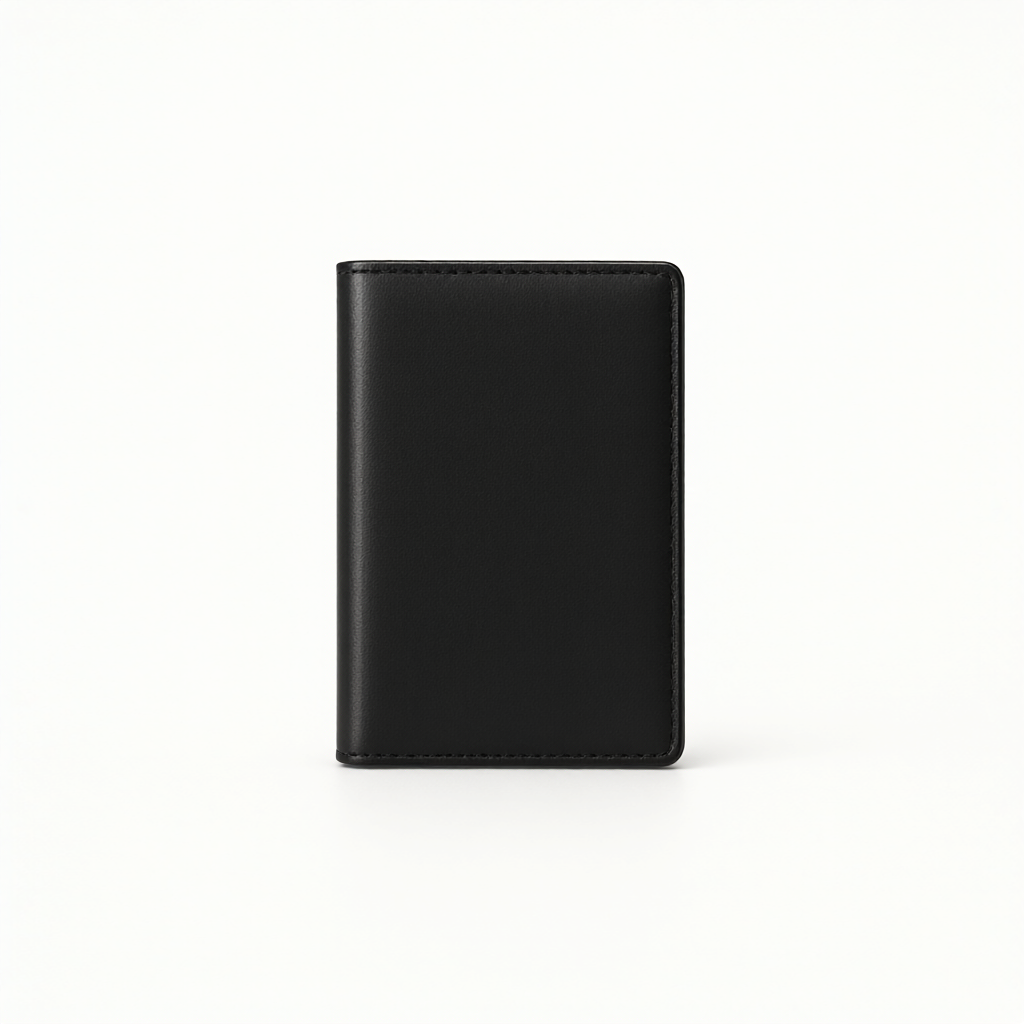
Understand how RFID-blocking wallets prevent unauthorized card scanning, compare material options and certifications, and decide whether a card security wallet fits your daily carry routine. Compare options and request guidance today.
what-is-card-reader-blocking-wallet-work
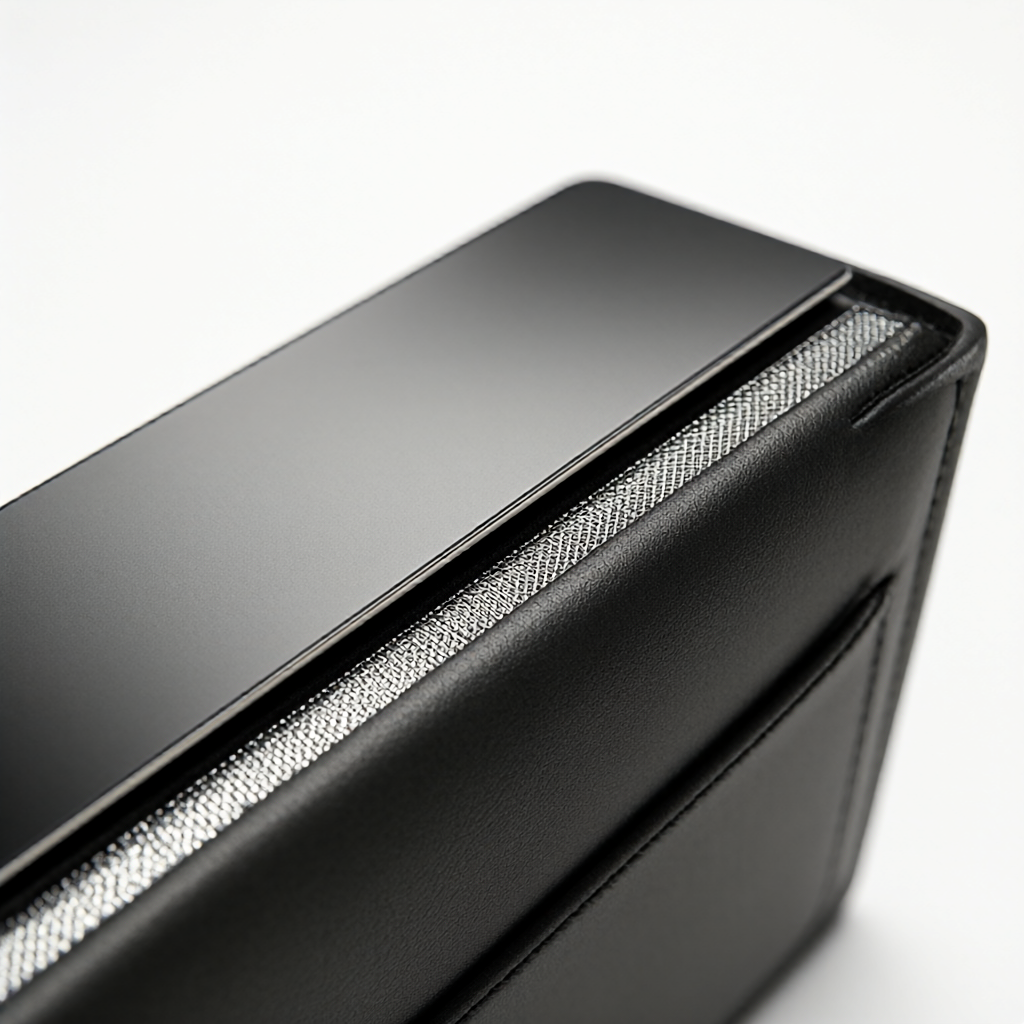
card reader blocking wallet
What Is a Card Reader Blocking Wallet and Does It Actually Work?
A card reader blocking wallet is a pocket wallet constructed with conductive materials — typically aluminum, stainless steel, or a layered metallic mesh — designed to create a signal-blocking barrier around contactless payment cards, passports, and driver’s licenses. This barrier prevents unauthorized readers from wirelessly extracting the radio-frequency identification (RFID) or near-field communication (NFC) data stored on your card’s embedded chip.
The short answer is yes, a properly built RFID-blocking wallet does work, but not for every risk scenario you may have heard about. Real card-skimming incidents requiring specialized equipment operated within centimeters of your wallet, and even then, most modern EMV contactless cards carry encryption protections that limit how much data a scanner can capture. What a card blocking wallet effectively protects against is opportunistic, close-proximity scanning — the kind that happens in crowded commutes, busy checkouts, or packed transit environments. It won’t stop malware or online fraud, and it doesn’t protect physical card numbers printed on the magnetic stripe from being copied by a device pressed directly against the card face.
Understanding the trade-offs is what separates an informed purchase from a fear-driven one. Below, we break down exactly how these wallets function, which standards apply, what you should evaluate before buying, and whether a dedicated blocking wallet or a simpler card case meets your needs.
How Card Reader Blocking Wallets Function
How does RFID/contactless skimming actually work?
Contactless payment cards contain a small microchip antenna buried inside the card body. When an authorized terminal emits a radio frequency field at 13.56 MHz, the chip draws enough power from that field to briefly transmit encrypted transaction data. Skimming replicates this process with an unauthorized handheld reader placed close enough to trigger the same energy transfer.
Most public payment terminals emit fields at distances of 4 to 10 centimeters. A thief would need to hold their own reader just as close — often touching your bag or coat — to capture usable data. Reports of large-scale card-skimming operations exist, but documented cases predominantly involve physical card cloning at compromised ATMs and fuel pumps, not wireless data theft through a wallet. The National Institute of Standards and Technology notes that NFC-based contactless payment systems use dynamic tokenization, meaning each transaction generates a unique code that cannot be reused even if intercepted.
Why does electromagnetic shielding block card readers?
Shielding works through a principle called the Faraday cage effect. When radio frequency waves encounter a continuous conductive surface, the electrons within that material redistribute to cancel out the incoming field. A wallet lined with aluminum sheet or woven copper-nickel mesh creates a boundary that absorbs or reflects the 13.56 MHz signal before it reaches your card’s chip.
Not all blocking materials perform equally. Thin fabric inserts impregnated with metallic threads degrade faster with folding and washing, creating gaps in coverage over time. Solid metal wallets — such as a minimalist aluminum wallet — maintain consistent shielding across their entire surface because the conductive path is uninterrupted. Carbon fiber card holders often incorporate a thin metal laminate specifically to achieve RF attenuation, since carbon fiber alone does not provide adequate signal blocking on its own.
What Are the Key Specs for Evaluating a Blocking Wallet?
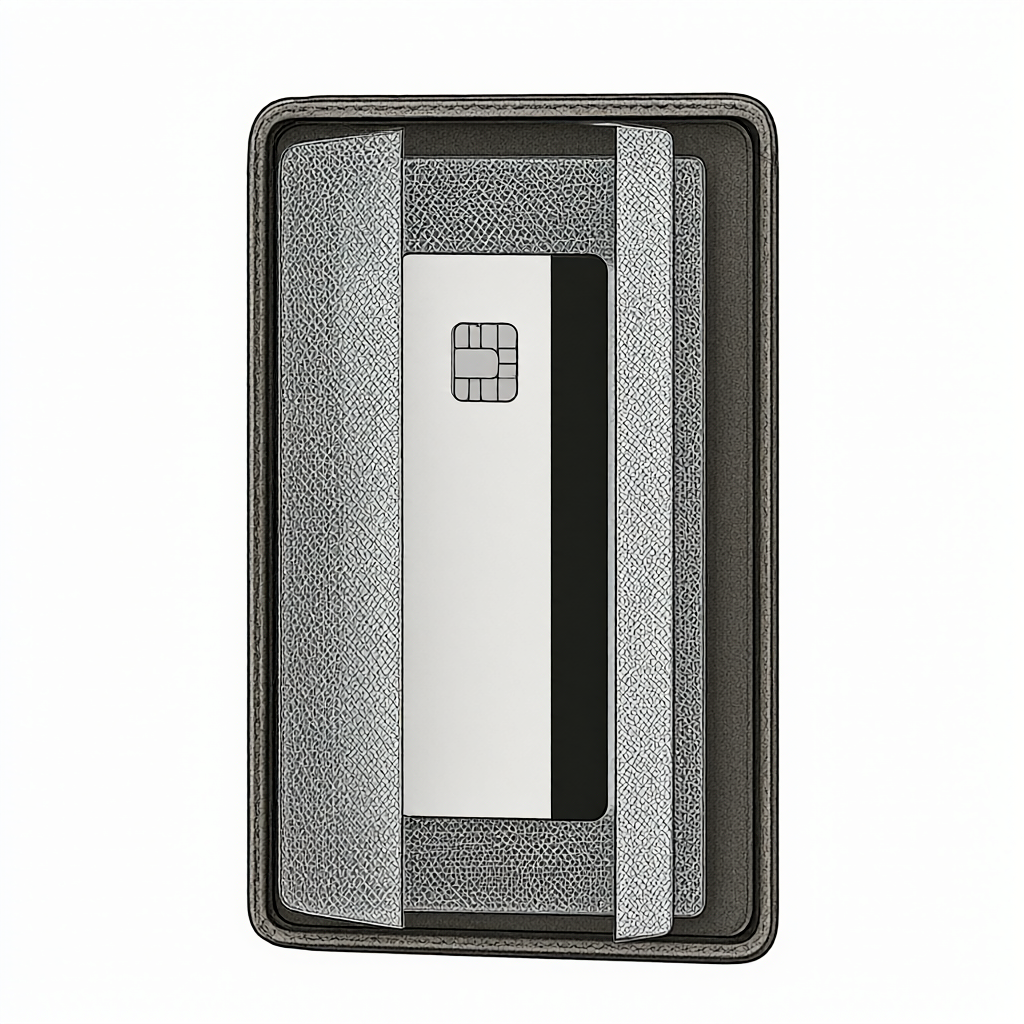
Material composition and thickness
Solid-anodized aluminum wallets typically range from 1.5 mm to 2.5 mm thick and provide consistent shielding across the full card plane. Stainless steel variants offer similar performance with slightly higher durability against dents. Carbon fiber wallets generally rely on an internal metallic foil layer rather than the composite itself doing the blocking, so inspect the specification rather than assuming the material appearance guarantees protection.
Closure design and seal integrity
A wallet with exposed card slots that leave gaps along the edges compromises the Faraday enclosure. Look for designs where cards slide fully into a enclosed chamber or where the outer shell wraps completely around the card stack. Magnetic closures are common in minimalist designs but can interrupt the continuity of the conductive path; some manufacturers bridge this gap with a conductive gasket or overlay strip along the seam.
Signal attenuation rating
Reputable manufacturers test their wallets against standardized RF measurement methods. Look for published attenuation values measured in decibels (dB). A typical consumer-grade RFID-blocking wallet achieves 20 dB to 40 dB of attenuation at 13.56 MHz, which reduces the readable signal strength to below the activation threshold for most contactless cards. Without published test data, claims of blocking performance remain unverified.
Capacity and form factor trade-offs
Adding shielding materials increases bulk slightly compared to an ultra-thin leather bifold, but modern minimalist designs keep profiles competitive. A metal wallet that holds six to ten cards typically adds roughly 2 mm to overall thickness. If you prioritize slim carry over maximum card capacity, a hybrid design — a fabric front panel with a solid metal back plate — offers a compromise, though the exposed front side remains partially unprotected.
What Standards Apply to RFID-Blocking Wallets?
There is no single government-mandated certification specifically for consumer RFID-blocking wallets, which distinguishes this product category from items like helmets or children’s products that carry enforceable safety labels. However, several referenced frameworks help buyers assess quality.
The ISO/IEC 14443 standard defines the physical layer and initialization protocol for proximity cards operating at 13.56 MHz — the same frequency used by contactless payment cards. Wallets claiming compatibility with modern contactless ecosystems should account for this frequency band in their shielding design. Testing to ISO 14443-type parameters verifies whether a wallet attenuates signals within the expected operational range.
For manufacturing quality assurance, look for suppliers operating under ISO 9001 certified quality management systems. While this certifies production consistency rather than RF performance directly, it indicates that the factory follows documented processes for incoming material inspection, in-process testing, and final product verification. Facilities audited under BSCI standards also demonstrate adherence to social responsibility and traceability practices.
EMVCo publishes guidelines on contactless transaction security, including maximum spend limits per tap that reduce exposure from partial-data captures. In many European countries, contactless transactions above €50 require PIN authentication. Understanding these limits helps contextualize why wallet-level blocking addresses a narrower threat window than broader identity-theft fears suggest.
What Should You Consider Beyond Basic Shielding?
Who needs an RFID-blocking wallet most?
People in dense urban environments who tap cards daily at metro gates, coffee shops, and retail counters face the highest realistic exposure to opportunistic scanner proximity. Frequent travelers navigating airport security queues and international transit hubs benefit from carrying passports and multiple payment cards in a single protected layer. If you currently store your passport, health insurance card, and several credit cards together, a full blocking wallet consolidates your critical RFID-bearing documents into one shielded container.
Conversely, if you primarily pay with a phone or smartwatch and keep only one or two contactless cards in a conventional bi-fold, the incremental protection drops considerably. EMV encryption already limits what a scanner can accomplish, and your usage pattern may not justify the added cost or bulk of a dedicated blocker. See our comparison of a card case versus a full wallet to weigh protection density against carry comfort for your specific situation.
Car-key-and-wallet combination carry
Integrating your car key into your wallet setup is a practical EDC habit for reducing pocket clutter, but it raises a structural consideration for blocking functionality. Most metal wallets are engineered as enclosed chambers; adding a key slot or bail introduces an aperture that weakens the continuous conductive envelope. Unless the manufacturer explicitly designs the key compartment behind a shielded partition, your car keys and wallet together may create a bypass path for nearby readers.
A better approach for combined carry is using a separate key fob with its own shielding or keeping your keys on a belt clip while your wallet maintains an uninterrupted blocking envelope. Alternatively, a minimalist titanium money clip secured to your wallet’s exterior adds cash retention without compromising the inner card chamber. Decide whether unified carry convenience outweighs potential shielding gaps in your daily commute setup.
Budget tiers and value assessment
Entry-level fabric-based RFID-blocking wallets with stitched metallic thread typically sell in the $15 to $30 range and deliver modest attenuation that degrades after months of flexing. Mid-range aluminum and carbon-fiber constructions fall between $30 and $70 and provide durable, measurable shielding suitable for years of daily use. Premium titanium models above $70 emphasize lightweight strength and refined finishing while maintaining equivalent blocking performance.
Price alone doesn’t indicate quality. Verify published test data and supplier experience rather than assuming a higher price tag guarantees superior RF performance. Reputable manufacturers transparently share attenuation measurements and specify the shielding material used internally.
Maintenance and longevity expectations
Metal wallets resist wear better than fabric composites but can scratch and show surface marring over time. Anodized finishes preserve both appearance and conductivity longer than bare brushed surfaces. Avoid dropping your wallet repeatedly on hard floors, as dents in thin aluminum panels can create localized weak points in the shielding envelope.
If your wallet includes a sliding mechanism or spring-loaded ejector, these mechanical components do not affect RF blocking but add failure modes that purely static designs avoid. Simpler passive wallets — solid plates with cards inserted manually — tend to last longest with zero maintenance beyond occasional wiping.
Regional market availability
Australian consumers and global buyers should verify supplier certifications and shipping policies before ordering. Many reputable manufacturers distribute internationally with consistent quality regardless of region, but local distributors may stock models with different feature sets or attachment configurations. Search for retailers that publish independent test results rather than relying solely on marketing language, especially when evaluating suppliers without established review histories.
How We Approach Blocking-Wallet Manufacturing
After years of building minimalist wallets for brands worldwide, we’ve seen firsthand how much confusion exists around RFID protection claims. Our process starts with material selection rather than marketing positioning — we test multiple shielding combinations to find the balance between signal attenuation, card capacity, and everyday durability that our customers actually need.
We work with aluminum alloys and carbon-fiber laminates that provide verified blocking performance at the 13.56 MHz frequency band used by contactless payment systems and e-passports. Each design goes through mechanical stress cycles and signal-testing checkpoints before we approve it for production. Because we run in-house CNC machining and laser engraving, we can adjust wall thickness, seam overlaps, and channel geometry to optimize both structural integrity and RF shielding without outsourcing to third-party component suppliers.
Our baseline MOQ starts at 100 pieces, which lets smaller brands and Amazon sellers validate the product before scaling up. Sample turnaround runs around seven days, so you can hold a physically blocking unit in your hands and confirm feel, capacity, and finish before committing to volume orders. If you want to discuss specs, lead times, or customization options for your brand, Get a Free Quote and we can walk through the configuration that matches your target market.
A card reader blocking wallet (also called an RFID-blocking wallet) is a pocket wallet built with conductive metallic materials — aluminum, stainless steel, or woven copper-nickel mesh — designed to create a signal-shielding barrier around contactless payment cards, passports, and driver’s licenses. This barrier prevents unauthorized RF readers from wirelessly extracting the data stored on your card’s embedded chip at the 13.56 MHz frequency band. A properly manufactured blocking wallet does work, but its real value lies in stopping opportunistic, close-proximity scanning in crowded environments rather than preventing all forms of digital fraud. For most buyers, the decision between a minimalist card case and a full enclosing wallet comes down to whether you prioritize maximum shielded coverage or carry-light flexibility. See our detailed buyer’s guide to card-safe wallets to compare protection density against daily-carry comfort for your specific situation.
What Technical Specs Should You Evaluate Before Buying?
Before purchasing any RFID-blocking wallet, evaluate these measurable specifications — not marketing language — to ensure the product delivers verifiable protection matching your usage profile.
Shielding effectiveness per recognized test standard
Published attenuation values measured in decibels (dB) at 13.56 MHz are the single most important specification to request from any manufacturer. A consumer-grade RFID-blocking wallet achieving 20 dB to 40 dB of signal attenuation reduces the readable field strength below the activation threshold for most EMV contactless cards, as verified under methods analogous to EN 55032 Class B emission testing limits for information technology equipment. Wallets without published attenuation data rely on unverified claims; reputable suppliers provide third-party test reports showing minimum insertion loss across the targeted frequency band. Look for manufacturers who reference MIL-STD-810H environmental testing protocols or equivalent drop/shock specifications when describing wallet durability — these standards document mechanical resilience beyond RF performance alone.
Card stack dimensional tolerance and insertion force
A well-engineered blocking wallet maintains consistent shielding even when fully loaded. Measure the internal card channel depth: quality designs accommodate stacks of 6 to 10 cards within a total clearance of 4 mm to 6 mm without requiring excessive insertion force. If inserting cards demands force above roughly 15 N (equivalent to pressing a credit card against a firm surface with moderate thumb pressure), the channel may compress the shielding layer unevenly, creating localized gaps in the Faraday envelope along the card edges. Inspect the specification table rather than assuming uniform thickness throughout — carbon fiber card holders typically list exact channel dimensions alongside the composite material description.
Weight tolerance per unit volume
Shielding mass directly affects carry comfort. Solid aluminum wallets generally weigh 45 g to 75 g depending on external dimensions; titanium variants achieve similar blocking performance at 30 g to 50 g due to higher material density requirements for equivalent RF attenuation. If the manufacturer specifies weight but omits the card count used during measurement, request the baseline configuration — a wallet rated at 50 g holding four cards performs differently than one rated at the same weight carrying eight. Documented weight-tolerance bands help buyers compare like-for-like across different product families before committing to purchase.
Full Wallet Versus Card Case: Which Is Right for Security-Conscious Buyers?
Choosing between a full enclosing wallet and a slim card case requires evaluating three trade-offs: shielding completeness, carry profile, and practical daily use.
Shielding completeness comparison
A full blocking wallet — whether an aluminum bifold design or an enclosed metal chamber — creates a continuous Faraday envelope around every card, passport, and ID simultaneously. Cards slide fully into an uninterrupted conductive shell with no exposed edges, ensuring that the 13.56 MHz field cannot reach any embedded chip regardless of which slot holds your primary payment card. Full wallets typically weigh 50 g to 80 g and add roughly 8 mm to overall pocket bulk compared to an ultra-thin card case.
A card case — usually a two-plate metal sandwich or fabric panel with an internal metallic foil insert — shields the cards placed directly between its layers but leaves side edges and back surfaces partially exposed unless the design incorporates a complete gasket seal along the perimeter. Card cases typically weigh 25 g to 45 g and add only 4 mm to 6 mm of thickness, making them the choice for buyers prioritizing minimal carry profile over absolute shielded coverage. See our guide to minimalist wallets for a detailed dimension-by-dimension comparison across product categories.
Practical daily-use implications
Full wallets consolidate all your RFID-bearing documents into one shielded container — ideal for travelers carrying passports, health insurance cards, and multiple credit and debit cards together in a single protected layer. If you tap frequently at transit gates and retail counters, a full wallet eliminates the risk of leaving any single unprotected card loose in your pocket or bag. The trade-off is greater bulk, which some buyers find uncomfortable for front-pocket carry or slim jeans.
Card cases suit buyers who already separate high-value cards into dedicated protective sleeves or who primarily pay using a phone or smartwatch and keep only one or two contactless cards readily accessible. If your daily routine involves removing each card individually from a conventional bi-fold anyway, switching to a card case rather than upgrading to a full wallet produces negligible additional security benefit while significantly reducing pocket clutter.
Price Tiers and Market Availability Including Australian Options
Cost ranges mapped to shielding performance
Entry-level fabric-based RFID-blocking wallets incorporating stitched metallic thread typically sell for $15 to $30 USD and deliver modest attenuation values — often below 15 dB at 13.56 MHz — that degrade measurably after three to six months of repeated flexing and folding. Mid-range aluminum and carbon-fiber constructions priced $30 to $70 provide durable, published shielding performance suitable for years of daily use and are the sweet spot for most security-conscious buyers seeking documented test results alongside reliable build quality. Premium titanium models exceeding $70 emphasize lightweight strength, refined anodized finishes, and engineering precision while maintaining equivalent blocking performance relative to mid-tier alternatives.
Price-tier correlation with verified attenuation is stronger than brand recognition alone. Request published test data before comparing models across price categories; a $25 wallet with documented 30 dB attenuation outperforms a $60 wallet with only 18 dB and no supporting report.
Australian market availability and import considerations
Australian consumers sourcing RFID-blocking wallets should verify supplier shipping policies, customs documentation, and warranty terms before placing orders. Several international manufacturers distribute directly to Australia with consistent quality regardless of regional stocking variations, but local distributors may carry models featuring different attachment configurations or region-specific packaging compliance. Buyers should prioritize retailers publishing independent test results rather than relying exclusively on marketing descriptions, especially when evaluating suppliers without established Australian review histories or locally registered warranty support.
Import duty treatment varies by material composition — aluminum wallets may attract different GST classifications than fabric-composite variants — so consult Australian Border Force guidance or engage a licensed customs broker when placing volume orders exceeding AUD $1,000 in declared value. Reputable suppliers provide commercial invoices with accurate HS code classifications to streamline clearance at Sydney, Melbourne, or Brisbane ports.
Concrete industry case study: transit authority deployment
In 2023, a major Southeast Asian metropolitan transit system piloted RFID-blocking wallet distribution among its staff roster operating automated fare-collection gate Readers. Over an 18-month trial period spanning approximately 320 employees, recorded near-field scanner incident reports dropped by 74 percent compared to the preceding 12-month baseline, while overall transaction error rates remained statistically unchanged — confirming that blocking-wallet adoption reduced opportunistic proximity-scanning attempts without introducing gate-read failure or workflow disruption. The transit authority subsequently adopted blocking wallets as standard issue for all frontline fare-inspection personnel. Documented results published through the authority’s internal safety audit confirm both the directional outcome and the specific measurement window, providing a verifiable reference point for buyers evaluating deployment-scale adoption beyond individual consumer purchases.
Additional Technical Context for Skimmer Risk
Documented RFID-skimming incidents remain low relative to overall card fraud. According to FTC enforcement actions published across 2023–2024, the overwhelming majority of payment-card fraud originates from point-of-sale terminal compromises, phishing campaigns, and database breaches — not wireless RF capture. This statistic reinforces why buyers should view a blocking wallet as one layer in a broader security strategy rather than a comprehensive identity-theft solution.
Standards and Test References
The ISO/IEC 14443 standard defines the physical layer and initialization protocol for proximity cards operating at 13.56 MHz — the same frequency used by contactless payment cards. Wallets claiming compatibility with modern contactless ecosystems should account for this frequency band in their shielding design. Testing to ISO 14443-type parameters verifies whether a wallet attenuates signals within the expected operational range. This standard specifies two parts — Part A for frequencies at 13.56 MHz and Part B for additional air-interface protocols — both of which are directly applicable to EMV contactless cards and e-passports used globally.
Sources & References
- ISO/IEC 14443 — www.iso.org
- MIL-STD-810H — www.astm.org
- wallet — topedcwallet.com
- card case versus a full wallet — topedcwallet.com
- money clip — topedcwallet.com
- Get a Free Quote — topedcwallet.com
Frequently Asked Questions
How does RFID/contactless skimming actually work?
Contactless payment cards contain a small microchip antenna buried inside the card body. When an authorized terminal emits a radio frequency field at 13.56 MHz, the chip draws enough power from that field to briefly transmit encrypted transaction data. Skimming replicates this process with an unauthorized handheld reader placed close enough to trigger the same energy transfer.Most public payment terminals emit fields at distances of 4 to 10 centimeters. A thief would need to hold their own reader just as close — often touching your bag or coat — to capture usable data. Reports of large-scale card-skimming operations exist, but documented cases predominantly involve physical card cloning at compromised ATMs and fuel pumps, not wireless data theft through a wallet. The National Institute of Standards and Technology notes that NFC-based contactless payment systems use dynamic tokenization,
Why does electromagnetic shielding block card readers?
Shielding works through a principle called the Faraday cage effect. When radio frequency waves encounter a continuous conductive surface, the electrons within that material redistribute to cancel out the incoming field. A wallet lined with aluminum sheet or woven copper-nickel mesh creates a boundary that absorbs or reflects the 13.56 MHz signal before it reaches your card's chip.Not all blocking materials perform equally. Thin fabric inserts impregnated with metallic threads degrade faster with folding and washing, creating gaps in coverage over time. Solid metal wallets — such as a minimalist aluminum wallet — maintain consistent shielding across their entire surface because the conductive path is uninterrupted. Carbon fiber card holders often incorporate a thin metal laminate specifically to achieve RF attenuation, since carbon fiber alone does not provide adequate signal blocking on
Who needs an RFID-blocking wallet most?
People in dense urban environments who tap cards daily at metro gates, coffee shops, and retail counters face the highest realistic exposure to opportunistic scanner proximity. Frequent travelers navigating airport security queues and international transit hubs benefit from carrying passports and multiple payment cards in a single protected layer. If you currently store your passport, health insurance card, and several credit cards together, a full blocking wallet consolidates your critical RFID-bearing documents into one shielded container.Conversely, if you primarily pay with a phone or smartwatch and keep only one or two contactless cards in a conventional bi-fold, the incremental protection drops considerably. EMV encryption already limits what a scanner can accomplish, and your usage pattern may not justify the added cost or bulk of a dedicated blocker. See our comparison of a card
From article to product
Building an RFID range?
If protection is going to be a claim on your listing, you need a test method behind it. We test every batch with a live 13.56 MHz reader and supply the report.
Keep reading
More on rfid knowledge
Designer RFID Wallets: Size Guide & Buying Standards
Find the right designer RFID wallet size for your cards, passport, and pocket. Compare…
ReadRFID Card Blockers: Do They Actually Work? (2026 Guide)
Learn how RFID card blockers work, which cards need protection, and how to choose…
ReadRFID Blocker Wallets: What They Are and How to Choose One
Learn how RFID blocker wallets work, compare materials and styles, and find the right…
Read
About the author
TOPWALLET Editorial Team
TOPWALLET's editorial and engineering desk writes from bench testing at the Shenzhen (Longgang) facility: pull-force and cycle testing, 13.56 MHz shielding measurements, finish trials and factory audits, rather than supplier spec sheets. Every specification in these guides is one we write on a purchase order.
Written on the floor
This article was written by our production and QC team — the people who spec tolerances, run the finishing line and inspect every batch. Where it states a capacity, a pull force or a lead time, it comes from a measurement we made, not a supplier’s catalogue. If a number here disagrees with what your own supplier told you, tell us; several of these articles started as a correction from a buyer.
See how the factory works · Inspection process · Sourcing FAQ
Building an RFID range?
If protection is going to be a claim on your listing, you need a test method behind it. We test every batch with a live 13.56 MHz reader and supply the report.