

Quick Answer
What size designer RFID wallet do you actually need? Most adults fit comfortably into one of three buckets: an ultra-slim card holder around 65 × 95 mm for five to eight cards, a compact bifold near 110 × 90 mm for ten to sixteen cards plus some cash, or a passport-friendly design at roughly 125 × 95 mm that adds a full passport slot. The critical detail most shoppers miss is that RFID-blocking material adds 0.5–2 mm of thickness, which can push a metal wallet from “slim” into “bulky” if you’re carrying more than ten cards. For daily commute carry, lean toward the smaller form factor; for international travel, look for passport-compatible models and verify the closing mechanism still seals properly once the RFID layer is accounted for.
Size System
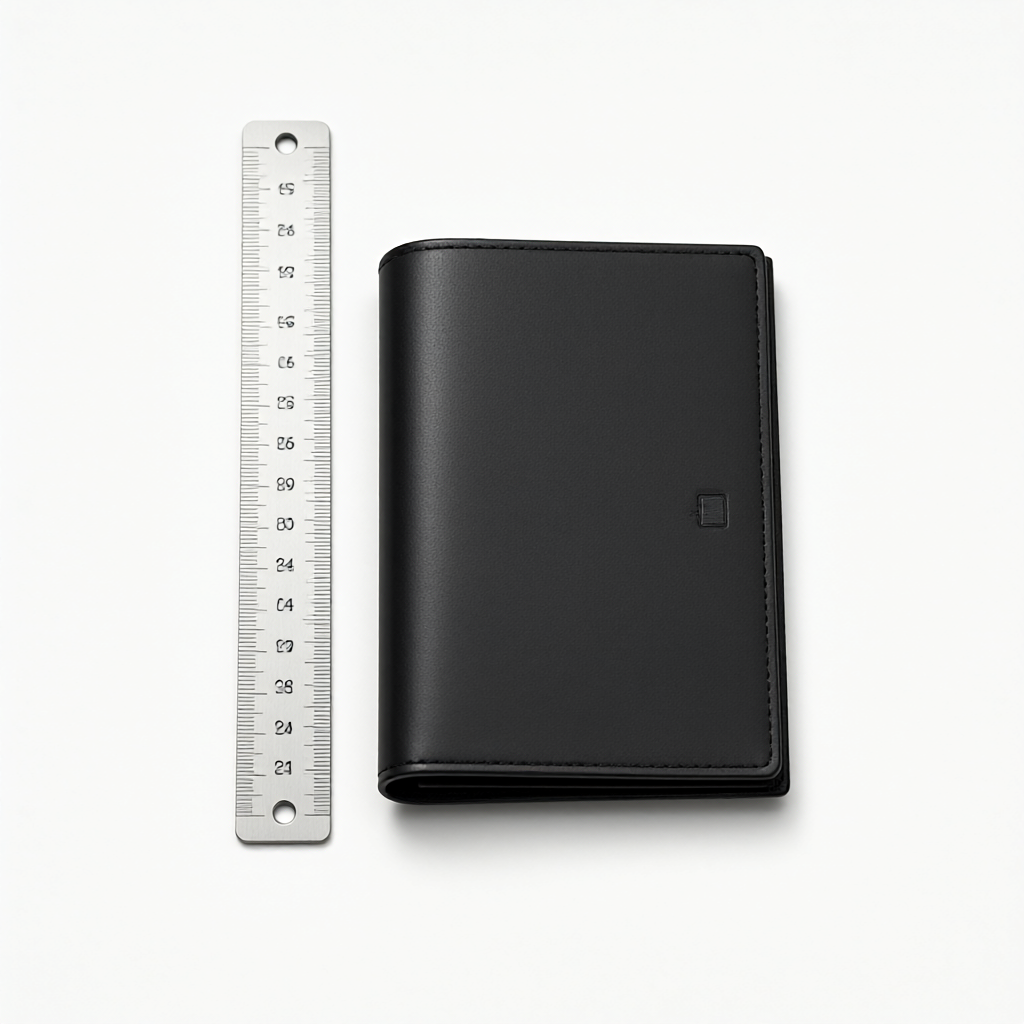
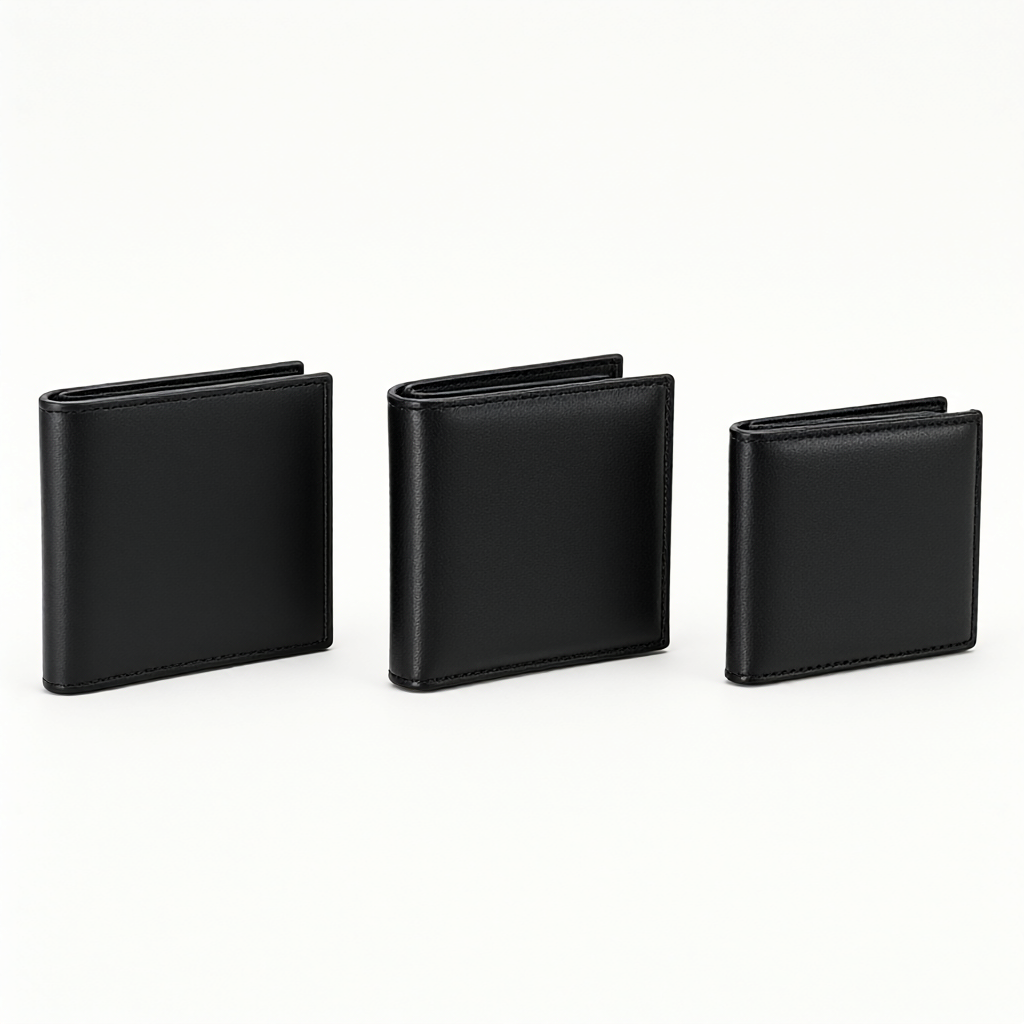
What are the standard size categories for designer RFID wallets?
The market breaks down into four practical form factors, each serving a distinct carrying style:
| Category | Typical Outer Dimensions | Card Capacity | Best For |
|---|---|---|---|
| Ultra-slim card keeper / slide wallet | ~65 × 95 mm | 4–8 cards | Minimalists, front-pocket carry |
| Compact bifold (slim wallet rfid) | ~90 × 105 mm | 6–12 cards + folded bills | Daily commuters, casual travelers |
| Standard bifold (men’s wallet rfid) | ~110 × 95 mm | 10–16 cards + bills | Everyday carry with moderate capacity |
| Passport-style bifold / trifold RFID wallet | ~125 × 95 mm | 10–16 cards + passport slot | International travelers, EDC enthusiasts |
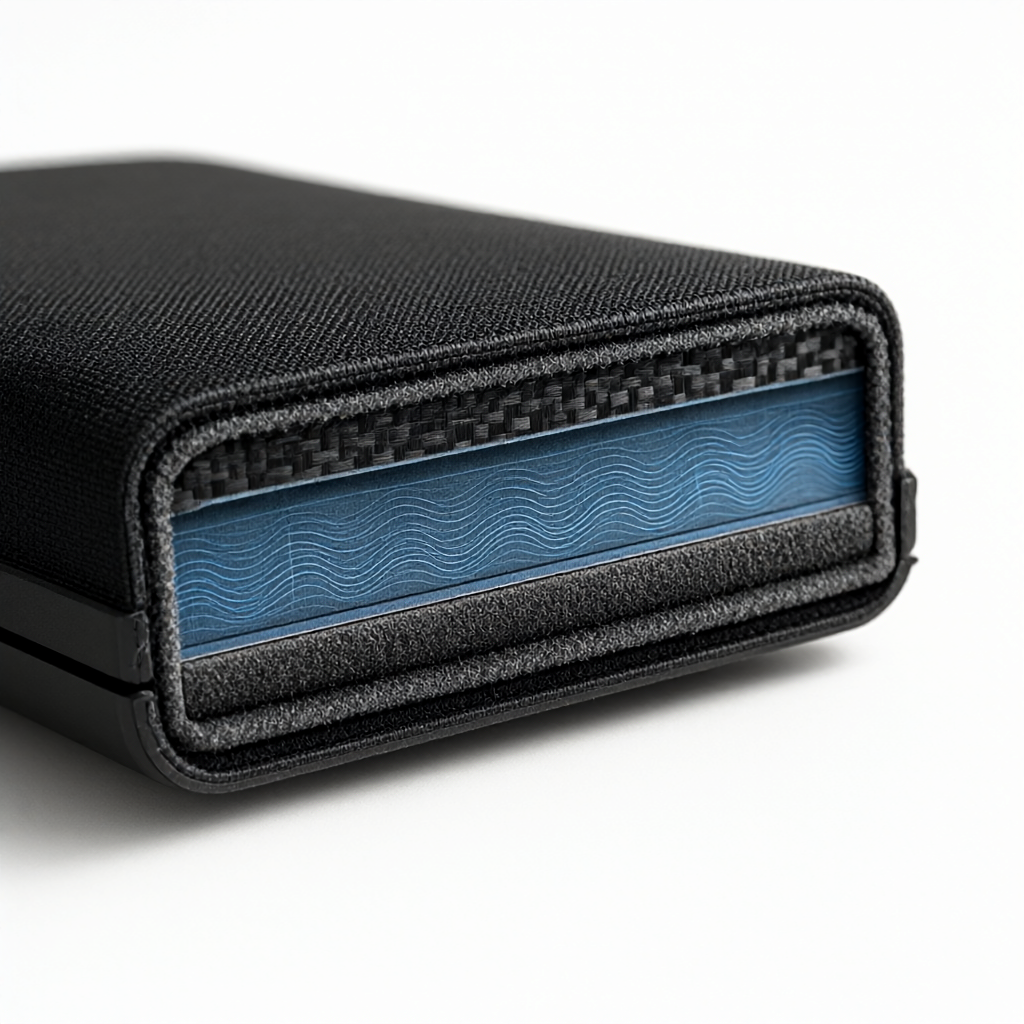
Material choice directly affects perceived bulk. A metal rfid blocking wallet in aluminum or titanium inherently runs thicker than its leather counterpart because the RFID mesh is laminated between metal sheets. Carbon fiber card holders tend to land in the middle — lighter than metal but slightly bulkier than polymer-based designs due to the layered weave construction.
For gender-tailored sizing, slim rfid wallets for women typically sit closer to the 65 × 95 mm card-keeper range or a narrow bifold around 85 × 100 mm. Brands such as Michael Kors RFID wallet lines often follow this convention, offering card-holder formats that nest into clutch interiors without adding noticeable weight. Conversely, a typical small rfid wallet womens style from fashion houses mirrors these proportions while sometimes including a zippered coin compartment, which adds 5–8 mm of depth. Men’s models tend to favor the standard or passport bifold range.
Related guidance: If you’re evaluating minimalist options for a gift or personal setup, see our best minimal wallets buying comparison guide for material trade-offs beyond RFID protection alone.
How to Measure
How do I measure my current wallet to find the right replacement size?
A quick tape measure or ruler does the job in three steps:
- Width: Lay your existing wallet flat and measure the longest horizontal edge — this is the width. Compare it against the dimension tables above.
- Height: Measure the vertical edge when the wallet is closed. This determines whether it fits under standard jacket or bag dividers.
- Thickness: Measure the closed wallet with cards inside, not empty. An empty wallet misleads; RFID layers have real-world occupancy impact.
When comparing to a new design, add roughly 1.0 mm to your measured thickness to account for the RFID blocking layer that comes integrated in most modern models. Polymer RFID liners are thinner (~0.5 mm), while embedded copper-nickel mesh in metal wallets adds closer to 1.5–2.0 mm.
For women’s purse compatibility specifically, measure the interior slot or pocket of the bag first. Many designer purses with RFID protection feature dedicated slim compartments that max out around 70 mm wide — a尺寸 check prevents buying a wallet that won’t nest securely.
Standards & Codes
What standards apply to RFID-blocking wallets?
RFID-blocking products claim performance against ISO/IEC 14443 and ISO/IEC 15693 frequency bands, which cover the 13.56 MHz range used by most contactless payment cards, e-passports, and access badges. Reputable manufacturers reference testing to ASTM International standards for electromagnetic shielding effectiveness, particularly ASTM F1681 for verification of RFID attenuation. While no single global regulatory body mandates consumer-grade RFID wallet certification, independent test labs commonly report signal reduction in the range of 80–100 dB at 13.56 MHz for well-engineered multi-layer designs.
Key specification markers to look for on product listings:
- Shielding attenuation: ≥80 dB at 13.56 MHz indicates effective blocking for payment and ID cards.
- Frequency band coverage: Should list both 125 kHz (older proximity cards) and 13.56 MHz (NFC/payment).
- Contactless payment compatibility: The blocker should attenuate external scanners without interfering with your phone tapping the reader — proper Faraday cage design achieves this by directing the field away from the card slot during a legitimate tap.
- Material composition disclosure: Copper-nickel weave, silver-infused fabric, and aluminum foil laminates each behave differently under stress.
An important caveat: many low-cost RFID credit card protectors sold as standalone sleeves lack lab-verified test data. The distinction matters because a gap even 3 mm wide along an edge can let through enough signal for a skimming attempt. Verify that any rfid diy blocker or add-on sleeve you purchase lists actual dB reduction figures rather than vague “blocks all scans” language.
Fit & Compatibility
Will an RFID-blocking wallet still fit inside a slim jacket pocket?
It depends on two variables: base wallet thickness and RFID layer thickness. A typical slim card keeper starts at about 8 mm when loaded; adding an RFID layer brings it to roughly 9–10 mm total. That usually slides into a suit jacket inner pocket without issue. However, a metal bifold already sitting at 14 mm empty may push past 16 mm loaded — uncomfortably tight for most narrow pockets.
Can a single designer RFID wallet hold both credit cards and a passport?
Yes, passport-compatible rfid blocking wallet and passport models exist in the ~125 × 95 mm category. The trade-off is clear: expect a minimum loaded thickness of 18–22 mm, which rules out back-pocket carry for most people and restricts suitable bag pockets to medium-to-large interior compartments. If travel documents are occasional rather than constant, consider a separate passport cover paired with a slim card holder instead.
Does using a separate RFID card protector change the wallet size I need?
Absolutely — and this is where shoppers miscalculate. A slip-in rfid credit card protector sleeve adds approximately 0.8–1.2 mm per side across the entire stack of cards, which translates to roughly 2–3 mm of total added thickness depending on card count. If you currently run a thin leather bi-fold with seven cards and decide to buy individual sleeves, your loaded thickness increases meaningfully. The reverse scenario also applies: switching from loose cards to an integrated RFID metal wallet often reduces bulk because the shielding is distributed evenly rather than stacking additional sleeves.
For readers navigating money clip preferences alongside RFID considerations, our good money clip wallets for men buying guide covers how clip tension interacts with card protection layouts.
Size Chart
What are the most common outer dimensions for designer RFID wallets across material types?
| Style | Width (mm) | Height (mm) | Loaded Thickness Range (mm) | Card Capacity | Material Notes |
|---|---|---|---|---|---|
| Ultra-slim card keeper / credit card sleeve | 63–68 | 92–98 | 8–11 | 4–8 | Carbon fiber: thinnest option; aluminum: ~1 mm thicker |
| Slim bifold (womens / compact) | 85–95 | 100–110 | 10–14 | 6–12 | Leather inserts add ~1.5 mm vs. polymer backing |
| Standard bifold (mens rfid) | 105–115 | 90–100 | 12–17 | 10–16 | Aluminum wallets hit upper range; carbon fiber sits lower |
| Passport bifold / trifold | 120–130 | 92–98 | 18–24 | 10–16 + passport | Titanium models skew heavier; aluminum trifold wallets are lightest metal option |
| Money clip style | 68–75 | 100–108 | 10–15 | 5–10 | Slim clip profile but reduced bill storage vs. bifold |
These ranges reflect production-typical dimensions from mainstream EDC-focused and fashion-label manufacturers. Individual models within each category vary by 3–5 mm depending on closure hardware, corner radius, and brand-specific tooling.
Related Considerations
Are there trade-offs worth knowing before committing to a size?
Here are the decisions that most often surprise buyers after purchase:
Metal vs. polymer RFID blockers in thin-slot spaces. Metal wallets — whether aluminum or titanium — provide excellent shielding by nature of the conductive material itself. The downside is inherent thickness. Polymer or fabric-based RFID liners, commonly found in leather or hybrid wallets, stay thinner but rely on complete coverage gaps being eliminated at seams. When choosing a metal rfid blocking wallet, prioritize designs with welded or folded edges rather than glued laminates, as seam integrity determines long-term blocking consistency.
Women’s specific design contexts. A slim rfid wallet for women frequently appears in two configurations: a pure card holder meant for purse insertion (often matching dimensions to standard clutch slots) and a compact stand-alone wallet. For everyday use, the card holder format pairs well with structured bags, while a slim bifold serves those who prefer to ditch the purse entirely. Our lightweight wallet for women comparison guide dives deeper into material choices affecting overall carry weight.
Brand sizing as benchmark references. Fashion brands like Coach, Tory Burch, and Michael Kors generally align their RFID-equipped offerings with traditional luxury wallet proportions — a standard bifold around 110 × 95 mm and a card sleeve near 70 × 100 mm. What distinguishes them is leather quality and aesthetic finishing, not dimensional innovation. Independent EDC manufacturers sometimes offer tighter tolerances and more aggressive slim profiles because their tooling prioritizes function over house style.
Corporate gift and promotional ordering context. For organizations considering branded designer rfid wallets as corporate gifts, laser engraving adds negligible thickness (~0.1 mm) but requires flat surface areas. Card-keeper styles with broad metallic faces engrave cleanly; deeply textured leather bifold surfaces do not.
Counterfeit risk awareness. When shopping secondhand or through unofficial channels, authenticated designer items should carry serial numbers and RFID-tagged authenticity cards. Listings advertising “Michael Kors RFID wallet” at steep discounts without verifiable provenance frequently replicate branding without functional shielding — verify the product includes explicit shielding specifications rather than relying on brand name alone.
As a manufacturer specializing in precision EDC gear, our approach centers on matching wallet geometry to real pocket constraints while ensuring shielding coverage leaves no unblocked gaps. We design our aluminum and carbon fiber models to hit the slimmest credible thickness for each capacity tier — typically landing in the 10–14 mm loaded range for card-heavy setups — and source RFID-interference materials tested to recognized attenuation benchmarks. Every component from the CNC-machined body to the laser-engraved finish is produced in-house so we can validate both form factor and blocking performance before anything ships.
Sources & References
- ASTM International — www.astm.org
- best minimal wallets buying comparison guide — topedcwallet.com
- good money clip wallets for men buying guide — topedcwallet.com
- lightweight wallet for women comparison guide — topedcwallet.com
- Get a Free Quote → — topedcwallet.com
From article to product
Building an RFID range?
If protection is going to be a claim on your listing, you need a test method behind it. We test every batch with a live 13.56 MHz reader and supply the report.
Keep reading
More on rfid knowledge
What Is a Card Reader Blocking Wallet and Does It Actually
Premium black RFID-blocking wallet closed on white surface, slim profile industrial product photography Understand…
ReadRFID Card Blockers: Do They Actually Work? (2026 Guide)
Learn how RFID card blockers work, which cards need protection, and how to choose…
ReadRFID Blocker Wallets: What They Are and How to Choose One
Learn how RFID blocker wallets work, compare materials and styles, and find the right…
Read
About the author
TOPWALLET Editorial Team
TOPWALLET's editorial and engineering desk writes from bench testing at the Shenzhen (Longgang) facility: pull-force and cycle testing, 13.56 MHz shielding measurements, finish trials and factory audits, rather than supplier spec sheets. Every specification in these guides is one we write on a purchase order.
Written on the floor
This article was written by our production and QC team — the people who spec tolerances, run the finishing line and inspect every batch. Where it states a capacity, a pull force or a lead time, it comes from a measurement we made, not a supplier’s catalogue. If a number here disagrees with what your own supplier told you, tell us; several of these articles started as a correction from a buyer.
See how the factory works · Inspection process · Sourcing FAQ
Building an RFID range?
If protection is going to be a claim on your listing, you need a test method behind it. We test every batch with a live 13.56 MHz reader and supply the report.