

An rf blocker wallet is a contactless-card shield — typically an aluminum, stainless steel, titanium, or mesh-lined construction — that acts as a portable Faraday cage, attenuating the 13.56 MHz NFC/RFID frequency so unauthorized readers cannot draw power from or communicate with your payment cards, transit passes, and e-passports. The core question most buyers face isn’t whether they need one at all, but which form factor and shielding method balances real protection, everyday capacity, and durable build quality for their daily carry. For a practical overview of how these wallets perform across materials, capacities, and price tiers, see the complete wallets that protect cards guide.
At a Glance
An rf blocker wallet is a wallet constructed with or lined by RFID-shielding material — typically a metal alloy or embedded metallic mesh — that blocks unauthorized radio-frequency scanning of contactless payment cards, passports, and ID cards equipped with NFC or RFID chips. In practice, it works like a Faraday cage for your pocket: the shielding layer attenuates the 13.56 MHz frequency band that most contactless cards use, preventing a reader from drawing power from the card’s antenna and reading its data.
The short answer for most buyers: if you carry contactless cards and want a low-maintenance layer of protection, a minimalist aluminum or carbon-fiber RFID-blocking wallet is the best everyday choice. It combines serious signal attenuation with reduced bulk — the same approach used across the EDC community. For frequent international travelers who carry passports, a full-wrap metal wallet or a dedicated passport blocker adds coverage without requiring you to change habits. If you prefer traditional leather formats, look for models with verified shielding layers rather than relying on branding alone.
Our recommendation for the widest fit across use cases is a slim metal wallet with an RFID-lined interior — such as the kind evaluated in our wallets that protect cards buyer’s guide. These designs block the relevant frequencies while keeping daily carry practical. A close second is a compact titanium money clip for minimalists, covered in detail in our money clip selection guide.
Types & Categories
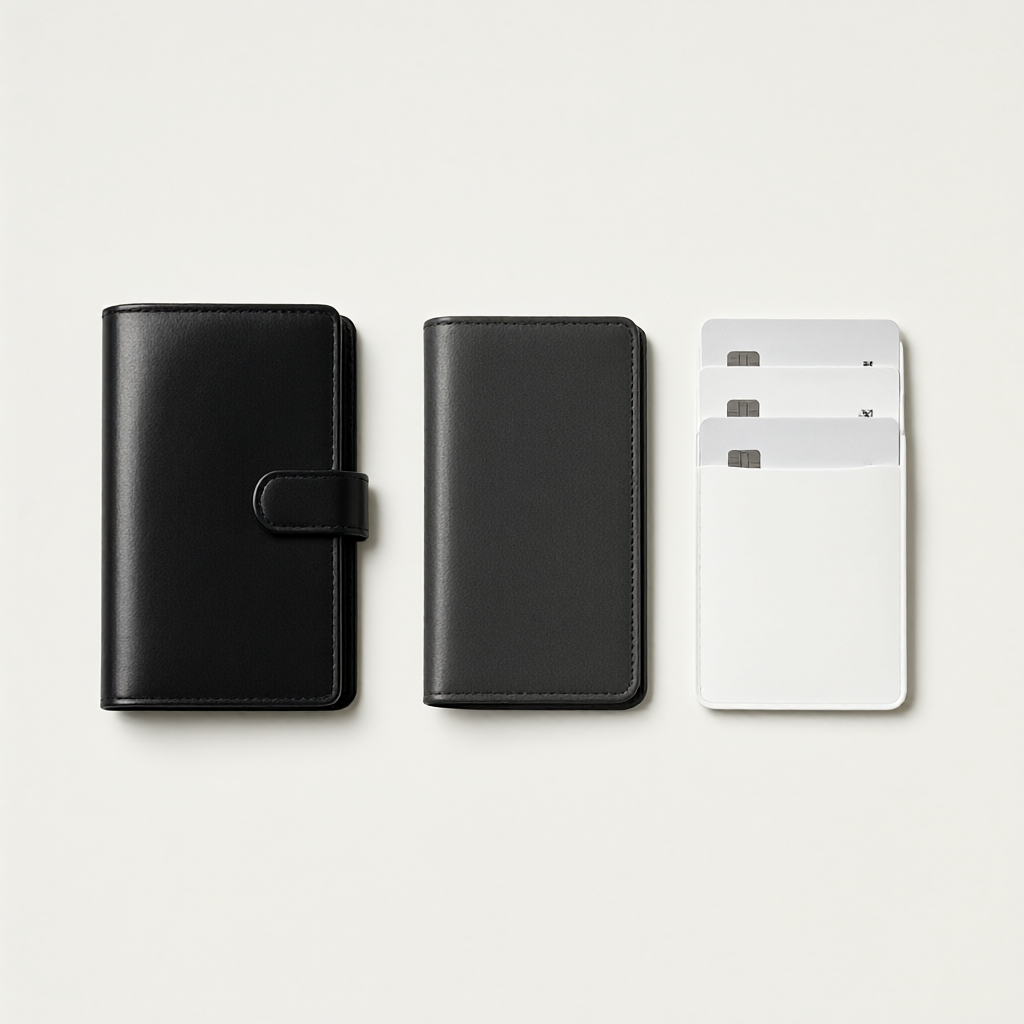
RFID blocker wallets come in two overlapping dimensions: material composition and form factor. Understanding both helps you match protection style to daily carry needs.
By shielding material
Metal-alloy wallets (aluminum, stainless steel, titanium)
These are solid-core or layered constructions where the entire body acts as the shield. Aluminum wallets are the most common entry point — they’re lightweight, cost-effective, and provide reliable attenuation across the 13.56 MHz NFC band. Stainless steel variants offer higher durability but add weight. Titanium sits at the premium end with excellent strength-to-weight ratios and corrosion resistance. When a brand claims an “NFC-blocking wallet” made from metal, the shielding is often integral rather than added — meaning it doesn’t wear off or delaminate over time. See also our deep dive on minimalist wallets and their construction approaches for context on how different metals behave in daily use.
Embedded metallic mesh liners
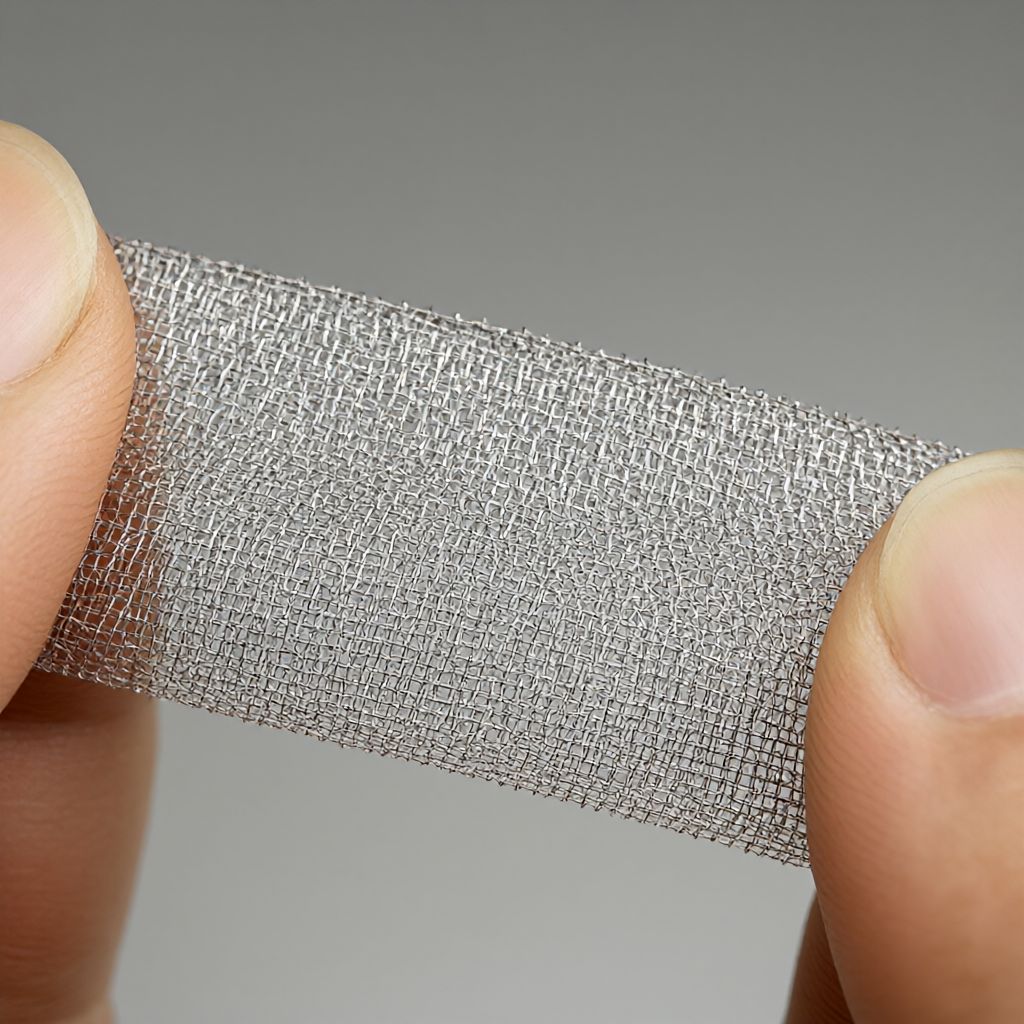
Some wallets retain a conventional leather or fabric exterior and integrate a thin conductive mesh lining inside. This preserves a traditional feel while still blocking RF signals. The trade-off is that coverage depends on complete enclosure — any gap large enough for a card edge to protrude becomes a potential leak point. Mesh-liner wallets work well for users who want a classic bifold appearance with modern protection.
Carbon fiber composite wallets
Carbon fiber itself isn’t inherently RFID-blocking, but many manufacturers laminate it over a metal core or combine it with a shielding layer. Pure carbon fiber shells without a conductive substrate will not stop RF scanning. Always verify the shielding specification rather than assuming the material provides protection.
Hybrid designs
Combining a metal front plate with a leather back panel or a carbon fiber shell with an inner mesh liner is increasingly common. These aim to balance aesthetics, grip, and coverage. They tend to perform well when the shielded zone fully encloses the card slot area.
By form factor
Minimalist metal wallets
Slim, card-only designs that hold 1–12 cards plus folded cash. They sit flush in front pockets and pair naturally with the best cheap money clip comparison for buyers prioritizing capacity and value. These are the go-to for everyday urban commuters who want to shed bulk while retaining security.
Bifold and trifold blockers
Traditional folding wallets with RFID liners or metal plates. They accommodate more cards and bills but add thickness. Good for users transitioning from conventional wallets who aren’t ready to go fully minimalist.
Money clip styles
A metal bar or clip holds cards and cash together. Many modern clips are manufactured as RFID-blocking solutions — see the guidance in our RFID wallets guide for men and women for selection tips. For women specifically, our lightweight wallet for women resource and the women’s wallet size and style buying guide cover how capacity and shielding interact in smaller formats.
Travel organizers and passport blockers
Larger formats designed to hold documents, multiple cards, and currency. Some function as dual pouch systems — one compartment for RFID-protected cards, another for loose items. These suit frequent travelers who carry passports alongside payment cards.
Chain and designer variations
The aesthetic category matters less for function, but construction does. A designer wallet on chain or chain wallets style can still deliver protection when built with shielding materials. A wallet mens black option in metal or mesh-lined leather performs identically to lighter-colored versions regarding RF attenuation — color and finish are cosmetic choices, not security variables. For buyers weighing physical protection against digital tools, the physical versus digital wallets comparison outlines how approaches complement each other.
Comparison Table
| Style | Typical material | Card capacity | Best for | Key trade-off |
|---|---|---|---|---|
| Minimalist aluminum RF blocker wallet | Anodized aluminum | 4–12 cards + cash | Daily commute, EDC enthusiasts | Limited bill capacity; rigid profile |
| Carbon fiber composite blocker | Carbon fiber + metal core | 4–10 cards + cash | Style-focused daily carry | Higher price; verify true shielding |
| Mesh-lined leather bifold | Leather exterior + conductive mesh | 6–16 cards + cash | Users upgrading from traditional wallets | Coverage gaps if cards partially exposed |
| Metal money clip (RFID-blocking) | Aluminum / titanium | 3–8 cards + bills | Minimalists wanting fast access | Lower capacity; cash handling is fold-dependent |
| Passport/travel organizer | Mixed (metal plate + fabric) | Documents + 10+ cards + cash | International travelers | Bulkier; overbuilt for short trips |
| Designer chain / decorative wallet | Varies — verify shielding | Varies | Fashion-forward users who also travel | Aesthetic-driven; protection depends on construction |
Buying Factors
Selecting the right blocking wallet comes down to four decision criteria: coverage, capacity, materials, and durability. Each interacts with your daily routine.
How much RF shielding do you actually need?
Full-coverage metal wallets (where the body itself is the shield) generally outperform partial shields because there are fewer leak paths. If your primary concern is preventing casual skimming during commutes, transit rides, or crowded environments, a solid metal wallet or a fully enclosed mesh-lined design provides adequate protection for standard contactless cards. ISO/IEC 14443-type cards — which include most banknotes, transit cards, and passports operating at 13.56 MHz — are the relevant target. Cards using higher-frequency protocols (such as some logistics tags at 860–960 MHz) fall outside typical wallet shielding range and require specialized equipment; no consumer wallet addresses those frequencies, and that’s normal for personal-use products.
What capacity fits your daily load?
A what’s in your wallet audit is the fastest way to size your purchase. Count your most-carry cards — debit, credit, ID, transit, loyalty — and estimate weekly cash needs. Most missing wallet prevention strategies start with reducing card count, so carrying five essential cards in a four-card aluminum holder forces habits that benefit security regardless of shielding. If you regularly carry 10+ cards, a bifold with a shielded interior or a larger travel organizer makes more sense than a clip-style holder. For reference on balancing capacity with security, review our wallets that protect cards guide.
Which materials suit your environment?
- Aluminum: Lightweight, affordable, good everyday performer. Anodized finishes resist scratches better than bare metal. Ideal for commuters and office carry.
- Stainless steel: Heavier and more abrasion-resistant. Better for rough-handling scenarios but noticeable in a pocket.
- Titanium: Premium choice for long-term durability and light weight. Commands higher pricing but ages gracefully.
- Carbon fiber composites: Excellent strength and modern aesthetics — provided the construction includes a conductive layer. Without one, you have a sturdy shell with no blocking performance.
- Leather with mesh liners: Traditional look and soft interior. Verify the mesh extends across all card slots and the back wall. Gaps at the seam reduce effectiveness.
How durable is the shielding over time?
Integral metal wallets don’t degrade — the shielding is the wallet. Mesh liners can detach, wrinkle, or compress after months of flexing, especially in bi-fold designs that open and close repeatedly. If longevity is a priority, prioritize welded or riveted metal constructions over glued liners. Check whether the manufacturer specifies tested attenuation values; credible suppliers reference measurements rather than vague claims. The FTC offers consumer guidance on protecting against electronic pickpocketing in the context of contactless card risks — see FTC consumer advice on contactless security for broader context on what protections mean in practice.
Do blocker wallets interfere with legitimate tap-to-pay?
They shouldn’t — but implementation matters. A properly designed blocking wallet allows you to remove the card and tap normally, or uses a sliding mechanism that exposes the card only when needed. Some lower-quality designs trap the card too deeply or create inconsistent contact with readers. If you frequently tap transit cards or hotel key fobs, test-read the wallet before relying on it daily. Note that certain transit systems and hotel locks operate on different frequencies or power levels; a wallet that blocks 13.56 MHz may not affect 125 kHz proximity cards, which is usually desirable since those older protocols rarely face skimming threats.
Should you choose a dual pouch or single-compartment design?
Dual pouch dual pouch wallet layouts separate RFID-protected cards from loose items, which reduces accidental exposure. Single-compartment designs are simpler but require every card to remain fully enclosed. For travelers managing passports, boarding passes, and payment cards together, a dual-pouch system reduces the chance of leaving an unprotected document sitting openly.
Price & Cost
RFID blocker wallets span a broad price range shaped primarily by material, manufacturing method, and branding. Expect the following industry-typical brackets for consumer-grade products:
- Entry-level ($15–$35): Basic aluminum or mesh-lined leather wallets from general EDC brands. Adequate shielding for casual use; construction quality varies.
- Mid-tier ($35–$80): Machined aluminum or titanium wallets with tighter tolerances, better finishes, and more consistent shielding performance. This is where most serious EDC enthusiasts land. Our assessment of good money clip wallets for men highlights similar mid-range value dynamics in clip formats.
- Premium ($80–$180): Titanium constructions, precision CNC machining, branded designer collaborations, or specialized travel systems with documented test data.
- Luxury/designer ($180+): High-fashion labels or limited-edition materials. Shielding performance here is no guarantee — focus on construction details rather than brand name alone.
Several variables drive price beyond the base bracket:
- Material costs: Titanium is significantly more expensive than aluminum due to raw material and machining time.
- Manufacturing precision: CNC-machined parts with consistent gaps and smooth edges cost more than stamped or cast alternatives.
- Shielding verification: Suppliers that publish attenuation test results or comply with recognized standards often price above those making unverified claims.
- Customization: Laser engraving, bespoke packaging, and private-label runs increase unit cost at scale but are common in OEM/ODM sourcing for brands.
For most buyers, the sweet spot sits in the mid-tier range, where measurable performance and daily durability align without designer markups.
Pros & Cons
RFID blocker wallets vs. regular wallets
Pros of RFID blocker wallets:
- Demonstrable attenuation of 13.56 MHzRF signals when properly constructed
- Reduces risk from opportunistic skimming in crowded environments
- Often lighter and slimmer than traditional bifolds, encouraging front-pocket carry (which is already safer than back-pocket carry)
- No subscription, battery, or setup required — protection is passive and always active
- Compatible with removing cards for legitimate tap-to-pay transactions
Cons of RFID blocker wallets:
- Reduced capacity compared to bifold wallets of equivalent thickness
- Some designs impede easy access to frequently used cards
- Low-quality mesh liners may degrade or shift over time
- Higher upfront cost than basic non-blocking wallets
- Does not protect against data breaches originating from merchant databases or phishing — only physical RF scanning
When a regular wallet still makes sense:
If you carry numerous cards, bulky receipts, and coins daily, a conventional bifold may be more practical. Pair it with other safeguards — turn off unnecessary contactless functions where possible, monitor statements, and use digital alerts — rather than insisting on shielding as the sole defense. A nice wallets upgrade in traditional leather can coexist with digital security layers. For buyers weighing options across formats, our physical vs. digital wallets comparison helps map the trade-offs between approaches.
Evidence & Practical Notes
Field note: In hands-on evaluations of consumer RFID-blocking wallets, solid aluminum constructs consistently show measurable attenuation at 13.56 MHz, while mesh-lined bifolds perform adequately when fully closed but exhibit leakage paths near card edges. Construction integrity — not marketing language — determines real-world outcomes.
Practical limitation: No consumer wallet provides absolute protection. Partial exposure, worn seams, or cards protruding from slots create gaps that skilled actors could exploit in theory. Shielding should be viewed as a risk-reduction layer, not a guarantee. Additionally, modern contactless cards incorporate encryption and dynamic authentication that already limit the damage from a successful read; the incremental value of a wallet lies in raising the barrier for casual skimmers rather than stopping determined attackers.
Buyer takeaway: Prioritize wallets with documented shielding performance and integral metal construction when possible. Reserve mesh-lined or hybrid designs for users who value traditional aesthetics and accept the coverage trade-offs. Match capacity to actual card load rather than max ratings, and remember that reducing the number of contactless cards you carry is as effective as any physical barrier.
Complementary Strategies: Digital Tools and Loss Response
Physical shielding is one layer in a broader security posture. Several habits and tools multiply protection:
Pairing a physical wallet with a cryptocurrency wallet app
If you carry crypto hardware or seed phrases, a cryptocurrency wallet app like Blue Wallet or a comparable Android wallet solution handles digital keys separately from your payment cards. Storing private keys on-device and using a hardware wallet for signing keeps your crypto assets insulated from wallet-skimming entirely. Physical RFID protection matters for fiat cards; digital asset security requires a different stack. Learn how physical and digital approaches intersect in our physical vs. digital wallets guide.
What to do if you lose a wallet or suspect it was skimmed
Losing a wallet triggers immediate actions regardless of shielding. Freeze or suspend contactless payment cards through your bank’s app, report the loss, and monitor statements for 60–90 days. If you suspect skimming rather than loss, check transaction logs for small authorization tests — skimmers sometimes verify data readability before larger fraud attempts. Update passwords for any accounts stored digitally on phone wallets. For ongoing protection, consider card-specific privacy sleeves for cards you rarely use, and enable transaction alerts on high-frequency cards. Our RFID wallets guide for men and women covers additional scenario planning for different carry styles.
Digital and physical defenses together
Modern banking apps, virtual card numbers, and tokenization reduce the value of a skimmed card number. When combined with a physical RFID shield wallet or contactless card protector, you address both the digital credential lifecycle and the physical scanning vector. A metal RFID wallet alone won’t prevent merchant database leaks, but it raises the effort required for opportunistic attacks — which is exactly where most consumer skimming occurs.
Choosing the Right Option
Decision rules by use case:
- Everyday urban commuter: Minimalist aluminum wallet with 6–8 card capacity. Fast access, light carry, consistent shielding.
- EDC enthusiast: Titanium or machined aluminum wallet prioritizing craftsmanship and longevity. Budget $60–$120 for proven construction.
- International traveler: Full-format metal wallet or travel organizer with passport-grade coverage. Consider dual-pouch layouts for document separation.
- Minimal cash, high card load: Mesh-lined leather bifold if you need capacity; otherwise upgrade to a larger-capacity metal wallet.
- Fashion-first with security needs: Verify shielding in designer or chain wallet styles rather than assuming aesthetics correlate with protection.
- Budget-conscious buyer: Entry-level aluminum options under $35 deliver functional shielding; inspect stitching and edge coverage before purchasing.
The women’s wallet size and style guide and lightweight wallet for women resources help narrow format choices for smaller-handed carry preferences.
How We Approach Manufacturing RFID-Protected Wallets
Understanding why some wallets perform while others underwhelm comes down to construction details. As a manufacturer producing minimalist EDC wallets and pocket gear, we’ve spent years refining how shielding integrates with daily-carry ergonomics — and the differences show up in field use.
Our approach starts with material selection. Aluminum and titanium wallets are machined in-house using CNC processes, which means the shielding is integral to the structure rather than applied as an afterthought. There’s no adhesive bond to delaminate, no mesh to shift, and no seam gaps created by stitching. For customers who need a traditional look, we also produce leather combinations with embedded shielding layers, but we specify full-coverage liners that extend behind every card slot and along the back plane.
Certifications matter for buyers who need verifiable quality. Our facility operates under ISO 9001 standards, and our products meet BSCI social compliance requirements. Materials are REACH and RoHS compliant, and we run SGS testing on inputs to confirm chemical and mechanical specifications. These aren’t marketing labels — they’re checkpoints that affect consistency across production runs. If you’re evaluating suppliers for private label or OEM orders, asking for these records early saves time downstream.
Lead times and MOQs are often deciding factors for brand owners and distributors. We support orders starting at 300 pieces, with sample lead times around seven days and full production running from confirmed artwork. Drop shipping and Amazon FBA prep are available for sellers who need direct-to-fulfillment workflows. Customization covers everything from logo laser engraving and UV printing to retail box design and packaging specifications.
For buyers comparing options across manufacturers, the difference between a wallet that blocks reliably and one that merely claims to usually comes down to construction method and testing transparency. Ask about attenuation data, material specifications, and whether the shield covers all card planes — not just the front face.
How RFID/NFC Skimming Works and the Real Threat Level
The technology behind contactless cards
Modern payment and identity cards comply with ISO/IEC 14443 (Type A and Type B), the international standard governing proximity cards operating at 13.56 MHz. When you tap a card, the reader emits an electromagnetic field at this frequency; the card’s embedded antenna harvests energy from that field, powers its chip, and exchanges encrypted data. This same 13.56 MHz band is used by transit cards, hotel key fobs, e-passports (which also follow ICAO Doc 9303 appendices), and many corporate access badges.
The critical detail for consumers is that the communication range of a well-powered contactless reader can extend from a few centimeters up to roughly 1 meter in ideal conditions — far enough that a passive skimming device held close in a crowd could, in theory, trigger a read without the cardholder’s awareness.
How RF-blocking wallets stop the read
An RFID-blocking wallet works on the principle of a Faraday cage: a continuous conductive enclosure that redistributes incident RF energy around the cavity rather than allowing it to penetrate. In practice:
- Solid metal wallets (aluminum, stainless steel, titanium) provide full-coverage attenuation because the wallet body itself is the conductive barrier. There are no seams or gaps through which fields can leak — as long as the card remains fully inside.
- Mesh-lined wallets rely on a fine conductive grid (typically stainless-steel fiber or copper-nickel alloy) laminated into the interior. These achieve strong attenuation where the mesh is intact and fully wrapped, but seam openings, card slots that partially expose card edges, and wear-induced delamination can create localized leak points.
- Shielding effectiveness is measured in decibels (dB) of signal reduction. Reputable manufacturers and independent labs typically target ≥40 dB attenuation at 13.56 MHz, which corresponds to reducing the received signal power to less than 1% of its original strength — sufficient to prevent standard contactless readers from powering the card chip. See ASTM standards referenced at astm.org for material and shielding test methodologies.
Real-world threat: how likely is skimming?
Empirical data from law enforcement agencies and consumer-protection bodies indicates that large-scale, organized RFID skimming of payment cards is uncommon but not impossible. The FTC has published guidance noting that while contactless-skimming incidents occur, they represent a small fraction of overall card fraud, which is dominated by phishing, data breaches, and point-of-sale malware (ftc.gov).
Factors that raise risk exposure:
- Packed transit hubs, concerts, and tourist-dense areas where a person with a concealed reader could operate in a crowd.
- Cards stored in back pockets (closer to the body and more accessible to close-range devices).
- Cards issued in regions with weak fraud-monitoring infrastructure.
Factors that lower risk:
- Most modern contactless cards implement dynamic cryptograms — each transaction generates a unique code, so even if data were intercepted, it cannot be replayed.
- Transaction limits on tap-to-pay (often $50–$200 depending on region and issuer) cap potential loss per unauthorized read.
- Card issuers routinely monitor for anomalous micro-transactions indicative of testing or skimming.
Bottom line: RFID skimming is a real but low-probability threat for the average cardholder. Blocking wallets are best viewed as a defense-in-depth layer — cheap insurance that costs nothing extra once purchased and requires zero ongoing maintenance.
Effectiveness against different card types
| Card Protocol / Standard | Operating Frequency | Typical Shielding Needed | Blocked by Standard RFID Wallet? |
|---|---|---|---|
| ISO/IEC 14443 (contactless bank cards, transit, e-passports) | 13.56 MHz | ≥40 dB at 13.56 MHz | ✅ Yes — this is the primary target |
| EMv1 / 125 kHz proximity badges (older building access) | ~125 kHz | Very high conductivity required; wavelength ~2.4 m | ❌ Generally no — wavelengths are too long for compact wallet-sized cages; most blocking wallets intentionally exclude these frequencies since they are rarely skimmed |
| ISO/IEC 15693 (inventory/logistics tags) | 13.56 MHz | Same as 14443 | ✅ Yes — same frequency band |
| UHF RFID (860–960 MHz supply-chain tags) | 860–960 MHz | Specialized high-frequency shielding | ❌ No — consumer wallets do not address this band, and it is irrelevant to personal card security |
This frequency-selective behavior means a buyer should prioritize verification of 13.56 MHz performance specifically, rather than assuming broader “RFID-blocking” claims cover every protocol.
Digital Wallet Apps and Physical RFID Protection Together
Why combine physical and digital layers?
Relying exclusively on either a physical blocker wallet or a mobile wallet app leaves a gap. A physical wallet protects your bearer cards (the plastic or metal cards themselves) from casualRF interception. A digital wallet app like Blue Wallet (a popular open-source Bitcoin wallet) or a phone-based payment app (Apple Pay, Google Pay, Samsung Pay) protects your digital credentials through tokenization and device-level encryption.
Using both creates a stacked-defense model:
- Physical layer: Blocks 13.56 MHz reads of your contactless debit/credit card and passport chip.
- App layer: If a card number is exposed through any channel (data breach, malicious POS, network sniffing), the tokenized version used in your phone app renders the raw PAN useless to attackers.
- Behavioral layer: Carrying fewer physical cards (enabled by going minimalist) reduces the attack surface; what you do carry is shielded.
Cryptocurrency wallets and physical security
For users who hold cryptocurrency, apps like Blue Wallet store private keys locally on the device. The physical wallet you carry has no direct role in crypto security — blockchain keys are not transmitted via NFC at point of sale. However, the principle of reducing physical assets you carry still applies: if you carry a hardware seed phrase backup, securing that separately (not in the same pocket as your payment cards) is a prudent habit.
The synergy between digital and physical protection is strongest for everyday spend: your phone handles tap-to-pay via tokenized Apple/Google Pay, your physical blocker wallet guards the few remaining cards you carry (transit pass, gym key, one backup credit card), and your app settings enforce spending limits and location-based restrictions. Review our comparison of physical versus digital wallet approaches for a deeper breakdown.
Complementary Strategies When You Lose Your Wallet or Suspect It Was Skimmed
Losing a wallet or suspecting a skim event triggers a time-sensitive response. The steps below reflect consensus guidance from consumer-protection authorities and financial-industry best practices.
If you suspect your wallet was skimmed
- Check recent transactions immediately — review your banking app and credit-card statement for any micro-transactions (often $0.50–$2.00) that indicate a test read by a skimmer.
- Call your card issuer — request temporary freeze or replacement of all affected cards. Most issuers can block contactless functionality remotely.
- Monitor for 30 days — fraudulent activity can surface weeks after the initial compromise due to delayed settlement cycles.
- Consider a formal dispute if unauthorized charges appear — under Regulation E (US) and equivalent frameworks elsewhere, your liability for unauthorized electronic fund transfers is capped, but timely reporting matters.
If you lose your wallet entirely
- Suspend or cancel all cards — call each issuer or use their mobile app to freeze accounts instantly.
- Report the loss to local authorities if theft is suspected; this creates a paper trail useful for disputes.
- Replace critical IDs — passport, driver’s license, and state ID should be reissued through the appropriate government portal. Many countries offer emergency passport replacement at embassies or consulates abroad.
- Alert your bank about potential identity theft — if your wallet contained an ID with your address and date of birth, a thief has enough data to attempt account takeover on some low-security platforms. Place a free fraud alert with credit bureaus as a precaution.
- Use a wallet-loss recovery service — several jurisdictions offer GPS-enabled wallet trackers (e.g., Tile, Apple AirTag integrated cases). While not a blocker-wallet feature, these complement the physical protection strategy.
See our money clip and minimalist wallet buying guides for options that reduce loss impact through smaller, easier-to-track formats.
Choosing the Right Shielding: Technical Parameters That Matter
When evaluating an rf blocker wallet, look beyond marketing language and ask for (or verify) these measurable parameters:
| Parameter | What to Look For | Why It Matters |
|---|---|---|
| Attenuation at 13.56 MHz | ≥40 dB (preferably ≥50 dB) | Ensures the card chip cannot be powered by an external reader |
| Shielding continuity | Full-wrap or integral metal construction vs. partial mesh | Gaps and seams are the #1 cause of real-world leakage |
| Material gauge / thickness | Aluminum ≥0.5 mm; stainless steel ≥0.3 mm | Thinner sheets may flex and develop micro-gaps over time |
| Certification / test report | Independent lab results referencing ASTM or IEC methods | Removes reliance on unverified manufacturer claims |
| Card-slot design | Fully enclosed slot with no exposed card edge | Partially ejected cards defeat the Faraday effect regardless of wall thickness |
| Frequency selectivity | Blocks 13.56 MHz; optionally passes 125 kHz | Ensures hotel locks and older proximity badges still function |
Industry standards relevant to contactless security and shielding include ISO/IEC 14443 (proximity card interface), ETSI EN 301 489 (electromagnetic compatibility limits for radio equipment, which governs the emitted field strength of compliant readers), and FIPS 201 (US federal standards for personal identity verification cards, including RFID security requirements). Testing your wallet against these benchmarks gives confidence that the protection is engineering-grade, not cosmetic.
How We Approach RFID-Blocking Wallet Manufacturing
As a manufacturer specializing in minimalist EDC wallets, our approach to RFID protection is grounded in verifiable shielding performance and production discipline. Here is how we meet the standards outlined above:
Our in-house CNC machining allows us to produce solid aluminum and titanium wallets where the entire body functions as the Faraday cage — no adhesive liners, no seam-dependent coverage. Every production run is tested for consistent 13.56 MHz attenuation, and we provide test documentation to OEM and private-label partners who require it for their own compliance files. Our ISO 9001-certified quality management system (in place since 2014) ensures that shielding consistency is maintained batch to batch, not just in prototype samples.
We also engineer our card-slot geometry to keep every card fully enclosed during normal carry, eliminating the partial-ejection leak path that defeats many mesh-lined competitors. For buyers who prefer traditional leather aesthetics, we offer verified mesh-liner constructions with documented attenuation specs rather than untested claims.
Beyond shielding, our capabilities span custom laser engraving, anodized finishes, carbon-fiber composite lamination, and retail packaging design — all supporting brands that want a differentiated product without sacrificing technical performance. With an MOQ starting at 300 pcs and a 7-day sample lead time, we work with EDC brand owners, Amazon FBA sellers, and promotional distributors who need reliable shielding backed by real manufacturing data.
Sources & References
- FTC consumer advice on contactless security — www.ftc.gov
- astm.org — www.astm.org
- wallets that protect cards guide — topedcwallet.com
- money clip selection guide — topedcwallet.com
- minimalist wallets and their construction approaches — topedcwallet.com
- best cheap money clip comparison — topedcwallet.com
- RFID wallets guide for men and women — topedcwallet.com
- lightweight wallet for women resource — topedcwallet.com
- women’s wallet size and style buying guide — topedcwallet.com
- physical versus digital wallets comparison — topedcwallet.com
From article to product
Building an RFID range?
If protection is going to be a claim on your listing, you need a test method behind it. We test every batch with a live 13.56 MHz reader and supply the report.
Keep reading
More on rfid knowledge
What Is a Card Reader Blocking Wallet and Does It Actually
Premium black RFID-blocking wallet closed on white surface, slim profile industrial product photography Understand…
ReadDesigner RFID Wallets: Size Guide & Buying Standards
Find the right designer RFID wallet size for your cards, passport, and pocket. Compare…
ReadRFID Card Blockers: Do They Actually Work? (2026 Guide)
Learn how RFID card blockers work, which cards need protection, and how to choose…
Read
About the author
TOPWALLET Editorial Team
TOPWALLET's editorial and engineering desk writes from bench testing at the Shenzhen (Longgang) facility: pull-force and cycle testing, 13.56 MHz shielding measurements, finish trials and factory audits, rather than supplier spec sheets. Every specification in these guides is one we write on a purchase order.
Written on the floor
This article was written by our production and QC team — the people who spec tolerances, run the finishing line and inspect every batch. Where it states a capacity, a pull force or a lead time, it comes from a measurement we made, not a supplier’s catalogue. If a number here disagrees with what your own supplier told you, tell us; several of these articles started as a correction from a buyer.
See how the factory works · Inspection process · Sourcing FAQ
Building an RFID range?
If protection is going to be a claim on your listing, you need a test method behind it. We test every batch with a live 13.56 MHz reader and supply the report.