

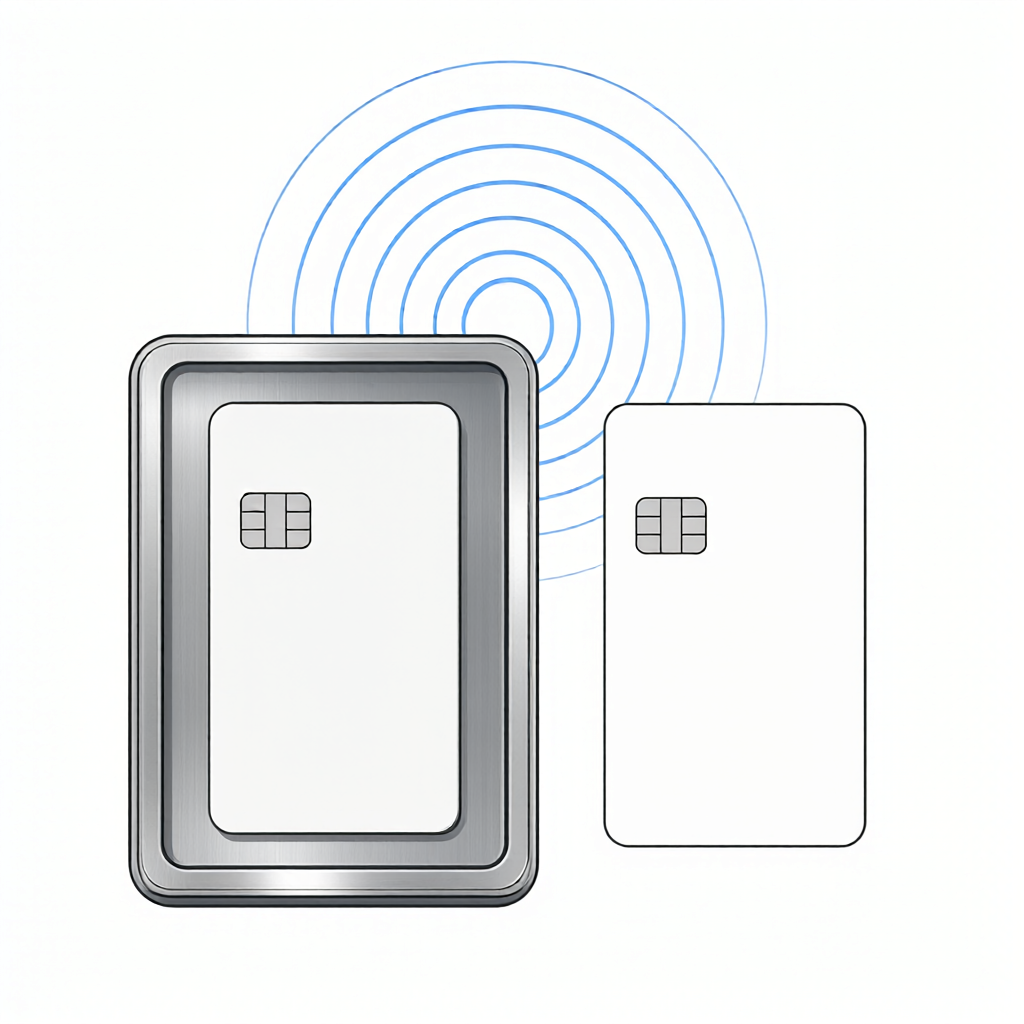
A metal RFID wallet is a slim pocket carrier built from aluminum, titanium, or stainless steel that fully encloses your contactless cards inside a continuous conductive shell, creating a Faraday cage that blocks 13.56 MHz RFID scanner signals. It differs from a regular metal wallet because only wallets with verified shielding topology—where the front, back, sides, and bottom of the card cavity are all covered by conductive material—can actually prevent unauthorized scanning; a plain metal wallet without this complete enclosure offers zero RF protection.
What Is a Metal RFID Wallet and Does It Actually Protect My Cards?
A metal RFID wallet is a minimalist pocket carrier constructed primarily from aluminum, stainless steel, or titanium that incorporates an RFID-blocking shielding layer—typically a conductive mesh or foil laminate—to create a Faraday-cage effect around your contactless cards. Yes, it does protect your cards from unauthorized wireless scanning, but only when the construction is complete. A partial shield leaves gaps where scanners can still read card data at close range.
For B2B buyers evaluating this product category—whether for private label, Amazon FBA, corporate gifting, or retail distribution—the critical distinction isn’t just whether a wallet contains metal. It’s whether the entire card-bearing compartment is fully enclosed by continuous conductive material with no uncovered seam or opening large enough for a reader’s antenna to access.
How Does RFID Blocking Technology Work Inside a Metal Wallet?
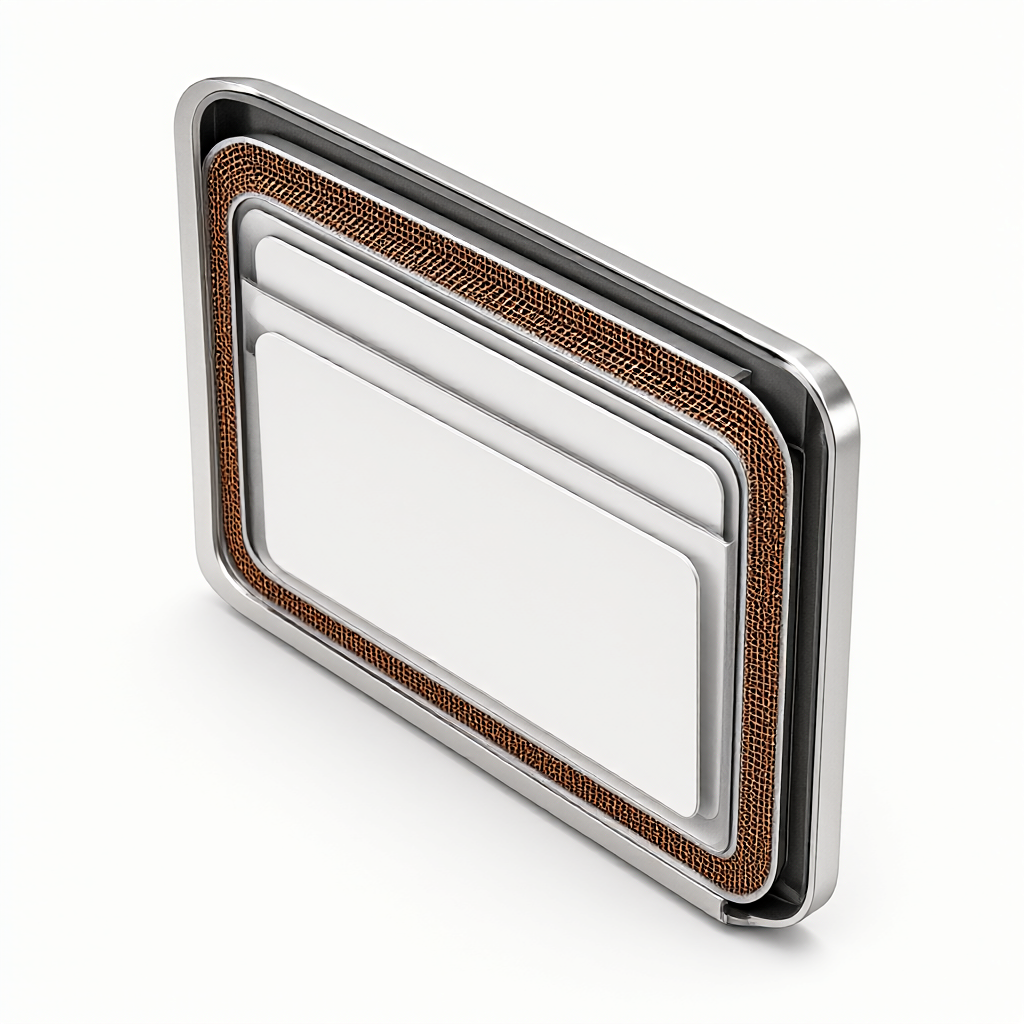
RFID-blocking technology relies on a principle called the Faraday cage. When the radio-frequency (RF) waves emitted by a scanner encounter a continuous conductive barrier, the electromagnetic energy is reflected and absorbed by the material, preventing it from reaching the card’s embedded chip and antenna inside. Contactless payment cards, transit passes, and e-passports all operate on high-frequency (HF) RFID bands—typically 13.56 MHz—and require the same basic shielding principle to be blocked effectively.
In a metal wallet, this shielding is achieved through one of three approaches:
- Solid metal enclosure: The card slot is formed entirely from a single piece of metal (e.g., a stamp-formed aluminum body) that wraps completely around the cards. This is the most reliable method because the conductive path has no intentional breaks.
- Metal-laminated structure: A thin RFID-blocking foil or conductive mesh is sandwiched between layers of aluminum or titanium during CNC machining or lamination. The underlying metal provides structural rigidity; the laminated layer provides the actual RF attenuation.
- Hybrid approach: A carbon-fiber or polymer outer shell contains an integrated metal shielding liner. This allows designers to maintain a non-metal exterior aesthetic while preserving signal-blocking performance inside the card cavity.
When sourcing OEM RFID metal wallets, ask your manufacturer to provide test reports showing signal attenuation in decibels (dB) across the 13.56 MHz band. A well-designed implementation achieves at least 50–70 dB of rejection, which translates to blocking scanner readability beyond a few centimeters from the wallet surface. Without published test data, you’re relying on the supplier’s claim alone—a meaningful risk in a market where incomplete shields are common in low-cost units.
Can Metal RFID Wallets Still Work With NFC-Enabled Cards and Mobile Payments?
This is one of the most frequently asked questions from buyers, and the answer depends on usage context. When cards are inside a fully shielded metal wallet, the Faraday cage prevents the wallet from acting as a bridge between the reader and the card—but it also means you must remove the card from the wallet before tapping it at a payment terminal, transit gate, or hotel lock. The metal enclosure blocks the NFC field from reaching the card’s antenna.
Some wallets address this trade-off with slide-out card mechanisms: a spring-loaded ejector pushes the card partially out of the shielded compartment so the chip area is exposed for tapping. This preserves convenience without compromising blocking when the card is stored. Others use a two-chamber design where only the payment card is shielded while a secondary ID slot remains unshielded—a configuration that requires careful evaluation of your target market’s actual use patterns.
In practice, most buyers report that their end consumers accept the minor inconvenience of removing a card for contactless taps. For bulk RFID wallets for branding, positioning the product as a daily-carry security item rather than a tap-and-go convenience accessory aligns messaging with actual user behavior.
What Are the Key Specifications for a Metal RFID Wallet?
Six specs decide the product: dimensions, card count, thickness, shield coverage, finish, and closure.
When evaluating a potential sourcing option, focus on these spec categories:
- Material grade: 6061-T6 aluminum (the industry standard), 304 or 316L stainless steel, Grade 5 titanium (Ti-6Al-4V). Each offers different weight, durability, and cost profiles. See our EDC wallets and minimalist wallet manufacturing guide for deeper material comparisons.
- Shielding coverage: Full enclosure vs. partial. Ask whether the bottom, sides, and top of the card cavity are all covered by conductive material—not just the front face.
- Card capacity: Typically 1–12 cards depending on design. Multi-card models often sacrifice one card slot for the shielding mechanism.
- Thickness profile: A quality unit sits between 8 mm and 16 mm closed thickness. Anything thicker suggests a dual-layer construction that may add bulk without proportional benefit.
- Weight: Aluminum units range from 40 g to 80 g; stainless steel adds roughly 30% more; titanium falls between the two at comparable strength-to-weight.
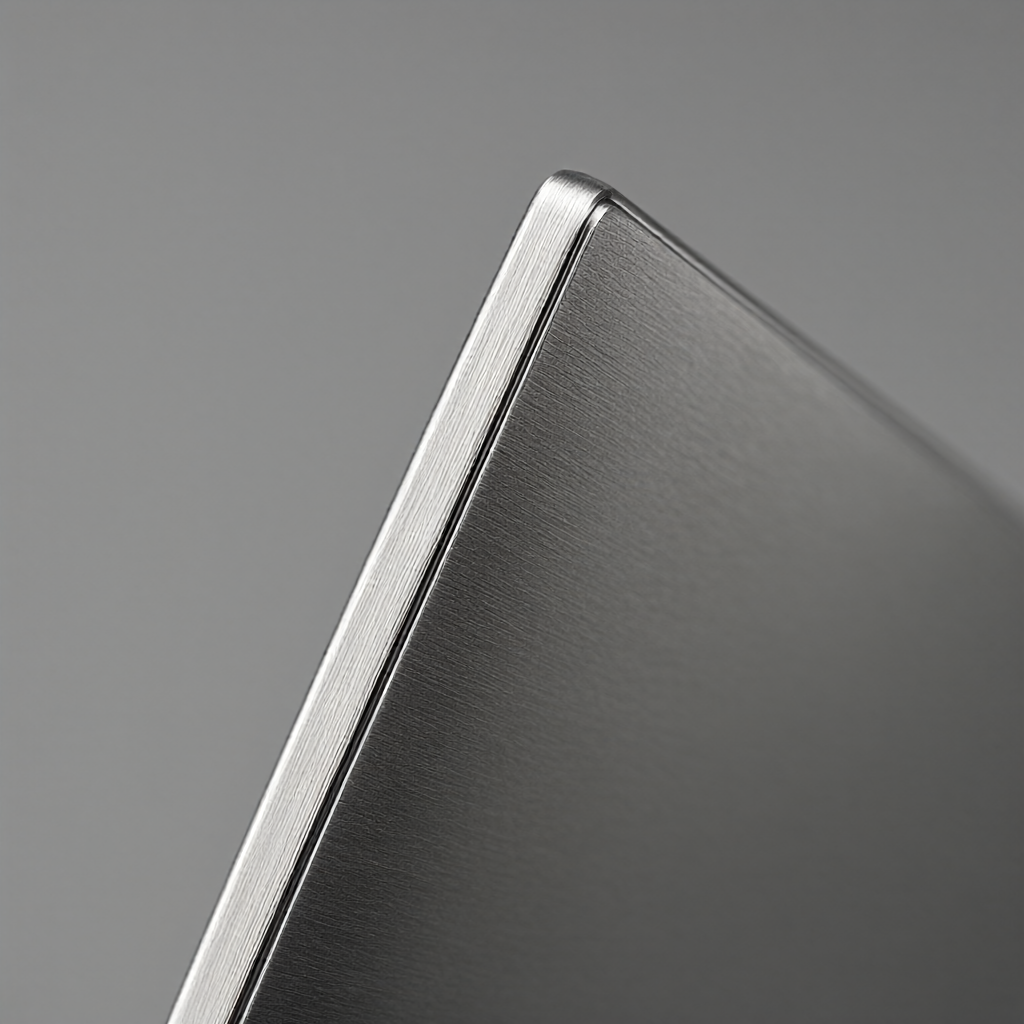
- Finish options: Anodized aluminum (color stability, scratch resistance), brushed/polished stainless steel (premium feel, fingerprint-prone), bead-blasted titanium (matte finish, higher cost). The men’s minimalist wallets materials guide covers finish selection for different brand positions.
A side-by-side look at common material trade-offs:
| Material | Weight (typical) | Durability | Cost Tier | Best Use Case |
|---|---|---|---|---|
| 6061 Aluminum | 45–65 g | Good (anodized) | Low–Mid | Volume branded runs, promotional gifts |
| 304 Stainless Steel | 65–90 g | Excellent | Mid | Premium retail, tactical positioning |
| Grade 5 Titanium | 50–75 g | Excellent (corrosion-proof) | High | Luxury EDC, outdoor/tactical niche |
| Carbon Fiber + Steel Liner | 40–60 g | Good (fibers can delaminate if impacted) | Mid–High | Design-forward private label |
What Else Should B2B Buyers Consider for Metal RFID Wallets?
Packaging, drop-test claims, and warranty terms decide repeat orders more than unit price.
Beyond specifications and standards, several practical factors influence whether a metal RFID wallet is the right product for your market segment:
- Card compatibility edge cases: Some transit cards (particularly older magnetic-stripe hybrids) and biometric passports contain components sensitive to conductive proximity. While the Faraday cage blocks unauthorized reads, it can occasionally interfere with legitimate reader antennas positioned extremely close to the wallet surface. Test with your target-market card types before finalizing the design.
- TSA and airport security screening: Metal wallets trigger X-ray machine alerts and require manual inspection at checkpoint conveyors. This is a consistent consumer complaint—not a product defect, but a real-world trade-off worth acknowledging in product descriptions and packaging copy. Brands that address this proactively tend to see fewer post-purchase support issues.
- Durability versus everyday carry wear: Anodized aluminum finishes resist scratching but can show micro-marring on the card-contact surfaces after extended use. Brushed stainless steel hides wear better but shows fingerprints prominently. Titanium offers the best long-term aesthetic retention but carries a premium cost. Match the finish to your target customer’s expected usage intensity.
- Packaging and presentation: For retail private label procurement, the unboxing experience matters. A metal wallet presented in a simple polybag undersells the product’s perceived value. Custom rigid boxes with spot UV, embossed logos, and tissue wrap justify higher retail price points. See the what is a card holder guide for packaging specification benchmarks.
- Drop shipping readiness: If you’re selling through Amazon FBA or direct-to-consumer channels, confirm the supplier can handle FBA-compliant labeling, polybagging (if required), and carton packing without additional rework. Suppliers experienced in international export logistics reduce fulfillment risk significantly.
How Does the Metal Wallet Industry Work?
Factories machine frames in-house and buy shields, then brands layer private label on top.
As a manufacturer, our approach to this category balances three priorities: proven shielding performance, realistic pricing, and flexible customization for brands at every scale.
We hold ISO 9001 certification and operate from a 50,000 sq ft facility with in-house CNC machining, laser engraving, and anodizing lines. Our BSCI audit confirms ethical manufacturing practices aligned with major retail and distributor requirements. We’ve been producing custom metal wallets, carbon fiber card holders, and money clips for over 13 years, exporting to more than 30 countries across North America, Europe, Australia, and Southeast Asia.
From a sourcing perspective, here’s what we prioritize for each client:
- Shielding verification: Every RFID-blocking model is tested before tooling approval. We don’t ship unverified prototypes as production units.
- Material traceability: Aluminum, steel, and titanium batches are tracked from raw stock through finishing, ensuring material specifications match what was quoted.
- Low MOQ flexibility: We start production runs at 300 pieces, making this category viable for emerging brands and small-batch corporate gift orders without requiring the volume commitment many factories impose.
- Sample speed: Standard samples ship within 7 days. Custom logo or color samples move through the same line with only the added time for laser setup or anodize bath scheduling.
- Full OEM/ODM scope: From concept sketches to finished retail packaging, we handle CNC forming, RFID liner integration, surface finishing, laser marking, and box design as a single workflow—reducing coordination risk for Amazon FBA product research buyers who need everything to arrive ready to list.
Whether you’re developing a new line for retail distribution, running a promotional merchandise program, or researching products for your private label catalog, the difference between a good metal RFID wallet and a great one comes down to construction integrity and manufacturing discipline—not just the presence of metal.
Which Metal Is Best for RFID Wallets: Aluminum, Titanium, or Steel?
Aluminum wins on cost and weight, titanium on wear, and steel on price-for-strength.
When sourcing RFID metal wallet products, material selection is the first and most consequential decision. Each material delivers RFID shielding through different physical mechanisms, and the choice directly affects price, weight, durability, and end-user perception.
Why Is 6061 Aluminum the Volume Choice?
6061-T6 aluminum is the dominant material for mid-tier and promotional EDC wallets. It offers strong electrical conductivity, which translates to reliable RF attenuation when formed into a continuous enclosure. The alloy achieves approximately 50–70 dB of signal rejection across the 13.56 MHz band in properly designed units, depending on gauge thickness and seam continuity. Anodizing adds surface hardness (Brinell ~95–120) and color stability while preserving conductive pathways where needed. At 45–65 g per unit, it sits at the low-cost tier and remains the go-to choice for branded runs exceeding 1,000 pieces. The EDC wallets guide provides additional material-selection context for buyers evaluating cost versus performance trade-offs.
When Does Grade 5 Titanium Justify the Premium?
Grade 5 titanium combines excellent corrosion resistance with high tensile strength (approximately 950 MPa ultimate) at a weight comparable to aluminum. Its natural oxidation layer is less conductive than bare aluminum, so manufacturers typically incorporate an internal copper or aluminum foil liner within the card cavity to ensure RF attenuation meets the 50 dB+ threshold. For luxury EDC and outdoor-tactical positioning, titanium justifies a premium retail price point. Weight typically lands between 50–75 g. Sourcing from a facility with in-house CNC machining ensures tight tolerances on the shielding gap—a critical parameter because even a 0.5 mm unshielded opening can create a leakage path at 13.56 MHz.
When Should Buyers Choose 304 or 316L Steel?
304 and 316L stainless steel deliver superior scratch and dent resistance compared to aluminum, with 316L adding molybdenum for enhanced corrosion tolerance in marine or high-humidity environments. The downside is weight—stainless wallets routinely weigh 65–90 g—and higher CNC machining time due to material hardness. However, solid 304 enclosures inherently provide continuous conductive paths without requiring an auxiliary liner, making them structurally simpler from a shielding perspective. Brushed or bead-blasted finishes mask micro-marring better than anodized aluminum, an important factor for tactical-positioned products.
How Do You Use the Material Selection Matrix?
Score weight, cost, wear, and finish per material, then pick the one that clears your price ceiling.
| Decision Factor | Aluminum 6061-T6 | Grade 5 Titanium | 304/316L Stainless Steel |
|---|---|---|---|
| Shielding mechanism | Solid conductive enclosure | Liner-based (copper/aluminum foil) | Solid conductive enclosure |
| Typical weight | 45–65 g | 50–75 g | 65–90 g |
| Cost tier (per unit at 500 pcs) | $3.50–$7.00 | $12.00–$22.00 | $6.00–$11.00 |
| Surface finish options | Anodized (full color range) | Bead-blasted, polished, PVD | Brushed, satin, mirror polish |
| Best for | Branded volume, promo gifts | Luxury EDC, outdoor niche | Tactical, rugged positioning |
| Long-term wear profile | Moderate (anodized scratches) | Excellent (corrosion-resistant) | Good (brushed hides marks) |
Buyers should match material to their target retail price point and customer expectations. An Amazon FBA brand priced under $25 should evaluate aluminum; a $60+ EDC boutique SKU may justify titanium.
How Do Carbon Fiber and Polymer Compare?
Carbon fiber shells with integrated metal liners offer a design-forward alternative, reducing weight while maintaining shielding performance. However, delamination risk under impact and long-term adhesive degradation mean these require rigorous quality testing. Polymer-only wallets with embedded RFID-blocking films achieve lower attenuation (typically 30–45 dB) and are better suited to light-duty applications rather than daily-carry security use. See our minimalist wallet buyer’s guide for broader category comparisons.
How Do You Evaluate Card Capacity and Carry Comfort?
Count real cards, check slot tension, and test loaded thickness against your pocket.
Spec sheets list card count, but real-world carrying comfort depends on several interacting factors that buyers should evaluate beyond published numbers.
How Does Pocket Geometry Affect Fit?
A minimalist metal wallet designed for front-pocket carry should not exceed 16 mm in closed thickness when loaded with 6–8 standard credit-card-equivalent cards. Beyond this threshold, users report discomfort during sitting, walking, and bending. The width-to-height ratio also matters: a wallet wider than 90 mm creates visible bulging in slim-fit trousers, while models under 75 mm wide may feel unstable in pocket placement.
How Do Friction Slots Retain Cards?
Card retention systems fall into three categories:
- Spring-loaded ejector: Pushes cards outward for easy one-handed retrieval. Adds 2–4 mm to closed thickness but significantly improves usability.
- Elastic band wrap: Simple, low-profile, but degrades over 6–12 months of repeated loading cycles.
- Friction-fit slots: Relies on precise machining tolerances; acceptable for 1–3 cards but insufficient for 8+ card volumes.
For B2B buyers, spring-ejector designs command higher retail prices ($35–$60) but generate fewer return reasons related to card ejection difficulty. Elastic-band models suit promotional-price segments ($15–$25) where replacement cycle length is shorter.
Does More Capacity Weaken Shielding?
Adding card slots increases wallet thickness linearly, but shielding effectiveness does not scale proportionally. A 10-card wallet with the same enclosure geometry as a 4-card model will have taller card edges exposed near the top opening—creating a potential antenna-access gap. Designers address this with stepped internal walls or extended bottom plates, both of which add manufacturing complexity and cost. When reviewing samples, inspect the top edge of the card cavity: if more than 3 mm of card surface is uncovered at the opening, unauthorized scanner access is theoretically possible at very close range (< 2 cm).
See the men’s minimalist wallets materials guide for additional ergonomics considerations.
Which MOQ, Lead Time, and Customization Rules Apply to Metal RFID Wallets?
Expect 500 to 1,000 piece MOQs, 7 to 10 days for samples, and 25 to 35 days production.
Procurement decisions for OEM RFID metal wallets involve trade-offs among minimum order quantity, production timeline, and degree of customization. Understanding these variables prevents costly mismatches between buyer expectations and factory capabilities.
How Do MOQ Thresholds Change Unit Cost?
Most contract manufacturers set minimum order quantities between 100 and 500 pieces for stock-design wallets, with pricing tiers dropping incrementally above 500, 1,000, and 5,000 units. Lower MOQs (100–300 pcs) carry higher per-unit costs—often 20–40% above volume pricing—because setup time (CNC fixturing, anodize bath racking, laser engraving registration) is amortized across fewer pieces. Emerging brands and small corporate gift programs benefit from suppliers offering MOQs starts at 300 pcs per SKU for full OEM customization (100 pcs trial order available for stock finishes), which reduces capital tied up in inventory and enables market testing before scaling.
How Long Do Samples and Production Take?
Two distinct timelines govern the sourcing process:
- Sample lead time: 5–7 days for standard-color, logo-less prototypes. Custom colors or engraved logos extend this to 10–14 days due to anodize batch scheduling and laser-programming setup.
- Production lead time: 15–25 days for confirmed orders up to 2,000 pieces; 25–35 days for larger runs or multi-component assemblies involving custom packaging.
Suppliers claiming simultaneous fast sampling and rapid mass production should be evaluated critically—production lines servicing sample requests often divert capacity from ongoing orders. Clarify whether sample and mass-production timelines are measured sequentially (sample approval required before production start) or concurrently.
How Does Customization Extend the Timeline?
Each added element such as engraving or custom packaging adds roughly seven days per revision.
| Customization Level | Examples | Additional Lead Time | Cost Impact |
|---|---|---|---|
| Basic branding | Laser engraving logo on existing design | +3–5 days | +$0.30–$0.80/unit |
| Color customization | Custom anodized hue (Pantone-matched) | +5–7 days | +$0.50–$1.50/unit |
| Structural modification | Modified ejector mechanism, unique cutout | +10–15 days + tooling | +$2,000–$8,000 tooling |
| Packaging design | Custom rigid box with spot UV, embossing | +7–10 days parallel | +$0.40–$1.20/box |
| Full ODM development | New product concept from sketch to production | +30–60 days | Project-based pricing |
Buyers should map their customization requirements against their launch timeline well in advance. A Q4 holiday retail push with full ODM development may not meet shipping deadlines if structural modifications are required.
What Belongs in Total Landed Cost?
Unit price alone is insufficient for procurement evaluation. Buyers should calculate landed cost including:
- Factory unit price (FOB or EXW)
- Freight and insurance (air vs. sea shipment significantly alters margins on low-cost items)
- Import duties (check HTS code 8309.90 for metal wallet closures in your jurisdiction)
- Customs broker fees
- Quality inspection costs (third-party pre-shipment inspection recommended at ≥ $500/order value)
- Packaging and labeling labor (if done domestically)
See our private label wholesale guide for detailed landed-cost modeling templates.
How Much Do Metal RFID Wallets Cost by Volume?
Aluminum runs 4 to 8 dollars FOB, titanium 12 to 25, and steel 6 to 11 at 1,000 pieces.
Understanding pricing tiers helps buyers align product selection with their target retail channel and margin expectations.
How Do Prices Split by Material and Volume?
| Material | 300 pcs | 500 pcs | 1,000 pcs | 5,000 pcs | Retail Price Range (MSRP) |
|---|---|---|---|---|---|
| 6061 Aluminum (basic) | $5.50–$7.50 | $4.00–$5.50 | $3.20–$4.50 | $2.50–$3.50 | $25–$45 |
| 6061 Aluminum (laser branded) | $6.50–$8.50 | $4.80–$6.20 | $3.80–$5.00 | $3.00–$4.00 | $30–$50 |
| 304 Stainless Steel | $8.00–$11.00 | $6.00–$8.50 | $5.00–$7.00 | $4.00–$5.50 | $40–$70 |
| Grade 5 Titanium | $16.00–$22.00 | $12.00–$17.00 | $10.00–$14.00 | $8.00–$11.00 | $60–$120 |
| Carbon Fiber + Steel Liner | $7.00–$10.00 | $5.50–$8.00 | $4.50–$6.50 | $3.50–$5.00 | $35–$65 |
Prices are FOB estimates and vary by design complexity, finish requirements, and packaging inclusion. All figures represent approximate wholesale ranges for budget-conscious buyers evaluating value propositions.
How Do You Assess Wallet Value?
Value should be assessed across four dimensions rather than unit price alone:
- Shielding performance: A $4 aluminum wallet achieving 65 dB rejection provides more long-term value than a $6 wallet achieving 35 dB—后者 will generate returns and negative reviews that erode brand equity.
- Finish durability: Anodized coatings rated at 25+ microns thickness resist abrasion testing better than thin (> 10 µm) equivalents. Request finish-thickness data from suppliers.
- Mechanism reliability: Spring-ejector mechanisms with stainless-steel springs outlast plastic-component designs in repeated-cycle testing. Ask for cycle-life data (target: 5,000+ open-close cycles without performance degradation).
- Supplier responsiveness: A slightly higher per-unit cost from a responsive manufacturer who delivers samples in 7 days and communicates proactively often yields better total outcomes than a cheaper supplier with poor communication and inconsistent quality.
How Do Brand Buyers Calculate ROI?
For private-label brands, estimate ROI using:
> Gross Margin % = (MSRP − Unit Cost − Shipping − Duties − Packaging − Marketing Allocation) ÷ MSRP
A $3.50 aluminum wallet retailing at $35 with $2.00 in combined logistics and marketing costs yields a 43% gross margin—healthy for EDC accessory channels. At $22 retail, the same unit drops to 14% margin, which is unsustainable for most DTC or FBA operations. Use this framework to back-calculate the maximum sustainable unit cost for your target retail price.
What Standards and Test Methods Apply to Metal RFID Wallets?
ISO 14443 sets the frequency, ASTM E2092 the interference test, and no certificate is mandatory.
While no mandatory government certification exists for consumer-grade RFID-blocking wallets in the United States or European Union, credible procurement cycles reference the following established frameworks:
- ISO/IEC 14443 (Types A and B): Defines the air-interface protocol for proximity cards operating at 13.56 MHz. This is the standard that RFID-blocking products are evaluated against—if your wallet attenuates the 13.56 MHz band per ISO/IEC 14443 test conditions, it meets the functional requirement for contactless payment and transit-card protection. The standard is maintained by ISO.
- ASTM E2092 / ASTM D6885: ASTM E2092 addresses RFID device resistance to electromagnetic interference, while D6885 covers labeling and data-carrier requirements. These are the benchmarks cited by third-party labs when measuring shielding performance and should be referenced in any supplier quality agreement. Visit astm.org for test-methodology documentation.
- EN 50131 (Grade 1–4): While primarily a European alarm-system security standard, certain provisions regarding electromagnetic compatibility and shielding integrity are increasingly adopted by B2B buyers as a voluntary quality marker for anti-skimming products.
- MIL-STD-810H (Method 514.8): Military environmental engineering considerations for electromagnetic interference. Although not required for consumer wallets, suppliers who have tested components against MIL-STD-810H signaling protocols demonstrate higher process maturity and are preferred by defense-contract and government-issued-ID program buyers.
- REACH (EC 1907/2006) and RoHS (Directive 2011/65/EU): Mandatory EU compliance covering restricted substances in metals, adhesives, anodizing baths, and packaging. Suppliers must provide a Declaration of Conformity and batch-level substance-testing records for products entering EEA markets.
- FIPS 201 / NIST SP 800-116: Applicable when wallets are sourced for federal employee credential programs or biometric passport applications. Shielding must not degrade authorized reader performance at border-control and secure-facility checkpoints.
A sourcing-ready manufacturer should provide (1) a third-party RFID-attenuation report from an accredited laboratory, (2) an active ISO 9001 quality-management certificate, (3) REACH/RoHS compliance declarations, and (4) material mill certificates traceable to each production batch. A supplier unable or unwilling to produce these documents represents elevated quality risk regardless of apparent pricing advantage.
How Is Attenuation Measured in Testing?
A calibrated reader records read range before and after insertion, then reports the difference in dB.
Understanding how attenuation tests are conducted helps you evaluate supplier claims critically:
- Setup configuration: A calibrated RFID reader antenna transmits at 13.56 MHz toward a test card positioned behind the wallet sample, following the geometry specified in ANSI C63.4 Section 7 (Radiated Emissions Measurements). The wallet is placed at a fixed distance and orientation relative to both the reader and the card.
- Measurement protocol: Attenuation is recorded in decibels (dB) across the 10–18 MHz range. Results are reported as insertion loss—the difference between the received signal strength with and without the wallet in place.
- Pass criteria: Industry consensus sets the effective blocking threshold at ≥50 dB insertion loss, which corresponds to reducing scanner-readable field strength to below the activation threshold of typical ISO/IEC 14443 card chips at practical standoff distances (under 5 cm).
- Repeatability requirements: Testing should include at least five samples per configuration to account for manufacturing variation. Outliers exceeding ±3 dB from the mean indicate inconsistent shielding continuity.
Buyers reviewing test reports should verify that the procedure documented matches one of these recognized methodologies. Reports using unqualified language such as “blocked all scans” without specifying frequency range, measurement setup, or sample size should be treated as non-compliant evidence.
Which Procurement Framework Fits Metal RFID Wallets?
Score certification, sample time, unit price, tolerance, and defect rate, then rank suppliers.
Use this checklist when evaluating potential suppliers for metal RFID wallets:
Pre-Qualification Stage
- [ ] Supplier holds active ISO 9001 certification (verify via iso.org registrar database)
- [ ] Ability to produce third-party RFID-attenuation test reports from accredited labs
- [ ] REACH and RoHS compliance documentation available for immediate review
- [ ] In-house CNC machining capability confirmed (not just assembly/packaging)
- [ ] MOQ flexibility aligned with your order volume (ideally ≤500 pcs for initial runs)
Technical Evaluation Stage
- [ ] Full enclosure shielding topology confirmed via engineering drawings
- [ ] Material specifications match quoted alloy grades (6061-T6, Ti-6Al-4V, 304/316L)
- [ ] Anodize thickness ≥15 µm for aluminum units (measured per ASTM B550)
- [ ] Sample lead time documented and within quoted range (standard: ≤7 days)
- [ ] Card-capacity tolerance specified (±0.5 mm clearance for smooth ejection)
Production Validation Stage
- [ ] First-article inspection report includes dimensional verification and shielding test
- [ ] Process control charts available for critical operations (CNC forming, laser engraving)
- [ ] In-process RFID screening at 10% sampling rate or greater during mass production
- [ ] Packaging design supports retail display requirements and FBA prep guidelines
Red Flags for Low-Quality Manufacturers
- Claims of “complete RFID protection” without providing decibel-level test data
- Unit prices significantly below market average (typically indicates thin or discontinuous shielding mesh)
- Refusal to share material certificates or ISO documentation
- Sample-to-production turnaround under 3 weeks for custom-engraved orders (suggests inadequate QC gates)
- No defined MOQ floor or willingness to produce single-unit prototypes withoutNRE fees
- Vague responses to questions about shielding topology and enclosure continuity
Sourcing Evaluation Criteria Scoring
Assign weighted scores (1–5) across these dimensions and calculate a composite rating before awarding tooling:
| Criterion | Weight | What to Assess |
|---|---|---|
| Shielding verification & test evidence | 25% | Lab reports, attenuation dB values, methodology alignment |
| Material traceability & certification | 20% | Mill certs, alloy grades, batch tracking systems |
| Manufacturing capability & tooling | 20% | In-house CNC, laser, anodizing; capacity utilization |
| Quality management & compliance | 15% | ISO 9001 status, audit history, defect-rate reporting |
| Lead time & sample responsiveness | 10% | Sample speed, communication clarity, revision cycle |
| Pricing competitiveness | 10% | Unit cost at target volumes, NRE transparency, hidden fees |
Apply this framework consistently across all shortlisted suppliers. A weighted scoring approach reduces the risk of selecting on price alone—a mistake that commonly results in elevated return rates and negative marketplace reviews after launch.
Which OEM Factors Matter for Branded Runs?
Tooling ownership, engraving depth, packaging artwork, and QC gates decide brand consistency.
For buyers developing private-label RFID wallets or custom-branded metal wallets, several manufacturing considerations directly affect timeline, cost, and launch readiness:
- Tooling strategy: CNC-formed wallets use precision-milled fixtures rather than injection-molded tools, reducing upfront NRE investment to the $200–$800 range for aluminum and $500–$1,500 for titanium. Laser-engraved logos require separate programming but no additional tooling cost beyond CNC fixturing.
- Surface finishing workflow: Anodizing requires a dedicated electrolytic bath cycle; color changes between batches incur cleaning and re-racking costs. Plan color selections early and consolidate SKUs where possible to minimize bath-changeover downtime.
- Shielding liner integration: Carbon-fiber models with internal steel liners require lamination or spot-welding steps that add 1–2 days to the assembly flow compared to solid-aluminum constructions. Factor this into your Gantt schedule.
- Packaging coordination: Custom rigid boxes with spot UV and embossing follow a separate production stream. Align box artwork approval with shield-tooling sign-off to avoid downstream delay. See the card holder sourcing guide for box specification benchmarks used by established EDC brands.
- Amazon FBA readiness: Confirm that your supplier can apply FNSKU labels, polybag items where required, and pack cartons to Amazon’s cubic-volume guidelines. Drop-shipping capability from the factory floor eliminates a reconciliation step in your fulfillment workflow.
Metal RFID Wallets: Where Can You Verify the Data and Sources?
- ASTM International — www.astm.org
- iso.org — www.iso.org
- ftc.gov — www.ftc.gov
- EDC wallets and minimalist wallet manufacturing guide — topedcwallet.com
- men’s minimalist wallets materials guide — topedcwallet.com
- what is a card holder guide — topedcwallet.com
- Get a Free Quote → — topedcwallet.com
- minimalist wallet buyer’s guide — topedcwallet.com
Metal RFID Wallet FAQ: Toll Booths, Chip Scratches, Titanium Value, Airport Security — Which Questions Do Buyers Ask Most?
Do metal RFID wallets block card readers at toll booths?
They block contactless reads entirely, so you must remove the card or tap with the wallet open at the reader.
Will a metal wallet scratch my card chip?
Rarely, if the inner surface is coated. Bare machined aluminum edges can scuff chip contacts over years.
Are titanium wallets worth three times the aluminum price?
For premium positioning yes, for function no. Both block equally; titanium adds wear resistance and status.
Can metal wallets pass airport scanners without emptying pockets?
No. Metal triggers detectors, so travelers remove the wallet at security regardless of size.
From article to product
Turning this into a product?
Most of what is written here is the difference between a sample that works and one that does not. We can build either — the useful one costs the same.
Keep reading
More on buying guides
wallet with trigger
How Does a Trigger Wallet Work? What Is the Pop-Up Mechanism? The core of…
Readbest bifold wallet for women
What Is a Bifold Wallet? The term “bifold” refers to the fold: the wallet…
ReadMen’s trifold wallets with zipper compartments vs. bifold
At a Glance The three dominant men’s wallet formats differ in panel count, depth,…
Read
About the author
TOPWALLET Editorial Team
TOPWALLET's editorial and engineering desk writes from bench testing at the Shenzhen (Longgang) facility: pull-force and cycle testing, 13.56 MHz shielding measurements, finish trials and factory audits, rather than supplier spec sheets. Every specification in these guides is one we write on a purchase order.
Written on the floor
This article was written by our production and QC team — the people who spec tolerances, run the finishing line and inspect every batch. Where it states a capacity, a pull force or a lead time, it comes from a measurement we made, not a supplier’s catalogue. If a number here disagrees with what your own supplier told you, tell us; several of these articles started as a correction from a buyer.
See how the factory works · Inspection process · Sourcing FAQ
Turning this into a product?
Most of what is written here is the difference between a sample that works and one that does not. We can build either — the useful one costs the same.