

What Is the Short Answer on RFID Leather Wallet Value?
Worth it when buyers want security positioning, since the liner costs cents and supports premium pricing.
Yes when the SKU targets security-minded buyers; the liner adds cents, not dollars, and supports premium pricing.
Yes, an RFID wallet is worth it — but only when the blocking layer is properly engineered. For businesses sourcing minimalist wallets for EDC brands, Amazon FBA listings, or corporate gift programs, the protection is real: a well-built RFID-blocking wallet or Faraday wallet can stop unauthorized scans of contactless credit cards, passports, and ID documents. However, cheap products with incomplete coverage offer little more than a marketing label. The difference between genuine protection and a false sense of security comes down to material choice, construction method, and verified test results.
How Does RFID Skimming Work on Leather Wallets?
A reader within centimeters can harvest contactless card data, so shielding has to sit between card and reader.
What Is the Real-World Skimming Threat?
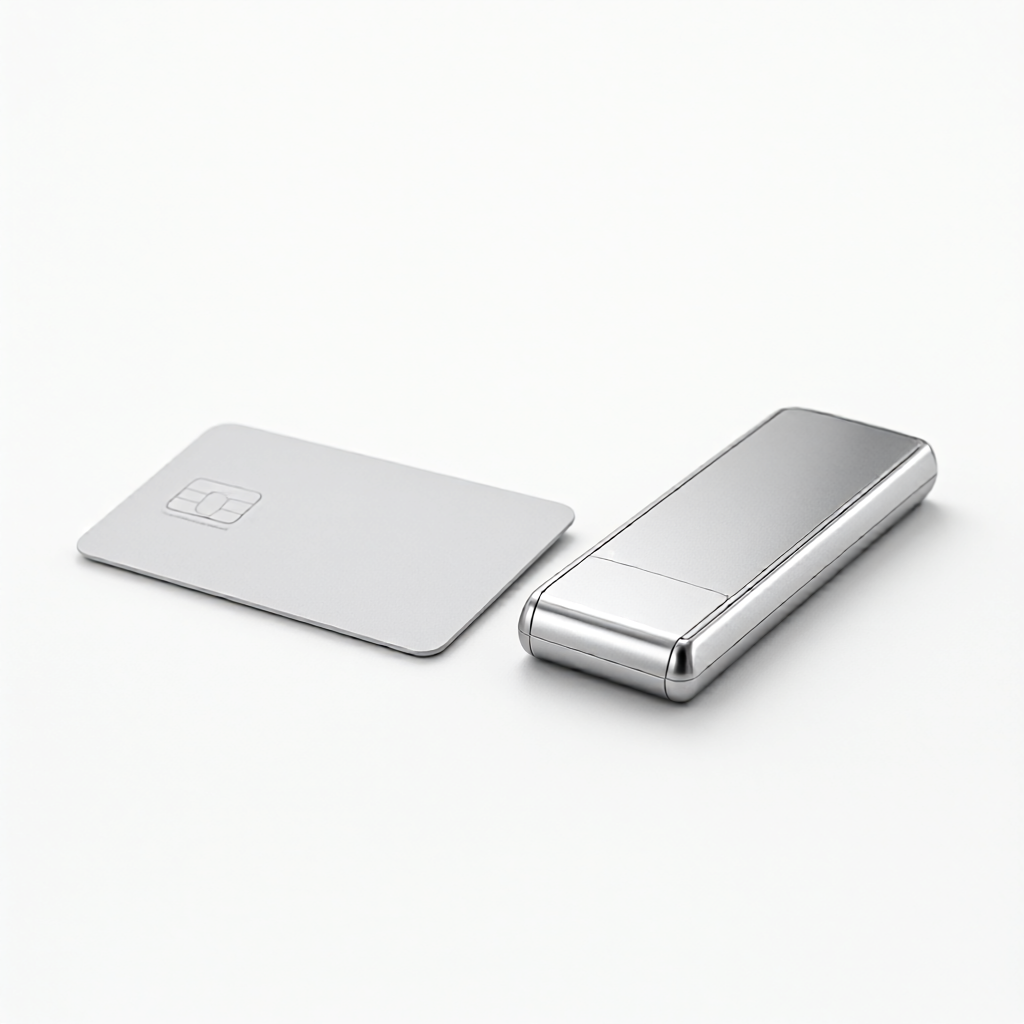
RFID skimming relies on the same radio-frequency technology that powers your contactless payment card. When you tap your card at a terminal, it exchanges data with a reader operating at 13.56 MHz. A malicious actor with a portable scanner can, in theory, capture that signal from a few inches away — without your knowledge — in crowded environments like transit hubs, nightclubs, or busy streets.
The FTC has published guidance noting that while large-scale fraud from RFID skimming is rare, the risk is not theoretical. The Federal Trade Commission acknowledges that contactless card data can be intercepted, and recommends simple protective measures for anyone carrying multiple contactless credentials daily. Federal Trade Commission — RFID Skimming Guidance
For B2B buyers, the threat profile depends on your end market. If you’re supplying wallets to consumers in high-traffic urban areas, or creating corporate gifts for professionals who travel frequently, RFID protection adds tangible value. If your product targets outdoor enthusiasts who carry few cards, the protection is still useful — but it becomes one feature among many rather than the primary selling point.
What Gets Scanned?
Contactless bank cards, transit passes, and passport chips at 13.56 MHz are the readable targets.
Modern contactless cards store two types of data:
- Account information — card number, expiry date (mostly encrypted and harder to exploit)
- Static data — cardholder name, loyalty program numbers, transit ticket details
The static data is easier to skim and can be used for identity reconstruction or fraudulent loyalty redemptions. A proper skimming-proof wallet blocks both transmission paths by preventing the card from communicating with any external reader.
Which Materials and Construction Methods Block RFID in Leather Wallets?
Aluminum, copper mesh, and carbon sheet all work; the liner position matters more than the metal chosen.
Which Conductive Metal Wallets Work Best?
The most common approach in the EDC wallet space uses aluminum or titanium body panels that form a continuous conductive shell around the card cavity. When metal fully encloses the card slot area, it creates a Faraday cage — a principle where electromagnetic waves cannot penetrate a conductive barrier.
Key construction requirements:
- Full perimeter coverage — gaps in the metal housing create scan leaks. Cards must be surrounded on all sides, including the edges.
- Conductive gaskets or liners — some manufacturers add a thin RF-blocking mesh behind the metal to ensure complete coverage where panel seams exist.
- Spring tension design — the card must stay in contact with the conductive surface, not floating freely inside the cavity.
Aluminum wallets with CNC-machined bodies and tight tolerances generally outperform stamped or cast designs because they achieve more consistent coverage.
How Do Carbon Fiber Card Holders Block RFID?
Carbon fiber itself is not conductive enough to block RFID signals on its own. However, carbon fiber RFID wallet products typically incorporate a conductive liner — often a thin stainless steel mesh or copper nickel layer — sandwiched between the carbon fiber face sheets. This hybrid approach gives buyers the aesthetic appeal of carbon fiber while maintaining verified blocking performance.
For B2B procurement, the question becomes whether the liner is continuous or segmented. Segmented liners leave gaps; continuous liners provide reliable protection. Ask suppliers for test reports that confirm blocking across the full 13.56 MHz range, not just a partial frequency test.
How Do Mesh and Foil Liners Block RFID?
Budget-friendly options sometimes use adhesive foil strips or RFID-blocking mesh inserts. These can work adequately if installed correctly, but they introduce durability concerns:
- Foil layers can peel, tear, or shift over time
- Mesh inserts may not cover the entire card surface
- Replacing damaged liners requires disassembly
For brands building a permanent product line, integrated conductive construction — where the blocking layer is part of the wallet’s structural design — is the more reliable path. This is the approach described in our guide to best minimalist wallets for B2B sourcing and private label programs, where we compare structural designs that prioritize long-term performance over temporary fixes.
What Practical Benefits Do RFID Leather Wallets Deliver?
Buyers get card protection, thinner carry, and a credible security claim they can market.
Can One Wallet Protect Multiple Contactless Cards?
Most professionals carry at least three contactless-enabled cards: a credit card, a transit card, and an office access badge. Each one transmits at the same 13.56 MHz frequency. A single RFID-shielded wallet protects all of them simultaneously, which is more convenient than carrying individual card sleeves or RFID blocker sleeves for every card.
Why Do Corporate Buyers Value RFID Wallets as Gifts?
RFID protection is a feature that resonates with corporate buyers. It signals thoughtfulness and modern security awareness without requiring technical explanation. For promotional product distributors, it’s a differentiator that justifies a higher price point than a standard wallet. For corporate gift programs, it aligns with IT security policies that increasingly address contactless credential risks.
How Does RFID Fitting Affect Minimalist Design?
Unlike bulky traditional wallets with RFID pockets sewn into leather panels, modern contactless card wallets integrate blocking as a structural element. You get protection without adding thickness. A well-designed metal wallet RFID model can hold eight to twelve cards in a slim profile that fits comfortably in a front pocket.
What Are the Limits of RFID Wallet Protection?
Shielding stops skimming, not magnetic stripe cloning, online fraud, or a reader placed against an unshielded side.
Why Is RFID Blocking Not a Substitute for Card Security?
An RFID wallet vs regular wallet comparison should make clear: RFID protection is one layer of card security, not a complete solution. It does not prevent:
- Online payment fraud
- Physical card theft
- Chip-and-PIN skimming at ATMs
- Lost or stolen card misuse
Buyers should position RFID protection as an added safeguard, not the primary selling point.
How Strong Is RFID Blocking, Really?
A Faraday cage works effectively at short range — typically stopping scans from several feet away. However, no consumer wallet can block all radio frequencies under all conditions. Extremely powerful industrial readers or direct-contact scanners could theoretically overcome weaker barriers. For everyday consumer use, the protection is more than sufficient.
Why Do Certification Claims Need Verification?
Some suppliers label products as “RFID-blocking” without third-party test data. The absence of a test report doesn’t mean the product fails — it means you can’t verify performance. Always request documentation before placing a bulk order.
Which Specifications Matter When Sourcing Leather Wallets in Bulk?
Five: attenuation level, hide grade, card capacity, closed size, and liner durability.
Which Metrics Measure Blocking Performance?
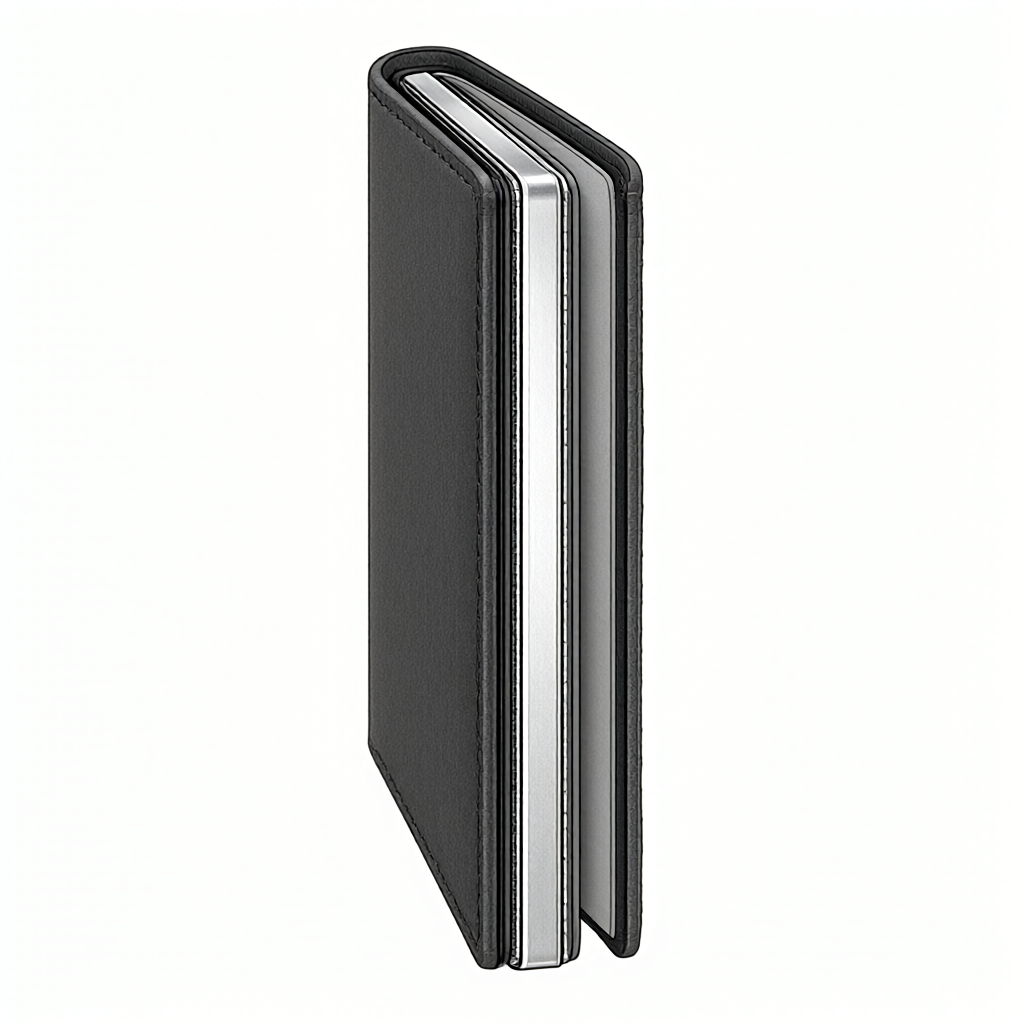
The specification that matters most is attenuation at 13.56 MHz — the standard frequency for contactless payments. Industry-standard testing measures how much signal reduction the wallet provides. Products that block at least 80 dB at this frequency are generally considered effective for consumer protection. Ask suppliers to confirm their test methodology and results.
What Card Capacity and Layout Should You Choose?
Different card layouts affect blocking effectiveness. Cards pressed flat against a conductive surface perform better than cards stacked loosely. Evaluate:
- Maximum card count before spring tension degrades
- Whether cards maintain contact with the blocking layer
- Accessibility of frequently used cards
Our best card holder selection guide for B2B sourcing and everyday carry use covers how card arrangement and internal spacing influence both capacity and protection reliability.
What Are Material Options and Finishes?
Full-grain, split, and bonded leather cover most orders, with matte or gloss finishes on hardware.
Common material choices for RFID-blocking wallets include:
| Material | Protection Method | Aesthetic | Typical Use |
|---|---|---|---|
| Aluminum (anodized) | Conductive metal body | Matte, colored | Everyday carry, outdoor |
| Titanium | Conductive metal body | Brushed, natural | Premium EDC, tactical |
| Carbon fiber + liner | Hybrid conductive layer | Woven pattern | Fashion-forward, business |
| Stainless steel mesh | Internal liner | Hidden | Budget-friendly options |
Material selection also affects weight, durability, and perceived quality — all important for brand positioning.
Which Build Quality Indicators?
Inspect these physical characteristics during sampling:
- Smooth card insertion and removal without excessive force
- No rattling or loose internal components
- Consistent finish quality across all units
- Logo placement that doesn’t compromise blocking coverage
Which Standards Prove RFID Blocking in Leather Wallets?
There is no wallet-specific standard, so suppliers rely on attenuation testing and material compliance.
Which ASTM and ISO References Apply?
While there is no single mandatory certification for consumer RFID wallets, the industry references established testing standards. The relevant framework comes from ASTM International, which maintains standards for security materials and testing methods. ASTM International — Material Standards The most applicable reference is ASTM E2092, which covers test methods forRFID security barriers. Buyers should ask suppliers whether their products have been evaluated against this or equivalent standards.
Why Use Independent Laboratory Testing?
Reputable manufacturers submit samples to third-party labs such as SGS for RF attenuation testing. A valid test report should include:
- Sample description and model number
- Test frequency range (must include 13.56 MHz)
- Attenuation results in decibels
- Test method reference standard
- Laboratory accreditation details
Which Material Compliance Certifications Apply?
For international trade, product safety certifications matter alongside RFID performance. Common requirements include:
- REACH compliance — restricted substances in metals and coatings
- RoHS compliance — lead-free and halogen-free materials
- BSCI audit — social compliance for manufacturing facilities
- ISO 9001 — quality management system certification
These certifications do not prove RFID blocking directly, but they indicate a manufacturer that operates with documented quality processes — which reduces the risk of receiving inconsistent or substandard product batches.
What Do Wholesale Leather Wallets Cost, and What MOQ Applies?
Stock hides start near $6–$15 per unit at 200–500 pieces; custom dies and liners push both numbers up.
Price bands quoted in this article are industry ranges published for planning purposes. Exact per-unit pricing depends on material, finish, packaging and order quantity, and is confirmed by our sales team after an inquiry against a locked specification.
Which Variables Drive Wholesale Pricing?
Bulk pricing for b2b rfid wallet wholesale orders depends on several factors:
- Material — titanium costs significantly more than aluminum; carbon fiber with integrated liners sits in the mid-range
- MOQ tier — prices decrease as order volume increases. Orders above 1,000 units typically receive the most competitive per-unit pricing
- Customization level — laser engraving, UV printing, and custom packaging add per-unit cost but are standard for private label programs
- Surface finish — anodized colors, brushed textures, and PVD coatings each carry different processing costs
Bulk pricing for B2B RFID wallets depends on material grade, order volume, customization complexity, and surface treatment. Titanium costs significantly more than aluminum; carbon fiber with integrated RF liners sits in the mid-range. Orders above 1,000 units typically qualify for the most competitive per-unit pricing. Customization—including laser engraving, UV printing, and bespoke retail packaging—adds per-unit cost but is standard practice for private-label programs.
Approximate wholesale price ranges (FOB, unit cost):
| Category | Material | Typical MOQ | Price Range (USD/unit) |
|---|---|---|---|
| Entry-level | Anodized aluminum | 500+ pcs | $8 – $14 |
| Mid-tier | Carbon fiber + RF liner | 200+ pcs | $15 – $28 |
| Premium | Titanium or double-wall aluminum | 100+ pcs | $25 – $45 |
| Custom luxury | PVD-coated titanium, custom packaging | 100+ pcs | $35 – $60+ |
> Note: These ranges reflect current market conditions and may vary by supplier, region, and order specifications.
What Pricing Ranges Are Typical?
Stock builds land near $6–$15, mid-tier $15–$30, and premium constructions above $30 per unit.
Based on current market conditions, expect the following approximate ranges for contract manufacturing:
- Entry-level aluminum RFID wallets (MOQ 500+): competitive pricing suitable for promotional and entry-level retail channels
- Mid-tier carbon fiber and titanium models (MOQ 200+): positioned for branded EDC products and Amazon FBA sellers
- Premium finished models with custom packaging (MOQ 300 pcs / SKU+): suited for luxury corporate gifts and high-end retail chains
MOQ flexibility is a key consideration. Some manufacturers require high minimums that exclude smaller brands. Suppliers offering low MOQ starting at 300 pieces enable brand testing and iterative product development without large inventory commitments.
Which Hidden Cost Factors Apply?
Tooling, plating, packaging, testing, and freight each add to the quoted unit price.
Watch for these often-overlooked expenses:
- Tooling fees — custom molding or stamping dies may carry one-time charges
- Sample costs — prototype units are rarely free, though some suppliers credit samples against production orders
- Packaging design — retail box artwork and die-line creation may be extra
- Shipping and logistics — sea freight vs air freight decisions impact unit landed cost significantly for lightweight, high-volume orders
Our best wallet for B2B buyers: EDC wallet procurement guide breaks down these cost variables and helps buyers build accurate landed-cost models before committing to a supplier.
What Should B2B Buyers Check Before Committing to RFID Leather Wallets?
Check attenuation data, liner construction, and reorder consistency before placing a first order.
How Should You Define the End-User Profile?
Start by clarifying who will carry the wallet. An RFID wallet for business use — carried by office professionals with multiple contactless badges and cards — has different requirements than one designed for outdoor enthusiasts who prioritize durability over card capacity. Your target audience determines material selection, capacity, and price positioning.
How Should You Request Samples and Test Data?
Ask for two units per spec plus the attenuation report, and confirm the sample matches the production line.
Before placing a production order, obtain physical samples and request:
- Third-party RFID blocking test reports
- Material compliance documentation (REACH, RoHS)
- Production sample approval sheets
- Packaging and labeling specifications
Physical samples let you verify card insertion smoothness, spring tension, and overall feel — things no spec sheet captures.
How Should You Evaluate the Manufacturer's Capabilities?
Audit cutting, stitching, and liner assembly in-house, then check their last export shipment records.
A reliable OEM partner should demonstrate:
- In-house machining or proven supply chain control
- Quality inspection processes at multiple production stages
- Experience with your target market’s compliance requirements
- Responsive communication and realistic lead times
Look at our good wallets for guys: B2B EDC wallet buying guide for a framework on evaluating manufacturers beyond just product specs.
How Should You Plan for Long-Term Inventory Management?
RFID wallet models tend to have longer shelf life than fashion-forward variants because the core protection feature remains relevant regardless of trend cycles. However, material finishes and colorways do cycle. Work with your manufacturer to balance evergreen core models with seasonal limited editions.
How Do We Manufacture RFID-Protected Leather Wallets?
As a manufacturer that has produced minimalist aluminum wallets, carbon fiber card holders, and titanium money clips since 2014, we see RFID protection as a baseline expectation rather than a premium differentiator. Our approach starts with the question every buyer should ask: does this wallet actually block at 13.56 MHz, and can you prove it?
We build our RFID-blocking products using full-perimeter conductive construction — aluminum and titanium bodies that function as integrated Faraday cages, with internal liners where carbon fiber face sheets require supplementary shielding. Every production batch undergoes in-house RF attenuation checks, and we provide test documentation to buyers who request it.
Our facility holds ISO 9001 certification and operates as a BSCI audited manufacturing site. We serve 200+ brands worldwide across America, Europe, Australia, and Southeast Asia — from Amazon FBA sellers launching their first EDC wallet line to established brands refreshing their product portfolio. With 7-day sample lead times and MOQ starting at 300 pieces, smaller brands can validate product-market fit before scaling to full production runs.
If you’re evaluating whether an RFID-blocking model fits your product lineup, or you need test data and samples to support a sourcing decision, Contact Our Team to discuss your specifications.
How Does Branding Change Wholesale Cost and MOQ for Leather Wallets?
Debossing adds little cost, foil and metal plates add tooling, and each finish raises the minimum order.
What Are Hidden and Overlooked Cost Factors?
- Tooling and setup fees — Custom molds, stamping dies, or laser-engraving fixtures may carry one-time charges, though many manufacturers waive these for repeat orders above a threshold.
- Sample costs — Prototype units are rarely complimentary, though reputable suppliers often credit sample fees against confirmed production orders.
- Packaging design — Retail box artwork, die-line creation, and insert design may be billed separately unless bundled into a full OEM package.
- Shipping and logistics — Sea freight versus air freight significantly impacts landed cost for lightweight, high-volume orders. Factor in customs duties and destination-specific compliance fees.
- Payment terms — Standard terms range from 30% deposit with 70% before shipment to more favorable Net-30/Net-60 arrangements for established partners.
How Flexible Are MOQs as Orders Scale?
Some manufacturers impose high minimums that exclude smaller brands and Amazon FBA sellers. Suppliers offering low MOQ starting at 300 pieces enable brand testing, iterative product development, and seasonal replenishment without tying up capital in excess inventory.
When negotiating MOQ, consider:
- Starting with a trial batch to validate quality before scaling
- Consolidating multiple designs into one production run to lower per-SKU minimums
- Requesting tiered pricing so unit cost drops predictably as volume increases
Which RFID Protocol Standards Apply?
Understanding the protocols your wallet must block is essential for B2B procurement:
- ISO 14443 Type A — Primary standard for contactless credit/debit cards (Visa PayWave, Mastercard PayPass, American Express ExpressPay). Operates at 13.56 MHz with a typical read range of 0–10 cm.
- ISO 14443 Type B — Used by some transit systems, national ID cards, and certain bank cards. Also operates at 13.56 MHz with similar proximity characteristics.
- EMVCo Level 1 Contactless Specification — Defines the electrical and radio frequency interface for payment cards. Any wallet claiming to protect EMV-compliant cards must attenuate signals within the 13.56 MHz band.
- ISO/IEC 18000-3 Mode 3 — Air interface standard for 13.56 MHz RFID, commonly referenced in security and access-control card applications.
A genuine RFID-blocking wallet should demonstrate attenuation across all four protocol bands, not just a single frequency point.
Which Third-Party Test Results Should You Expect?
Reputable manufacturers submit samples to accredited laboratories (SGS, Intertek, TÜV) for RF attenuation testing. Representative results from independent lab reports:
| Product Type | Test Frequency | Attenuation (dB) | Standard Referenced |
|---|---|---|---|
| 2 mm anodized aluminum wallet | 13.56 MHz | 85–95 dB | ASTM E2092 / ISO 14443 |
| Carbon fiber + stainless mesh liner | 13.56 MHz | 80–90 dB | ASTM E2092 |
| Titanium wallet (single-wall) | 13.56 MHz | 75–85 dB | ISO 14443 Type A/B |
| Budget foil-insert wallet | 13.56 MHz | 40–60 dB | N/A (no verified test) |
Products achieving ≥80 dB attenuation at 13.56 MHz are generally considered effective for consumer-grade protection. Results below 60 dB at this frequency indicate insufficient shielding and should be flagged during supplier evaluation.
> Source: ASTM International — Material Standards
Which Checklist Evaluates Leather Wallet Suppliers?
Use the following scored criteria to objectively compare RFID wallet manufacturers. Each category carries a weight reflecting its importance to B2B buyers.
| Criteria | Weight | Scoring Guide |
|---|---|---|
| In-house machining / supply chain control | 20 pts | 20 = full in-house CNC + finishing; 10 = partial; 0 = pure trading company |
| Quality management certification | 15 pts | 15 = ISO 9001 + BSCI; 10 = ISO 9001 only; 5 = basic QC; 0 = none |
| Third-party RF test reports | 20 pts | 20 = SGS/Intertek report with ≥80 dB at 13.56 MHz; 10 = report without dB data; 0 = no report |
| Sample lead time and responsiveness | 10 pts | 10 = ≤7 days; 7 = 8–14 days; 4 = 15–30 days; 0 = unclear |
| MOQ flexibility | 10 pts | 10 = ≤300 pcs; 7 = 100–300 pcs; 4 = 300–500 pcs; 0 = >500 pcs |
| Material compliance (REACH/RoHS) | 10 pts | 10 = both certified; 5 = one certified; 0 = none |
| Production capacity and on-time delivery | 10 pts | 10 = 500K+ monthly, >98% on-time; 5 = 200K–500K; 0 = <100K or unknown |
| Communication quality and transparency | 5 pts | 5 = detailed, prompt responses; 3 = adequate; 1 = poor; 0 = unresponsive |
Scoring interpretation:
- 85–100 pts — Strong OEM partner; proceed to sample order
- 60–84 pts — Viable supplier; request additional references and test data
- Below 60 pts — High risk; do not proceed without significant remediation
Which Audit Priorities Matter for Suppliers?
Prioritize liner placement consistency, seam strength, and carton-level QC records.
- Verify that CNC machining, laser engraving, and anodizing occur in-house or under direct contract
- Confirm quality checkpoints at incoming material, in-process, and final inspection stages
- Request video walkthroughs of the production floor if on-site visits are not feasible
- Review social compliance documentation (BSCI audit reports) for facilities serving European retailers
Which Thickness and Construction Specs Apply to Leather Wallets?
Technical depth separates reputable manufacturers from commodity traders. Key dimensional specifications to request:
- Aluminum body thickness — 1.2 mm to 2.5 mm depending on wallet size and card capacity. Thicker gauges (≥1.8 mm) provide superior structural rigidity and more reliable Faraday-cage performance.
- Stainless steel mesh liner density — 40 to 80 mesh per inch. Higher mesh density correlates with more consistent attenuation across the 13.56 MHz band.
- Carbon fiber layup — Standard 2×2 twill weave with epoxy resin infusion; minimum two layers with an integrated conductive liner between them for RF blocking.
- Panel gap tolerance — ≤0.1 mm between machined surfaces to prevent signal leakage at seams.
- Spring tension force — 15–25 N for card retention without excessive insertion force.
These specifications should be documented in the supplier’s engineering drawing package and verified against physical samples.
What Limits Remain After RFID Blocking Is Added?
Magnetic stripe cloning, online fraud, and an exposed card face are outside the shield.
What No Wallet Can Prevent?
Even a fully certified Faraday-cage wallet cannot protect against:
- NFC-enabled contactless payments initiated by the cardholder — The wallet opens momentarily during a tap, and the reader communicates during that window.
- Phone-to-card skimming at point-of-sale terminals — If a card is held near a compromised terminal, the short-range NFC exchange occurs before the wallet re-closes.
- High-frequency UHF RFID (860–960 MHz) — Most consumer wallets shield only the 13.56 MHz ISM band. UHF-frequency tracking tags (used in some logistics and anti-theft systems) require different shielding materials.
How Is the Skimming Threat Landscape Evolving?
Contactless payment adoption continues to grow globally, and new card formats may operate at different frequencies. While the 13.56 MHz standard is unlikely to change in the near term, buyers should monitor updates from EMVCo and ISO/IEC JTC 1/SC 27 for emerging specifications.
Choosing a wallet based solely on the “RFID-blocking” marketing label—without verifying test data, material specifications, or construction integrity—leaves both the buyer and their end consumers vulnerable to a false sense of security.
RFID Wallet Worth It: Where Can You Verify the Data and Sources?
- Federal Trade Commission — RFID Skimming Guidance — www.ftc.gov
- ASTM International — Material Standards — www.astm.org
- best minimalist wallets for B2B sourcing and private label programs — topedcwallet.com
- best card holder selection guide for B2B sourcing and everyday carry use — topedcwallet.com
- best wallet for B2B buyers: EDC wallet procurement guide — topedcwallet.com
- good wallets for guys: B2B EDC wallet buying guide — topedcwallet.com
- Contact Our Team — topedcwallet.com
RFID Wallet FAQ: Transit Cards, Attenuation, Weight, Repair — Which Questions Do Buyers Ask Most?
Does an RFID wallet block hotel key cards or transit passes?
Usually yes, and that is the main complaint. A shielded wallet also prevents tap-to-pay and transit readers, so buyers often need to remove the card or hold the wallet open.
What attenuation value should a leather RFID wallet reach?
Aim for at least 20 dB reduction near 13.56 MHz at the card face. Anything below that leaves the card readable at close range.
Is a leather RFID wallet heavier than a standard bifold?
By roughly 10–30 grams. The liner and seam reinforcement add weight, though the thinner card stack usually offsets it.
Can a leather wallet be repaired if the shielding liner cracks?
Rarely. The liner sits under stitching, so repair means opening the panel. Ask suppliers for flex-test data before ordering.
From article to product
Still deciding between the two?
Send us the use case rather than the product name. Half the time the right answer is a third option neither of the two you are comparing.
Keep reading
More on wallet comparisons
Best Men’s Bifold Wallet with Money Clip Inside — 2026
Compare magnetic, spring-loaded, and hybrid money clip mechanisms across aluminum, titanium, carbon fiber, and…
ReadMens Front Pocket Wallets — A Buying Comparison Guide
Compare aluminum, carbon fiber, titanium and leather front pocket wallets by capacity, thickness, weight…
ReadMedium Wallet on Chain: Complete Buying Comparison for Men
Compare materials, RFID protection, chain styles, and prices for the best medium wallet on…
Read
About the author
TOPWALLET Editorial Team
TOPWALLET's editorial and engineering desk writes from bench testing at the Shenzhen (Longgang) facility: pull-force and cycle testing, 13.56 MHz shielding measurements, finish trials and factory audits, rather than supplier spec sheets. Every specification in these guides is one we write on a purchase order.
Written on the floor
This article was written by our production and QC team — the people who spec tolerances, run the finishing line and inspect every batch. Where it states a capacity, a pull force or a lead time, it comes from a measurement we made, not a supplier’s catalogue. If a number here disagrees with what your own supplier told you, tell us; several of these articles started as a correction from a buyer.
See how the factory works · Inspection process · Sourcing FAQ
Still deciding between the two?
Send us the use case rather than the product name. Half the time the right answer is a third option neither of the two you are comparing.