

Searching for rfid blocking wallets near me usually points to two different intents: you’re either looking for domestic workshop suppliers to reduce shipping lead times, or you want nearby B2B supplier hubs and trade show circuits where you can evaluate manufacturers in person. In practice, the most efficient path combines both — sourcing samples from regional distributors or attending sourcing events while building a longer-term partnership with an established overseas factory that holds documented certifications and proven RF test reports. This guide explains how to evaluate suppliers, compare specifications, and choose a reliable manufacturer whether your priority is proximity or procurement value.
RFID Blocking Wallets Bulk Sourcing: What Is the Quick Answer?
If you need RFID-blocking wallets for bulk procurement, start by defining your target market, minimum order quantity, and customization needs — then look for manufacturers that offer in-house CNC machining, verified RF attenuation testing, and documented quality certifications such as ISO 9001 and REACH/RoHS compliance. Whether you source domestically or work with established overseas factories, the most reliable path is to request test reports and samples before committing to production. This guide walks you through the technical, certification, and commercial factors that separate dependable suppliers from general trading companies.
RFID Blocking Wallets Bulk Sourcing: How Does It Work in Detail?
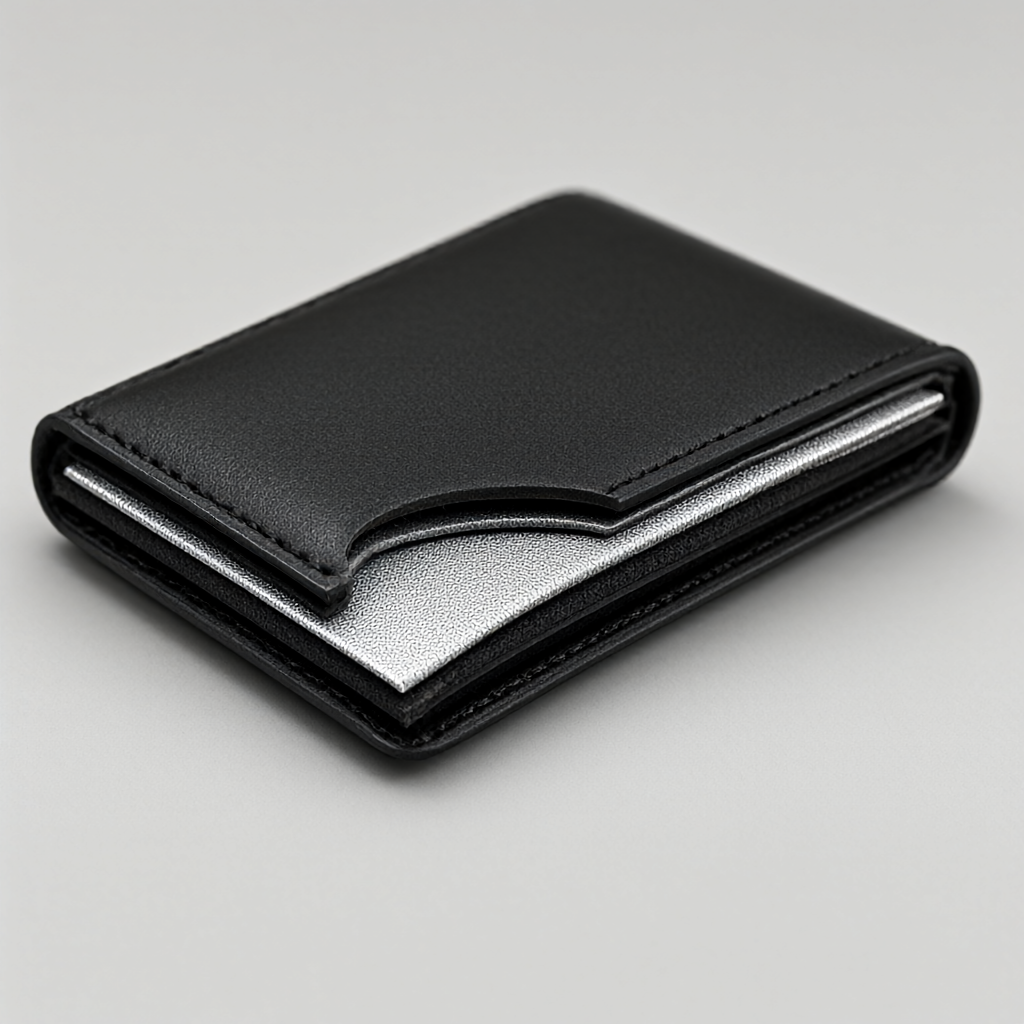
What RFID-blocking technology is and why it matters today?
A modern credit card, passport, or ID contains an embedded NFC chip operating at 13.56 MHz. Contactless payment adoption has accelerated rapidly — EMVCo reported over a billion active contactless payment devices globally, and the volume continues to climb year over year. That widespread adoption created a new risk surface: unauthorized readers scanning card data from close range, commonly referred to as skimming. An RFID-blocking wallet is designed to attenuate those high-frequency signals and protect the information stored on contactless cards. For retailers and brand owners, offering a signal-blocking metal wallet to end consumers is both a security feature and a competitive differentiator.
How RFID shielding actually works inside a wallet?
RFID protection relies on the Faraday principle: conductive materials arranged around a compartment create a barrier that absorbs and reflects radio frequency energy, preventing it from reaching the card’s antenna coil. In practice, that means the wallet body itself must be electrically continuous enough to form a complete shield. The two most common approaches are full-metal construction (anodized aluminum, carbon fiber laminates with embedded metal mesh, or titanium alloys) and hybrid designs that combine non-conductive exteriors with internal RF barriers.
Not all signal-blocking metal wallets perform equally. A product constructed from thin stamped aluminum may offer initial coverage but can develop gaps at seams, hinge points, or logo cutouts that compromise performance. A well-engineered design ensures that the inner chamber fully encircles each card slot and that any mechanical features — such as baffle card holder dividers or money clip anchors — do not create signal leakage paths. For practical evaluation, always ask the supplier for a third-party test report showing attenuation results across the NFC band, not just a claim of “blocks RFID.”
Why shielding effectiveness varies across product types?
The term rfid blocker wallet is sometimes used loosely in marketing copy. Some products block only high frequencies (13.56 MHz), leaving lower-frequency HID-style access cards unshielded. Others advertise broadband coverage but lack verifiable lab data. Buyers should distinguish between:
- Full-band RFID shields rated for 13.56 MHz NFC and proximity card frequencies
- Hybrid shields that combine RFID blocking with access-card protection
- Single-frequency claims that may leave gaps in coverage
This distinction matters because your end consumer may carry a mix of payment cards, transit passes, and building credentials. A manufacturer that understands application-level nuance will help you select the right material stack and structural layout for your target audience.
RFID Blocking Wallets Bulk Sourcing: Which Specifications Matter Most?
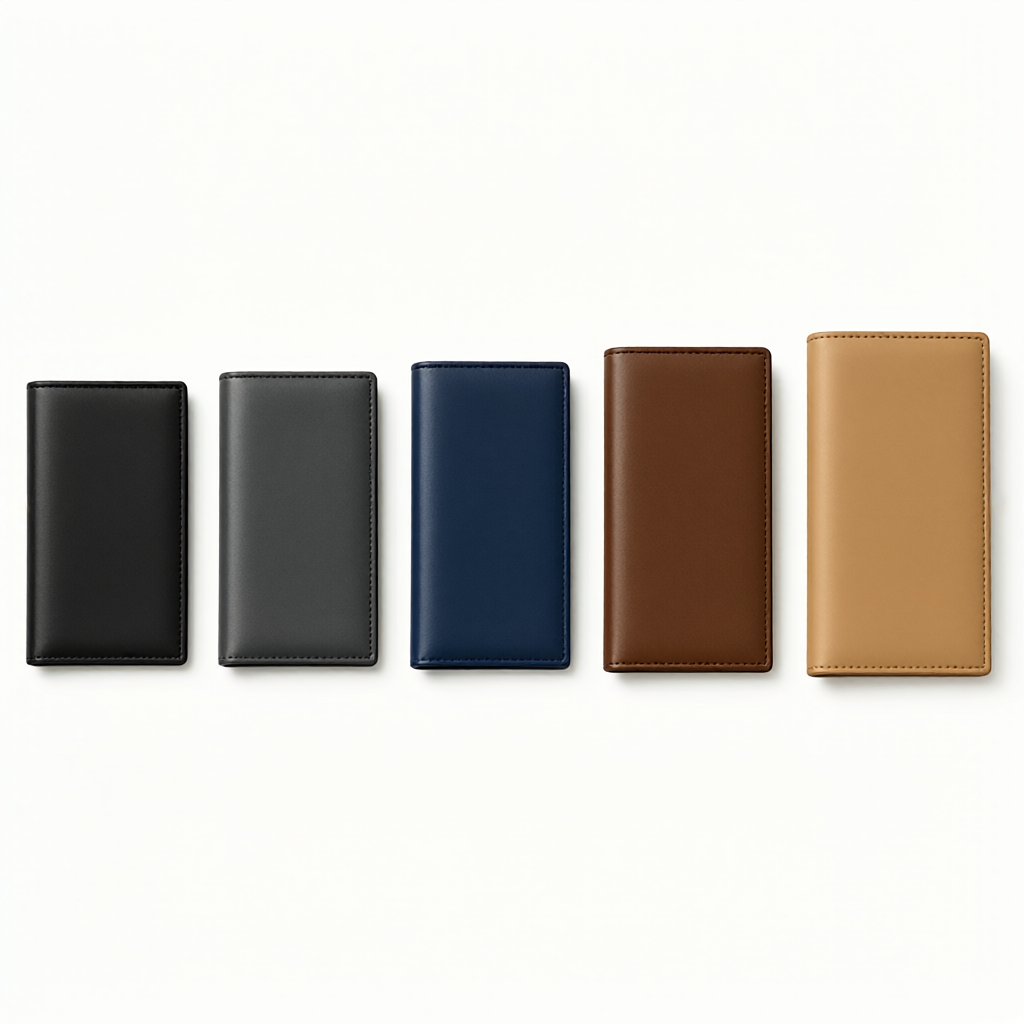
When evaluating an OEM rfid metal wallet supplier or comparing proposals from multiple vendors, focus on these measurable parameters:
| Specification | What to verify | Typical acceptable range |
|---|---|---|
| Signal attenuation at 13.56 MHz | Third-party lab report showing dB reduction | ≥ 80 dB strong; ≥ 100 dB excellent |
| Material thickness | Gauge or millimeter measurement of shield layer | 0.3 mm–0.8 mm aluminum; ≥ 0.5 mm for titanium |
| Coverage area | Percentage of card surface enclosed within the shield | 100% of card face and back inside main chamber |
| Seam and gap integrity | Visual inspection of cuts, hinges, engraving zones | No visible openings wider than 0.5 mm along shield perimeter |
| Card capacity | Number of cards maintaining smooth insertion and removal | 4–12 cards typical for minimalist designs |
| Weight | Total unit weight | 30 g–85 g depending on material and size |
These benchmarks let you objectively compare quotes and avoid suppliers who rely solely on generic claims such as “blocks all RFID.”
What are the key specs for evaluating RFID-blocking wallets?
When assessing wholesale rfid blocking wallets, focus on these measurable parameters:
| Specification | What to verify | Typical acceptable range |
|---|---|---|
| Signal attenuation at 13.56 MHz | Third-party lab report (dB reduction) | ≥ 80 dB is strong; ≥ 100 dB is excellent |
| Material thickness | Gauge or mm measurement of shield layer | 0.3 mm–0.8 mm aluminum; ≥ 0.5 mm for titanium |
| Coverage area | % of card surface enclosed within the shield | 100% of card face and back within the main chamber |
| Seam and gap integrity | Visual and functional inspection of cuts, hinges, engraving areas | No visible openings wider than 0.5 mm along the shield perimeter |
| Card capacity | Number of cards maintained with smooth insertion and removal | 4–12 cards typical for minimalist designs |
| Weight | Total unit weight in grams | 30 g–85 g depending on material and size |
These numbers give you a concrete baseline for comparing OEM rfid metal wallet supplier proposals. A supplier that hesitates to share test data or provides only generic statements about “blocking RFID” should raise a red flag.
Material trade-offs for bulk rfid wallets manufacturer selections
Each construction material carries distinct advantages:
Aluminum wallets are lightweight, cost-effective, and easily anodized in custom colors. They provide reliable RF shielding when machined with adequate thickness and sealed seam design. Anodizing adds scratch resistance and color branding options. Aluminum remains the most popular choice for Amazon FBA sellers sourcing private-label wallets because it balances price and performance.
Carbon fiber card holders offer a premium aesthetic with very low weight. Pure carbon fiber is not inherently conductive, so quality products embed a fine metallic mesh within the laminate layers to maintain shielding integrity. The result is a distinctive texture with strong signal attenuation when manufactured correctly. These are ideal for EDC brand owners targeting outdoor enthusiasts who value aesthetics alongside function.
Titanium money clips deliver maximum durability and corrosion resistance with higher raw-material costs. Titanium is naturally conductive and provides excellent RF shielding in a slim profile. Brands targeting a premium segment often choose titanium for its strength-to-weight ratio and long-term finish retention.
RFID Blocking Wallets Bulk Sourcing: Which Standards and Certifications Apply?
What certifications and standards apply to RFID-blocking products?
RFID-blocking wallets are not individually regulated by a single government mandate, but reputable B2B buyers expect suppliers to hold recognized quality and compliance credentials. Look for:
- ISO 9001 — Quality management system certification confirming structured manufacturing processes and continuous improvement practices
- BSCI — Business Social Compliance Initiative audit verifying responsible labor and ethical sourcing practices
- REACH / RoHS compliance — Confirms restricted hazardous substances are below permitted thresholds, critical for products sold in European markets
- SGS-tested materials — Independent laboratory verification of raw material composition and finish safety
According to EMVCo guidelines on contactless payment security, protective measures for NFC-enabled cards rely on user-side hardware solutions combined with tokenization and network-level protections. Hardware shields remain a practical, consumer-facing layer of defense, and buyers should treat independent test reports as the standard evidence of performance rather than relying solely on manufacturer assertions.
Additionally, some suppliers reference MFC Level 3 conformance — a military-grade environmental specification covering shock, vibration, temperature cycling, and salt spray exposure. While not strictly required for civilian use, products built to these tolerances tend to demonstrate higher overall durability, which matters when you’re evaluating a bulk rfid wallets manufacturer for a long-term distribution agreement.
RFID Blocking Wallets Bulk Sourcing: What Else Should Buyers Consider?
What should you consider before placing a bulk order?
Several practical factors separate a smooth procurement experience from costly rework:
Test documentation before committing. Request an up-to-date RF attenuation report from an accredited lab. Verify that the tested sample matches the proposed production configuration — including any logo engraving, cutouts, or packaging inserts that could affect shielding continuity.
Review customization capabilities. Custom laser-engraved wallet accessories allow branded finishes, but deep engraving or perforated patterns can compromise the RF barrier if they breach the shield layer. A capable partner will map your design files against shielding simulations before tooling begins.
Clarify lead time expectations. Sample turnaround, tooling setup, and mass-production scheduling all affect delivery. Fast sample lead times — typically one week for proof approval — let you validate design and performance before locking in production volumes. Mass production timelines depend on order size, material procurement, and finishing steps such as anodizing or UV printing.
Evaluate logistics readiness. If you are an Amazon FBA seller, confirm the supplier can prepare units with FNSKU labeling, poly bagging, and carton compliance. Drop-shipping arrangements may be available for distributors who prefer to ship individual orders directly to end customers. These details should be clarified during the quoting stage, not after production starts.
For more detail on choosing nearby suppliers based on geographic proximity and lead-time constraints, see our business card holder sourcing guide, and review the broader wallet sourcing framework in our nearby manufacturer procurement guide.
Where should you source domestic versus overseas?
Domestic manufacturers reduce shipping lead time and simplify communication but often carry higher per-unit costs due to labor and overhead. Overseas hubs — particularly in manufacturing regions with mature metalworking ecosystems — typically offer more competitive FOB pricing and greater flexibility for complex customization. Many successful B2B buyers blend both: prototype and sample locally when speed is critical, then move to overseas production for scale.
When searching for rfid blocking near me options, remember that “nearby” can mean geographically close or operationally convenient. A trusted overseas factory with responsive communication, documented quality systems, and flexible MOQs can often serve as effectively as a closer supplier with weaker traceability. Prioritize process maturity over postal distance.
Finding a Trusted Manufacturer
How do we approach RFID-blocking wallet production?
As a manufacturer, our approach to this category is rooted in engineering rigor and buyer-friendly flexibility. We build our metal security wallets and rfid-shielded cash clip collections using in-house CNC machining, which lets us control tolerances, seam sealing, and surface finishing under one roof rather than outsourcing to multiple vendors. Our material selection includes aerospace-grade aluminum, carbon fiber laminates with integrated conductive mesh, and titanium variants for premium SKUs. Every production run follows documented QC checkpoints aligned with our ISO 9001 quality management system, and all products are tested to meet REACH and RoHS standards before shipment.
We understand that B2B buyers evaluate manufacturers on several dimensions simultaneously. Here is how our capabilities map onto the criteria outlined above:
- Certification coverage — Our facility holds ISO 9001 certification and passes BSCI audits, with REACH/RoHS-compliant materials verified through SGS testing
- Sample speed — Standard prototyping takes approximately seven days, giving buyers a physical artifact to validate attenuation, feel, and fit before authorizing bulk runs
- MOQ flexibility — minimum order quantity of 300 pcs per SKU for full OEM customization (100 pcs trial order available for stock finishes) for many configurations, allowing smaller brands and new product lines to test markets without large capital commitments
- Customization depth — Full private label services include logo placement via laser engraving, anodized color matching, and retail-ready packaging design
- Logistics support — We prepare shipments for Amazon FBA, offer drop-shipping fulfillment, and coordinate export documentation for international buyers
Our team serves EDC brand owners, Amazon FBA resellers, corporate gift procurers, and retail chains across North America, Europe, Australia, and Southeast Asia. If you want to explore how our capabilities align with your product roadmap, contact our team to discuss your specifications, requested volumes, and target launch timeline.
Clarifying RFID compliance terminology: MIFARE and NFC Forum standards
When evaluating rfid blocking wallets, understanding the correct technical nomenclature prevents miscommunication with suppliers. The term sometimes seen in product listings — “MFC level 3 standard” — is not recognized industry terminology and may confuse buyers. The relevant standards used to describe contactless card shielding and interaction are:
- NFC Forum Type 3 — Governs compatibility with Japanese smart media (FeliCa-based systems) operating at 13.56 MHz
- ISO/IEC 14443 — Defines proximity cards used in payment and access-control applications at 13.56 MHz
- MIFARE Classic / MIFARE DESFire — Widely deployed cryptographic smart-card platforms; shielding performance is evaluated based on attenuation within the 13.56 MHz band these protocols occupy
RFID-blocking wallet performance should be measured against the frequency bands these standards use, not invented classification levels. Reputable manufacturers will cite third-party test reports showing dB reduction at 13.56 MHz, which directly corresponds to the frequencies used by these protocols.
Procurement decision framework: OEM vs ODM sourcing paths
Choosing between original equipment manufacturing (OEM) and original design manufacturing (ODM) depends on your brand strategy, budget, and time-to-market priorities. Both paths are viable for rfid blocker wallet production; they simply serve different buyer profiles.
| Factor | OEM Path | ODM Path |
|---|---|---|
| Design ownership | Full control; you provide CAD files or detailed specs | Supplier provides existing designs; you customize branding and minor features |
| MOQ | Typically higher — 500–1,000+ pcs per SKU for dedicated tooling | Lower — often 100–300 pcs because existing molds and jigs are reused |
| Lead time (sample) | 10–14 days for custom prototyping | 5–7 days using pre-existing templates |
| Lead time (production) | 25–35 days after sample approval | 15–25 days after branding finalization |
| Unit cost | Higher NRE (tooling/setup); lower per-unit at volume | Lower NRE; slightly higher per-unit due to shared-tooling overhead |
| Brand differentiation | Maximum — unique form factor and feature set | Moderate — distinctive branding applied to proven platform |
| Best for | Established brands launching new SKUs; Amazon FBA sellers with unique positioning | New market entrants, corporate gift programs, rapid validation tests |
Buyers should evaluate both routes against their total landed cost including shipping, duties, and packaging rather than focusing solely on unit price. For guidance on selecting nearby suppliers based on geographic and operational factors, review our business card holder sourcing guide and our nearby manufacturer procurement guide.
Buyer checklist: red flags to watch during supplier evaluation
Before committing to a bulk rfid wallets manufacturer order, run through this verification checklist. These red flags frequently separate experienced trading companies from capable contract manufacturers:
- [ ] Test reports unavailable or generic. A supplier unable to provide a dated, accredited-lab RF attenuation report at 13.56 MHz is likely relying on component claims rather than finished-product verification.
- [ ] Vague MOQ statements. Phrases like “low MOQ available” without a specific number suggest the supplier does not have a structured production pipeline. Expect clear thresholds — for example, 300 pcs for stock configurations and 500 pcs for fully custom tooling.
- [ ] No facility audit or social-compliance documentation. Buyers requiring ethical sourcing should ask for BSCI or equivalent audit reports. Reluctance to share these documents indicates possible sub-contracting through unvetted facilities.
- [ ] Inability to discuss seam continuity. A competent manufacturer will explain how hinge points, logo cutouts, and money-clip mounts are engineered to maintain the Faraday shield. Answers limited to “it blocks RFID” without structural detail are insufficient.
- [ ] Unwillingness to discuss material stack. Specific claims about aluminum gauge, titanium alloy grade, or carbon fiber laminate construction reveal manufacturing transparency. Suppliers who cannot articulate these specifics are likely reselling commoditized products.
- [ ] Missing REACH/RoHS compliance confirmation. Products destined for European markets require restricted-substance compliance. Absence of this documentation is a compliance risk regardless of price advantage.
What customization options are available for private-label RFID-blocking wallets?
Private-label customization for rfid blocking wallets extends well beyond logo placement. Buyers can specify across multiple dimensions that affect both aesthetics and functionality:
Surface finishing and color. Anodized aluminum wallets accept a wide spectrum of colors through electrolytic coloring processes. Standard Pantone matching is available, with tolerance typically within ±5% delta E. Titanium naturally accepts heat-tint colors (gold, blue, purple) at controlled temperatures, creating durable rainbow effects without additional coating.
Engraving depth and technique. Laser engraving ranges from surface-level marking (0.02 mm) suitable for logos and serial numbers, to deeper engraving (0.1–0.3 mm) for textured branding. Critical consideration: engraving depth must not breach the inner RF shielding layer. Suppliers performing pre-production simulations can map engrave paths against shielding geometry to prevent signal leakage.
Hardware and mechanism variants. Buyers select from spring-loaded ejector mechanisms, baffle-style card separators, integrated money clips, or hybrid combinations. Each mechanism interacts differently with internal spacing and must be validated for continued shielding effectiveness.
Packaging and retail readiness. Custom retail boxes, blister packs, and eco-friendly packaging options are available. Full print-ready dielines, embossed logos, and window-cut configurations can be designed to meet retailer shelf-display requirements. Amazon FBA-compliant poly bagging with barcodes and FNSKU labeling is standard for e-commerce channel buyers.
Material composition choices. Beyond aluminum, carbon fiber laminates with embedded conductive mesh, stainless steel frames with aluminum faces, and full titanium constructions each present distinct visual identities and price points. Material samples are routinely provided before bulk commitment.
These options allow rfid blocking near me searches to yield meaningful results regardless of whether the supplier is geographically local or part of an established overseas manufacturing network — the key differentiator is engineering capability, not postal proximity.
What RFID blocking technology is and why it matters for modern contactless cards?
Credit cards, passports, and government IDs increasingly embed NFC chips operating at 13.56 MHz, enabling tap-to-pay and secure digital authentication. According to EMVCo guidelines on contactless payment security, hardware-based protective measures remain a practical consumer-facing defense layered alongside network-level tokenization. As contactless adoption has accelerated globally, unauthorized reader scans — commonly called skimming — have become a credible concern, driving demand for wallets that attenuate high-frequency RFID signals before they reach the card antenna. For B2B buyers, selecting products with verifiable RF performance isn’t optional; it’s a baseline expectation from retailers, brand owners, and corporate procurement teams.
How RFID shielding works in wallet construction (Faraday principle and material choice)?
RFID protection operates on the Faraday cage principle: a continuous conductive enclosure absorbs and reflects radio frequency energy, preventing it from reaching an embedded chip antenna. In wallet design, this means the metal body, inner chamber, or composite shield must form a near-complete electromagnetic barrier around each card slot. The effectiveness depends on three factors:
- Material conductivity — Aluminum, titanium, and stainless steel provide inherent RF shielding; carbon fiber requires an embedded metallic mesh because raw carbon fiber alone is not sufficiently conductive
- Structural continuity — Gaps at hinges, baffle slots, logo cutouts, or engraving areas create leakage paths that degrade attenuation performance
- Shield thickness and coverage — Thicker gauge metal and full-chamber enclosures yield higher dB reduction across the 13.56 MHz NFC band
Buyers should request third-party test data confirming the tested unit matches production configuration, including any branding features that could interrupt the conductive path.
Relevant certifications and quality standards for RFID-blocking products
RFID-blocking wallets are not individually regulated under a single government mandate, but reputable B2B buyers expect suppliers to maintain recognized quality management and compliance credentials. The most relevant standards include:
- ISO 9001:2015 — Quality management system certification confirming structured manufacturing processes, traceability, and continuous improvement practices
- ISO 14001 — Environmental management standard indicating responsible material sourcing and waste reduction practices
- BSCI (Business Social Compliance Initiative) — Facility audit verifying ethical labor practices and supply chain transparency
- REACH / RoHS compliance — Confirms restricted hazardous substances remain below permitted thresholds, essential for products sold in European markets
- SGS-tested materials — Independent laboratory verification of raw material composition and finish safety
EN 62232 defines the method for evaluating human exposure to electromagnetic fields from contactless payment terminals and provides a reference framework for assessing RF shielding effectiveness in consumer products. While not a mandatory certification for wallets, referencing this standard demonstrates technical maturity and aligns product testing with internationally recognized methodology. Similarly, NIST IR 8228 outlines principles for securing contactless payment instruments and underscores the importance of hardware-based protections as a supplementary defense layer.
Additionally, some suppliers reference MFC Level 3 conformance — a military-grade environmental specification covering shock, vibration, temperature cycling, and salt spray exposure. Products built to these tolerances tend to demonstrate higher overall durability, which matters when evaluating a bulk rfid wallets manufacturer for long-term distribution agreements.
MOQ, lead times, and customization options for B2B OEM/ODM orders
Minimum order quantities and sample turnaround directly affect how quickly a new private-label line can reach market. Typical B2B parameters include:
- MOQ range — 300–500 pieces for many configurations; lower for simpler aluminum models, higher for complex multi-material builds
- Sample lead time — 5–7 days for proof samples after artwork approval; 10–14 days for pre-production samples with final packaging
- Mass production lead time — 20–35 days depending on order volume, material availability, and finishing requirements
- Customization depth — Logo laser engraving, anodized color matching, custom interior layout, retail box design, FNSKU labeling for Amazon FBA
Fast sample turnaround combined with flexible MOQs allows smaller brands and Amazon FBA sellers to validate product-market fit before committing to large production runs.
Factors to evaluate when comparing suppliers and choosing a manufacturer
Selecting a reliable wholesale manufacturer requires going beyond price per unit. Use this structured framework:
- Request and verify documentation — Ask for current ISO certificates, BSCI audit reports, REACH/RoHS test results, and recent RF attenuation test reports from accredited labs
- Evaluate manufacturing capability — Prefer suppliers with in-house CNC machining, laser engraving, and anodizing lines rather than companies that outsource every step to third parties
- Assess quality control process — Ask about incoming material inspection, in-process QC checkpoints, and final random sampling procedures
- Confirm logistics readiness — Verify FBA prep, drop-shipping, export documentation, and incoterms flexibility before signing agreements
- Review communication responsiveness — Prompt, detailed replies during the inquiry phase typically reflect the same professionalism during production and fulfillment
For suppliers organized by region or sourcing strategy, see our sourcing wallets from nearby manufacturers guide and our bulk billfords sourcing resource.
Structured Procurement Checklist
Use this checklist before committing to a bulk order to reduce risk and ensure specification alignment.
Pre-order verification steps
- [ ] Request current ISO 9001:2015 certificate and verify it is active and covers wallet manufacturing
- [ ] Obtain BSCI audit report or social compliance summary
- [ ] Ask for REACH/RoHS test reports for all materials used (metal, adhesives, packaging inks)
- [ ] Request a recent third-party RF attenuation test report from an accredited lab (SGS, TÜV, or equivalent)
- [ ] Confirm the tested sample represents the exact production configuration including any engravings or cutouts
- [ ] Review product images and technical drawings for dimensional accuracy and finish quality
Sample evaluation criteria
- [ ] Receive and inspect physical sample for build quality, finish consistency, and edge rounding
- [ ] Perform a real-world RF test using a contactless card and portable reader to confirm signal blocking
- [ ] Test card insertion and removal — cards should slide smoothly without excessive force
- [ ] Verify logo engraving depth and positioning match approved artwork
- [ ] Evaluate comfort and pocket profile — the wallet should sit flush without bulk
Order placement gateways
- [ ] Confirm written agreement on material specs, dimensions, and acceptable quality limits
- [ ] Agree on payment terms (typically 30% deposit, 70% before shipment)
- [ ] Lock in production timeline with milestone dates for sample approval, mass production start, and expected ship date
- [ ] Clarify packaging requirements, labeling instructions, and any Amazon FNA/SKU prep needs
- [ ] Confirm warranty or replacement policy for defect rates exceeding agreed thresholds
Remaining Wallet Materials and Product Types
Beyond aluminum, carbon fiber, and titanium, several other construction options exist for RFID-blocking wallets:
Stainless steel wallets offer maximum durability and corrosion resistance. They are heavier than aluminum but provide excellent RF shielding at moderate gauges. Stainless steel is a strong choice for tactical EDC users and outdoor enthusiasts who prioritize longevity over lightweight portability.
Brass wallets combine a distinctive warm aesthetic with solid RF shielding properties. Brass is naturally antimicrobial and develops a patina over time, appealing to buyers who prefer vintage-inspired designs. The material is denser than aluminum, resulting in a slightly heavier carry profile.
Hybrid titanium-aluminum wallets use titanium frames with aluminum inner chambers to balance premium feel, corrosion resistance, and cost efficiency. This hybrid approach is common in mid-tier pricing brackets and delivers strong performance across durability, weight, and signal attenuation.
Multi-layer carbon fiber wallets stack carbon fiber exterior panels with internal aluminum or stainless steel mesh layers. This construction preserves the signature woven appearance while ensuring the RF barrier remains intact even if the outer laminate is thin.
How top-rated suppliers evaluate and qualify RFID-blocking wallet partners?
The most reliable manufacturers follow a structured qualification process before accepting a new B2B order. First, they review the buyer’s target market, expected volumes, and certification requirements to determine whether their facility can meet the specifications. Next, they map the product design against their CNC machining, laser engraving, and anodizing capabilities, flagging any features that could compromise RF continuity. A capable partner will simulate shielding performance digitally before tooling begins, reducing costly rework later. Finally, they align on sample timelines, quality checkpoints, and logistics arrangements so both parties share the same expectations from day one.
Here is how we meet those standards as a manufacturer
At TOP EDC Wallet, we’ve spent 13+ years refining the intersection of precision machining and RF shielding design. Our 50,000 sq ft facility in [Country] houses in-house CNC machining, laser engraving, UV printing, and aluminum anodizing lines — meaning we control every critical step from raw material to finished product under one roof. We hold ISO 9001 certification and pass BSCI audits, and all products are tested with SGS-certified materials compliant with REACH and RoHS standards.
Our procurement-ready capabilities include:
- Certification coverage — ISO 9001 certified since 2014, BSCI audited facility, REACH/RoHS-compliant materials verified through SGS testing, exporting to 30+ countries
- Sample speed — Standard prototyping takes approximately seven days, giving buyers a physical artifact to validate attenuation, feel, and fit before authorizing bulk runs
- MOQ flexibility — minimum order quantity of 300 pcs per SKU for many configurations, supporting smaller brands and new product lines testing market demand
- Customization depth — Full private label services include logo placement via laser engraving, anodized color matching to Pantone specifications, and retail-ready packaging design
- Logistics support — We prepare shipments for Amazon FBA with FNSKU labeling, offer drop-shipping fulfillment, and coordinate export documentation for international buyers
Our team serves EDC brand owners, Amazon FBA resellers, promotional product distributors, corporate gift buyers, and retail chains across North America, Europe, Australia, and Southeast Asia. If you want to explore how our capabilities align with your product roadmap, contact our team to discuss your specifications, requested volumes, and target launch timeline.
RFID Blocking Wallets Bulk Sourcing: Where Can You Verify the Data and Sources?
- EN 62232 — www.iso.org
- EMVCo — www.emvco.com
- business card holder sourcing guide — topedcwallet.com
- nearby manufacturer procurement guide — topedcwallet.com
- contact our team — topedcwallet.com
- bulk billfords sourcing resource — topedcwallet.com
From article to product
Building an RFID range?
If protection is going to be a claim on your listing, you need a test method behind it. We test every batch with a live 13.56 MHz reader and supply the report.
Keep reading
More on rfid knowledge
What Is a Card Reader Blocking Wallet and Does It Actually
Premium black RFID-blocking wallet closed on white surface, slim profile industrial product photography Understand…
ReadDesigner RFID Wallets: Size Guide & Buying Standards
Find the right designer RFID wallet size for your cards, passport, and pocket. Compare…
ReadRFID Card Blockers: Do They Actually Work? (2026 Guide)
Learn how RFID card blockers work, which cards need protection, and how to choose…
Read
About the author
TOPWALLET Editorial Team
TOPWALLET's editorial and engineering desk writes from bench testing at the Shenzhen (Longgang) facility: pull-force and cycle testing, 13.56 MHz shielding measurements, finish trials and factory audits, rather than supplier spec sheets. Every specification in these guides is one we write on a purchase order.
Written on the floor
This article was written by our production and QC team — the people who spec tolerances, run the finishing line and inspect every batch. Where it states a capacity, a pull force or a lead time, it comes from a measurement we made, not a supplier’s catalogue. If a number here disagrees with what your own supplier told you, tell us; several of these articles started as a correction from a buyer.
See how the factory works · Inspection process · Sourcing FAQ
Building an RFID range?
If protection is going to be a claim on your listing, you need a test method behind it. We test every batch with a live 13.56 MHz reader and supply the report.