

What Is a Front Pocket Wallet, and How Should You Source One?
A front pocket wallet is a compact, low-profile carrying solution designed specifically to be worn in the front pants pocket. It typically holds only essential cards and folded bills, uses rigid or semi-rigid materials such as aluminum, carbon fiber, or titanium, and replaces the bulk of a traditional bi-fold wallet with a form factor built for security, posture, and ease of access.
How Are Front Pocket Wallets Built and Classified?
Front pocket wallets split into three build families: rigid metal cardholders, semi-rigid composite shells, and slim leather sleeves. Each family trades weight against capacity, and that trade-off is what buyers specify first.
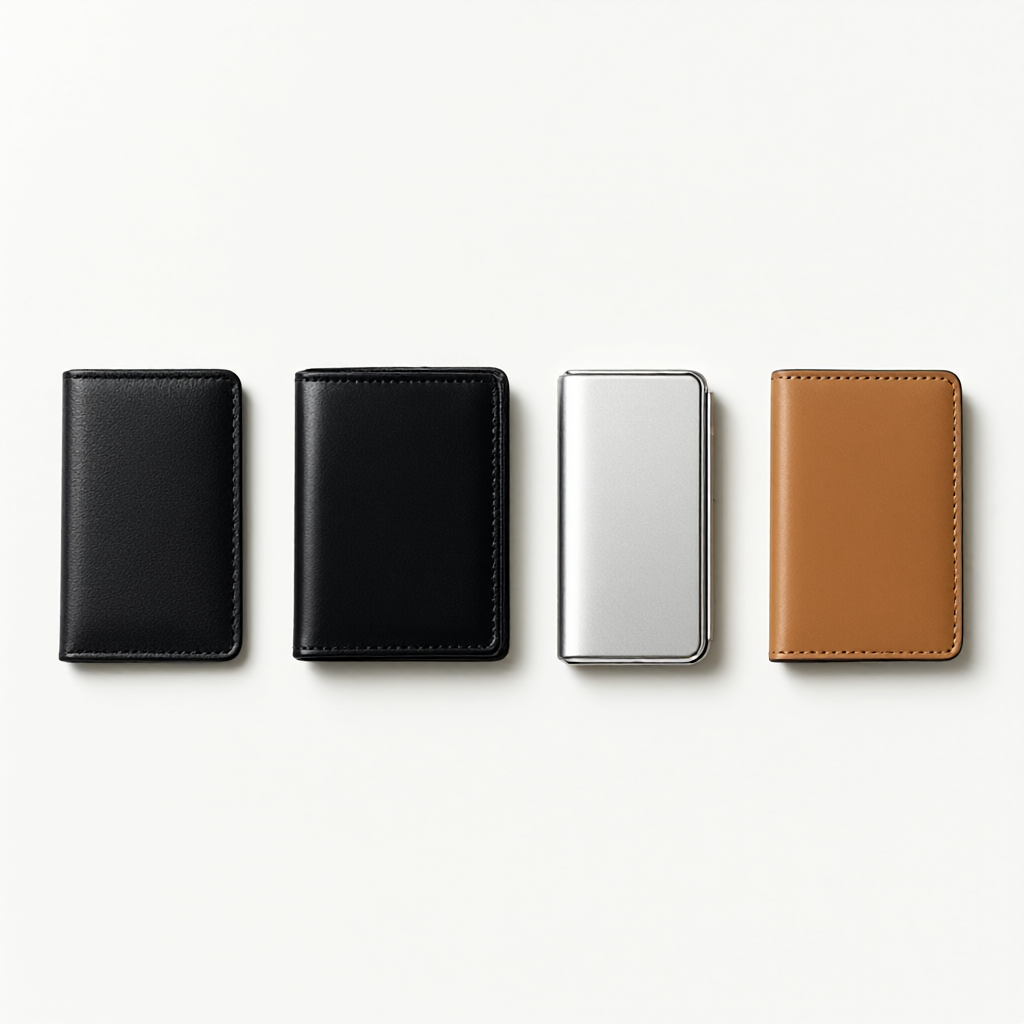
Front pocket wallets have moved beyond niche status. They are now a standard category within the Everyday Carry market, adopted by professionals, travelers, and anyone carrying contactless payment cards regularly. For B2B buyers entering this space, understanding what differentiates a front pocket wallet from traditional designs—and which material, certification, and sourcing variables matter most—is the foundation for sound product selection and supplier evaluation.
At its core, a front pocket wallet is defined by three constraints: thickness, intended carry location, and capacity discipline. A typical unit measures between 70 mm and 105 mm in width, 90 mm and 120 mm in height, and 6 mm to 16 mm thick when loaded. Capacity commonly ranges from six to twelve credit-card-equivalent slots plus a cash compartment. The design intentionally limits volume because the goal is ergonomic comfort and security rather than storage maximums.
A genuine front pocket wallet passes four checks: pocket-fit dimensions, no visible seated bulge, secure card retention, and a closure that survives movement. Each is testable on a sample.
- Exterior dimensions compatible with an average men’s front trouser pocket
- Slim profile that does not create a visible bulge when seated
- Card retention mechanism capable of preventing slippage
- Closure method that protects contents during movement
Buyers should also understand that product classifications vary across the market. Some items marketed as “wallets” are technically card holders; others labeled “EDC organizers” include money clips, zipper pockets, or hybrid layouts. Review best minimal wallets for B2B sourcing to see how manufacturers categorize and differentiate these product types.
How Does a Front Pocket Wallet Differ From a Traditional Wallet?
Traditional bifold or trifold wallets are designed around cash-heavy carries. They often accommodate full-size bills unfolded, multiple receipts, photos, and identification documents. That volume pushes thickness well past 20 mm when fully loaded and places weight on the hip bone and lumbar region when carried in the back pocket.
Front pocket wallets shift the design priority from capacity to ergonomics and security. Key differences include:
- Carry location. Front-pocket carry keeps the wallet off the lower spine and reduces pressure on the sciatic nerve during sitting, standing, and prolonged commute periods.
- Profile discipline. These wallets are engineered to remain flat against the body rather than cantilever outward.
- Intentional limitation. Card count and bill capacity are deliberately restricted to sustain the slim silhouette.
Several manufacturers provide comparative resources on RFID wallet definitions and technologies that help clarify the distinction between basic minimalist wallets and units engineered for electronic protection. For sourcing-specific details on manufacturing steps and procurement variables, review how minimalist EDC wallets are manufactured.
Why Do People Carry a Wallet in the Front Pocket?
Three practical drivers dominate buyer conversations:
Ergonomic benefit. Sitting with a thick wallet in the back pocket creates uneven pelvic alignment and adds compressive load to the lower lumbar discs. A slimmer front-carry unit removes that interference. Multiple clinical discussions and ergonomic reviews reference lumbar posture improvements linked to eliminating back-pocket bulk, though buyers should consult medical professionals for personalized guidance rather than treating general ergonomic commentary as diagnostic advice.
Security. Front-pocket wallets are harder to pick, easier to monitor visually, and significantly more difficult to lift from a bag or jacket compared with back-pocket or loose-clasped alternatives. Additional electronic-skimming protection appears in models featuring RF-shielding layers or Faraday-style barriers. See our coverage of RFID-blocking technology applications for technical detail on shielding effectiveness and verification methods.
Simplicity of carry. Modern payment habits have reduced cash dependency for many users. When cards and a phone dominate daily transactions, a bulky wallet becomes unnecessary weight. Front pocket formats match current spending behavior better than legacy designs.
What Specifications Should a Front Pocket Wallet Meet?
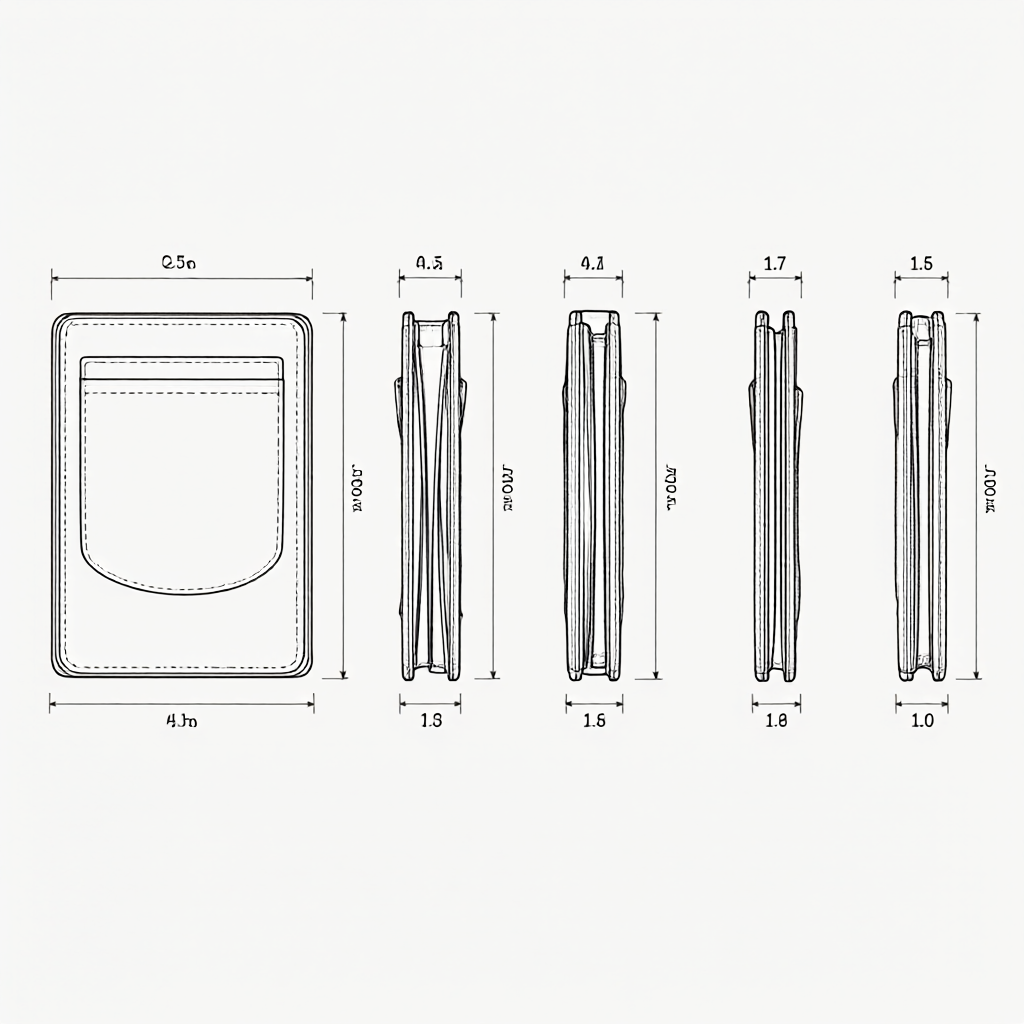
Spec literacy is critical when evaluating suppliers and comparing SKUs across categories. Below are the measurable dimensions B2B buyers should verify.
| Specification | Typical Range | Notes |
|---|---|---|
| Width | 70–105 mm | Depends on card count and hinge design |
| Height | 90–120 mm | Standard ISO credit-card proportion preserved |
| Loaded Thickness | 6–16 mm | Thinner frames suit five to eight cards; spring-loaded or expandable frames reach the upper range |
| Weight | 25–120 g | Aluminum versions lean toward 40–65 g; titanium models often sit at 70–110 g |
| Max Card Slots | 4–16 | Includes ID windows and mixed-format pockets |
| Bill Capacity | 2–6 folded bills | Varies by compartment architecture |
Buyers sourcing money clips for B2B programs should note that clip-based wallets frequently achieve thinner profiles than spring-frame designs because clamping force replaces internal tension mechanisms. Similarly, reviewing card holder selection criteria for B2B sourcing helps align slot configurations with expected card density.
Common styles include:
- Slim cardholders. Fixed slots with no expandability. Ideal for buyers targeting corporate gifts and branding programs requiring consistent, predictable dimensions.
- Spring-loaded mechanical wallets. Expandable tension systems that accept eight to twelve cards. Require more precision engineering and tend to carry higher unit costs.
- Hybrid card-plus-clip wallets. Combine a card rack with a detachable metal money clip. Flexible for promotional use.
- Zippered organizational wallets. Add fabric or leather compartments inside a rigid shell. Heavier and thicker but useful for travel-oriented product lines.
Which Standards Apply to Front Pocket Wallet Materials?
Quality frameworks govern both material safety and manufacturing reliability. Buyers should understand which certifications signal genuine capability versus marketing language.
Material compliance. Metals used in EDC wallets must comply with restriction-of-hazardous-substances regulations in destination markets. REACH and RoHS standards set limits on heavy metals and certain chemical substances in finished goods. Products intended for European distribution should demonstrate conformity documentation aligned with REACH regulatory requirements, while US-market products should meet comparable safety benchmarks under applicable state and federal guidelines. Independent SGS testing reports can substantiate material claims.
Quality management. An ISO 9001 certification indicates that a facility operates under a documented quality-management system covering process control, traceability, corrective action, and continuous improvement. It is a baseline expectation rather than a luxury marker.
Ethical-audit compliance. Many distributors and retail chains require proof of responsible labor practices. BSCI audit results confirm facility compliance with internationally recognized social-performance criteria and are routinely requested during sourcing qualification.
Ergonomic framing. Posture-related benefits are grounded in biomechanical principles but cannot substitute for professional medical advice. Buyers should represent ergonomic arguments accurately in marketing materials and avoid implying diagnostic or therapeutic outcomes.
How Do Front Pocket Wallets Fit Different Buyer Segments?
Promo buyers need low cost, private-label brands need finish options, and premium lines need metal or titanium.
How Should B2B Buyers Evaluate Front Pocket Wallet Suppliers?
Supplier quality shows up in four measurable places: in-house process coverage, sample speed, MOQ flexibility, and private-label readiness. Price is the fifth variable, not the first.
Manufacturing capability. In-house CNC machining, laser engraving, anodizing lines, and assembly stations reduce dependency on external vendors and shorten iteration cycles. Facilities lacking one or more of these steps may outsource critical processes, increasing lead-time risk.
Sample responsiveness. Prototyping speed signals operational maturity. A credible supplier should deliver a working sample within one week for standard material and finish combinations. Custom packaging and branded tooling typically extend timelines slightly.
Minimum order quantity flexibility. Some programs start at 300 pieces; others require larger runs to amortize setup costs. Buyers should match MOQ expectations to their channel strategy before committing.
Customization readiness. Private-label work demands clean logo-application methods, approved color-matching workflows, and packaging line integration. Laser engraving, pad printing, UV printing, and embossing each produce different visual results depending on substrate material.
What Procurement Factors Raise Front Pocket Wallet Bulk Costs?
Four cost drivers sit outside the quoted unit price: tooling, finish complexity, packaging, and shipping terms. Tooling is one-time and amortizes; the other three recur per order.
- Tooling investment. Custom molds, engraved dies, and specialty jigs are typically one-time charges passed to the buyer. Reusable tooling spreads cost across larger volumes.
- Finish complexity. Powder coating, bead blasting, PVD plating, and anodized coloration each add processing time. Simpler finishes generally yield tighter margins.
- Packaging requirements. Retail-ready boxes, insert cards, and poly bags increase per-unit cost but may be mandatory for Amazon FBA or big-box retail entry. See our local sourcing guide for business card holders for context on packaging and compliance needs across regions.
- Shipping terms. FOB quotations exclude freight and customs clearance. DDP or FCA terms shift logistics responsibility and should be compared transparently.
Product architecture should match end-use context. Budget-tier offerings under approximately twenty-five dollars suit promotional campaigns, trade shows, and high-volume retail replenishment where margin drives purchasing decisions. Mid-range units in the twenty-five to seventy-five-dollar band typically offer stronger material construction, refined finishes, and reliable RFID protection—popular for private-label brands and Amazon sellers. Premium positions above seventy-five dollars focus on titanium constructions, advanced mechanisms, and signature branding.
Scenario alignment matters more than feature stacking:
- Daily commuters prioritize RFID protection, quick one-hand retrieval, and slip resistance inside pocket linings.
- Travel-focused users value compactness, durability under variable climates, and anti-theft security.
- Minimalist-carry communities prefer ultra-low weight, single-material aesthetics, and modular expansion options.
- Corporate-gift programs require fast branding turnaround, neutral color palettes, and presentation-quality packaging.
- Professional environments favor subdued designs that look appropriate in client-facing settings.
Understanding which segment dominates a buyer’s sales channel shapes specification selection far more than chasing universal feature lists.
For additional perspective on wallet recovery and loss-prevention strategies within professional EDC contexts, refer to our EDC security guide.
Which Manufacturers Produce Front Pocket Wallets for Private Label?
The supplier base spans small workshops to multi-thousand-square-foot operations. Mid-tier manufacturers that combine in-house machining, surface-finishing lines, and export documentation experience tend to service brand owners, Amazon FBA sellers, and regional distributors most effectively. Buyers working with such partners often find that integrated CNC and anodizing capabilities reduce communication gaps during engineering revisions, while experienced export teams accelerate customs documentation and packaging compliance.
For example, TOP EDC Wallet has spent over a decade manufacturing minimalist wallets and pocket gear for clients worldwide. Their operation covers the full chain from concept modeling through CNC machining, laser engraving, anodizing, and final packaging—meaning buyers rarely coordinate between disconnected subprocess vendors. With an ISO 9001 system, BSCI-audited facilities, and REACH/RoHS-compliant materials, their production environment aligns with standards most international distributors require. MOQ flexibility beginning at one hundred pieces makes pilot launches viable, and a seven-day sample turnaround gives buyers early visibility into material, tolerance, and finish quality before committing to large production runs. If you want to review current specifications and lead times for your next program, contact us to discuss project requirements.
What Happens After Front Pocket Wallet Approvals?
Final validation comes from samples. Buyers should request physical prototypes representing the exact alloy, finish, closure mechanism, and packaging intended for production. Inspect edge radii, slot tension consistency, engrave depth accuracy, and hinge smoothness. Confirm that RFID-test results—if claimed—match independent lab reports rather than unchecked marketing statements. Once samples pass inspection, the remaining steps involve artwork approval, trial-run validation, mass-production monitoring, and FBA or export packaging prep. Keeping clear specification sheets for each SKU prevents revision drift across production batches.
A front pocket wallet is a compact, card-centric carry solution designed to sit in the front trouser pocket, typically measuring 70–105 mm wide, 90–120 mm tall, and 6–16 mm thick when loaded, using rigid materials such as 6000-series aluminum, forged carbon fiber, or Grade 5 titanium. For B2B buyers, the key sourcing variables are material specification, RFID shielding compliance (EN 62421 / ISO/IEC 14443), surface-finish quality, and whether the manufacturer holds ISO 9001:2015 certification and BSCI audit coverage. Understanding these parameters lets buyers evaluate suppliers against measurable benchmarks instead of marketing claims alone.
Which Front Pocket Wallet Supplier Criteria Actually Reduce Sourcing Risk?
A structured evaluation framework reduces sourcing risk and aligns product specifications with end-market expectations. Buyers should assess candidates across five dimensions: engineering capability, quality-system maturity, supply-chain responsiveness, compliance readiness, and total landed cost. Below is a practical comparison matrix that can serve as a quick-scan reference during supplier shortlisting.
| Evaluation Dimension | Key Indicators | Red Flags |
|---|---|---|
| Engineering & tooling | In-house CNC, laser engraving, anodizing lines; documented GD&T workflow | Heavy reliance on sub-suppliers for critical processes |
| Quality management | ISO 9001:2015 certification, documented FMEA / control-plan practices, SGS test reports | No visible QMS documentation; only verbal assurances |
| Sample speed & MOQ | Working sample within 7 days; MOQ ≤ 300 pcs for pilot runs | Excessively long prototyping windows or MOQ exceeding market norms |
| Compliance readiness | REACH/RoHS material declarations; BSCI audit for labor standards; verifiable RFID performance data | Missing documentation for target markets |
| Cost transparency | FOB breakdown with finish-level pricing; clear tooling-fee schedule | Vague quotations without process or material detail |
Buyers should also complete a written checklist before issuing RFQs. At minimum, verify the following:
- Material alloy designation and hardness rating (e.g., 6061-T6 aluminum, ~95 HV)
- Surface-finish specification and anodic-layer thickness (typically 10–25 µm for Type II anodizing)
- Card-slot tension force (recommended retention range: 12–22 N per slot)
- RFID-shielding test method and attenuation performance (target ≥ 30 dB attenuation across 13.56 MHz band per ISO/IEC 14443 guidelines)
- Finish warranty terms and replacement-policy clarity
- Packaging drop-test documentation (ASTM D4169 common benchmark)
- Lead-time commitments for both samples and bulk production
What Do Front Pocket Wallet Unit Costs Look Like by Material and Finish?
Cost-per-unit estimates below reflect typical factory-gate quotations for standard finishes and do not include freight, duties, or custom packaging. Actual pricing varies with order volume, alloy selection, and decoration complexity.
| Material / Build | Estimated Unit Cost (USD) | Typical MOQ | Best Segment Fit |
|---|---|---|---|
| Aluminum (6061-T6), bead-blasted | $3.50 – $8.00 | 300 pcs | Promotional programs, Amazon private label |
| Aluminum, Type II anodized color | $4.50 – $10.50 | 200 pcs | Mid-tier retail brands |
| Carbon fiber (forged), polished edge | $6.00 – $14.00 | 300 pcs | Premium EDC lines |
| Titanium (GR2), brushed + engraved | $12.00 – $24.00 | 300 pcs | High-margin specialty brands |
These ranges align with wholesale-tier pricing commonly seen in the minimalist wallet sourcing space and provide a baseline for budget modeling before engaging suppliers.
How Should You Weight a Front Pocket Wallet Supplier Scorecard?
Weight attenuation proof and QC records highest, then tooling cost and lead time.
When comparing three to five qualified vendors, apply a weighted scorecard to quantify differences objectively:
- Manufacturing completeness (weight: 25%) — presence of CNC, engraving, anodizing under one roof
- Certification & audit status (weight: 20%) — ISO 9001:2015, BSCI, SGS test availability
- Sample turnaround time (weight: 15%) — target ≤ 7 working days for standard builds
- Compliance documentation quality (weight: 15%) — REACH/RoHS declarations, material certificates
- Pricing competitiveness (weight: 15%) — unit price, tooling amortization, packaging add-ons
- Communication & engineering responsiveness (weight: 10%) — clarity, revision speed, technical consultation
Scores above 75 / 100 generally indicate a mature supplier ready for volume engagement; scores between 50 and 75 suggest conditional qualification pending documentation review; scores below 50 warrant either deeper due diligence or exclusion from the shortlist.
What Does a Real Front Pocket Wallet Sourcing Brief Look Like?
In practice, B2B buyers who anchor their evaluation on documented quality systems rather than price alone report fewer post-production defects. Facilities operating under ISO 9001:2015 frameworks typically show higher first-pass yield rates because incoming-material inspection, in-process dimensional checks, and final-output verification are codified. Similarly, BSCI-audited factories demonstrate stronger labor-compliance records, which matters for retail chains and distributors subject to corporate-responsibility sourcing policies. Reference astm.org for mechanical-testing methodology context and iso.org for standards-navigation guidance when reviewing supplier claims.
How Does TOP EDC Wallet Apply These Front Pocket Wallet Standards?
As a manufacturer, our approach to this category starts with the same buyer-facing logic: define the functional envelope first, then select materials and processes that meet it reliably. We manufacture minimalist EDC wallets and pocket gear in a 50,000 sq ft facility, holding ISO 9001 certification since 2014 and operating an audited BSCI-compliant site. Our production chain covers CNC machining, laser engraving, UV printing, aluminum anodizing, and final assembly under one roof, so engineering revisions move through the floor without routing through disconnected subcontractors. Typical sample lead time is seven days for standard alloy-and-finish combinations, with MOQ starts at 300 pcs per SKU for full OEM customization (100 pcs trial order available for stock finishes) to keep pilot launches economically viable. Materials comply with REACH and RoHS requirements and are SGS-tested; products are shipped to clients across America, Europe, Australia, and Southeast Asia. If you want to review current specifications, finish options, and lead times for your program, request a quote and share your target material, slot count, and finish preference so we can scope the build accurately.
A front pocket wallet is a low-profile, compact carrying solution engineered to sit securely in the front trouser pocket—eliminating back-pocket bulk, reducing lumbar pressure, and providing faster one-hand access to essentials. For B2B buyers and brand owners, the category spans precision-machined aluminum wallets, carbon fiber cardholders, titanium money clips, and hybrid organizers, each governed by measurable specifications in material grade, dimensional tolerance, weight, and RFID protection performance. Selecting the right product requires understanding metallurgy standards, security-layer technologies, and proven procurement workflows—not just price comparison.
Which Material Specifications and Standards Govern Front Pocket Wallets?
Front pocket wallets rely on three primary construction materials, each with distinct performance characteristics and applicable industry benchmarks.
Aerospace-grade aluminum (6061-T6 / 7075-T6). These alloys are the most common choice for minimalist metal wallets. Aluminum 6061-T6 delivers a tensile strength of approximately 310 MPa with excellent machinability and corrosion resistance. 7075-T6, used in higher-performance models, reaches approximately 570 MPa tensile strength—roughly comparable to some steels—making it suitable for buyers demanding maximum durability without added weight. Both alloys accept anodized finishes that provide surface hardness ratings of 300–500 HV (Vickers), significantly increasing scratch resistance. Surface treatments should conform to ASTM B117 salt-spray testing protocols for corrosion validation.
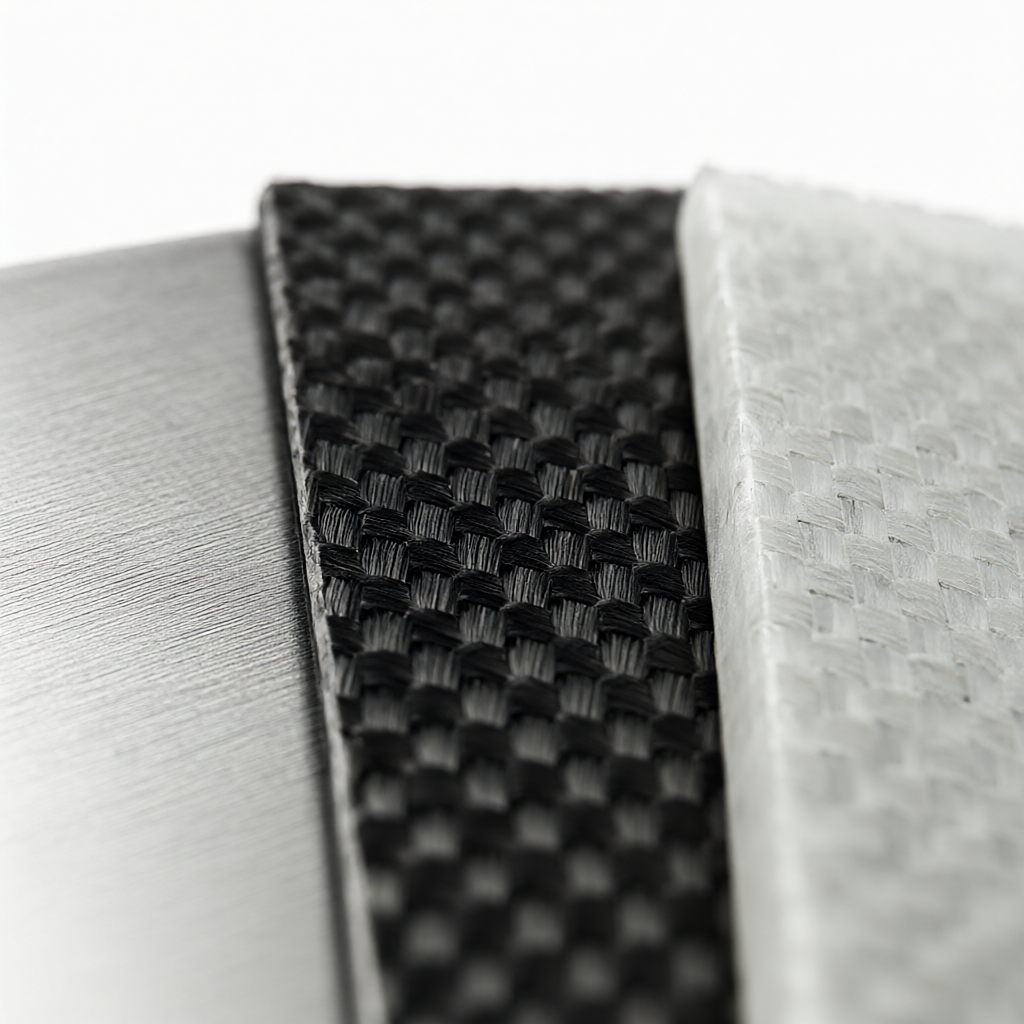
Carbon fiber composite. Woven carbon fiber laminates offer an ultra-lightweight alternative with exceptional stiffness-to-weight ratios. Typical panel thickness ranges from 1.0 mm to 2.5 mm. Carbon fiber construction eliminates metallic conductivity concerns but requires epoxy resin bonding that must meet RoHS restrictions for restricted substances. Buyers should request material safety data sheets (MSDS) confirming compliance.
Titanium (Grade 2 / Grade 5 Ti-6Al-4V). Grade 2 commercial-purity titanium provides excellent biocompatibility and natural corrosion resistance. Grade 5 titanium alloy, containing 6% aluminum and 4% vanadium, achieves tensile strengths up to 950 MPa and is the premium choice for high-end minimalist wallets. Titanium requires specialized CNC tooling due to its galling tendency, which influences minimum order quantity economics.
Stainless steel springs (for expandable designs). Card-retention mechanisms in spring-frame wallets typically use marine-grade 302 or 304 stainless steel wire with a hardened temper rating of approximately 50–55 HRC (Rockwell C). Substandard springs rated below 40 HRC will lose elastic memory within months of cyclic loading—a frequent failure point in budget-tier products.
How Are Front Pocket Wallets Tested for Durability and RFID Security?
Durability and electronic security claims must be validated against recognized testing frameworks, not simply asserted in marketing copy.
Environmental durability. Premium EDC wallets should withstand conditions simulated by MIL-STD-810H methodology, which covers drop resistance, thermal cycling (-40°C to +71°C), humidity exposure, and sand/dust ingress. While no formal military certification is required for consumer wallets, manufacturers adhering to MIL-STD-810H test protocols produce units capable of surviving daily abuse—including incidental drops onto hard surfaces and prolonged exposure to sweat and moisture.
RFID/NFC shielding effectiveness. Most contactless payment cards operate at 13.56 MHz under the ISO/IEC 14443 Type A and Type B proximity card standards. Effective RFID-blocking wallets incorporate conductive layers—typically copper mesh, nickel-plated steel, or Faraday-cage-style enclosures—that attenuate RF signals by 20 dB or greater at this frequency. Independent laboratory testing per ASTM F2923 (Standard Test Method for Measuring the Attenuation Performance of Radio Frequency Identity (RFID) Wallets) provides verifiable proof of shielding efficacy. Buyers should require test reports from accredited labs (SGS, Intertek, TÜV) rather than accepting supplier self-certification. See what is RFID blocking and how it protects cards for deeper technical context on shielding layer design and measurement methodology.
Drop and cycle testing benchmarks. A well-engineered spring-loaded wallet should endure 5,000+ open-close cycles without measurable loss of clamping force. Hinge mechanisms on articulated models should similarly survive 10,000+ actuations. Anodized finishes should pass cross-hatch adhesion testing per ASTM D3359 with a rating of 4B or higher.
Which Supplier Audit Checks Belong on a Front Pocket Wallet Buyer Checklist?
A structured procurement workflow reduces sourcing risk and ensures received goods match engineering specifications. Apply this three-phase checklist during supplier qualification.
Phase 1 — Supplier Qualification Audit. Verify these criteria before placing any order:
- ISO 9001 quality management certification (current, non-expired)
- BSCI social-compliance audit report (valid within past 12 months)
- In-house CNC machining capability (not fully outsourced)
- Demonstrated REACH/RoHS compliance with SGS test documentation
- Export history to your target region(s)—preferably America, Europe, Australia, or Southeast Asia
- Minimum order quantity alignment with your launch volume
- Sample lead time: standard samples within 7 business days
Phase 2 — Sample Evaluation Protocol. Upon receipt of prototypes, conduct these inspections:
- Dimensional verification against approved CAD drawings (tolerance: ±0.2 mm for critical features)
- Card-slot tension test: load 8–10 credit-card-equivalent cards; retention force must exceed 15 N without slippage
- Finish inspection: anodized color uniformity, absence of orange-peel texture, no visible machine marks on exterior surfaces
- Edge radii check: all exposed edges should measure 0.3–0.8 mm radius; sharp corners indicate rushed deburring
- Engraving depth verification: laser-engraved logos should cut 0.05–0.15 mm into substrate for legibility without structural weakening
- RFID performance verification (if claimed): confirm independent ASTM F2923 test report for the exact SKU
Phase 3 — Quality Acceptance Tolerances. Establish clear pass/fail thresholds before mass production:
| Parameter | Acceptable Tolerance | Reject Threshold |
|---|---|---|
| Width / Height | ±0.3 mm | >±0.5 mm |
| Loaded Thickness | ±0.5 mm | >±1.0 mm |
| Weight | ±3 g | >±5 g deviation |
| Slot Retention Force | ≥15 N | <10 N |
| Anodized Hardness | ≥300 HV | <250 HV |
| Salt-Spray Corrosion | ≥48 hrs no red rust | Red rust visible <48 hrs |
| Engrave Depth | 0.05–0.15 mm | Shallow (0.2 mm) |
Confirm that your supplier documents incoming material inspections, in-process checks, and final出货 inspection (OQC) reports—not just a single outbound certificate. Continuous process control is the hallmark of a mature manufacturer.
What Red Flags Should Disqualify a Front Pocket Wallet Supplier?
Several recurring defects signal inadequate quality systems. Recognizing these warning signs prevents costly batch rejections and brand-reputation damage.
Spring temper degradation. Budget-tier manufacturers sometimes source underspecified stainless steel wire (temper below 40 HRC) or skip the heat-treatment step entirely. The result: wallets that lose card-clamping force within weeks. Always specify 302/304 stainless with confirmed tempers and request a cycle-test report.
Unverified RFID-blocking claims. Some suppliers advertise “RFID protection” using generic metallic linings that provide incomplete coverage—leaving gap regions where skimming remains possible. Require an ASTM F2923 test report showing ≥20 dB attenuation at 13.56 MHz across the full card surface area, not just spot readings.
Electroplated vs. anodized confusion. Cheap electropolishing or thin chrome plating may look attractive initially but flakes within months of daily friction. Proper Type II or Type III anodizing (hardcoat) produces a bonded oxide layer that cannot peel. Ask suppliers to clarify their finish process and specify anodizing thickness targets of 15–25 µm for standard use, 25–50 µm for heavy-duty applications.
Inconsistent thickness across units. Spring-frame wallets that vary more than ±1.0 mm in loaded thickness indicate poorly calibrated forming dies or manual assembly variance. This defect causes packaging fit issues and retail-display problems.
Missing edge deburring. Unfinished cut edges on aluminum and steel wallets create sharp burrs that damage clothing linings and cause user discomfort. Confirm that all edges receive mechanical tumbling or vibration-finishing post-CNC.
Vague customization processes. Suppliers who cannot articulate their color-matching workflow, logo-application method selection criteria, or packaging integration timeline are likely relying on ad-hoc procedures. Demand a documented custom-branding protocol before committing to private-label orders.
For additional guidance on lost-wallet recovery strategies and security best practices for EDC professionals, refer to our EDC security guide.
Front Pocket Wallet: Where Can You Verify the Data and Sources?
- ISO/IEC 14443 — www.iso.org
- astm.org — www.astm.org
- best minimal wallets for B2B sourcing — topedcwallet.com
- RFID wallet definitions and technologies — topedcwallet.com
- how minimalist EDC wallets are manufactured — topedcwallet.com
- RFID-blocking technology applications — topedcwallet.com
- money clips for B2B programs — topedcwallet.com
- card holder selection criteria for B2B sourcing — topedcwallet.com
- REACH regulatory requirements — echa.europa.eu
- local sourcing guide for business card holders — topedcwallet.com
Front Pocket Wallet FAQ: Questions Buyers Ask Before Sourcing — Which Questions Do Buyers Ask Most?
Can a front pocket wallet hold a passport or a boarding pass?
No, not at standard dimensions. Passports measure roughly 125 by 88 mm, wider than the 70–105 mm width band a genuine front pocket wallet is built to, so a passport will not close inside one without turning the product into a different format. Buyers selling to travelers should specify a passport-holder architecture instead, which keeps a separate sleeve and usually runs 10–16 mm thicker; see custom travel wallets and passport holders for that specification path. Boarding passes on a phone are unaffected, which is why most front-pocket users travel paper-free.
How Much Does Front Pocket Wallet Unit Cost Change Between 100 and 500 Pieces?
Only the one-time share falls. At 500 pieces the tooling charge is spread across five times the volume, so its per-unit contribution drops to about one-fifth of the 100-piece quote. Material, finishing, and labor are largely volume-neutral, so a buyer should expect a modest total reduction rather than a proportional discount — ask for the tooling line item separately and compare it across MOQ tiers before negotiating.
Will a Metal Front Pocket Wallet Trigger Airport Security?
It screens normally but may cost you a second look. An aluminum or titanium wallet is X-ray opaque and often gets pulled for a tray check, which is a screening delay rather than a prohibition; no aviation rule bans metal wallets. RFID shielding does not block X-ray, so the card data is visible on the image exactly as with a leather wallet.
How Do You Stop an Aluminum Wallet Wearing Through Pocket Lining?
Control the edge radius, not the material. Edges finished to 0.3–0.8 mm with tumbled or vibratory deburring remove the sharp burr that abrades fabric; sharper corners are the actual cause of lining wear. On the sourcing side, add edge radius and post-CNC deburring to the acceptance criteria, and specify a Type II anodized layer of 15–25 µm so the finish does not flake at the contact edges.
From article to product
Building an RFID range?
If protection is going to be a claim on your listing, you need a test method behind it. We test every batch with a live 13.56 MHz reader and supply the report.
Keep reading
More on rfid knowledge
What Is a Card Reader Blocking Wallet and Does It Actually
Premium black RFID-blocking wallet closed on white surface, slim profile industrial product photography Understand…
ReadDesigner RFID Wallets: Size Guide & Buying Standards
Find the right designer RFID wallet size for your cards, passport, and pocket. Compare…
ReadRFID Card Blockers: Do They Actually Work? (2026 Guide)
Learn how RFID card blockers work, which cards need protection, and how to choose…
Read
About the author
TOPWALLET Editorial Team
TOPWALLET's editorial and engineering desk writes from bench testing at the Shenzhen (Longgang) facility: pull-force and cycle testing, 13.56 MHz shielding measurements, finish trials and factory audits, rather than supplier spec sheets. Every specification in these guides is one we write on a purchase order.
Written on the floor
This article was written by our production and QC team — the people who spec tolerances, run the finishing line and inspect every batch. Where it states a capacity, a pull force or a lead time, it comes from a measurement we made, not a supplier’s catalogue. If a number here disagrees with what your own supplier told you, tell us; several of these articles started as a correction from a buyer.
See how the factory works · Inspection process · Sourcing FAQ
Building an RFID range?
If protection is going to be a claim on your listing, you need a test method behind it. We test every batch with a live 13.56 MHz reader and supply the report.