

A front pocket organizer is a slim, low-profile wallet or card-holder system engineered to sit flat and comfortably in the front pants pocket, eliminating the bulge, discomfort, and security risks associated with traditional bi-fold wallets. For B2B buyers—brand owners, Amazon FBA sellers, and distributors—it represents a fast-growing Everyday Carry (EDC) segment defined by material innovation (anodized aluminum, carbon fiber, titanium, leather, nylon), built-in RFID-blocking shielding, modular capacity configurations, and deep private-label customization at accessible MOQs.
What Is a Front Pocket Organizer?
A front pocket organizer is a slim, structured wallet or card-holder system designed to sit comfortably in the front pants pocket. Unlike traditional bi-fold wallets that stack thickly against the hip or create an unsightly rear bulge, these organizers use a flat, low-profile design to carry cards, cash, and occasionally coins in a streamlined package. They are most commonly constructed from aluminum, carbon fiber, or titanium — materials chosen for their strength-to-weight ratio and durability in daily carry scenarios.
For B2B buyers, the front pocket organizer represents a distinct product category within the broader EDC (everyday carry) market. It sits at the intersection of functional utility and minimalist aesthetics, appealing to consumers who prioritize comfort during prolonged sitting, anti-theft convenience, and a clean silhouette under fitted clothing.
How Does a Front Pocket Organizer Work?
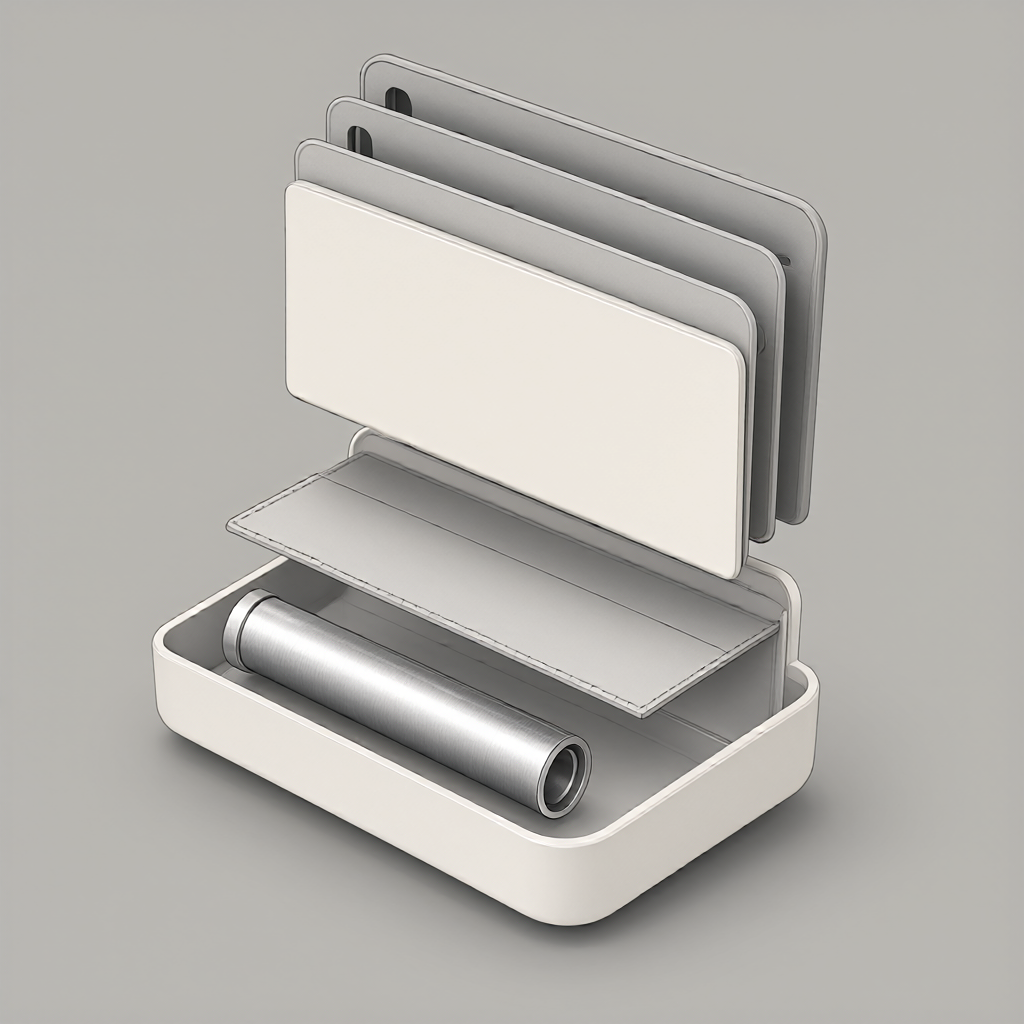
What Makes It Different From a Traditional Bi-Fold Wallet?
The fundamental difference lies in load distribution and access mechanics. A traditional bi-fold wallet forces paper currency to fold repeatedly, creating thickness that increases with each added card. This bulk makes front-pocket carriage uncomfortable and often leads buyers to prefer back pockets — which introduces posture issues and security risks.
A front pocket organizer eliminates folding through horizontal stacking. Cards slide into parallel slots, and bills rest flat beneath or between them via a money clip, elastic band, or accordion-style mechanism. The result is a consistent profile regardless of whether you carry four cards or eight. This uniform thinness is what makes front-pocket carriage viable for extended wear.
What Fits Inside a Front Pocket Organizer?
A practical way to evaluate capacity is through standardized testing. Using industry-typical items — ten standard US dollar bills, eight credit/debit cards, and a small quantity of coins — most minimalist front pocket organizers accommodate this load within a thickness range of 8 to 16 millimeters, depending on material and internal mechanism.
| Item | Typical Fit | Notes |
|---|---|---|
| Credit/debit cards (5–10) | Yes | Slots vary by model; some limit to 6–8 for optimal closure |
| Paper currency (folded flat) | Yes | Holds 5–15 bills depending on organizer depth |
| Coins (loose) | Limited | Some models include a dedicated coin pouch;多数 require a separate container |
| IDs / license cards | Yes | Often placed in a quick-access sleeve |
| USB drives / small tools | Select models | Certain designs feature integrated multi-tool slots |
The key trade-off is capacity versus thickness. An organizer holding ten cards plus folded bills will measure noticeably thicker than one holding six cards and a single bill fold. Buyers should evaluate their target customer’s typical carry load before specifying dimensions.
How Does RFID-Blocking Functionality Work?
RFID-blocking wallets incorporate a conductive metal layer — typically aluminum, stainless steel, or a specialized metallic mesh — integrated into the wallet’s construction. This layer creates a Faraday cage effect that blocks radio-frequency identification signals from reading embedded chips in contactless credit cards, passports, and employee badges.
The blocking works on frequencies common to modern NFC and RFID technology, primarily 13.56 MHz for high-frequency cards. When a skimming device attempts to communicate with a card inside an RFID-blocked organizer, the conductive barrier prevents the signal from reaching the chip.
It is important to note that not all front pocket organizers include RFID protection, and effectiveness depends on complete signal coverage. Partial shielding — where gaps exist around card slots or the money clip mechanism — can reduce blocking performance. Buyers seeking verified protection should request RFID-test reports from SGS or equivalent laboratories rather than relying solely on marketing claims.
What Are the Key Specifications for Front Pocket Organizers?
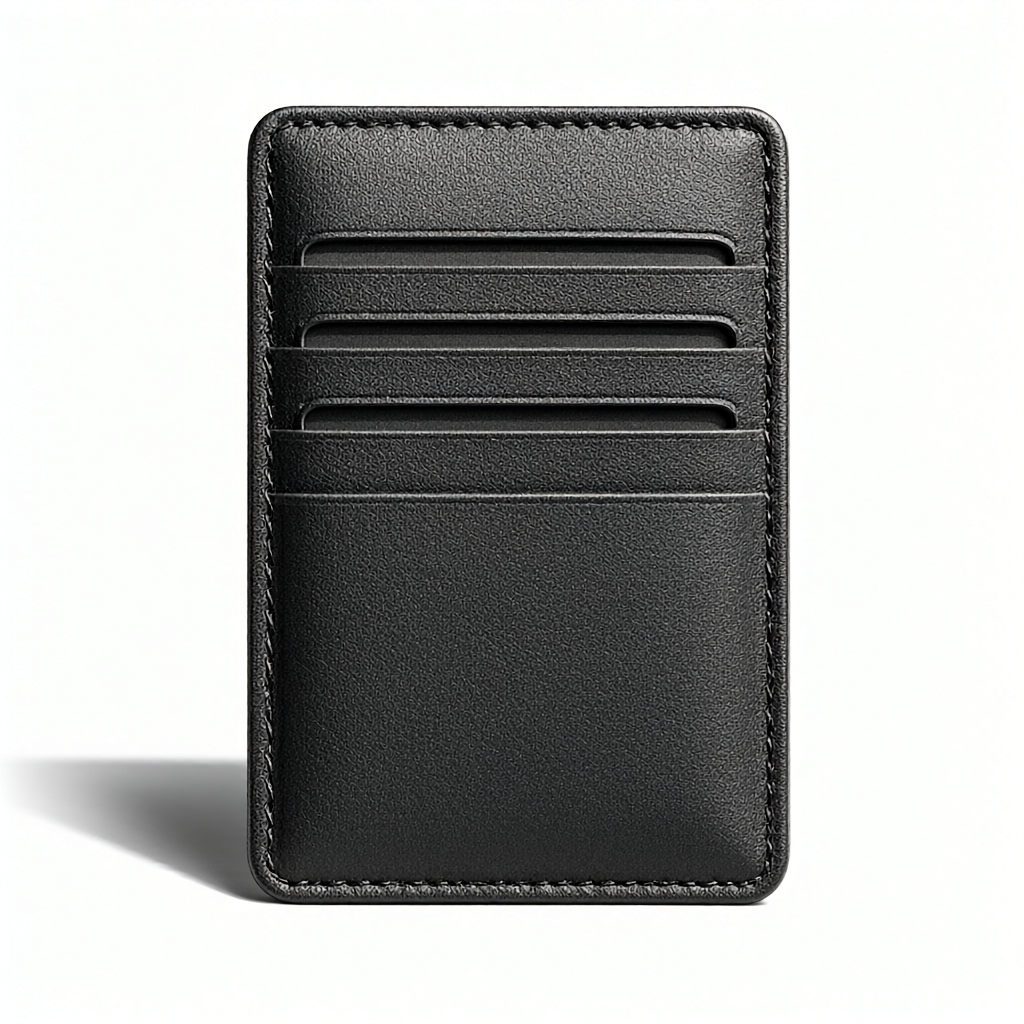
Common Materials and Their Trade-offs
Material selection is the primary determinant of a front pocket organizer’s weight, durability, price point, and perceived quality. The three dominant materials in the B2B sourcing landscape are:
Aluminum (6000-series, typically 6061 or 6063)
- Weight: approximately 35–55 grams for a standard card holder
- Finish options: anodizing (multiple colors), bead blasting, polishing
- Cost tier: mid-range
- Best for: brands targeting value-conscious consumers who want a metal feel without premium pricing
- Limitations: lighter gauge aluminum can dent under impact; color consistency across production batches requires process control
Carbon Fiber
- Weight: approximately 25–40 grams
- Construction: woven fibers set in epoxy resin, CNC-machined to final shape
- Cost tier: upper mid-range
- Best for: premium positioning; strong visual texture that appeals to outdoor and tactical markets
- Limitations: edge chipping during machining if parameters are incorrect; higher scrap rate than aluminum
Titanium (Grade 2 or Grade 5)
- Weight: approximately 40–60 grams (denser than aluminum but can be machined thinner)
- Finish options: natural mill finish, sandblasted, anodized (via electrochemical coloring)
- Cost tier: premium
- Best for: luxury EDC positioning; exceptional corrosion resistance and scratch endurance
- Limitations: significantly higher material cost and longer CNC cycle time; lower margin potential unless priced accordingly
Each material also influences the sitting comfort factor — a differentiator rarely addressed in consumer reviews. Aluminum and carbon fiber organizers at 8–12 mm thickness generally maintain comfort during extended desk work or driving. Titanium’s slightly greater density can make a perceptible difference in the same thickness band, though this varies by individual body type and clothing fit.
Dimensions and Form Factors
Standard front pocket organizer dimensions fall within these ranges:
- Height: 95–110 mm (matching international credit card height of 85.6 mm with margin for grip)
- Width: 60–75 mm (single-panel) or up to 90 mm (double-panel hinged designs)
- Thickness: 8–16 mm when loaded, 3–6 mm unloaded
- Weight: 25–65 grams depending on material and feature set
Double-panel or铰链-style designs add width but improve one-handed card retrieval. Single-panel bulkhead styles sacrifice some accessibility for minimal footprint.
Capacity Configuration Options
Buyers should consider how their target customers intend to use the organizer:
- Card-only: 4–12 horizontal slots, no cash compartment
- Cards + cash sleeve: Cards secured in slots, bills held by elastic retention band
- Cards + money clip: Metal clip retains folded bills above or below card stack
- Hybrid: Integrated coin pocket alongside card slots and cash management
Hybrid configurations increase complexity and cost but broaden market appeal, particularly for markets where cash remains prevalent.
What Standards Apply to Front Pocket Organizers?
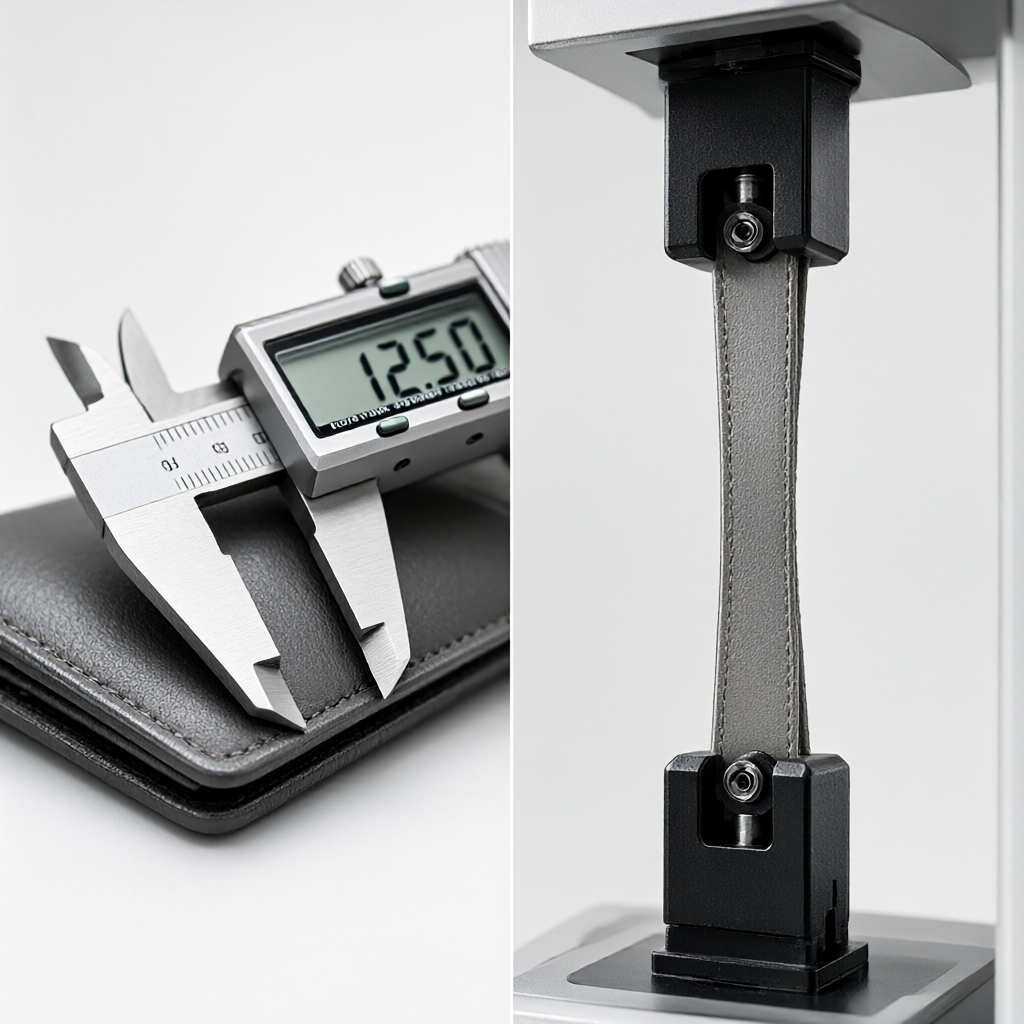
Quality Management and Facility Certification
For B2B procurement, facility certifications serve as the baseline indicator of manufacturing reliability. Two certifications are particularly relevant:
- ISO 9001: Confirms the manufacturer operates a documented quality management system covering incoming inspection, in-process control, and outgoing verification. This is the minimum expectation for any serious OEM partner.
- BSCI (Business Social Compliance Initiative): Audits the facility for labor practices, working conditions, and ethical standards. Required by many European retail buyers and corporate gifting programs.
Material Compliance for International Markets
Products containing metals and composites must meet material safety regulations in destination markets:
- REACH (EU): Restricts use of certain hazardous substances including lead, cadmium, and specific phthalates in consumer goods. Anodizing processes and adhesive bonds must be screened.
- RoHS (EU): Primarily targets electronics but relevant where metal components may introduce restricted substances through contamination during machining or finishing.
- SGS testing: Independent third-party verification of material composition provides documentation for customs clearance and retail buyer requirements.
RFID Performance Verification
While no universal certification governs RFID-blocking efficacy, reputable manufacturers provide test data from accredited labs. Buyers should request:
- Signal attenuation measurements in dB at 13.56 MHz
- Coverage maps showing shielded vs. uncovered zones
- Reproducibility notes indicating batch-to-batch consistency
Claims of “full RFID protection” should be treated with skepticism without this documentation.
What Should You Consider When Sourcing?
Customization and Private Label Depth
Front pocket organizers offer one of the highest customization degrees in the EDC wallet space because metal and composite substrates respond well to multiple surface treatment methods:
- Laser engraving: Applied to aluminum, titanium, and carbon fiber surfaces for logos, serial numbers, or decorative patterns. Depth and contrast vary by material — titanium accepts fine-line engraving with natural color differentiation after anodizing.
- UV printing: Suitable for aluminum and select coated surfaces; enables full-color graphics but limited to平面 areas.
- Anodizing color matching: Aluminum organizers can be anodized to match brand color palettes. Tolerance is typically ±10% in chromaticity, which buyers should account for when matching to existing product lines.
- Packaging: Retail-ready boxes, blister packs, and hang cards can be custom-designed. Eco-friendly kraft packaging is increasingly demanded by European and North American buyers.
For corporate promotional gifts, laser-engraved aluminum organizers in matte black or silver are among the most requested configurations due to their professional appearance and perceived value relative to unit cost.
Manufacturing Lead Times and MOQ
Typical production timelines for private-label front pocket organizers follow this pattern:
| Phase | Duration | Dependencies |
|---|---|---|
| Sample development | 5–7 business days | Design approval, material selection, logo artwork |
| Prototype revision | 3–5 business days | Feedback incorporation, usually 1–2 rounds included |
| Mass production | 15–25 business days | Order size, finishing complexity, packaging |
| Shipping (sea freight) | 25–35 days | Origin port, destination, customs clearance |
MOQ for custom branding typically starts at 300 pieces per SKU, making this category accessible to emerging DTC brands and Amazon FBA sellers who cannot commit to large initial runs. Stock items with no customization may have even lower minimums or be available as samples for evaluation.
For time-sensitive launches, expedited sampling at additional cost is often available, compressing the sample phase to 3–5 days.
OEM vs. ODM Paths
Buyers should decide early whether they need OEM (their own design, manufactured by the supplier) or ODM (the supplier’s existing design, rebranded with buyer’s logo). ODM routes dramatically reduce development time and tooling cost but limit differentiation. OEM routes offer full design freedom but require investment in jigs, fixtures, and potentially new CNC programming.
A hybrid approach is common: start with an ODM platform to validate market demand, then transition to OEM for differentiated SKUs once sales volume justifies the development expense. See our guide on best minimal wallets for B2B sourcing and private label programs for more on this decision framework.
Long-Term Material Performance
Consumer complaints about front pocket organizers tend to cluster around a few predictable failure modes. Understanding these helps both buyers and manufacturers set accurate expectations:
- Anodized finish wear: Aluminum anodizing provides excellent corrosion resistance but can show micro-scratches on high-friction edges after 12–18 months of daily use. Bead-blasted finishes hide wear better than polished ones.
- Carbon fiber delamination: Rare when properly manufactured, but edge exposure to moisture over extended periods can cause minor lifting in lower-quality constructions. Look for full-edge sealing during QC.
- Money clip spring fatigue: Stainless steel clips retain tension well, but cheaper alloys may lose clamping force after 6–12 months of repeated loading cycles.
- Elastic band degradation: Silicone retention bands outperform rubber over time; rubber bands typically require replacement within 12 months of heavy use.
These longevity factors influence warranty terms and replacement part strategies that B2B buyers should negotiate upfront. For detailed evaluation criteria on minimalist wallets, see this sourcing guide.
How We Approach Front Pocket Organizer Manufacturing?
When evaluating a supplier for front pocket organizers, the questions that matter most aren’t about features alone — they’re about whether the manufacturer can consistently deliver those features at scale while maintaining the tolerances your brand promises.
Our operation is built around that discipline. Since 2014, we have focused exclusively on minimalist EDC wallets and pocket gear, which means our CNC capabilities, finishing workflows, and quality checks are optimized for exactly this category rather than spread across unrelated product lines. Our ISO 9001-certified facility and BSCI-audited operations reflect the standards that European and North American buyers expect — not as marketing extras, but as baseline requirements we verify with every production run.
For buyers entering this space, the critical path looks like this: start with a reference design or your own CAD file, validate material and finish choices against your target market’s price sensitivity, produce samples within seven days to confirm fit and function, then scale to production with clear acceptance criteria documented before tooling begins. Whether you are launching a private label line for retail, building an Amazon FBA catalog, or sourcing corporate gifts for a annual program, the configuration options — from single-material aluminum stockers to titanium dual-panel organizers with custom anodized branding — map directly to your positioning.
If you are evaluating suppliers or want to discuss a specific configuration, contact our team to review your requirements.
Alternative Carry Formats to Consider
While front pocket organizers dominate minimalist wallet conversations, buyers should evaluate alternative formats depending on their target market:
| Format | Typical Use Case | Trade-offs |
|---|---|---|
| Front pocket organizer / card holder | Everyday desk work, driving, formal attire | Best comfort and profile; limited coin capacity |
| Money clip + card sleeve combo | Minimalist carry, light travelers | Ultra-thin; fewer card slots |
| Tactical pocket organizer | Outdoor enthusiasts, field use | Rugged; bulkier; adds weight |
| Back pocket minimalist wallet | Markets still accustomed to traditional carry | Higher comfort trade-off but familiar to consumers |
| Neck wallet / travel organizer | International travel, anti-theft focus | Not everyday-carry; niche appeal |
| Card case / passport wallet hybrid | Business travelers, event giveaways | Dual-purpose; slightly thicker profile |
B2B buyers serving diverse retail segments often stock a mix of these formats rather than betting exclusively on one category.
Material Comparisons Across Leather, Metal, Nylon, and Composite Options
Beyond aluminum, carbon fiber, and titanium, several other substrate choices appear in the front pocket organizer market:
Leather (full-grain or bonded)
- Weight: 40–70 grams depending on thickness
- Aesthetic: classic, professional, ages with patina
- Cost tier: mid-range
- Limitations: requires conditioning; less resistant to water exposure; longer break-in period; not ideal for tactical/outdoor positioning
- Best suited for: corporate gifting, professional-oriented brands, heritage-style products
Nylon / Ballistic Cloth
- Weight: 20–35 grams
- Aesthetic: utilitarian, military-inspired
- Cost tier: low to mid-range
- Limitations: lower perceived premium value; can fray at edges over time
- Best suited for: budget-conscious DTC brands, tactical-themed product lines
Hybrid Combinations
- Aluminum frame with leather backing plate for comfort against skin
- Carbon fiber face with silicone grip inserts
- These combinations let manufacturers balance cost, aesthetics, and ergonomics
Material selection should align with your end-user’s lifestyle context and price expectation. See our best card holder buying guide for B2B sourcing for deeper material evaluation criteria.
Anti-Theft and Security Features
Security-sensitive buyers and end-users increasingly expect features beyond basic RFID blocking:
- RFID-blocking Faraday cage: Blocks 13.56 MHz NFC signals; requires full metallic enclosure for effectiveness
- Locking mechanisms: Small hinge locks or sliding covers prevent accidental card ejection and deter casual pickpocketing
- Tether loops: Integrated carabiner-style attachment points allow securing the organizer to a belt loop or bag strap
- Tamper-evident packaging: Sealed retail boxes signal authenticity and protect against in-store swapping
- Serial numbering / laser etching: Enables inventory tracking, warranty validation, and deters resale fraud
When specifying security features, request lab-verified test reports for RFID attenuation (measured in dB at target frequencies) and mechanical cycle testing for any locking components. Avoid suppliers who make absolute claims like “100% waterproof” or “indestructible” without third-party documentation.
Procurement Decision Checklist: Weighted Scoring Framework
Use this weighted scoring model when evaluating potential front pocket organizer suppliers:
| Evaluation Criterion | Weight | Key Questions |
|---|---|---|
| Material quality & traceability | 20% | Can you provide alloy certs (e.g., 6061-T6 aluminum mill certs)? Are materials REACH/RoHS compliant? |
| Certification & compliance | 15% | Is the facility ISO 9001 certified? BSCI audited? SGS-tested samples available? |
| Customization depth | 15% | What engraving/printing methods are available? Can you match Pantone colors via anodizing? |
| Sample lead time & revision policy | 10% | How many business days for first articles? Are revisions included? |
| MOQ flexibility | 10% | What is the minimum order quantity per SKU? Are trial runs accommodated? |
| Production capacity & scalability | 10% | What is monthly output capacity? Can you handle rush orders? |
| Shipping & logistics support | 10% | Do you offer FBA prep, drop shipping, or EXW/FOB terms? |
| Pricing competitiveness | 10% | How does unit pricing compare at equivalent quantities and specs? |
| Communication & responsiveness | 5% | Response time to RFQs? Dedicated account management? Time-zone alignment? |
Suppliers scoring below 70% across these criteria warrant additional due diligence before committing to production orders.
Red Flags: Common Supplier Risks to Watch For
| Risk Signal | Why It Matters | How to Verify |
|---|---|---|
| No ISO 9001 or BSCI certification | Indicates weak quality management systems; higher defect risk | Request current audit certificates; verify issuer and expiration date |
| Vague RFID-blocking claims without test reports | “RFID-safe” marketing language may not meet actual blocking thresholds | Ask for SGS or equivalent lab report showing dB attenuation at 13.56 MHz |
| Inconsistent anodized color across batches | Poor process control leads to visible quality drift | Request batch samples; specify ±10% chromaticity tolerance in contract |
| Unspecified aluminum alloy grade | Unknown metallurgy affects durability and finish adhesion | Require 6061 or 6063 alloy specification with mill test reports |
| Extremely low pricing with no MOQ | May indicate substandard materials, skipped QC steps, or middleman operations | Cross-reference unit costs across 3+ suppliers; flag outliers below 30% of market average |
| Refusal to share factory photos or video walkthroughs | Hides potentially non-compliant or unqualified facilities | Request live virtual tour; verify address matches registered business location |
| No clear sample policy or hidden sample fees | Creates uncertainty in upfront costs | Confirm sample cost, refund policy upon order placement, and revision limits |
| No after-sales support or warranty terms | Signals short-term transactional thinking rather than partnership | Negotiate warranty period, replacement part availability, and defect rate thresholds |
Thorough vetting using these checkpoints significantly reduces supply chain risk for B2B buyers entering the minimalist wallet space.
Industry Standards Referenced
When specifying and qualifying front pocket organizers, these numbered standards provide the most relevant benchmarks:
- ISO 9001:2015 — Quality management systems; confirms documented procedures for incoming inspection, in-process control, and outgoing verification
- ASTM D4236 — Standard practice for labeling art materials for chronic health hazards; relevant where adhesives or coatings contact skin
- REACH Annex XVII — EU restriction on substances such as lead, cadmium, and certain phthalates in consumer goods
- RoHS Directive 2011/65/EU — Limits on hazardous substances in electrical and electronic equipment; applicable where metal machining introduces contamination
- MIL-STD-810G (Method 514.6) — Drop test procedure; while not mandatory for wallets, some manufacturers use it as a durability benchmark for rugged EDC gear
- SGS material composition reports — Third-party verified elemental analysis confirming absence of restricted heavy metals in alloys and finishes
Reputable suppliers should reference these standards in their RFQ responses and quality documentation. See this sourcing guide for money clips for complementary specification frameworks.
Our Approach to Front Pocket Organizer Manufacturing
As a manufacturer focused exclusively on minimalist EDC wallets and pocket gear since 2014, our approach centers on disciplined execution across every stage — from raw material certification through final packaging. We operate from a 50,000 sq ft in-house facility equipped with CNC machining centers, laser engravers, UV printing stations, and aluminum anodizing lines, giving us direct control over dimensions, surface finishes, and branding application without relying on subcontractors.
Our ISO 9001-certified quality management system and BSCI-audited facility meet the baseline requirements that European and North American buyers expect. Every shipment includes SGS-test documentation for material compliance, and we provide RFIDD-test reports for any organizer featuring shielding layers — ensuring your procurement team receives verifiable data, not just marketing claims.
For custom branding, our typical process moves from artwork approval through digital proofing to physical sample production in 7 business days. From there, mass production runs generally complete within 15–25 business days, with expedited sampling available for time-sensitive launches. Our standard MOQ begins at 300 pieces per SKU, making it feasible for emerging DTC brands, Amazon FBA sellers, and promotional product distributors to test markets before scaling.
Whether you’re starting with an ODM platform to validate demand or moving straight into full OEM development, our team supports you through design refinement, material selection, and packaging configuration — helping you bring custom metal wallets, carbon fiber card holders, and money clips from concept to shelf with consistent quality and transparent communication.
Alternative Materials: Leather and Nylon in Front Pocket Organizers
Beyond aluminum, carbon fiber, and titanium, two additional materials appear frequently in B2B front pocket organizer catalogs:
- Genuine or bonded leather: ~50–80 g depending on thickness; offers a classic aesthetic but gains weight and bulk over time when exposed to moisture. Cost tier: mid-range (comparable to aluminum). Best suited for heritage or lifestyle brands rather than tactical/outdoor positioning.
- Ballistic nylon / Cordura: ~20–35 g; extremely durable and water-resistant, often paired with a metal or elastic card retention system. Cost tier: budget-friendly. Best for promotional products and high-volume entry-level SKUs.
| Material | Typical Weight | Cost Tier (per unit at 1,000 pcs) | Best Market Fit | Key Limitation |
|---|---|---|---|---|
| Aluminum 6061 | 35–55 g | $3.50–$6.00 | Value-to-mid EDC brands | Prone to dents; color batch variation |
| Carbon Fiber | 25–40 g | $5.00–$9.00 | Premium outdoor / tactical | Higher scrap rate during CNC |
| Titanium Gr2/Gr5 | 40–60 g | $9.00–$18.00 | Luxury EDC / premium DTC | Longer cycle time; higher tooling cost |
| Full-grain leather | 50–80 g | $2.50–$5.50 | Heritage / lifestyle brands | Bulks with age; less pocket-friendly |
| Ballistic nylon | 20–35 g | $1.20–$2.80 | Promotional / budget FBA | Lower perceived value; limited luxury appeal |
Pricing is indicative for 1,000-unit orders with basic laser engraving and standard retail packaging; complex finishing or custom packaging shifts costs accordingly.
Procurement Decision Framework: Matching Material and Configuration to Buyer Profile
When selecting a front pocket organizer supplier and product spec, B2B buyers should run their target SKU through this quick decision matrix:
By Business Model:
- Amazon FBA sellers → Prioritize aluminum or nylon at MOQ 100–500 pcs, with FBA-compliant retail packaging prep included. Target unit cost $2.50–$5.00; emphasize RFID-blocking as a listing keyword.
- EDC/DTC brand owners → Carbon fiber or anodized aluminum with OEM design freedom. Expect MOQ 200–500 pcs; target unit cost $4.00–$9.00. Budget 7-day sample + 20-day production timeline.
- Corporate/gift buyers → Laser-engraved aluminum in matte black/silver, 100–300 pcs, simple kraft box. Unit cost $2.00–$4.00; fastest path to shelf.
- Retail chain buyers (EU) → Require BSCI-audited facility, REACH/RoHS documentation, and SGS test reports. MOQ typically 1,000+ pcs per SKU.
By Volume Tier:
| Order Volume | Expected Unit Cost Range (Aluminum) | Sample Lead Time | Tooling/Jig Cost |
|---|---|---|---|
| 100–300 pcs | $5.50–$8.00 | 5–7 days | Minimal (existing jigs) |
| 500–1,000 pcs | $3.50–$5.50 | 5–7 days | Moderate |
| 2,000–5,000 pcs | $2.80–$4.50 | 5–7 days | Amortized over order |
| 10,000+ pcs | $2.20–$3.80 | 3–5 days (expedited) | Fully amortized |
Certification Checklist for Import Compliance:
- [ ] ISO 9001:2015 QMS certification (verify certificate number and scope)
- [ ] BSCI audit report (valid within last 12 months)
- [ ] REACH compliance statement (Annex XVII substances screened)
- [ ] RoHS declaration (heavy-metal limits verified)
- [ ] SGS or equivalent lab RFID-test report (13.56 MHz attenuation ≥30 dB)
- [ ] Material composition certificate (alloy grade verification for aluminum/titanium)
Concrete B2B Sourcing Example: Australian Outdoor Brand Launch
An Australian EDC retailer planning an Amazon AU and direct-to-consumer launch needed a carbon-fiber front pocket organizer with integrated money clip and RFID blocking. The buyer’s requirements were:
- MOQ: 300 pcs (first run) for market validation
- Logo: UV-printed on one face, laser-engraved on reverse
- Packaging: Recyclable kraft hang-card with product photography insert
- Certification: Full REACH and SGS RFID documentation for Australian Border Force compliance
The supplier produced a 7-day prototype using existing carbon-fiber CNC patterns (no new tooling fee), refined the money-clip tension after one revision round, and delivered the 300-piece order in 18 production days with FBA-ready labeling. Total landed cost per unit (including packaging and sea freight to Sydney) came to approximately $7.20, enabling a retail price point of A$49.99 with healthy margin. This outcome—achievable at low MOQ with verified compliance docs—is representative of what established contract manufacturers deliver to emerging brands globally.
Front Pocket Organizer: Where Can You Verify the Data and Sources?
- best minimal wallets for B2B sourcing and private label programs — topedcwallet.com
- this sourcing guide — topedcwallet.com
- contact our team — topedcwallet.com
- best card holder buying guide for B2B sourcing — topedcwallet.com
- this sourcing guide for money clips — topedcwallet.com
From article to product
Turning this into a product?
Most of what is written here is the difference between a sample that works and one that does not. We can build either — the useful one costs the same.
Keep reading
More on buying guides
wallet with trigger
How Does a Trigger Wallet Work? What Is the Pop-Up Mechanism? The core of…
Readbest bifold wallet for women
What Is a Bifold Wallet? The term “bifold” refers to the fold: the wallet…
ReadMen’s trifold wallets with zipper compartments vs. bifold
At a Glance The three dominant men’s wallet formats differ in panel count, depth,…
Read
About the author
TOPWALLET Editorial Team
TOPWALLET's editorial and engineering desk writes from bench testing at the Shenzhen (Longgang) facility: pull-force and cycle testing, 13.56 MHz shielding measurements, finish trials and factory audits, rather than supplier spec sheets. Every specification in these guides is one we write on a purchase order.
Written on the floor
This article was written by our production and QC team — the people who spec tolerances, run the finishing line and inspect every batch. Where it states a capacity, a pull force or a lead time, it comes from a measurement we made, not a supplier’s catalogue. If a number here disagrees with what your own supplier told you, tell us; several of these articles started as a correction from a buyer.
See how the factory works · Inspection process · Sourcing FAQ
Turning this into a product?
Most of what is written here is the difference between a sample that works and one that does not. We can build either — the useful one costs the same.