

A front pocket wallet is a slim, minimalist wallet designed to be carried securely in the front trouser pocket rather than the back, reducing spinal misalignment and pickpocket risk while fitting comfortably inside jeans or chinos without creating a visible bulge. These wallets are produced by specialized EDC manufacturers using materials like anodized aluminum (6061-T6), carbon fiber composite, and titanium grade 5, with typical loaded thickness ranging from 8–16 mm, card capacity from 4–16 slots, and RFID-blocking performance tested per ASTM E2356. For B2B buyers seeking private-label production, reliable suppliers offer MOQs from 300 pcs per SKU, 7-day sample lead times, ISO 9001:2015 quality systems, and full OEM/ODM customization including laser engraving and retail packaging — with unit costs generally falling between $3.50 and A reliable front pocket wallet manufacturer partners with B2B buyers who prioritize verifiable quality systems (ISO 9001), documented export history, in-house CNC and laser-engraving capability, transparent material test reports, realistic sampling timelines, and clearly stated MOQs—not retail-directory listings. Most serious volume orders originate from specialized factories in Guangdong and Zhejiang provinces that support private-label programs, Amazon FBA prep, and low-minimum pilot runs starts at 300 pcs per SKU for full OEM customization (100 pcs trial order available for stock finishes).2.00 depending on material and complexity.
Pocket Wallet: What Is the Quick Answer?
A reliable front pocket wallet supplier is found by targeting manufacturers with in-house CNC machining, documented export history, and proper quality certifications like ISO 9001—not by searching local retail directories. Most verified producers are based in manufacturing hubs such as Guangdong and Zhejiang in China, operating factories that serve Amazon FBA sellers, EDC brands, and promotional distributors worldwide. Buyers typically confirm credibility through sample requests, factory audits, and review of material test reports before placing bulk orders.
Pocket Wallet: How Does It Work in Detail?
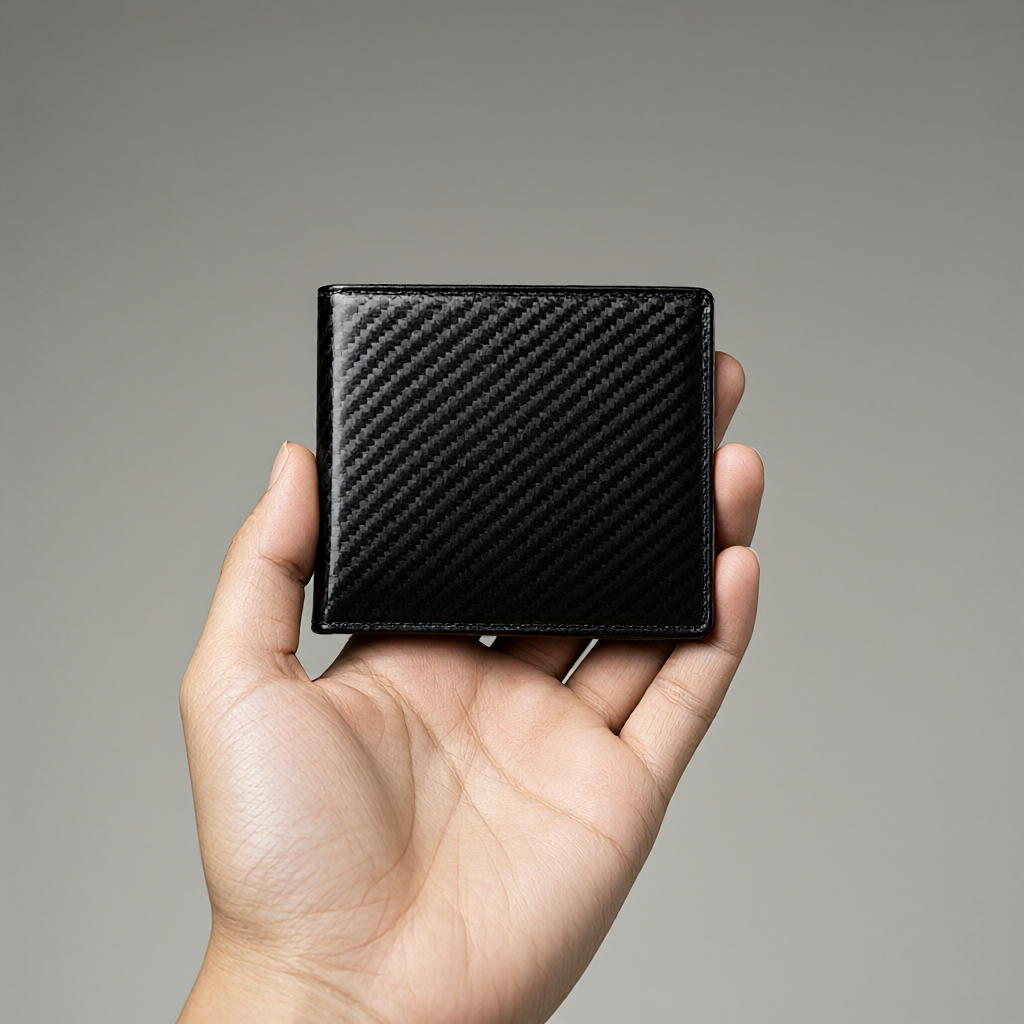
Why front pocket wallets have become a preferred carry choice?
Front pocket wallets address a well-documented comfort and health issue: carrying a thick wallet in the back pocket shifts spinal alignment and places pressure on the sciatic nerve during sitting. A slim front-carry design distributes weight evenly and eliminates that localized strain. Beyond ergonomics, front pocket wallets offer superior security—pickpockets target back pockets far more often—and they occupy less luggage or bag space when traveling.
The category’s popularity has been driven by advances in lightweight materials. Carbon fiber provides high stiffness at minimal weight. Anodized aluminum offers corrosion resistance and a clean industrial aesthetic. Titanium delivers strength with a natural hypoallergenic surface. These materials allow wallets to hold 6–12 cards plus cash in a profile thin enough to wear comfortably inside jeans or chinos without creating a visible bulge.
How B2B buyers evaluate a manufacturer?
Evaluation begins with confirming the manufacturer controls critical processes in-house. Wallets that involve metal forming, CNC machining, laser engraving, and surface finishing require coordinated tooling and quality checkpoints. Factories that outsource every step introduce communication delays and inconsistent tolerances. In-house capability also means the buyer can request design modifications without waiting for third-party coordination.
Export experience signals familiarity with international quality expectations and logistics. Manufacturers who regularly ship to North America, Europe, and Australia understand packaging standards, labeling requirements, and customs documentation. Buyers should ask directly about destination markets served and verify recent shipment records before committing to a large order.
Third-party audits provide independent verification of working conditions and management systems. Facilities audited under BSCI (Business Social Compliance Initiative) demonstrate adherence to labor, safety, and environmental standards. While not a substitute for a personal factory visit, an audit report gives buyers confidence that the operation meets responsible sourcing benchmarks expected by Western retailers and online marketplaces.
What to look for in private-label capabilities?
Private-label production involves more than printing a logo on a blank product. Buyers should confirm that the manufacturer handles full customization—including design refinement, prototyping, tooling modification, color matching, and retail-ready packaging. A capable partner guides the buyer through material selection, hinge or spring mechanism choices, and RFID-blocking implementation rather than simply executing a pre-defined drawing.
Laser engraving, UV printing, and debossing are common branding methods for metal and carbon fiber wallets. Each technique has different durability and aesthetic trade-offs. Engraved logos remain legible after years of pocket friction; printed graphics offer full-color reproduction but may fade with prolonged UV exposure. Buyers should request samples showing each method applied to their chosen substrate before specifying branding on a bulk order.
Sampling and production timeline expectations
Sampling is the most informative phase of any sourcing relationship. A quality manufacturer produces functional samples within 5–10 business days using existing tooling, then adjusts tooling or surface treatments for approval-grade samples if design changes are requested. Buyers should evaluate sample card retention, hinge smoothness, edge finish, and weight consistency before authorizing mass production.
Bulk production lead time depends primarily on order volume and whether custom tooling is required. Standard designs from existing inventory move fastest. Custom engraving patterns, unique colors, or new hinge mechanisms add days to the schedule. Reputable manufacturers communicate realistic timelines upfront and provide weekly progress updates during production, allowing buyers to plan inventory replenishment accurately.
Pocket Wallet: Which Specifications Matter Most?
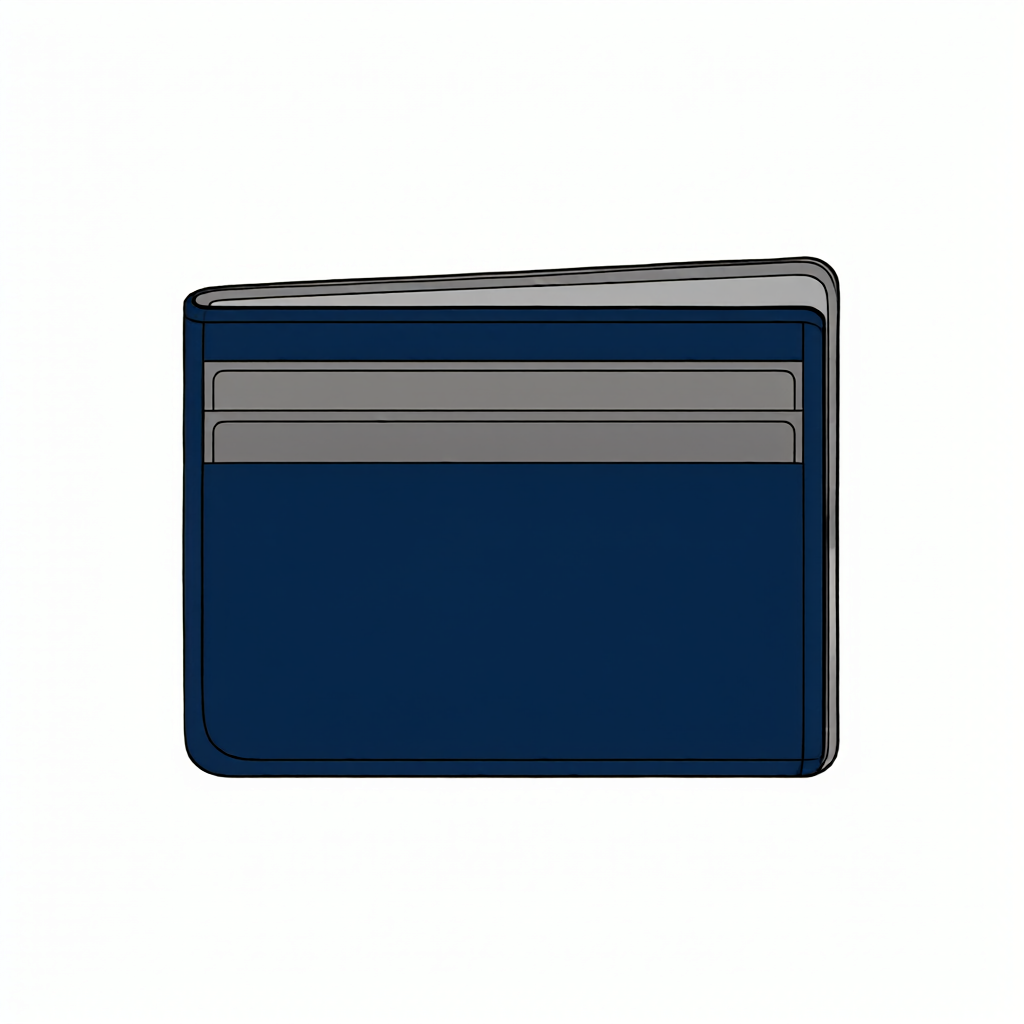
What are the key specs for a quality front pocket wallet?
Material selection drives nearly every performance metric. Aluminum wallets typically use 6061-T6 or 7075 alloys, balancing machinability with structural rigidity. Carbon fiber cardholders rely on a woven epoxy laminate—higher thread counts produce a denser, more impact-resistant surface. Titanium variants commonly use grade 1 or grade 5 (Ti-6Al-4V), depending on whether formability or maximum strength is the priority.
Card capacity ranges from 4 to 16 slots depending on the user’s habits and the wallet architecture. Spring-loaded ejector mechanisms, passive friction retention, and magnetic closures each solve card access differently. Ejector systems offer one-handed retrieval but add mechanical complexity and a slight thickness increase. Friction-retention designs are simpler and thinner but require more deliberate card removal.
Thickness is measured at the narrowest point of the wallet body. Quality front pocket wallets typically range from 8 mm to 16 mm when fully loaded, compared to 25–40 mm for traditional bi-fold leather wallets. The slim profile is what enables comfortable front-pocket carry without distorting clothing fit.
Weight varies by material density. A compact aluminum wallet usually weighs between 50 g and 85 g. Carbon fiber versions fall in the 40 g to 70 g range. Titanium wallets tend toward 60 g to 90 g depending on thickness and feature set. For end consumers comparing options, lower weight generally correlates with higher perceived quality in this category, though structural adequacy must always take precedence over ultralight claims.
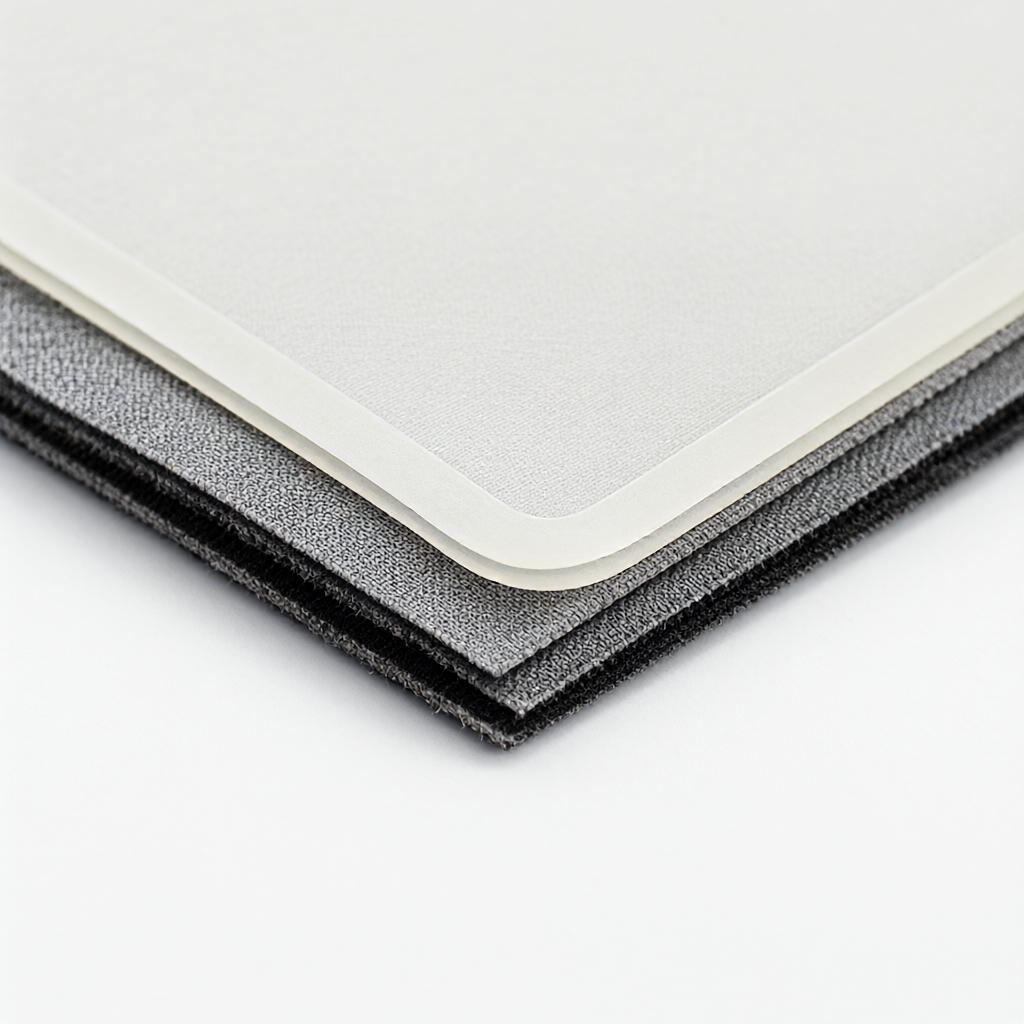
RFID-blocking performance requires a conductive layer—typically a stainless steel mesh or a specialized polymer film—integrated into the wallet body. Independent laboratory testing per ASTM E2356 guidelines measures shielding effectiveness in decibels across the 13.56 MHz frequency used by contactless payment cards. Buyers should request test reports rather than accepting manufacturer claims alone, especially when marketing RFID protection as a selling point to consumers.
| Spec | Typical Range | What Determines Variation |
|---|---|---|
| Thickness (loaded) | 8–16 mm | Material choice, card capacity, retention mechanism |
| Weight | 40–90 g | Alloy type, wall thickness, carbon fiber layup |
| Card capacity | 4–16 slots | Internal layout, spine design, user preference |
| RFID blocking | 0–80 dB attenuation | Conductive layer material and coverage area |
| Surface finish | Matte, brushed, polished | Anodizing process, bead blasting, PVD coating |
Pocket Wallet: Which Standards and Certifications Apply?
What standards apply to EDC wallet manufacturing?
Quality management systems establish the baseline for consistent production. ISO 9001 certification requires documented procedures for incoming material inspection, in-process quality checks, and finished-goods release criteria. Buyers should verify current certification status and confirm that the scope includes the specific product categories being ordered. Certificates can be validated directly through the International Organization for Standardization registry.
Material compliance follows regional regulations. European customers often require REACH and RoHS documentation confirming that restricted substances are absent from coatings, adhesives, and plating solutions. American buyers may request Prop 65 compliance statements for products sold in California. Suppliers should provide material test reports covering heavy metals, phthalates, and nickel migration—particularly important for wallets worn against skin on a daily basis.
Safety standards for metal edges and corners receive less public attention but matter significantly for consumer satisfaction and liability. Sharp burrs left during machining cause discomfort during repeated pocket insertion and removal, and they accelerate wear on clothing fabric. Quality manufacturers de-burr and polish all exposed edges to a touch-safe radius, typically verifying by running a gloved finger along the perimeter during final inspection.
Packaging and labeling standards depend on the sales channel. Amazon FBA requirements include barcoding, polybagging, and suffocation warning labels on plastic outer packaging. Retail chain buyers may specify shelf-ready cartons with printed UPC codes and country-of-origin markings. Promotional distributors often prefer simplified mailer boxes that reduce shipping cost while protecting the product. Clear specification sheets provided upfront prevent costly rework during fulfillment preparation.
Pocket Wallet: What Else Should Buyers Consider?
What should you consider when choosing a wallet OEM supplier?
Cost structure deserves careful scrutiny beyond unit price. Low per-piece quotes sometimes reflect outsourced operations, thinner materials, or reduced finishing steps that become apparent only after delivery. Buyers should compare quotes that specify identical materials, coatings, and inclusion levels—sampling, packaging, and tooling costs are legitimate line items but should be transparently listed rather than hidden inside an artificially low unit price.
Communication responsiveness during the inquiry stage predicts experience during production. Suppliers who return detailed quotations with clear specifications, realistic timelines, and relevant past work demonstrate the organizational discipline needed to manage complex custom orders. Slow or vague replies during sampling typically escalate into missed deadlines and unresolved quality issues once production begins.
Long-term reliability matters more than the lowest initial price. A supplier who consistently delivers on schedule and maintains quality across repeat orders reduces operational risk for ongoing inventory replenishment. Buyers should review references and request contact information for existing accounts in similar markets before finalizing a contract, particularly for first-time partnerships.
Return policies and defect resolution procedures should be agreed upon in writing before the purchase order is issued. Industry norms allow a defined rejection rate—for example, 1% to 3% of units—with replacements or credits for conforming goods outside tolerance. Understanding how disputes are handled prevents surprises when minor quality deviations surface during receiving inspection.
Where do experienced manufacturers typically operate?
Manufacturing concentration follows supply chain efficiency. Regions with established precision machining clusters, metal finishing infrastructure, and experienced labor pools tend to produce the highest volume of quality wallets. Guangdong Province in southern China remains a dominant hub due to its dense ecosystem of component suppliers, mold makers, and export logistics providers. Zhejiang Province is another significant center, particularly for carbon fiber composite products.
European and North American manufacturers exist but command substantially higher prices due to labor and overhead costs. They may suit buyers requiring very short run lengths, rapid prototyping cycles, or strict proximity for quality audits. For most B2B orders ranging from hundreds to tens of thousands of units, Asian-based factories deliver competitive pricing without sacrificing quality when properly vetted.
Sourcing from nearby warehouses or distributors can shorten fulfillment time for small reorder quantities, but these intermediaries typically source from the same original factories. Buyers benefit most from establishing direct relationships with manufacturers on subsequent orders to eliminate margin markups and improve communication speed.
Practical next steps for verification
Requesting samples from three to five shortlisted manufacturers provides the most reliable comparison. Evaluating sample quality side by side reveals differences in fit, finish, and function that brochures and websites cannot convey. Buyers should order samples in the exact material and configuration intended for production rather than accepting generic stock samples.
Factory audit reports, whether conducted by third-party inspection firms or performed personally, reveal details about production capacity, quality control practices, and working conditions that documents alone cannot show. Virtual tours and live video calls during business hours provide reasonable preliminary assessments when travel is impractical.
Reviewing existing client references and examining verified market feedback confirms whether the manufacturer’s claimed capabilities translate into consistent delivery. Buyers serving Amazon FBA should specifically inquire about previous FBA prep experience and familiarity with marketplace compliance requirements.
Finding Your Supplier
Searching for a front pocket wallet manufacturer near me or a front pocket wallet supplier near me often leads buyers toward local distributors, but most serious B2B sourcing happens through direct factory partnerships that offer better pricing, deeper customization, and stronger quality oversight. When evaluating options, practical considerations like sample turnaround, production flexibility, and certification transparency matter more than geographic proximity.
Here is how we approach the process at TOP EDC Wallet: as a manufacturer with 13+ years of export experience and a BSCI-audited facility, we build our workflow around early-stage collaboration—reviewing your concept sketches or reference photos, recommending materials suited to your target market, producing a functional sample within seven days, and refining the design through iterative feedback before committing to full production. Our in-house CNC machining and laser engraving capabilities let us handle aluminum wallets, carbon fiber cardholders, and titanium money clips with tight tolerances, starting from an MOQ of just 300 pieces. You can explore our full range and discuss your project specifics through our sourcing wallets from nearby manufacturers guide or reach out directly to talk through your requirements.
Order Practicalities
MOQs, sampling, and lead-time standards for custom front pocket wallets
Minimum order quantities are one of the most negotiated variables in B2B EDC-wallet sourcing because they directly shape unit economics, material procurement, and machine-setup efficiency. In this category, MOQs commonly range from 300 pcs per SKU for basic aluminum or carbon-fiber designs up to 1,000+ pcs when complex hinge mechanisms, multi-color anodizing, or custom packaging is involved. Manufacturers with established platform tooling and modular production lines can comfortably service small pilot runs; buyers requesting ultra-low quantities from unfamiliar factories often encounter resistance, long quotation delays, or mandatory surcharges.
Sampling should be treated as a standalone quality gate, not an administrative checkbox. Typical industry expectations break down as follows:
- Quick-turn evaluation sample: 3–5 business days, usually produced from existing inventory or near-final drawings. These samples confirm overall form factor, basic ergonomics, and finishing appearance but may not carry final engraving or color. Cost ranges from $50 to $150 depending on complexity.
- Pre-production / approval sample: 7–10 business days after drawing lock, using actual tooling or trial runs. This sample validates dimensions, hinge function, surface treatment batch consistency, and branding placement. Revisions between 2 and 3 rounds are standard; each additional round typically adds 3–5 days.
- Production-sample confirmation: Once approved, a signed sample becomes the quality benchmark against which bulk units are measured during incoming inspection and random AQL checks.
Bulk production lead time generally spans 15–30 calendar days for standard designs at volumes under 5,000 pcs. Custom engraving patterns, unique powder-coat colors, or newly machined stamping dies extend timelines by 5–10 working days. Buyers serving seasonal catalog cycles or holiday-market windows should build at least an extra 10-day buffer for shipment routing and customs clearance.
Experienced manufacturers publish internal KPIs rather than keeping them implicit. For example, competitive producers track on-time delivery rate above 95%, maintain first-pass yield targets above 97%, and share summary quality statistics rather than requiring independent audits for every order cycle. Clear lead-time commitments and visible throughput numbers reduce buyer planning risk far more than glossy promises do.
Price Ranges, Local Sourcing, and Buyer Evaluation
Understanding price ranges and value drivers in bulk front pocket wallets
Unit pricing across minimalist metal and composite wallets fluctuates widely based on material alloy, machining complexity, branding method, and order volume. Buyers benefit from understanding which cost layers are legitimate and which often signal compromised inputs or hidden downstream charges.
| Product Type | Starting Unit Price (bulk) | Typical Price Drivers |
|---|---|---|
| Basic aluminum wallet (existing design, minimal branding) | $2.80 – $4.50 | Alloy grade, anodize color, quantity tier |
| Carbon fiber cardholder (standard weave, no engraving) | $3.20 – $5.50 | Carbon ply count, epoxy system, thickness tolerance |
| Titanium money clip (grade 5, simple contour) | $5.50 – $9.00 | Ti grade, hand-finishing level, clamping mechanism |
| RFID-blocking metal wallet | $4.00 – $7.50 | Shielding mesh type, layer lamination, testing documentation |
| Custom engraved / UV-printed private label | +$0.30 – $1.20 per unit | Artwork setup fee, number of colors, engraving depth |
Additional line items that reputable suppliers itemize separately include sample fees, mold or jig creation ($200–$1,500 for complex jigs), retail-box design and prototyping, and Amazon FBA compliance labeling. Transparent quotations list each element so buyers can compare scope-equivalent quotes without confusing lower base prices with artificially stripped deliverables.
Price should never be evaluated in isolation. A quote that appears 30% cheaper often omits deburring passes, skips edge-radius verification, uses recycled aluminum scrap without disclosure, or excludes outer carton reinforcement—failures that surface later as customer returns and marketplace account penalties. Value assessment compares total landed cost, defect-rate projections, certification coverage, and post-delivery responsiveness rather than headline unit price alone.
Where to buy near me: local distributors vs. direct factory sourcing?
A search for where to buy front pocket wallet bulk near me frequently surfaces wholesale distributors, trade-show exhibitors, or regional sourcing agents. Intermediaries provide conveniences such as shorter communication loops, domestic warehousing, smaller minimums, and localized dispute resolution. However, they insert a margin layer and often cannot modify manufacturing processes, materials, or compliance documentation beyond pre-selected catalogs.
Direct factory partnerships remain the preferred route for private-label programs, high-volume orders, and products requiring distinct engineering modifications. Even buyers who initially engage through a trading company usually transition to direct communication once volume scales, because factory-level dialogue improves specification accuracy, reduces revision cycles, and unlocks better pricing.
Several reputable sourcing resources exist for buyers conducting their own due diligence:
- For structured wholesale inquiries and vetted supplier directories, see guides on Sourcing Wallets Near Me for B2B Buyers.
- If budget-conscious promotional or discount programs are part of the strategy, consult the resource on Billfolds on Sale — B2B Bulk Sourcing & Competitive Pricing.
- For broader procurement frameworks covering related accessories, the Wallet Chain Sourcing Guide for B2B Buyers outlines comparable evaluation approaches.
Logistics and fulfillment flexibility also differentiate reliable manufacturers from brokers. Facilities offering drop-shipping, Amazon FBA prep (polybagging, suffocation warnings, FNSKU application, shipment labels), and consolidated sea-freight consolidation enable buyers to operate leaner warehouses. Understanding these capabilities before signing a purchase agreement prevents fulfillment bottlenecks downstream.
Supplier decision tree: make-vs-buy and sourcing-route choices
Buyers should run their sourcing strategy through a concise decision flow before committing to a contract:
Step 1 — Define volume tier. Under 500 pcs favors quick-turn platforms and broker-sourced catalogs. Between 500 and 5,000 pcs supports small-run factory agreements. Above 5,000 pcs warrants direct RFQ submission to 3–5 manufacturers.
Step 2 — Evaluate customization depth. Cosmetic changes only (logo placement, single color) are handled easily by distributors. Structural or material changes (new hinge geometry, alternative alloy, proprietary enclosure) require OEM collaboration and should bypass pure brokers.
Step 3 — Assess regulatory exposure. Products targeting EU markets must satisfy REACH/RoHS documentation. Items marketed with RFID-blocking claims need test reports aligned with recognized laboratory standards. Buyers with compliance obligations should prioritize ISO 9001-certified facilities over general trading companies.
Step 4 — Compare total landed cost. Unit price plus sample fees, tooling amortization, inner/outer packaging, freight, duties, and expected return rate produces a more accurate projection than quoted FOB prices alone.
Step 5 — Validate with physical samples. Three-side-by-side samples evaluated against identical criteria reveal finishing depth, edge feel, spring tension consistency, and weight uniformity faster than any quotation review.
Weighted supplier evaluation checklist
When comparing multiple prospective manufacturers, assign scores using a consistent weighting scale so decisions remain defensible and auditable. A commonly used framework allocates weights as follows:
| Criterion | Weight | What to Verify |
|---|---|---|
| Quality management & certification validity | 20% | Current ISO 9001 certificate scope, BSCI report recency, material test coverage |
| Production capability & tooling ownership | 18% | In-house CNC, laser engraving, anodizing lines; absence of outsourced critical steps |
| Sample responsiveness & iteration clarity | 15% | Turnaround published in writing; revision policy; willingness to refine before mass run |
| Transparency of pricing & line-item detail | 14% | Separate entries for samples, tooling, packaging, freight; no vague disclaimers |
| Export experience & reference availability | 13% | Shipments to target regions within past 24 months; verified client contacts offered |
| Communication speed & English proficiency | 10% | Response within 24 hours during business days; clear technical Q&A |
| Logistics readiness (FBA prep, drop shipping) | 10% | Documented procedures for barcode application, polybagging, carton marking |
Scoring each criterion on a 1–5 scale and multiplying by its weight produces a comparable总分. Buyers should record scores in a spreadsheet alongside supporting documents so internal stakeholders can review the rationale.
Red flags of unreliable wallet manufacturers
Certain behaviors consistently predict sourcing failures. Recognizing these warning signs early saves time, preserves relationships, and protects brands from reputational damage caused by substandard bulk deliveries.
Red flags to watch for include:
- Refusing or delaying sample requests. Legitimate manufacturers understand sampling as essential due diligence. Vague excuses, hidden sample fees that disappear after inquiry, or refusal to ship representative samples suggest limited production capacity or an intermediary model.
- Vague or expired audit reports. Request a recent BSCI, ISO, or third-party inspection document with identifiable dates and signatures. Blanket certificates lacking facility names, addresses, or valid expiry periods should raise immediate concern.
- No traceable export records. Reliable exporters maintain shipping logs, bills of lading summaries, and customs documentation spanning at least 12–24 months. Suppliers unable to demonstrate outbound shipments to Western markets lack verifiable fulfillment history.
- Unrealistically low unit prices without scope clarification. Quotes that omit tooling, packaging, or inspection costs are likely incomplete. Extremely low figures paired with pressure to commit quickly often precede cost renegotiation after order placement.
- Inconsistent or defensive communication. Slow replies during inquiry, reluctance to provide factory photos or video walkthroughs, and evasive answers to straightforward technical questions forecast similar behavior during production execution.
- Absence of written defect-resolution policy. Without clear agreed-upon rejection thresholds and credit/replacement protocols, minor receiving-inspection deviations become costly disputes. Factories uncomfortable defining these terms upfront rarely honor them afterward.
- Refusal to share material test reports or finish specifications. Buyers should receive documentation on aluminum alloy designation, anodize thickness, carbon fiber resin type, and RFID shielding attenuation levels. Generalized claims without lab data indicate insufficient quality infrastructure.
Recognizing these signals allows buyers to eliminate risky partners early and concentrate procurement efforts on manufacturers whose transparency aligns with responsible sourcing standards.
Materials and durability benchmarks
Longevity depends on material science and manufacturing tolerance control. Anodized aluminum wallets resist corrosion and scratching through a battery-anodizing process that builds a hard oxide layer up to 25 µm thick—well above the 10 µm threshold recommended by the Surface Finishing Standards Committee for daily-carry durability. Carbon fiber wallets resist warping and moisture absorption due to their thermoset polymer matrix, but edges can delaminate if not properly sealed during lamination.
Titanium wallets offer the highest strength-to-weight ratio and are inherently hypoallergenic, making them suitable for users with nickel allergies. Grade 5 titanium (Ti-6Al-4V) provides tensile strength around 950 MPa, roughly double that of 6061 aluminum, allowing for thinner cross-sections without sacrificing rigidity.
The FTC recommends that product claims about material composition and durability be substantiated by verifiable testing data. Buyers should ask suppliers for material mill certificates and third-party durability cycle tests—such as a minimum 10,000 open/close cycle rating for hinge mechanisms—to ensure claims match actual performance.
Buyer Checklist
Essential questions to ask any front pocket wallet manufacturer
- What is your current ISO 9001:2015 certification scope, and can you share the certificate?
- Do you hold a valid BSCI audit report, and when was the last audit conducted?
- What is your MOQ for private-label orders, and does it vary by material?
- Can you provide material mill certificates and third-party RFID test reports (ASTM E2356)?
- What is your sample lead time, and do you charge for pre-production samples?
- Which surface finishes do you offer for aluminum (anodized colors, PVD options)?
- Do you handle Amazon FBA prep, including barcoding and polybagging?
- What is your standard rejection rate policy, and how are defects resolved?
- Can you share 2–3 client references in my target market?
- What payment terms do you offer for first-time orders?
Industry Case Examples
Case study: European EDC brand scaling to 15,000 units
A mid-tier EDC brand based in Germany partnered with a Guangdong-based manufacturer to launch a private-label titanium money clip line. The brand requested Ti-6Al-4V grade 5 clips with custom laser-engraved logos and black anodized aluminum card sleeves. The manufacturer delivered approval samples within 7 days, completed a full BSCI audit at the requester’s expense, and produced 15,000 units over 28 calendar days. The finished goods achieved a 0.8% rejection rate against a 3% tolerance threshold and shipped via sea freight with FBA-compliant labeling. The brand reported a 22% year-one sell-through rate across Amazon.de and their own Shopify store.
Case study: US promotional distributor’s first bulk order
A promotional products distributor in Texas placed an initial 500-unit order for aluminum front pocket wallets branded for a financial services firm’s employee onboarding kits. The manufacturer produced laser-engraved logo samples within 5 business days, adjusted the anodized color match to the client’s brand guidelines, and completed the full production run in 18 days. The order included custom mailer boxes with the client’s artwork. Total landed cost came to approximately $4.75 per unit including packaging and domestic US shipping, demonstrating how low-MOQ pilot runs can validate a product before larger commitments.
Pocket Wallet: How Do We Meet These Standards?
As a manufacturer operating since 2014, we bring 13+ years of focused experience in EDC wallet production to every partnership. Our 50,000 sq ft factory houses in-house CNC machining, laser engraving, and UV printing lines—meaning we control critical tolerances and branding execution under one roof rather than coordinating across multiple subcontractors. Every facility is ISO 9001:2015 certified and BSCI audited, and all materials carry REACH/RoHS compliance documentation with SGS-tested substance reports available on request.
We serve over 200 brands across America, Europe, Australia, and Southeast Asia, producing minimalist aluminum wallets, carbon fiber card holders, and titanium money clips for EDC brand owners, Amazon FBA sellers, and corporate gift buyers. Our standard MOQ begins at 300 pieces, and we deliver production-grade samples within 7 days so you can evaluate quality before committing to volume. Full customization—from material selection and hinge mechanism to logo application and retail packaging—is handled by our in-house engineering team. You can explore our product range at topedcwallet.com or discuss your specifications with our team at sales@gstartec.com.
Pocket Wallet: Where Can You Verify the Data and Sources?
- ASTM E2356 — www.astm.org
- International Organization for Standardization — www.iso.org
- sourcing wallets from nearby manufacturers — topedcwallet.com
- Get a Free Quote → — topedcwallet.com
- Billfolds on Sale — B2B Bulk Sourcing & Competitive Pricing — topedcwallet.com
- Wallet Chain Sourcing Guide for B2B Buyers — topedcwallet.com
- topedcwallet.com — topedcwallet.com
From article to product
Turning this into a product?
Most of what is written here is the difference between a sample that works and one that does not. We can build either — the useful one costs the same.
Keep reading
More on buying guides
wallet with trigger
How Does a Trigger Wallet Work? What Is the Pop-Up Mechanism? The core of…
Readbest bifold wallet for women
What Is a Bifold Wallet? The term “bifold” refers to the fold: the wallet…
ReadMen’s trifold wallets with zipper compartments vs. bifold
At a Glance The three dominant men’s wallet formats differ in panel count, depth,…
Read
About the author
TOPWALLET Editorial Team
TOPWALLET's editorial and engineering desk writes from bench testing at the Shenzhen (Longgang) facility: pull-force and cycle testing, 13.56 MHz shielding measurements, finish trials and factory audits, rather than supplier spec sheets. Every specification in these guides is one we write on a purchase order.
Written on the floor
This article was written by our production and QC team — the people who spec tolerances, run the finishing line and inspect every batch. Where it states a capacity, a pull force or a lead time, it comes from a measurement we made, not a supplier’s catalogue. If a number here disagrees with what your own supplier told you, tell us; several of these articles started as a correction from a buyer.
See how the factory works · Inspection process · Sourcing FAQ
Turning this into a product?
Most of what is written here is the difference between a sample that works and one that does not. We can build either — the useful one costs the same.