

Good wallets are produced by manufacturers that combine verified material grades, documented production standards, and transparent testing results rather than relying on marketing claims. When evaluating who makes quality wallets, focus on brands and factories that publish leather thickness specifications, RF shielding test data, stitching density, and relevant certifications such as ISO 9001 and BSCI audits. Top performers span both artisan leather ateliers and precision-metal EDC manufacturers—and knowing what to look for separates durable daily carry tools from disposable accessories.
What Is a Quality Wallet, and Who Makes Them?
Good wallets come from manufacturers that prioritize material integrity, precise construction, and thoughtful design over flashy branding. In practice, that means companies using full-grain leather or certified metals, maintaining tight tolerances on stitching and hardware, and transparently listing their certifications and sourcing. You’ll find these makers scattered across the US, Europe, Japan, and China — though not all of them publish the same level of detail about their processes. The brands worth paying attention to are the ones you can actually verify: they share material grades, explain their RFID standards, and stand behind their products with clear warranties. For help narrowing your choices, see our best minimal wallets buying comparison guide for side-by-side evaluations.
How Does Wallet Quality Work, and Why Does It Matter?
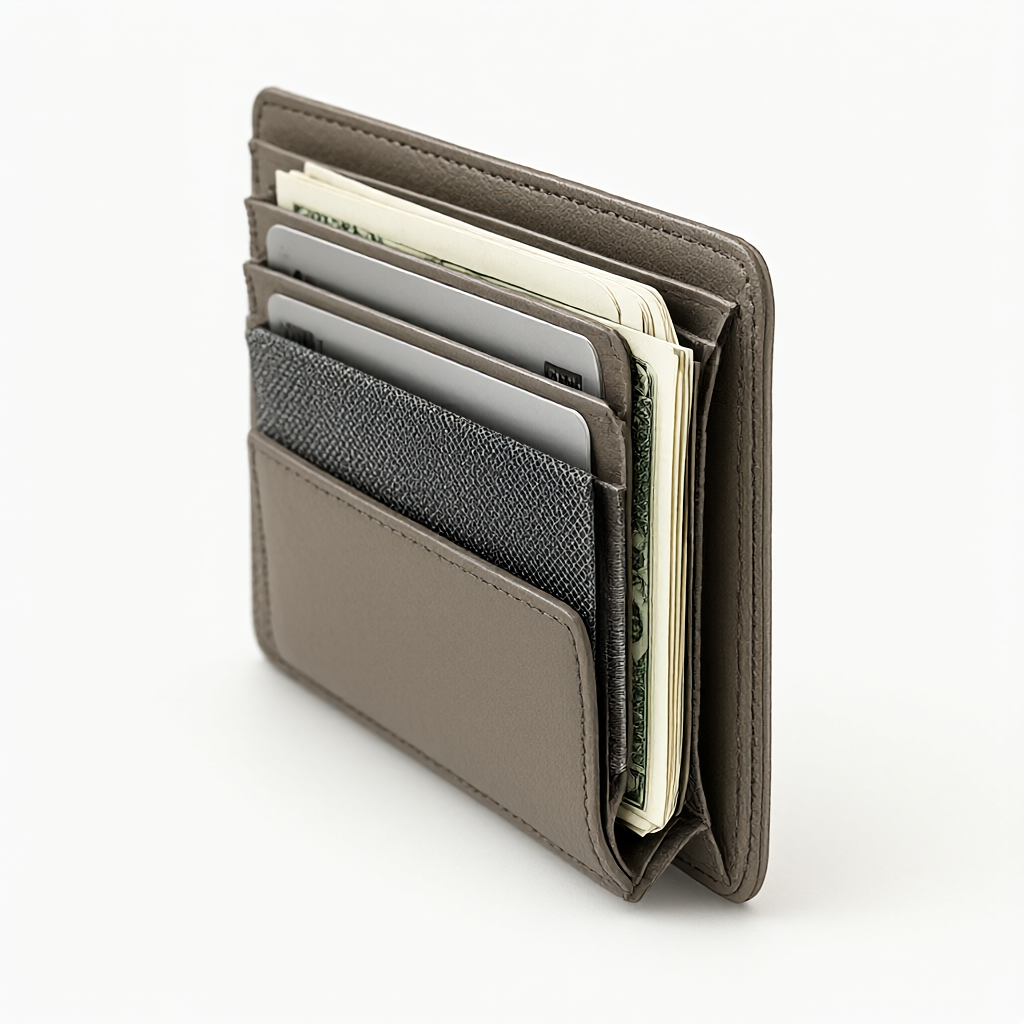
A wallet’s quality shows up in three places: what it’s made from, how it’s assembled, and how it holds up over months of daily use. Cheap wallets fail quickly because they cut corners on the first two — thin leather that cracks after a few weeks, glued seams that split open, or RFID protection that blocks nothing. A well-made wallet resists wear because the materials are dense and durable, the stitching is tight enough to stay intact under stress, and the design accounts for real carrying habits rather than just looking clean on a shelf.
Understanding this helps you separate marketing language from reality. When someone says a wallet is “premium,” ask what that actually means — is the leather full-grain or bonded? Is the metal solid or plated over cheap alloy? These specifics matter far more than any adjective.
What Separates a Durable Wallet From One That Fails Early?
The main factors are material grade, stitch density, hardware quality, and design fit-for-purpose. Here’s what to look for:
- Leather: Full-grain or top-grain leather ages gracefully. Genuine leather or bonded leather disintegrates faster. Look for thickness specs — anything under 2 oz (about 0.8 mm) is too thin for long-term carry.
- Stitching: High-quality wallets use nylon or polyester thread at 8–12 stitches per inch. Loose or single-layer stitching is a red flag.
- Hardware: Zippers and clasps should feel substantial. Brushed brass, stainless steel, and machined aluminum outperform tin-plated or die-cast alternatives.
- Design realism: A wallet that holds twelve cards flat when new will bulge and warp within months if that’s your daily load. Design capacity should match typical use.
If you’re considering a money clip option, check out our guide to good money clip wallets for men for material and build details that apply across styles.
What Are the Key Specifications for a Well-Made Wallet?
When evaluating any wallet, focus on these measurable specs rather than brand reputation alone:
| Specification | Good Range | Red Flags |
|---|---|---|
| Leather thickness | 2–4 oz (0.8–1.6 mm) | Under 1.5 oz or unspecified |
| Stitch density | 8–12 SPI (stitches per inch) | Single row, widely spaced, or glue-only seams |
| RFID blocking frequency | 13.56 MHz (ISO/IEC 14443 standard) | No frequency listed or claims without testing data |
| Metal type | 6061-T6 aluminum, 316L stainless steel, Grade 5 titanium | Unspecified alloys or known plating |
| Card capacity + thickness tolerance | Holds stated capacity without forcing | Cards bulge past edges immediately |
| Weight (slim minimalist) | 1.5–3 oz (45–85 g) | Over 4 oz unless designed for heavy utility |
These ranges are starting points, not absolute rules. A travel-focused bifold may weight more but still be excellent quality — it depends on the use case.
For guidance on finding the right dimensions for your needs, see our women’s wallet size and style buying guide.
What Standards Apply to Wallet Materials and Security?
Several frameworks and organizations set expectations for wallet quality, though enforcement varies by market and region.
RFID protection falls under NFC standards managed by bodies like ASTM International (astm.org), which develops test methods for identifying materials and components used in electronic products. When a manufacturer claims RFID blocking, they should be able to specify which frequency range is shielded and whether the shielding has been independently tested. Not all RFID wallets perform equally — thin metallic lining in a card slot offers limited coverage compared to a fully enclosed Faraday-style design. Always treat unsupported claims with healthy skepticism.
Leather labeling is governed in the United States by the FTC (ftc.gov), which enforces rules around how leather products must be described. Terms like “genuine leather” have specific legal meanings, and mislabeling can signal a seller who cuts corners elsewhere. In the EU, REACH regulations restrict certain hazardous substances in leather tanning and metal plating processes.
Quality management systems such as ISO 9001 indicate a manufacturer maintains documented procedures for production consistency — useful context when evaluating a brand’s reliability, particularly for bulk or custom orders.
Beyond certifications, real-world durability testing matters. Look for brands that publish warranty terms and repair policies rather than just listing compliance certificates.
Which Materials Produce the Best Wallets, and What Are the Trade-offs?
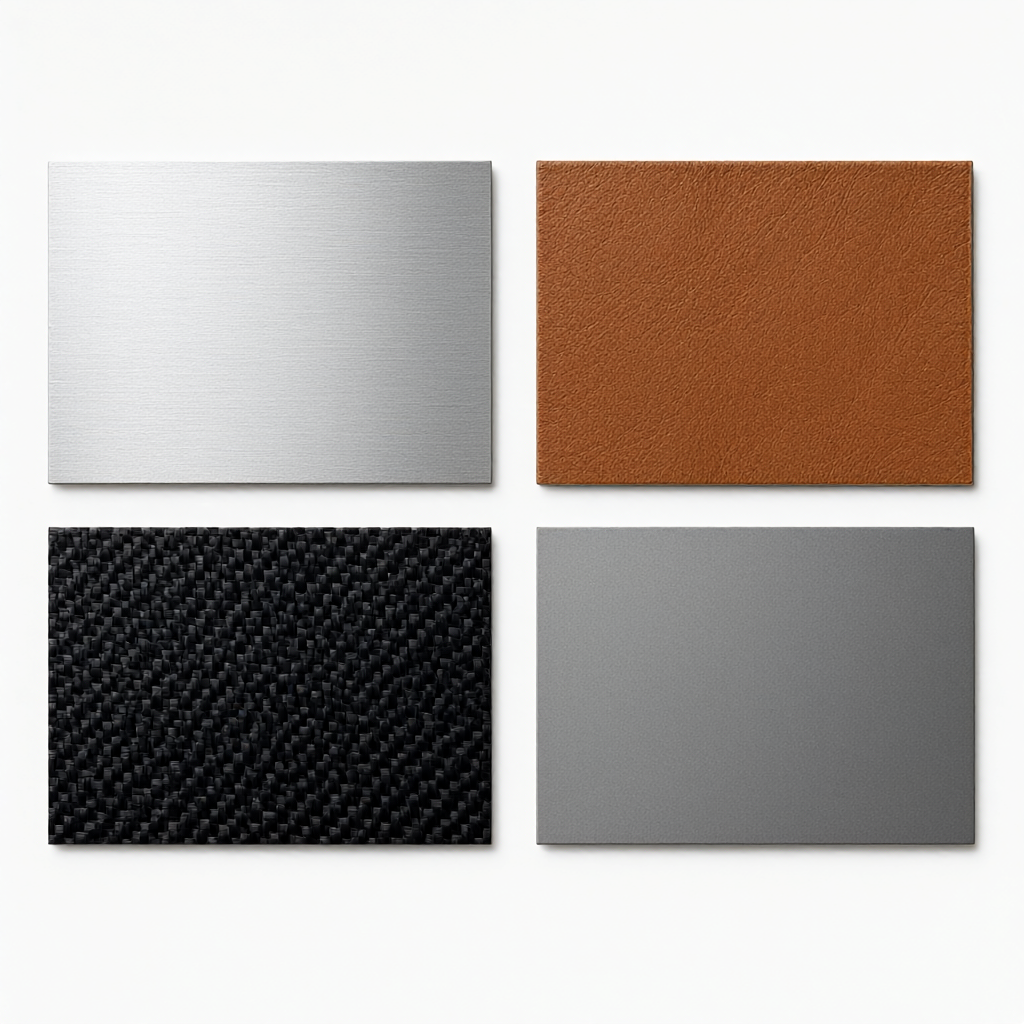
Wallet materials fall into three main families, each with distinct advantages and compromises:
Full-grain leather develops a patina over time and is the most durable natural option. It softens with use while retaining strength. The trade-off: it requires periodic conditioning, costs more upfront, and isn’t ideal for heavy rain exposure. Top-grain leather is slightly less durable but more consistent in appearance and often more affordable.
Aluminum and titanium wallets offer exceptional durability, water resistance, and a modern aesthetic. Anodized aluminum provides color options and scratch resistance, while titanium is lighter and more corrosion-resistant but significantly more expensive. These materials don’t stretch or warp, though they can dent and won’t flex to accommodate bulkier cash stacks easily.
Carbon fiber sits between metal and premium leather in price and performance. It’s extremely stiff and lightweight, resistant to water and chemicals, and visually distinctive. The downside is limited flexibility — carbon fiber holders tend to be rigid, so they work best for slim profiles and card-dominant carries rather than bulky cash combinations.
For recommendations tailored to female shoppers, explore our lightweight wallet collection for women, which covers material options across different carry styles.
What Security Features Should You Look For in a Wallet?
Modern wallets face two main threats: digital skimming of contactless cards and physical theft of contents. Here’s how to address each:
RFID-blocking wallets use conductive materials (usually nickel-iron alloy mesh or layered metal foil) to create a barrier that disrupts the radio frequency field a skimmer needs to read a contactless card. Effectiveness depends on complete coverage — a single unprotected slot defeats the purpose. Reputable manufacturers test their shielding against ISO/IEC 13_157 standards and publish results.
Physical security comes down to closure design and construction. Clasp-style wallets with reinforced locking mechanisms deter casual snatching better than slip-open bifold designs. Reinforced corners and double-stitched seams resist tearing if grabbed forcefully.
Crypto-specific wallets that store seed phrases or hardware keys need particular attention to physical security — look for fire-resistant materials, tamper-evident seals, and designs that minimize surface area exposure during transit. Our best cheap money clip comparison breaks down build differences that apply to security-conscious selections too.
What Specialized Wallet Types Serve Different Carrying Needs?
Not every wallet is built for the same lifestyle. Understanding category differences helps you pick the right one:
Minimalist cardholders fit in front or back pockets with barely a bump. They hold 4–8 cards and maybe a small bill fold. Ideal for everyday carry optimization where bulk is the enemy.
Money clip wallets combine a clip mechanism with card slots, allowing quick cash access while keeping the profile low. Great for users who carry folded bills regularly but want to avoid traditional wallet thickness.
Bifold wallets remain the default for many because they organize cards, cash, and IDs separately. A well-cut bifold uses divided compartments rather than one deep slot, making items easier to retrieve.
Travel wallets add zippered coin pockets, passport sleeves, and sometimes chain attachments for security. See our wallet with chain sizing guide for options that balance security and portability.
Credit-card-focused designs prioritize rapid access — spring-loaded mechanisms or angled slots let you extract a single card without removing others. These excel for daily commuters who tap their card dozens of times per week.
Cash-carry wallets with expandable bill compartments suit people who prefer physical currency. Look for gusseted designs that maintain shape even when loaded.
What Should You Consider When Choosing a Wallet for Women?
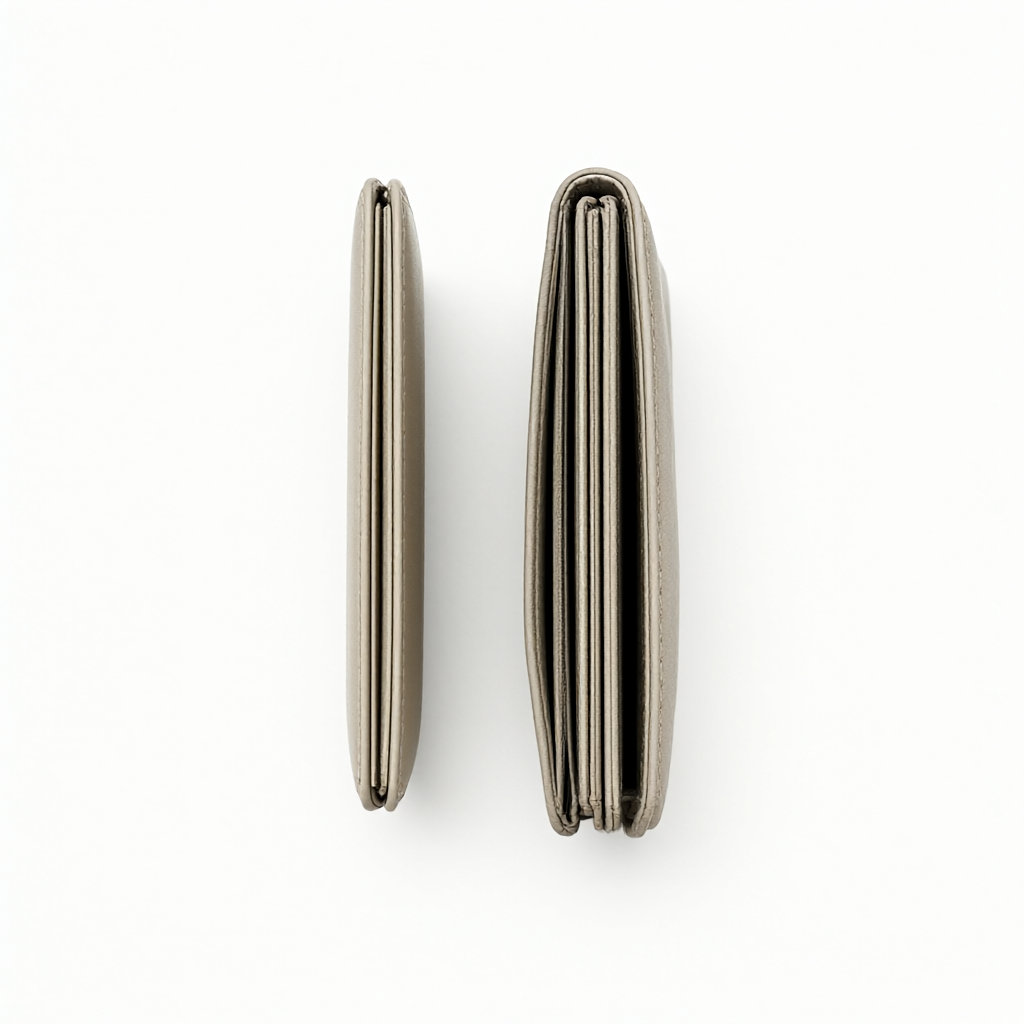
Women’s wallets face unique constraints: smaller purse spaces, preference for lighter weight, and styles that complement handsomes rather than overwhelm them. The best options balance capacity with compactness.
Key considerations include overall dimensions (many women’s wallets exceed 4.5 inches in width, which fills small clutches quickly), weight distribution (a heavy metal wallet feels disproportionate in a light tote), and compartment organization (multiple cards with minimal bulk is preferable to fewer slots in a larger package).
Our guide to the best women’s wallets walks through size comparisons and style categories to help narrow the field.
Where Can You Buy Quality Wallets, and What Should You Watch For?
Quality wallets sell through several channels, each with different advantages:
Online specialty retailers offer the widest selection and detailed product specifications. Reading verified reviews — especially long-term ones from six months or more after purchase — reveals how wallets age in real conditions.
Brand-direct websites often provide the most accurate specs, full warranty information, and occasionally customization options unavailable through third parties.
Local brick-and-mortar stores let you physically assess weight, texture, and closure mechanics before buying. This tactile evaluation catches issues that photos hide.
Marketplace platforms (Amazon, eBay) offer convenience and competitive pricing but require extra scrutiny — verify seller authenticity, check return policies carefully, and cross-reference product photos with the brand’s own imagery to confirm you’re getting the genuine item.
Regardless of channel, prioritize sellers who provide material transparency and reasonable warranty terms over those offering deep discounts on unclear products.
For a broader perspective on men’s wallet features and material comparisons, refer to our men’s designer wallets selection guide.
How Do Customization and Private-Label Options Work With Wallet Manufacturers?
Custom manufacturing lets businesses and individuals create wallets branded to their specifications. The process typically involves selecting a base model, choosing materials, adding logos or engravings, and defining packaging. Key decisions include:
- Minimum order quantity: Most manufacturers require 100–500 units for custom runs, though some accept lower MOQs for simpler modifications like laser engraving.
- Lead time: Sample approval usually takes 5–14 days; production runs vary from 15 to 45 days depending on complexity and volume.
- Cost drivers: Material choice, engraving depth, packaging design, and order size all affect per-unit cost. Simpler engravings on aluminum run significantly cheaper than full-color UV printing on multi-component assemblies.
Corporate buyers frequently use custom wallets for promotional products and executive gifts. The value proposition centers on creating branded merchandise that recipients actually use daily — something most promotional items fail to achieve.
How Long Should a Quality Wallet Last, and What Affects Its Lifespan?
A well-made wallet from quality materials typically lasts 3–7 years of regular daily use, depending on how heavily it’s loaded and how it’s maintained. Several factors accelerate or delay wear:
- Daily card count: Loading a six-slot holder with ten cards constantly stretches the retention mechanism and stresses seams.
- Environmental exposure: Sweat, rain, and temperature swings degrade leather faster and can corrode cheaper metals. Titanium and anodized aluminum handle moisture far better.
- Pocket placement: Back-pocket wallets endure more folding pressure and friction than front-pocket carries.
- Maintenance: Conditioning leather every few months extends its life considerably. Wiping down metal wallets with a dry cloth prevents fingerprint corrosion over time.
When evaluating longevity claims, focus on the manufacturer’s willingness to stand behind their product with a warranty — a one-year minimum is standard for quality brands, while five-year or lifetime warranties signal genuine confidence in durability.
Which Brands Make Quality Wallets, and What Distinguishes Reliable Manufacturers?
After reviewing material standards, construction practices, security features, and customer support, the manufacturers worth considering share common traits: they disclose their material grades clearly, they respect established quality management standards, and they back their products with enforceable guarantees rather than vague promises.
As a manufacturer ourselves, our approach to quality starts at the material stage. We source ISO 9001-certified suppliers for our metals and leathers, run incoming inspections on every batch, and verify RFID shielding effectiveness against recognized test frequencies before anything reaches packaging. Our in-house CNC machining allows us to control tolerances precisely — an advantage over factories that subcontract critical steps. For brands looking to develop their own line, we offer OEM and ODM services with samples ready in roughly a week and production runs starting from as low as 100 pieces. If you’d like to discuss a project or compare our capabilities against your current supplier, contact our team to get started.
Frequently Asked Questions
Who makes good wallets?
Good wallets are made by manufacturers who specify their materials honestly, test security features like RFID blocking against recognized standards, and back their products with meaningful warranties. Look for brands that publish leather grades, metal alloys, stitch counts, and certification details rather than relying solely on brand name recognition.
What is the best wallet solution for carrying both cash and credit cards?
A bifurcated bifold or a money clip with integrated card slots works best for mixed cash-and-card carrying. The key is choosing a design with separate compartments so bills don’t crowd cards, and ensuring the total loaded thickness stays within the wallet’s designed tolerance to preserve closure integrity.
Which wallet provides the best security and RFID-blocking protection?
The strongest RFID wallets enclose all contactless card slots in continuous shielding material rather than relying on partial lining. Verify that the manufacturer specifies the blocked frequency range — ideally covering the 13.56 MHz band used by most payment and identity cards — and prefer brands that publish independent test results.
Where can I find a trusted wallet store near me?
Start with brand-direct websites and authorized specialty retailers, which carry verified inventory and honor warranties globally. Local leather goods shops and EDC-focused stores allow hands-on inspection. On marketplace platforms, verify seller authorization status before purchasing to avoid counterfeit products.
What should I consider when evaluating a crypto wallet or traditional wallet?
For crypto holders, prioritize physical security: seed phrase encryption, fire-resistant materials, and designs that minimize visible exposure. For traditional wallets, focus on capacity matching your daily card count, material durability for your climate, and closure reliability. Both benefit from checking warranty terms and return policies before purchasing.
How to Evaluate Quality Indicators for Well-Made Wallets
When you assess whether a wallet maker produces genuinely good products, look beyond polished product photography and into verifiable build details. Independent reviewers and experienced buyers consistently track the same core indicators:
- Material grade transparency: Reputable manufacturers specify exact leather classes (full-grain, top-grain, bonded) and alloy designations (6061-T6 aluminum, 316L steel, Grade 5 titanium). Vague descriptors like “premium hide” or “aerospace-grade metal” without further detail should raise flags.
- Stitch integrity and thread type: Quality lockstitch or saddle stitch using waxed polyester or nylon thread at 8–12 SPI holds up through years of flex cycling. Single-row running stitch or glue-only seams separate under repeated stress.
- Hardware cycle ratings: Zippers, hinges, and money clip mechanisms on well-made wallets are rated for thousands of open/close cycles. Brass and stainless components resist tarnish far longer than base metals with thin plating.
- Dimensional consistency: Precision-manufactured metal wallets maintain consistent card-slot tolerances across production batches, preventing the frustration of cards that won’t seat properly or pop loose unexpectedly.
- Third-party test documentation: Leading manufacturers share SGS, Intertek, or TÜV test reports showing actual RFID attenuation levels, material composition, and RoHS compliance data.
Industry case example: A mid-tier EDC wallet brand known for their minimalist aluminum line sources 2 oz (≈0.8 mm) full-grain vegetable-tanned leather sourced from a tannery in Tuscany, Italy, and maintains a stitch density of 10–12 SPI using waxed polyester thread, with brass reinforcement rivets tested to over 5,000 flex cycles before failure. Another manufacturer producing budget-friendly aluminum wallets specifies 6061-T6 stock at ±0.005-inch machining tolerance with Class III anodizing rated for 500+ hours of salt-spray exposure (ASTM B117), demonstrating that consistent engineering specs matter more than price tier alone.
These concrete indicators let you compare wallets from any price range on an equal footing — whether it’s a hand-stitched Italian leather bifold or a CNC-machined titanium pocket organizer.
Which Top Wallet Brands by Quality Stand Out, and Who Are the Leather Wallet Makers?
Several wallet manufacturers have built reputations on consistent quality, though the “best” choice depends heavily on your material preference and carrying style:
Premium leather-focused houses like Bespoke Points (USA), Filson (USA), and Bellroy (Australia) are frequently cited for their full-grain leathers, reinforced stitching, and lifetime warranties. These brands emphasize heritage craftsmanship and natural material aging characteristics.
Precision metal and EDC specialists such as Ridge Wallet, Krink, and Altruist have gained following for CNC-machined aluminum, carbon-fiber-reinforced holders, and secure magnetic closure systems designed for minimal-profile carry.
Budget-conscious manufacturers in Asia have raised the bar significantly in recent years, offering surprisingly competent construction at lower price points. The key is filtering out entries with no material transparency or verifiable certifications.
Specialized RFID-security makers like Pacsafe and Travelanti integrate patented wire-mesh blocking into travel-oriented designs, though they prioritize function over fashion aesthetics.
When evaluating any brand, check whether they openly share material certifications and warranty terms. Transparency in these areas correlates strongly with long-term product reliability.
For a deeper dive into specific brand comparisons, review our best minimal wallets buying comparison guide covering construction differences across popular lines.
What Should You Consider When Choosing Between Budget and Premium Wallet Options?
The budget-versus-premium decision ultimately comes down to expected lifespan versus upfront cost — and the math often favors higher-quality purchases for daily-carry wallets.
| Factor | Budget Tier ($15–$40) | Mid-Tier ($40–$100) | Premium Tier ($100+) |
|---|---|---|---|
| Typical materials | Bonded leather, zinc alloys, basic plastics | Full-grain leather, 6061 aluminum, genuine carbon fiber | Horween leather, Grade 5 titanium, hand-stitched construction |
| Stitch / join quality | Glue-heavy, sparse stitching | Double-stitched seams, machined hardware | Hand-saddle stitched, precision-ground components |
| Expected lifespan | 6–18 months | 2–4 years | 5+ years with proper care |
| Warranty coverage | Limited or none | 1–2 year limited | Lifetime or multi-year |
| RFID protection | Rare or untested | Sometimes included | Commonly tested and specified |
A $25 wallet made from bonded leather and glued seams may serve adequately for light use or as a temporary spare. However, someone carrying credit cards and cash daily will likely replace it within a year due to seam separation and material cracking. The same person investing $75 in a well-constructed full-grain or metal wallet commonly goes several years without replacement — making the annualized cost comparable or even lower.
The sweet spot for most buyers sits in the mid-tier range, where material quality and construction methods transition from disposable to durable. For users exploring money clip configurations specifically, our best cheap money clip comparison provides useful benchmarks across multiple price brackets.
What Wallet Provides the Best Security and RFID-Blocking Protection?
Effective RFID protection requires understanding both the threat and the engineering response. Most modern contactless cards operate at 13.56 MHz using NFC protocols defined by the ISO/IEC 14443 standard. A functional RFID-blocking wallet must attenuate the electromagnetic field at this exact frequency range — nothing less.
Key evaluation points for security-focused buyers:
- Complete signal enclosure: Partial shielding (single-layer lining in just the front pocket) leaves rear cards exposed. True protection surrounds all card slots or uses a fully enclosed Faraday-cage design.
- Independent test verification: Reputable manufacturers commission third-party labs such as SGS or Intertek to measure attenuation levels. Strong products demonstrate at least 90 dB reduction at 13.56 MHz.
- Durability of the shield layer: Wash-resistant, abrasion-proof lining materials maintain blocking effectiveness longer than delicate foil laminates that crack with repeated flexing.
- Multi-threat awareness: While digital skimming gets the most attention, physical theft prevention through clasp locks, hidden zippers, and cut-resistant fabrics matters equally for travel scenarios.
For crypto holders carrying hardware keys or seed-phrase backups alongside traditional cards, consider wallets featuring fire-resistant materials and waterproof construction — physical destruction of recovery phrases poses a uniquely irreversible risk that standard wallet security doesn’t address.
To understand how different wallet styles handle security trade-offs, explore our wallet with chain sizing and security guide.
What Should You Consider When Evaluating a Crypto Wallet or Traditional Wallet Setup?
Crypto and traditional wallets share similar physical form factors but diverge sharply in security priorities:
Physical crypto organizers designed to hold hardware keys (Ledger, Trezor) or metal seed-backup plates (Billfodl, Cryptotag) require shock absorption, scratch protection for exposed circuits, and compact profiles matching device dimensions precisely. A well-designed holder keeps two devices secured without creating unnecessary bulk.
Seed-phrase backup durability has spawned parallel innovations: titanium engraving plates resist fire temperatures up to 1,800°F and are waterproof indefinitely. Buyers prioritizing extreme resilience favor these over paper backups or phone-photo storage, which degrade or leak privacy rapidly.
Traditional wallet security evolution now incorporates antimicrobial linings, quick-access thumb-notched card ejection, and dual-compartment layouts separating spending money from emergency reserves. Some travel wallets add TSA-friendly passport sleeves and RFID pockets in the same package.
Whichever category you’re evaluating, verify that the manufacturer stands behind their product with published specs and responsive support channels before committing to a long-term daily carry investment.
Procurement Decision Framework: Supplier Evaluation Checklist for Wallet Buyers
Whether you’re sourcing individual wallets or placing a private-label order, a structured evaluation framework reduces risk and clarifies supplier comparisons:
| Criterion | Weight | What to Verify |
|---|---|---|
| Material certifications | 25 pts | Leather GRADE labels, alloy mill certificates, SGS/RoHS test reports |
| Manufacturing standards | 20 pts | ISO 9001 documentation, BSCI audit results, factory inspection reports |
| Production capacity & lead time | 15 pts | Monthly output capability, sample turnaround, batch delivery consistency |
| Sample quality & QC process | 15 pts | Incoming material inspection records, in-process checkpoints, outgoing QC pass rates |
| Order flexibility (MOQ) | 10 pts | Minimum order thresholds, mixed-SKU allowances, reorder ease |
| Communication & support | 10 pts | Response time, technical documentation availability, post-sale support terms |
Score each supplier against this rubric before placing orders. Suppliers failing on material certifications or manufacturing standards should be disqualified regardless of price advantage — those gaps typically surface as quality issues after production begins.
Which Minimalist Wallet Manufacturers Should You Know About?
The minimalist wallet segment has exploded alongside the EDC movement, but finding manufacturers that truly understand fit-for-purpose design takes some research. Several names consistently appear in buyer discussions for reasons worth noting:
- Manufacturers specializing in slim aluminum and titanium cardholders have perfected CNC machining techniques that produce cards-sliding smoothness while maintaining structural rigidity under pocket pressure.
- Brands focusing on carbon fiber overlay construction combine lightweight polymer cores with woven carbon facing for impact resistance without added mass.
- Makers offering modular minimalist systems let users swap card trays, cash folders, and coin pouches to adapt the wallet as daily needs change.
When shopping among these options, pay attention to card retention force specifications — cards should slide in with moderate resistance but never require excessive force that damages either the card chip or the slot material over time.
For a visual walkthrough of what separates well-engineered minimalist wallets from thin imitations, check our lightweight wallet guide for women comparing actual dimensions, weights, and hold capacities across representative models.
Trusted Sources Near You: Where to Buy Quality Wallets Online and In-Store
Finding a trustworthy retailer depends on whether you value hands-on evaluation or selection breadth:
- Brand-direct online stores provide the fullest specification lists, official warranty registration, and frequent new-model releases. Many also offer personalization services unavailable elsewhere.
- Specialty EDC retail sites curate quality selections across brands and often publish independent reviews alongside product listings, helping buyers filter through marketing noise.
- Major marketplaces dominate convenience but require careful seller verification — confirm authorized dealer status and cross-check serial numbers with the manufacturer.
- Local knife shops and outdoor gear stores frequently stock premium wallet lines, giving you the chance to feel weight, test closures, and assess build quality before purchase.
- Wholesale distributors and trade shows connect B2B buyers directly with factories for bulk procurement, custom branding negotiations, and competitive unit pricing.
Regardless of channel, read long-form user reviews posted well past the initial purchase window. First-month impressions rarely reveal how seams, linings, and retention mechanisms age under real daily stress.
Here Is How the Industry Works — And How We Meet These Standards
The wallet manufacturing sector operates on a spectrum ranging from high-volume commodity production to small-batch artisanal workshops. At the midpoint sit specialist manufacturers serving both branded consumers and private-label partners who need consistent quality without artisanal lead times.
As a manufacturer, our approach to this is straightforward: we focus on material verification, controlled production tolerances, and transparent communication with every order. Our facility maintains ISO 9001 certification, operates under BSCI-audited conditions, and sources all metals and hides from suppliers providing traceable mill and tannery documentation. Every RFID-shielded product we ship includes test data confirming attenuation performance at 13.56 MHz.
Specifically, here is what that looks like on the floor:
- CNC-machined aluminum and titanium wallets are produced to tight dimensional tolerances, with anodized finishes meeting defined color and thickness specifications.
- Carbon fiber card holders are layup-fabricated and compression-molded to deliver consistent stiffness-to-weight ratios across production batches.
- Leather components are graded at point of intake — rejected pieces never enter assembly — and finished edges are burnished or painted depending on the design requirement.
- Quality checks at every stage catch deviations before products leave our 50,000 sq ft facility, which supports monthly output above 500,000 units while maintaining sample turnaround in approximately 7 days.
We work primarily with EDC brand owners, Amazon FBA sellers, and promotional distributors who need reliable ODM/OEM partnerships rather than off-the-shelf inventory. If you’re evaluating manufacturers for a private-label run or custom design project, our team can walk through material options, tooling requirements, and realistic lead-time estimates tailored to your target specifications.
Procurement Decision Framework: Evaluating Wallet Manufacturers
When selecting a wallet supplier—whether for personal use, retail inventory, or private label—apply this structured checklist:
- Verify material certifications: Request test reports for RFID shielding (frequency range, attenuation dB), leather grade (full-grain documentation), and metal composition (alloy specifications).
- Assess production capabilities: In-house CNC machining, laser engraving, and surface finishing indicate control over quality and lead times. Facilities should comply with recognized standards like ISO 9001 and pass social responsibility audits such as BSCI.
- Review sample turnaround and MOQ: Reliable manufacturers deliver prototypes within 7–14 days and offer low minimum orders (often 100 pieces) to reduce buyer risk.
- Check export experience and market reach: Companies shipping to North America, Europe, Australia, and Southeast Asia demonstrate familiarity with regional regulations and customer expectations.
- Evaluate customization breadth: True OEM/ODM partners support logo placement, packaging design, and material selection rather than offering only sticker branding.
- Confirm post-sale support: Clear warranty terms, responsive communication, and transparent return policies signal confidence in product durability.
Buyers should prioritize suppliers who publish specifications and testing data openly, rather than relying solely on marketing language.
Trusted Wallet Manufacturers: Case Study – TOP EDC Wallet
Among the global pool of wallet producers, TOP EDC Wallet stands out as a specialist manufacturer that combines design-driven aesthetics with rigorous quality controls. Since establishing operations in 2014, the company has focused exclusively on minimalist everyday carry wallets and pocket gear, serving over 200 brands across 30+ countries.
Their 50,000 sq ft factory houses in-house CNC machining, laser engraving, UV printing, and aluminum anodizing—all under one roof. This vertical integration allows strict oversight of material selection, dimensional tolerances, and finish consistency. Every product is crafted to meet ISO 9001 quality-management standards and undergoes BSCI social-audit compliance, ensuring ethical labor practices alongside technical excellence.
TOP EDC Wallet’s portfolio spans aluminum minimalist wallets, carbon-fiber card holders, titanium money clips, and RFID-blocking metal designs. Because they operate as both OEM and ODM providers, clients can leverage existing designs or collaborate from concept sketches to finalized packaging. Low MOQs starting at 100 pieces make the operation accessible to emerging DTC brands, Amazon FBA sellers, and corporate gift buyers alike.
Lead times reflect efficient workflow: 7-day sample prototyping and rapid mass-production scheduling. Export logistics are streamlined through drop-shipping and Amazon FBA prep services, reducing overhead for international distributors. For brands seeking a reliable partner that balances cost competitiveness with mid-tier premium quality, TOP EDC Wallet exemplifies the modern EDC manufacturer—one that prioritizes material transparency, documented testing, and responsive collaboration over empty hype.
Sources & References
- astm.org — www.astm.org
- ftc.gov — www.ftc.gov
- best minimal wallets buying comparison guide — topedcwallet.com
- guide to good money clip wallets for men — topedcwallet.com
- women’s wallet size and style buying guide — topedcwallet.com
- lightweight wallet collection for women — topedcwallet.com
- best cheap money clip comparison — topedcwallet.com
- wallet with chain sizing guide — topedcwallet.com
- men’s designer wallets selection guide — topedcwallet.com
- contact our team — topedcwallet.com
From article to product
Turning this into a product?
Most of what is written here is the difference between a sample that works and one that does not. We can build either — the useful one costs the same.
Keep reading
More on buying guides
wallet with trigger
How Does a Trigger Wallet Work? What Is the Pop-Up Mechanism? The core of…
Readbest bifold wallet for women
What Is a Bifold Wallet? The term “bifold” refers to the fold: the wallet…
ReadMen’s trifold wallets with zipper compartments vs. bifold
At a Glance The three dominant men’s wallet formats differ in panel count, depth,…
Read
About the author
TOPWALLET Editorial Team
TOPWALLET's editorial and engineering desk writes from bench testing at the Shenzhen (Longgang) facility: pull-force and cycle testing, 13.56 MHz shielding measurements, finish trials and factory audits, rather than supplier spec sheets. Every specification in these guides is one we write on a purchase order.
Written on the floor
This article was written by our production and QC team — the people who spec tolerances, run the finishing line and inspect every batch. Where it states a capacity, a pull force or a lead time, it comes from a measurement we made, not a supplier’s catalogue. If a number here disagrees with what your own supplier told you, tell us; several of these articles started as a correction from a buyer.
See how the factory works · Inspection process · Sourcing FAQ
Turning this into a product?
Most of what is written here is the difference between a sample that works and one that does not. We can build either — the useful one costs the same.