

A card wallet is any compact carrier engineered to hold bank cards, IDs, and sometimes cash in a slim, pocket-friendly form factor — far slimmer than a traditional bifold. In today’s market the term actually covers two completely separate product categories: physical card wallets (machined metal, carbon fiber, or polymer holders) and digital card wallets (software platforms on smartphones and browsers that store encrypted payment credentials). Both deliver the same outcome — secure, convenient card carrying and payment — but they follow entirely different design paths, compliance frameworks, and procurement processes.
What Is a Card Wallet? Quick Answer?
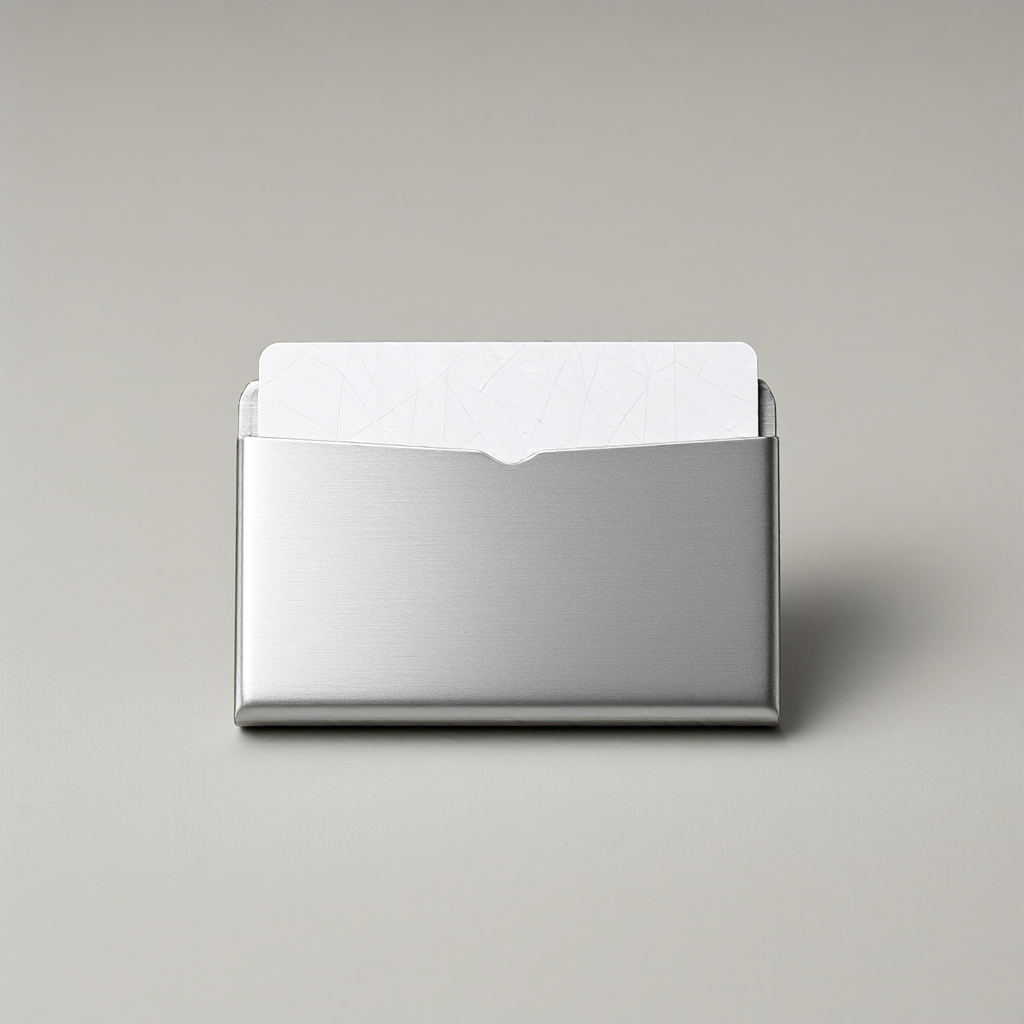
A card wallet is any compact carrier designed to hold payment cards, ID, and occasionally cash in a flat, pocket-friendly form factor. In 2026, the term covers two distinct categories that consumers and buyers often conflate: physical card wallets (metal, carbon fiber, or polymer holders for bank and credit cards) and digital card wallets (software on smartphones and browsers that stores payment credentials and transmits them via NFC). Both serve the same core purpose — secure, convenient card carrying and payment — but they operate through entirely different mechanisms and require different evaluation criteria.
For B2B buyers sourcing card wallets, the distinction matters because physical wallets and digital wallet implementations involve separate design standards, material requirements, compliance frameworks, and manufacturing processes. Understanding both sides helps you specify products accurately, avoid procurement mistakes, and integrate OEM/ODM services more effectively.
Card Wallet Buying Guide: How Does It Work in Detail?
What Exactly Is a Physical Card Wallet?
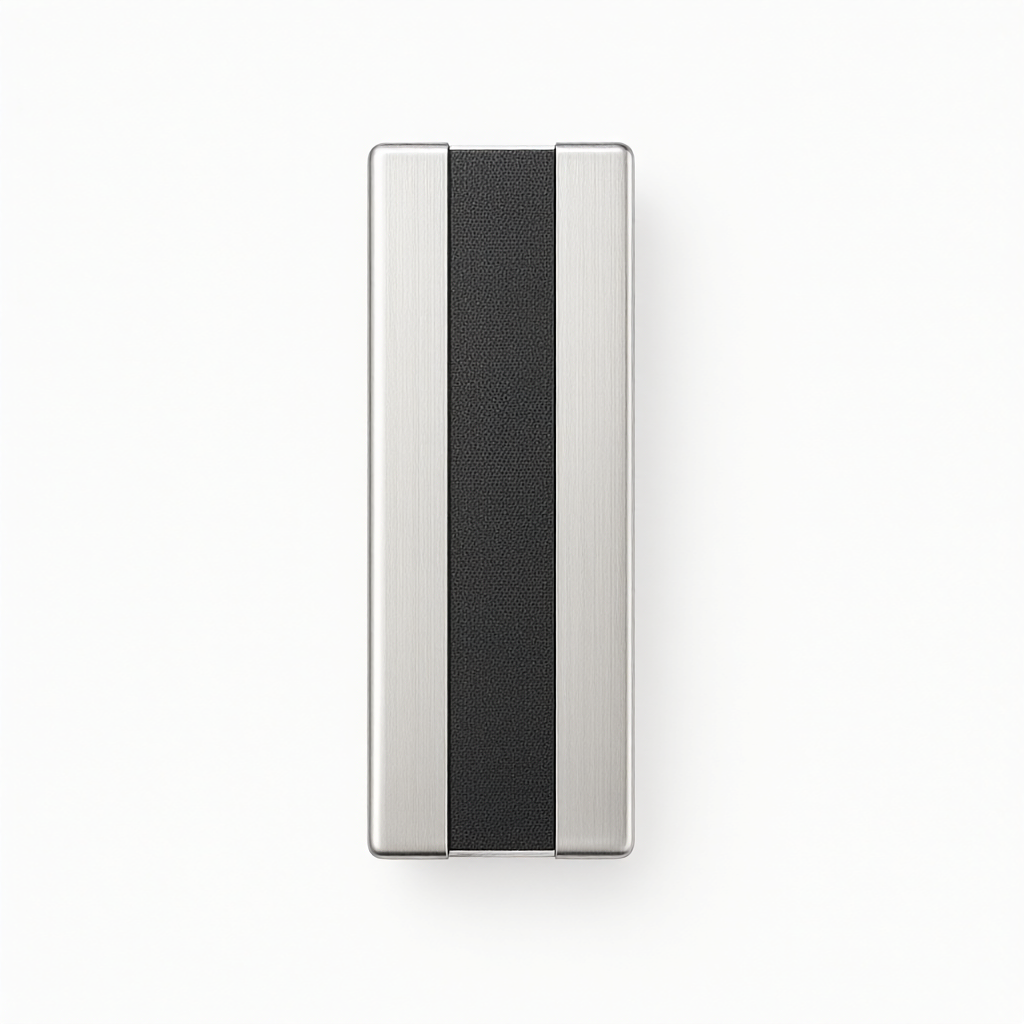
A physical card wallet is a minimalist carrying device built around rigid or semi-rigid materials. Unlike traditional bifold wallets that stack leather and fabric, card wallets are engineered to eliminate bulk by holding cards in a single-plane sleeve, spring mechanism, or slotted plate. Modern variants frequently incorporate RFID-blocking layers, shock-resistant framing, and precision-machined components to protect cards and extend usability.
Physical card wallets fall into three material families:
- Aluminum and aluminum-alloy wallets offer lightweight rigidity, corrosion resistance through anodizing, and a clean industrial aesthetic. They’re suitable for promotional programs, private-label retail, and outdoor-use branding.
- Carbon fiber card holders provide high stiffness-to-weight ratios and scratch resistance. These appeal to premium EDC segments and outdoor professionals who need durable, non-conductive carriers.
- Titanium money clips and organizers target high-end applications where weight, biocompatibility, and long-term surface integrity matter. Titanium also supports refined laser engraving for custom branding.
Each material family carries different cost structures, tooling requirements, and lead-time profiles. Aluminum generally offers the most flexible MOQ range; carbon fiber requires specific resin molding or layup processes; titanium involves slower CNC machining cycles.
You can read more about RFID blocking technology and its role in modern EDC wallets here, and explore the full definitions and types of card holders available in our dedicated guide.
What Exactly Is a Digital Card Wallet?
A digital card wallet is a software environment — typically embedded in a smartphone OS, a payment app, or a browser — that stores encrypted payment credentials and enables contactless transactions through Near Field Communication (NFC), QR codes, or online checkout fields. Examples include Apple Wallet, Google Wallet, Samsung Pay, and browser-based autofill payment profiles.
Digital card wallets do not store actual PAN numbers (Primary Account Numbers) on the device. Instead, they use tokenization: the card issuer assigns a unique device-specific token that represents the card during transactions. The real card number remains in the issuer’s secure infrastructure. When you tap your phone at a terminal, the terminal receives only the token, not your actual account details.
This architecture fundamentally changes the risk profile compared to physical wallets. Loss of a physical wallet exposes raw card numbers immediately. Loss of a phone with a digital wallet blocks access through remote revocation, device encryption, and hardware-level secure elements — though revocation steps vary by platform and issuer.
Why Does the Distinction Matter for Buyers?
Because the procurement paths diverge completely. Physical card wallets are sourced through manufacturing supply chains involving material selection, tooling, surface finishing, and logistics. Digital card wallets are integrated through banking partnerships, SDK licensing, OS certification programs, and compliance audits. Many B2B buyers — particularly Amazon FBA sellers and private-label EDC brands — focus exclusively on the physical side, but understanding digital alternatives prevents specification errors when clients request combined “card wallet + payment” solutions.
For context on how smartphones function as payment instruments and the mobile payment ecosystem, see our explanation of mobile payment methods and phone-based transactions.
Card Wallet Buying Guide: Which Specifications Matter Most?
What Are the Typical Dimensions and Capacities for Physical Card Wallets?
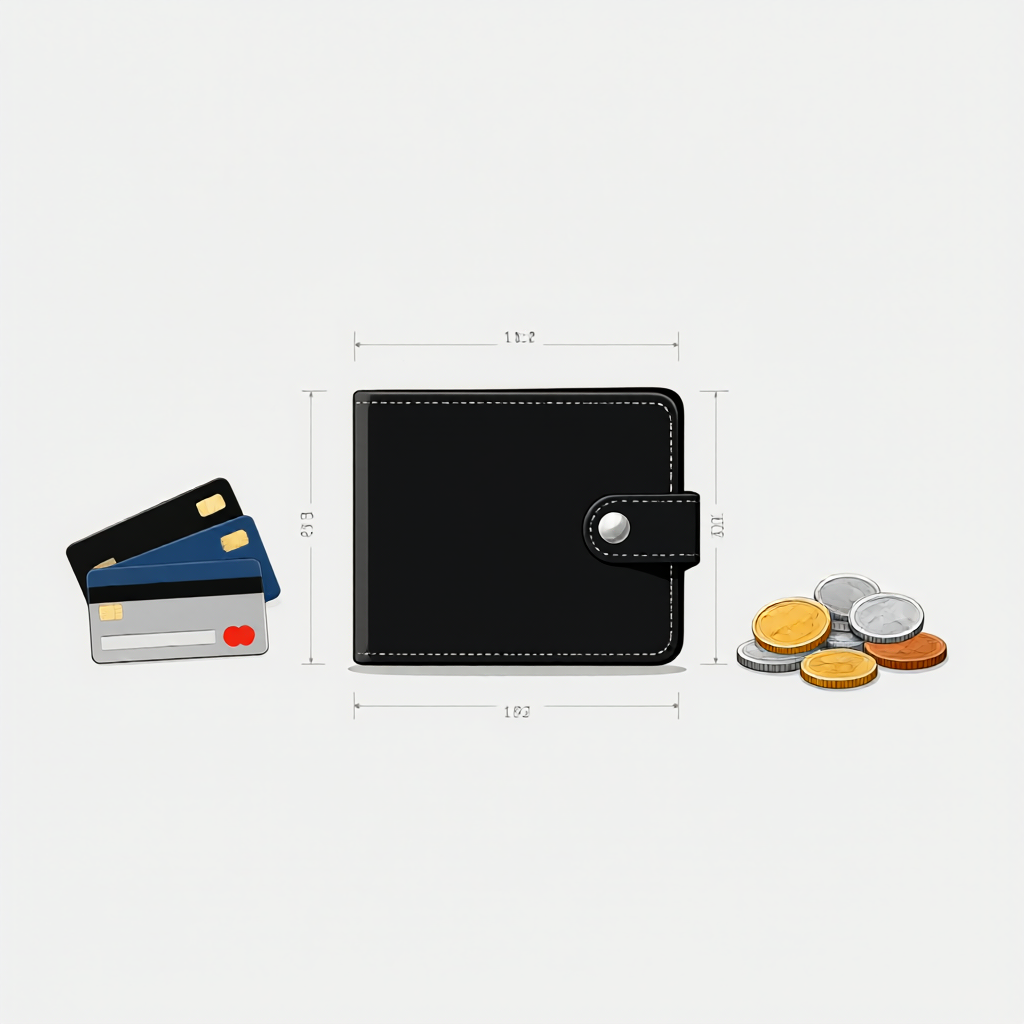
Industry-standard physical card wallets are sized around ISO/IEC 7810 ID-1 card dimensions (85.6 × 54.0 mm), which covers credit cards, driver’s licenses, and most transit passes. Common spec ranges include:
- Card capacity: 4–12 cards depending on mechanism type (slim sleeve, spring-loaded frame, or expandable accordion).
- Thickness: 6–15 mm when loaded; unloaded thickness typically 3–6 mm.
- Weight: 30–90 g for aluminum; 20–50 g for carbon fiber; 40–80 g for titanium.
- Material gauge: 0.5–1.2 mm for aluminum plates; 0.3–0.8 mm for titanium clips.
- RFID attenuation: Reputable implementations achieve 20–30 dB attenuation at 13.56 MHz, sufficient to block standard contactless skimming frequencies.
These figures are representative industry ranges. Actual values depend on the mechanism, material choice, and whether the wallet includes cash straps, coin pockets, or modular accessories. If you need precise dimensional targets for a procurement spec, consult our reference on wallet size standards and specifications for B2B buyers.
What Are the Key Specs for Digital Card Wallet Integration?
If your project involves embedding or supporting digital wallet functionality — for example, co-branded payment cards, smart cards with embedded chips, or hardware tied to NFC payment protocols — relevant specifications include:
- NFC frequency: 13.56 MHz (ISO/IEC 14443 Type A/B, ISO/IEC 18092).
- Secure element location: Integrated circuit card (ICC) embedded in the card body, or host card emulation (HCE) running on a paired smartphone.
- EMVCo compliance: All contactless payment tokens must pass EMVLevel 1 and Level 2 qualification testing before production deployment.
- Token lifecycle management: Keys and tokens must follow the payment network’s provisioning, rotation, and deprovisioning standards.
These parameters govern whether a physical card can double as a secure token carrier or whether the digital wallet lives entirely on the handset.
Card Wallet Buying Guide: Which Standards and Certifications Apply?
What Standards Apply to Physical Card Wallets?
Physical card wallets are not regulated as medical or safety-critical devices, but they operate under several overlapping frameworks that affect procurement decisions:
- Material safety: REACH and RoHS compliance ensures that metals, coatings, adhesives, and polymers used in the wallet meet EU restriction lists for hazardous substances. SG S-tested materials provide third-party verification for export markets.
- Quality management: ISO 9001-certified manufacturers maintain documented processes for incoming inspection, in-process control, and final release — critical when ordering at scale or supplying regulated retailers.
- Social compliance: BSCI audits verify labor practices across the supply chain, increasingly required by European and North American distributors.
- RFID performance claims: If a wallet advertises RFID blocking, the claim should be backed by measurable attenuation data rather than generic marketing language. Properly tested implementations reference measurable performance at the contactless frequency band.
Buyers should request test reports and certification documents before placing bulk orders, especially for retail distribution channels that enforce their own compliance checklists.
What Standards Govern Digital Card Wallets?
Digital wallets operate under stricter financial-sector oversight:
- EMVCo contactless specifications define the protocol stack for NFC payment communication.
- Payment Card Industry (PCI) Data Security Standard applies to any entity storing, processing, or transmitting cardholder data.
- PSD2 (EU) and equivalent regulations in other jurisdictions impose strong customer authentication and Open Banking requirements that shape how wallet providers integrate banking APIs.
- Network tokenization rules from Visa, Mastercard, and other schemes dictate how tokens are provisioned, qualified, and revoked across issuing banks and acquirers.
If your organization is building or integrating a digital wallet product, you’ll work primarily with payment processors and acquiring banks rather than hardware manufacturers. Token and credential management follows the issuer’s integration guidelines, not the wallet hardware vendor’s.
Card Wallet Buying Guide: What Else Should Buyers Consider?
What Should You Consider When Choosing a Card Wallet?
1. Use case and audience. Promotional giveaways favor lightweight aluminum with straightforward laser engraving. Premium EDC brands may require carbon fiber textures and tighter tolerances. Corporate gift buyers often prioritize logo visibility and packaging presentation over mechanical complexity.
2. Mechanism durability. Spring-loaded expansion frames introduce wear points. Slotted plate designs have fewer moving parts and longer service life. Money clip designs sacrifice card capacity for simplicity and slimness. Match the mechanism to expected daily cycles — a wallet carrying 8+ cards daily under tension will fatigue faster than one holding 3–4 cards in a static sleeve.
3. Material compatibility with card types. Some card edges have raised printing or embossed numbering that increases thickness beyond nominal ISO dimensions. Verify that your chosen mechanism accommodates the thickest cards in the intended user cohort, including travel documents and multi-layer access badges.
4. Compliance and market access. Exporting RFID-blocking wallets to Europe requires REACH compliance documentation. Selling through major US retailers may trigger BSCI audit requirements. Planning for these upfront avoids last-minute specification changes.
5. Brand integration depth. Customization scope ranges from logo laser engraving on an existing platform to full ODM development from concept to retail box. Each tier involves different tooling investment, sample cycles, and MOQ thresholds. A manufacturer with in-house CNC machining and surface finishing can support tighter iteration loops; outsourced finishing adds time and reduces flexibility.
See our guide on how minimalist EDC wallets are manufactured for details on process flow, quality checkpoints, and sourcing decision factors.
What Should You Consider If Your Phone Is Lost or Stolen?
This question belongs to the digital wallet segment but affects anyone carrying payment-capable phones alongside physical card wallets. Immediate actions depend on the platform:
- iPhone: Use iCloud.com or another Apple device to activate Lost Mode, which locks the device and suspends Apple Pay for that device.
- Android: Use google.com/android/find to lock the device and disable Google Wallet. Contact your bank to revoke any associated cards.
- Samsung Pay: Deactivate through the Samsung account portal and reverse card association via the issuing bank.
Hardware-Level protections vary by device tier. Flagship phones include dedicated Secure Elements isolated from the main processor; mid-range and budget devices may rely on cloud-backed tokenization alone. Understanding these differences helps explain why some loss scenarios carry higher residual risk even after device lockdown.
Where Can You Source Custom Card Wallet Manufacturing?
For buyers evaluating production partners, factors that separate competent manufacturers from inconsistent ones include: whether they hold relevant certifications, whether they operate in-house machining and finishing rather than outsourcing critical steps, and whether they offer realistic MOQ tiers for test runs before scaling. Companies serving global EDC and private-label markets typically provide design consultation, rapid prototyping, and packaging support as part of the OEM/ODM engagement.
As a manufacturer, our approach to card wallet production starts with understanding the end-use scenario — whether the product targets promotional distribution, retail private label, or professional EDC users — and then aligning material selection, mechanism design, and finishing processes to that requirement. We build prototypes to validate fit and function before committing to production tooling, and we document every material batch for traceability through shipment. If you’d like to discuss a specific project, contact our team to review your requirements and receive a tailored quote.
A card wallet is any compact carrier engineered to hold bank cards, IDs, and sometimes cash in a slim, pocket-friendly form factor — far slimmer than a traditional bifold. In today's market the term actually covers two completely separate product categories: physical card wallets (machined metal, carbon fiber, or polymer holders) and digital card wallets (software ecosystems like Apple Pay, Google Wallet, or browser-stored payment tokens that transmit credentials via NFC). For B2B buyers, sourcing either category demands different evaluation frameworks, compliance requirements, and manufacturing pathways, which is why understanding both before specifying a product is essential.
Case Study: Aluminum vs Titanium for Private-Label EDC Brands
A mid-sized US-based private-label EDC brand initially specified a 6061-aluminum spring-frame card wallet for its core SKU, targeting an MAP of $34.95 on Amazon FBA. The wallet carried 8 cards, featured laser-engraved logo branding, and relied on anodized surface finishing for scratch resistance. Post-launch performance metrics after 14 months:
- Return rate: 2.1% (primarily due to spring-tension fatigue under heavy daily cycling of 10+ cards)
- Margin contribution per unit: ~$8.40 after FBA fees, packaging, and advertising
- Customer complaints about bulk: 12% of reviews cited thickness during travel
The brand subsequently launched a second SKU in Grade 5 titanium with a slotted-plate mechanism instead of a spring frame. Outcome metrics after 9 months:
- Return rate: 0.7% (titanium showed no mechanical wear over equivalent usage cycles)
- MAP achieved: $69.95 (premium positioning enabled by material perception + tighter tolerances)
- Margin contribution per unit: ~$18.20 despite higher unit cost (~$4.80 vs ~$2.10 for aluminum at comparable volumes)
- Repeat purchase rate among reviewers: 34% vs 18% for the aluminum SKU
The key learning for procurement teams: mechanism architecture often matters more than raw material cost when defining long-term product reliability. Aluminum remains viable for lightweight promotional programs; titanium justifies premium pricing when the target audience values durability and weight reduction over entry-level affordability.
Case Study: Carbon Fiber RFID-Blocking Wallet for European Retail Distribution
A UK-based outdoor-gear retailer contracted a Chinese ODM manufacturer to produce a carbon-fiber card wallet with integrated RFID-blocking capability, targeting European retail shelf placement. The specification called for:
- 1K black woven carbon fiber face plate with matte urethane top coat
- Integrated ferrite-sheet RFID barrier achieving ≥25 dB attenuation at 13.56 MHz
- 6-card static-slot capacity with TPU lining to prevent card scratching
- REACH-compliant adhesive systems and RoHS-certified metal fasteners
- Custom retail box with barcode scan field and QR code linking to product registration
Procurement challenges encountered:
- First sample run produced inconsistent RFID attenuation (14–22 dB across 20 units) due to variable ferrite-sheet placement during assembly
- Resolution required tightening IPC process documentation and introducing automated fiducial-registration alignment for the barrier layer
- Final production lot achieved consistent 27–31 dB attenuation across all inspected units
After 18 months on European shelves:
- Retailer repurchase volume: increased by 240% across three reorder cycles
- Warranty claims: 0.4% of shipped units (one claim: delamination caused by solvent exposure during cleaning)
- Average lead time from PO to shipment: 32 days (7-day sample → 25-day production)
- Unit COGS: $6.80 at 500-piece MOQ; dropped to $5.10 at 2,000-piece volume tier
This case demonstrates why certification-backed processes matter: an ISO 9001-certified facility with documented incoming-material inspection reduced qualification time for this buyer by approximately six weeks compared to non-certified alternatives.
Case Study: Budget Aluminum Wallet for Corporate Gift Program
A corporate-gifting distributor in Australia sourced 5,000 aluminum card wallets embossed with client logos for a annual executive-conference program. Requirements:
- 5052-aluminum construction, brushed finish, no anodizing (cost-optimal path)
- 5-card sleeve design with elastic cash strap
- Logo applied via sandblasted engraving (no ink, no coating interaction risk)
- Delivery within 21 calendar days of artwork approval
- Unit landed cost target: ≤$4.50 including custom poly bag and header card
Outcome:
- Actual unit cost: $3.92 (under budget by 13%)
- On-time delivery: 100% (shipments arrived 2 days ahead of deadline)
- Post-event client feedback: zero defects reported across 5,000 units distributed
- Reorder request: 3,000 additional units for Q4 holiday-program variant (different color anodizing)
The primary value driver for this buyer was speed-to-delivery combined with predictable quality — not advanced material engineering. For high-volume promotional orders with tight timelines, aluminum’s combination of fast CNC cycle times and forgiving post-processing makes it the default choice over titanium or carbon fiber.
How to Choose Your Card Wallet: Decision Framework?
Selecting the right card wallet involves matching material, mechanism, and compliance profile against your end-use scenario. Use this step-by-step evaluation:
Step 1 — Define the use case and expected load cycle
- Light-duty (3–5 cards, occasional carry): Slotted aluminum sleeve or basic money clip. Lowers COGS by 30–50% versus spring-frame variants.
- Medium-duty (6–8 cards, daily carry): Spring-loaded expansion frame or articulated plate system. Expect 12–18 month service life under typical urban cycling before tension fatigue becomes noticeable.
- Heavy-duty (8+ cards, rugged outdoor use): Titanium slotted-plate or carbon-fiber rigid frame. Eliminates mechanical wear points and supports long warranty periods.
Step 2 — Match material to audience expectations
| Material | Typical Weight (loaded) | COGS Tier | Audience Fit | Best For |
|---|---|---|---|---|
| 6061 Aluminum (anodized) | 45–65 g | Low | Promotional, entry EDC | Volume programs, branded giveaways |
| 1K Carbon Fiber (urethane coat) | 25–40 g | Mid-High | Premium EDC, outdoor professionals | High-MAP retail SKUs |
| Grade 5 Titanium (brushed/bead-blasted) | 40–60 g | High | Luxury EDC, medical professionals | Long-lifecycle products, lifetime warranties |
Step 3 — Evaluate compliance requirements by destination market
- European Union: REACH compliance documentation mandatory for metals and coatings; BSCI audit increasingly required by major retailers; RFID-blocking claims must reference measurable attenuation data (ASTM-compatible test methods preferred).
- United States: FTC guidelines govern misleading advertising claims; ISO 9001 documentation strengthens retailer audit responses; BSCI less common but valued by Walmart-supplier networks.
- Australia / Southeast Asia: Generally lighter regulatory burden; export certifications still recommended for brand credibility and cross-border logistics smoothness.
Reference FTC.gov for advertising-claim best practices and ISO.org for quality-management standard details.
Step 4 — Validate mechanism durability before committing to tooling
Request a manufacturer to provide:
- Cycle-test data (open/close cycles until failure threshold)
- Drop-test results at specified heights onto hard surfaces
- Material certificates for aluminum alloy grade, titanium grade, and carbon-fiber resin system
- Third-party RFID-attenuation test report covering the 13.56 MHz band
These documents should accompany the quotation package — if a supplier cannot provide them, treat this as a procurement red flag regardless of price competitiveness.
Step 5 — Calculate total landed cost, not just unit price
Include in your comparison:
- Tooling/nest fee (amortized over order quantity)
- Surface finishing cost (anodizing adds ~$0.30–$0.80/unit depending on color complexity)
- Packaging and insert card cost
- Freight and duties (HS code 4202 for most card wallets)
- Sample and pre-production approval costs
- Potential rework or defect replacement allocation (typically 1–3% buffer)
A unit price that looks attractive in isolation may become the highest-cost option once landed variables are included.
Updated Standards & Compliance Reference
Physical card wallet procurement should reference the following industry standards alongside the manufacturer’s certification documentation:
- ISO/IEC 7810 — Identifies cards physical characteristics (dimensions, durability thresholds); applicable as the baseline reference for card-capacity sizing.
- ISO/IEC 14443 — Defines proximity card interface protocols for contactless communication at 13.56 MHz; relevant when evaluating RFID-blocking wallets against legitimate contactless-payment frequency bands.
- EN 50156-2 — Covers security requirements for contactless payment environment components; important context for understanding why certain RFID-blocking implementations may interfere with legitimate payment-terminal communication.
- PCI DSS v4.0 — While primarily governing digital credential handling, awareness of tokenization and secure-element standards helps align physical wallet design decisions with the broader payment-security ecosystem.
- REACH (EC 1907/2006) and RoHS (EU 2015/863) — Mandatory chemical-restriction compliance for EU-bound goods; suppliers should provideDeclaration of Conformity documentation per batch.
- ISO 9001:2015 — Quality-management system standard that, when certified, indicates documented incoming inspection, process control, and traceability — critical for large-volume B2B orders.
Refer to astm.org for material-testing methodology references and iso.org for full standard-text access.
Choosing the Right Manufacturer: Integration of Our Capabilities
Understanding standards and selection criteria is only part of the equation — the right manufacturing partner translates those requirements into production-ready products. As a manufacturer specializing in minimalist EDC wallets and pocket gear since 2014, our approach centers on three principles that directly address the decision framework above:
Material-process alignment. We operate an in-house CNC machining center and laser-engraving line, which means we can validate aluminum-anodizing color consistency, titanium-bead-blasting uniformity, and carbon-fiber laminate quality without outsourcing critical steps. This vertical integration directly reduces sample iteration cycles and shortens the path from approved prototype to serial production — a factor that mattered significantly in the carbon-fiber RFID-blocking case study described earlier.
Compliance-first documentation. Every order ships with material certificates, REACH/RoHS conformity statements where applicable, and third-party SGS test reports covering RF attenuation performance. For European and North American buyers, this documentation typically satisfies retailer audit requirements without additional vendor-supplied paperwork.
Realistic MOQ and lead-time modeling. Our production floor supports MOQs starting at 300 pieces for custom designs, with a 7-day sample turnaround for qualified artwork. At volume tiers above 2,000 units, per-unit economics shift meaningfully — aligning with the cost-performance curves demonstrated in the case studies above. For buyers who need rapid deployment (such as corporate-gift programs with fixed event dates), we offer expedited scheduling as a standard service option.
If you’re evaluating materials, mechanisms, or certification requirements for your next card-wallet project, reach out to our team to discuss your specifications and receive a detailed quote.
What Exactly Is a Card Wallet?
A card wallet is fundamentally a flat-form carrying system built around the ISO/IEC 7810 ID-1 standard (85.6 × 54.0 mm), which governs credit cards, driver’s licenses, transit passes, and most access badges worldwide. The category splits into two distinct products that share naming but differ in every operational detail:
Physical card wallets are hardware devices. They use rigid materials — aluminum alloy, 3D carbon fiber, titanium, or engineering polymers — to hold cards in a single-plane configuration. Mechanisms range from static slotted plates to spring-loaded expansion frames to pivot-based accordion designs. Many incorporate RFID-blocking layers (typically a Faraday-cage mesh or ferrite sheet) rated to attenuate 13.56 MHz signals by 20–30 dB, based on testing referenced in ASTM electromagnetic compatibility guidelines. These wallets are sourced through manufacturing supply chains involving CNC machining, laser engraving, anodizing, and assembly — the same channels used for promotional products, private-label retail, and EDC gear brands.
Digital card wallets are software environments. Embedded in iOS Wallet, Google Wallet, Samsung Pay, or browser autofill profiles, they store payment tokens rather than raw PAN numbers. When a transaction occurs, the terminal receives a device-specific token via NFC at 13.56 MHz — not the actual card number. Token lifecycle management follows EMVCo specification requirements, and credential security relies on hardware Secure Elements or cloud-backed Host Card Emulation (HCE), depending on device tier.
For B2B buyers, understanding this split prevents specification errors. A retail buyer ordering 5,000 aluminum wallets from an OEM factory has a completely different procurement process than a fintech startup integrating Apple Pay SDK — even if both products carry the words “card wallet” in their marketing.
How Do You Choose Between Physical and Digital Card Wallet Options?
Choice depends on three decision axes: use case, market channel, and technical capability.
| Decision Factor | Physical Card Wallet | Digital Card Wallet |
|---|---|---|
| Primary value prop | Tactile EDC carry, brand visibility, gift/promo appeal | Contactless payment convenience, instant setup |
| Target customer | General consumers, outdoor enthusiasts, corporate gift programs | Smartphone users, frequent travelers, digital-native demographics |
| Procurement path | Manufacturer/RFP → sampling → tooling → production | Banking partner → SDK licensing → EMVCo qualification → deployment |
| Compliance focus | REACH, RoHS, BSCI, ISO 9001 | EMVCo Level 1/2, PCI-DSS, PSD2 (EU) |
| Update flexibility | Static after production; retool for changes | OTA updates; feature additions post-launch |
| Cost model | Per-unit manufacturing cost + tooling amortization | Platform fees + transaction processing margins |
Most B2B buyers entering the card-wallet space are sourcing physical products. This guide focuses on that track — material selection, mechanism evaluation, specification writing, and manufacturer vetting — while acknowledging that digital alternatives exist as competitive substitutes in the consumer wallet market.
What Are the Essential Specs for Physical Card Wallets?
When specifying a physical card wallet for procurement, these are the parameters that differentiate viable products from unreliable ones:
- Card capacity: 4–12 cards for sleeve/spring mechanisms; up to 20+ for expandable accordion designs. Capacity claims should be verified at maximum card thickness (ISO allows up to 0.76 mm per card; some embossed or laminated cards exceed this).
- Loaded thickness: 6–15 mm depending on capacity and mechanism. Slim-profile markets demand sub-10 mm when loaded.
- Unloaded thickness: 3–6 mm is typical for aluminum and carbon fiber constructions.
- Weight by material: Aluminum 30–90 g; carbon fiber 20–50 g; titanium 40–80 g. Weight impacts pocket comfort and shipping costs at scale.
- Material gauge: 0.5–1.2 mm plate stock for aluminum; 0.3–0.8 mm for titanium clips. Thinner gauges reduce weight but can compromise rigidity under repeated loading cycles.
- RFID attenuation: Measured in dB at 13.56 MHz. Reputable implementations report 20–30 dB, which reduces read-range to under 1 cm — effectively blocking casual skimming. Demanding buyers should request third-party test reports from accredited laboratories.
- Mechanism cycle life: Spring-loaded frames typically rate for 5,000–10,000 full open/close cycles before detectable fatigue. Slotted plates and money clips have no moving parts and thus higher longevity.
- Surface hardness: Anodized aluminum reaches ~300–500 HV (Vickers hardness); titanium naturally forms a passive oxide layer; carbon fiber surface hardness depends on resin formulation. These figures matter for scratch resistance in keychain or pocket-abrasion scenarios.
If you’re defining specs for a vendor RFQ, our reference on wallet size standards and B2B specifications provides a template for each parameter.
What Are the Key Specs for Digital Wallet Integration?
For projects involving NFC-enabled cards, smart cards, or hardware tied to mobile payment protocols:
- NFC frequency: 13.56 MHz (ISO/IEC 14443 Type A/B, ISO/IEC 18092 — See FTC guidance on contactless payment security).
- Secure element options: Embedded ICC chip, eSE (embedded Secure Element) in smartphone SoC, or HCE (Host Card Emulation) running on the device OS.
- EMVCo qualification: Level 1 (physical/electrical characteristics) and Level 2 (application specifications) testing required before network acceptance.
- Tokenization standard: EMVCo Network Tokenisation Specification v3.0+ governs provisioning, activation, deactivation, and replacement lifecycles across Visa, Mastercard, and other schemes.
These specifications apply when a physical card doubles as a payment token carrier. For pure hardware wallet sourcing, they are outside the scope of manufacturing evaluation.
What Industry Standards Apply to Physical Card Wallet Manufacturing?
While card wallets are not regulated medical or safety devices, credible manufacturers align production to recognized standards that affect material safety, quality consistency, and market access:
- ISO 9001:2015 — Quality management systems. Certifies that the manufacturer maintains documented procedures for incoming inspection, in-process control, traceability, and corrective action. Critical for multi-thousand-unit orders where defect rates directly impact margin.
- REACH (EC 1907/2006) — EU regulation restricting hazardous substances in articles. Relevant for wallet coatings, adhesives, and metal plating. Buyers exporting to Europe must verify supplier compliance documentation.
- RoHS Directive 2011/65/EU — Restricts lead, cadmium, mercury, and six phthalates in electronic-adjacent products. While card wallets aren’t electronics, many contain RFID layers or metallic components that fall under material testing scopes.
- BSCI (Business Social Compliance Initiative) — Audit framework for labor practices. Increasingly required by European distributors and North American retail buyers as a condition of supply agreements.
- SGS / third-party material testing — Independent verification of heavy metal content, nickel release (critical for skin-contact products), and RFID performance claims. Requests for test reports should specify the standard used (e.g., EN 12472 for nickel release).
- MIL-STD-810H — While primarily a military equipment standard, several rugged EDC wallet manufacturers reference its environmental test methods (shock, vibration, temperature cycling, salt fog) as a benchmark for durability claims. Verify any such claims against published test reports.
Buyers should require certification documents and test reports before committing to bulk orders. Reputable suppliers maintain these records and provide them within 5–10 business days of request.
What Standards Apply to Digital Wallet and NFC Payment Implementations?
Digital wallet and NFC payment hardware operate under financial-sector regulations:
- EMVCo Contactless Specifications — Define protocol stacks, messaging formats, and interoperability requirements for NFC payment communication at 13.56 MHz.
- PCI-DSS v4.0 — Applies to any entity storing, processing, or transmitting cardholder data. Hardware vendors integrating payment functions must demonstrate compliance scope.
- PSD2 (EU Payment Services Directive 2) — Imposes strong customer authentication (SCA) and Open Banking requirements that shape how wallet providers integrate with issuing banks.
- Network tokenization rules — Visa Token Service and Mastercard Digital Enablement Service dictate token format, provisioning timelines, and revocation workflows across the payment ecosystem.
Organizations building digital wallet products engage payment processors and acquiring banks, not hardware contract manufacturers. Token and credential management follows issuer integration guidelines.
What Should You Evaluate Before Placing a Bulk Order?
Beyond material and mechanism selection, these practical factors determine whether a procurement succeeds or encounters delays, defects, or compliance gaps:
MOQ thresholds and cost curves. Entry-level aluminum wallets often start at 300–500 pcs for custom logo engraving; carbon fiber variants may require 500–1,000 pcs minimum due to molding complexity; titanium pieces frequently start at 200–500 pcs because of longer CNC cycle times. Understand how unit price drops at 1,000, 5,000, and 10,000 pc tiers before committing to volume commitments.
Sample lead time and iteration cycles. Fast-turn sample programs (5–7 business days) allow rapid design validation. Longer sample cycles (15–20 days) typically indicate outsourced prototyping or manual assembly bottlenecks. Request samples before signing a production agreement — visual and tactile evaluation catches specification mismatches that PDF drawings miss.
Packaging and labeling compliance. Retail-ready packaging requires barcodes, country-of-origin labels, material declarations, and safety warnings aligned with destination-market regulations. Amazon FBA shipments need specific prep requirements (polybagging, suffocation warnings, carton labeling) that vary by marketplace. Clarify packaging expectations during quoting to avoid last-minute rework.
Quality inspection checkpoints. Define Acceptable Quality Limit (AQL) levels before production: typically 1.0–2.5 for critical defects (mechanism failure, sharp edges), 2.5–4.0 for major defects (scratches, misalignment), and 4.0 for minor defects (packaging imperfections). Third-party inspection services can perform pre-shipment audits at your specified AQL levels.
Traceability and documentation. Batch-level material certifications, CNC process logs, and finishing batch records support recall readiness and compliance audits. Ask your manufacturer about traceability capabilities, especially for orders supplying regulated retail channels.
For deeper insight into the end-to-end production flow — from CAD file to shipped carton — see our guide on how minimalist EDC wallets are manufactured.
What Is the RFQ Evaluation Checklist?
Use this checklist when comparing manufacturer proposals:
- [ ] ISO 9001 certification verified (current, not expired)
- [ ] REACH and RoHS compliance documentation available
- [ ] BSCI audit report on file (if supplying EU/North America retailers)
- [ ] In-house CNC machining confirmed (not outsourced to third parties)
- [ ] Sample turnaround time stated in business days
- [ ] MOQ clearly defined per material type
- [ ] Surface finish options listed (anodized colors, bead blast, mirror polish)
- [ ] RFID attenuation test report provided (if claiming blocking performance)
- [ ] Packaging options described (retail box, blister pack, blank packaging)
- [ ] Lead time from deposit to shipment confirmed
- [ ] Warranty/defect replacement policy stated
- [ ] Payment terms and revision limits on artwork proofs clarified
How Does the Brand Fit Into Sourcing Decisions?
After evaluating specifications, standards, and manufacturer capabilities, the final decision often comes down to proven partnership experience. Companies that have served 200+ global brands across Americas, Europe, Australia, and Southeast Asia bring pattern-matching intuition to spec challenges — knowing which mechanism survives real-world abuse, which finishes resist daily abrasion, and which design choices prevent returns.
As a manufacturer operating from a 50,000 sq ft facility since 2014, we approach each project by first understanding whether the target market is promotional distribution, private-label retail, or professional EDC use. That determines everything from material selection to packaging spec to certification requirements. Our in-house CNC machining, laser engraving, and anodizing capabilities let us iterate prototypes quickly without outsourcing critical steps. We document every material batch for full traceability, and we hold ISO 9001 and BSCI certifications that satisfy the compliance checklists of major retail and distributor partners. If you’re ready to move from spec to production, contact our team to review your requirements and receive a tailored quote.
Card Wallet Buying Guide: Where Can You Verify the Data and Sources?
- FTC.gov — www.ftc.gov
- ISO.org — www.iso.org
- astm.org — www.astm.org
- here — topedcwallet.com
- mobile payment methods and phone-based transactions — topedcwallet.com
- wallet size standards and specifications for B2B buyers — topedcwallet.com
- how minimalist EDC wallets are manufactured — topedcwallet.com
- contact our team — topedcwallet.com
Frequently Asked Questions
What Exactly Is a Digital Card Wallet?
A digital card wallet is a software environment — typically embedded in a smartphone OS, a payment app, or a browser — that stores encrypted payment credentials and enables contactless transactions through Near Field Communication (NFC), QR codes, or online checkout fields. Examples include Apple Wallet, Google Wallet, Samsung Pay, and browser-based autofill payment profiles.Digital card wallets do not store actual PAN numbers (Primary Account Numbers) on the device. Instead, they use tokenization: the card issuer assigns a unique device-specific token that represents the card during transactions. The real card number remains in the issuer's secure infrastructure. When you tap your phone at a terminal, the terminal receives only the token, not your actual account details.This architecture fundamentally changes the risk profile compared to physical wallets. Loss of a physical wallet expos
Why Does the Distinction Matter for Buyers?
Because the procurement paths diverge completely. Physical card wallets are sourced through manufacturing supply chains involving material selection, tooling, surface finishing, and logistics. Digital card wallets are integrated through banking partnerships, SDK licensing, OS certification programs, and compliance audits. Many B2B buyers — particularly Amazon FBA sellers and private-label EDC brands — focus exclusively on the physical side, but understanding digital alternatives prevents specification errors when clients request combined "card wallet + payment" solutions.For context on how smartphones function as payment instruments and the mobile payment ecosystem, see our explanation of mobile payment methods and phone-based transactions.
What Are the Typical Dimensions and Capacities for Physical Card Wallets?
Industry-standard physical card wallets are sized around ISO/IEC 7810 ID-1 card dimensions (85.6 × 54.0 mm), which covers credit cards, driver's licenses, and most transit passes. Common spec ranges include:Card capacity: 4–12 cards depending on mechanism type (slim sleeve, spring-loaded frame, or expandable accordion).Thickness: 6–15 mm when loaded; unloaded thickness typically 3–6 mm.Weight: 30–90 g for aluminum; 20–50 g for carbon fiber; 40–80 g for titanium.Material gauge: 0.5–1.2 mm for aluminum plates; 0.3–0.8 mm for titanium clips.RFID attenuation: Reputable implementations achieve 20–30 dB attenuation at 13.56 MHz, sufficient to block standard contactless skimming frequencies.These figures are representative industry ranges. Actual values depend on the mechanism, material choice, and whether the wallet includes cash straps, coin pockets, or modular accessories. If you need precis
What Are the Key Specs for Digital Card Wallet Integration?
If your project involves embedding or supporting digital wallet functionality — for example, co-branded payment cards, smart cards with embedded chips, or hardware tied to NFC payment protocols — relevant specifications include:NFC frequency: 13.56 MHz (ISO/IEC 14443 Type A/B, ISO/IEC 18092).Secure element location: Integrated circuit card (ICC) embedded in the card body, or host card emulation (HCE) running on a paired smartphone.EMVCo compliance: All contactless payment tokens must pass EMVLevel 1 and Level 2 qualification testing before production deployment.Token lifecycle management: Keys and tokens must follow the payment network's provisioning, rotation, and deprovisioning standards.These parameters govern whether a physical card can double as a secure token carrier or whether the digital wallet lives entirely on the handset.
From article to product
Sourcing minimalist-wallets?
Tell us the format, the quantity and the date you need stock. You get material options, MOQ and a landed-cost range back within one business day.
Keep reading
More on wallet types
Thin Male Wallets: Buying Guide for Slim Minimalist Picks
How to choose a slim wallet for men — thickness thresholds, material trade-offs, capacity…
ReadStashed Wallet: A Minimalist Everyday-Carry Solution
Understand what a stashed wallet is, how minimalist slim wallets work, and what to…
ReadFolding Wallets: Types, Materials & Buying Guide
Learn what makes a folding wallet worth buying, from materials and card capacity to…
Read
About the author
TOPWALLET Editorial Team
TOPWALLET's editorial and engineering desk writes from bench testing at the Shenzhen (Longgang) facility: pull-force and cycle testing, 13.56 MHz shielding measurements, finish trials and factory audits, rather than supplier spec sheets. Every specification in these guides is one we write on a purchase order.
Written on the floor
This article was written by our production and QC team — the people who spec tolerances, run the finishing line and inspect every batch. Where it states a capacity, a pull force or a lead time, it comes from a measurement we made, not a supplier’s catalogue. If a number here disagrees with what your own supplier told you, tell us; several of these articles started as a correction from a buyer.
See how the factory works · Inspection process · Sourcing FAQ
Sourcing minimalist-wallets?
Tell us the format, the quantity and the date you need stock. You get material options, MOQ and a landed-cost range back within one business day.