

A mini card wallet is a compact, pocket-sized organizer designed primarily for men who carry five or fewer cards and want fast, one-handed access without the bulk of a traditional bi-fold. It holds credit and ID cards securely, usually folded bills or cash, and sometimes small essentials like a SIM tool or key blade—all in a profile thin enough to slip comfortably into a front or back pants pocket. The ideal model balances slim dimensions, reliable card retention, meaningful security (such as RFID shielding), and durable materials that survive years of daily carry. This guide walks through exactly what to evaluate before buying.
What Is a Mini Card Wallet for Men?
A mini card wallet is a compact, minimalist pocket organizer built primarily to hold credit cards, IDs, and occasionally folded bills or cash. Unlike traditional bi-fold wallets that bulk up pockets, these wallets strip away everything unnecessary and deliver a slim profile that slides easily into front or back pants pockets. The typical construction uses aluminum, stainless steel, carbon fiber, or titanium, often paired with a mechanical card-ejection mechanism so you can grab your most-used card without digging.
This category sits at the intersection of everyday carry practicality and personal style. It is designed for people who carry few cards daily but want quick access, secure organization, and a low-visibility footprint. If you have been looking for a reliable minimalist wallet that fits real-world routines rather than fashion shows, this guide will walk you through the exact specifications and trade-offs that matter.
How Does a Mini Card Wallet Work?
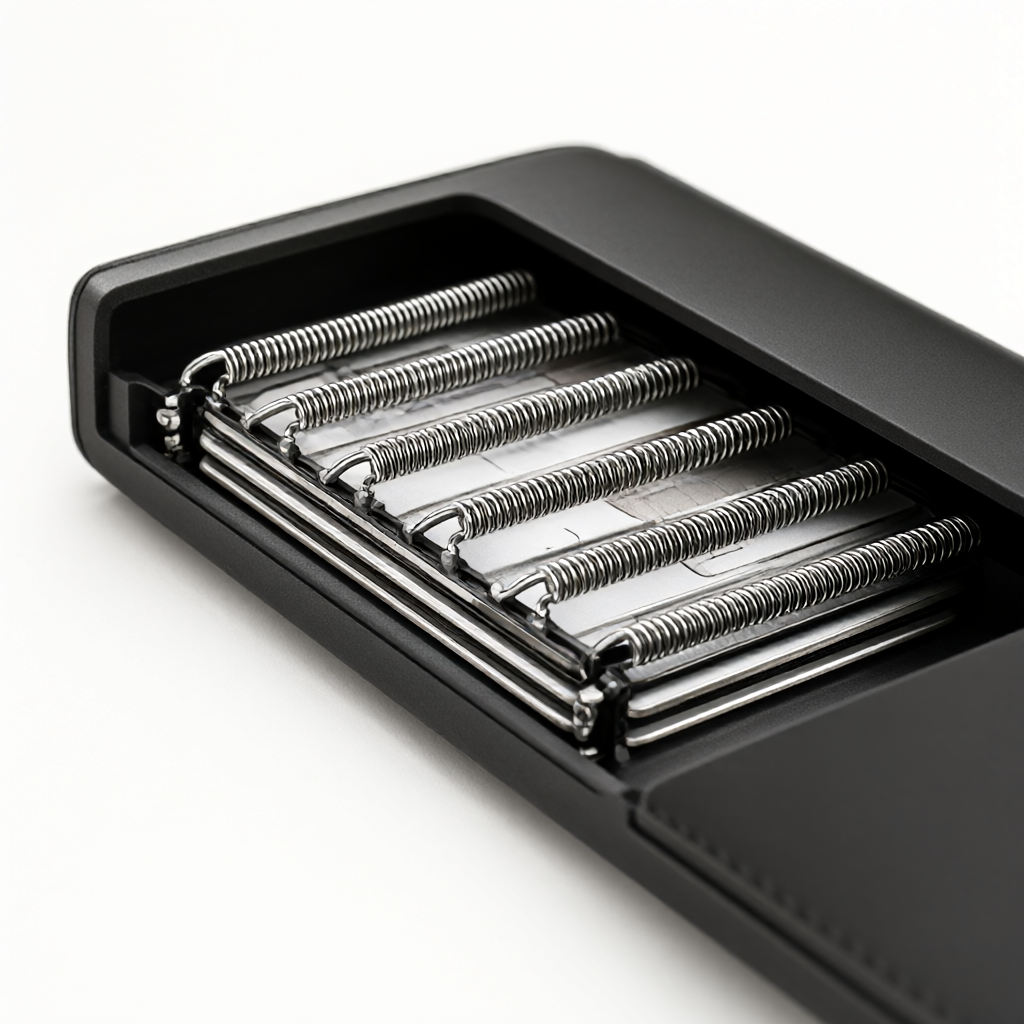
Understanding the mechanics behind these wallets helps you evaluate them objectively instead of relying on marketing language alone. Most designs fall into two functional categories: passive holders and active ejection systems.
Passive card holders rely on friction, elastic bands, or spring-loaded plates to keep cards organized. They are simple, lightweight, and inexpensive, but retrieving a card usually means pulling from the stack, which can shuffle your other cards out of order. Active ejection systems use springs or levers to push the top card forward when you press a button. This makes daily retrieval faster and keeps your cards aligned.
Money clip variants add a metal clasp that holds folded bills against the card stack. The clip applies consistent pressure without stretching leather over time. Some models offer hybrid configurations where the clip sits beside the card mechanism rather than replacing it entirely.
Security features like RFID-blocking layers sit between the outer shell and the inner card slots. These layers absorb radio-frequency signals, preventing unauthorized scanners from reading the magnetic strips or chip data on your cards. For more detail on shielding technology, see our RFID wallets buyer guide.
Which Specifications Define a Mini Card Wallet?
A mini card wallet measures under 100 mm wide, holds four to eight cards, and stays under 8 mm loaded.
What defines a good mini card wallet?
The essentials come down to capacity, build materials, dimensions, and the carrying method. A well-designed unit balances these factors rather than maximizing any single one.
Card capacity typically ranges from 1 to 12 cards depending on thickness and design. Ultra-slim versions hold 3 to 5 cards comfortably; expanded editions accommodate 6 to 10 cards plus cash. Overloading a wallet beyond its designed capacity causes the ejector mechanism to jam or the card edges to warp.
Dimensions usually fall between 2.5 and 3.5 inches in height and 1.5 to 2.5 inches in width, with thickness ranging from 0.25 to 0.75 inches when fully loaded. Front-pocket carriers prefer the lower end of this range. Back-pocket carriers can absorb slightly taller profiles without discomfort.
Weight varies significantly by material. Aluminum models generally weigh 2 to 3 ounces. Carbon fiber units sit around 1 to 2 ounces. Titanium versions fall between 2 and 3 ounces. Stainless steel wallets tend toward the heavier side at 3 to 4 ounces. Every additional gram matters when this is your only carry item.
What are the key specs to compare?
| Specification | Typical Range | Why It Matters |
|---|---|---|
| Height | 2.5–3.5 inches | Determines pocket compatibility |
| Width | 1.5–2.5 inches | Affects grip and card removal ease |
| Thickness (loaded) | 0.25–0.75 inches | Controls comfort in front vs. back pockets |
| Weight | 1–4 oz | Influences pocket sag and long-term carry fatigue |
| Card capacity | 1–12 cards | Sets realistic daily-carry limits |
| Material | Aluminum, carbon fiber, titanium, steel | Drives durability, weight, and aesthetics |
| Ejection type | Passive, spring-assisted, manual lever | Impacts card retrieval speed and reliability |
| RFID layer | Integrated aluminum or special mesh | Provides contactless payment protection |
Which size fits your pocket situation best?
Front-pocket carry demands the slimmest possible profile to avoid pressure points on the hip or lower back. A wallet under 0.5 inches thick when loaded works well here. Back-pocket carry allows slightly thicker designs since the weight distributes across the glutes, though persistent sitting with an overly bulky wallet can still cause discomfort during long hours.
Travel situations often justify a larger capacity. Weekend trips and business travel introduce additional cards, boarding passes, and event tickets that exceed daily carry needs. A modular system or a wallet with removable inserts handles this variability better than a fixed-capacity model.
For sizing specifics, consult our wallet dimension guide before committing to a purchase.
Which Standards Apply to Mini Card Wallets?
What standards apply to quality wallets?
Manufacturers follow recognized quality management and environmental compliance frameworks. ISO 9001 certification indicates a facility maintains documented processes for design control, material verification, production monitoring, and corrective actions. It does not guarantee every individual product performs identically, but it gives buyers confidence that the factory has systematic methods for consistency.
BSCI audits cover social compliance in manufacturing environments, including working conditions, child labor policies, and safety protocols. Buyers sourcing from contract manufacturers commonly request BSCI documentation as part of supplier evaluation.
Material safety standards such as REACH and RoHS restrict hazardous substances in products sold in certain markets. Reputable factories test raw materials and finished components to demonstrate compliance before shipping. SGS provides independent verification of material safety and performance claims, offering objective third-party validation.
Certification documents provide verifiable proof rather than marketing assertions. When evaluating suppliers, ask for current audit certificates and match them to the factory address listed.
What should you verify about construction quality?
Look for uniform surface finishing without sharp burrs or uneven anodized patches. Laser-engraved logos should appear crisp with no charring or bleeding into surrounding areas. Mechanical ejectors should cycle smoothly without grinding or excessive force. Card slots should retain tension after repeated insertion and removal cycles.
Drop resistance varies widely across price points and materials. Aluminum wallets generally survive routine drops without structural damage, though deep scratches accumulate over months of pocket carry. Carbon fiber resists impact better than aluminum but can delaminate if struck at critical angles. Titanium offers excellent strength-to-weight performance but costs considerably more due to machining difficulty.
Which Mini Card Wallet Styles Exist?
Four styles dominate: flat cardholder, clip frame, chained wallet, and tactical rugged case.
How do chained wallets differ from standard mini card wallets?
Chained wallets attach a short cord or strap to the wallet body, allowing the user to secure the wallet to a bag, belt loop, or buttonhole. Designer chain wallets elevate this concept with decorative hardware, branded finishes, and premium material pairings. Both styles prioritize anti-loss security over pure slimness, making them suitable for crowded environments like public transit, concerts, and busy airports.
The added chain introduces extra weight and occupies space in a bag or pocket. Buyers who value peace of mind while traveling often accept the trade-off. Those prioritizing minimal bulk typically skip chains in favor of purely pocket-mounted designs.
Our guide to card-safe wallets covers additional organizational features worth evaluating alongside aesthetic choices.
What color and finish options exist?
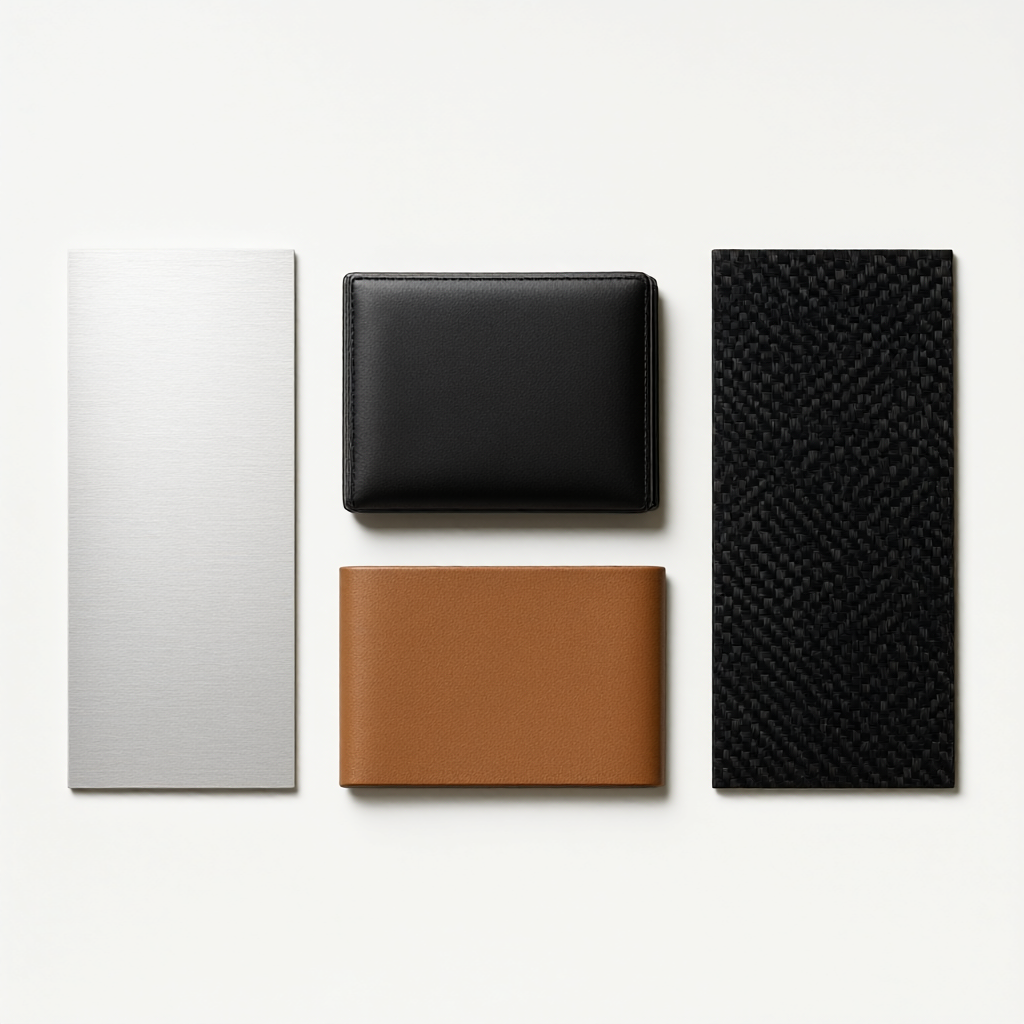
Standard finishes include natural aluminum silver, matte black anodized aluminum, gunmetal gray, brushed titanium, and glossy carbon fiber weaves. Color trends lean toward neutrals for everyday versatility, though seasonal limited editions frequently feature bold tones like forest green, vibrant orange, and deep red. Custom powder coating and laser engraving allow personalized color matching for corporate gifting or promotional campaigns.
Grey and black remain perennial favorites because they conceal scuffs and fingerprint marks better than polished metallic finishes. Anodized colors resist fading far longer than painted coatings, which matters for wallets subjected to daily sunlight exposure.
Are rugged and tactical designs practical for daily use?
Tactical-themed wallets emphasize durability through reinforced corners, textured gripping surfaces, and MOLLE-compatible attachment options. Some include integrated tools like bottle openers or screwdrivers. While these features appeal to outdoor enthusiasts, they add weight and complexity that urban commuters rarely need. A streamlined rugged wallet without embedded tools often delivers the same durability with less bulk.
How Does a Mini Card Wallet Protect Cards?
How does RFID blocking protect your cards?
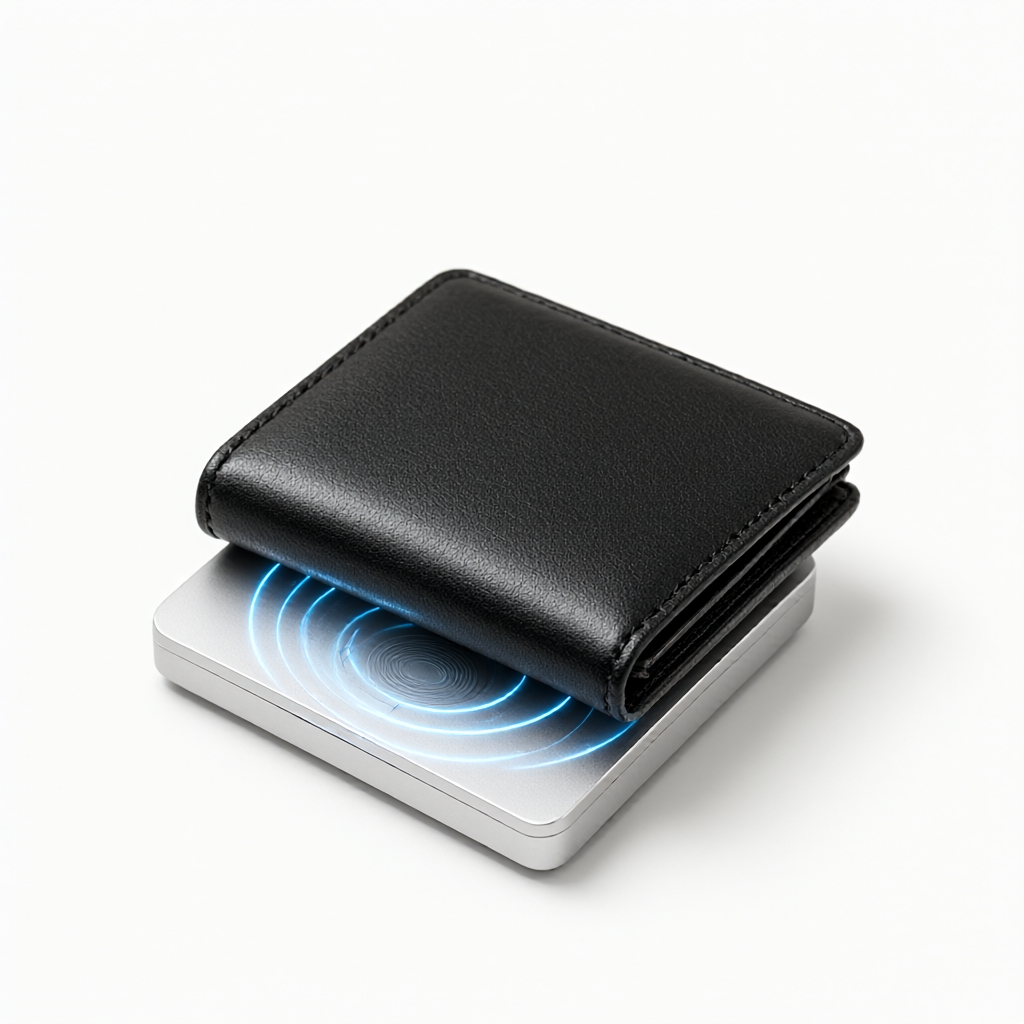
RFID-enabled credit and ID cards contain small antennas and chips that communicate wirelessly with point-of-sale readers. RFID-blocking wallets incorporate a conductive layer, typically made from aluminum foil or specialized metal mesh, positioned between the card slots and the exterior. This layer creates a Faraday shield that absorbs electromagnetic energy from external scanners, preventing data transmission.
Shielding effectiveness depends on complete coverage. Gaps around card slots or thin sections near the ejector mechanism can reduce protection. Reputable manufacturers test shielding performance using standardized measurement equipment and report results in decibel reduction or signal attenuation figures.
Airport security checkpoints routinely scan wallets placed in trays. Metal wallets pass through X-ray machines without damage, and TSA screening does not affect the functionality of RFID-blocking layers or card data. You can safely carry a metal wallet through all security screenings.
What physical security mechanisms are available?
Spring-loaded ejectors prevent accidental card loss by maintaining positive retention until deliberate pressure releases the card. Magnetic closures provide a secondary lock in some hybrid designs, adding a snap-shut feature for high-movement activities like cycling or hiking. Combination locks on full-size organizers are uncommon in mini card formats due to size constraints.
Anti-skipping mechanisms keep cards from sliding partially out of the slot when the wallet moves rapidly. This feature relies on tight tolerances between the ejector plate and card edges. Cheap implementations sometimes cause excessive friction that makes card removal frustrating.
Where Can You Buy Mini Card Wallets Online?
Purchasing a mini card wallet online requires attention to seller reputation, return policies, and product transparency. Established e-commerce platforms offer buyer protection programs and verified reviews. Direct manufacturer websites often provide fuller customization options, competitive pricing on bulk orders, and faster sample turnaround.
When comparing sellers, check whether they publish detailed specifications, high-resolution images from multiple angles, and material composition information. Vague listings with only lifestyle photos often indicate dropshippers reselling unverified products. Third-party review sites and enthusiast forums provide long-term usage reports that reveal wear patterns, mechanism failures, and material degradation over extended periods.
What Should You Consider Before Buying?
Several practical factors influence satisfaction beyond material and price alone.
Daily habits determine ideal capacity. If you consistently carry five cards plus cash, a four-slot wallet forces uncomfortable compression or leaves money unsecured. If you rotate between three and six cards weekly, a flexible loader system with removable spacers avoids overbuying capacity you never use.
Carrying preference shapes form factor. Front-pocket carriers benefit from ultra-thin rectangular designs that eliminate bulging. Back-pocket users have more latitude to select wider, taller wallets with higher capacities. Hybrid approaches combining a slim front-card holder with a separate bill compartment distribute weight differently but require managing two pieces instead of one.
Professional settings may dictate subtlety. Corporate environments often reward understated designs in black, grey, or dark brown. Outdoor and casual contexts tolerate bolder textures, visible tool elements, and brighter accent colors. Matching your wallet to your daily dress code prevents visual mismatch.
Gift buyers should consider recipients’ existing habits. Someone transitioning from a traditional bi-fold benefits most from a straightforward replacement with familiar card spacing. A minimalist converter might appreciate advanced ejection mechanisms and interchangeable backplates. Understanding recipient preferences reduces return rates and increases satisfaction.
Customization adds meaningful value for bulk purchases. Laser engraving on aluminum and titanium surfaces produces permanent markings that withstand years of pocket friction. UV printing works well on flat polymer substrates but fades faster under direct sunlight exposure. Select engraving for longevity and printing for cost-effective shorter runs.
Which Related Wallets Should Buyers Consider?
Women’s minimalist wallets share many technical specifications with men’s models but often feature narrower widths, lighter weights, and softer color palettes. Cross-gender appeal continues growing as gender-neutral design gains traction across fashion and accessories. Many brands now offer identical structural models in coordinated color families suited to diverse preferences.
Full-size organizers remain relevant for users requiring extensive storage alongside slim efficiency. These models integrate coin pockets, receipt compartments, and passport sleeves into a single unit. They sacrifice pocket flexibility but eliminate the need for multiple carry items during travel.
Leather remains a viable material choice for buyers preferring traditional warmth and patina development. See our leather wallet care guide for maintenance recommendations if you select genuine hides over metals.
Budget-conscious shoppers can find functional options across price tiers. Entry-level aluminum wallets often perform adequately for basic card storage, while premium titanium and carbon fiber models invest in tighter tolerances, smoother ejector action, and longer-lasting finishes. Price differences usually reflect material cost and manufacturing precision rather than dramatic functional gaps within the same category.
How Do Mini Card Wallets Solve Real Carry Problems?
They cut pocket bulk by roughly half and end the sit-on-wallet problem entirely.
The shift toward mini card wallets reflects a measurable change in how men carry daily essentials. Industry observations show that the average man carries between five and eight cards regularly, with cash usage declining steadily as contactless payment adoption increases across North America, Europe, and Australia. A mini card wallet addresses this by removing dead weight — expired loyalty cards, receipt holders, and spare change pockets — while retaining only what matters for daily transactions.
The practical benefit comes down to pocket ergonomics. A traditional bi-fold wallet typically adds 1.5 to 2 inches of thickness in the front pocket, creating pressure points along the iliac crest and upper thigh during prolonged sitting or walking. This pressure can contribute to sciatic nerve irritation, commonly referred to in ergonomic literature as wallet-induced discomfort. Switching to a minimalist card wallet reduces pocket bulk by approximately 60 to 75 percent, which most users notice within the first week of daily carry.
Beyond comfort, mini card wallets improve retrieval speed. With a stack of five to eight cards arranged in a single plane, users can feel for their ID or primary card by touch alone without looking. This tactile access matters in situations like airport queues, club entries, or checkout lines where both hands may not be available.
For detailed sizing recommendations tailored to different carry styles, refer to our wallet dimension guide.
How Do Mini Card Wallet Materials Compare?
Material selection determines almost every property a buyer cares about: weight, durability, scratch resistance, aesthetics, and price. Each material enters the wallet through different manufacturing pathways, which affects both performance and cost.
How Do Aluminum Mini Wallets Perform?
Anodized aluminum dominates the entry-to-mid-tier segment. The base material is typically 6061-T6 aluminum alloy, chosen for its machinability and reasonable strength. After CNC machining or stamping, the surface undergoes electrolytic anodizing — an electrochemical process that thickens the natural oxide layer, creating a hard, corrosion-resistant surface. Type II anodizing produces layers around 0.0002 to 0.001 inches thick, while Type III (hardcoat) anodizing reaches 0.001 to 0.003 inches, significantly improving abrasion resistance.
Aluminum wallets generally weigh between 2 and 3 ounces loaded. They resist everyday scratches reasonably well but will show micro-abrasions over months of pocket carry. The anodized finish prevents the bare metal from contacting skin directly, reducing the likelihood of allergic reactions for users sensitive to aluminum salts.
Cost range for aluminum wallets typically falls between $15 and $45 per unit at retail, with OEM bulk pricing considerably lower depending on order volume and customization level.
How Do Carbon Fiber Mini Wallets Perform?
Carbon fiber construction involves laminating woven carbon fiber sheets with epoxy resin under heat and pressure, then machining the resulting block into wallet form. The result is a material that is lighter than aluminum and notably stiffer, with a characteristic glossy weave pattern that many buyers find visually distinctive.
Loaded weight for carbon fiber wallets usually ranges from 1 to 2 ounces — the lightest option among mainstream materials. The composite resists scratching better than anodized aluminum but can suffer from edge delamination if dropped onto sharp surfaces repeatedly. Cosmetic damage to carbon fiber is generally superficial and does not compromise structural integrity unless the laminate separates significantly.
Premium carbon fiber wallets position themselves in the $30 to $70 retail range, reflecting both material cost and the precision machining required.
How Do Titanium Mini Wallets Perform?
Titanium, typically Grade 2 commercial purity or Grade 5 (Ti-6Al-4V) for higher-strength applications, represents the premium end of the material spectrum. It offers superior strength-to-weight ratio compared to aluminum and excellent corrosion resistance that exceeds both aluminum and stainless steel. machined titanium wallets generally weigh 2 to 3 ounces when loaded.
The primary drawback is cost. Titanium is significantly more expensive than aluminum on a per-kilogram basis, and CNC machining titanium requires specialized tooling and slower feed rates, increasing production time. Retail prices for titanium wallets commonly start around $60 and extend well past $120 for intricately designed models.
Titanium is also naturally hypoallergenic, making it the preferred choice for users with metal sensitivities who cannot tolerate aluminum or certain steel alloys.
What Does the Material Comparison Show?
Aluminum is lightest, carbon fiber the stiffest, and titanium the most scratch resistant.
| Property | Aluminum (Anodized) | Carbon Fiber | Titanium |
|---|---|---|---|
| Typical loaded weight | 2–3 oz | 1–2 oz | 2–3 oz |
| Scratch resistance | Good | Very good | Excellent |
| Impact resistance | Good | Moderate (delamination risk) | Excellent |
| Corrosion resistance | Good | Excellent | Excellent |
| Hypoallergenic | Generally yes (anodized) | Yes | Yes |
| Relative cost tier | Low–mid | Mid–high | High |
| Best for | Budget-conscious buyers | Weight-focused users | Maximum durability |
What Are the Limits of RFID Blocking in Mini Wallets?
RFID (Radio Frequency Identification) technology operates at two dominant frequencies for payment and identification cards: 13.56 MHz for contactless credit cards and some passports, and 125 kHz for older access control badges. Shielding effectiveness varies depending on frequency, so a wallet claiming RFID protection should specify which frequencies it addresses.
The shielding layer inside a wallet functions as a Faraday cage — a conductive enclosure that redistributes external electromagnetic fields around its exterior, preventing them from penetrating the interior. Common shielding materials include aluminum foil laminates, stainless steel mesh, and specially formulated conductive fabrics. The shielding must cover all card positions comprehensively; gaps larger than a few millimeters can allow signal leakage at resonant frequencies.
Independent testing conducted by research organizations and consumer electronics labs has demonstrated that properly constructed RFID-blocking wallets can attenuate signals by 20 to 40 dB at 13.56 MHz, effectively reducing readable signal strength to less than one percent of the original. However, no consumer-grade shielding provides absolute protection, and the effectiveness degrades over time if the conductive layer is bent, punctured, or worn through repeated flexing.
For comprehensive guidance on selecting card-safe wallets with verified RFID protection, consult our complete RFID wallet buyer guide.
What Physical Security Features Matter Beyond RFID?
Card retention is the other critical security function. A wallet that drops a card when opened carelessly creates the same risk as an unlocked door. Quality spring ejectors apply measured force — enough to hold cards firmly under normal movement but smooth enough to release them deliberately with a button press. Testing standards for ejector mechanisms evaluate cycle life, typically requiring 5,000 to 10,000 full extension and retraction cycles without significant force degradation.
Anti-skipping designs incorporate precision-machined guides that keep each card aligned perpendicular to the wallet face. Lower-quality implementations rely on friction alone, which causes cards to tilt and catch on adjacent cards during removal. A well-designed system maintains parallel alignment even after hundreds of card insertions and withdrawals.
Which Production Processes Ensure Wallet Quality?
Understanding how wallets are manufactured helps buyers evaluate claims about quality and durability. The production chain for a typical aluminum mini card wallet involves several stages:
CNC Machining: Solid blocks of 6061-T6 aluminum are mounted on multi-axis CNC milling machines. Tool paths remove material to create the outer shell, card slots, and mechanism housings. Tolerances for critical interfaces like the ejector track typically fall within ±0.005 inches. Modern 5-axis CNC centers complete a single wallet body in approximately 3 to 8 minutes depending on complexity.
Anodizing: Machined parts undergo cleaning, electrical connection, and immersion in sulfuric acid baths. Voltage and temperature control determine anodize thickness and color consistency. Curing time for Type II anodizing averages 30 to 60 minutes per batch. Post-anodizing sealing in hot deionized water closes the pore structure, locking in color and improving corrosion resistance.
Laser Engraving: Logo application uses fiber laser markers operating at wavelengths around 1,064 nanometers. Power settings between 20 and 80 watts produce engraved marks ranging from subtle matte contrasts to deep cuts. Marking speed varies from 200 to 800 mm/s depending on desired depth and material response.
Component Assembly: Springs, ejector plates, and button mechanisms are assembled on dedicated workstations. Quality checks verify smooth mechanical operation, proper tension, and correct component placement. Final inspection includes visual screening for surface defects and dimensional verification against engineering drawings.
Packaging: Completed wallets receive protective films, insertion into custom boxes or blister packs, and shipment preparation. For Amazon FBA orders, units undergo barcoding, polybagging, and carton labeling according to platform requirements.
Lead times for a standard OEM order of 500 to 1,000 units typically span 25 to 35 days from approved art to factory shipment, including sample approval, tooling setup, production, quality control, and packaging. Expedited schedules of 14 to 21 days are possible for simpler designs with existing tooling.
Which Checklist Vets Mini Card Wallet Suppliers?
Procuring custom wallets through OEM or ODM manufacturers requires systematic evaluation. Use this checklist to assess potential suppliers before placing orders:
- Certification verification: Request current ISO 9001 and BSCI certificates. Confirm the certificate holder matches the factory address and that audits are recent (within the last 12 to 24 months). Cross-reference with the certifying body’s online registry when possible.
- Material compliance documentation: Ask for REACH and RoHS test reports from SGS or equivalent accredited laboratories. Reports should list tested substances and confirm concentrations below regulatory thresholds.
- Sample protocol: Request pre-production samples before committing to volume. Evaluate finish quality, mechanical action, material feel, and engraving accuracy. Test RFID blocking independently using a smartphone app or dedicated reader before approving production.
- MOQ assessment: Determine minimum order quantities for your target configuration. Standard colors and unengraved units often have lower thresholds. Custom colors, engravings, and special packaging increase minimums due to setup costs and material waste.
- Production timeline confirmation: Obtain written lead times for samples and bulk production. Verify whether quoted timelines include quality inspection and packaging or represent factory-gate estimates only.
- Quality inspection terms: Clarify whether third-party inspection (e.g., SGS, Bureau Veritas) is acceptable and who covers inspection fees. Define acceptable defect rates and remediation procedures for non-conforming shipments.
- IP protection: Sign non-disclosure agreements before sharing designs or logos. Confirm that the manufacturer does not produce identical or near-identical products for competing brands without authorization.
For additional guidance on choosing the right minimalist wallet approach for your brand, review our minimalist wallets guide.
Who Manufactures Mini Card Wallets to These Standards?
As a manufacturer specializing in minimalist EDC wallets and pocket gear, our approach follows the same evaluation framework outlined above. We have operated for over a decade serving brand owners, Amazon FBA sellers, and distributors who need reliable production partners rather than trading companies.
Our facility runs ISO 9001-certified processes covering everything from incoming material inspection through final shipment. Raw aluminum billets, carbon fiber prepregs, and titanium stock arrive with mill certificates and are verified against specification before entering production. Every batch of anodized parts undergoes color consistency checks using spectrophotometer readings and pull-off adhesion tests on witness panels.
The CNC machining center handles components from 300-piece prototypes to 50,000-piece monthly runs without retooling delays for standard designs. Laser engraving registers within 0.1 mm accuracy across the full product surface, and anodized finishes meet ASTM B449 salt spray requirements for the designated coating thickness. Our BSCI audit covers social compliance across the facility, providing the documentation that European and North American retailers require.
When you work with us, you get direct access to engineering input during the design phase — not just production execution. We review card slot geometry for ejection reliability, suggest material choices based on your target market positioning, and provide prototype samples within seven days for standard configurations. Private label packaging is designed in-house, and we handle FBA compliance prep including barcode application and carton labeling for Amazon distribution channels.
Contact Our Team to discuss your project specifications, volume requirements, and timeline.
Where Do the Sources for This Guide Come From?
- iso.org — www.iso.org
- ftc.gov — www.ftc.gov
- minimalist wallet — topedcwallet.com
- RFID wallets buyer guide — topedcwallet.com
- wallet dimension guide — topedcwallet.com
- guide to card-safe wallets — topedcwallet.com
- leather wallet care guide — topedcwallet.com
- Contact Our Team — topedcwallet.com
Mini Card Wallet FAQ: Cash, Phone Cases, Chains, Front Pocket Limits — Which Questions Do Buyers Ask Most?
Does a mini card wallet hold cash?
Most hold four to eight folded bills. Anything more requires a clip or a separate money clip strap.
Will a mini card wallet work with a thick phone case?
Yes if it sits under 100 mm wide, but magnetic attachments may interfere with the phone case magnet array.
Is a chained wallet safe for travel?
A chain deters pickpockets but adds noise and weight; travel buyers usually prefer a hidden pocket instead.
How thick is too thick for a front pocket mini wallet?
Past 10 mm loaded the wallet prints through denim, so eight cards plus two bills is the practical ceiling.
From article to product
Sourcing minimalist-wallets?
Tell us the format, the quantity and the date you need stock. You get material options, MOQ and a landed-cost range back within one business day.
Keep reading
More on wallet types
Thin Male Wallets: Buying Guide for Slim Minimalist Picks
How to choose a slim wallet for men — thickness thresholds, material trade-offs, capacity…
ReadStashed Wallet: A Minimalist Everyday-Carry Solution
Understand what a stashed wallet is, how minimalist slim wallets work, and what to…
ReadFolding Wallets: Types, Materials & Buying Guide
Learn what makes a folding wallet worth buying, from materials and card capacity to…
Read
About the author
TOPWALLET Editorial Team
TOPWALLET's editorial and engineering desk writes from bench testing at the Shenzhen (Longgang) facility: pull-force and cycle testing, 13.56 MHz shielding measurements, finish trials and factory audits, rather than supplier spec sheets. Every specification in these guides is one we write on a purchase order.
Written on the floor
This article was written by our production and QC team — the people who spec tolerances, run the finishing line and inspect every batch. Where it states a capacity, a pull force or a lead time, it comes from a measurement we made, not a supplier’s catalogue. If a number here disagrees with what your own supplier told you, tell us; several of these articles started as a correction from a buyer.
See how the factory works · Inspection process · Sourcing FAQ
Sourcing minimalist-wallets?
Tell us the format, the quantity and the date you need stock. You get material options, MOQ and a landed-cost range back within one business day.