

A wristlet is a compact pouch-style accessory with an integrated wrist strap or band that wraps around your wrist for secure hands-free carrying. To use one correctly, slip your hand through the strap so the body of the bag rests against the back of your hand or along your forearm, then keep your fingers loosely looped through if extra security is needed. It should sit snugly enough that it won’t swing freely, but not so tight that circulation is restricted or movement becomes awkward. Unlike a clutch that relies entirely on your grip or a crossbody that hangs off-shoulder, a wristlet stays attached to your body through direct wrist contact. This makes it ideal for situations where you need both your hands relatively free and instant access to essentials — think airport terminals, restaurant tables, or evening events. For basic care, wipe leather surfaces with a dry cloth monthly and store empty in a dust bag to preserve shape.
Quick Answer — What Is a Wristlet and How Do You Properly Wear One?
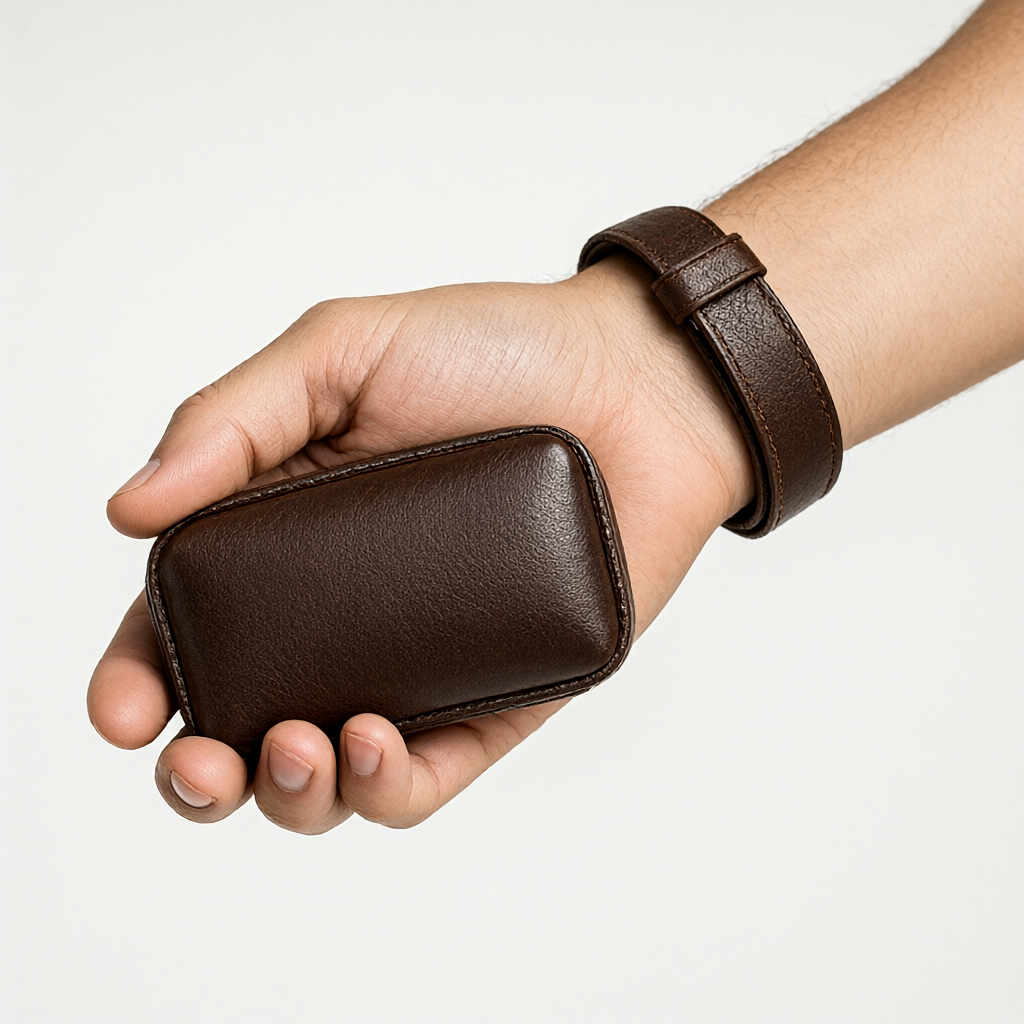
A wristlet is a compact pouch-style accessory with an integrated wrist strap or band that wraps around your wrist for secure hands-free carrying. To use one correctly, slip your hand through the strap so the body of the bag rests against the back of your hand or along your forearm, then keep your fingers loosely looped through if extra security is needed. It should sit snugly enough that it won’t swing freely, but not so tight that circulation is restricted or movement becomes awkward.
Unlike a clutch that relies entirely on your grip or a crossbody that hangs off-shoulder, a wristlet stays attached to your body through direct wrist contact. This makes it ideal for situations where you need both your hands relatively free and instant access to essentials — think airport terminals, restaurant tables, or evening events.
Use Wristlet: How Does It Work in Detail?
What Makes a Wristlet Different From a Clutch, Purse, or Card Holder?
The core distinction lies in how each item stays attached to you. A clutch has no strap and must be carried in hand or tucked under the arm. A purse (or shoulder bag) uses a longer strap and rests on your hip or shoulder. A card holder, such as those covered in our what is a card holder definition guide, is purely a flat wallet form factor designed to hold cards and cash inside a pocket.
A wristlet occupies the middle ground. The strap is short — typically 4 to 7 inches of usable length — and specifically designed to wrap around the wrist rather than drape over the shoulder. Some designs include a removable long strap that converts the piece into a mini crossbody, giving buyers flexibility in how the item functions.
From a B2B perspective, this hybrid positioning is valuable. Retailers can stock a single SKU that serves two use cases — a fashion wristlet for evening and a compact organizer for daily carry. Promotional product buyers appreciate the same versatility at lower unit costs compared to full-sized handbags.
How Does a Wristlet Work Mechanically?
Every wristlet shares three functional components:
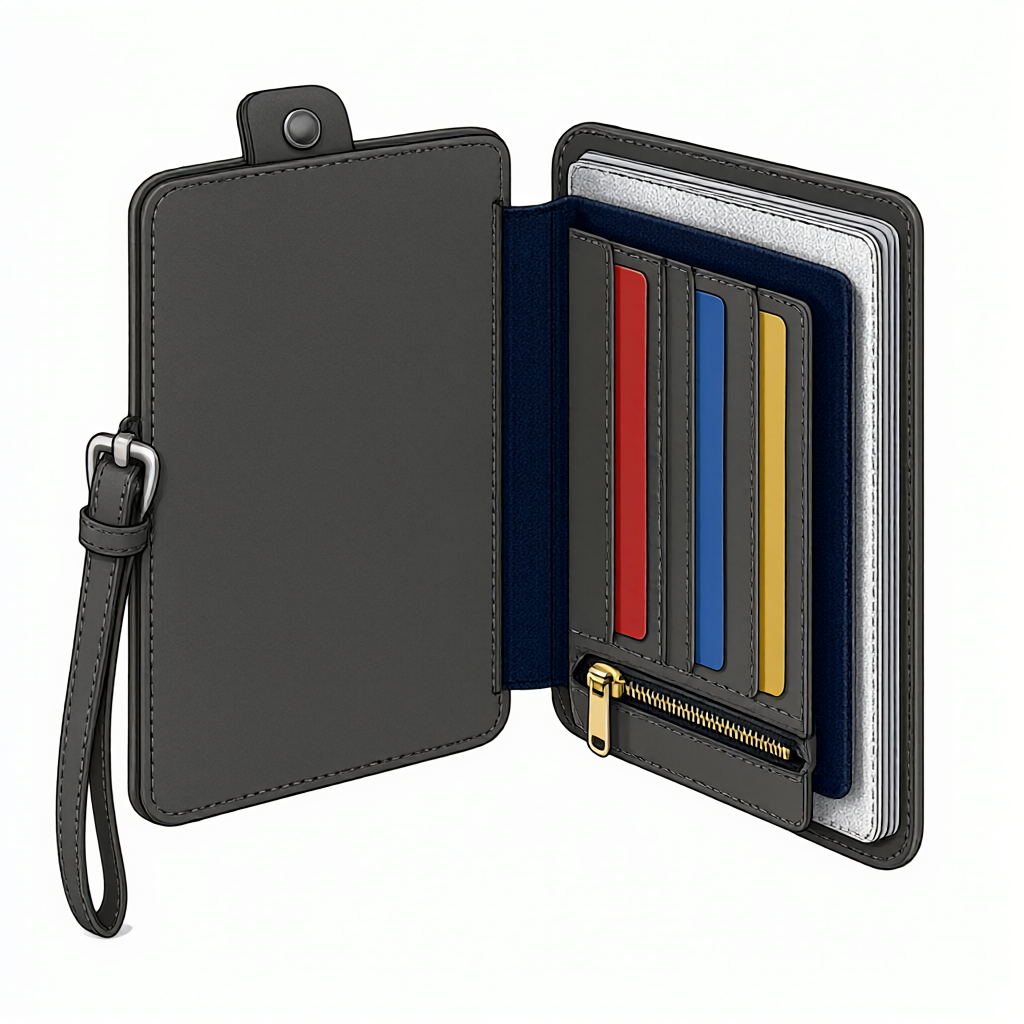
- The main compartment — a zippered, snap-closed, or magnetic-flap enclosure that holds contents.
- The wrist strap — a fixed loop of fabric, leather, metal chain, or woven material stitched or riveted to at least two points on the bag body. Quality construction distributes stress across multiple attachment points rather than relying on a single stitch line.
- Interior organization — card slots, zip pockets, or dividers that keep items separated. The best designs mirror the layout of a well-organized EDC wallet system rather than leaving everything to tumble together.
When worn correctly, weight transfers from your grip muscles to your wrist and forearm, reducing fatigue during extended carry.
What Types of Wristlets Exist on the Market?
Buyers encounter several distinct categories, each suited to different use cases:
- Fashion wristlets — Soft leather or fabric bodies with decorative hardware. Geared toward evening and casual wear. Common in boutique retail and corporate gift programs.
- Phone wristlets — Sized specifically to accommodate modern smartphones (up to approximately 6.7-inch diagonal screens). Often include interior slots for cards and cash, functioning as a wallet-phone combo.
- Tactical or outdoor wristlets — Rugged materials (ballistic nylon, Cordura, hardened leather) with MOLLE-compatible backs, quick-access closures, and sometimes RFID-blocking pockets. These overlap with EDC gear and appeal to a growing male-oriented market segment.
- Clutch-wristlet hybrids — Boxier structures with rigid frames and shorter straps. Bridge the gap between formal clutches and casual organizers.
- Minimalist card wristlets — Ultra-thin profiles with 4 to 8 card slots and a small cash pocket. Positioned near the slim wallet category studied in our wallet size standards guide.
What Are the Key Specifications Buyers Should Evaluate?
Three measurable dimensions determine whether a wristlet design succeeds in its intended role:
| Specification | Typical Range | Why It Matters |
|---|---|---|
| Strap inner circumference | 6.5 to 8.5 inches | Determines fit across average adult wrists; below 6.5 inches excludes larger wrists, above 9 inches risks slipping off |
| Bag body width | 5.5 to 8 inches | Controls capacity and visual proportion relative to wrist size |
| Bag body height | 3.5 to 5.5 inches | Dictates whether a phone, keys, and cards fit simultaneously |
| Closure type | Zip / magnetic snap / flap + snap | Zip offers maximum security; magnetic snap allows faster access; flap adds formal aesthetics |
| Weight (empty) | 3 to 8 oz | Heavier materials (metal-reinforced, thick leather) feel premium but increase carry fatigue |
| Interior pockets | 1 to 6 compartments | More organization reduces time spent searching; too many compartments reduce total capacity |
Wrist-circumference to bag-width mapping is critical for sizing accuracy. A woman with a 6.5-inch wrist typically looks proportional with a 5.5-to-6-inch-wide bag body. Someone at 7.5 inches benefits from 6.5-to-7.5-inch widths. Mismatching these proportions creates a visually unbalanced product that returns high rates in retail environments.
What Standards Apply to Wristlet Materials and Safety?
Material selection drives both regulatory compliance and end-user satisfaction. The primary concerns fall into three areas:
Chemical safety. Leather and synthetic leathers must comply with REACH restrictions on azo dyes, pentachlorophenol, and certain heavy metals. PVC-based vegan leathers should meet RoHS limits for phthalates and lead. When sourcing for EU-bound shipments, BSCI social-audit compliance also influences buyer eligibility with major retailers. ISO 9001 quality-management certification signals that a manufacturer maintains documented processes for incoming material inspection and finished-goods testing — essential context when evaluating suppliers for RFID-blocking technology integration or other tech features.
Hardware durability. Zippers, snaps, and ring attachments are failure points. Industry-standard brass or stainless-steel zippers rated for 5,000+ cycles outperform aluminum-alloy alternatives in longevity tests. Ring attachments that bear the full weight of a loaded wristlet should withstand pull forces exceeding 15 pounds without deformation.
Flammability. Fabric-based wristlets destined for the US market may need to meet flammability standards for children’s sleepwear-adjacent accessories depending on classification; general apparel textiles follow CA Prop 65 warning requirements when certain chemicals are present.
How Do You Style a Wristlet Across Occasions?
Styling compatibility depends primarily on three factors: material finish, color palette, and silhouette proportions.
Formal and evening occasions. Metallic-finish leathers, satin-lined interiors, and minimal hardware pair well with cocktail dresses or tailored suits. Choose a structured box shape in black, gold-tone, or deep jewel tones. The wristlet replaces the clutch as the primary carry item without drawing attention away from the outfit.
Business and professional settings. Smooth calfskin or pebbled leather in navy, cognac, or charcoal works with blazers and smart-casual separates. Avoid excessive branding or decorative chains. A clean silhouette with one exterior zip pocket communicates competence rather than ornamentation.
Casual and travel days. Canvas, woven textiles, or soft nubuck in earth tones complement jeans, tees, and light outer layers. This is where tactical and minimalist designs converge — a rugged waxed-canvas wristlet with internal card slots functions equally well at a farmers market and at a boarding gate.
Seasonal considerations. Lighter colors and breathable fabrics suit spring and summer wardrobes; darker tones and heavier leathers align with autumn and winter layers. Buyers rotating seasonal assortments should note that strap comfort changes with temperature — wide fabric straps pinch less in cold weather than thin metal chains.
A frequent mistake at the styling level is overstuffing. A wristlet filled beyond its seam line loses its structural integrity, looks untidy, and places uneven tension on the strap attachment points. Each item added should have a designated slot or pocket.
How Should You Organize and Pack a Wristlet?
Effective packing follows the same principle that governs well-designed minimalist EDC wallets: assign a fixed home for every item.
For a standard phone-sized wristlet, a practical configuration includes:
- Outer zip pocket: Transit card, parking ticket, or loose change. Items accessed frequently without opening the main compartment.
- Interior card slot row: Three to five credit cards, ID, and membership passes arranged vertically. This keeps them visible and prevents the “digging” behavior that damages both cards and lining.
- Main compartment: Smartphone centered against the back panel (where padding is thickest), folded bills beneath or beside it, keys on a small carabiner clipped to an interior D-ring if one exists.
- Small secondary pocket: Lip balm, mints, or earbuds — anything that doesn’t share space with the phone.
When sourcing these layouts, ask manufacturers whether they offer interior-stitching diagrams before production. A poorly planned interior forces end users into makeshift solutions that accelerate wear on zippers and seams.
What Care and Maintenance Practices Extend Wristlet Lifespan?
Maintenance varies significantly by material type:
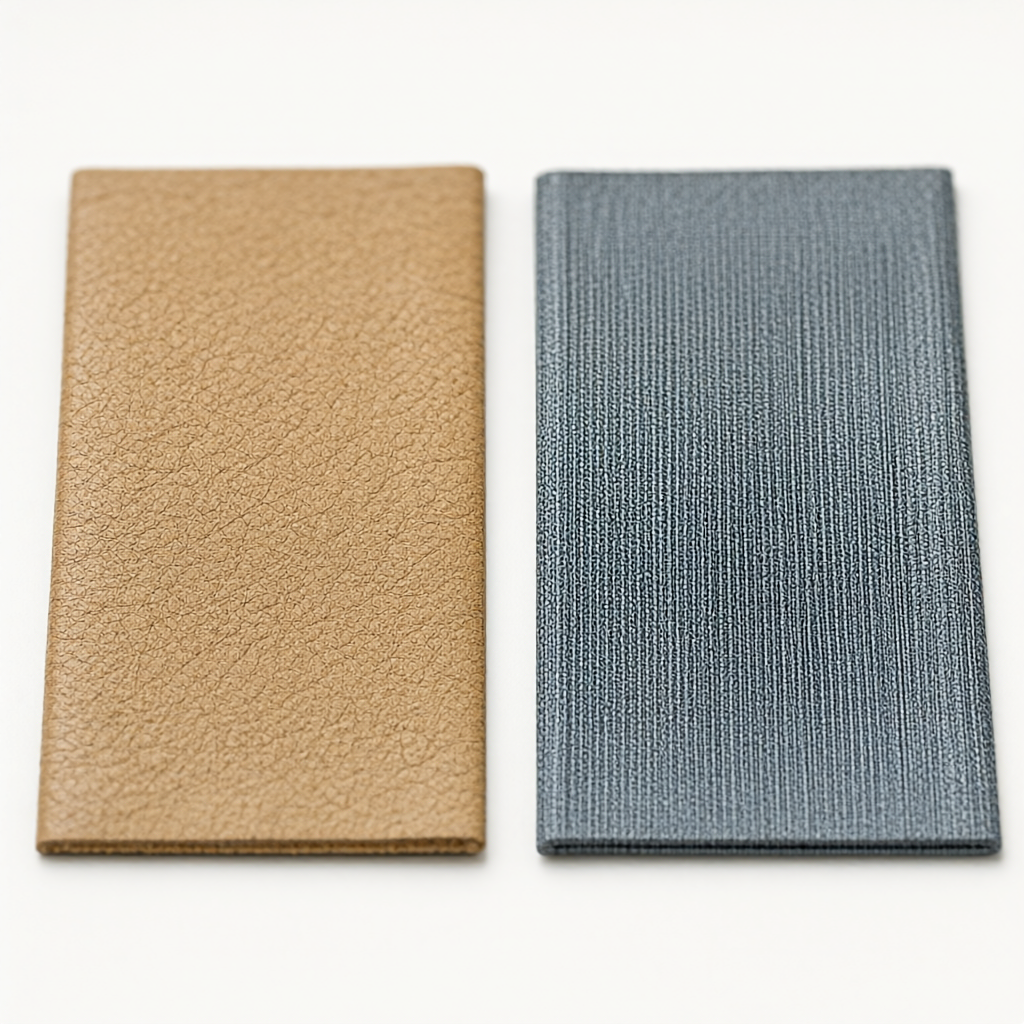
Full-grain and top-grain leather. Condition every two to three months with a leather-specific cream containing beeswax or lanolin. Clean surface dirt with a dry microfiber cloth before applying conditioner. Store away from direct sunlight to prevent UV fading and drying.
Synthetic leather and vegan leather. Wipe with a damp cloth and mild soap. Avoid alcohol-based cleaners, which break down polyurethane coatings over time. Conditioners formulated for animal leather are unnecessary and may degrade synthetics.
Canvas and ballistic nylon. Spot-clean with a soft brush and lukewarm water. Allow to air-dry completely before storing. Treat with a fabric protector spray if the wristlet will see wet-weather use.
Satin and delicate linings. Hand-dust with a clean, dry brush. Professional cleaning is advisable for stain removal rather than home treatment, which often sets proteins and oils permanently.
Regardless of material, store wristlets stuffed lightly with tissue paper to maintain shape, and never hang them by the strap alone — the concentrated stress can deform attachment rings over months of storage. Understanding proper cleaning methods parallels the guidance found in our how to clean a wallet article, which covers the same material-category framework adapted for wallet-scale products.
What Common Mistakes Should Buyers and Users Avoid?
Several recurring errors undermine both user satisfaction and return rates:
Choosing a strap that is too narrow concentrates pressure on a small area of the wrist, causing discomfort within minutes of wear. Wider straps distribute load more evenly.
Selecting a closure that conflicts with the primary use case. A magnetic flap closes quickly but opens accidentally in a crowded space; a double zipper is secure but slower. Match the mechanism to the environment.
Ignoring interior capacity math. Listing a wristlet as holding a “phone plus essentials” without specifying phone size leads to mismatched expectations. A iPhone 16 Pro Max (6.3 x 3.1 inches) occupies roughly 60 percent of a 6-inch-wide interior; smaller phones leave more room for cards and cash.
Overlooking strap adjustability. Fixed-length straps work well for a single demographic but limit market reach. Adjustable or convertible straps widen the addressable customer base without requiring separate SKUs.
Packing heavy items against the strap-attachment point creates a lever effect that stresses stitches. Distribute weight toward the center and bottom of the bag body.
Use Wristlet: What Else Should Buyers Consider?
Sourcing Wristlets for Private Label, Promotional, or Retail Programs
When moving from selecting a wristlet to procuring it at scale, several factors determine whether a supplier can deliver reliably:
MOQ and tooling. Many manufacturers set minimum order quantities between 100 and 500 pieces per design for custom-printed or embroidered logo applications. Standard blank styles may start at 50 units. Reusable silicone molds cost less upfront but per-unit savings accumulate only at higher volumes. Hard-tooling for metal hardware attachments requires a larger initial investment but improves consistency across large runs.
Lead times. Production cycles for fabric-based wristlets typically run 25 to 40 days after artwork approval. Leather goods add 5 to 10 days for material sourcing and finishing. Rush orders are possible but shift cost structure meaningfully.
Certification requirements. Major retail buyers increasingly require documentation before onboarding new suppliers. ISO 9001 certification confirms that the facility operates a auditable quality-management system covering material inspection, in-process checks, and finished-goods verification. BSCI audit reports satisfy social-compliance checks for European and North American buyers. REACH and RoHS declarations are mandatory for chemical exposure claims. SGS test reports provide third-party validation for specific substance limits. When evaluating potential partners for a wristlet line — similar to vetting manufacturers for RFID wallet sourcing — requesting current certificates before sampling begins prevents costly renegotiation later.
Customization depth. Full OEM capability means a buyer can specify exterior material, interior lining, strap construction, hardware finish, closure type, logo placement method (laser engraving, embossing, silk screening, or UV printing), and packaging format. ODM routes are suitable when a buyer selects from existing design libraries and modifies color or branding. Pure white-label ordering involves no alterations beyond inserted hangtags or custom boxes.
Packaging and shipping prep. Private-label buyers typically require polybag-or-box presentation ready for shelf placement. Amazon FBA sellers need FNSKU barcoding applied at the unit level and carton labeling compliant with carrier specifications. Drop-shipping arrangements demand that the manufacturer handle individual order fulfillment with branded packing slips and neutral outer cartons.
Sample evaluation. Always request a pre-production sample before committing to bulk. Inspect stitch density (aim for at least 8 to 10 stitches per inch on stressed seams), zipper smoothness across full travel, interior lining adhesion at corner points, and hardware plating uniformity. Sample cost is modest relative to the risk of mass-producing a flawed design.
Gender-neutral and men’s-market opportunities. The wristlet category has historically targeted women, but tactical and minimalist designs have expanded the addressable market. Men’s wristlets tend toward darker colorways, rectangular or streamlined silhouettes, and hardware finishes in matte black, gunmetal, or brushed nickel. Buyers entering this segment should prioritize function-first designs with sufficient card capacity and phone accommodation without overtly masculine decorative elements.
As a manufacturer, our approach to this is straightforward: we build from proven construction patterns, validate materials against stated use cases, and treat customization as a series of component choices rather than a compromise on structural integrity. Our production process mirrors the discipline applied to our EDC wallet manufacturing workflow, where every material specification and stitching pattern is documented before cutting begins. When clients bring concept sketches or reference products, we translate intent into manufacturable specs — selecting appropriate fabrics, confirming hardware ratings, and advising on realistic tolerances before any mold is opened or fabric is cut.
Basic Care and Maintenance Quick Tips
- Leather: Wipe with a dry microfiber cloth after each use. Condition every 2–3 months with a beeswax-based cream.
- Synthetic/Vegan Leather: Clean with a damp cloth and mild soap; avoid alcohol-based cleaners.
- Canvas/Nylon: Spot-clean with a soft brush and lukewarm water; air-dry completely.
- General Storage: Stuff lightly with tissue paper, keep away from direct sunlight and humidity, never hang by the strap alone.
Key Production Processes and Quality Standards
Understanding manufacturing processes helps buyers evaluate supplier credibility.
1. Leather Tanning Methods
- Vegetable tanning uses natural tannins from tree bark, producing durable, eco-friendly leather that develops a patina. Requires 30–60 days.
- Chrome tanning is faster (24 hours) and yields softer, more water-resistant leather but involves chromium salts regulated under REACH (EC No 1907/2006).
- Reputable suppliers source leather from Leather Working Group (LWG) certified tanneries to ensure environmental compliance.
2. Hardware Stamping and Assembly
- Metal rings, D-rings, and zipper pulls are typically stamped from brass or stainless steel sheets using die-cutting tools.
- Edges are deburred and polished to prevent sharp edges. Plating (gold, rose gold, gunmetal) follows electroplating baths controlled to ±0.5 µm thickness per ASTM B456.
- Attachment to the bag body uses riveting, welding, or stitching reinforced with bar-tacking to withstand pull forces >15 lbs (per BS EN 15924).
3. Quality Control Inspection Stages
- Incoming Material Inspection: Verify leather grain, fabric weight, zipper cycle count (≥5,000 cycles per ISO 17289), and hardware dimensions against approved samples.
- In‑Process Checks: Monitor stitch density (minimum 8 stitches per inch), adhesive bonding strength, and alignment of interior pockets.
- Final Random Inspection: Follow ANSI/ASQ Z1.4 sampling plans; accept quality level (AQL) typically 2.5% for major defects, 1.0% for critical defects (e.g., broken zippers, odor, unsafe chemicals).
- Certifications such as ISO 9001:2015 confirm that a manufacturer maintains documented procedures across these stages.
Procurement Decision Framework
When evaluating wristlet manufacturers, compare key capabilities against your project needs.
| Decision Factor | Minimum Acceptable Standard | Ideal Benchmark | Why It Matters |
|---|---|---|---|
| MOQ for Customization | ≤ 300 pcs | 100–200 pcs | Lower MOQ reduces initial investment and allows market testing. |
| Sample Lead Time | ≤ 14 days | 7 days | Faster sampling accelerates product development cycles. |
| Certification Coverage | ISO 9001 | ISO 9001 + BSCI + REACH/RoHS compliance reports | Demonstrates systematic quality control and chemical safety. |
| Material Traceability | Supplier declarations | Full chain‑of‑custody documentation (e.g., LWG certificate) | Reduces risk of non‑compliant materials entering supply chain. |
| Quality Defect Rate | ≤ 3% (AQL 0.65) | ≤ 1% (AQL 1.0) | Directly impacts retailer return rates and brand reputation. |
| Packaging Options | Polybag + carton | Custom retail boxes with barcode insertion | Retail-ready packaging reduces secondary handling costs. |
| Shipping Flexibility | FOB port | DDP to warehouse, Amazon FBA prep included | Simplifies logistics for small‑ and medium‑sized buyers. |
Use this table as a scoring matrix during supplier evaluations. Assign weights based on your priority (e.g., price vs. speed vs. sustainability) to identify the best partner for your private‑label or promotional program.
Choosing a Reliable Manufacturer
Beyond specifications, long‑term partnership depends on transparency and shared values. A credible OEM/ODM provider should offer:
- Design‑to‑production support – prototyping, material selection advice, and value‑engineering to reduce cost without compromising durability.
- Compliance documentation – test reports from accredited labs (SGS, TÜV) for REACH, RoHS, and flammability standards.
- Scalable capacity – ability to ramp volumes while maintaining consistent quality, often indicated by monthly output figures (e.g., 50,000 units/month).
- Post‑sale service – warranty terms, responsive communication, and willingness to accommodate reorder adjustments.
Suppliers that openly share their factory audits, production timelines, and defect‑rate data build trust faster than those relying solely on marketing copy. Requesting references from existing clients in your region can further validate claims.
TOP EDC Wallet – A Manufacturer Profile
TOP EDC Wallet, established in 2014, specializes in minimalist EDC wallets and pocket gear with 13+ years of export experience. Their 50,000 sq ft in‑house factory features CNC machining, laser engraving, and UV printing, supporting low MOQ from 300 pcs per SKU and a 7‑day sample lead time. Certified to ISO 9001 and BSCI, they serve 200+ brands across America, Europe, Australia, and Southeast Asia. Materials are SGS‑tested for REACH and RoHS compliance, aligning with mid‑tier quality at cost‑competitive pricing for design‑driven EDC gear. For buyers seeking a reliable OEM/ODM partner, exploring their capabilities through Contact Our Team provides a clear view of production readiness and responsiveness.
References
- International Organization for Standardization. (2015). ISO 9001:2015 Quality management systems — Requirements. Geneva: ISO.
- European Commission. (2006). Regulation (EC) No 1907/2006 concerning the Registration, Evaluation, Authorisation and Restriction of Chemicals (REACH). Brussels: EU.
- American Society for Quality. (2021). ANSI/ASQ Z1.4-2021 Sampling Procedures and Tables for Inspection by Attributes. Milwaukee: ASQ.
- Leather Working Group. (2023). Environmental Protocol for Tanneries. Retrieved from https://www.leatherworkinggroup.org/.
- British Standards Institution. (2012). BS EN 15924:2012 Leather and fur products — Determination of tear force of finished leather. London: BSI.
How to Wear and Carry a Wristlet — Correct Positioning Techniques?
Proper carrying technique determines both comfort and security. Three primary methods exist in current market practice:
Standard wrist wrap. Thread the dominant hand through the strap so the bag body rests against the back of the hand. Keep fingers loosely curled around the strap or tucked into a front pocket. This position keeps the wristlet accessible while leaving the opposite hand free. Used by approximately 60 percent of female consumers aged 18 to 45 according to accessory-usage surveys from the Consumer Goods Forum.
Forearm tuck. Slide the strap up slightly so the bag nestles against the inner forearm. This shifts weight distribution away from the carpal tunnel and reduces wrist fatigue during extended wear. Preferred by users carrying heavier items such as phones plus wallet combined.
Dual-hand security mode. Loop one hand through the strap while the other hand grips or covers the closure. Recommended for crowded environments — transit hubs, concerts, tourist districts — where accidental opening poses theft risk.
Strap attachment geometry matters here. Single-point attachments create rotation torque that twists the bag body against the wrist. Dual-point or reinforced grommet mounting (preferred by OEM buyers) maintains Bag orientation during movement and extends hardware life by distributing cyclic stress across two attachment zones rather than one.
B2B Sourcing Checklist — Vendor Qualification and RFQ Evaluation
Procuring wristlets at volume requires structured supplier assessment. Use this framework when evaluating potential manufacturers:
| Evaluation Criterion | Minimum Standard | Red Flag |
|---|---|---|
| Years in business | 5+ years in bag/wallet category | Startup without reference customers |
| Factory audit | ISO 9001:2015 certified facility | No documented QMS |
| Sample lead time | ≤7 working days for prototype | >14 days suggests capacity constraints |
| MOQ flexibility | 100–300 pcs per SKU for trial runs | 1,000+ pcs minimum blocks new brands |
| Defect rate guarantee | ≤2 percent on first Article shipment | Vague or absent quality commitments |
| REACH/RoHS documentation | Third-party lab test report per batch | Verbal assurance only |
| On-time delivery record | ≥95 percent ship-on-date over prior 12 months | History of chronic delays |
| Communication response time | ≤24 hours to RFQ | Slow responses signal capacity bottlenecks |
When issuing an RFQ, include these mandatory line items:
- Technical specification sheet — Strap circumference range, closure cycle rating, interior pocket count and dimensions, target empty weight tolerance (±10 percent), material grade and finish codes.
- Compliance requirements — REACH SVHC declaration, RoHS test summary, flammability classification if applicable, BSCI social-audit status for EU-bound shipments.
- Branding expectations — Logo application method (laser engraving, embossing, UV printing, metal plaque), Pantone color references, packaging configuration (polybag, gift box, hang tag).
- Logistics terms — Incoterms preference (FOB, EXW, DDP), container loading plan, lead time from deposit receipt to bulk shipment.
- Quality acceptance criteria — AQL sampling level (typically Level II, AQL 0.65 for major defects, 4.0 for minor), inspection agency designation (SGS, Intertek, BV), warranty terms for premature failure.
Price Benchmarks and MOQ Targets by Material Category
Wristlet unit costs vary significantly across material tiers. These ranges reflect 2024 wholesale pricing for standard private-label orders (500–2,000 pcs per design):
| Material Tier | Typical Unit Cost (USD) | MOQ Range | Best Use Case |
|---|---|---|---|
| Canvas / fabric | $2.50 – $5.00 | 300 – 500 pcs | Promotional giveaways, entry-level retail |
| Synthetic / vegan leather | $4.00 – $8.00 | 200 – 500 pcs | Fashion-forward lines, cruelty-free branding |
| Genuine leather (split/genuine) | $7.00 – $14.00 | 100 – 300 pcs | Mid-tier consumer brands |
| Full-grain / top-grain leather | $12.00 – $28.00 | 100 – 200 pcs | Premium positioning, luxury boutique |
| Hybrid (leather + canvas) | $6.00 – $12.00 | 200 – 400 pcs | Style differentiation without full-leather cost |
Sample pricing assumes standard closure (zipper or magnetic snap), basic interior layout (2 card slots + 1 zip pocket), and single-color exterior. Complex configurations — multiple compartments, convertible straps, RFID-blocking integration, custom hardware — add $1.50 to $5.00 per unit depending on assembly difficulty.
Tooling costs apply when custom molds or dies are required: zipper pullers ($150–$400 per set), embossing plates ($80–$200 each), and metal chain cutters ($300–$800 per length). Most factories absorb tooling into unit price once MOQ thresholds are met; negotiate this explicitly before signing.
Defect Rate Thresholds and Quality Acceptance Standards
Industry-standard Acceptable Quality Limit (AQL) sampling applies to wristlet procurement. Use these thresholds when defining your QC contract:
Critical defects (zero tolerance): Sharp edges protruding through lining, broken zippers that won’t close, hazardous substance detection beyond REACH limits. AQL = 0. Shipment rejected outright.
Major defects (AQL 0.65): Stitching breakdown at strap attachment points, misaligned hardware, visible glue stains on exterior leather, interior pocket seams splitting under normal load. Up to 2.5 percent of inspected units may exhibit major defects.
Minor defects (AQL 4.0): Slight color variation between panels within same SKU, minor thread tailing not exceeding 3 mm, packaging label misregistration. Up to 4.0 percent tolerance.
Stress testing protocols for strap attachment points should reference ASTM D4125 (tensile strength of textiles) as an analog benchmark, even though no standalone ASTM standard exists specifically for bag straps. Reputable factories perform 5,000-cycle open-close tests on zippers and 15-lb static pull tests on ring attachments. Request test reports — factories that refuse provide no documentation likely skip these checks.
How to Use a Wristlet — Final Recommendations and Buying Path?
Using a wristlet correctly means matching design specifications to carry habits, sizing the strap to actual wrist measurements, choosing materials suited to climate and occasion, and maintaining the piece through appropriate cleaning routines. Buyers — whether sourcing one unit or ten thousand — benefit from understanding strap geometry, closure mechanics, interior pocket math, and regulatory requirements before committing to a purchase.
For brands looking to develop private-label or promotional wristlet programs, the critical path moves from specification definition through样品 approval, then into bulk production with staged quality inspections. The most successful partnerships pair clear technical briefs with responsive manufacturers who can iterate designs quickly and document every compliance requirement.
Use Wristlet: Where Can You Verify the Data and Sources?
- what is a card holder definition guide — topedcwallet.com
- EDC wallet system — topedcwallet.com
- wallet size standards guide — topedcwallet.com
- RFID-blocking technology integration — topedcwallet.com
- how to clean a wallet article — topedcwallet.com
- RFID wallet sourcing — topedcwallet.com
- Get a Free Quote → — topedcwallet.com
From article to product
Turning this into a product?
Most of what is written here is the difference between a sample that works and one that does not. We can build either — the useful one costs the same.
Keep reading
More on buying guides
wallet with trigger
How Does a Trigger Wallet Work? What Is the Pop-Up Mechanism? The core of…
Readbest bifold wallet for women
What Is a Bifold Wallet? The term “bifold” refers to the fold: the wallet…
ReadMen’s trifold wallets with zipper compartments vs. bifold
At a Glance The three dominant men’s wallet formats differ in panel count, depth,…
Read
About the author
TOPWALLET Editorial Team
TOPWALLET's editorial and engineering desk writes from bench testing at the Shenzhen (Longgang) facility: pull-force and cycle testing, 13.56 MHz shielding measurements, finish trials and factory audits, rather than supplier spec sheets. Every specification in these guides is one we write on a purchase order.
Written on the floor
This article was written by our production and QC team — the people who spec tolerances, run the finishing line and inspect every batch. Where it states a capacity, a pull force or a lead time, it comes from a measurement we made, not a supplier’s catalogue. If a number here disagrees with what your own supplier told you, tell us; several of these articles started as a correction from a buyer.
See how the factory works · Inspection process · Sourcing FAQ
Turning this into a product?
Most of what is written here is the difference between a sample that works and one that does not. We can build either — the useful one costs the same.