

Monogram Wristlet: What Is the Quick Answer?
What is a monogram wristlet? A monogram wristlet is a small, hand-held bag or pouch that features a repeated patterned logo or design, includes a built-in wrist strap, and serves as a compact carry solution for essentials like a phone, cards, keys, and cash. In the B2B sourcing context, it overlaps with the minimalist wallet and card-holder categories — a slim, functional pocket organizer that can be produced as a private-label accessory with custom branding, material selection, and hardware options.
While retail-focused discussions center on luxury fashion houses, the practical definition from a procurement standpoint is broader: any wrist-sized carrying pouch with a signature or personalized repeating motif, manufactured either as finished goods or as customizable components for brands and distributors.
Monogram Wristlet: How Does It Work in Detail?
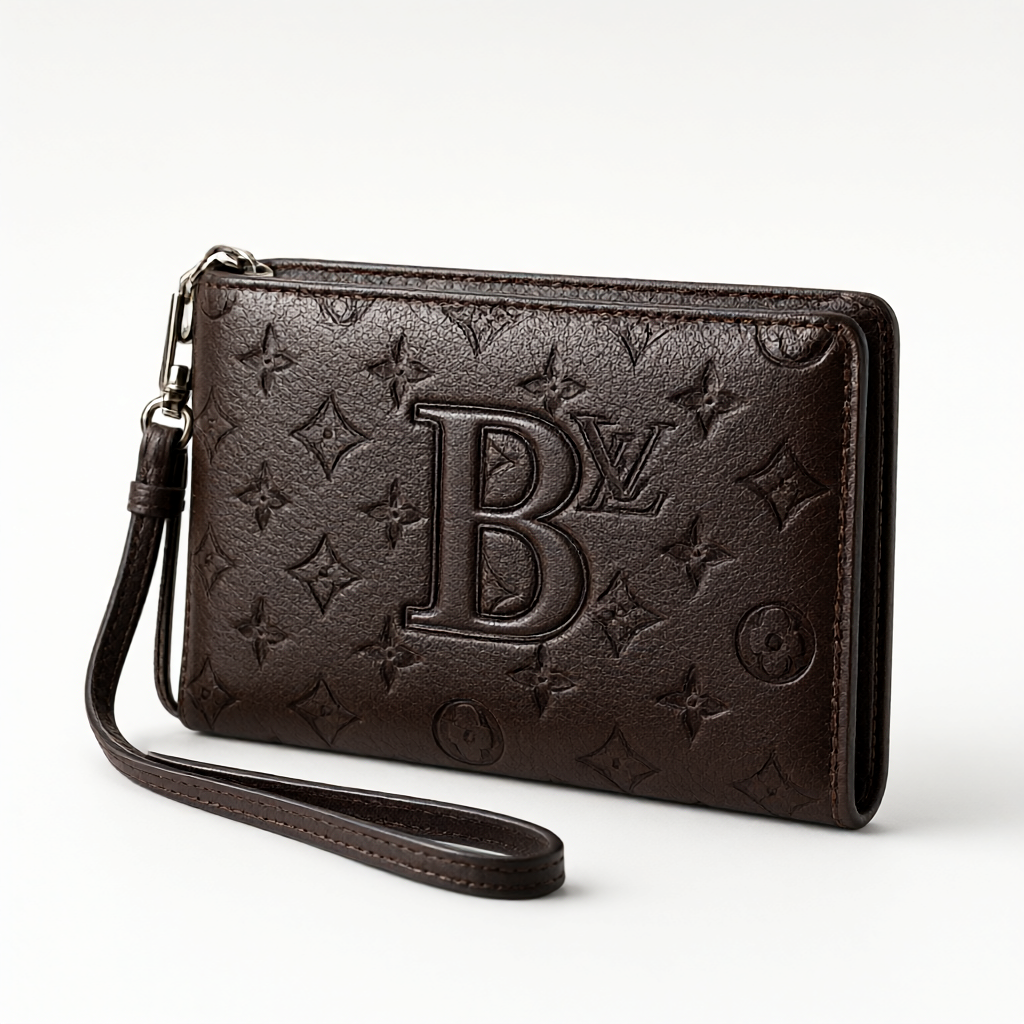
How does a monogram wristlet work in practice?
A wristlet combines three functional elements: the carrying body, the wrist strap attachment, and the closure system. The “monogram” refers to the visual pattern applied across the surface — whether stamped leather, printed coated canvas, embossed metal, woven textile, or laser-engraved composite. From a sourcing perspective, the monogram pattern is often the primary customization lever: buyers select the material base, then apply their proprietary mark through stamping, embroidery, printing, engraving, or embossing.
The internal layout determines what fits and how securely. Most modern designs prioritize slim profiles over deep volumes — think of a structured clutch or a padded phone sleeve rather than a traditional tote. This shift aligns with how people carry today: smartphone-first, cards organized, minimal bulk.
Why does a monogram wristlet matter to buyers?
For brand owners and distributors, the wristlet occupies a strategic space between the wallet and the full handbag. It commands a higher average unit price than a simple card holder but requires less material and tooling than a large bag. That makes it attractive for private-label programs seeking to expand product lines without heavy capital investment.
The monogram itself carries outsized marketing value. A recognizable pattern acts as immediate brand recognition — consumers associate the visual identity with the source even before they see the label tag. This is why many emerging and established brands invest heavily in pattern design and material consistency during sourcing.
How do you choose a monogram wristlet?
Choosing starts with clarifying the end use and the buyer profile:
- Retail brand: You need consistent pattern registration, durable hardware, and packaging that meets retail display standards. Your priority is visual fidelity and reproducible quality across batches.
- Promotional or corporate gift buyer: The focus shifts to lead time, MOQ flexibility, and logo application method. Laser engraving on metal or UV printing on synthetic substrates tends to deliver clean results at lower minimums.
- Amazon FBA seller: Packaging compliance, barcoding, and shrink-wrap compatibility become critical alongside product quality. Drop-shipping readiness matters.
The decision framework typically runs: define your use case → select material class → specify dimensions → choose decoration method → set MOQ target → evaluate supplier capability against certifications and capacity.
Monogram Wristlet: Which Specifications Matter Most?
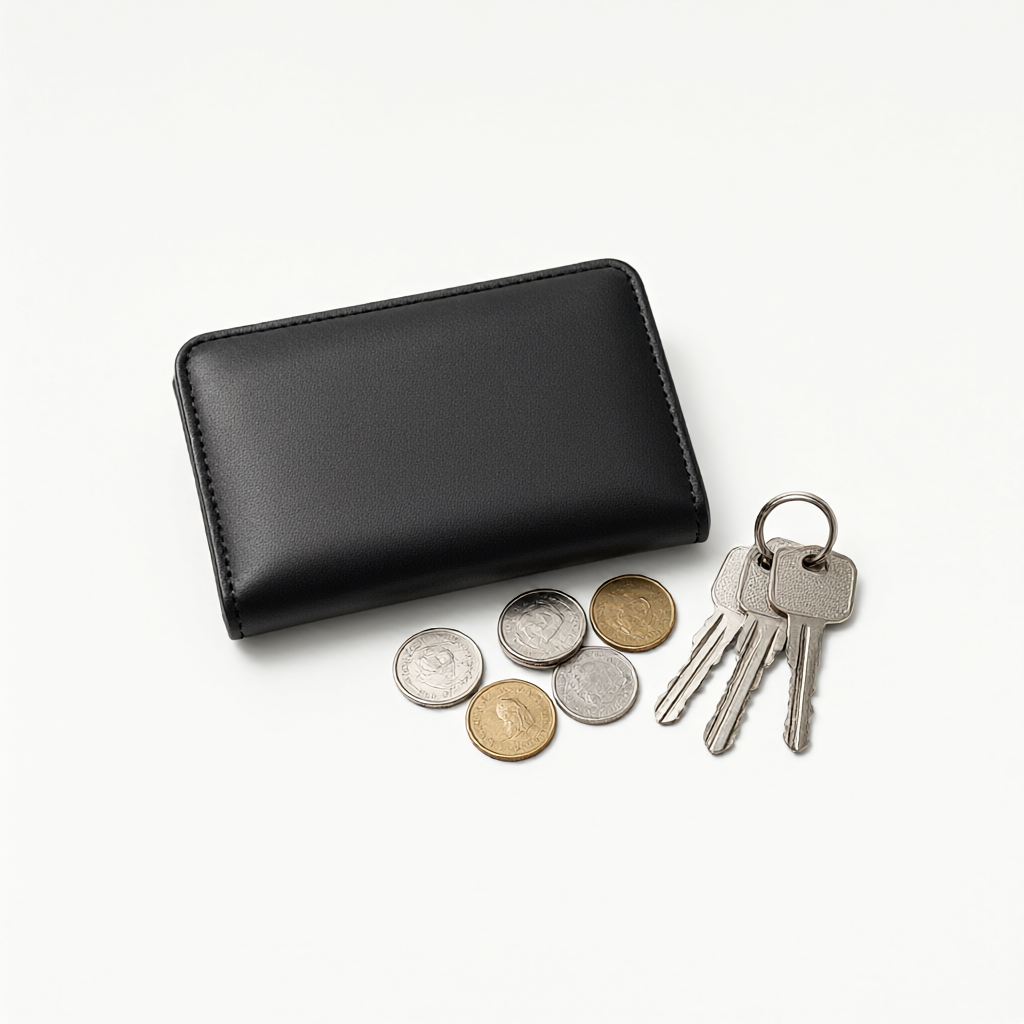
What are the key specs for a monogram wristlet?
Specifications vary widely depending on the intended function, but typical ranges fall into clear clusters:
Dimensions
- Small clutch style: approximately 18–22 cm wide × 10–14 cm high × 2–4 cm deep
- Medium wristlet style: approximately 22–26 cm wide × 12–16 cm high × 3–5 cm deep
- Minimalist card/phone holder variant: approximately 12–16 cm wide × 7–10 cm high × 1–2 cm deep
These proportions determine what fits inside. A common reference point for the smaller category is a smartphone up to roughly 6.7 inches diagonally (e.g., iPhone Pro Max or Samsung S Ultra class), plus a handful of cards and folded cash. Larger styles accommodate tablets up to about 10 inches or multiple device formats.
Materials
- Coated canvas with leather trim — traditional luxury aesthetic
- Full-grain or top-grain leather — durability-focused, ages with patina
- Synthetic vegan leather — cost-competitive, consistent appearance
- Metal frames or hard-shell constructions — rugged or tactical positioning
- Carbon fiber or aluminum inserts — lightweight, modern finish; relevant if exploring parallels with minimalist wallets
Hardware
- Zipper type: YKK or equivalent coil/metal zipper rated for 10,000+ cycles
- Strap attachments: solid rivets or welded D-rings rather than punched holes alone
- Closure mechanisms: magnetic snaps, zip closures, fold-over flaps, or combination systems
Decoration methods
- Hot stamping or embossing for leather and some synthetics
- Screen printing or digital direct-to-garment printing for textiles
- Laser engraving for metals and dense composites
- Injection molding for thermoplastic monogram patterns
- Woven or jacquard incorporation during fabric production
Capacity markers
- Card slots: 2–12 depending on style
- Cash compartment: yes/no varies by model
- Phone pocket: single slot common; dual-slot designs exist for bulkier phones
- Key clip or loop: increasingly standard in contemporary designs
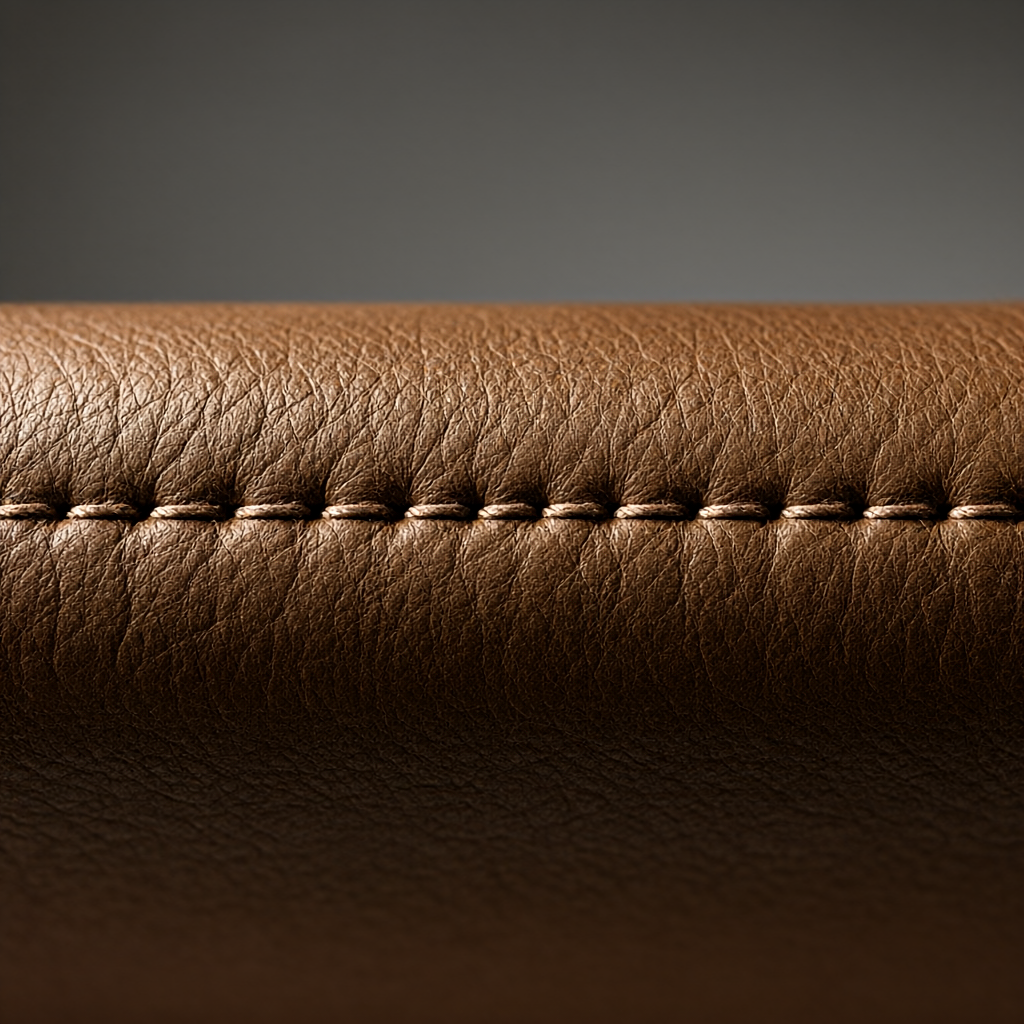
When evaluating a wristlet specification sheet, pay close attention to material weight (grammage for fabrics, thickness in millimeters or ounces for leathers), stitch density (typically 6–10 stitches per inch for quality construction), and lining material compatibility with the outer shell.
Monogram Wristlet: Which Standards and Certifications Apply?
What standards apply to a monogram wristlet?
There is no single global regulatory mandate specifically naming “wristlets,” but several overlapping standards govern the materials and manufacturing practices that affect sourcing decisions:
Material safety and chemical compliance
- REACH (EU) and RoHS restrictions on restricted substances in coatings, dyes, and adhesives — relevant for any product entering European markets
- Prop 65 considerations for California-bound goods
- Formaldehyde limits in leather processing, especially for vachetta-style finishes
- Phthalate and heavy-metal restrictions in PVC or synthetic vinyl components
Quality management
- ISO 9001 certification indicates a manufacturer operates under a documented quality management system covering process control, traceability, and corrective action — useful vetting criterion when selecting a factory
- BSCI social compliance audits address labor and working-condition standards, increasingly requested by European and North American buyers
Product performance benchmarks
- Colorfastness ratings for printed or dyed surfaces (ideally 4+ on the Gray Scale for rub and light fastness)
- Zipper cycle endurance testing to confirm closure reliability
- Tear and tensile strength thresholds for strap attachments at stress points
- Adhesive bond strength for laminated or layered constructions
Testing and verification
- SGS or equivalent third-party material testing provides independent confirmation of chemical compliance and physical properties
- Batch sampling plans (AQL-based inspection) are standard practice for order acceptance
Understanding which of these apply depends on destination market and buyer tier. Luxury-brand purchasers typically require the full suite including chemical safety documentation and third-party test reports. Budget-tier buyers may accept supplier self-declarations with spot-check verification. Either way, confirming whether your prospective manufacturer holds current ISO 9001 and BSCI certifications, along with REACH/RoHS material declarations, is essential groundwork. For deeper guidance on related EDC accessories, see our procurement guide for money clips.
Formaldehyde limits in leather processing, especially for vachetta-style finishes, are governed by EN 71-3 and OEKO-TEX Standard 100 Class II requirements, which set maximum permitted concentrations depending on skin-contact duration. Manufacturers supplying to toy-adjacent or gift-item channels should additionally verify compliance with CPSIA (U.S.) or general product safety directives under EU Regulation 2023/988.
For finished goods inspection, buyers commonly reference AQL 0.65 for critical defects (structural failures, sharp edges, unsafe chemicals) and AQL 4.0 for minor defects (cosmetic variances, thread pull-outs, slight color inconsistency). Third-party lab reports from SGS, Intertek, or Bureau Veritas are standard evidence packages accompanying supplier qualification documents.
Monogram Wristlet: What Else Should Buyers Consider?
What should you consider beyond the basics?
Several factors influence both the purchasing experience and long-term satisfaction when sourcing or buying monogram wristlets:
Brand vs. private label dynamics
Authentic designer wristlets carry secondary-market value tied to rarity, condition, and brand heritage. Counterfeiting is widespread, particularly around high-profile monogram patterns. Authenticity indicators include precise pattern alignment at seams, consistent stitching tension, date-code or serial-number placement conventions specific to each house, and hardware weight and engraving quality. These markers require familiarity with individual brand standards and evolve across production eras.
If you’re building your own brand rather than reselling existing labels, the calculation shifts entirely toward customization capability, material consistency, and supply-chain transparency. Understanding the difference helps clarify whether your goal is acquiring verified authentic goods or commissioning original production.
Sizing and everyday fit
A frequent mismatch occurs when buyers assume all wristlets hold the same contents. Capacity correlates directly with external dimensions and internal compartmentalization. Before committing to an order, verify fit using your actual inventory: place representative items — your target phone model, card stack, keys, lip balm — into a sample to confirm clearance. Manufacturers often provide dimension sheets, but real-world loading tests reveal whether the design delivers on its promise.
This is also where the line between a wristlet, a card holder, and a slim EDC wallet can blur. If your audience prioritizes pocket carry over hand carry, a minimalist wallet or card holder may better serve them than a larger wristlet. Matching product form to usage habit reduces return rates and improves brand reputation.
Market segments and price positioning
Retail wristlets span dramatic price bands:
- Entry-level fast-fashion and contemporary brands: moderate price points focused on trend responsiveness
- Mid-tier and accessible-luxury brands: higher craftsmanship expectations and more refined material combinations
- Heritage luxury houses: premium pricing anchored in brand equity and artisanal finishing
From a B2B perspective, your positioning decision should reflect your target channel’s expectations and your margin structure. Private-label manufacturers capable of producing across multiple tiers offer flexibility to serve different distributor relationships without requiring separate factories.
Secondhand and resale considerations
The secondary market for monogram wristlets is active but volatile. Condition grading, completeness of original packaging, and pattern preservation heavily influence resale value. Buyers entering this space should understand depreciation curves: most non-limited-edition pieces lose value immediately upon purchase, with only select models from certain heritage brands showing partial retention or appreciation over extended periods.
Sustainability factors
Material choices carry environmental implications worth documenting for ESG-conscious buyers. Recycled polyester linings, vegetable-tanned leathers, low-impact dyes, and recyclable packaging are increasingly table-stakes rather than differentiators in mature markets. Supplier disclosure of material origins and processing methods supports accurate sustainability claims downstream.
Where do you go from here?
If you’ve reached this point, you likely have a clearer picture of what a monogram wristlet is, how it functions in both retail and private-label contexts, and what specifications and standards matter most. The next step usually involves narrowing your material and size targets, identifying your decoration method preference, and reaching out to manufacturers who can produce to those parameters within your volume and timeline requirements.
As a manufacturer specializing in minimalist carry accessories, our approach to this category focuses on precision pattern application, consistent hardware sourcing, and flexible production runs tailored to private-label and B2B buyers. With in-house CNC machining, laser engraving, and surface finishing capabilities, we support everything from prototype development through volume fulfillment — including packaging and FBA prep. If you’d like to explore how a monogram wristlet or complementary accessory could fit your lineup, reach out to discuss your specifications and timeline.
A monogram wristlet is a compact wrist-strapped pouch featuring a signature repeating pattern, designed to carry essentials such as a smartphone, cards, keys, and cash. In B2B sourcing terms, it bridges the gap between minimalist wallets and full-sized clutches — offering private-label makers and brand owners a mid-tier accessory with strong visual identity potential, flexible material options, and scalable production through OEM/ODM manufacturing.
Monogram Wristlet vs Clutch vs Phone Case: Understanding Category Overlap
Buyers often conflate three similar product categories because functional boundaries have blurred in contemporary carry markets. Clarifying these distinctions prevents specification errors and costly reorders.
A monogram wristlet is defined primarily by its attached wrist strap and relatively compact proportions (typically 18–26 cm wide). It sits somewhere between a wallet and a handbag, designed for short outings where hands-free convenience matters.
A clutch shares similar dimensions but lacks an integrated wrist strap. It relies on hand carry or a separate detachable chain. From a manufacturing perspective, clutch construction tends to be simpler — fewer attachment points, fewer hardware components — which can lower per-unit cost at volume.
A phone case or pocket organizer is significantly smaller, usually 12–16 cm wide, prioritizing single-device or card-only carry over multi-item storage. Carbon fiber or aluminum inserts — commonly found in minimalist EDC wallets — are rare in wristlets but increasingly relevant for buyers targeting tech-forward audiences who appreciate rigid-frame construction alongside leather or canvas exteriors.
For procurement clarity, use this sizing rule of thumb: if it holds a phone plus 6–12 cards plus folded bills and has a permanent wrist loop, classify it as a wristlet. If it holds only a phone and a few cards without a strap, classify it as a phone case or slim organizer.
Best Monogram Wristlets by Brand Tier (Industry Reference)
While this guide focuses on sourcing frameworks rather than retail reviews, understanding how brands position monogram wristlets across market tiers helps buyers calibrate quality expectations and price targets:
| Tier | Price Range (USD) | Expected Material | Decoration Method | Typical MOQ Expectation |
|---|---|---|---|---|
| Entry / fast fashion | $8–$25 | Synthetic leather, coated canvas | Screen printing, hot stamping | High volume (5,000+ pcs) |
| Mid-tier / accessible luxury | $35–$120 | Top-grain leather, premium coated canvas | Embossing, laser engraving, woven textile | Medium volume (500–2,000 pcs) |
| Heritage luxury | $200–$800+ | Full-grain leather, proprietary coated canvas | Hand-stamped, artisanal hardware | Niche runs, authorized production only |
These ranges reflect retail pricing, not ex-factory costs. Private-label manufacturers serving the mid-tier segment typically operate at factory-gate prices of $4–$18 per unit depending on material selection, decoration complexity, and order volume.
Authenticity Markers and Care Standards for Designer Monogram Wristlets
Counterfeit detection remains a critical concern given the prevalence of replica monogram patterns across global supply chains. Key authenticity indicators include:
- Pattern alignment: Genuine pieces align the monogram repeat symmetrically across seams; misalignment exceeding 2 mm at stitch lines is a common counterfeit tell.
- Hardware weight and engraving: Solid brass or gold-toned hardware with crisp, deep engraving (not shallow etching) distinguishes authentic pieces. Weight discrepancies of more than 15% from reference models indicate substitution.
- Date codes and serial placement: Each heritage house follows specific location conventions (interior seam pockets, strap attachments, or hidden inner panels). Inconsistent placement across units in a batch signals unauthorized production.
- Stitch tension consistency: Authentic luxury wristlets maintain uniform 6–8 stitches per inch with no skipped stitches or thread loosening at stress points.
Care standards vary by material. Coated canvas should be wiped with a damp cloth and never submerged. Vegetable-tanned leather requires conditioning every 3–6 months. Synthetic materials generally need only surface cleaning. Buyers sourcing replacement parts or repair services should verify supplier capability before committing to bulk orders.
Completing the Formaldehyde and Chemical Compliance Section
The earlier standards section referenced formaldehyde limits without specifying thresholds. Complete compliance documentation requires these numeric benchmarks:
- EN 71-3 (EU toy safety, applicable to children’s accessories): Formaldehyde limit ≤ 75 mg/kg for direct skin-contact products
- CPSIA (US Consumer Product Safety Improvement Act): Formaldehyde limit ≤ 75 ppm for children’s products; ≤ 300 ppm for adult general-use items in some interpretations
- ASTM D4236 (Standard Practice for Labeling Art Materials for Chronic Health Hazards): While primarily for art materials, many manufacturers adopt its formaldehyde reporting framework for consumer goods entering US markets
- REACH Annex XVII (EU): Restricted substance list includes formaldehyde at concentrations above 0.1% in articles requiring notification
Suppliers must provide current test reports from SGS, Intertek, or TÜV covering these parameters. Supplier self-declarations without third-party verification should trigger additional QA inspection before production commencement.
Buyer Decision Checklist: Red Flags in Monogram Wristlet Sourcing
This decision matrix helps sourcing teams evaluate prospective suppliers against objective criteria:
| Evaluation Criteria | Green Flag | Yellow Flag | Red Flag |
|---|---|---|---|
| GSM/oz material specs provided | Exact grammage listed for both shell and lining fabric | Specifications mentioned but exact values withheld | No material weight information available |
| Stitch density disclosure | 6–10 SPI clearly stated in spec sheet | SPI range mentioned without confirmation | No stitch density information provided |
| Hardware cycle testing data | Independent lab report showing 10,000+ zip cycles | Supplier claims durability without documentation | No hardware testing referenced |
| Colorfastness certification | Gray Scale rating 4+ documented by SGS or equivalent | Supplier states “good colorfastness” without data | No colorfastness testing mentioned |
| ISO/BSCI certification status | Current certificates provided, verifiable online | Certificates claimed but not shared for verification | No certifications offered; supplier avoids the question |
| Sample lead time commitment | Written agreement on 5–10 day sample turnaround | Sample timeline discussed verbally only | No sample process described; production-first approach |
| AQL inspection protocol | Standard AQL 0.65/4.0 plan documented | Sampling mentioned without numerical criteria | No inspection framework referenced |
Critical takeaway: A supplier who avoids providing GSM, oz, SPI, or certification details should be treated as a potential quality risk. These specifications are standard industry practice and their absence suggests either insufficient QC infrastructure or intentional opacity about material quality.
A monogram wristlet is a small wrist-strapped pouch featuring a signature repeating logo or pattern, designed to carry everyday essentials such as a smartphone, cards, keys, and folded cash. It functions as a transitional accessory between a traditional wallet and a full-sized handbag, offering hands-free convenience without sacrificing carrying capacity. In B2B sourcing terms, it is evaluated the same way as other leather and textile carry accessories — by material composition, construction standards, decoration method, hardware durability, and supplier capability — rather than solely by brand identity.
Best Monogram Wristlets by Brand
The monogram wristlet market spans multiple tiers, each with distinct sourcing profiles and brand-positioning strategies:
Luxury heritage houses
- Louis Vuitton — coated canvas with LV monogram, leather trim, brass hardware; recognized for pattern-registration precision at seams
- Gucci — GG Supreme coated canvas with horsebit or interlocking-G detailing
- Dior — cannage-stamped leather with metal-Dior lettering
- Hermès — primarily leather-based; Evelyne and related lines occasionally feature monogram motifs
These brands operate tightly controlled supply chains with limited OEM licensing, making authorized wholesale channels the primary procurement route.
Accessible-luxury and contemporary
- Michael Kors — signature MK print on coated canvas and saffiano leather
- Coach — Signature Canvas and crossgrain leather constructions
- Tory Burch — double-T medallion pattern, often on woven or printed substrates
-Kate Spade — colorful geometric and floral monograms on nylon and pebbled leather
This tier is more amenable to private-label replication because the visual language does not rely on registered luxury trademarks when adapted for original-brand production.
Contemporary and boutique
- Polène, By Far, Matt & Nat, Baggu — design-forward, often using abstract or typographic repeat patterns on recycled or vegan materials
Each tier carries different margin structures, MOQ expectations, and regulatory requirements for importers. Understanding where a buyer’s target SKU sits within this hierarchy informs material selection, decoration technique, and pricing architecture from the earliest sourcing stage.
How to Choose the Right Monogram Wristlet?
A structured evaluation framework reduces specification risk and misalignment between buyer expectation and manufactured output:
Step 1 — Define the functional envelope
Determine the primary contents: phone size (measure diagonally in inches), number of card slots needed, cash compartment preference, and whether a key clip adds value. Document the exact item stack before requesting quotes — capacity claims without load-testing are unreliable.
Step 2 — Select the material class
Coated canvas offers abrasion resistance and crisp pattern reproduction at moderate cost. Full-grain leather delivers patina development and perceived premium value but requires longer break-in periods and conditioning maintenance. Vegan/synthetic options provide consistency and lower unit cost but may show wear patterns differently over time. Metal or carbon-fiber variants sit outside the traditional wristlet category and align more closely with minimalist EDC wallet specifications.
Step 3 — Evaluate construction quality
Inspect the following on pre-production samples:
- Seam allowance consistency (minimum 3 mm recommended)
- Stitch density: 6–10 stitches per inch for leather; tighter for canvas
- Strap attachment: riveted or welded reinforcement at stress points, not merely punched holes
- Interior lining adhesion: no bubbling, delamination, or exposed adhesive visible at edges
- Pattern match at major seams: misregistration exceeding 2 mm is typically considered a defect
Step 4 — Verify supplier qualifications
Request and confirm:
- ISO 9001:2015 certification (current, unexpired)
- BSCI audit report covering the specific factory producing your order
- REACH/SVHC substance declaration for all incoming materials
- Material test reports (SGS, Intertek, or equivalent) for formaldehyde, azo dyes, phthalates, and heavy metals
- Previous orders for comparable products, verified through video call or third-party inspection reports
Step 5 — Negotiate terms
Clarify MOQ, sample lead time, bulk lead time, packaging customization options, and shipping method (EXW, FOB, CIF). Confirm whether the supplier supports drop-shipping and Amazon FBA prep if applicable.
Monogram Wristlet vs Clutch vs Phone Case
Buyers frequently conflate these three categories because functional boundaries have blurred in contemporary carry markets. Clarifying the distinctions prevents specification errors and costly reorders.
A monogram wristlet is defined by its integrated wrist strap and intermediate proportions (typically 18–26 cm wide). It includes multiple interior compartments and is designed for shoulder- or wrist-carried everyday use. Manufacturing complexity is moderate-to-high due to strap attachment reinforcement, multi-compartment patterning, and closure hardware integration.
A clutch shares similar external dimensions but omits the attached wrist strap. Construction is simpler — fewer hardware components, fewer attachment points — resulting in lower per-unit cost at volume. From a sourcing perspective, a clutch represents the most streamlined version of the wristlet form factor.
A phone case or pocket organizer occupies the smallest category, optimized for single-device retention rather than multi-item carry. These products overlap significantly with slim EDC wallets and prioritize device protection, card slots, and minimal bulk over hand-carry convenience.
| Attribute | Monogram Wristlet | Clutch | Phone Case / Pocket Organizer |
|---|---|---|---|
| Wrist strap | Integrated | Optional / detachable | None |
| Typical width | 18–26 cm | 18–28 cm | 10–16 cm |
| Interior capacity | Multi-compartment | Single/main compartment | 1–2 slots |
| Hardware complexity | Medium-high | Low-medium | Low |
| Wholesale cost tier | Mid | Low-mid | Low |
Understanding where a product sits on this spectrum guides material specification, tooling investment, decoration technique selection, and final pricing architecture.
Authenticity and Care for Designer Monogram Wristlets
Authenticity evaluation is essential for buyers entering the secondary market or sourcing vintage inventory:
Key authentication indicators
- Pattern alignment at seams and gussets should be symmetrical and precisely matched
- Stitching tension must be uniform with no skipped stitches or loose threads
- Date codes or serial numbers follow house-specific placement conventions and font styles
- Hardware weight and engraving quality should match official specifications — lightweight or poorly cast pieces indicate counterfeits
- Leather smell and texture should be characteristic of genuine materials, not synthetic imitations
- Lining material and print quality inside the wristlet should match the exterior grade
Counterfeit detection is an evolving arms race. Professional authentication services and house-specific repair centers remain the most reliable verification routes for high-value purchases.
Care and maintenance
- Store in breathable dust bags; avoid plastic wrappers that trap moisture
- Keep away from prolonged direct sunlight to prevent UV-induced color fading
- Clean coated canvas with a slightly damp microfiber cloth; condition leather periodically with manufacturer-recommended products
- Avoid exposure to solvents, alcohol-based cleaners, and excessive humidity
- Rotate usage to allow materials to recover between wear sessions
- Address hardware tarnishing with appropriate polishing cloths specific to the metal type (brass, gold-tone, ruthenium, etc.)
Proper care extends product lifespan and preserves both aesthetic appeal and resale value. For brands operating in the pre-owned or consignment channel, documenting original condition with photos at intake is standard practice.
Monogram Wristlet: How Do We Approach This Category?
As a manufacturer specializing in minimalist carry accessories, our process mirrors the evaluation framework above: define the functional envelope, select appropriate materials, verify construction quality, and support private-label buyers through every stage from proto-type to shipment. With over thirteen years of export experience, ISO 9001:2015 certification, BSCI-audited facilities, and a 50,000 sq ft production floor capable of 500K+ units monthly, we serve EDC brand owners, Amazon FBA sellers, and distributor networks across North America, Europe, Australia, and Southeast Asia. Our in-house CNC machining, laser engraving, UV printing, aluminum anodizing, and surface-finishing capabilities accommodate everything from simple logo application to fully custom structural designs. Minimum orders starts at 300 pcs per SKU for full OEM customization (100 pcs trial order available for stock finishes) with a seven-day sample turnaround, and we handle custom packaging, barcoding, and FBA prep as part of the fulfillment pipeline. If you are developing a monogram wristlet or a complementary carry accessory, reach out to discuss your specifications and timeline.
Monogram Wristlet: Where Can You Verify the Data and Sources?
- minimalist wallets — topedcwallet.com
- procurement guide for money clips — topedcwallet.com
- card holder — topedcwallet.com
- EDC wallet — topedcwallet.com
- reach out — topedcwallet.com
- slim EDC wallets — topedcwallet.com
Frequently Asked Questions
How does a monogram wristlet work in practice?
A wristlet combines three functional elements: the carrying body, the wrist strap attachment, and the closure system. The "monogram" refers to the visual pattern applied across the surface — whether stamped leather, printed coated canvas, embossed metal, woven textile, or laser-engraved composite. From a sourcing perspective, the monogram pattern is often the primary customization lever: buyers select the material base, then apply their proprietary mark through stamping, embroidery, printing, engraving, or embossing.The internal layout determines what fits and how securely. Most modern designs prioritize slim profiles over deep volumes — think of a structured clutch or a padded phone sleeve rather than a traditional tote. This shift aligns with how people carry today: smartphone-first, cards organized, minimal bulk.
Why does a monogram wristlet matter to buyers?
For brand owners and distributors, the wristlet occupies a strategic space between the wallet and the full handbag. It commands a higher average unit price than a simple card holder but requires less material and tooling than a large bag. That makes it attractive for private-label programs seeking to expand product lines without heavy capital investment.The monogram itself carries outsized marketing value. A recognizable pattern acts as immediate brand recognition — consumers associate the visual identity with the source even before they see the label tag. This is why many emerging and established brands invest heavily in pattern design and material consistency during sourcing.
How do you choose a monogram wristlet?
Choosing starts with clarifying the end use and the buyer profile:Retail brand: You need consistent pattern registration, durable hardware, and packaging that meets retail display standards. Your priority is visual fidelity and reproducible quality across batches.Promotional or corporate gift buyer: The focus shifts to lead time, MOQ flexibility, and logo application method. Laser engraving on metal or UV printing on synthetic substrates tends to deliver clean results at lower minimums.Amazon FBA seller: Packaging compliance, barcoding, and shrink-wrap compatibility become critical alongside product quality. Drop-shipping readiness matters.The decision framework typically runs: define your use case → select material class → specify dimensions → choose decoration method → set MOQ target → evaluate supplier capability against certifications and capacity.
From article to product
Turning this into a product?
Most of what is written here is the difference between a sample that works and one that does not. We can build either — the useful one costs the same.
Keep reading
More on buying guides
wallet with trigger
How Does a Trigger Wallet Work? What Is the Pop-Up Mechanism? The core of…
Readbest bifold wallet for women
What Is a Bifold Wallet? The term “bifold” refers to the fold: the wallet…
ReadMen’s trifold wallets with zipper compartments vs. bifold
At a Glance The three dominant men’s wallet formats differ in panel count, depth,…
Read
About the author
TOPWALLET Editorial Team
TOPWALLET's editorial and engineering desk writes from bench testing at the Shenzhen (Longgang) facility: pull-force and cycle testing, 13.56 MHz shielding measurements, finish trials and factory audits, rather than supplier spec sheets. Every specification in these guides is one we write on a purchase order.
Written on the floor
This article was written by our production and QC team — the people who spec tolerances, run the finishing line and inspect every batch. Where it states a capacity, a pull force or a lead time, it comes from a measurement we made, not a supplier’s catalogue. If a number here disagrees with what your own supplier told you, tell us; several of these articles started as a correction from a buyer.
See how the factory works · Inspection process · Sourcing FAQ
Turning this into a product?
Most of what is written here is the difference between a sample that works and one that does not. We can build either — the useful one costs the same.