

The best type of wallet for girls depends on age, daily carry habits, and budget. A skinny wallet or slim cardholder works best for tweens carrying just a few cards and some cash. Older teens who need transit passes, library cards, and multiple payment cards often prefer a continental wallet or bifold. Secure models with RFID-blocking, durable materials, and age-appropriate sizes are top priorities. Here’s a complete guide comparing styles, security features, materials, price tiers, and what to consider before buying.
Quick Answer
The best type of girls wallet depends on daily carry habits, not just aesthetics. For tweens and younger teens who carry a handful of cards and some cash, a skinny wallet or slim cardholder keeps things light and hard to lose. Older teens who need more organization benefit from a continental wallet or bifold with dedicated slots. If you want added protection against digital fraud, choose a model with RFID-blocking technology. The right choice balances size, security, durability, and the girl’s actual routine — not just what looks trendy this season.
Detailed Explanation
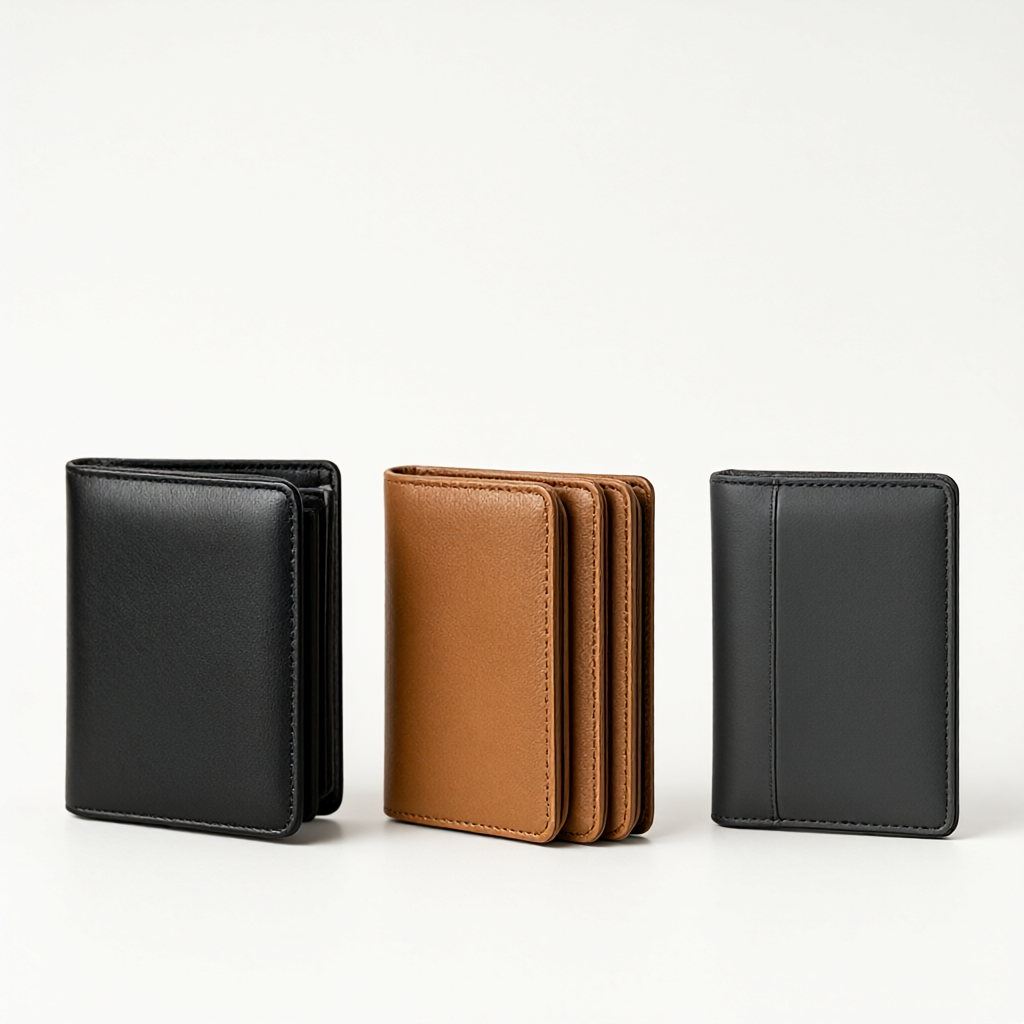
Choosing a wallet for a girl means matching its form, features, and material to her lifestyle rather than picking the most popular style off the shelf. A few different wallets have become standard recommendations, each solving a different set of problems.
Which wallet forms are actually worth considering?
A vertical wallet stands upright in a bag, making it easy to grab without digging. A continental wallet offers generous card capacity, a zippered coin section, and a full-length bill compartment — useful for teens who carry transit passes, library cards, and multiple payment cards. A simple wallet strips away unnecessary bulk, typically offering four to six card slots plus a slim cash pocket. A clutch wallet or wallet pouch functions as both accessory and organizer, common among young users who prefer slipping everything into one compact piece before placing it inside a backpack or tote.
If the goal is minimalism, a minimalist wallet or cardholder focuses on cards and cash only, removing zippers, coins, and extra pockets that add weight and can fail over time. The trade-off is less storage, but the result is lighter everyday carry that rarely draws attention.
For deeper details on minimal design principles, see our minimalist wallets overview.
How do secure features change the equation?
Modern wallets increasingly address data safety alongside physical security. Cards with contactless payment chips can be skimmed if no barrier exists, which is why many buyers now look for models that meet proven blocking standards. According to testing frameworks documented by ASTM International, RFID-protective performance is evaluated using defined test methods that verify whether a material blocks radio-frequency scanning within expected frequency bands. Choosing a wallet with verified blocking gives real peace of mind for anyone carrying cards frequently.
Beyond signal protection, secure closures matter. Zipper tracks, magnetic flaps, and reinforced stitching all reduce the chance of cards falling out during normal use. A well-built closure prevents the frustrating scenario of losing a card simply because the wallet opened unintentionally.
Detailed comparisons of protective features are available in our guide to wallets that protect cards.
What materials perform best for active users?
Fabric, synthetic leather, genuine leather, and metal each serve different needs. Fabric is lightweight and resistant to minor water exposure, making it practical for gym bags and school backpacks. Synthetic leather offers consistent color and lower cost, though it may scuff over years of heavy use. Genuine leather ages gracefully and becomes softer with time, but requires more care and costs more upfront. Metal constructions — including aluminum and titanium options — are exceptionally durable and resist deformation, though they add noticeable weight and can feel bulky in smaller pockets.
When evaluating longevity, pay attention to stitching density, zipper quality, and edge finishing. These small details usually predict long-term reliability better than any single material claim.
Do girls actually need a cryptocurrency wallet, and what should they know?
A cryptocurrency wallet is simply a tool that stores the digital keys needed to access crypto assets on a blockchain. It is not a physical container for money like a traditional purse or card holder, though hardware versions exist as small devices resembling USB drives. Software wallets run on phones or computers, while paper wallets store keys printed on paper.
Most younger users do not need a crypto wallet unless they actively buy, hold, or trade digital currency. However, understanding the difference between hot and cold storage helps avoid confusion if the topic comes up among friends or in news coverage.
How does Coinbase Wallet fit into this picture?
The Coinbase Wallet icon represents a specific software product from a major exchange, used to manage crypto holdings independently of the exchange itself. It is a hot wallet, meaning it stays connected to the internet for convenience. This is different from a cold wallet, which remains offline for stronger security. Knowing whether a wallet is hot or cold matters mostly for people who regularly move funds, not for casual users who only carry traditional cards.
What makes a good gift or budget-friendly choice?
Gifting a wallet works best when you consider the recipient’s daily pattern. A back-to-school purchase might favor a durable slim wallet with clear ID visibility. A birthday gift could lean toward a womens designer wallet if style is the priority. For younger girls just learning to manage money, a simple cardholder teaches organization without overwhelming complexity.
Price tiers vary widely. Entry-level fabric or synthetic options often fall below thirty dollars, mid-range leather and metal designs sit roughly between thirty and eighty dollars, and premium designer or artisan pieces can exceed that range depending on materials and brand positioning. Value comes from matching construction quality to usage intensity rather than chasing the lowest price.
For guidance tailored to women’s sizing and style preferences, review our women’s wallet size and style buying guide.
Key Specifications
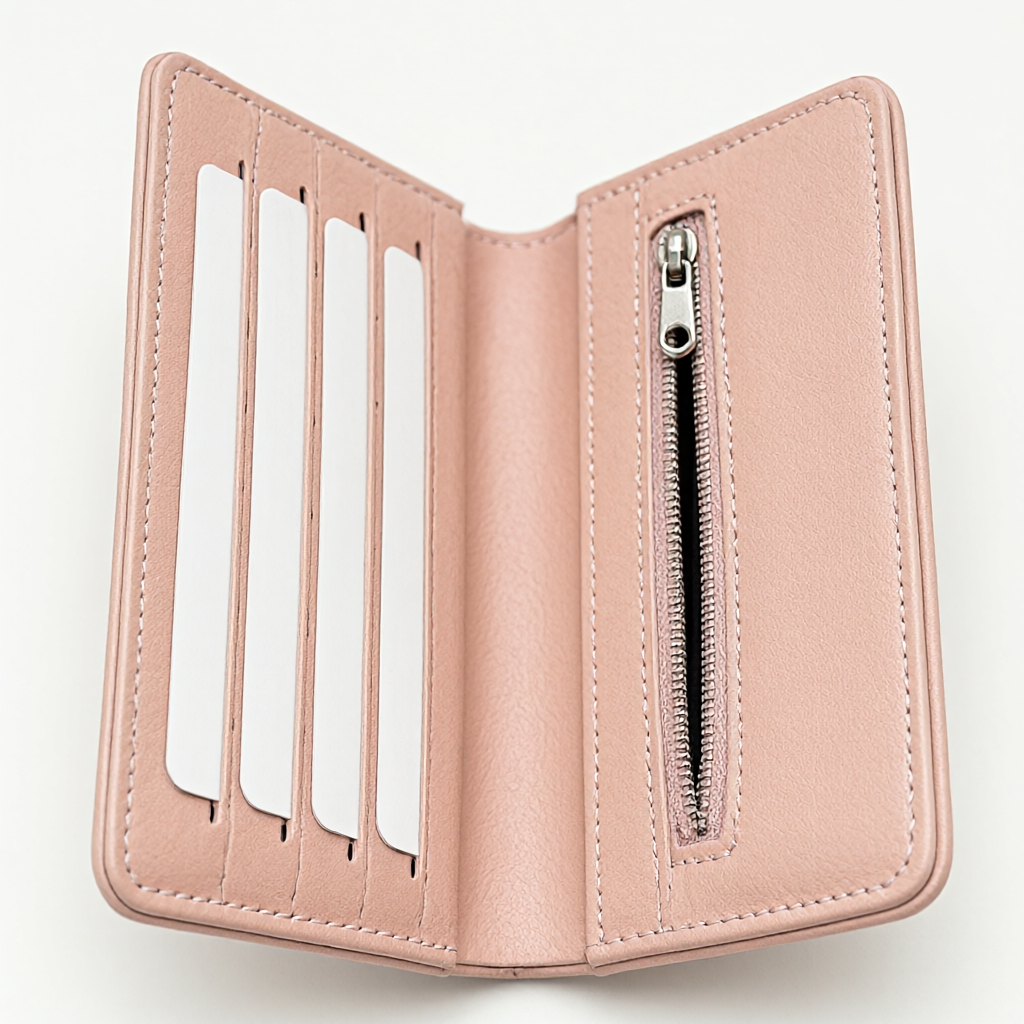
What are the practical specs to compare?
- Card capacity: Four to eight slots is typical for a slim cardholder; ten to sixteen suits a continental design.
- Cash compartment: Fold-over pocket for bills; zippered section for coins in fuller wallets.
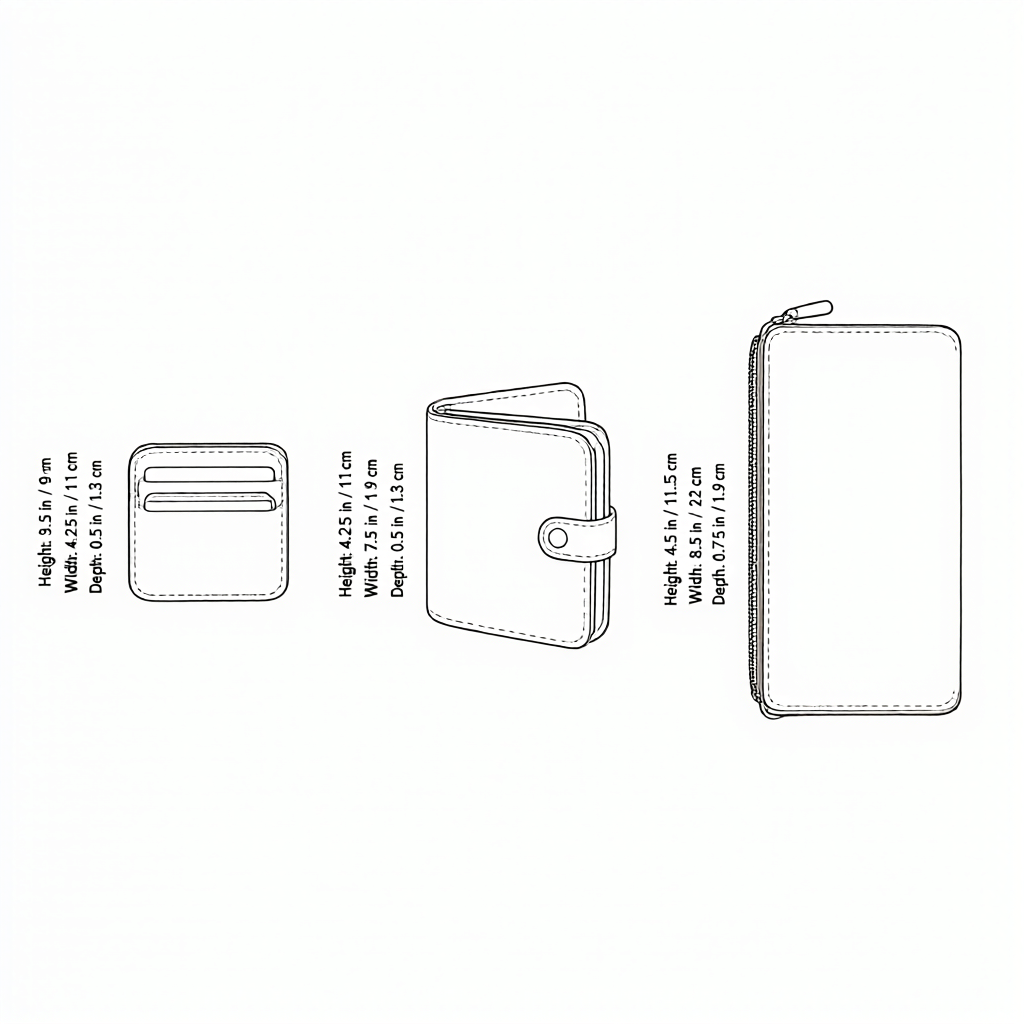
- Dimensions: Skinny wallets measure roughly 4 by 3 inches folded; continental formats often reach 5 by 4 inches.
- Weight: Fabric and nylon options hover near one to two ounces; metal models can weigh three to five ounces.
- Closure type: Magnetic snap, zipper, flap, or open slot — each affects speed of access and security.
- Protection level: Basic RFID-shielded cards block common scanning frequencies; no single product blocks every possible reader variant, so check manufacturer specifications rather than assuming universal coverage.
- Durability indicators: Stitch count per inch, reinforced stress points, zipper brand ratings, and finish consistency reveal build quality better than marketing language.
Standards & Requirements
Which standards and guidelines should buyers reference?
Product safety expectations depend on region and age group. For children’s items, general compliance with local consumer-product regulations applies, and reputable sellers provide documentation when requested. When evaluating RFID-blocking claims, third-party testing under recognized protocols from bodies like ASTM provides objective verification instead of unverified marketing statements.
For broader quality-management references that manufacturers follow across production facilities, ISO standards outline frameworks for consistent processes, material control, and defect reduction. These systems do not certify individual consumer wallets directly, but they indicate whether a maker maintains structured quality practices.
Consumer protection agencies such as the FTC oversee truthful advertising and fair trade practices, which means buyers should expect clear, accurate product descriptions rather than exaggerated safety claims.
Related Considerations
What should you evaluate beyond style?
Lifestyle fit matters more than trends. A college student who carries textbooks and gym gear benefits from a wallet that fits a side pocket without sagging. A teen who walks to school daily may prefer something resilient and low-profile over an elaborate multi-compartment piece. A tracker wallet with an embedded Bluetooth tag can help locate a lost item, though it adds cost and requires battery maintenance.
Age-appropriate sizing influences comfort. Younger users often struggle with oversized wallets that bulge in backpacks or purses. A smaller simple wallet or clutch wallet encourages independence without overwhelming organization. As users mature, gradual transitions to larger formats make sense because card collections and cash habits expand.
Money management and education provide another angle. Starting with a straightforward cardholder helps teach categorization — separate slots for bus passes, emergency cash, and debit cards build habits that persist into adulthood. More complex arrangements can confuse beginners, while overly basic options may frustrate teens managing multiple accounts and memberships.
Sustainability considerations are increasingly relevant. Buyers interested in longer lifespans often choose sturdy materials and reputable craftsmanship over fast-fashion seasonal releases. Repairable zippers, replaceable straps, and timeless finishes reduce replacement cycles and waste.
Regarding designer purchases, authenticate carefully and prioritize resale value if that matters to you. Some womens designer wallet models retain value well when kept in good condition; others depreciate quickly despite high initial prices. Check authorized retailers and request proof of authenticity when buying secondhand.
For practical insights on selecting compact carry solutions, see our comparison of good money clip wallets and our evaluation of budget-friendly money clip options.
If you’re exploring the choice between physical and digital payment tools, our piece on physical versus digital wallets breaks down the trade-offs clearly. Readers looking for lightweight constructions can also consult our lightweight wallet for women guide.
Frequently Asked Questions
What type of wallet is easiest for a beginner to manage?
A simple wallet or slim cardholder with four to six slots is the most straightforward. It forces intentional organization, reduces clutter, and teaches basic card management without overwhelming compartments.
Is a metal wallet a good option for an active teen?
Metal wallets are highly durable and resist deformation, but they add weight and feel bulkier than fabric or leather alternatives. They work well for users who prioritize longevity over feather-light carry.
How do I know if an RFID wallet is actually effective?
Look for independent test results or certifications referencing recognized testing methods. Reputable brands publish frequency ranges and attenuation levels rather than vague protection claims. For background reading, see our RFID-protected wallets guide.
Should I buy a designer wallet or save for a higher-quality non-branded option?
Designer wallets offer prestige and sometimes stronger resale value, but craftsmanship varies by collection. Non-branded options from established makers often deliver equal or superior materials at lower prices. Evaluate stitching, hardware, and interior layout regardless of logo presence.
When does a cryptocurrency wallet make sense for a young user?
Only when someone actively stores or trades digital currency. For everyday spending and campus life, a traditional physical wallet remains the appropriate tool.
How do I choose between a skinny wallet and a continental wallet?
A skinny wallet is designed for users who carry few cards and minimal cash. Typically holding four to six cards and a small folded bill compartment, these wallets are lightweight, compact, and slide easily into jeans pockets, small purses, or backpack side pockets. They are ideal for tweens, casual teens, and anyone practicing minimalist carry.
A continental wallet serves users who need higher organization. With ten to sixteen card slots, a full-length bill compartment, and often a zippered coin section, a continental format replaces the need for a separate coin purse. These are better suited for older teens managing multiple cards — student IDs, transit passes, debit and credit cards — plus cash and loose change.
| Feature | Skinny Wallet | Continental Wallet |
|---|---|---|
| Card capacity | 4–6 slots | 10–16 slots |
| Cash storage | Slim fold slot | Full-length compartment |
| Coin pocket | Rarely included | Usually zippered |
| Best for | Minimalists, tweens | Teens, active card users |
| Typical dimensions | ~4 × 3 inches folded | ~5 × 4 inches |
What should I consider when buying a designer wallet?
Designer wallets carry brand premiums that range from 2× to 10× the cost of comparable non-branded alternatives. Key considerations include:
- Authenticity verification: Purchase from authorized retailers or brand boutiques. Counterfeit designer wallets are widespread and may use inferior materials and lack proper construction.
- Material quality: Even premium brands use varied leather grades. Full-grain leather outlasts bonded or patent finishes in daily wear.
- Resale value: Some models retain value; others depreciate rapidly. Research secondary-market prices before committing.
- Construction consistency: Designer bags sometimes prioritize aesthetics over function — check stitch density, hardware durability, and interior layout.
- Warranty and service: Reputable brands offer repair or replacement programs; cheaper copies typically do not.
What is a Cryptocurrency Wallet and Do I Need One?
What exactly is a cryptocurrency wallet?
A cryptocurrency wallet is a tool — digital, hardware, or paper — that stores the cryptographic private keys needed to sign transactions on a blockchain. It does not “hold” currency in the way a physical wallet holds bills. Instead, it grants access to funds recorded on a distributed ledger. There are three main categories:
- Software (hot) wallets: Applications running on smartphones or computers. They stay connected to the internet, making them convenient for frequent transactions but more exposed to malware and phishing.
- Hardware (cold) wallets: Physical devices that store private keys offline. They offer strong security for long-term holders but require purchasing the device and following setup protocols carefully.
- Paper wallets: Printed records of private keys and public addresses. Cheap and fully offline, but fragile and impractical for regular use.
Most younger users do not need a cryptocurrency wallet unless they actively buy, hold, or trade digital currency. For everyday campus life, a traditional physical wallet remains the appropriate tool.
What does the Coinbase Wallet icon represent?
The Coinbase Wallet icon identifies a specific software product from Coinbase, one of the largest cryptocurrency exchanges globally. This app is a self-custody hot wallet, meaning users retain control of their private keys rather than leaving assets on the exchange. It supports Ethereum, Solana, Polygon, and other networks, and allows interaction with decentralized applications (dApps).
It is important to distinguish this from a Coinbase account, where funds are custodied by the exchange. The wallet icon signals independence from centralized custody, but it does not make the asset immune to security risks — phishing attacks and device compromises remain real threats.
Is a crypto wallet relevant for teenage users?
Only in specific circumstances. A teenager who participates in crypto trading, receives digital payments, or follows blockchain-based hobbies may find a software wallet useful. However, for students focused on school supplies, transit cards, and occasional cash purchases, a conventional wallet covers every practical need. Understanding the difference between hot and cold storage is valuable knowledge, even if actual usage comes later.
Manufacturing Standards & Sourcing Guide
How are wallets manufactured at scale?
Wallet production varies significantly by material and construction method:
- Injection molding is used for rigid polymer and composite wallets. Tolerances typically range from ±0.1 mm to ±0.3 mm depending on cavity precision. Cycle times average 30–90 seconds per part. This process suits high-volume runs exceeding 10,000 units.
- Metal stamping produces aluminum and titanium wallets. CNC machining handles custom geometries and engraving, with tolerances around ±0.05 mm for precision components. Lead times for prototype tooling are 7–14 days; mass production follows once molds are validated.
- Stitched fabric / leather assembly relies on automated cutting, sewing, and edge finishing. Defect rates in certified facilities typically stay below 2%. Stitch density of 8–12 stitches per inch is standard for durable seams.
- Laser engraving and UV printing add logos, patterns, and QR codes. Engraving depth ranges from 0.02 mm to 0.1 mm depending on material hardness.
What quality certifications should buyers expect?
Reputable manufacturers adhere to internationally recognized standards:
- ISO 9001:2015 — Quality management systems ensuring consistent production processes, material traceability, and defect reduction.
- ASTM E2412-18 — Standard test method for assessing RFID shielding effectiveness, providing objective data on signal attenuation across frequency bands.
- REACH / RoHS compliance — Restriction of hazardous substances in materials, required for markets in Europe and increasingly adopted globally.
Buyers should request certification documentation and third-party test reports rather than relying solely on manufacturer claims. Consumer protection agencies such as the FTC oversee truthful advertising, reinforcing the importance of verifiable specifications.
What are realistic lead times and MOQ benchmarks?
| Order Volume | Typical Lead Time | Unit Cost Trend |
|---|---|---|
| Sample / prototype | 5–7 days | Highest per-unit cost |
| 100–500 pcs | 15–25 days | Moderate; tooling amortized |
| 500–2,000 pcs | 20–35 days | Lower per-unit; economies of scale |
| 2,000+ pcs | 30–45 days | Lowest per-unit; optimized production lines |
Minimum order quantities (MOQ) vary by construction type. Simple cardholders may start at 300 pieces, while complex multi-material designs with custom packaging may require 500–1,000 pieces.
What should B2B buyers evaluate when qualifying suppliers?
- Factory audits and certifications — ISO 9001, BSCI social compliance, and REACH/RoHS documentation.
- Sample quality review — Evaluate stitching, finish consistency, closure function, and material feel before committing to bulk orders.
- Capacity and scalability — Ensure the supplier can handle peak-season volumes without quality degradation.
- Communication responsiveness — Clear timelines, proactive issue reporting, and responsive engineering support indicate professional operations.
- Customization capability — OEM and ODM flexibility for logo placement, material selection, packaging design, and color matching.
How We Approach Girls Wallet Manufacturing
As a specialist manufacturer, our approach to producing wallets for younger demographics centers on balancing safety, durability, and age-appropriate design. We’ve been building minimalist wallets since 2014, and over 13 years of export experience has taught us that children’s and teen products demand tighter tolerances, safer materials, and thoughtful sizing.
Our in-house CNC machining and laser engraving capabilities allow precise customization from logo placement to full retail packaging. We hold ISO 9001 certification and operate under BSCI-audited facilities, ensuring responsible manufacturing practices. Our SGS-tested materials meet REACH and RoHS standards, and we provide third-party test reports for RFID-blocking claims when requested.
For brands, Amazon FBA sellers, and distributors, we offer OEM and ODM services with low MOQ starting at 300 pieces and a 7-day sample lead time. Our 50,000 sq ft factory supports up to 500K+ monthly production capacity, and we serve 200+ brands worldwide across America, Europe, Australia, and Southeast Asia.
When developing wallets for younger users, we pay close attention to: rounded edges and smooth surfaces to prevent snags, lighter-weight materials for smaller hands, simplified closure mechanisms that children can operate independently, and RFID-blocking layers validated against ASTM test protocols. Whether you’re launching a new line or sourcing custom metal wallets, carbon fiber card holders, or titanium money clips, we can take your concept from design to shelf.
# Wallet form factors designed for girls
A vertical wallet stands upright in a bag, making it easy to grab without digging. Dimensions typically range from 4.5 by 3 inches folded, fitting comfortably into small crossbody bags or backpack side pockets. A continental wallet offers generous card capacity—ten to sixteen slots—with a zippered coin pocket and full-length bill compartment. Its approximate size is 5 by 4 inches, suited for teens who carry transit passes, library cards, and multiple payment cards. A skinny wallet is designed for users who carry few cards and minimal cash, holding four to six cards and a small folded bill compartment. These wallets are lightweight, compact, and slide easily into jeans pockets or small purses. A simple wallet strips away unnecessary bulk, typically offering four to six card slots plus a slim cash pocket, ideal for beginners learning organization. For deeper details on minimal design principles, see our minimalist wallets overview.
# Security features and RFID protection specifics
Modern wallets increasingly address data safety alongside physical security. Cards with contactless payment chips operate at 13.56 MHz (NFC) and can be skimmed if no barrier exists. According to testing frameworks documented by ASTM International, RFID‑protective performance is evaluated using defined test methods that verify whether a material blocks radio‑frequency scanning within expected frequency bands (e.g., ASTM F3254‑22 for evaluating RFID shielding materials). Choosing a wallet with verified blocking—typically achieving >30 dB attenuation across the 13.56 MHz and 850–950 MHz ranges—gives real peace of mind for anyone carrying cards frequently.
Beyond signal protection, secure closures matter. Zipper tracks, magnetic flaps, and reinforced stitching all reduce the chance of cards falling out during normal use. A well‑built closure prevents the frustrating scenario of losing a card simply because the wallet opened unintentionally. Additionally, some wallets incorporate anti‑slip linings or elasticized card slots to keep cards secure even when jostled.
# Material thickness and construction standards
Fabric, synthetic leather, genuine leather, and metal each serve different needs. Fabric is lightweight and resistant to minor water exposure, making it practical for gym bags and school backpacks. Synthetic leather offers consistent color and lower cost, though it may scuff over years of heavy use. Genuine leather ages gracefully and becomes softer with time, but requires more care and costs more upfront. Leather’s durability depends on the tanning method: vegetable‑tanned leather (often 2–3 mm thick) develops a patina and is more environmentally friendly, while chrome‑tanned leather (1.2–2 mm thick) is softer and more water‑resistant. Metal constructions—such as those made from 0.5 mm aluminum or titanium—are exceptionally durable and resist deformation, though they add noticeable weight (3–5 ounces) and can feel bulky in smaller pockets.
When evaluating longevity, pay attention to construction details:
- Stitch density: High‑quality wallets use 8–12 stitches per inch, often with double‑needle reinforcement at stress points.
- Zipper cycle rating: Reliable zippers withstand 10,000–15,000 open/close cycles; look for branded hardware (e.g., YKK) with rust‑resistant coatings.
- Edge finishing: Burnished or painted edges prevent fraying and maintain a clean appearance over time.
- Material safety standards: Reputable makers comply with ISO 9001 (quality management) and REACH/RoHS regulations to ensure materials are free from harmful substances.
These small details usually predict long‑term reliability better than any single material claim.
# Designer and branded wallet considerations
Regarding designer purchases, authenticate carefully and prioritize resale value if that matters to you. Some womens designer wallet models retain value well when kept in good condition; others depreciate quickly despite high initial prices. Check authorized retailers and request proof of authenticity when buying secondhand. Look for details such as serial numbers, high‑resolution logos, and consistent stitching patterns—these indicators help distinguish genuine items from counterfeits.
# Accessories and add-ons for wallets
Lifestyle fit matters more than trends. A college student who carries textbooks and gym gear benefits from a wallet that fits a side pocket without sagging. A teen who walks to school daily may prefer something resilient and low‑profile over an elaborate multi‑compartment piece. A tracker wallet with an embedded Bluetooth tag can help locate a lost item, though it adds cost and requires battery maintenance. Compatible accessories include:
- Wallet pouches: Leather or silicone sleeves that protect the wallet from scratches and provide extra organization for coins or receipts.
- Bluetooth trackers: Small devices (e.g., Tile, Apple AirTag) that attach to the wallet or interior pocket, enabling location tracking via smartphone apps.
- Money clips: Attachments that convert a traditional wallet into a slimmer profile by securing bills externally.
- Card organizers: Removable insert trays that separate cards into individual slots, reducing clutter and preventing wear.
These add‑ons can extend a wallet’s functionality and lifespan, especially for active users who subject their gear to frequent movement.
For practical insights on selecting compact carry solutions, see our comparison of good money clip wallets and our evaluation of budget‑friendly money clip options. If you’re exploring the choice between physical and digital payment tools, our piece on physical versus digital wallets breaks down the trade‑offs clearly. Readers looking for lightweight constructions can also consult our lightweight wallet for women guide.
# How modern manufacturers meet these standards
As a manufacturer, our approach to these standards begins with material selection and rigorous testing. At TOP EDC Wallet, we have specialized in minimalist EDC wallets and pocket gear since 2014, exporting to over 200 brands worldwide. Our 50,000 sq ft facility houses in‑house CNC machining, laser engraving, and UV printing, allowing us to control every step of production—from alloy composition to surface finishing.
We adhere to ISO 9001 quality‑management systems and hold BSCI certification, ensuring ethical and consistent manufacturing practices. RFID‑blocking products are validated against ASTM F3254‑22 protocols, with attenuation measurements published for transparency. Material safety complies with REACH and RoHS directives, and all metals undergo SGS testing to guarantee they are free from harmful substances.
Our capability extends to low minimum orders (from 300 pcs per SKU) and fast sample lead times (seven days), making it easier for emerging brands to prototype and validate designs before committing to larger runs. Whether producing aluminum wallets, carbon‑fiber card holders, or titanium money clips, we focus on delivering durable, well‑ engineered gear that meets both functional and aesthetic expectations.
Sources & References
- ASTM International — www.astm.org
- ISO standards — www.iso.org
- FTC — www.ftc.gov
- minimalist wallets — topedcwallet.com
- wallets that protect cards — topedcwallet.com
- women’s wallet size and style buying guide — topedcwallet.com
- good money clip wallets — topedcwallet.com
- budget-friendly money clip options — topedcwallet.com
- physical versus digital wallets — topedcwallet.com
- lightweight wallet for women — topedcwallet.com
From article to product
Still deciding between the two?
Send us the use case rather than the product name. Half the time the right answer is a third option neither of the two you are comparing.
Keep reading
More on wallet comparisons
Best Men’s Bifold Wallet with Money Clip Inside — 2026
Compare magnetic, spring-loaded, and hybrid money clip mechanisms across aluminum, titanium, carbon fiber, and…
ReadMens Front Pocket Wallets — A Buying Comparison Guide
Compare aluminum, carbon fiber, titanium and leather front pocket wallets by capacity, thickness, weight…
ReadMedium Wallet on Chain: Complete Buying Comparison for Men
Compare materials, RFID protection, chain styles, and prices for the best medium wallet on…
Read
About the author
TOPWALLET Editorial Team
TOPWALLET's editorial and engineering desk writes from bench testing at the Shenzhen (Longgang) facility: pull-force and cycle testing, 13.56 MHz shielding measurements, finish trials and factory audits, rather than supplier spec sheets. Every specification in these guides is one we write on a purchase order.
Written on the floor
This article was written by our production and QC team — the people who spec tolerances, run the finishing line and inspect every batch. Where it states a capacity, a pull force or a lead time, it comes from a measurement we made, not a supplier’s catalogue. If a number here disagrees with what your own supplier told you, tell us; several of these articles started as a correction from a buyer.
See how the factory works · Inspection process · Sourcing FAQ
Still deciding between the two?
Send us the use case rather than the product name. Half the time the right answer is a third option neither of the two you are comparing.