

At a Glance
To choose the right wallet for your everyday carry, match the wallet’s type, material, and security features to how you actually live. If you value low profile and quick access, a minimalist cardholder or money clip is ideal. If you carry cash frequently or need more card slots, a slim bifold remains practical. Security now means RFID‑blocking and secure closure systems, while digital integration lets your phone handle cards and tickets—keeping the physical wallet as a backup. Style and personalization, such as a pink aluminum wallet or engraved graphics, turn a functional item into something uniquely yours.
Quick recommendation: For most urban daily carry, a RFID‑blocking aluminum or carbon‑fiber cardholder (5–8 card slots) paired with a mobile payment app covers 90% of situations. Add a money clip or slim bifold if you still carry paper cash regularly.
Types & Categories
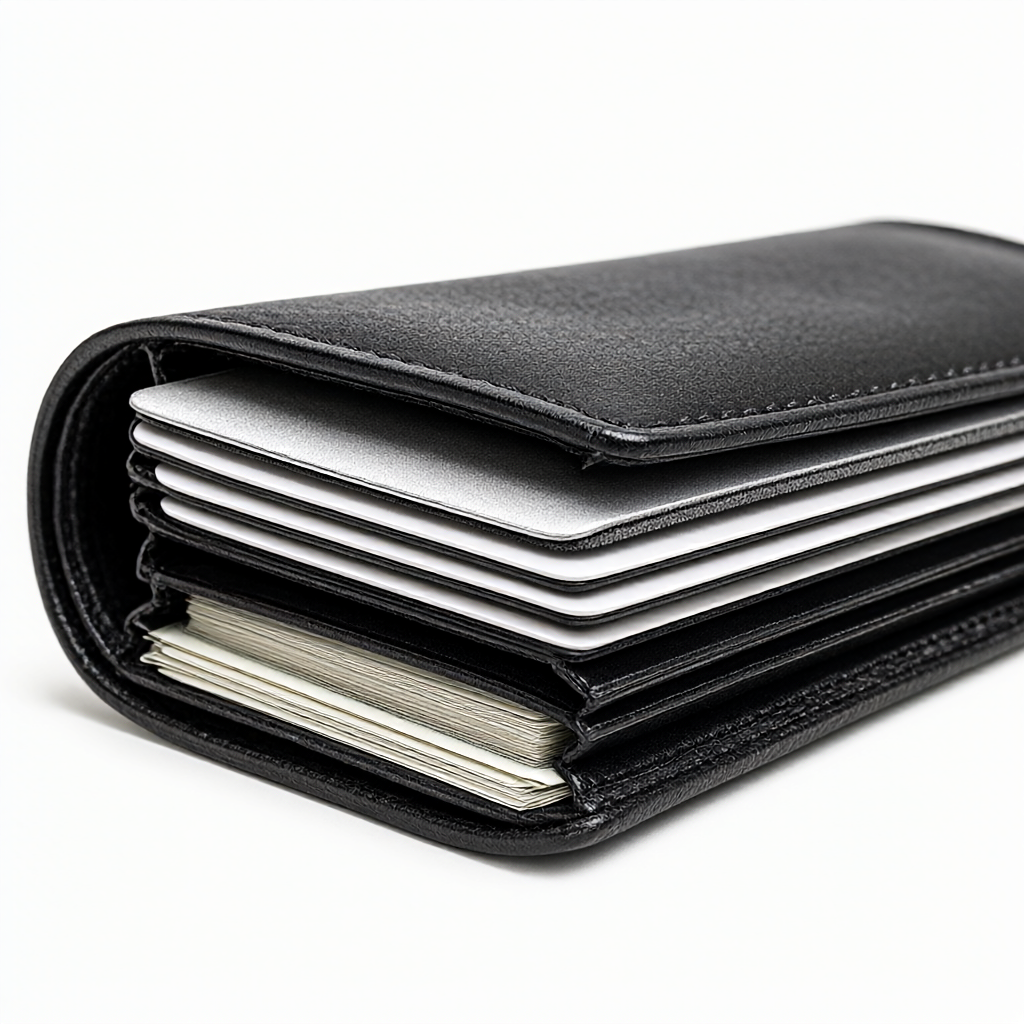
Wallets come in several forms, each serving different habits. Understanding these categories helps you avoid over‑buying capacity you never use.
What type of wallet is best for everyday carry versus travel or outdoor use?
- Cardholders are the lightest option, holding just enough cards for daily access. They fit easily in front pockets and pair well with a separate cash strap. Ideal for minimalists and tech‑forward users.
- Money clips combine a blade for bills and often a slot for a few cards. They’re ultra‑slim and work great when you rarely carry coins or receipts. Popular among outdoor enthusiasts who prefer low‑bulk gear.
- Slim bifolds retain the classic two‑fold design but in a thinner profile. They typically hold 6–12 cards, a few bills, and sometimes a ID window. A solid balance for people who still want a traditional layout without backpack bulk.
- Bifolds are the standard two‑panel wallet. They offer more slots and compartments but add thickness. Best for those who carry multiple cards, coupons, and folded cash daily.
- Trifolds have three panels and maximum organization, but they’re bulky and often unnecessary for modern carry. Mostly suited for heavy organizers or those who still rely on physical tickets, boarding passes, and loyalty cards.
- Wallet sleeves slip inside jacket pockets or bag compartments. They protect a cardholder or money clip and add a layer of privacy when moving through crowds.
For travel and outdoor use, prioritize durability and security: titanium or reinforced aluminum bodies, anti‑theft zipper closures, and dedicated passport/document pockets. For everyday urban carry, focus on quick access and comfort in pants pockets.
Comparison Table
| Wallet Type | Typical Card Capacity | Cash Storage | Security Features | Material Options | Best For |
|---|---|---|---|---|---|
| Cardholder | 4–8 | Strap or slot | RFID blocking, metal frame | Aluminum, carbon fiber, leather | Minimalists, tech users |
| Money Clip | 2–4 | Blade + slot | Metal construction, clip lock | Titanium, aluminum, steel | Low‑profile carry, outdoors |
| Slim Bifold | 6–10 | Folded bills | RFID shielding, snap/button | Aluminum, hybrid materials | Daily commuters, balance seekers |
| Standard Bifold | 8–12 | Multiple sections | RFID, zippered coin pocket | Leather, synthetic, metal combos | Heavy card carriers, travelers |
| Trifold | 10–16 | Full bill compartment | Multiple dividers, secure closure | Leather, fabric, plastic | Organizers, occasional bulk carry |
| Sleeve/Travel | Varies | Protective layer | Anti‑theft lining, RFID‑safe inserts | Nylon, silicone, mesh | Bag organizers, secure transit |
Note: Capacities are industry‑typical ranges and vary by manufacturer design.
Buying Factors
Choosing a wallet means weighing four core dimensions: size, material, performance, and aesthetics. Each trade‑off impacts comfort, longevity, and security.
How to choose the right wallet size and fit?
Measure your typical pocket depth and width. Front pockets favor wallets under 4 inches wide; back pockets can accommodate up to 4.5 inches before causing discomfort. Standard card sizes (3.375 × 2.125 inches) fit most holders, but some specialty cards (club cards, IDs) are larger—verify slot dimensions if you carry non‑standard items.
What factors matter most when choosing between leather, metal, or synthetic materials?
- Leather: Softens with age, develops patina, and feels premium. Requires conditioning to prevent cracking. Less resistant to water and abrasion than metals.
- Aluminum/Titanium: Lightweight, corrosion‑resistant, and highly durable. Can feel cold in winter and may scratch surfaces. Often includes built‑in RFID shielding.
- Carbon Fiber: Extremely strong, lightweight, and visually distinctive. More expensive and less flexible in design. Resists stains and moisture well.
- Synthetics (polymers, nylon): Affordable, versatile in color, and easy to clean. May lack the tactile appeal of natural materials and can degrade faster under UV exposure.
Material choice also ties to certifications and safety standards. Reputable manufacturers follow material guidelines documented by organizations like ASTM International for testing durability and finish quality. Look for anodized coatings on aluminum and RoHS‑compliant metals to ensure low heavy‑metal release.
What does a bi‑fold wallet mean and how does it differ from other styles?
A bifold wallet folds in half, creating two main compartments. It differs from a trifold (three‑panel fold) by being thinner and simpler, and from a cardholder (no fold, just slots) by offering enclosed storage for bills. Bifolds are the most common everyday style because they balance capacity and bulk.
Price & Cost
Quality minimalist wallets range from $15 to $60 for consumer retail units. Bulk OEM pricing typically falls between $5 and $25 per piece depending on material, customization, and order volume. Factors affecting cost include:
- Material grade: Titanium costs more than aluminum; genuine full‑grain leather exceeds bonded leather.
- Customization: Laser engraving, UV printing, and proprietary logos add per‑unit fees.
- Certifications: ISO 9001 quality management and BSCI social compliance audits increase production overhead but assure consistency.
- MOQ (Minimum Order Quantity): Lower MOQs (e.g., 300 pieces) carry higher unit prices; larger runs reduce per‑item cost significantly.
- Logistics: Drop‑shipping prep, Amazon FBA labeling, and custom retail packaging influence final landed cost.
For end consumers, price usually reflects craftsmanship and material integrity rather than brand markup alone. Manufacturers with in‑house CNC machining and finishing can offer better value than retailers who outsource production.
Pros & Cons
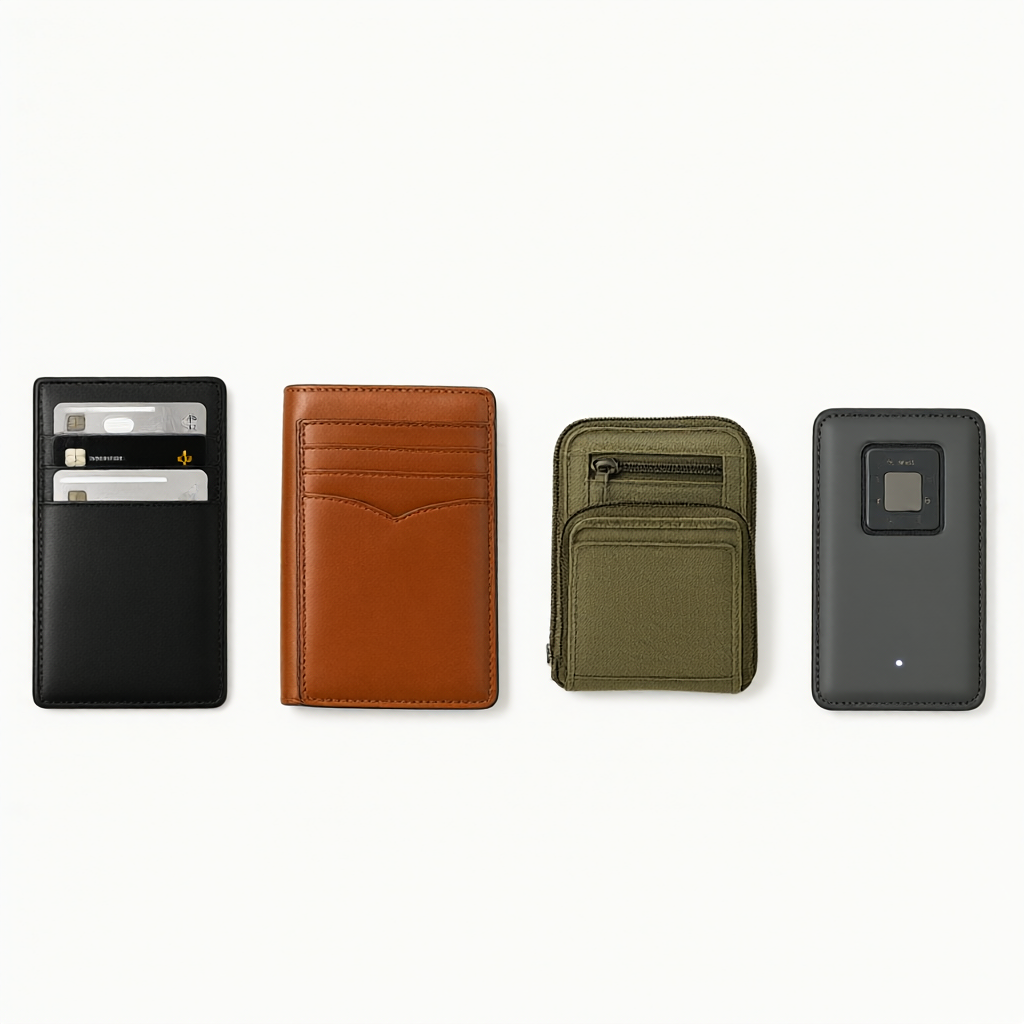
Cardholders
Pros: Ultra‑slim, lightweight, excellent for RFID blocking, easy to slide in/out of pockets.
Cons: Limited cash storage, may require separate bill holder, fewer slots for frequent card rotation.
Money Clips
Pros: Minimalist, secure cash retention, robust metal construction, often integrates card slots.
Cons: Not ideal for heavy card carriers, clips can loosen over time, limited compartmentalization.
Slim Bifolds
Pros: Balanced capacity, familiar folding mechanism, good mix of protection and accessibility.
Cons: Slightly thicker than cardholders, may bulge if overfilled, traditional aesthetic.
Standard Bifolds
Pros: High organization, multiple compartments, widely available designs.
Cons: Bulkier, heavier, slower to access single cards, can cause back‑pocket discomfort.
Travel/Security Wallets
Pros: Anti‑theft features (zipper locks, slash‑proof layers), RFID‑safe compartments, durable exteriors.
Cons: Heavier, less stylish for casual wear, often pricier due to specialized hardware.
Additional Considerations
Beyond core specs, several nuances affect real‑world satisfaction.
Digital Integration & Lock‑Screen Shortcuts
Modern carry blends physical and digital. Many smartphones support Apple Wallet (iOS) or Google Wallet (Android), storing transit cards, loyalty passes, and payment credentials. The Apple Wallet icon appears as a stylized blue card slot with overlapping white cards—check your device’s control center or app drawer to identify mobile‑payment readiness. When choosing a wallet, consider whether your daily routine already leans digital; if so, a lightweight cardholder serves as a reliable backup.
Security Enhancements
RFID‑blocking technology uses ferromagnetic or conductive layers to disrupt wireless skimming. While not foolproof against all attacks, it raises the barrier for casual theft. Some designs incorporate anti‑theft zippers or magnetic clasps that resist pickpocketing. For “frias mas seguras” (safer cold‑storage options), metal wallets with sealed compartments provide physical protection similar to hardware wallets used for cryptocurrency keys.
Organization & Carry Scenarios
A wallet full of receipts suggests a need for dedicated slip pockets or a small envelope divider. Conversely, a wallet full of money images (illustrative or decorative prints) is purely aesthetic and doesn’t affect function. When planning capacity, remember the functionality mantra: every extra slot adds bulk; choose only what you actually use weekly. The same applies to a wallet full of money drawings—graphics don’t increase real‑world utility.
Style & Personalization
Color and engraving let you express personality. A wallet from pink—anodized aluminum or dyed leather—adds a subtle pop without compromising masculinity or versatility. “Geek” or tech‑inspired engravings (circuit patterns, code snippets) cater to hobbyists. Many manufacturers offer custom laser etching, enabling monograms, coordinates, or inside jokes. These personal touches make replacements feel less like losses and more like upgrades.
Care & Longevity
Maintain leather with periodic conditioners; wipe metals with a dry cloth to remove oils and fingerprints. Avoid prolonged exposure to saltwater or extreme heat, which can degrade adhesives and anodized finishes. Warranties vary—some brands offer lifetime guarantees on mechanisms, while others limit coverage to manufacturing defects. Check the seller’s return policy and verified certifications before purchasing.
When evaluating suppliers, consider those adhering to international standards like ISO 9001 quality management systems, which ensure consistent production processes and traceable materials. The International Organization for Standardization provides frameworks that help buyers verify manufacturer reliability beyond marketing claims.
Choosing the Right Manufacturer
After comparing types, materials, and features, the next step is sourcing from a reputable producer. Look for manufacturers with proven export experience, in‑house machining capabilities, and transparent certification records. Key indicators include:
- Low MOQ flexibility (starting around 300 pieces allows brand testing without large inventory risk)
- Fast sample lead times (under two weeks indicates responsive engineering)
- Full customization (logo placement, packaging design, alloy options)
- Third‑party audits (BSCI, SGS material tests, REACH/RoHS compliance)
As a specialist in minimalist EDC wallets and pocket gear, our approach focuses on bridging design intent with manufacturable reality. We handle everything from concept sketches to final packaging, ensuring that whether you’re an Amazon FBA seller, a promotional products distributor, or a boutique brand owner, the finished product meets both functional and aesthetic expectations. Our CNC machines and laser engravers run in the same facility, so prototype revisions happen quickly and consistently.
We’ve helped over 200 brands worldwide bring custom metal wallets, carbon‑fiber card holders, and titanium money clips to market. By controlling the machining, anodizing, and assembly steps in‑house, we maintain tight tolerances and consistent surface finishes across batches. This vertical integration reduces lead‑time variability and allows us to offer competitive pricing even at lower volumes.
If you’re ready to move from research to procurement, comparing specifications side‑by‑side and requesting samples is the logical next step.
How Wallet Materials Compare: Technical Breakdown
Aluminum Wallets
- Grade used: 6061-T6 aerospace-grade aluminum is the industry standard for EDC wallets
- Thickness range: 1.2 mm to 2.0 mm (0.047″–0.079″)
- Weight: 28–45 g depending on slot count and frame design
- Anodizing: Type II sulfuric acid anodizing provides a hard, corrosion-resistant surface (Kirkside Frazier hardness ~400–600 HV)
- Pros: Lightweight, affordable, highly customizable via laser engraving and UV printing
- Cons: Softer than titanium; anodized layers can scratch through with sharp impact
Titanium Wallets
- Grade used: GR1 (commercially pure) or GR5 (Ti-6Al-4V) for strength
- Thickness range: 0.8 mm to 1.5 mm
- Weight: 35–55 g — slightly heavier than aluminum but significantly more durable
- Surface finish: Bead-blasted, mirror-polished, or anodized (color variants require careful voltage control)
- Pros: Corrosion-proof, hypoallergenic, higher scratch resistance, premium feel
- Cons: 2–3× the cost of aluminum; harder to machine, limiting design complexity
Carbon Fiber Wallets
- Construction: Wrapped around aluminum or steel core laminates
- Weight: 25–40 g — among the lightest options available
- Strength-to-weight ratio: ~3× stronger than aluminum at equivalent thickness
- Pros: Striking visual texture, extremely lightweight, stain and moisture resistant
- Cons: Higher unit cost; edge chipping possible if dropped on hard surfaces; limited color customization
Leather Wallets
- Full-grain leather: Top layer retains natural grain; ages gracefully with patina. Thickness typically 1.0–1.5 mm. Durable for 5+ years with conditioning.
- Top-grain leather: Sanded and finished for uniform appearance. Less porous, more water-resistant than full-grain.
- Bonded leather: Shredded leather fibers bonded with polyurethane backing. Lowest cost tier; prone to peeling after 1–2 years.
- Synthetic (PU/vinyl): Economical and easy to clean but degrades under UV exposure and repeated flexing within 12–18 months.
Polymer & Hybrid Options
- TPU/GFRP inserts: Used for shock absorption and RFID shielding layers
- Nylon/ ballistic cloth wraps: Light protective outer shells for cardholders
- Hybrid builds: Metal frame + leather panel or carbon fiber wrap over aluminum core — common in mid-tier EDC wallets
Explore different types of leather wallets for a deeper look at material grades and their real-world performance.
Security Features Explained: RFID Blocking, Anti-Theft & Build Standards
How RFID Blocking Actually Works
RFID-blocking wallets incorporate a conductive or ferromagnetic barrier — typically a thin sheet of nickel-iron alloy (Mu-metal) or copper mesh — positioned between card slots. This barrier creates an opposing electromagnetic field that disrupts the 13.56 MHz frequency used by contactless payment cards, NFC tags, and e-passports. According to Federal Trade Commission guidance on identity theft prevention, blocking the reading range (typically 1–10 cm) eliminates casual skimming risks. For validated performance, look for products tested against ASTM International F2923 requirements for RFID attenuation.
Anti-Theft Hardware Designs
| Feature | Description | Effectiveness Level |
|---|---|---|
| Spyder/coiled metal closure | Slim wire loop threads through a card slot to secure contents | ★★★★☆ (pick-resistant) |
| Magnetic clasp + hidden slit | Magnetic seal accessible only via side opening | ★★★☆☆ |
| Zipper track with lock | Full perimeter zipper with integrated combination lock | ★★★★★ |
| Slash-proof lining | Steel mesh or Kevlar®-woven inner layer prevents blade cuts | ★★★★☆ |
| Hidden compartment | Interior pocket with no external access point for valuables | ★★★☆☆ |
For travelers seeking the highest protection level, titanium or reinforced aluminum wallets with encrypted zip closures offer the best defense against both electronic and physical theft. These are the same RFID-protected wallets recommended for men and women who prioritize secure carry in high-traffic environments.
Durability Benchmarks for EDC Use
- Drop test: Reputable manufacturers test wallets at 1.2 m onto hardwood flooring; target zero structural deformation
- Flex cycle: Bifold hinges rated for ≥10,000 open/close cycles before spring tension loss
- Water exposure: Anodized aluminum and titanium wallets withstand >4 hours immersion without surface degradation
- Abrasion rating: Measured per ASTM D4060 (Taber test); ≥1,000 cycles without coating failure for daily-carry products
Price Ranges and Value Assessment
| Tier | Price Range (Unit Retail) | Price Range (OEM Bulk, 500 pcs) | Typical Materials | Expected Lifespan | Best Buyer Profile |
|---|---|---|---|---|---|
| Budget | $8–$18 | $3–$7 | Aluminum, PU leather, basic RFID foil | 1–2 years | Entry-level buyers, promotional items |
| Mid-tier | $18–$45 | $7–$18 | 6061-T6 aluminum, full-grain leather, carbon fiber wrap, advanced RFID | 3–5 years | EDC enthusiasts, Amazon sellers, boutique brands |
| Premium | $45–$100+ | $18–$35 | Grade 5 titanium, hand-stitched full-grain leather, bespoke engraving | 5–10+ years | Luxury retailers, corporate gift programs |
| Specialty | $100+ | N/A (low volume) | Exotic materials (damascus steel,陨铁 meteorite inlays), limited editions | Lifetime | Collectors, custom orders |
What drives the price difference? Beyond raw material costs, key value drivers include:
- In-house CNC machining vs. outsourced stamping (tolerance consistency)
- Surface finishing processes (anodizing, bead blasting, hand polishing)
- Testing and certification overhead (ISO 9001 QC systems add ~5–8% to production cost but reduce defect rates to <1%)
- Custom packaging and retail-ready presentation
Value tip: A wallet priced above $40 at retail should offer verifiable material grade documentation and quality testing records. Without these, you may be paying for branding rather than build quality.
Sustainability and Ethical Manufacturing
Sustainability in wallet manufacturing centers on three pillars:
Material Sourcing
- Recycled aluminum (6061 from post-industrial scrap): Reduces primary smelting energy by ~92% compared to virgin ore processing
- FSC-certified leather: Ensures hides originate from responsibly managed tanneries with controlled chemical discharge
- Plant-based polymers: Bio-PET and flax-composite frames are emerging alternatives to petroleum-derived synthetics
Production Practices
- Water-based anodizing solutions replace older chromium-based processes
- Laser engraving generates zero VOC emissions versus solvent-based marking
- Waste metal shavings from CNC operations are collected and recycled back into the supply chain
Social Compliance
Reputable factories hold BSCI (Business Social Compliance Initiative) audit certification, verifying safe working conditions, fair wages, and no child or forced labor. Buyers sourcing in bulk should request the latest BSCI report as part of their vendor evaluation.
Learn more about minimalist wallets and how sustainable material choices affect long-term product value.
Portability and Organization: Design Engineering Details
Pocket-Space Mathematics
The average men’s jeans front pocket measures approximately 4.25″ × 3.5″ when laid flat. A wallet exceeding 4″ in width causes the “wallet bulge,” leading to spinal misalignment from uneven sitting and fabric wear. Slim wallets designed to 3.5″ × 2.5″ stay flush against the body and eliminate these issues.
Card Slot Architecture
Standard ISO/IEC 7810 ID-1 credit card dimensions are 85.60 × 53.98 mm. Each slot adds roughly 0.8 mm of profile when closed. A well-engineered cardholder uses spring steel retainers to hold cards at 0.6–0.8 N extraction force — enough to prevent accidental slips but low enough for one-handed retrieval.
Cash Retention Methods
| Method | Capacity | Profile Impact | Notes |
|---|---|---|---|
| Elastic band strap | 5–15 bills | Low (+2 mm) | Stretch loses tension over 12–18 months |
| Spring-loaded money clip | 10–20 bills | Low (+3 mm) | Titanium clips maintain consistent grip for 5+ years |
| Folded bill slot | 2–4 bills | Medium (+5 mm) | Integrated into bifold/trifold designs |
| Roll-lock mechanism | 20–40 bills | High (+8 mm) | Found in tactical organizers; secure but bulky |
Modular System Design
Advanced EDC wallets use interchangeable module plates — a base frame accepting swap-in card trays, cash modules, or tool inserts (USB drive, multi-bit driver). This extends product lifecycle since individual components can be replaced independently.
Brand Reputation and Supplier Evaluation Framework
Industry Reputational Indicators
When evaluating wallet brands, check these publicly verifiable signals:
- Verification badges: FTC-recognized business accreditation, Better Business Bureau ratings
- Review authenticity: Look beyond star counts — examine verified purchase reviews mentioning specific defect types or longevity experiences over 6+ months
- Warranty terms: Lifetime mechanism warranties indicate confidence in engineering; limited 1-year warranties suggest planned obsolescence risk
Manufacturer Audit Checklist
Procurement professionals should ask these questions during supplier evaluation:
- Quality Control: What is your defect rate threshold? (<1% is industry best practice) Can you provide third-party SGS test reports for material composition?
- Production Lead Time: What is your standard sample turnaround? (Benchmark: ≤7 calendar days for prototype approval; ≤25 days for mass production)
- Certifications On File: ISO 9001 (quality management), BSCI (social compliance), REACH/RoHS (material safety) — request copies, not just claims
- Capacity Verification: Monthly output capacity ≥500K pieces indicates established supply chain; confirm whether CNC, anodizing, and assembly all run in-house
- Reference Cases: Ask for documented case studies with order volumes, material specs, and delivery timelines for comparable clients
For example, a 2024 procurement case involved a US-based Amazon FBA seller ordering 2,500 units of a titanium money clip with laser-engraved logo and custom retail packaging. The manufacturer delivered samples in 5 days, completed production in 22 days, maintained a 0.4% defect rate, and shipped FBA-prepped inventory directly to a fulfillment center — demonstrating the benchmark standard for mid-volume EDC orders.
Request a detailed quote and compare specifications for your specific order parameters.
Sources & References
- ASTM International — www.astm.org
- International Organization for Standardization — www.iso.org
- Federal Trade Commission — www.ftc.gov
- ASTM International — www.astm.org
- Get a Free Quote → — topedcwallet.com
- Explore different types of leather wallets — topedcwallet.com
- RFID-protected wallets recommended for men and women — topedcwallet.com
- Learn more about minimalist wallets — topedcwallet.com
From article to product
Turning this into a product?
Most of what is written here is the difference between a sample that works and one that does not. We can build either — the useful one costs the same.
Keep reading
More on buying guides
wallet with trigger
How Does a Trigger Wallet Work? What Is the Pop-Up Mechanism? The core of…
Readbest bifold wallet for women
What Is a Bifold Wallet? The term “bifold” refers to the fold: the wallet…
ReadMen’s trifold wallets with zipper compartments vs. bifold
At a Glance The three dominant men’s wallet formats differ in panel count, depth,…
Read
About the author
TOPWALLET Editorial Team
TOPWALLET's editorial and engineering desk writes from bench testing at the Shenzhen (Longgang) facility: pull-force and cycle testing, 13.56 MHz shielding measurements, finish trials and factory audits, rather than supplier spec sheets. Every specification in these guides is one we write on a purchase order.
Written on the floor
This article was written by our production and QC team — the people who spec tolerances, run the finishing line and inspect every batch. Where it states a capacity, a pull force or a lead time, it comes from a measurement we made, not a supplier’s catalogue. If a number here disagrees with what your own supplier told you, tell us; several of these articles started as a correction from a buyer.
See how the factory works · Inspection process · Sourcing FAQ
Turning this into a product?
Most of what is written here is the difference between a sample that works and one that does not. We can build either — the useful one costs the same.