

At a Glance
If your wallet was stolen, the smartest move is to replace it with a modern minimalist EDC wallet—a compact, secure alternative designed specifically to prevent future loss. A quality minimalist wallet holds just the cards and cash you actually need each day, fits flush in your front pocket, and often includes anti-theft features like RFID-blocking materials and tight card retention that make pickpocketing noticeably harder. You’re not just swapping one wallet for another; you’re upgrading how you carry your essentials after a theft, trading bulk for confidence.
For most people recovering from a stolen wallet, an anodized aluminum RFID-blocking wallet or a carbon fiber card holder strikes the best balance of affordability, durability, and security. These wallets are slim enough to be difficult targets in crowded spaces yet substantial enough to hold daily necessities without feeling flimsy. The right choice depends on whether you prioritize maximum security, style versatility, budget constraints, or specific carry needs like integrated keys.
The remainder of this guide walks through every decision factor—size, materials, security features, gender-specific options, key-integrated designs, price bands, and niche formats—so you can select a replacement wallet with full clarity rather than guesswork. Whether you’re looking for a small card wallet for ladies, a low-profile option for guys, or something more distinctive like a purple-finished metal wallet or a designer keychain carrier, the trade-offs become obvious once you understand what each build type delivers.
Types & Categories
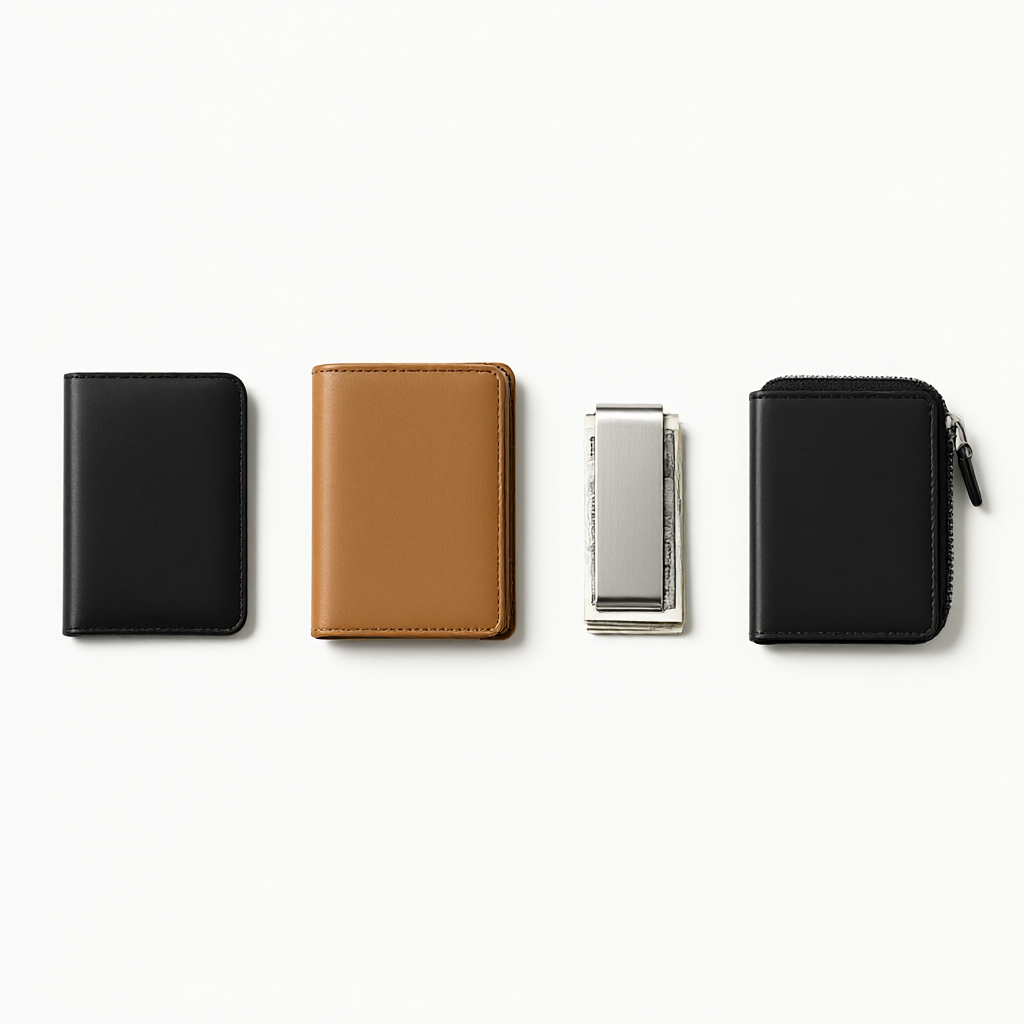
Minimalist wallets fall into several distinct categories, each suited to different recovery scenarios and daily-carry preferences. Understanding these types helps narrow your choice after a theft, because a wallet that prevents future losses looks very different from the bifold you lost.
What type of minimalist wallet is best for maximum security?
RFID-blocking metal wallets are the top recommendation for theft recovery. Anodized aluminum or titanium constructions with embedded RFID-shielding layers prevent contactless skimming—a growing concern alongside traditional pickpocketing. Brands like TOP EDC Wallet produce aluminum wallets with continuous copper-nickel mesh shielding behind the outer shell, ensuring signal interference across all card frequencies. According to ASTM F841-20a, which covers performance standards for barrier materials against radio frequency identification data transfer, properly engineered shielding attenuates signals by at least 20 dB across the 13.56 MHz HF range. When selecting a replacement, verify that RFID blocking is built into the structure itself—not merely a thin insert—and confirm test data exists for the specific claim.
What type of wallet suits daily EDC swapping?
Carbon fiber card holders offer the best all-around option for rebuilding your everyday carry after theft. These slim wallets weigh approximately 30–50 grams, slide effortlessly into any pocket, and resist scratches, water damage, and general wear far better than leather alternatives. The layered carbon fiber weave provides inherent rigidity while keeping the profile thin enough that bulky bulges don’t advertise what’s inside—a deliberate advantage if reclaiming privacy after a theft is part of your goal.
What type of wallet works for tactical or outdoor scenarios?
Titanium money clips and hybrid pocket organizers serve users who need rugged utility beyond basic card storage. Titanium’s strength-to-weight ratio means a clip can securely hold folded bills and multiple cards without bending under normal use. For those whose daily routine involves tools, multi-bit drivers, or other pocket gear, a tactical pocket organizer constructed from aluminum alloy combines card slots with modular attachment points for additional EDC accessories.
What size is wallet size and why does it matter after losing your old wallet?
This question deserves immediate attention. “Wallet size” typically refers to a standard bifold measuring roughly 4.5 × 3.5 inches when closed—but that dimension describes the old wallet you lost, not the ideal replacement. A minimalist wallet meant to prevent future thefts measures closer to 2.75 × 4 inches, sometimes even smaller. The reduction in footprint matters because larger wallets are更容易被目标锁定(easier targets for opportunistic thieves),and they protrude visibly from pockets, signaling value to anyone watching. Choosing a wallet that measures below the traditional 4.5-inch width immediately reduces its visibility as a target while still accommodating 4–8 cards and folded cash. See our detailed wallet size dimensions guide for exact measurements across common formats.
Comparison Table
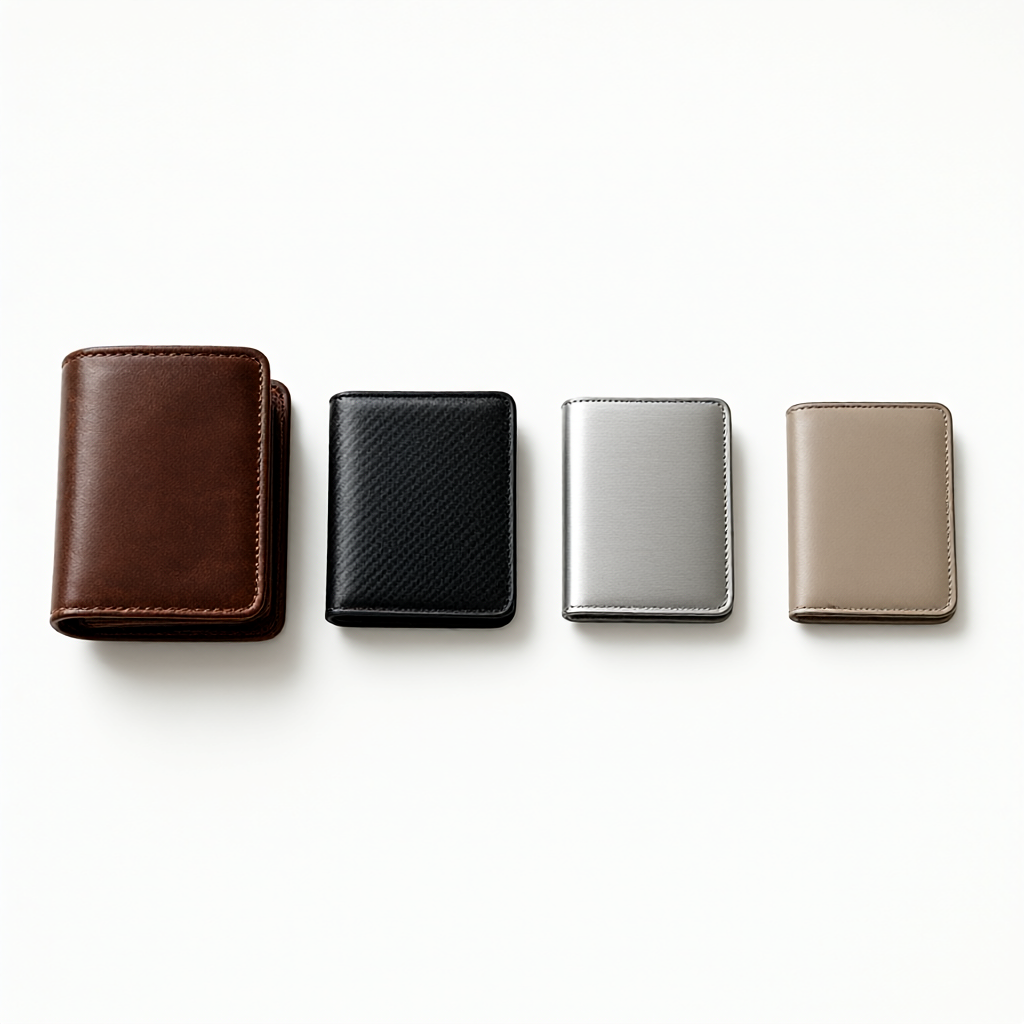
| Category | Material | Typical Dimensions | Card Capacity | RFID Blocking | Weight Range | Best For |
|---|---|---|---|---|---|---|
| Aluminum minimalist wallet | Anodized aluminum alloy | ~2.75 × 4 × 0.5 in | 4–12 cards | Yes (built-in mesh) | 45–70 g | Maximum security post-theft |
| Carbon fiber card holder | Carbon fiber / TPU composite | ~2.5 × 3.75 × 0.4 in | 4–8 cards | Optional | 30–50 g | Everyday carry, travel |
| Titanium money clip | Grade 5 titanium | ~2.5 × 4 × 0.3 in | 4–6 cards + cash | No (by design) | 35–55 g | Lightweight durability focus |
| Hybrid pocket organizer | Aluminum + silicone / nylon | Variable (modular) | 6–16 cards + items | Available | 60–100 g | Multi-tool EDC users |
| Leather minimalist bi-fold | Full-grain or bonded leather | ~4 × 3.5 × 0.75 in | 6–12 cards | No (typically) | 50–90 g | Traditionalists transitioning out |
Buying Factors
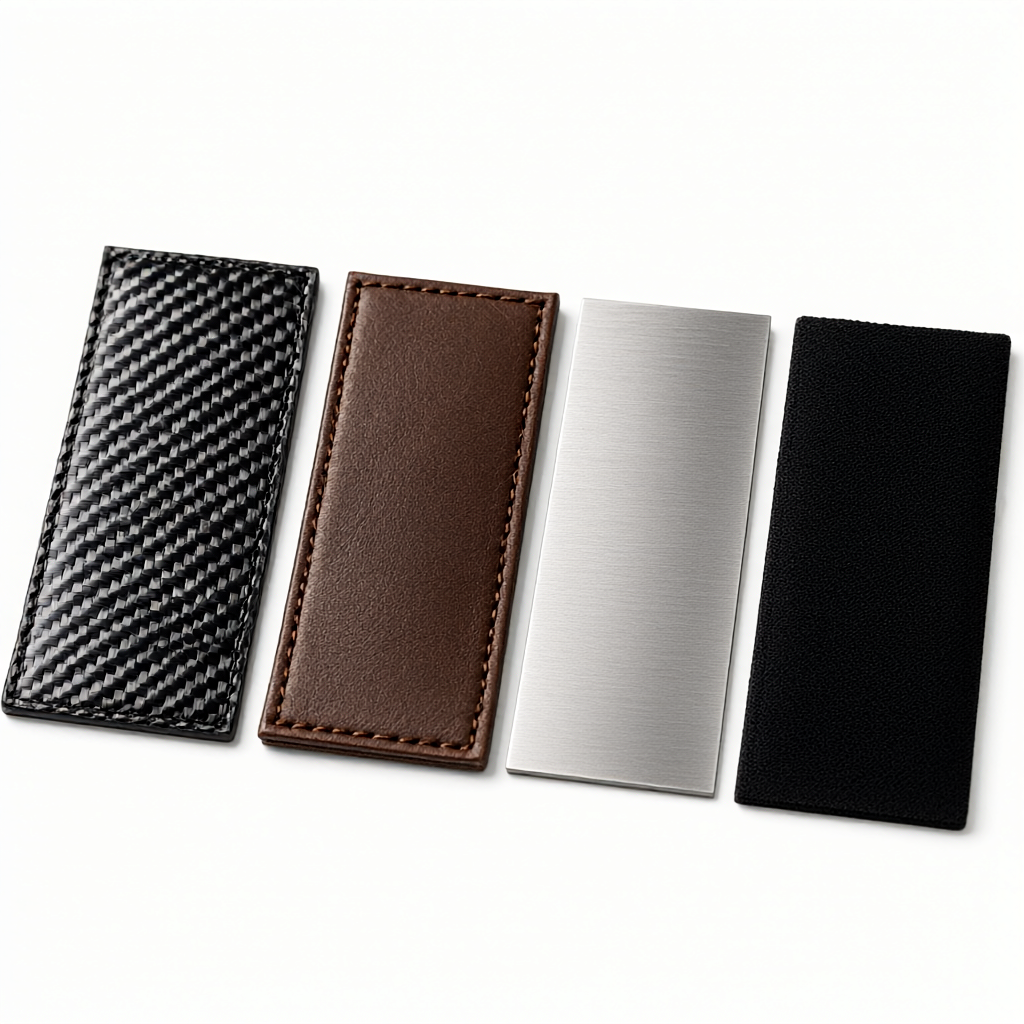
Selecting a replacement wallet after theft requires evaluating four interrelated factors: size, material performance, security features, and lifestyle fit. Each factor carries trade-offs that influence comfort, concealment, and long-term satisfaction.
How to choose the right wallet size for post-theft recovery?
Start by auditing exactly what you carried before the theft. Most people overestimate their needs. List the cards you actually reach for daily—driver’s license, one credit card, transit pass, membership card—and eliminate everything else. A well-designed minimalist wallet handles this lean portfolio gracefully. Choose a size that snugly contains only those verified items; anything larger invites hoarding habits that defeat the purpose.
For women recovering from a stolen female wallet purse situation, a compact cardholder that slips inside a crossbody bag or small tote eliminates the separate-purse problem entirely. For men seeking a wallet for guys, a front-pocket aluminum wallet maintains a clean silhouette while keeping valuables accessible without reaching into a back pocket—a habit that signals opportunity to thieves. Explore curated selections at our minimalist wallets collection.
What material differences matter most: aluminum vs carbon fiber vs titanium?
Aluminum wallets dominate the mid-range for good reason. Anodized aluminum offers exceptional scratch resistance, lightweight handling, and natural RFID attenuation when combined with conductive mesh layers. It costs less than titanium but outperforms polymers and many plastics in structural longevity. The surface finish withstands drops, abrasion, and sweat exposure without degradation—critical for someone rebuilding carry habits after theft disrupts their routine.
Carbon fiber ranks second in durability but excels in weight savings and corrosion immunity. Unlike metal, carbon fiber never conducts electricity or interferes with phone signals, making it compatible with wireless charging pads and proximity payment setups without removal. It also absorbs impact differently than metal—it flexes microscopically rather than denting—which some users prefer for pocket longevity.
Titanium sits above both in tensile strength and premium appeal but comes at a significant price premium. A titanium money clip costs two to three times more than an equivalent aluminum wallet. The investment pays off only if extreme lightweight portability and lifetime durability justify the expense; for most theft-recovery situations, aluminum or carbon fiber deliver proportional benefit per dollar spent.
Our RFID wallet buyer’s guide covers material compatibility with various RFID shielding technologies in detail.
Should I choose a wallet with RFID-blocking after my wallet was stolen?
Yes—if your previous wallet contained payment cards with contactless chips, RFID blocking is a non-negotiable upgrade. Pickpockets equipped with handheld skimmers can read card data from arm’s length without physical contact, and traditional leather or fabric wallets offer zero resistance to this technique. Replacing a stolen wallet with an RFID-blocking model closes that vulnerability gap entirely.
However, RFID shielding is not universally necessary. If your remaining cards lack contactless capability, or if you primarily carry older magnetic-strip products, the extra cost of RFID-engineered construction provides diminishing returns. In those cases, prioritize mechanical security features instead—secure card grips, anti-drop closures, and discreet form factors that physically resist removal by thieves.
How do I match wallet style to gender and personal preference?
Men typically favor metallic finishes, muted tones (black, gunmetal, navy anodization), and angular geometries that project tactical reliability. Women may gravitate toward slimmer profiles, decorative laser-engraving patterns, softer color options like rose gold or deep purple anodization, and integrated key-ring configurations. That said, individual preference overrides demographic trends—many women carry chunky aluminum wallets, and many men prefer sleek carbon fiber designs.
For users seeking a small wallet for ladies that doesn’t require switching to a completely different carrying system, a slim cardholder that tucks into a existing handbag or shoulder bag provides continuity. Those wanting something more self-contained might consider a purse with built in wallet hybrid product—though these tend toward luxury pricing and limited material options compared to standalone minimalist wallets.
Price & Cost
Understanding pricing ranges prevents overpaying during the emotional recovery phase after theft.
How much does a quality minimalist wallet cost?
Entry-level aluminum RFID-blocking wallets run between $25 and $45 USD for consumer retail purchases. Mid-range options with advanced finishes, custom laser engraving, or hybrid card-plus-cash configurations typically sit between $45 and $80. Premium titanium models and fully custom private-label productions generally exceed $80, reaching $120–$150 for highly personalized configurations.
Budget-conscious buyers—particularly those sourcing multiple units as gift buyer selection replacements for friends or colleagues—can find solid wholesale pricing starting around $18–$22 per unit at volume tiers beginning at 300 pieces. Private-label customization adds approximately $3–$8 per unit depending on engraving complexity and packaging requirements.
Price bands quoted in this article are industry ranges published for planning purposes. Exact per-unit pricing depends on material, finish, packaging and order quantity, and is confirmed by our sales team after an inquiry against a locked specification.
Corporate buyers seeking branded promotional goods for clients should budget $15–$30 per unit for standard aluminum wallets with single-side laser engraving and simple gift boxes, scaling upward for multi-material constructions and elaborate packaging. Read our guide on different types of leather wallets to understand how material choice influences retail pricing across the broader market.
What affects minimalist wallet pricing the most?
Three variables drive cost differences: material grade (aluminum alloy 6061-T6 versus titanium GR5), manufacturing complexity (CNC-milled single-piece bodies versus stamped and assembled constructions), and customization depth (off-the-shelf stock versus logo engraving, UV printing, custom packaging, and FBA prep services). Basic aluminum wallets with no personalization represent the lowest reachable price point; heavily customized titanium pieces with retail packaging and barcoding represent the highest.
Pros & Cons
Each wallet category presents identifiable strengths and weaknesses that determine suitability for different post-theft scenarios.
Aluminum RFID-blocking wallets
These wallets offer strong overall value with excellent security features at moderate prices. The anodized surface resists cosmetic degradation far better than bare metals or leather. Card retention springs keep contents organized and accessible. However, aluminum conducts temperature——the wallet feels cold in winter and warm in summer——and the rigid construction means it won’t flex to fit into deeply packed pants pockets without effort. Some entry-level models compromise on spring tension quality, leading to loose cards that slip out unexpectedly.
Carbon fiber card holders
Carbon fiber wallets excel in weight reduction and corrosion resistance. They remain visually pristine after years of pocket abuse and pair naturally with modern smartphone ecosystems since they don’t interfere with wireless charging or NFC payments. The primary drawback is lower card capacity——most carbon fiber designs accommodate only four to six cards comfortably. Extended cash storage requires folding bills tightly, which becomes impractical for frequent travelers needing larger denominations. Additionally, carbon fiber’s smooth surface occasionally causes cards to eject too readily when tilted sharply.
Titanium money clips
Titanium clips represent the lightest, strongest option available. They survive drops, impacts, and years of use without deformation or finish failure. The aesthetic appeals to users who prefer utilitarian elegance. On the negative side, titanium clips provide no RFID protection unless specifically engineered with internal shielding layers——which adds cost and thickness. Cash retention relies entirely on clip tension, meaning overly thick bill stacks may not stay secured during vigorous movement. Users expecting integrated card storage alongside cash will find standard money clips insufficient without companion card sleeves.
Keychain wallets and hybrid organizers
Integrated key chain wallet configurations merge card storage with keyring attachment, eliminating the separate-key problem that plagues traditional setups. A small card wallet with key ring attachment point lets users consolidate their most essential items onto a single loop. The downside is added bulk at the hip——keys and wallet hardware jingle together, creating noise and slight discomfort during extended wear. These hybrids also increase theft attractiveness since they combine two valuable item categories in one visible package.
Additional Considerations
Beyond core selection criteria, several niche options and supplementary factors deserve attention for buyers navigating post-theft replacement decisions.
Niche formats worth evaluating
Designer keychain wallet designer pieces occupy a unique intersection between functional carry accessory and fashion object. Certain brands produce precision-machined metal wallets with artistic laser-engraving patterns that double as conversation pieces. While these command premium pricing—often $60–$120—they deliver superior aesthetic differentiation for users who view their EDC as personal expression. A purple wallet with distinctive anodized coloring or engraved geometric motifs can serve this expressive role effectively without requiring luxury-brand premiums.
Cryptocurrency holders increasingly seek dedicated carriers alongside traditional fiat wallets. A cryptowallet sleeve or slot within a multi-compartment organizer allows secure separation of paper seed phrases and hardware wallet dongles from everyday payment cards. This compartmentalization reduces the risk of accidentally exposing sensitive credentials during routine card access—a precaution particularly relevant for users recovering from theft who want to minimize future vulnerability exposure.
Hybrid systems like a purse with built in wallet remain popular among consumers who refuse to abandon conventional bag-based carry entirely. These products embed a slim cardholder compartment directly inside structured handbags, reducing the number of separate items to manage. However, they sacrifice modularity—you cannot swap the built-in wallet for an upgraded version independently.
Practical integration tips for theft recovery
When rebuilding your wallet setup after a theft, resist the urge to immediately refill a new minimalist wallet with every card and document you owned previously. Instead, deliberately curate a leaner load. Remove expired memberships, unused store cards, and redundant loyalty programs. Keep only active identification, one primary payment method, one secondary backup card, transit passes, and essential health insurance information. This intentional curation reduces both financial exposure and physical bulk simultaneously.
Consider pairing your new minimalist wallet with complementary anti-theft gear: a money belt worn beneath clothing for emergency cash reserves, a locking zippered bag for travel, and an Apple Find My or Tile tracker adhered to the interior of your wallet. These additions create layered defense without reintroducing the bulky profile that made your original wallet a target.
See our complete guide to card-safe wallets for detailed analysis of RFID technologies and card protection mechanisms used across current market offerings.
Supplier evaluation considerations
The wallet market contains thousands of manufacturers varying dramatically in quality control rigor, material sourcing transparency, and ethical production standards. Buyers should distinguish between suppliers offering genuine CNC-machined construction with documented material certifications and those producing thin stamped-metal imitations with superficial “RFID-blocking” claims unsupported by independent testing. Certifications such as ISO 9001 quality management systems and BSCI social compliance audits provide baseline assurance regarding factory operations. SGS-tested materials confirm the absence of restricted substances under REACH and RoHS frameworks.
As a manufacturer specializing in this space for over a decade, our approach centers on verifiable engineering standards rather than marketing language. Every aluminum wallet we produce undergoes CNC machining from solid billet stock, incorporates certified RFID-shielding mesh validated against established attenuation benchmarks, and carries relevant compliance documentation upon request. We maintain in-house finishing capabilities including anodizing, laser engraving, and UV printing so that brand partners—from Amazon sellers to corporate gift buyers—receive consistent quality whether ordering 300 pieces or scaling to volume distribution. If you’re evaluating suppliers for private-label production or comparative assessment before purchase, reaching out for technical specifications and sample requests provides concrete data to inform your decision. Contact Our Team to discuss your specific requirements.
How to Choose Based on Lifestyle & Daily-Carry Needs
Your daily routine should dictate your wallet choice more than trends or aesthetics. Below are three common profiles with specific recommendations.
For commuters and urban professionals
If you navigate crowded transit systems or busy city streets daily, prioritize compact front-pocket wallets with secure card retention. An anodized aluminum RFID-blocking wallet in a slim profile reduces pickpocket visibility while keeping your phone and one card accessible. Look for wallets under 15 mm thick when loaded. Weight matters less than concealment—back-pocket wallets signal opportunity to thieves, especially in metro environments.
For travelers and outdoor enthusiasts
Travelers benefit most from hybrid pocket organizers combining card storage with zippered cash compartments and external carabiner loops. A titanium or aluminum wallet with modular attachment points lets you secure your gear to a backpack strap or belt loop, reducing loss risk during movement. Carbon fiber remains the lightest option for weight-sensitive carry. Consider a crypto wallet carrier—a dedicated slot or pouch sized for hardware wallets like Ledger or Trezor—if digital assets form part of your value storage. These niche formats often integrate into tactical wallet designs.
For minimalists seeking maximum simplicity
Users who carry only 2–4 cards and a small amount of cash should choose a pure cardholder or money clip. A carbon fiber cardholder at 30 g provides zero bulk and slides into any pocket or sleeve. If you prefer metal construction, a single-piece CNC-milled aluminum wallet eliminates moving parts that could fail over time. The trade-off is reduced capacity—you cannot expand your carry without switching products.
Gender-Specific Considerations
Wallet design has evolved beyond unisex assumptions. Understanding gender-specific preferences helps narrow the search faster.
Wallets for women
Women seeking alternatives to traditional purses often look for small card wallets that fit inside existing bags rather than replacing them. Key considerations include:
- Slender profiles under 12 mm when loaded to maintain bag aesthetics
- Decorative finishes such as rose gold anodization, purple metallic tones, or laser-engraved patterns
- Integrated key rings that eliminate the separate keys-and-wallet separation problem
- Lightweight construction (under 50 g) so the wallet does not add noticeable weight to a handbag
Popular choices include purple-finished aluminum wallets and designer keychain wallets that double as bag charms while securing essentials. These formats appeal to users who want functional accessories that complement their style rather than disappear into a bag lining.
Wallets for men
Men’s minimalist wallets emphasize durability, low-profile silhouettes, and tactical functionality. Preferred characteristics:
- Gunmetal, black, or navy anodized finishes that resist visible scratches
- Angular geometry conveying rugged utility
- Front-pocket compatibility with belt-loop friendliness
- Higher card capacity (8–12 slots) for users carrying multiple payment and identification cards
Tactical pocket organizers with MOLLE-compatible attachment points suit users whose carry includes multi-tools, flashlights, or other EDC accessories alongside financial cards.
Key-Integrated & Hybrid Wallet Options
Integrated key holders solve a common pain point: carrying separate keys and wallets doubles the items you can lose. Several approaches exist.
Key-ring card wallets
A key ring card wallet combines a split-ring or tethered key holder with a slim card compartment. These hybrid designs typically measure 3.5 × 2.5 inches and weigh 60–90 g. The key ring attaches directly to the wallet body via a reinforced pivot point, ensuring keys and cards remain physically connected. Quality examples use marine-grade stainless steel rings that resist corrosion and maintain tension over thousands of open-close cycles.
Integrated key holder wallets
Some manufacturers embed a fold-out key tray into the wallet body itself. When closed, the keys sit flush inside a machined channel; when deployed, a thumb groove allows quick access. This format works best for users carrying 1–3 house or car keys alongside 4–6 cards. The mechanical complexity introduces a failure mode—the tray hinge can loosen over time—but the convenience factor justifies the trade-off for many daily-carry users.
Practicality assessment
Key-integrated wallets add approximately 20–40 g to your carry weight and increase thickness by 3–5 mm. If your daily routine already involves juggling keys separately, the integration pays off immediately. If you rarely carry more than two keys, a standalone keychain paired with a pure cardholder remains the lighter, more reliable option. See our complete guide to card-safe wallets for additional protection strategies.
Niche Formats Deep Dive
Several specialized wallet categories address distinct user needs that general-purpose designs overlook.
Designer keychain wallets
Designer keychain wallets merge fashion accessory with functional card storage. These pieces typically feature branded logos, premium materials (polished brass, ceramic inserts, genuine leather wraps), and retail packaging positioned for gift markets. Pricing spans $40–$120 for consumer units, though wholesale costs for OEM-produced versions start around $12–$18 per unit at 100+ quantities. For corporate buyers sourcing branded promotional goods, these formats command higher perceived value than standard metal wallets, making them effective client gifts.
Purple-finished metal wallets
Purple anodized aluminum wallets have gained popularity as distinctive everyday carry pieces. The color comes from controlled electrochemical anodization—a process that grows a colored oxide layer on the aluminum surface. Unlike paint or powder coating, anodized colors integrate into the metal substrate and resist chipping, fading, or scratching under normal use. The finish undergoes no additional sealing step beyond standard dye immersion and hot-water pore closing, maintaining the material’s natural thermal conductivity.
For users who want visual distinction without sacrificing function, purple-finished wallets offer the same RFID-blocking performance and card retention as neutral-toned equivalents. Production lead times are identical since coloring occurs during the standard anodizing batch cycle.
Crypto wallet carriers
Hardware cryptocurrency wallets (Ledger Nano S/X, Trezor Model One/T) require dedicated physical protection. Dedicated crypto wallet carriers are slim sleeves or pockets sized specifically for these devices, often integrated into larger minimalist wallets as a secured internal slot. Key specifications to verify:
- Inner dimensions matching your device (typically 65 × 30 × 5 mm for Nano S+)
- Anti-static lining to protect sensitive electronic components
- Quick-access flap or slide mechanism for rapid retrieval
- Compatibility with USB cable routing when connecting to a computer
Integrating a crypto carrier into your daily wallet eliminates the separate protective case that many users currently carry, consolidating everything into one pocket item.
Immediate Actions After Wallet Theft: A Security Protocol
Recovering from wallet theft requires systematic action to minimize financial and identity damage. Follow this sequence regardless of which country you are in.
Step 1: Cancel credit and debit cards immediately
Contact your bank or card issuer within hours of discovering the theft. Most major banks offer mobile apps with instant card-lock features—use these first if available. For cards issued internationally, call the nearest embassy or consulate if local phone numbers are unavailable. Under FTC guidelines, consumers bear zero liability for unauthorized charges made after reporting card loss, provided the report is filed promptly. Document every call: note the representative name, timestamp, and confirmation number.
Step 2: File a police report
A formal police report creates an official record required by most insurance claims and many banking dispute processes. Visit the nearest station or file online where your jurisdiction permits. Request a copy of the report number—you will need this for card issuer disputes and insurance filings. Include details about the theft circumstances, last known location, and any suspect descriptions. In many jurisdictions, wallet theft below a certain dollar threshold qualifies as a misdemeanor, but the report itself remains valuable even when prosecution is unlikely.
Step 3: Replace government-issued identification
Your driver’s license, passport, and national ID card are high-value targets for identity fraud. Report lost IDs to the issuing authority within 24 hours where possible. For US residents, contact the DMV for license replacement and the State Department for passport reissuance. Keep receipts and confirmation numbers. Expect replacement processing times ranging from same-day (some DMVs) to 2–4 weeks (passport renewals by mail). Consider placing a fraud alert with credit bureaus during this period.
Step 4: Protect against identity theft and fraud
File a police report → place a fraud alert → monitor credit reports. The three-step protocol above addresses immediate financial exposure. Long-term protection requires:
- Checking annual credit reports from all major bureaus
- Setting up transaction alerts through your banking apps
- Monitoring for unfamiliar accounts opened in your name
- Considering a credit freeze if you suspect comprehensive identity compromise
Step 5: Contact Social Security administration if SSN was compromised
If your wallet contained a Social Security card or any document displaying your full SSN, contact the Social Security Administration within 48 hours. Report the potential misuse and request a new card with a modified number if fraud is confirmed. Under Social Security regulations, victims of identity theft can obtain a new SSN after exhausting all alternatives—a process requiring extensive documentation but providing permanent protection against recurring fraud using the compromised number.
> Note: This security protocol addresses the aftermath of wallet theft comprehensively. Pairing it with a secure replacement wallet—preferably one with RFID blocking and compact front-pocket carry—reduces future risk significantly. Review our guide to RFID-protected wallets for detailed product recommendations.
Manufacturer Guidance: How We Meet These Standards
As a manufacturer specializing in minimalist EDC wallets for over a decade, we structure our production around the exact criteria discussed in this guide. Here is how our facility translates industry standards into finished products.
Our ISO 9001-certified quality management system governs every production step—from raw aluminum billet inspection through final packaging. Materials comply with REACH and RoHS directives, and all RFID-blocking constructions undergo SGS testing to verify attenuation meets or exceeds the 20 dB threshold specified in ASTM F841-20a. Our BSCI-audited facility ensures ethical manufacturing practices throughout the supply chain.
For buyers evaluating post-theft wallet replacements, we recommend starting with our flagship anodized aluminum RFID-blocking wallets as the baseline secure option, then upgrading to titanium or custom-configured builds based on individual carry requirements. With MOQ starting at 300 pieces and sample turnaround in 7 days, brand owners and distributors can validate quality before committing to volume orders.
Sources & References
- ASTM F841-20a — www.astm.org
- FTC guidelines — www.ftc.gov
- wallet size dimensions guide — topedcwallet.com
- minimalist wallets collection — topedcwallet.com
- RFID wallet buyer’s guide — topedcwallet.com
- different types of leather wallets — topedcwallet.com
- guide to card-safe wallets — topedcwallet.com
- Contact Our Team — topedcwallet.com
- Social Security regulations — www.socialsecurity.gov
From article to product
Turning this into a product?
Most of what is written here is the difference between a sample that works and one that does not. We can build either — the useful one costs the same.
Keep reading
More on buying guides
wallet with trigger
How Does a Trigger Wallet Work? What Is the Pop-Up Mechanism? The core of…
Readbest bifold wallet for women
What Is a Bifold Wallet? The term “bifold” refers to the fold: the wallet…
ReadMen’s trifold wallets with zipper compartments vs. bifold
At a Glance The three dominant men’s wallet formats differ in panel count, depth,…
Read
About the author
TOPWALLET Editorial Team
TOPWALLET's editorial and engineering desk writes from bench testing at the Shenzhen (Longgang) facility: pull-force and cycle testing, 13.56 MHz shielding measurements, finish trials and factory audits, rather than supplier spec sheets. Every specification in these guides is one we write on a purchase order.
Written on the floor
This article was written by our production and QC team — the people who spec tolerances, run the finishing line and inspect every batch. Where it states a capacity, a pull force or a lead time, it comes from a measurement we made, not a supplier’s catalogue. If a number here disagrees with what your own supplier told you, tell us; several of these articles started as a correction from a buyer.
See how the factory works · Inspection process · Sourcing FAQ
Turning this into a product?
Most of what is written here is the difference between a sample that works and one that does not. We can build either — the useful one costs the same.