

Finding engraved wallets that dads will genuinely keep in their pocket requires balancing permanent personalization with durable everyday-carry construction. For B2B buyers sourcing personalized pocket gear, slim metal wallets in 6061-T6 aluminum or Grade 5 titanium with fiber-laser engravings consistently perform best—offerings that combine scratch-resistant finishes, refined tactile weight, and legible markings that survive years of daily handling. When evaluating bulk orders, focus on material hardness, engraving permanence (verified by salt-spray and adhesion tests), realistic MOQ thresholds, and supplier certifications such as ISO 9001:2015 and BSCI compliance.
Engraved Wallets: What Is the Quick Answer?
What engraved wallets are best suited for giving to dads as gifts? For B2B buyers sourcing personalized pocket gear, the strongest choices are slim metal wallets—typically aluminum or titanium—featuring precise laser engraving of initials, short names, or simple icons. These wallets combine durable everyday‑carry construction with a refined finish that reads as thoughtful rather than novelty. Carbon fiber card holders and RFID‑blocking metal wallets are also strong candidates when security and modern aesthetics are priorities. In practice, “engraved wallets for dad” work best when the design stays minimal, the engraving is permanent (not printed), and the material can withstand daily wear without tarnishing.
Engraved Wallets: How Does It Work in Detail?
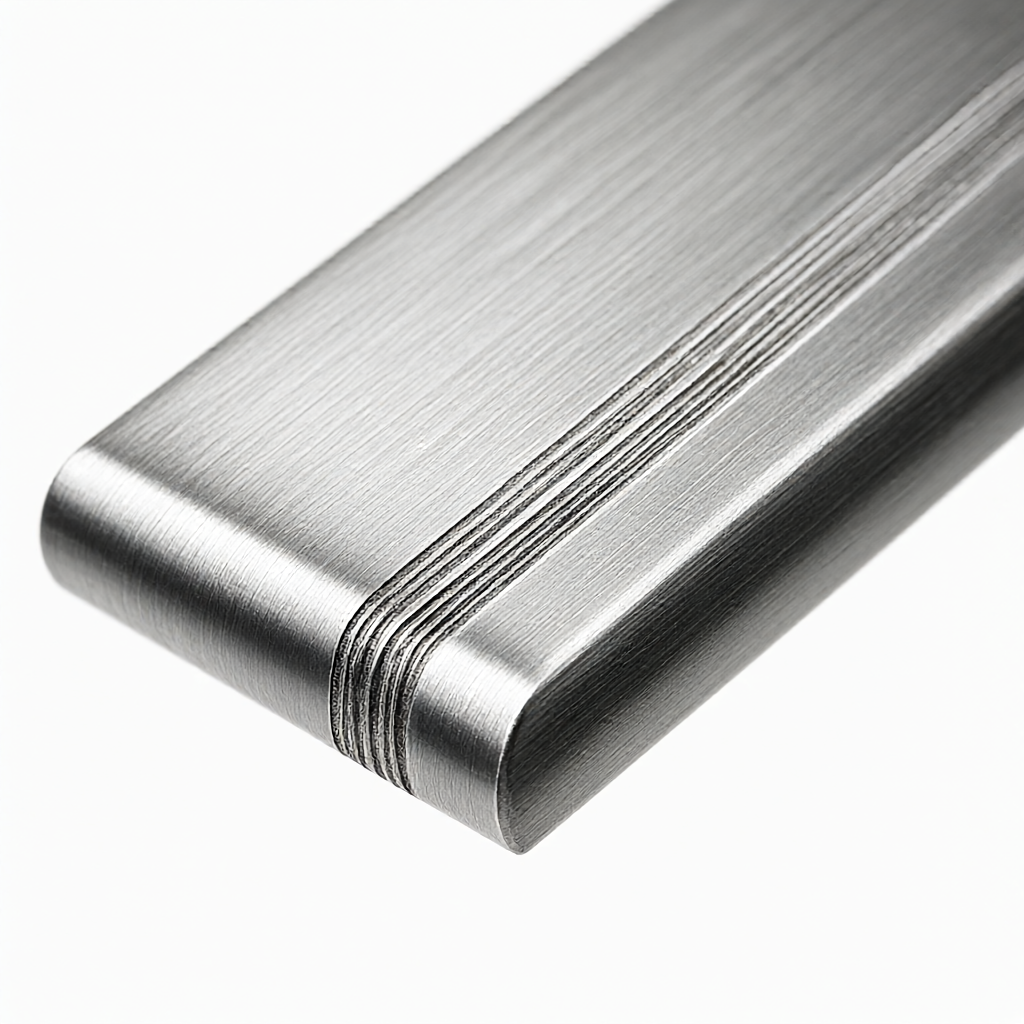
Why material matters more than engraving style?
The recipient’s daily habits determine which wallet will endure. Fathers who carry cash, cards, and coins benefit from a structured holder with elastic bands or a clip mechanism; those who prefer just ID and a few cards often choose a card‑holder format. The base material should match that usage pattern:
- Aluminum offers a lightweight, machined feel and accepts fine laser marks without cracking. It is cost‑effective for medium‑volume orders and pairs well with anodized colors.
- Titanium provides higher scratch resistance and a premium tactile weight, making it a frequent choice for executive gifts and corporate appreciation programs.
- Carbon fiber delivers a distinct visual texture and excellent rigidity, but surface engraving tends to show through the woven pattern rather than sit cleanly on top.
Material selection also influences whether you should explore complementary formats, such as a money bag for layered gift sets or a dedicated card holder SKU when the design calls for fewer slots.
How laser engraving works on metal and carbon fiber wallets?
Laser engraving removes or discolors a thin surface layer to create permanent markings. On metals, a fiber laser excites the surface so that oxide patterns form exactly where the beam traces the vector path. On carbon fiber, the laser carbonizes the resin binder between fibers, leaving dark lines against the lighter weave. The result is a mark that resists fading, washing, and abrasion far better than surface prints.
For high‑visibility applications—such as RFID-blocking wallets intended as secure corporate gifts—laser engraving remains compatible because the marking occurs above the Faraday cage layers rather than disrupting them. Buyers who prefer a painted or filled-in look instead of a contrast mark can evaluate UV printing as an alternative, though UV layers sit on top of the substrate and may show wear over years of pocket friction.
Which personalization approaches suit different gifting occasions?
- Father’s Day corporate gifting typically favors single-initial engravings, company logos, or simple geometric lines that read cleanly at a glance.
- Promotional product wholesale often incorporates branded slogans inside the band or on the reverse face, paired with custom retail boxes.
- Custom employee appreciation gifts can justify thicker materials, deeper engrave depths, and multi-component packages that pair a wallet with a wristlet or travel organizer.
When planning a bulk order, map the engraving area to the SKU’s available real estate before finalizing artwork dimensions. A design that fits a slim minimalist wallet may require vertical scaling for a wider tactical pocket organizer, and misalignment during production is usually caused by unclear crop marks rather than machine error.
Engraved Wallets: Which Specifications Matter Most?
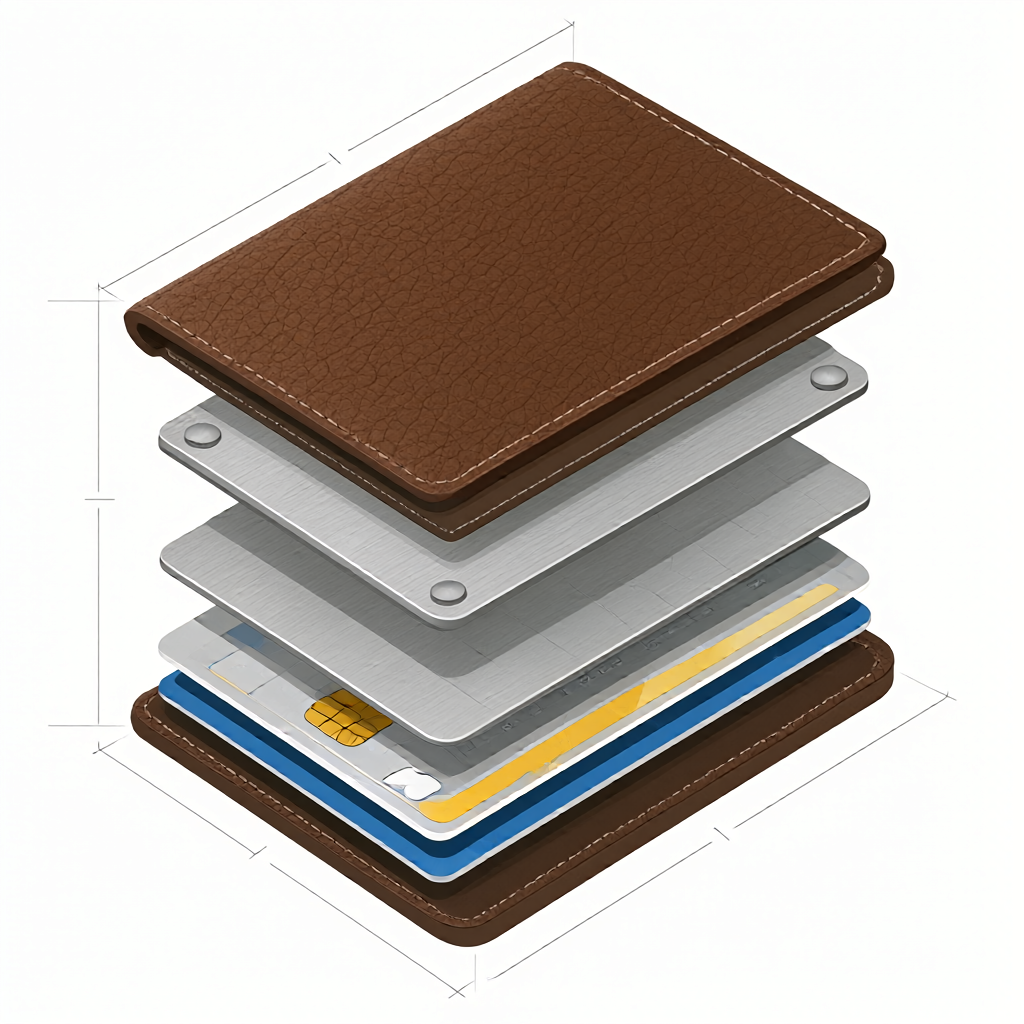
Beyond material and engraving method, buyers should assess five measurable specification groups to predict long-term performance and compare suppliers objectively.
| Specification | Acceptable Range / Standard | Why It Matters |
|---|---|---|
| Base alloy | 6061-T6 aluminum; Grade 5 titanium | Hardness, machinability, and anodize quality vary by alloy grade |
| Frame thickness | 1.2–2.0 mm | Controls pocket profile and card-protection margin |
| Card capacity | 4–12 cards + cash sleeve | Aligns with recipient carry habits; mismatch causes return complaints |
| Engraving depth | 0.02–0.08 mm (metals) | Ensures permanence without weakening the substrate |
| Minimum engrave line weight | 0.2 mm (aluminum); 0.3 mm (titanium) | Prevents breakage during laser passes on fine details |
| Anodized color fastness | ≥36 h salt-spray test (ASTM B117) | Verifies no color bleed near engraved zones |
| RFID attenuation (if applicable) | ≥20 dB at 13.56 MHz | Confirms legitimate contactless-payment blocking |
| Packaging | Retail box with foam insert, barcode/UPC | Reduces damage in transit and supports shelf-ready distribution |
Request vector artwork files (AI/EPS with outlined text) and a pre-production sample proof before committing to bulk quantity. Misalignment during production usually traces back to unclear crop marks rather than equipment error, so clear dimensional documentation from day one prevents costly rework.
What are the key specs for engraved wallets for dad?
When evaluating products for a bulk gifting program, focus on five core specification groups: material composition, mechanical capacity, engraving parameters, finish quality, and package contents. Each group contains measurable thresholds that help you compare suppliers and predict long-term performance.
| Specification category | Typical range / standard | Why it matters for dad gifts |
|---|---|---|
| Base material | 6061-T6 aluminum, Grade 5 titanium, aramid carbon fiber | Determines weight, scratch resistance, and perceived value |
| Thickness / gauge | 1.2–2.0 mm for metal frames | Thinner profiles fit slim pockets; thicker frames protect cards |
| Card capacity | 4–12 cards plus cash slot | Matches daily carry volume without bulk |
| Engraving method | Fiber laser (metal/carbon), UV ink (selected substrates) | Laser marks resist abrasion; UV allows full-color artwork |
| Engraving depth | 0.02–0.08 mm on metals | Deep enough to stay legible after years of handling |
| Anodized / PVD color | Class 2 chromatic uniformity, ≥36 h salt-spray tested | Prevents color bleed near engraved edges |
| RFID protection (if applicable) | 13.56 MHz attenuation ≥20 dB | Adds utility for contactless-payment users |
| Packaging | Retail box with foam insert, barcode label, UPC | Supports shelf-ready distribution and reduces damage |
Beyond the table, verify that the supplier provides clear artwork files (vector AI/EPS with outlined text) and a pre-production proof before bulk run. If the design includes a logo, confirm that the engraved line weight meets the minimum threshold for the chosen material—typically 0.2 mm for aluminum and 0.3 mm for titanium—to avoid breakage during laser passes.
Engraved Wallets: Which Standards and Certifications Apply?
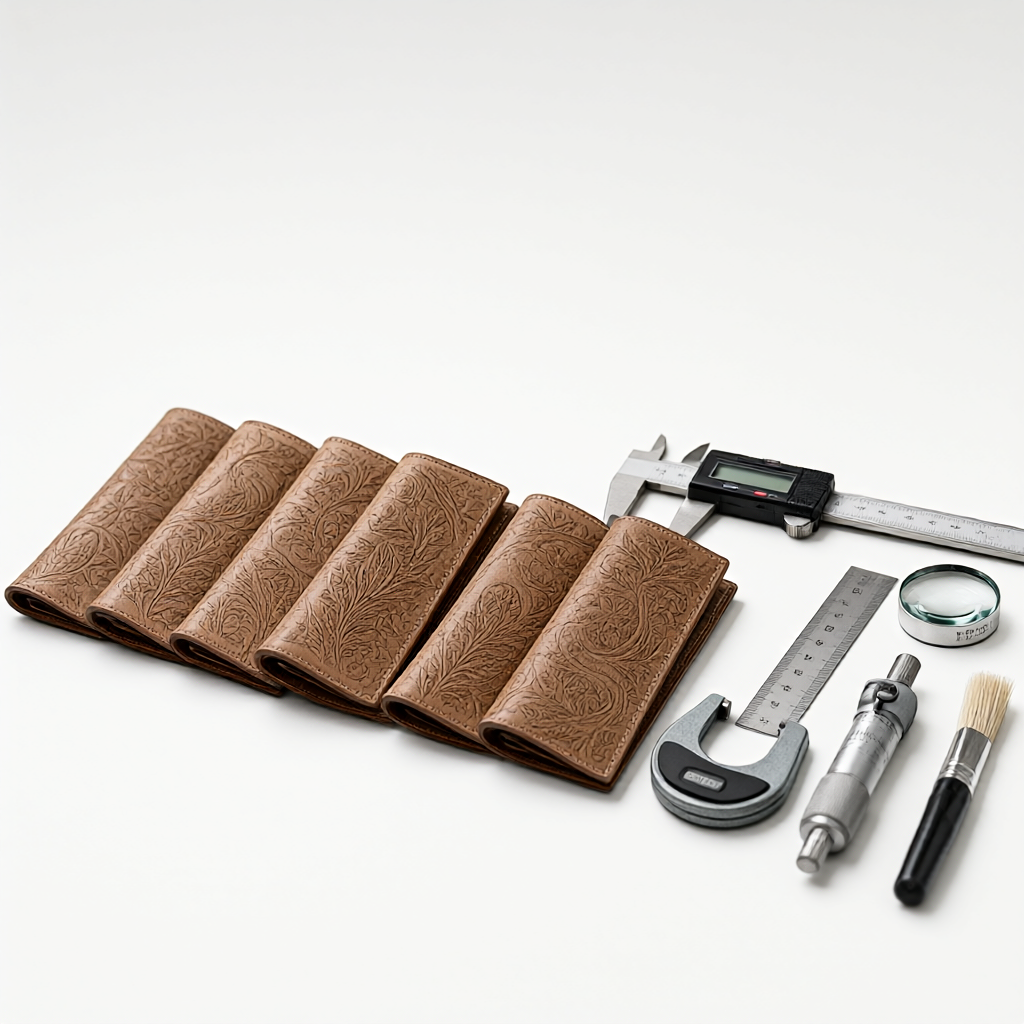
What certifications and safety standards apply to engraved wallet manufacturing?
B2B procurement of personalized pocket gear should be anchored to recognized quality and environmental management systems. The most common baseline references include ISO 9001 for quality management, BSCI for social compliance in manufacturing, and REACH/RoHS restrictions on restricted substances in finished articles. Additionally, material test reports aligned with ASTM International methods provide independent verification of properties such as hardness, adhesion, and corrosion resistance.
Key documentation items you should request from any factory include:
- ISO 9001 certification covering the production facility.
- BSCI audit report if you operate in markets with strong ethical-sourcing expectations.
- REACH/RoHS compliance statement confirming absence of restricted phthalates, heavy metals, and certain organic compounds in finishes and adhesives.
- SGS or equivalent lab test certificates for surface coating durability and alloy composition.
- Product-specific test data for RFID attenuation if the wallet advertises signal blocking.
When engraving carbon fiber or applying colored anodized layers, confirm that the processing chemicals and coatings fall within declared restricted-substance limits. Materials tested per recognized protocols reduce liability and simplify import inspections in regions with strict chemical reporting requirements.
For broader context on product formats and material trade-offs, see the overview in our men’s minimalist wallets materials, specs & sourcing guide.
Engraved Wallets: What Else Should Buyers Consider?
What should you consider when selecting a reliable engraved-wallet manufacturer?
Procurement success depends on aligning design intent with manufacturing capability. Start by clarifying whether the order is primarily brand-driven—where custom packaging and logo placement dominate—or product-driven—where material selection, engraving permanence, and mechanical robustness take precedence. Then evaluate potential partners across four practical dimensions:
Production transparency. Request a detailed quotation that separates unit cost, tooling/setup fees, sample charges, packaging costs, and shipping terms. A transparent quote reveals whether the supplier treats customization as routine engineering work or as an add-on service that inflates unit price later.
Sample turnaround and revision policy. Reliable factories offer prototype samples within a week and allow one or two revision cycles before bulk commitment. Fast sampling lets you validate engraving contrast, fit tolerances, and box assembly without risking large inventories.
Quality control checkpoints. Ask for in-process inspection points, especially after CNC forming, surface treatment, and engraving. Out-of-tolerance parts typically trace back to unwelded clamping fixtures or inconsistent laser power settings, both of which good facilities monitor with first-article and random-sample checks.
Logistics readiness. Confirm drop-shipping support, Amazon FBA labeling procedures, and export documentation experience for your target region. Suppliers familiar with international freight consolidation and customs paperwork streamline delivery for overseas distributors.
As a manufacturer, our approach to these checkpoints emphasizes early artwork validation, fixed setup procedures for each material type, and final packing inspections that verify engraving legibility, edge deburring, and correct orientation before boxing. When sourcing begins with a clear brief and agreed proof, the gap between concept and delivered shipment narrows significantly.
Material options for engraved wallets and their suitability for personalization
The choice of base material directly determines how cleanly an engraving will appear and how long it will remain legible through daily pocket wear. Aluminum, titanium, and carbon fiber are the three most common substrates in minimalist wallet manufacturing, each offering distinct advantages for personalization.
Aluminum (6061-T6) is the most cost-effective option for medium-volume custom orders. Its smooth anodized surface accepts fine laser marks without cracking, making it ideal for intricate initials, dense text blocks, or multi-line logos. Aluminum wallets typically range from 1.2 mm to 2.0 mm thick, providing enough rigidity to hold shape while remaining slim enough for front pockets. Common anodized colors—black, blue, silver, and gunmetal—provide high contrast against the etched engraving area, enhancing readability over time.
Titanium (Grade 5 / Ti-6Al-4V) delivers superior scratch resistance and a heavier tactile weight that signals premium quality. Laser engraving on titanium produces a dark oxidized mark that contrasts sharply with the brushed or bead-blasted substrate. This material is frequently selected for executive gifts, milestone recognition programs, and high-tier corporate appreciation tiers because it ages gracefully and resists corrosion even with frequent hand exposure.
Carbon fiber (aramid-weave composite) offers a modern, textured appearance but requires different engraving expectations. A fiber laser carbonizes the resin binder between fibers, leaving dark lines that sit slightly below the woven surface rather than sitting cleanly on top. Fine detail and small font sizes may soften on carbon fiber because the laser energy diffuses across the weave pattern. For projects prioritizing sharp typographic clarity, aluminum or titanium remains the safer choice; carbon fiber excels when visual texture and lightweight rigidity take precedence.
Related guidance on material trade-offs can be found in our men’s minimalist wallets materials, specs & sourcing guide.
Engraving techniques available (laser, UV print, etching) and their durability
Three primary personalization techniques dominate the EDC wallet market, each with distinct durability profiles, cost structures, and aesthetic outcomes.
Fiber laser engraving is the industry standard for metal and carbon-fiber wallets. A focused laser beam vaporizes or oxidizes a microscopic layer of the substrate, producing a permanent mark that cannot peel, crack, or fade with normal use. On aluminum, the laser creates a raised or etched silhouette; on titanium, it generates a dark oxide stain; on carbon fiber, it carbonizes the binding resin. Typical engraving depths range from 0.02 mm to 0.08 mm on metals, which is deep enough to survive years of pocket friction while remaining shallow enough not to compromise structural integrity. Fiber laser is compatible with RFID-blocking layers because marking occurs above the Faraday cage rather than disrupting it.
UV inkjet printing deposits cured ink onto the substrate surface, allowing full-color artwork, gradients, and photographic images. This technique produces vibrant results quickly and at lower setup costs, but the ink layer sits on top of the material and is susceptible to abrasion, solvent exposure, and gradual fading over extended carry periods. UV printing works well for short-run promotional items and design-heavy artwork but is less ideal when long-term legibility is the priority.
Mechanical or chemical etching is rarely used on EDC wallets due to higher per-unit labor costs and environmental handling requirements. When applied, chemical etchants produce a frosted, recessed appearance but introduce compliance and sustainability challenges around waste disposal. Mechanical dot-peen engraving creates visible indentations suited for serial numbers or barcodes but lacks the precision required for fine typography.
For security-focused gifting, RFID-blocking wallets paired with laser engraving offer the strongest combination: permanent personalization above the signal-blocking layer without compromising protection performance.
Compliance and safety standards relevant to engraved wallet manufacturing
B2B procurement of personalized pocket gear must anchor to recognized quality, environmental, and substance-compliance frameworks. The following standards and documents should form your baseline requirement list:
- ISO 9001:2015 — Quality management system certification for the manufacturing facility. This standard governs documented procedures for incoming inspection, in-process control, and finished-goods verification, including engraving alignment checks and surface-finish consistency.
- ISO 14001:2015 — Environmental management system certification demonstrating controlled wastewater, chemical handling, and waste disposal practices during anodizing and laser processing. Facilities holding both ISO 9001 and ISO 14001 demonstrate maturity in quality-environment linkages.
- BSCI (Business Social Compliance Initiative) audit report — Required when selling into European retail channels or working with brands that enforce ethical-sourcing policies. BSCI covers working conditions, child labor prohibitions, and fair-wage verification.
- REACH / RoHS compliance statement — Confirms restricted substances (lead, cadmium, hexavalent chromium, certain phthalates, and organic compounds) do not exceed declared limits in finishes, adhesives, and coatings.
- SGS or equivalent lab certificates — Independent test reports for alloy composition, coating adhesion, salt-spray endurance, and RFID attenuation performance at 13.56 MHz.
When evaluating suppliers, ask for active certificate numbers and expiration dates rather than accepting generic claims. Certificates issued under ISO.org registries are publicly verifiable, and requesting these documents early in the sourcing conversation filters out suppliers who cannot meet basic compliance thresholds.
Design and customization considerations for B2B orders
Bulk personalized wallet orders succeed when design intent aligns with manufacturing constraints from the outset. Several practical considerations prevent costly redesign loops after production has begun.
Artwork preparation. Supply vector files with outlined text and specified line weights. Convert all type to paths, embed fonts, and provide a dimensioned sketch showing exact placement coordinates on the wallet face. Minimum safe margins from the wallet edge should be 1.5 mm for aluminum and 2.0 mm for titanium to prevent edge distortion during CNC forming.
Personalization format mapping. Match engraving complexity to wallet geometry. Slim minimalist wallets offer narrow engraving bands favoring single lines or compact initials; wider tactical organizers allow larger logo placements and multi-line text blocks. Vertical scaling decisions made early prevent artwork rejection during the proofing stage.
Packaging and presentation. Corporate gifting programs often pair the wallet with custom retail boxes, tissue wraps, or companion items such as a money bag for layered gift sets. Early packaging coordination ensures the engraved area remains protected and visible once the recipient opens the box.
For expanded detail on product categories and material recommendations, review our EDC wallets and minimalist wallet manufacturing for B2B buyers overview.
Procurement Decision Guide & Red Flags
Buyer checklist with weighted criteria for supplier selection
Use the following weighted scoring matrix to evaluate potential manufacturers side by side. Assign each criterion a score from 1 to 5, multiply by its weight, and sum for a comparative total.
| Criterion | Weight | Score (1-5) | Weighted Score |
|---|---|---|---|
| ISO 9001:2015 certification verified | 15% | ||
| Sample turnaround ≤ 7 days | 12% | ||
| MOQ flexibility (≤ 300 pcs acceptable) | 10% | ||
| Engraving precision and alignment tolerance | 15% | ||
| Surface finish quality (anodize, PVD) | 12% | ||
| RFID performance test data (≥20 dB) | 8% | ||
| REACH/RoHS and BSCI documentation | 10% | ||
| Packaging and FBA drop-shipping capability | 8% | ||
| Communication responsiveness and revision policy | 10% | ||
| Total | 100% |
A supplier scoring below 3.5 overall should trigger further investigation before commitment. Below 3.0 indicates likely misalignment with professional B2B sourcing standards.
Red flags covering common defects
Watch for these warning signs during sampling and quality audits:
- Poor engraving alignment — Marks centered inconsistently across units, shifted vertically or horizontally beyond ±0.5 mm. Indicates inadequate fixture jigs or uncalibrated laser gantries.
- Color bleed near engraved edges — Anodized coating lifts or discolors adjacent to the laser path, suggesting improper surface prep or excessive thermal input during marking.
- Weak RFID attenuation — Test results below 20 dB at 13.56 MHz reveal incomplete Faraday cage coverage or misaligned shielding layers, undermining a core product claim.
- UV ink peeling or scuffing — Finger-rub tests revealing ink transfer after 10–20 cycles point to inadequate UV curing or incompatible ink-substrate pairing.
- Inconsistent salt-spray endurance — Corrosion appearing before the 36-hour benchmark signals substandard anodizing thickness or compromised seal quality.
- Vague quotation breakdowns — Unit pricing that bundles tooling, samples, packaging, and shipping without itemized line levels suggests hidden cost inflation downstream.
- Refusal to share active certification numbers — Legitimate ISO and BSCI certificates carry registry numbers and expiry dates; suppliers declining to provide these often cannot verify their claims.
Brand Comparison & Sourcing Insight
When comparing manufacturers for engraved wallet programs, the evaluation narrows to four dimensions: material expertise, engraving consistency, compliance documentation, and logistics readiness. Several established producers emphasize design aesthetics and rapid prototyping; others focus heavily on low-cost volume with limited quality controls.
As a manufacturer, our approach to engraved wallet sourcing emphasizes early artwork validation, fixed setup procedures for each material type, and final packing inspections that verify engraving legibility, edge deburring, and correct orientation before boxing. Being an ISO 9001 certified facility since 2014 with a 50,000 sq ft in-house factory and 13+ years of export experience, we structure every order around verifiable checkpoints rather than post-delivery corrections. Our 7-day sample lead time and MOQ starts at 300 pcs per SKU for full OEM customization (100 pcs trial order available for stock finishes) allow brands to validate design and quality before scaling, and we support private label, OEM, and ODM workflows for Amazon FBA sellers, EDC brand owners, and corporate gifting programs across America, Europe, Australia, and Southeast Asia. Each batch ships with SGS-tested materials and BSCI-audited production records. If you are planning a corporate gifting initiative or seasonal order, contact us to review your spec sheet and receive a detailed quotation.
How different engraving techniques compare in durability and visual result?
Engraving method directly determines how long a personalized mark remains legible and how cleanly it integrates with the wallet’s surface finish.
Fiber-laser engraving (1064 nm wavelength) is the industry standard for metal and carbon-fiber substrates. The laser removes or oxidizes a thin surface layer along a controlled vector path, producing marks with typical depths of 0.02–0.08 mm on aluminum and slightly shallower penetration on titanium due to its higher thermal conductivity. Coatings applied afterward must pass adhesive-bond tests; per ASTM F2923 (Standard Test Method for Rating Adhesion Density by Cross-Cut Tape),合格的 anodized and powder-coated surfaces show no lifting or flaking at engraving edges after tape-peel cycling. This method yields the highest abrasion resistance among common personalization techniques.
UV inkjet printing deposits cured polymer ink on the substrate surface. It enables full-color artwork and photographic imagery but sits above the material rather than displacing it. Surface-applied prints typically experience visible wear within 12–24 months of daily pocket friction, making them unsuitable for permanent gifts intended to carry sentimental value across years. UV printing is better positioned for short-run promotional campaigns or interior-panel branding where abrasion exposure is minimal.
Mechanical etching / diamond-tip engraving physically displaces material through contact tool paths. While durable, this approach requires physical contact with the substrate, introduces micro-fracture risk on brittle carbon-fiber composites, and delivers lower resolution compared to fiber-laser systems—typically minimum line weights of 0.4–0.5 mm versus 0.2 mm achievable with laser marking.
For B2B gifting programs targeting long-term recipient satisfaction, fiber-laser engraving on aluminum or titanium is the recommended default. Per ISO 9001:2015 clause 8.5.1 (Control of production and service provision), documented parameter validation—including laser power, frequency, and scanning speed per material type—ensures consistent engraving contrast and depth across production batches.
What MOQ and lead-time ranges should buyers plan for?
Bulk custom-engraved wallet procurement typically follows established production-phase thresholds that influence project budgeting and seasonal gifting timelines.
- MOQ: Most contract manufacturers set the entry point at 300 pcs per SKU/design, with price-tier breaks commonly activated at 500, 1,000, and 5,000 units. Some factories offer 50-unit pilot runs at elevated per-piece cost for design validation purposes.
- Sample lead time: Prototypes and pre-production samples typically ship within 5–7 business days, including CNC setup, first-article inspection, and digital proof approval. One to two revision cycles are standard practice before lock-in.
- Bulk production cycle: Range from 15–25 business days post-sample confirmation, scaled by order volume, material availability, and engraving station queue density. Higher-complexity jobs—such as multi-stage anodizing followed by precision laser marking and custom retail-box insertion—lean toward the upper boundary.
- Shipping: Air freight adds approximately 5–7 days; ocean freight 25–35 days depending on origin port and destination region.
Buyers should incorporate sample-revision time, tooling calibration, and transit variability into master schedules, particularly for seasonal gifting waves such as Father’s Day or year-end corporate appreciation programs. Planning a 6–8 week horizon from initial inquiry to delivered inventory minimizes expediting surcharges and ensures stock availability for peak seasons.
What compliance and test standards govern engraved-wallet manufacturing?
Beyond basic product aesthetics, responsible B2B procurement anchors purchasing decisions to recognized quality-management and environmental-compliance frameworks. The following standards provide objective verification pathways for suppliers and importers alike:
- ISO 9001:2015 — Quality-management-system certification requiring documented procedures for design control, incoming-material inspection, in-process checks, and corrective-action tracking. Valid certification implies structured traceability from raw alloy billet through final shipment.
- ISO 14001:2015 — Environmental-management-system standard governing waste disposal, coolant handling, and energy-use monitoring during CNC machining and anodizing operations. Relevant for buyers operating in markets with green-procurement policies.
- REACH & RoHS compliance — EU regulations restricting hazardous substances (lead, cadmium, hexavalent chromium, certain phthalates) in finished consumer articles. Manufacturers must supply declared-substance statements and, when requested, third-party lab reports confirming restricted-compound limits are not exceeded in anodized coatings or adhesive laminates.
- BSCI audit — Social Compliance initiative verifying fair-labor practices, workplace safety, and working-hour adherence in contract-manufacturing facilities. Required by many European and North American retail distributors.
- ASTM F2923 — Standard for rating adhesive coating density after cross-cut tape application, directly applicable to verifying that anodized colors do not delaminate near laser-engraved zones.
- SGS / Intertek / TÜV test certificates — Independent laboratory documentation for alloy composition (e.g., 6061-T6 confirmatory spectrometry per ASTM B211), surface-hardness ratings, and RFID-attenuation performance measured at 13.56 MHz.
Requesting this documentation before awarding purchase orders reduces liability exposure and streamlines customs clearance in regulated import corridors.
Design and customization levers available for B2B engraved-wallet orders
Customized engraved wallets offer multiple configuration axes that procurement teams should define early to avoid downstream misalignment between design intent and manufacturing capability.
Artwork and typographic parameters:
- Minimum engraved line weight: 0.2 mm (aluminum), 0.3 mm (titanium)
- Recommended font styles for small-character legibility: sans-serif geometrics (Helvetica, Arial, DIN); script or serif fonts risk fill-collapse at sub-0.3 mm strokes
- Vector-file format required: AI/EPS with outlined text, CMYK or single-channel black for engraving-only jobs
Branding and logo placement:
- Front face: single-line monogram, company wordmark, or icon emblem
- Reverse panel: secondary logo, QR-code integration, or campaign tagline
- Interior band surface: hidden slogan, date stamp, or motivational phrase accessible only to the owner
- Packaging exterior: custom-printed retail box, rigid mailer, or branded poly bag
Finish and color-matching:
- Anodized base colors (black, blue, silver, gunmetal, gold) selected to maximize engraving contrast
- PVD-coated variants for enhanced scratch resistance on titanium SKUs
- Two-tone combinations achievable via selective anodizing mask-and-engrave workflows
Accessory and bundle options:
- Companion money bag inserts for layered gift presentations
- Matching wristlet or card-holder formats for coordinated corporate sets
- Custom foam inserts, tissue wraps, and luxury presentation boxes
A finalized tech pack containing dimensional drawings, material callouts, finish specifications, artwork crop marks, and packaging requirements eliminates ambiguity before CNC setup begins. Early alignment between buyer specifications and factory engineering translates directly into fewer reworks and tighter per-unit cost control.
Buyer evaluation checklist: comparing engraved-wallet suppliers
Structured supplier assessment prevents costly mismatches between expected and delivered quality. Use the following evaluation matrix when scoring potential manufacturing partners:
| Evaluation criterion | High-scoring indicator | Red flag |
|---|---|---|
| ISO 9001:2015 certification (current, unverifiable URL) | Active certificate on file, scope includes design + production | Certificate expired or limited to trading activity only |
| Sample lead time | ≤ 7 business days with 1–2 revision cycles included | Samples quoted at 3+ weeks with no revision allowance |
| MOQ policy | 300 pcs/SKU transparently stated with tier-break pricing | MOQ hidden until quote stage or escalated post-agreement |
| In-process QC checkpoints | Documented first-article inspection + random sampling protocol | No visible quality-control workflow described |
| Salt-spray / adhesion test documentation | ≥ 36 h ASTM B117 results; ASTM F2923 tape-test records on request | Refuses to share test data or provides vague claims |
| RFID attenuation proof (if claiming blocking) | Lab-measured ≥ 20 dB at 13.56 MHz, tested per IEC 62479 methodology | Marketing language only, no independent measurement attached |
| Export experience to target market | Shipment history to same customs zone, documented HS-code classification | First-time exporter to region with unfamiliar import requirements |
| Drop-shipping / FBA readiness | Established labeling, kitting, and carton-specification SOPs | Requires buyer to arrange all logistics independently |
When scoring prospective vendors, weight certification authenticity and test-data transparency equally against unit-price advantage—a marginally cheaper supplier lacking verifiable quality infrastructure often produces higher total landed cost through rejections, delays, and chargebacks.
About TOP EDC Wallet
As a specialist manufacturer of minimalist EDC wallets and pocket gear with 13+ years of export experience, we help brands, Amazon sellers, and distributors bring custom metal wallets, carbon fiber card holders, and money clips from concept to shelf. Our 50,000 sq ft facility operates under an ISO 9001-certified quality-management system since 2014 and has passed BSCI social-compliance audits, supporting consistent output across 500K+ monthly production capacity. We serve 200+ brands worldwide across America, Europe, Australia, and Southeast Asia, offering OEM, ODM, private-label, and custom-design services with low MOQ starts at 300 pcs per SKU and a 7-day sample lead time. Full customization—from logo and typography to anodized finish and retail packaging—is handled in-house using CNC machining, laser engraving, UV printing, and aluminum anodizing workflows, ensuring every engraved wallet meets both aesthetic and functional benchmarks before shipment.
Engraved Wallets: Where Can You Verify the Data and Sources?
- ASTM International — www.astm.org
- ISO.org — www.iso.org
- money bag — topedcwallet.com
- card holder — topedcwallet.com
- RFID-blocking wallets — topedcwallet.com
- UV printing — topedcwallet.com
- wristlet — topedcwallet.com
- minimalist wallet — topedcwallet.com
- men’s minimalist wallets materials, specs & sourcing guide — topedcwallet.com
- Get a Free Quote → — topedcwallet.com
From article to product
Sourcing minimalist-wallets?
Tell us the format, the quantity and the date you need stock. You get material options, MOQ and a landed-cost range back within one business day.
Keep reading
More on gift guides
Sourcing a Men’s Wallet Gift Set for B2B Programs
A men's wallet gift set bundles a minimalist wallet with one or more complementary…
ReadBest Wallet Gift for Husband — Material Guide & Sourcing
Discover the best minimalist wallet gifts for husbands by material, specs, RFID protection, and…
ReadWallet Gifts for Men 2026: 11 Ideas That Match Who He Actually Is
A wallet is the rare gift that gets used every single day — which…
Read
About the author
TOPWALLET Editorial Team
TOPWALLET's editorial and engineering desk writes from bench testing at the Shenzhen (Longgang) facility: pull-force and cycle testing, 13.56 MHz shielding measurements, finish trials and factory audits, rather than supplier spec sheets. Every specification in these guides is one we write on a purchase order.
Written on the floor
This article was written by our production and QC team — the people who spec tolerances, run the finishing line and inspect every batch. Where it states a capacity, a pull force or a lead time, it comes from a measurement we made, not a supplier’s catalogue. If a number here disagrees with what your own supplier told you, tell us; several of these articles started as a correction from a buyer.
See how the factory works · Inspection process · Sourcing FAQ
Sourcing minimalist-wallets?
Tell us the format, the quantity and the date you need stock. You get material options, MOQ and a landed-cost range back within one business day.