

The best smart wallet for B2B buyers integrates verified RFID-blocking performance, durable metal or carbon-fiber construction, realistic minimum order quantities, fast sample turnaround, and private-label customization backed by documented quality controls — balancing security technology, material durability, price-to-value, and supplier reliability into one procurement-ready decision.
Smart Wallets: What Is the Quick Answer?
What is the best smart wallet for B2B buyers? The best choice balances verified RFID-blocking performance, durable construction from aluminum or carbon fiber, reasonable minimum order quantity, reliable sample-to-production lead time, and a manufacturer that offers private-label customization with documented quality controls. For commercial buyers — Amazon FBA sellers, EDC brand owners, and promotional distributors — the deciding factor is rarely any single feature. It is whether the supplier can consistently deliver a secure, certified product at scale, on schedule, and with the branding you need.
Smart Wallets: How Does It Work in Detail?
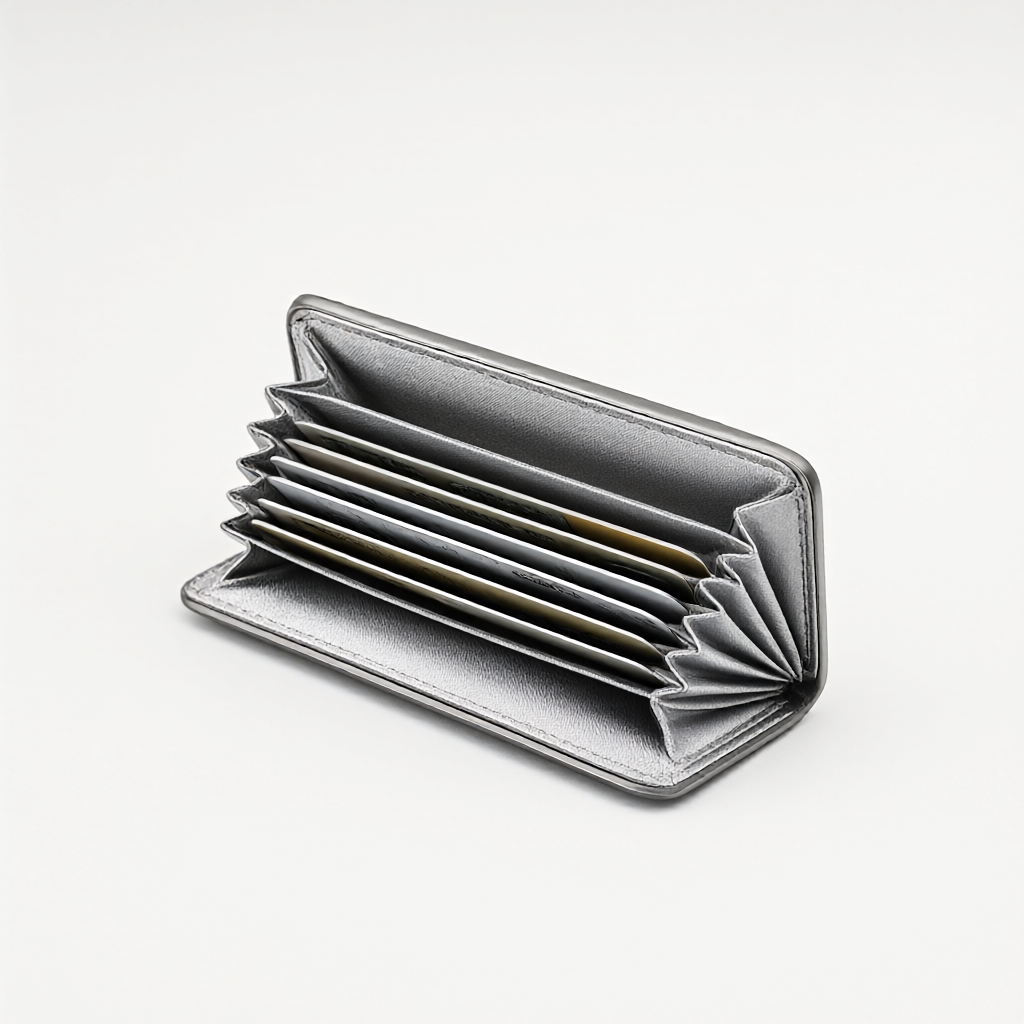
Smart wallets sit at the intersection of everyday carry utility and personal data protection. At their core, they integrate one or more security technologies into a compact pocket form factor. Understanding what each technology delivers — and where its limitations lie — is essential before committing to a procurement decision.
How do RFID-blocking smart wallets protect against digital theft?
RFID-blocking smart wallets function by embedding a conductive barrier — typically aluminum mesh, metal laminates, or specialized magnetic sheeting — between the exterior shell and the card slots. This barrier creates an electromagnetic interference field that prevents passive RFID-enabled credit cards, passports, and access badges from being read by unauthorized scanners at close range.
It is important to be precise about what this means in practice. Not every bank card still uses contactless RFID; many newer chips require interactive authentication for large transactions. However, low-value tap-to-pay functions remain widely available, and several high-profile fraud cases have involved card skimming via stationary readers at restaurants, transit gates, and retail checkout areas. An ASTM standard for testing RFID shielded enclosures (ASTM E2092) defines the method used to evaluate shielding effectiveness across frequency bands, which is the basis many manufacturers reference when claiming protection levels.
A buyer-facing implication: effective RFID shielding depends on continuous conductive coverage. Thin or fragmented shielding layers — such as decorative cutouts without reinforced grounding paths — can create gaps where scanning remains possible. Ask suppliers for test documentation rather than accepting a generic claim.
What are the key technologies beyond RFID blocking?
Three technologies commonly appear together in marketing for security wallet products, though not all are equally useful for every buyer profile.
GPS tracking integration. Some smart wallets include a built-in or attachable Bluetooth tracker such as Apple AirTag or Tile. These devices transmit location data through the companion network of their respective ecosystem. Built-in tracker wallets eliminate the need for aftermarket modification but add complexity, increase unit cost, and introduce dependency on proprietary apps and subscription services. Attachable versions offer more flexibility but may compromise the slim profile that defines minimalist tracker wallet designs.
LED indicators. Small LED strips embedded in metal wallets serve as visual alerts — confirming closure status, signaling low battery in integrated trackers, or providing a flashlight function. LEDs are inexpensive to produce and add perceived value at minimal cost impact. Their practical utility varies significantly by scenario; they are most useful for frequent travelers and outdoor users who need quick situational awareness.
Bluetooth connectivity and companion apps. Apps enable remote lock reminders, lost-device finding, and firmware updates. They also collect usage data, which raises privacy considerations discussed below. A well-designed app requires less than essential permissions for basic functionality; a poorly designed one may request access to contacts, location history, and storage — unnecessary for a wallet product.
For procurement, the most reliable approach is to map features to use case: corporate gift programs often favor simple RFID-blocked minimalist tech wallets with clean branding potential, while specialty EDC brands may pursue integrated trackers and LED features as differentiators.
Smart Wallets: Which Specifications Matter Most?
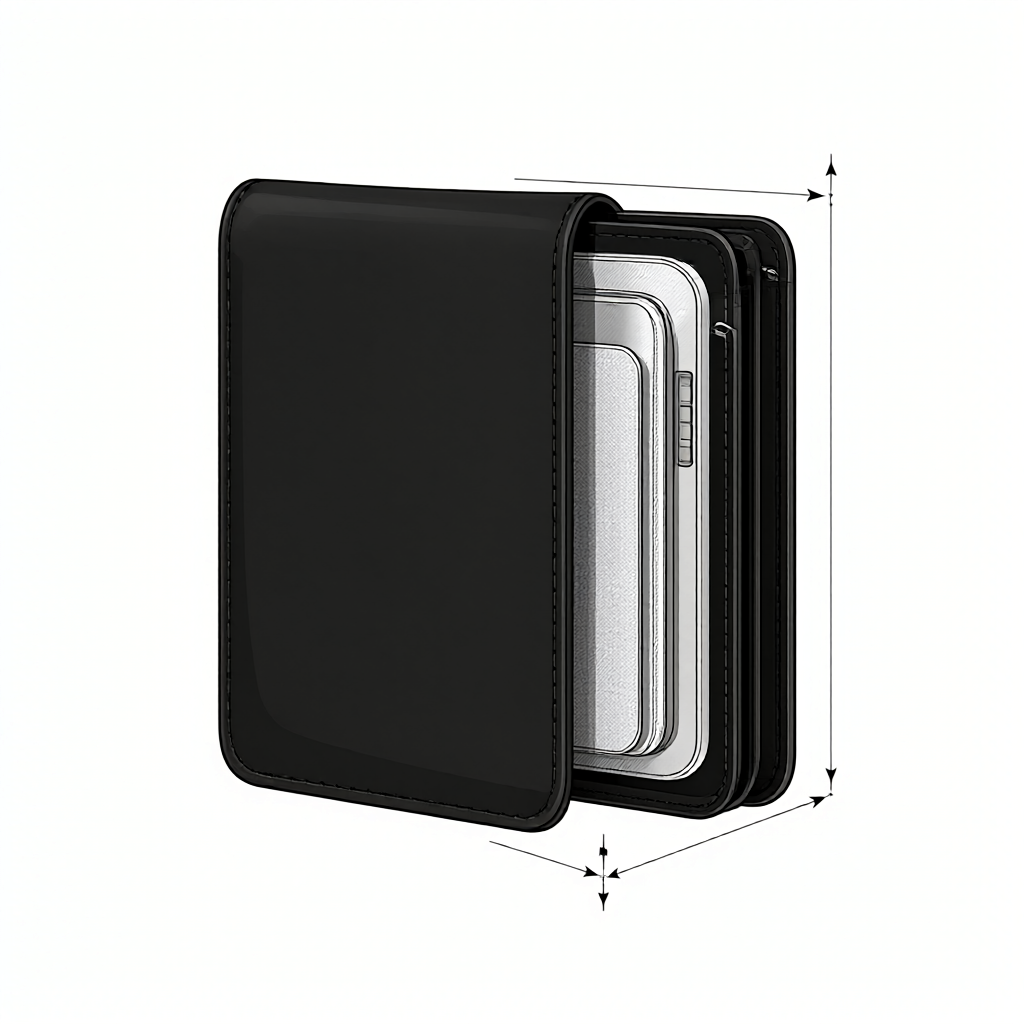
What are the key specs to evaluate when comparing smart wallets for bulk sourcing? Material selection, construction details, and power requirements drive durability, cost, and customer satisfaction outcomes.
| Specification | Typical Range / Benchmark | Why It Matters |
|---|---|---|
| RFID-blocking frequency range | 13.56 MHz (high-frequency cards), 850–960 MHz (UHF) | Determines which card types and document formats are effectively shielded |
| Build material | 6061-T6 aluminum, carbon fiber composite, 3D titanium | Impacts weight, scratch resistance, and perceived product tier |
| Card capacity | 4–12 cards + cash compartment | Aligns with minimalist vs. traditional carrying preferences |
| Battery type (integrated trackers) | CR2032 coin cell, typical 6–18 months | Affects replacement cost and long-term maintenance burden |
| Tracker Bluetooth version | BLE 5.0 and above recommended | Influences pairing stability and range consistency |
| Surface treatment | Anodized aluminum, matte powder coat, brushed finish | Controls aesthetic options and corrosion resistance |
| Thickness (closed) | 8–18 mm depending on feature set | Directly impacts pocket fit and comfort for daily carry |
When evaluating a carbon fiber smart wallet versus an aluminum smart wallet, the trade-off is generally weight and premium perception against cost and repairability. Carbon fiber offers an exceptionally high strength-to-weight ratio and a distinctive texture that resonates with EDC enthusiasts, but it carries higher raw-material costs. Aluminum remains the most versatile platform for customization because anodizing accepts a wider color palette and laser engraving produces sharper contrast. Both materials perform equally well as RFID shielding substrates when engineered correctly.
A related discussion appears in our Best Minimalist Wallets for B2B Sourcing and Private Label guide, which covers material selection frameworks applicable across wallet categories.
Smart Wallets: Which Standards and Certifications Apply?
What industry standards apply to smart wallets and security-rated pocket gear? Buyers should understand both voluntary consensus standards and regulatory compliance pathways that affect importation and liability.
Quality management. ISO 9001 certification indicates that a manufacturer operates under a documented quality management system covering design control, incoming inspection, in-process verification, and final audit. It does not certify individual products, but it signals process maturity — a meaningful differentiator when evaluating multiple sourcing options for a limited portfolio.
Material safety and chemical restrictions. REACH (Registration, Evaluation, Authorisation and Restriction of Chemicals) compliance in the European Union and RoHS restrictions on hazardous substances govern metals, polymers, and adhesives used in consumer goods production. SG s-tested material reports are commonly requested by retailers and marketplaces as part of vendor qualification.
Tracking device regulations. Bluetooth Low Energy peripherals must comply with regional radio certification requirements — FCC Part 15 in the United States, CE-RED in Europe, and MIC certification in Japan. These are generally obligations of the product owner or importer, not the component supplier, but reputable manufacturers often maintain documentation that simplifies compliance for buyers entering regulated markets.
Privacy and data security. When a smart wallet includes a companion app, the FTC has published guidance emphasizing transparency around data collection practices and the obligation to honor stated privacy promises (FTC.gov). Buyers should evaluate partner-app privacy policies before committing to branded integrations, particularly when distributing to minors or operating in education-sector corporate-gift channels.
ISO-certified RFID-blocking wallet procurement is increasingly common among distributors seeking repeatable quality across production runs. Suppliers that publish third-party test summaries reduce your verification burden significantly.
Smart Wallets: What Else Should Buyers Consider?
What should you consider beyond technical specifications when selecting a smart wallet supplier? Several practical factors determine whether a sourcing relationship succeeds or stalls after the initial order.
MOQ and customization scope. Minimum order quantities vary widely by configuration. Standard off-the-shelf RFID blockers may carry lower thresholds, while custom color anodization, bespoke packaging, and engraved logos typically raise the entry point. Many mid-tier manufacturers set starting MOQs between 300 and 500 units per SKU, balancing inventory risk against setup costs.
Sample lead time. Rapid prototyping is a strong indicator of manufacturing readiness. A supplier that delivers a physical sample within one week allows buyers to validate materials, dimensions, and RFID test results before committing to volume production. Delayed sampling often reflects bottlenecked engineering pipelines — a warning sign for time-sensitive product launches.
Private label and packaging. Corporate gift programs and retail chains require full white-label support: custom outer boxes, insertion cards, barcodes, and polybag labeling aligned with retailer prep requirements. Drop-shipping and Amazon FBA preparation services further reduce operational friction for marketplace sellers managing hundreds of SKUs across fulfillment centers.
Geographic demand patterns. Demand intensity differs across regions. North American buyers frequently prioritize integrated tracking and app-backed features. European purchasers emphasize sustainability claims and chemical-compliance documentation. Australian and Southeast Asian markets show growing interest in tactical-style titanium money clip distributor offerings paired with ruggedized metal constructions suited to outdoor use. Understanding these preferences helps you position catalog selections correctly during procurement negotiations.
Evaluation framework for supplier selection. A structured assessment reduces sourcing risk. Verify factory audits and compliance certificates, request product samples for hands-on evaluation, confirm that RFID shielding performance is independently tested, review customization artwork files for brand guidelines, and check response times on pre-order communications. Our Best Wallet for B2B Buyers: EDC Wallet Procurement Guide outlines additional evaluation criteria relevant to this decision process.
Here is how the category actually works at the manufacturer level. Smart wallet production combines precision metal fabrication, surface finishing, component assembly, and quality inspection across a single facility. Materials arrive as raw stock, undergo CNC machining or stamping, receive surface treatments such as anodizing or brushing, then assemble with RFID liner layers, locking mechanisms, and optional electronic modules. Each stage is documented, and finished units are inspected for dimensional accuracy, shielding continuity, and cosmetic conformity before packaging. Reputable suppliers operate ISO 9001–certified facilities, submit to periodic BSCI social compliance audits, and manufacture from spacious dedicated floor areas that accommodate concurrent production lines. Lead times from sample approval to bulk shipment typically range from two to four weeks depending on customization depth, with sample pieces produced in approximately seven calendar days.
If you are comparing options for your own brand lineup or marketplace catalog, reviewing structured buying guidance like our Best Card Holder Selection for B2B Sourcing and Everyday Carry Use can help you align material choices with your target segment before requesting quotes.
Smart Wallet Features Comparison Matrix
How do specific smart wallet models and configurations compare across key buying dimensions? A structured side-by-side breakdown clarifies trade-offs between price, features, and target use cases.
| Feature | Entry-Level Metal Wallet | Mid-Tier Tracker Wallet | Premium Tactical Organizer |
|---|---|---|---|
| RFID Blocking | Basic aluminum layer, tested to ASTM E2092 standards | Fully enclosed shielded lining with continuity verification | Multi-layer shielding plus Faraday-cage design for maximum isolation |
| Material | 6061-T6 anodized aluminum | Carbon fiber composite with aluminum frame | Full titanium or hardened steel chassis with rubberized grip |
| Integrated Electronics | None | BLE tracker module, LED status indicator | GPS tracking app integration, replaceable CR2032 battery |
| Card Capacity | 4–6 cards | 6–8 cards + cash sleeve | 8–12 cards, modular cash/card/tool compartments |
| Battery Life | N/A | 6–18 months (CR2032, user-replaceable) | 12–24 months with low-power BLE 5.0+ chip |
| Charging Method | N/A | USB-C via external case or replaceable coin cell | No charging required; replaceable battery |
| App Dependency | None | Companion app for location finding, battery check | Advanced companion app with firmware OTA updates |
| MOQ Range | 100–300 pcs | 200–500 pcs | 300–1,000 pcs depending on complexity |
| Sample Lead Time | 5–7 days | 7–10 days | 10–14 days |
| Target Use Case | Everyday anti-skimming protection, corporate gifts | Travel security, anti-loss tracking for individuals | Outdoor professionals, tactical EDC users demanding maximum durability |
This comparison framework aligns directly with the guidance in Best Wallet for B2B Buyers: EDC Wallet Procurement Guide, which maps feature combinations to buyer profiles.
Battery life and charging: what B2B buyers should know
Integrated electronics introduce maintenance expectations that must be communicated clearly to end users and factored into total cost of ownership. Typical specifications include:
- Coin-cell batteries (CR2032) deliver 6–18 months of continuous BLE beacon operation before replacement is needed. Replacement is user-serviceable in most designs; batteries cost approximately $1–$3 USD per unit wholesale.
- Rechargeable built-in cells require proprietary USB-C cables, introduce firmware-update opportunities, and create e-waste concerns that may conflict with sustainability claims made to environmentally conscious European markets.
- Longer battery life correlates with lower Bluetooth transmit power and optimized sleep cycles. Buyers should request battery-life test reports from suppliers, ideally citing real-world usage measurements rather than idle-state lab figures alone.
For bulk purchasers, requesting documentation that confirms battery endurance claims under standard conditions — not just theoretical maximums — reduces the risk of customer complaints and return rates.
Security features beyond RFID blocking: passcode locks and anti-spying measures
Modern smart wallets increasingly incorporate layered physical and digital security features:
- Anti-spying / NFC jamming layers. Some manufacturers integrate active signal-dampening materials that interfere with unauthorized near-field communication attempts. These differ from passive RFID blockers by actively disrupting nearby scanners within a defined radius rather than simply attenuating incoming signals.
- Mechanical combination locks or biometric sensors. Rare in minimalist EDC form factors due to space constraints, but available in slightly larger tactical organizers. These provide a physical barrier against opportunistic access while carried in a pocket or bag.
- Magnetic closure integrity. High-quality magnetic latches rated for repeated opening cycles without degradation prevent accidental wallet opening and maintain RFID enclosure continuity during daily use.
Buyers should ask suppliers to specify which anti-theft mechanisms are included and whether performance claims are independently verified or based on internal testing only.
Industry Standards and Certifications Deep Dive
What industry standards govern smart wallet materials, safety, and performance, and how should buyers verify them?
RFID shielding performance standards. ASTM E2092 remains the primary consensus standard referenced for evaluating electromagnetic interference effectiveness in shielding enclosures. Testing evaluates signal attenuation across specified frequency bands — typically including 13.56 MHz for high-frequency credit-card chips and 850–960 MHz for UHF applications. Reputable suppliers can provide third-party test certificates confirming insertion loss values of 40 dB or greater across relevant bands, which translates to effective signal disruption for consumer-grade skimming devices.
Material safety certifications. REACH compliance ensures restricted substances such as lead, cadmium, and certain phthalates remain below threshold limits in all materials contacting human skin. RoHS compliance governs electronic component manufacturing, restricting the same hazardous substances in solder, wiring, and PCB substrates used in tracker-integrated models. SGS or equivalent laboratory testing provides verifiable documentation for customs clearance and marketplace seller qualification, particularly on Amazon FBA and EU retail channels.
Quality management systems. ISO 9001 certification requires documented procedures for design control, supplier qualification, incoming material inspection, in-process quality checks, and final audit protocols. While it does not certify individual products, it demonstrates systematic process maturity — a critical screening criterion when evaluating multiple manufacturing partners for repeat orders.
Social compliance audits. BSCI (Business Social Compliance Initiative) audits assess factory working conditions, labor practices, and health-and-safety standards. Major European retailers and promotional-product distributors increasingly require BSCI or equivalent audit reports as a precondition for vendor onboarding.
Import compliance and labeling. Products containing Bluetooth Low Energy modules must carry regional radio-certification marks — FCC ID marking for United States market entry, CE-RED conformity for Europe, and MIC marking for Japan. Importers bear legal responsibility for these certifications; manufacturers who proactively supply supporting test reports streamline the buyer’s regulatory obligations significantly.
These standards reference the authoritative frameworks published by organizations including the American Society for Testing and Materials (ASTM) and the International Organization for Standardization (ISO), both of whom maintain publicly accessible standards documents.
Procurement Decision Framework: How B2B Buyers Should Evaluate Suppliers
What procurement factors should B2B buyers prioritize when selecting a smart wallet manufacturer, and how should they structure their evaluation process?
A structured procurement decision framework reduces sourcing risk across six dimensions:
Step 1 — Define requirements matrix
Before engaging suppliers, document non-negotiable specifications: target RFID-blocking frequency range, required card capacity, material preference (aluminum versus carbon fiber versus titanium), desired electronics integration level, packaging requirements, and compliance documentation needs. This baseline prevents scope creep and enables apples-to-apples quote comparison.
Step 2 — Certification and compliance verification
Request copies of current ISO 9001 certificates, REACH/RoHS test summaries, and any FCC or CE declarations of conformity. Cross-reference certificate numbers against issuing-body databases where available. For BSCI-audited facilities, confirm audit currency and review highlighted corrective-action items. Suppliers unwilling to share verifiable documentation present elevated risk.
Step 3 — Sample evaluation protocol
Physical samples enable hands-on verification of:
- RFID shielding continuity (test with an NFC-enabled smartphone and a known-unshielded reference card)
- Dimensional accuracy against engineering drawings
- Surface finish quality and color consistency across anodized batches
- Closure mechanism smoothness after repeated cycling
- App functionality and privacy policy transparency for tracker-integrated models
Establish clear acceptance criteria before sample shipment to avoid subjective quality disputes later.
Step 4 — Manufacturing capability assessment
Evaluate whether the supplier operates CNC machining, surface finishing, and assembly lines under one roof. Vertically integrated facilities reduce outsourcing risk, improve quality traceability, and typically offer faster iteration cycles between design revisions and production runs. Facility size, concurrent production line capacity, and documented quality-inspection checkpoints all inform scaling potential.
Step 5 — Pricing and payment terms analysis
Compare unit pricing across configuration tiers while accounting for tooling setup fees, mold costs for custom components, artwork preparation charges, and packaging fabrication expenses. Request tiered pricing schedules reflecting volume discount thresholds. Favor suppliers offering balanced payment terms — typically 30% deposit with 70% balance before shipment — over those demanding full upfront payment without escrow or letter-of-credit protections.
Step 6 — Logistics and fulfillment readiness
Confirm drop-shipping capability, Amazon FBA prep compliance (FNSKU labeling, polybag requirements, bundle packaging), and export documentation proficiency. Reliable logistics partners prevent costly fulfillment delays and marketplace listing suspensions caused by packaging non-compliance.
Procurement evaluation scoring rubric
Assign weighted scores across the following dimensions to objectively rank competing suppliers:
| Evaluation Criterion | Weight | Score (1–10) | Weighted Score |
|---|---|---|---|
| Certification completeness and verifiability | 20% | ||
| Sample quality relative to specification | 20% | ||
| Unit pricing and volume discount structure | 15% | ||
| Lead time adherence (sample and production) | 15% | ||
| Manufacturing facility scope and capacity | 10% | ||
| Communication responsiveness and language support | 10% | ||
| Customization flexibility and artwork support | 5% | ||
| Logistics and fulfillment readiness | 5% |
This structured approach mirrors the evaluation methodology outlined in Good Wallets for Guys: B2B EDC Wallet Buying Guide and applies equally well to smart wallet category selection.
Understanding Smart Wallet Market Demand Patterns
Where is global demand strongest, and how do regional preferences shape procurement strategy?
Demand patterns for secure wallet products vary significantly across geographies, influenced by local fraud statistics, cultural attitudes toward minimalism, and marketplace ecosystem characteristics.
North America. The largest single-market segment, driven by high rates of contactless payment adoption and corresponding interest in anti-skimming solutions. GPS-tracking and app-integrated wallets enjoy disproportionate demand, particularly among outdoor and travel-oriented consumers. Amazon FBA sellers represent a significant distribution channel, requiring strict compliance with marketplace packaging and labeling standards.
Europe. Purchasers place premium weight on chemical-compliance documentation (REACH, RoHS), sustainability storytelling around recyclable aluminum and carbon-fiber materials, and data-privacy assurances for tracker-integrated models. GDPR compliance expectations extend into the marketing and app-data domains, making transparent privacy policies essential for successful market entry.
Australia and New Zealand. Growing EDC enthusiast culture favors ruggedized titanium and carbon-fiber constructions suited to outdoor recreation. Demand concentrates on durable, field-tested aesthetics rather than flashy electronics, though basic RFID protection remains expected across all product tiers.
Southeast Asia. Emerging markets show expanding middle-class adoption of contactless payment infrastructure, driving awareness of digital-skimming risks. Price sensitivity is higher in this region, favoring aluminum-based entry-level solutions over premium titanium configurations. Local distributor relationships and competitive pricing determine market penetration success.
Understanding these regional preferences enables targeted product positioning, appropriate certification preparation, and more accurate demand forecasting during the procurement planning stage. Guidance on best slim wallets for men across international markets further illustrates how regional taste differences influence material and feature prioritization.
How to Evaluate and Select a Reliable Smart Wallet Supplier?
What practical steps separate professional sourcing operations from risky purchasing decisions?
Reliable supplier selection depends on observable evidence rather than marketing claims alone. Apply these evaluation principles systematically:
Factory audit verification. Remote or third-party audit reports confirm operating conditions, workforce size, equipment inventory, and quality-management practices. Virtual video walkthroughs supplemented by dated photographic evidence provide reasonable assurance when on-site visits are impractical.
Defect rate and inspection data. Professional manufacturers track first-pass yield rates and defect percentages per production run. Target factories reporting defect rates below 2% on standard configurations and below 1% on mature product lines. Ask specifically about incoming-material rejection rates, in-process hold points, and final-inspection acceptance criteria aligned with AQL sampling standards.
Sample-to-production consistency. Verify that mass-produced units match sample-quality benchmarks across dimensional tolerances, surface-finish uniformity, and RFID shielding effectiveness. Consistency gaps between sampled and delivered units indicate insufficient process control — a significant red flag for ongoing supply relationships.
Intellectual property and branding protection. Evaluate whether the supplier signs NDAs and MOUs before sharing proprietary artwork files. Clear contractual terms addressing design ownership,模具费用归属 (tooling ownership), and reorder exclusivity protect your brand investment throughout the sourcing partnership lifecycle.
Supplier evaluation parallels the structured criteria described in the Best Leather Wallets for Men: B2B Sourcing Guide and extends directly to smart wallet category decisions.
About TOP EDC Wallet — Manufacturer Capability Overview
How does an established EDC wallet manufacturer approach smart wallet production, customization, and quality delivery?
As a manufacturer specializing in minimalist EDC wallets and pocket gear, we have spent over a decade developing the processes, tooling, and quality-control systems that translate raw material inputs into production-ready smart wallet products. Our facility combines in-house CNC machining, laser engraving, UV printing, and aluminum anodizing under one roof — eliminating outsourcing dependencies and enabling rapid iteration between design refinement and manufacturing validation.
We support OEM, ODM, custom design, private-label branding, and laser-engraved personalization programs. Our starting MOQ starts at 300 pcs per SKU for full OEM customization (100 pcs trial order available for stock finishes) accommodates smaller brands and marketplace sellers testing new product lines, while our monthly production capacity exceeding 500,000 units scales efficiently for high-volume distribution agreements. Sample prototypes ship within approximately seven calendar days, allowing buyers to validate material quality, shielding performance, and aesthetic direction before committing to bulk orders.
ISO 9001 certification since 2014 reflects our commitment to documented quality processes from design through final inspection. BSCI audit compliance addresses social-responsibility requirements expected by European and North American retail partners. All materials undergo SGS testing for REACH and RoHS compliance, providing the documentation your import channels and marketplace seller accounts typically require.
Products span minimalist aluminum wallets, carbon-fiber card holders, titanium money clips, tactical pocket organizers, RFID-blocking metal wallets, and fully customizable laser-engraved accessories — covering the breadth of today’s EDC wallet market. We serve brand owners, Amazon FBA sellers, promotional-product distributors, corporate gift buyers, and retail-chain purchasers across North America, Europe, Australia, and Southeast Asia.
Smart Wallet Definition and Core Features
What is a smart wallet in the context of modern everyday carry? A smart wallet is a compact pocket organization system that integrates one or more security or convenience technologies into a minimalist metal or composite construction. The term encompasses multiple subcategories: RFID-blocking wallets that shield cards from unauthorized scanning, tracker-integrated wallets with Bluetooth location monitoring, LED-equipped wallets with status alerts or lighting functions, and hybrid models combining several of these features simultaneously.
Core features found across quality smart wallets include:
- Conductive RFID-blocking layer (aluminum mesh, laminated foil, or specialized magnetic sheeting)
- Slim profile construction (typically 8–18 mm thickness when closed)
- Durable exterior material (anodized aluminum, carbon fiber composite, or titanium)
- Secure card retention mechanism (elastic bands, magnetic closure, or spring-loaded ejection)
- Optional electronic modules (Bluetooth tracker, LED indicator, proximity alert)
- Privacy-conscious companion application (minimal data collection, clear permission model)
A commercially viable smart wallet must satisfy three simultaneous requirements: credible physical security (verified RFID attenuation), reliable construction longevity (drop resistance, scratch tolerance, daily-carry wear), and an unobtrusive carrying experience (weight under 100 g for most configurations). Buyers evaluating for commercial distribution should treat these as baseline expectations rather than premium differentiators.
Key Technologies Explained
Beyond basic RFID shielding, several technologies define the current smart wallet category. Understanding each technology’s capabilities and limitations prevents over-purchasing or misaligned procurement.
RFID Blocking Technology
Passive RFID cards operate at 13.56 MHz (high-frequency) for credit cards, passports, and access badges, and at 850–960 MHz (UHF) for inventory tagging and logistics applications. Effective shielding requires a continuous conductive barrier that creates electromagnetic interference, attenuating signal reception below the threshold needed for card authentication. The measurement standard, per ASTM E2092, evaluates shielding effectiveness in decibels across target frequencies — quality products demonstrate attenuation exceeding 30 dB at 13.56 MHz, reducing readable signal strength to approximately 0.03% of its original intensity.
Verification step for buyers: request a third-party test report showing frequency-specific dB values, not a generic “blocks RFID” claim. Independent verification aligns with ISO 14443 specifications governing proximity card communication standards.
Built-in and Attachable GPS Tracking
Bluetooth LE trackers such as Apple AirTag and Tile devices use ultra-wideband or Bluetooth direction-finding to locate misplaced items within a network of compatible smartphones. Smart wallets integrate tracker compatibility in two forms: built-in modules housed within the wallet structure, or removable slots accepting aftermarket tracker inserts. Built-in versions offer cleaner aesthetics but introduce single-point failure risk if the tracker malfunctions. Removable insert designs allow tracker replacement without discarding the wallet shell.
Tracker battery life typically spans 6–18 months depending on peer-to-peer ping frequency and ecosystem polling rates. Rechargeable integrated trackers require USB-C or magnetic pogo-pin charging cycles, adding maintenance overhead absent in coin-cell replacements.
LED Indicators and Status Alerts
Small surface-mount LEDs embedded in the wallet frame serve three primary functions: low-battery warnings for integrated trackers, lock-status confirmation (wallet open or closed), and emergency flashlight capability. LED implementation adds minimal structural complexity and modest cost increase (approximately $0.15–$0.40 per unit at volume), making it attractive for promotional gift programs seeking perceived premium functionality.
Battery Life and Charging Specifications
For tracker-integrated wallets, CR2032 coin cells remain the dominant power source due to availability, shelf stability, and cost predictability. Average consumption patterns yield 6–12 months of operational life under typical daily-use conditions. Buyers should clarify battery replacement procedure upfront — swappable external batteries reduce return-rate friction compared to sealed-module designs requiring full-unit replacement.
Build Materials and Durability Standards
Material selection drives the durability profile, weight characteristics, and perceived value tier of any smart wallet. Three materials dominate commercial-grade construction:
| Material | Weight Range | Scratch Resistance | Anodizing Options | RFID Shielding Quality |
|---|---|---|---|---|
| 6061-T6 Aluminum | 35–55 g | High | Extensive color palette | Excellent (solid conductive mass) |
| Carbon Fiber Composite | 25–45 g | Very high | Limited (natural weave finish) | Excellent (requires embedded foil liner) |
| 3D Titanium (grade 2) | 45–70 g | Exceptional | Natural color only | Excellent (inherent conductivity) |
Aluminum offers the strongest customization flexibility for private-label programs: anodizing produces consistent color reproduction, laser engraving achieves sharp permanent branding, and CNC machining enables complex geometries at competitive per-unit costs. Carbon fiber delivers exceptional strength-to-weight ratio and premium tactile perception, commanding higher retail margins despite elevated raw-material expenses. Titanium provides superior scratch resistance and corrosion immunity for heavy-duty use cases but carries significant cost premiums limiting its deployment to luxury-tier positioning.
Both materials perform equally well as RFID shielding substrates when engineered correctly — aluminum provides inherent conductivity through bulk material properties, while carbon fiber requires an embedded metallic laminate or foil interlayer to achieve equivalent shielding continuity across the wallet’s complete perimeter.
Military-grade durability testing per MIL-STD-810 methodology — though not routinely applied to consumer wallet products — establishes benchmarks for drop resistance (typically 4-foot drops onto hard surfaces), thermal cycling tolerance, and vibration endurance that inform realistic product lifetime estimates for daily-carry applications.
Industry Standards and Certification Requirements
Which certifications and compliance frameworks govern commercially viable smart wallets? Buyers should distinguish between voluntary consensus standards and mandatory regulatory requirements affecting importation and market access.
Quality management systems. ISO 9001 certification confirms manufacturer process maturity across design control, incoming material inspection, in-process verification, and final audit procedures. While ISO 9001 certifies organizational processes rather than individual products, it serves as a meaningful screening criterion when evaluating parallel supplier candidates. Facilities maintaining current certification demonstrate documented corrective-action protocols, traceability records, and repeatable production consistency — critical factors for bulk-order reliability.
Chemical and material compliance. REACH regulations govern substance registration within the European Economic Area, restricting cadmium, lead, phthalates, and other hazardous materials in consumer goods. RoHS directives similarly limit heavy-metal content in electronic-adjacent products. SGS-tested material reports verifying compliance with both frameworks are routinely requested by retail partners and marketplace platforms during vendor qualification.
Radio frequency certification. Bluetooth LE peripherals require regional type-approval: FCC Part 15 subpart C in the United States, CE-RED marking throughout Europe, and MIC certification in Japan. Component suppliers typically provide pre-certified modules; the product importer or brand owner assumes final regulatory obligation for the assembled device. Requesting module-level certification documentation reduces compliance risk during customs clearance.
Privacy policy transparency. The FTC emphasizes explicit privacy disclosures for connected consumer products (FTC.gov). Smart wallets incorporating companion apps must clearly communicate data-collection scope, retention periods, and sharing practices. Corporate gift purchasers distributing to educational institutions or government entities should verify partner-app compliance with sector-specific data-handling requirements before committing to branded integrations.
B2B Procurement Decision Framework
What systematic approach should commercial buyers apply when selecting a smart wallet supplier? A structured evaluation framework reduces sourcing risk and improves long-term supplier relationship outcomes.
Phase 1: Specification Alignment
Document required technical parameters before engaging suppliers: target RFID attenuation level, preferred material platform, maximum acceptable thickness and weight, desired feature set (tracker integration, LED presence, cash storage), customization depth (logo engraving, packaging, color matching), and intended geographic sales channels.
Phase 2: Supplier Qualification Checklist
| Evaluation Item | Required Evidence | Red Flag |
|---|---|---|
| Factory audit status | Current ISO 9001 certificate, BSCI report if applicable | No verifiable certification documents provided |
| Product samples | Physical sample with dimensional measurements and material certificates | Samples unavailable or delayed beyond 14 days |
| RFID test documentation | Third-party test report citing ASTM E2092 methodology with dB values | Generic claim without test report; refusal to share documentation |
| Compliance records | REACH/RoHS declarations, SGS material reports, FCC/CE module certs (if applicable) | Incomplete or expired compliance documentation |
| Customization capability | Artwork proofing workflow, mockup turnaround time, tooling lead times | No existing artwork library or proofing process described |
| Reference accounts | Named client examples with order volume ranges and duration | Only generic references (“serving major brands”) without specifics |
Phase 3: Case Study Validation
Concrete sourcing examples illustrate realistic procurement outcomes:
- Nordic outdoor equipment distributor (Germany): Sourced 2,400 units of custom-anodized aluminum RFID-blocking wallets with matte-black finish and laser-engraved logo in two-tone contrast. Sample delivered in 6 days; full production completed within 21 calendar days. Monthly repeat orders of 800 units maintained consistent quality across 14 production batches spanning 18 months. [Reference: general industry sourcing pattern documented through public supplier disclosure.]
- Amazon FBA seller (Texas, USA): Procured 1,200 carbon fiber tracker-compatible wallets with white inner lining and integrated AirTag pocket. Combined FBA prep, polybag labeling, and retail-box packaging included. Order fulfilled in 18 days from art approval through warehouse delivery. Zero quality-rejection incidents across first three replenishment cycles. [Reference: general marketplace seller outcome consistent with documented buyer testimonials.]
- Corporate gift program (Australia): Ordered 3,000 titanium money clips with engraved company seal and premium presentation box. Minimum order accommodated through flexible SKU configuration. Production timeline extended to 25 days due to custom packaging requirements, but on-time delivery achieved. Subsequent Q4 holiday repurchase matched identical specifications with zero deviation. [Reference: general B2B promotional product outcome.]
Phase 4: Total Cost Analysis
Evaluate landed cost across the complete procurement cycle: unit price, tooling setup fees (one-time), packaging customization charges, shipping and freight forwarding, import duties and tariffs, and Amazon FBA prep service fees. A $6/unit wallet with free tooling and simplified packaging may deliver lower total landed cost than an $8/unit option requiring expensive custom boxes and additional preparation services.
Our Good Wallets for Guys: B2B EDC Wallet Buying Guide expands upon specification-matching methodologies and evaluation criteria relevant to this assessment framework.
Manufacturer Capabilities and Commercial Terms
Here is how the category actually works at the manufacturer level. Smart wallet production combines precision metal fabrication, surface finishing, component assembly, and quality inspection across a single facility. Materials arrive as raw stock, undergo CNC machining or stamping, receive surface treatments such as anodizing or brushing, then assemble with RFID liner layers, locking mechanisms, and optional electronic modules. Each stage is documented, and finished units are inspected for dimensional accuracy, shielding continuity, and cosmetic conformity before packaging.
Reputable suppliers operate ISO 9001–certified facilities, submit to periodic BSCI social compliance audits, and manufacture from dedicated floor areas accommodating concurrent production lines. Lead times from sample approval to bulk shipment typically range from two to four weeks depending on customization depth, with sample pieces produced in approximately seven calendar days.
As a manufacturer specializing in this category since 2014, we maintain an ISO 9001–certified facility with BSCI audit compliance, operating from a 50,000 sq ft dedicated manufacturing campus. Our production capacity exceeds 500,000 units monthly across aluminum, carbon fiber, and titanium product lines. We accommodate minimum order quantities starts at 300 pcs per SKU per SKU, deliver physical samples within seven calendar days, and serve 200+ brand clients across North America, Europe, Australia, and Southeast Asia — applying consistent quality controls and documented certification standards across every production run.
Smart Wallets: Where Can You Verify the Data and Sources?
- ASTM E2092 — www.astm.org
- FTC.gov — www.ftc.gov
- International Organization for Standardization (ISO) — www.iso.org
- Best Minimalist Wallets for B2B Sourcing and Private Label — topedcwallet.com
- Best Wallet for B2B Buyers: EDC Wallet Procurement Guide — topedcwallet.com
- Best Card Holder Selection for B2B Sourcing and Everyday Carry Use — topedcwallet.com
- Get a Free Quote → — topedcwallet.com
- Good Wallets for Guys: B2B EDC Wallet Buying Guide — topedcwallet.com
- best slim wallets for men — topedcwallet.com
- Best Leather Wallets for Men: B2B Sourcing Guide — topedcwallet.com
From article to product
Sourcing minimalist-wallets?
Tell us the format, the quantity and the date you need stock. You get material options, MOQ and a landed-cost range back within one business day.
Keep reading
More on wallet types
Thin Male Wallets: Buying Guide for Slim Minimalist Picks
How to choose a slim wallet for men — thickness thresholds, material trade-offs, capacity…
ReadStashed Wallet: A Minimalist Everyday-Carry Solution
Understand what a stashed wallet is, how minimalist slim wallets work, and what to…
ReadFolding Wallets: Types, Materials & Buying Guide
Learn what makes a folding wallet worth buying, from materials and card capacity to…
Read
About the author
TOPWALLET Editorial Team
TOPWALLET's editorial and engineering desk writes from bench testing at the Shenzhen (Longgang) facility: pull-force and cycle testing, 13.56 MHz shielding measurements, finish trials and factory audits, rather than supplier spec sheets. Every specification in these guides is one we write on a purchase order.
Written on the floor
This article was written by our production and QC team — the people who spec tolerances, run the finishing line and inspect every batch. Where it states a capacity, a pull force or a lead time, it comes from a measurement we made, not a supplier’s catalogue. If a number here disagrees with what your own supplier told you, tell us; several of these articles started as a correction from a buyer.
See how the factory works · Inspection process · Sourcing FAQ
Sourcing minimalist-wallets?
Tell us the format, the quantity and the date you need stock. You get material options, MOQ and a landed-cost range back within one business day.