

When your wallet is stolen, the fastest path to a new ID is a coordinated sequence: call your bank to freeze every payment card, file a police report within 24 hours, then submit replacement requests to each issuing authority in parallel. A duplicate driver’s license typically arrives in 5–10 business days for When your wallet is stolen, replacing your identification requires immediate action: file a police report within 24 hours, freeze all payment cards through your bank’s fraud line, and contact each issuing authority for a reissuance. A U.S. driver’s license duplicate typically arrives within 5–10 business days for $15–$50 depending on the state, while a passport replacement takes 2–8 weeks. The time gap between loss and full credential recovery is where identity-theft exposure peaks — and using an RFID-blocking wallet reduces the secondary risk of contactless-card skimming during that vulnerable window.5–$50 depending on your state, while a stolen passport replacement takes 2–8 weeks. The entire recovery window — from loss to full credential restoration — usually spans one to eight weeks, and carrying an RFID-blocking wallet significantly reduces the secondary risk of contactless-card skimming during that vulnerable period.
Wallet Theft: What Is the Quick Answer?
When someone asks how to get new id if wallet stolen, the short answer is a sequence of five coordinated steps: report the theft immediately, freeze your credit and monitor accounts, contact the issuing authority for a replacement ID, replace any other card-style credentials (driver’s license, professional licenses, health cards), and update beneficiary or authorization records where needed. The exact order depends on your jurisdiction, but speed is what determines whether the loss stays inconvenient or becomes identity theft. A stolen wallet exposes every piece of identification at once, so treating it as a coordinated response rather than a single form-filing event is the difference between a clean recovery and months of disputes.
This is specifically what the phrase means in practice: a procedural checklist that restores access to essential identification documents while actively neutralizing the fraud risk created by having government-issued IDs and payment cards in one lost item. If you are buying wallets for distribution or corporate gifting, the same logic applies — people who carry fewer documents and add friction to card-skimming recover faster when something goes wrong. For context on how modern carry solutions reduce exposure, see the RFID-blocking technology and its application in EDC wallets guide.
Wallet Theft: How Does It Work in Detail?

How does replacing a stolen ID actually work?
Getting a new ID after a wallet theft is not one form; it is a cascade. The central problem is that a typical wallet holds multiple credential types simultaneously: a driver’s license or national ID, health insurance card, membership cards, payment cards, and sometimes employer badges. When those are gone together, each issuing body requires its own verification, replacement process, and timeline. Most systems are designed to handle a single loss at a time, which is why simultaneous losses compound quickly.
The replacement process follows a predictable pattern across jurisdictions. First, you establish that the items were stolen, not simply misplaced. That changes everything because a stolen-item designation triggers fraud protections on bank cards, activates alert networks with motor-vehicle agencies, and can block temporary fraudulent filings such as benefit claims or utility services opened in your name. Second, you begin contacting issuing authorities in order of fraud risk. Payment cards always come first because unauthorized purchases happen immediately. Then government-issued photo IDs, because they carry the highest authority for secondary fraud. Then supplementary credentials like health cards, professional licenses, and library or gym memberships, which tend to have slower fraud cycles but higher replacement friction.
On the documentation side, most agencies require proof of identity before issuing a replacement. That usually means another original document you did not lose — a passport, birth certificate, social security card, or a certified copy held elsewhere. If you travel frequently or work from home, having a secure digital scan of these backups explains why many buyers choose compact carries that leave room for minimal backup storage without forcing them into bulky physical folders. On procurement considerations for durable EDC gear, including how materials affect everyday resilience, see How Minimalist EDC Wallets Are Manufactured: A Procurement.
Why does speed matter more than procedure alone?
Because the gap between loss and lockout is short. Banks often allow rapid card cancellation, but photo-ID replacements can take weeks depending on local agency volume. During those weeks, a criminal with your driver’s license can attempt account openings, targeted phishing using verified personal data, or even traffic infractions routed to your address. That is why most procurement guides for corporate security kits stress redundancy: primary ID plus a secure backup location for supporting documents. For additional context on recovery workflows beyond simple retrieval, review How to Find a Lost Wallet: EDC Security Guide.
What role does wallet design play in preventing the initial crisis?
The phrase “how to get new id if wallet stolen” assumes the theft has already happened, but smart carriers build prevention into their choice of carry system. Minimalist designs that hold only what is necessary daily reduce the blast radius of a single loss. An RFID-enabled metal wallet, for example, limits skimming risk on contactless payment cards, while a streamlined layout discourages carrying multiple redundant credentials that increase replacement overhead. Buyers evaluating private-label options often compare material choices because metal enclosures provide both physical durability and passive signal shielding, whereas fabric or leather offers less inherent protection unless lined with certified blocking layers. See What Is RFID Protection & How Does It Work? (Full Guide) for technical background on that category.
Wallet Theft: Which Specifications Matter Most?
What are the key timelines for replacing stolen identification?
Timelines vary by country and issuing agency, but most B2B and individual buyers operate within recognizable ranges:
| Document Type | Typical Replacement Window | Priority Reason |
|---|---|---|
| Credit / debit cards | Same day to 48 hours | Immediate financial fraud risk |
| Driver’s license / national ID | 5–20 business days | Highest secondary-fraud authority |
| Passport | 2–8 weeks depending on expedited service | International travel and border control |
| Health insurance card | 3–10 business days | Claims and pharmacy access |
| Professional / employee badges | 1–5 business days | Facility access and compliance |
| Membership or loyalty cards | Varies; often self-service online | Low fraud risk, convenience only |
These figures are industry-typical estimates and should be confirmed with local authorities. Expediting services exist for passports and some government IDs, but they require existing proof-of-citizenship or residency documents kept outside the carried wallet.
What documentation is typically required for replacement?
Most issuing bodies ask for three categories: proof of identity, proof of address, and a police report or theft declaration. Proof of identity usually accepts a passport, birth certificate, or social security record. Proof of address typically requires two recent utility bills, lease agreements, or bank statements. A police report number is not always mandatory for a driver’s license renewal, but it is almost always required for passport reissuance after theft and strongly recommended for all cases involving financial card losses. Keeping a single encrypted digital archive of these documents explains why procurement teams and security-conscious buyers prefer compact, organized carries over multi-pocket billfolds.
What are the usual costs involved?
Replacement fees depend entirely on jurisdiction and document type. In many regions, the first duplicate driver’s license after theft may be discounted or free if supported by a police report, whereas subsequent duplicates carry full fees. Passport renewals after theft generally cost the standard fee plus any expedite charges. Card replacements are often free for the first fraudulent batch but may include shipping fees for express delivery. Understanding total cost of ownership means adding administrative time, not just dollar amounts, especially for organizations supplying carry products to employees who travel or work across borders. For decision frameworks around selecting men’s wallets based on functional features, refer to How to Choose Men’s Wallets for B2B Sourcing.
Wallet Theft: Which Standards and Certifications Apply?
What standards influence replacement procedures?
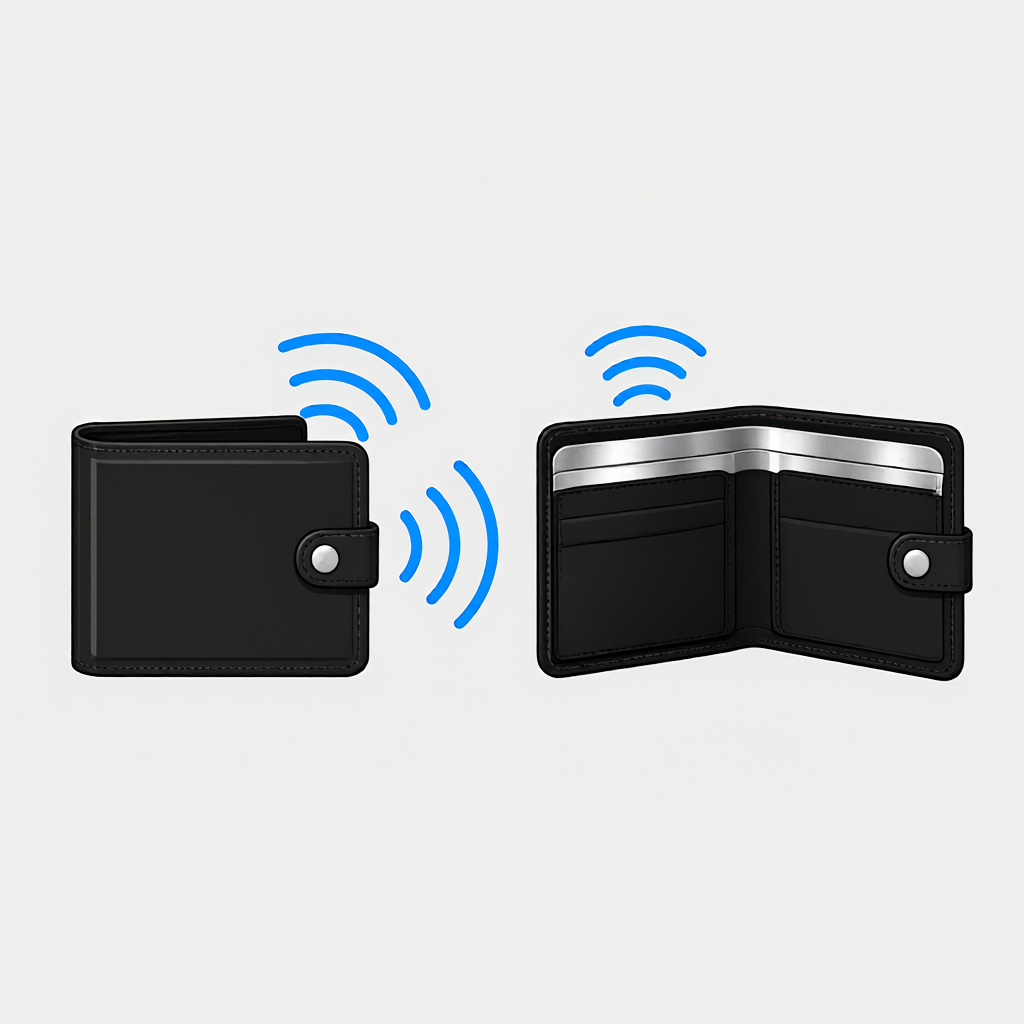
There is no single global standard for identity replacement, but several frameworks shape how agencies operate. Government identity programs increasingly align with ISO/IEC 7816 family standards for smart-card interoperability, which affects how digitally enabled IDs behave during replacement and deactivation. Payment-card recovery processes follow EMVCo guidelines and regional network policies that determine fraud-liability windows — typically shifting responsibility to the card issuer within days of reported loss. For consumer protection and dispute resolution around identity theft, the Federal Trade Commission provides official recovery frameworks that many agencies reference during victim intake. Additionally, organizations sourcing EDC accessories should note that RFID-shielding products are generally evaluated against ASTM test protocols such as those covered under ASTM testing standards, though specific electromagnetic attenuation claims depend on product construction and independent lab verification.
What regulatory requirements apply to corporations supplying carry products?
Corporate buyers and distributors need to understand that selling RFID-blocking wallets carries documentation responsibilities. Materials must comply with REACH and RoHS restrictions in export markets, and marketing claims about blocking performance should avoid absolute language. The FTC enforces truth-in-advertising for functional claims, meaning vendors must substantiate blocking effectiveness with verifiable testing data rather than generic assertions. ISO 9001 quality-management certification signals mature production controls, while BSCI audits indicate labor-compliance practices relevant to ethical sourcing programs. These credentials matter most when you are specifying private-label inventory for retail or promotional channels.
Wallet Theft: What Else Should Buyers Consider?
What should you consider when choosing how to replace a stolen ID efficiently?
The question “how to get new id if wallet stolen” has two dimensions: recovering existing credentials and restructuring habits to make future recovery simpler. On the recovery side, the biggest decision is whether to use expedited services or wait for regular processing. Expedited options save time but require upfront proof-of-documents that must already be secured outside the stolen item. If those backups were also lost, you face a longer chain starting with vital records.
On the habit side, most friction comes from carrying multiple overlapping credentials. A minimalist setup that separates high-risk items — keeping a backup passport photograph or scanned birth certificate in a secure cloud folder rather than physically alongside daily cards — creates distance between loss events and replacement blockers. This is why procurement buyers increasingly evaluate wallet architecture not only on capacity and finish but on enforced minimalism: fewer slots mean fewer simultaneous credential exposures.
How do payment protections interact with ID recovery?
Credit-monitoring services, fraud alerts, and chargeback rights do not replace a driver’s license, but they do buffer the period while government-issued replacements process. Most financial institutions let you flag accounts instantly through mobile apps, yet the underlying identity verification often still requires mailing original documents to the bank. Organizations that supply wallets to field teams should therefore ensure recovery protocols include pre-approved digital onboarding pathways with partner banks wherever available.
What mistakes commonly complicate replacement?
The most frequent error is reporting the theft too late. Every hour without a card freeze increases transaction exposure. Another common mistake is assuming one police report covers all losses; some agencies treat document reissues separately and request case references on file. A third error is storing backup documents in the same physical location as primary ones, which defeats redundancy entirely. A fourth mistake is ignoring recurring subscriptions tied to the stolen cards, which continue billing until manually cancelled or disputed.
How should B2B buyers think about wallet selection after understanding replacement complexity?
Buyers who internalize the replacement workflow tend to specify products that reduce both likelihood and impact. RFID-blocking laminates lower skim probability. Compact aluminum or carbon-fiber constructions limit casual pickpocket success by being harder to palm unnoticed. Secure closures — magnetic flap locks, elastic retention, or rigid plates — reduce accidental spills compared to simple bi-fold openers. When developing private-label programs around these features, manufacturers typically offer customization ranging from laser-engraved logos to complete retail-box design, which helps brands signal trustworthiness to end consumers who value security-oriented carry solutions.
As a manufacturer focused on minimalist EDC wallets, our approach to supporting these realities is straightforward: we produce compact metal and carbon-fiber carries with integrated RFID-blocking options, offer low minimum orders for emerging brands, and maintain an in-house machining line so designers can iterate from concept to production sample within a week. If you are evaluating how specification choices translate into user recovery outcomes, we can walk through material options and finish configurations that align with your market segment.
What are state-specific procedures for U.S. driver’s license replacement?
Exact requirements differ by state, but nearly all follow AAMVA (American Association of Motor Vehicle Accountants) document-verification standards. In California, a duplicate license requires DL 44 completion, a Social Security number, one proof of residency (utility bill or lease within 90 days), and a $38 fee; a police report is optional but activates fraud-alert notation on the record. Texas issues a duplicate with Form LD-143 and accepts a notarized affidavit of loss in place of a police report, processing within 2–5 business days by mail. New York mandates an in-person visit for any photo update and charges $20, while Florida allows free provisional card suspension online within 24 hours of a theft report before requiring a subsequent office appearance. Most states discount or waive the first duplicate when supported by a filed police report, and processing ranges from same-day counter issuance to 14 calendar days for mailed cards. For further reading on recovery workflows and security planning, see How to Find a Lost Wallet: EDC Security Guide.
What technical specifications define effective RFID shielding?
RFID-blocking performance is measured against electromagnetic-testing protocols, principally ASTM E1918 for evaluating shielded enclosure effectiveness. Practical anti-skimming performance requires attenuation of at least 30 dB (99.9% signal reduction) at 13.56 MHz, the frequency used by ISO/IEC 14443 Type A/B contactless cards — the standard underpinning MIFARE credentials, NFC-enabled payment cards, and many national ID systems. Aluminum 6061-T6, when machined to a minimum thickness of 1.5 mm, functions as a continuous Faraday cage and delivers this attenuation without additional lining. Carbon-fiber constructions achieve comparable results by embedding a conductive copper or nickel mesh interlayer between prepreg sheets, trading some mass for impact resistance. Titanium Grade 2 and Grade 5 (Ti-6Al-4V) provide higher tensile strength alongside acceptable RF damping, though the material cost positions those wallets in the premium tier. Independent laboratory verification remains essential because the FTC enforces substantiation requirements for functional claims under truth-in-advertising guidelines; therefore, reputable suppliers provide test reports from accredited third-party labs rather than relying on self-reported numbers.
How are minimalist EDC wallets manufactured to industry specifications?
Precision metal wallets are produced through a sequence of CNC machining, surface finishing, and assembly steps, each governed by quality controls that affect bothDurability and RF-shielding consistency. Multi-axis CNC mills cut 6061-T6 or 7075 aluminum billets to dimensional tolerances of ±0.05 mm, ensuring uniform closure force and card-ejection behavior across production runs. Anodizing — typically Type II sulfuric-acid process — grows a dielectric oxide layer 10–25 μm thick, sealed in deionized water at 95–100 °C; the substrate beneath the coating, not the coating itself, provides the shielding. Fiber-laser engraving at 1064 nm marks logos and custom text to depths of 0.05–0.2 mm without breaching the conductive envelope. Carbon-fiber wallets are formed via resin-transfer molding, compressing 200 gsm twill or plain-weave pre-pregs around a metallic core that carries the shielding function. Final inspection routines — aligned with ISO 9001 quality-management requirements — encompass dimensional verification, coating adhesion per ISO 2409, and functional cycling of closures past 10,000 open-close operations. For an extended look at the full procurement decision-tree behind these manufacturing choices, consult How Minimalist EDC Wallets Are Manufactured: A Procurement.
How buyers evaluate manufacturers against these technical benchmarks?
Procurement teams and private-label developers who understand replacement timelines, shielding physics, and production QC are better positioned to select suppliers on evidence rather than marketing copy. In-house CNC capability matters because it lets a manufacturer hold tighter tolerances, pivot designs faster, and respond to sample requests within days instead of weeks. Material traceability — verifiable mill certificates for aluminum, carbon-fiber layup logs, titanium grade stamps — separates facilities that source generic blanks from those building specification-driven products. ISO 9001 certification demonstrates a documented quality-management system covering incoming inspection through final release, while BSCI audit records confirm labor-compliance practices important for ethical-sourcing programs. Export history to regulated markets signals familiarity with REACH and RoHS restrictions, and SGS-tested material reports give buyers the documentation needed for customs and retail-compliance filings. As a manufacturer, our approach to these standards is practical: we machine our aluminum and titanium wallets in-house on multi-axis CNC equipment, run documentedincoming-material inspections, subject our RFID-blocking assemblies to independent ASTM E1918-style attenuation testing, and deliver certified REACH/RoHS paperwork with every production lot. With a 50,000 sq ft facility producing 500K+ units monthly, 7-day sample lead times, and MOQ starting at 300 pcs, we support emerging DTC labels, Amazon FBA sellers, and promotional distributors from concept sketch through scaled production. Designers can request custom laser engraving, anodized finishes, or full retail-box packaging — each option tracked through our quality-management system for batch consistency. If you want to discuss how material specs, shielding performance, and customization pathways map to your product line, reach out to our team to review your requirements.
What are the technical specifications for RFID-blocking materials?
Effective RFID shielding relies on Faraday-cage principles across multiple frequency bands. Certified blocking materials target these operating ranges: NFC and contactless-payment chips at 13.56 MHz (ISO/IEC 14443 Type A/B), legacy HF RFID at 125 kHz–13.56 MHz, and UHF EPC Gen2 at 860–960 MHz. Quality-grade metallized laminates and conductive fabric interlayers achieve insertion losses of 25–40 dB, reducing the RF signal intensity reaching any protected card to approximately 0.1%–1% of its unshielded strength. Aluminum wallets manufactured through in-house CNC machining inherently function as passive Faraday enclosures because the continuous conductive shell blocks field penetration without requiring a separate shielding liner. Buyers should request third-party lab reports before bulk ordering, since actual attenuation varies by material thickness, seam construction, and hinge gaps. Independent performance validation against ASTM electromagnetic testing protocols remains the industry standard for objective comparison.
Which government and industry standards govern identity-replacement workflows?
Replacement procedures and product claims are shaped by several numbered standards:
| Standard | Governing Body | Relevance |
|---|---|---|
| ISO/IEC 14443 | ISO | Contactless smart-card interface specification for payment and national-ID cards at 13.56 MHz |
| FIPS 201 | NIST / U.S. Federal Government | Personal Identity Verification (PIV) criteria establishing baseline credential-issuance and revocation workflows |
| ISO/IEC 7816 | ISO | Smart-card physical characteristics and interindustry communication protocols for chip-based IDs |
| EMVCo Level 1 & 2 | EMVCo | Payment-card chip specification defining fraud-liability windows that shift to issuers shortly after reported loss |
| REACH / RoHS | European Union | Chemical restriction regulations governing material sourcing for exported carry products |
Most government motor-vehicle and passport agencies process replacement requests using workflows aligned with ISO/IEC 7816 interoperability principles, which determine how digitally enabled credentials behave during deactivation and reissuance. The Federal Trade Commission enforces truth-in-advertising under Section 5 of the FTC Act, requiring vendors to substantiate RFID-blocking claims with verifiable lab data rather than generic assertions. Private-label buyers should confirm that their contract manufacturers hold ISO 9001 quality-management certification, which indicates structured production controls across material inspection, assembly, and final出货. Organizations sourcing PIV-compatible hardware for federal or enterprise programs should review FIPS 201 compliance requirements well before specifying hardware components.
complete precision-machining operations, enforce ISO 9001 quality management, and provide OEM and ODM services starting at MOQs of 300 pieces with a seven-day sample turnaround. Our 50,000 square-foot facility produces up to 500,000 units monthly, serving more than 200 brands across America, Europe, Australia, and Southeast Asia. We handle everything from logo laser engraving and UV printing through retail-box design and Amazon FBA prep. To discuss your project specifications, lead times, and pricing, visit Contact Our Team.
Wallet Theft: Where Can You Verify the Data and Sources?
- ISO/IEC 7816 — www.iso.org
- Federal Trade Commission — www.ftc.gov
- ASTM — www.astm.org
- FIPS 201 — www.nist.gov
- RFID-blocking technology and its application in EDC wallets — topedcwallet.com
- How Minimalist EDC Wallets Are Manufactured: A Procurement — topedcwallet.com
- How to Find a Lost Wallet: EDC Security Guide — topedcwallet.com
- What Is RFID Protection & How Does It Work? (Full Guide) — topedcwallet.com
- How to Choose Men’s Wallets for B2B Sourcing — topedcwallet.com
- reach out to our team — topedcwallet.com
From article to product
Turning this into a product?
Most of what is written here is the difference between a sample that works and one that does not. We can build either — the useful one costs the same.
Keep reading
More on buying guides
wallet with trigger
How Does a Trigger Wallet Work? What Is the Pop-Up Mechanism? The core of…
Readbest bifold wallet for women
What Is a Bifold Wallet? The term “bifold” refers to the fold: the wallet…
ReadMen’s trifold wallets with zipper compartments vs. bifold
At a Glance The three dominant men’s wallet formats differ in panel count, depth,…
Read
About the author
TOPWALLET Editorial Team
TOPWALLET's editorial and engineering desk writes from bench testing at the Shenzhen (Longgang) facility: pull-force and cycle testing, 13.56 MHz shielding measurements, finish trials and factory audits, rather than supplier spec sheets. Every specification in these guides is one we write on a purchase order.
Written on the floor
This article was written by our production and QC team — the people who spec tolerances, run the finishing line and inspect every batch. Where it states a capacity, a pull force or a lead time, it comes from a measurement we made, not a supplier’s catalogue. If a number here disagrees with what your own supplier told you, tell us; several of these articles started as a correction from a buyer.
See how the factory works · Inspection process · Sourcing FAQ
Turning this into a product?
Most of what is written here is the difference between a sample that works and one that does not. We can build either — the useful one costs the same.