

Quick Answer — What Are the Main Types of Wallets?
The main types of wallets available for bulk purchase fall into six categories: minimalist wallets ( slim, low-capacity designs for card-and-cash essentials), metal wallets ( CNC-machined aluminum, titanium, or stainless steel), carbon fiber wallets ( lightweight composite card holders), RFID-blocking wallets ( integrated signal-shielding layers), money clips ( strap-and-clip cash carriers with card slots), and tactical/EDC wallets ( rugged organizers built for active use). Each type is distinguished by material, form factor, and security features — not by style alone. Buyers should select based on the intended user scenario, target price tier, and certification requirements for the destination market.
Detailed Explanation — How Do Wallet Types Differ by Material and Design?
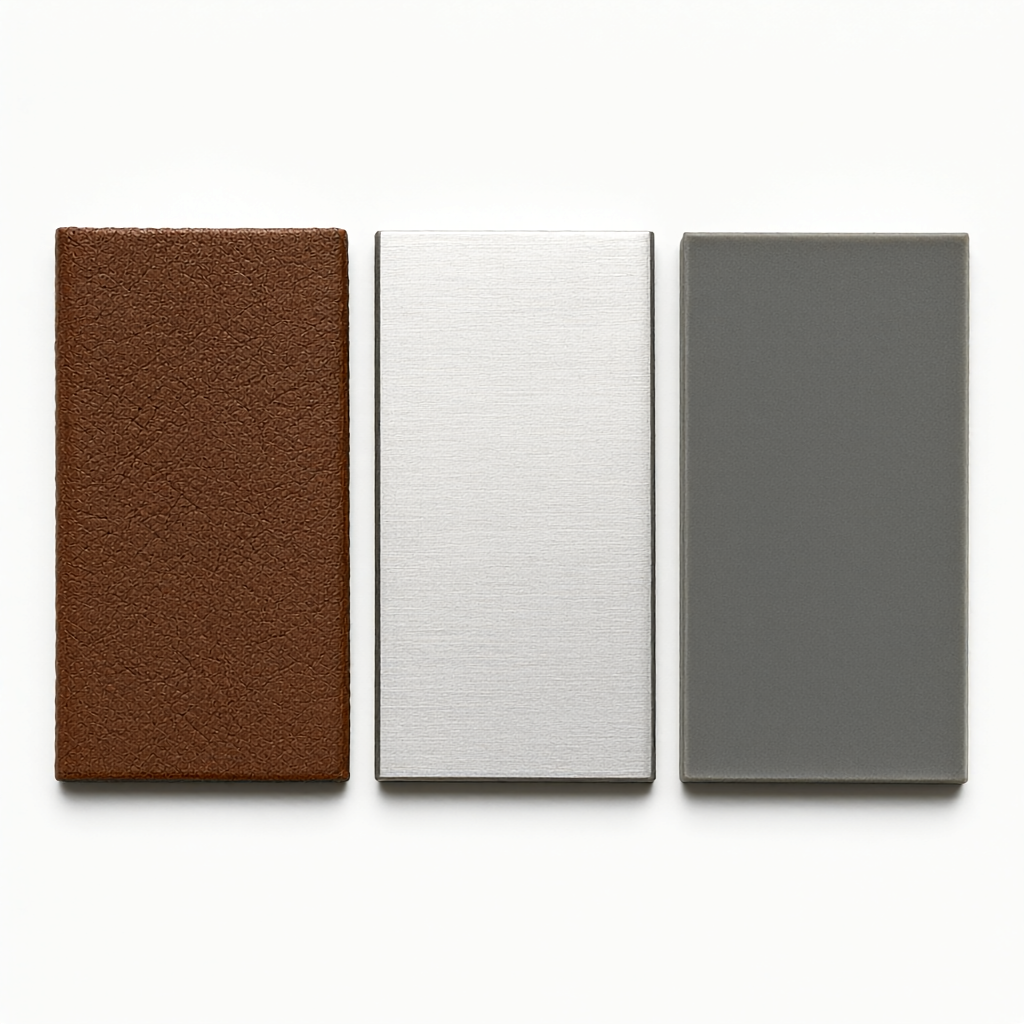
What Are Minimalist Wallets and How Do They Work?
Minimalist wallets are compact pocket carriers designed to replace traditional bifold or trifold designs. They typically hold 4 to 12 cards and a small cash strap or slip compartment. The form factor reduces bulk in the front or back pocket, which is the primary value proposition for urban commuters, outdoor enthusiasts, and everyday carry users.
The design difference from traditional bifolds is structural: minimalist wallets eliminate the hinged folding mechanism and replace it with a rigid frame, spring-loaded clip, or band system that keeps cards secured in a single plane. This means less material, lower weight, and a smaller profile — but also lower card capacity. For B2B buyers, minimalist wallets are the most common entry point for private label programs because they are simple to manufacture, easy to customize, and appeal to a broad demographic across age groups and regions. See our men’s minimalist wallets guide for deeper material and sourcing details.
Metal Wallets: Aluminum, Titanium, and Stainless Steel
Metal wallets are rigid, single-plane carriers machined or stamped from sheet stock. The three most common materials are:
- Aluminum (6061 or 7075 grade): The most cost-effective option. Anodized surfaces provide color and scratch resistance. Weight typically ranges from 40 to 70 grams for a 10-card capacity model. Suitable for mid-tier pricing and high-volume programs.
- Titanium (GR1 or GR2): Premium material with higher strength-to-weight ratio and natural corrosion resistance. Weight is similar to aluminum at 45 to 75 grams, but the raw material cost is significantly higher. Often positioned at the premium end of the market.
- Stainless steel: Heavier and more durable than aluminum, with a brushed or polished finish. Less common in minimalist formats due to weight, but used in tactical and heavy-duty designs.
Metal wallets are manufactured through CNC machining, stamping, or a combination of both. Laser engraving and UV printing are standard customization methods for logos and graphics. For procurement context on EDC wallet manufacturing processes, see our EDC wallets sourcing guide.
Carbon Fiber Wallets and Their Advantages
Carbon fiber card holders are constructed from woven carbon fiber sheets laminated over an aluminum or polymer core. The material offers high tensile strength at low weight — typically 30 to 50 grams for a full-size card holder — and a distinctive matte-black aesthetic that commands a premium position.
The primary advantage is the combination of lightweight durability and visual differentiation. Carbon fiber does not dent or scratch the way bare aluminum does, and it does not show wear patterns over time. However, the material is more expensive than aluminum and requires additional lamination steps in production, which can increase unit cost and slightly extend lead times compared to straight CNC aluminum.
RFID-Blocking Wallet Technology and Standards
RFID-blocking wallets incorporate a conductive layer — usually aluminum mesh, nickel-copper alloy, or ferrofluid-treated fabric — between the outer shell and inner card slots. This layer creates a Faraday cage effect that attenuates 13.56 MHz radio-frequency signals, the frequency used by most contactless payment cards and e-passports.
The effectiveness of RFID blocking depends on complete signal coverage. A wallet with only partial shielding — for example, a back panel without side coverage — will have gaps where reader antennas can still penetrate. Buyers should verify that the shielding design wraps around the card storage area and meets recognized testing protocols. According to ASTM International standards for RFID materials, attenuation of at least 20 dB at 13.56 MHz is the baseline expectation for consumer-grade blocking products.
Money Clips vs. Traditional Card Holders
A money clip is a slender metal or leather band that secures folded cash against a set of card slots. It differs from a traditional card holder in that cash retention is mechanical (spring tension or magnetic closure) rather than contained within a pocket or slot. Money clip wallets typically hold 6 to 10 cards and 5 to 20 bills, depending on bill thickness and clip tension.
The trade-off is simplicity versus capacity. Money clips are among the thinnest wallet formats — often under 10 mm thick — making them ideal for users who carry minimal cash. However, they are less suitable for buyers whose end users carry large denominations or prefer a pocket-secure cash storage method. For a deeper look at card holder specifications and sourcing, see our card holder buying guide.
Tactical and EDC-Focused Wallet Designs
Tactical wallets are built for durability and multi-function use. They often feature SLAM (Slide-Lock Active Mechanism) openers, ballistic nylon straps, cut-resistant materials, and modular attachments for tools or gear. These wallets target outdoor professionals, military and law enforcement personnel, and serious EDC collectors.
The design language is functional over aesthetic: textured surfaces for grip, reinforced stress points, and higher card capacity (12 to 20 cards). Customization options tend toward matte finishes, laser-engraved markings, and subdued color palettes. These wallets command higher price points but also have a narrower, more dedicated buyer segment.
Key Specifications — What Are the Common Dimensions and Capacities?
What Are the Typical Thickness and Weight Ranges by Wallet Type?
| Wallet Type | Thickness (mm) | Weight (g) | Card Capacity |
|---|---|---|---|
| Minimalist aluminum | 8–14 | 40–70 | 4–12 |
| Carbon fiber holder | 6–12 | 30–50 | 4–10 |
| Titanium money clip | 8–15 | 45–80 | 6–10 |
| RFID-blocking bifold | 12–20 | 60–100 | 6–14 |
| Tactical pocket organizer | 15–25 | 80–150 | 10–20 |
These ranges are approximate and vary by manufacturer, design complexity, and material grade. Thickness is measured with cards inserted, as empty-profile measurements are not representative of the product the end user will handle.
What Card Capacities Are Standard Across Formats?
Card capacity is determined by the internal clearance between the outer frame and any spring or clip mechanism. A tight tolerance (0.3–0.5 mm per card gap) maximizes capacity but makes card insertion and removal more difficult. A loose tolerance improves usability but reduces total card count. Most manufacturers target 8 to 12 cards as the functional sweet spot for minimalist and metal wallets.
For women’s wallet specifications and sizing considerations, refer to our wallets for women guide.
Standards & Requirements — Which Certifications Matter for Wallet Sourcing?
What Certifications Should B2B Buyers Verify?
Three certification categories are most relevant for wallet procurement:
- Quality management: ISO 9001 certification indicates the manufacturer operates a documented quality management system covering production processes, incoming material inspection, and finished-goods testing. It is the baseline expectation for any contract manufacturer supplying branded programs.
- Social compliance: BSCI (Business Social Compliance Initiative) audit confirms the facility meets agreed labor and ethical standards. This is often required by European retail buyers and large promotional product distributors.
- Material safety: REACH and RoHS compliance verify that the materials used — including anodizing solutions, adhesives, and metal alloys — meet EU restriction limits for hazardous substances. SGS testing reports provide third-party verification of material composition.
According to ISO standards for manufacturing quality systems, buyers should request current certification documents rather than relying on verbal claims. Certifications that are expired or not scoped to the relevant product line do not provide meaningful assurance.
Are There Regulatory Labeling Requirements?
FTC guidelines govern material disclosure for consumer goods in the United States. If a wallet is marketed as “genuine leather,” the material must meet the FTC’s definition of top-grain or full-grain leather — not bonded or synthetic alternatives. Mislabeling can trigger enforcement action and product recalls. Buyers should ensure that material descriptions on packaging and marketing materials match the actual specifications of the sourced product. See the FTC guidance on labeling for full regulatory details.
Related Considerations — What Should Buyers Evaluate Before Ordering?
How Should Buyers Select Materials for Their Target Market?
Material selection should be driven by the end-user’s lifestyle and the target retail price point, not by aesthetic preference alone. The decision matrix below maps common scenarios to recommended materials:
- Everyday urban carry (office, commuting): Anodized aluminum or carbon fiber. Lightweight, professional appearance, strong margin potential at mid-tier pricing.
- Outdoor and active use: Titanium or reinforced aluminum with textured finishes. Higher durability justifies premium pricing.
- Corporate gifts and promotional programs: Aluminum with laser engraving. Cost-effective at volume with strong brand visibility.
- Premium branding lines: Titanium or carbon fiber with multi-step finishing. Higher unit cost supports higher MSRP and stronger brand positioning.
What Customization Options Are Available for Branded Wallets?
Customization for private label programs typically includes:
- Logo application: Laser engraving (most durable, works on metal and carbon fiber), UV printing (full-color graphics on flat surfaces), or embossing (leather and some synthetic materials).
- Finish and color: Anodized colors for aluminum (black, blue, red, gold, etc.), brushed or polished metallic finishes, and carbon fiber weave patterns (plain, twill, or forged).
- Packaging: Custom retail boxes, blister packs, or polybags with brand artwork. Drop shipping and Amazon FBA prep packaging are widely available.
- Hardware variations: Spring tension adjustments, clip mechanisms, and band materials can be specified to match the target feel and function.
For additional detail on minimalist wallet customization and specification, see our minimalist wallet buyer’s guide.
How Do MOQ and Lead Times Vary Across Wallet Types?
Minimum order quantities and lead times are influenced by manufacturing complexity and material availability:
- Standard aluminum wallets: MOQ typically 300–500 pieces. Sample lead time 5–7 days. Production 15–25 days after sample approval.
- Carbon fiber wallets: MOQ 200–500 pieces due to lamination process. Sample lead time 7–10 days. Production 20–30 days.
- Titanium wallets: MOQ 300 pcs / SKU–300 pieces. Longer CNC machining cycles increase production time to 25–35 days.
- Custom designs from scratch: MOQ 500+ pieces. New tooling and prototyping add 10–15 days to the timeline.
Buyers planning Amazon FBA or seasonal retail launches should account for these timelines when scheduling orders. See our EDC wallets and manufacturing guide for procurement planning advice.
Manufacturer Insights — How a Specialized EDC Wallet Maker Approaches These Categories
As a manufacturer specializing in EDC wallets and pocket gear, we organize our product development around the same categories buyers encounter — minimalist, metal, carbon fiber, RFID-blocking, money clip, and tactical — but we evaluate each one through the lens of manufacturability, material performance, and end-user fit.
Our approach starts with material selection. We use 6061-T6 aluminum as our baseline because it machines well, accepts anodized finishes consistently, and hits the cost-performance balance that most private label programs require. For customers targeting the premium segment, we offer titanium (GR1/GR2) and carbon fiber constructions, each with defined tolerances and finishing options. Our in-house CNC capabilities mean we can produce prototype samples in 7 days and scale to full production runs without outsourcing — which keeps quality control tight and lead times predictable.
On RFID-blocking wallets, we treat shielding coverage as a design requirement, not an add-on. The conductive layer must wrap the card storage zone with minimal gap; partial shielding creates false confidence. We verify attenuation performance against the relevant ASTM testing protocols before approving a design for production.
For customization, we offer laser engraving, UV printing, and custom packaging as standard options. Our typical MOQ starts at 300 pcs per SKU for full OEM customization (100 pcs trial order available for stock finishes) for established designs, which allows smaller brands and Amazon FBA sellers to test new products without large capital commitment. We also support drop shipping and FBA prep packaging for buyers who need direct-to-warehouse logistics.
We have been manufacturing EDC wallets since 2014, and our facility is ISO 9001 certified and BSCI audited. We export to more than 30 countries across North America, Europe, Australia, and Southeast Asia. If you are evaluating wallet types for a private label or distribution program, contact our team to discuss your specifications and receive a tailored sourcing recommendation.
Types Of Wallets: Where Can You Verify the Data and Sources?
- ASTM International standards for RFID materials — www.astm.org
- ISO standards for manufacturing quality systems — www.iso.org
- FTC guidance on labeling — www.ftc.gov
- men’s minimalist wallets guide — topedcwallet.com
- EDC wallets sourcing guide — topedcwallet.com
- card holder buying guide — topedcwallet.com
- wallets for women guide — topedcwallet.com
- minimalist wallet buyer’s guide — topedcwallet.com
- contact our team — topedcwallet.com
From article to product
Sourcing minimalist-wallets?
Tell us the format, the quantity and the date you need stock. You get material options, MOQ and a landed-cost range back within one business day.
Keep reading
More on wallet types
Thin Male Wallets: Buying Guide for Slim Minimalist Picks
How to choose a slim wallet for men — thickness thresholds, material trade-offs, capacity…
ReadStashed Wallet: A Minimalist Everyday-Carry Solution
Understand what a stashed wallet is, how minimalist slim wallets work, and what to…
ReadFolding Wallets: Types, Materials & Buying Guide
Learn what makes a folding wallet worth buying, from materials and card capacity to…
Read
About the author
TOPWALLET Editorial Team
TOPWALLET's editorial and engineering desk writes from bench testing at the Shenzhen (Longgang) facility: pull-force and cycle testing, 13.56 MHz shielding measurements, finish trials and factory audits, rather than supplier spec sheets. Every specification in these guides is one we write on a purchase order.
Written on the floor
This article was written by our production and QC team — the people who spec tolerances, run the finishing line and inspect every batch. Where it states a capacity, a pull force or a lead time, it comes from a measurement we made, not a supplier’s catalogue. If a number here disagrees with what your own supplier told you, tell us; several of these articles started as a correction from a buyer.
See how the factory works · Inspection process · Sourcing FAQ
Sourcing minimalist-wallets?
Tell us the format, the quantity and the date you need stock. You get material options, MOQ and a landed-cost range back within one business day.