

What Are Slim Wallets for Women?
Slim wallets for women are compact, minimalist card holders and pocket organizers designed specifically to address the spatial and aesthetic constraints of women’s clothing and bags. Unlike traditional bi-fold or trifold wallets, these products hold between 4 and 12 cards with minimal bulk — typically between 0.3 and 0.6 inches thick — and are constructed from lightweight metals or composite materials such as aluminum, carbon fiber, and titanium.
The core value proposition is straightforward: replace a bulky leather wallet with a slim profile that fits comfortably in a woman’s front pocket, small crossbody bag, or clutch without creating a visible bulge. The women’s segment adds specific requirements — narrower form factors, refined surface finishes, and color options that align with prevailing fashion preferences — that distinguish sourcing decisions from general minimalist wallet procurement. See our wallets for women guide for additional context on this category.
Design and Material Considerations
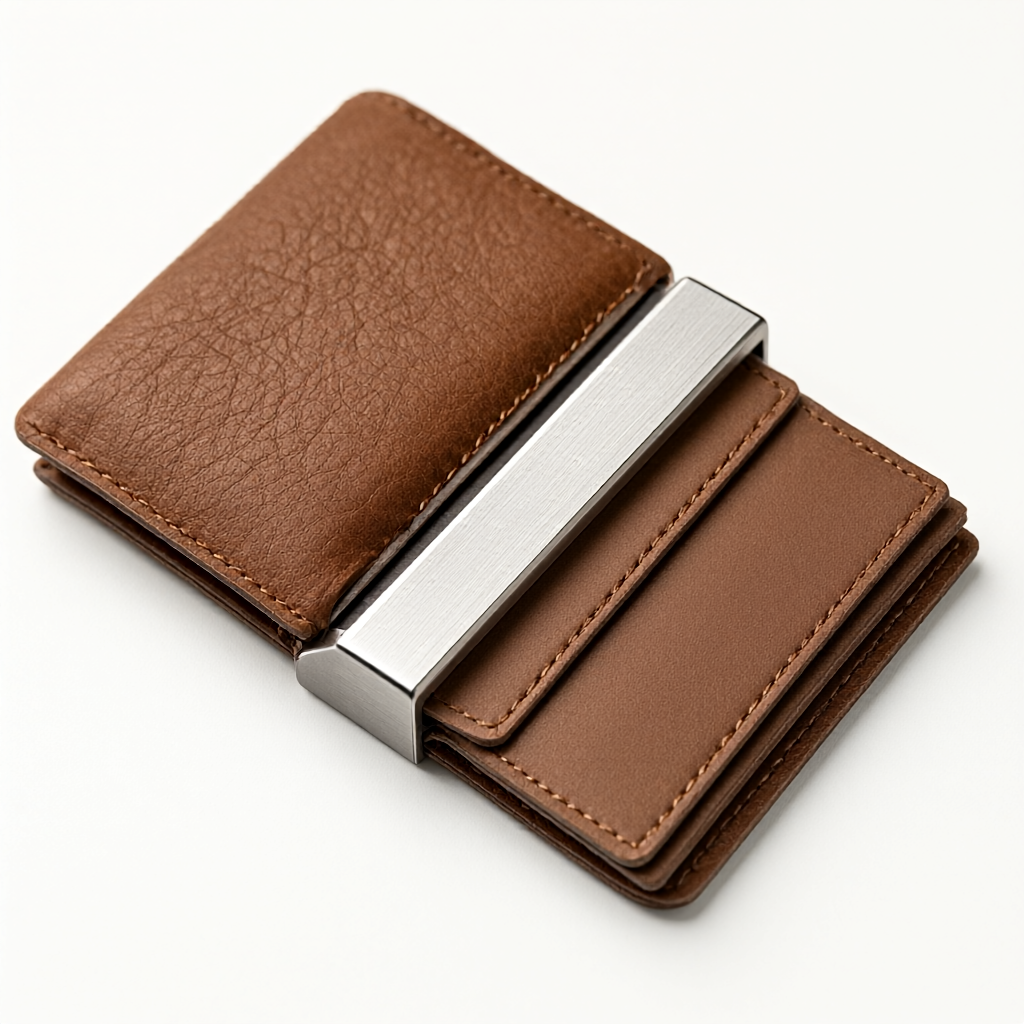
What design features make slim wallets suitable for women?
Three design dimensions drive suitability for the women’s market:
Pocket geometry. Women’s clothing pockets are consistently narrower and shallower than men’s. A standard women’s jeans front pocket measures approximately 3.5 to 4 inches wide and 5 to 6 inches deep. A wallet that exceeds 3 inches in width will not sit flush, and thickness above 0.5 inches creates a noticeable protrusion. Manufacturers design slim wallets for women to stay within these constraints while preserving card access.
Card capacity calibration. Women typically carry fewer cards than men — often 4 to 8 daily-use cards — which shifts the optimal configuration away from high-capacity designs toward streamlined slot layouts. Over-engineering capacity into a women’s slim wallet adds unnecessary thickness and weight without practical benefit.
Aesthetic finishing. Surface treatments, color palettes, and edge profiling carry outsized importance in the women’s segment. Brushed or matte anodized finishes, rose gold and black PVD coatings, and carbon fiber textures are among the most requested options. The finish directly influences perceived value and retail shelf appeal.
What materials are used in manufacturing slim wallets for women?
Three primary materials dominate the slim wallet category, each with distinct trade-offs:
| Material | Weight (per unit) | Durability | Cost tier | Typical finish options |
|---|---|---|---|---|
| Aluminum | Lightest (~25–40 g) | Moderate — scratches over time | Lowest | Anodized colors, PVD coatings |
| Carbon fiber | Light (~30–45 g) | High — scratch and wear resistant | Mid to high | Natural weave, glossy/matte clear coat |
| Titanium | Heaviest (~45–65 g) | Highest — corrosion and scratch resistant | Highest | Natural brushed, bead-blasted, PVD colored |
Aluminum is the entry-point material for most brands launching a women’s slim wallet line. It offers the lowest unit cost, supports a broad color range through anodizing, and is light enough to avoid pocket drag. The primary limitation is surface hardness — anodized aluminum will show micro-scratches with daily use, which some buyers accept as part of the product character and others view as a quality issue.
Carbon fiber sits in the mid-range. It delivers a premium visual texture that photographs well and resists scratching better than aluminum. The material is produced by laminating carbon fiber sheets over a polymer or metal substrate, then machining to specification. Finish consistency depends on laminate quality, making supplier selection critical.
Titanium occupies the premium position. It is inherently corrosion-resistant, does not require surface coating for protection, and carries strong brand perception in the EDC segment. The higher material cost and more demanding CNC machining process result in significantly higher per-unit pricing, making it suitable for brands positioning in the $30–$60+ retail tier.
These material choices parallel those discussed in our men’s minimalist wallets sourcing guide, with the women’s line prioritizing narrower profiles and refined aesthetics over tactical styling.
How does RFID-blocking work in slim wallets?
RFID-blocking technology uses a thin layer of ferromagnetic or conductive material — typically nickel-iron alloy or copper mesh — embedded within the wallet’s structure to create a Faraday cage around the card slots. This layer attenuates the 13.56 MHz radio frequency used by contactless payment and identity cards, preventing unauthorized scanners from reading stored data.
For women’s slim wallets, RFID protection addresses a practical security concern: front-pocket carry places cards closer to potential scanning distance in crowded environments. The technology is particularly relevant for buyers targeting consumers who prioritize data protection, though independent third-party verification of RFID-blocking performance remains limited across the industry. Some manufacturers claim blocking effectiveness without publishing test reports, so buyers should request certification documentation before placing orders.
What is the typical capacity of a slim wallet for women?
The standard capacity range for women’s slim wallets is 4 to 8 card slots, with an additional cash sleeve or money clip option in many designs. A few models extend to 10–12 slots, but this typically adds thickness that compromises the slim profile — a common trade-off that buyers should evaluate against their target market’s actual carrying habits.
Practical capacity differs from theoretical maximum. A wallet rated for 10 cards may function smoothly with 6 cards but become difficult to eject with 10. Buyers should request physical samples to evaluate the ejector mechanism and slot tension before committing to production quantities.
Slim Wallets For Women: Which Specifications Matter Most?
What are the key specs for slim wallets for women?
Realistic target specifications for a competitive women’s slim wallet product line:
| Specification | Typical Range | Notes |
|---|---|---|
| Overall thickness | 0.30–0.55 in (7.6–14 mm) | Below 0.4 in preferred for front-pocket use |
| Width | 2.75–3.25 in (70–83 mm) | Fits most women’s front pockets |
| Height | 4.0–4.5 in (102–114 mm) | Standard credit card height plus tolerance |
| Card capacity | 4–8 slots | Plus optional cash/money clip compartment |
| Weight | 25–65 g | Depends on material |
| Ejection mechanism | Spring-loaded or friction | Spring-loaded preferred for one-handed use |
| RFID blocking | Optional | Verify with test reports when claimed |
These dimensions align with standard credit card profiles (85.6 × 53.98 mm) while accommodating the slight variations that occur in different wallet constructions. For reference on general card holder specifications, see our card holder sourcing guide.
Slim Wallets For Women: Which Standards and Certifications Apply?
What standards and certifications apply to slim wallet manufacturing?
Reputable manufacturers of slim wallets for women should hold the following credentials:
ISO 9001 — The baseline quality management standard. It confirms the manufacturer has documented processes for design control, incoming material inspection, in-process quality checks, and final product verification. Buyers should request a current certificate and verify its scope covers wallet manufacturing.
BSCI (Business Social Compliance Initiative) — Increasingly required by European and North American retail buyers. BSCI audits cover labor practices, working hours, and facility conditions. It signals supply chain transparency, which matters for brands marketing ethical sourcing.
REACH / RoHS compliance — Essential for markets in Europe and increasingly important in North America. These regulations restrict certain heavy metals and chemical substances in consumer products. Materials used in wallet construction — particularly adhesives, plating solutions, and coating materials — must comply. Buyers should request a Declaration of Conformity and, for large orders, independent SGS test reports.
FTC guidance on RFID claims — The U.S. Federal Trade Commission has issued consumer protection guidance noting that RFID-blocking claims should be substantiated. While no specific testing standard is mandated, buyers should ask manufacturers for third-party test data rather than accepting unverified claims at face value.
For broader context on EDC wallet manufacturing standards, see our EDC wallets manufacturing for B2B buyers guide.
Slim Wallets For Women: What Else Should Buyers Consider?
What customization options are available for private-label orders?
OEM and ODM pathways offer fundamentally different approaches to private-label development:
OEM (Original Equipment Manufacturer) — You provide the design — either a complete technical drawing set or a reference product — and the manufacturer produces to your specification. This path gives full control over dimensions, materials, finishes, and mechanism design but requires developed design capability on your side.
ODM (Original Design Manufacturer) — The manufacturer proposes existing designs or modifies proven platforms to match your branding requirements. This is faster and lower-risk for new brands entering the market, as the underlying engineering is already validated. Customization in ODM mode typically includes logo placement, color selection, packaging design, and minor dimensional adjustments.
Customization elements commonly available across both pathways:
- Logo application — Laser engraving (most common for metal wallets), UV printing, or embossing
- Material selection — Aluminum grades, carbon fiber laminate types, titanium grades
- Finish options — Anodized colors, PVD coatings, bead-blasting, polishing
- Internal layout — Number and arrangement of card slots, cash compartment inclusion, money clip integration
- Packaging — Retail boxes, hang tags, poly bags, and branded inserts
- Branding details — Serial numbering, QR code integration, custom hardware
These options connect to the broader minimalist wallet buyer’s guide for additional specification context.
What MOQ and lead times should buyers expect from manufacturers?
Typical sourcing parameters for slim wallets for women:
- MOQ (Minimum Order Quantity): 300–500 pieces per design, depending on the manufacturer and complexity of customization. Simple designs in standard colors often accept lower MOQs; custom finishes and unique mechanism designs typically require higher minimums.
- Sample lead time: 5–10 business days for a production-representative sample. Prototype samples may be faster but are not always indicative of final manufacturing quality.
- Production lead time: 15–30 business days after sample approval, depending on order volume and customization complexity.
- Tooling/mold fees: One-time charges for custom jigs, laser programs, or packaging tooling, typically ranging from $200–$1,000 depending on scope.
Buyers should budget sample costs and tooling fees into their initial investment calculation. Reputable manufacturers often credit sample and tooling costs against production orders of sufficient volume.
How do you evaluate a slim wallet manufacturer for quality and reliability?
Four evaluation dimensions separate reliable manufacturers from risky ones:
Factory audit evidence. Request photos or video walkthroughs of the production floor, including CNC machining areas, surface finishing lines, and quality inspection stations. A facility that can demonstrate in-house machining and finishing — rather than outsourcing these processes — typically maintains tighter quality control.
Sample quality assessment. Evaluate samples for fit and finish: edge deburring, slot tolerance consistency, ejector mechanism smoothness, finish uniformity, and logo registration accuracy. Check whether the sample matches the quoted specifications in material, dimensions, and weight.
Certification verification. Confirm that ISO 9001 and BSCI certificates are current and cover the relevant product categories. Request REACH/RoHS test reports for materials that will contact skin or cards.
Communication responsiveness. Track response time, technical depth of answers, and willingness to provide documentation. Manufacturers who proactively address potential quality concerns during the sampling phase tend to deliver more consistent production results.
What market positioning and retail considerations apply to women’s slim wallets?
Successful placement in the women’s slim wallet segment requires alignment between product specification, pricing, and retail channel:
Price tiers by material:
- Aluminum: $8–$15 wholesale → $18–$35 retail
- Carbon fiber: $12–$22 wholesale → $28–$50 retail
- Titanium: $20–$35 wholesale → $45–$80 retail
These ranges are illustrative starting points; actual pricing depends on customization depth, order volume, and packaging requirements.
Channel considerations:
- Amazon FBA — Competitive pricing and Prime-eligible fulfillment are essential. Product photography must showcase the slim profile and finish quality.
- DTC brand — Higher margins possible but require strong branding, storytelling, and customer acquisition strategy.
- Retail/distribution — Requires consistent supply, competitive wholesale pricing, and professional packaging that survives shelf display.
- Corporate gifts and promotions — Value driven by logo visibility and perceived quality; lower MOQ tolerance.
See our men’s minimalist wallets guide for additional insights on material-to-price positioning that applies across gender segments.
Slim Wallets For Women: How Do We Meet These Standards?
As a manufacturer specializing in minimalist EDC wallets and pocket gear, our approach to producing slim wallets for women is built around in-house CNC machining, consistent material sourcing, and flexible OEM/ODM support. We hold ISO 9001 certification, operate a BSCI-audited facility, and ensure all materials meet REACH and RoHS compliance requirements.
Our production process covers the full chain — from raw material inspection and CNC forming through anodizing, laser engraving, assembly, and final quality check — so there is no reliance on external subcontractors for critical steps. This gives us direct control over tolerances, finish consistency, and defect rates across production runs.
For buyers evaluating sourcing partners, we recommend starting with a sample order to verify fit, finish, and mechanism performance against your specifications before committing to volume production. Contact Our Team to discuss your project requirements.
Slim Wallets For Women: Where Can You Verify the Data and Sources?
- wallets for women — topedcwallet.com
- men’s minimalist wallets sourcing guide — topedcwallet.com
- card holder sourcing guide — topedcwallet.com
- EDC wallets manufacturing for B2B buyers — topedcwallet.com
- minimalist wallet buyer’s guide — topedcwallet.com
- Contact Our Team — topedcwallet.com
From article to product
Sourcing minimalist-wallets?
Tell us the format, the quantity and the date you need stock. You get material options, MOQ and a landed-cost range back within one business day.
Keep reading
More on wallet types
Thin Male Wallets: Buying Guide for Slim Minimalist Picks
How to choose a slim wallet for men — thickness thresholds, material trade-offs, capacity…
ReadStashed Wallet: A Minimalist Everyday-Carry Solution
Understand what a stashed wallet is, how minimalist slim wallets work, and what to…
ReadFolding Wallets: Types, Materials & Buying Guide
Learn what makes a folding wallet worth buying, from materials and card capacity to…
Read
About the author
TOPWALLET Editorial Team
TOPWALLET's editorial and engineering desk writes from bench testing at the Shenzhen (Longgang) facility: pull-force and cycle testing, 13.56 MHz shielding measurements, finish trials and factory audits, rather than supplier spec sheets. Every specification in these guides is one we write on a purchase order.
Written on the floor
This article was written by our production and QC team — the people who spec tolerances, run the finishing line and inspect every batch. Where it states a capacity, a pull force or a lead time, it comes from a measurement we made, not a supplier’s catalogue. If a number here disagrees with what your own supplier told you, tell us; several of these articles started as a correction from a buyer.
See how the factory works · Inspection process · Sourcing FAQ
Sourcing minimalist-wallets?
Tell us the format, the quantity and the date you need stock. You get material options, MOQ and a landed-cost range back within one business day.