

What Is a Slim Wallet and Who Buys Them?
A slim wallet — also called a minimalist wallet, cardholder, front pocket wallet, or EDC wallet — is a low-profile carrying solution designed to hold cards and folded cash without the bulk of a traditional bi-fold. They are typically constructed from aluminum, carbon fiber, or titanium, and may include features like RFID-blocking layers, money clip mechanisms, or elastic card retention.
In B2B contexts, the primary buyers are EDC brand owners building their own product lines, Amazon FBA sellers sourcing private-label inventory, promotional product distributors looking for branded pocket gear, corporate gift procurement teams, and retail chain buyers stocking seasonal or year-round wallet assortments.
The core use cases driving demand include everyday carry for professionals who prefer front-pocket comfort, outdoor and tactical enthusiasts seeking durable gear, and corporate gifting programs looking for recognizable branded items with perceived value. If you are exploring sourcing money clips for B2B, you will find many of the same material and specification considerations apply to slim wallets as well.
How Does Slim Wallet Manufacturing Work?
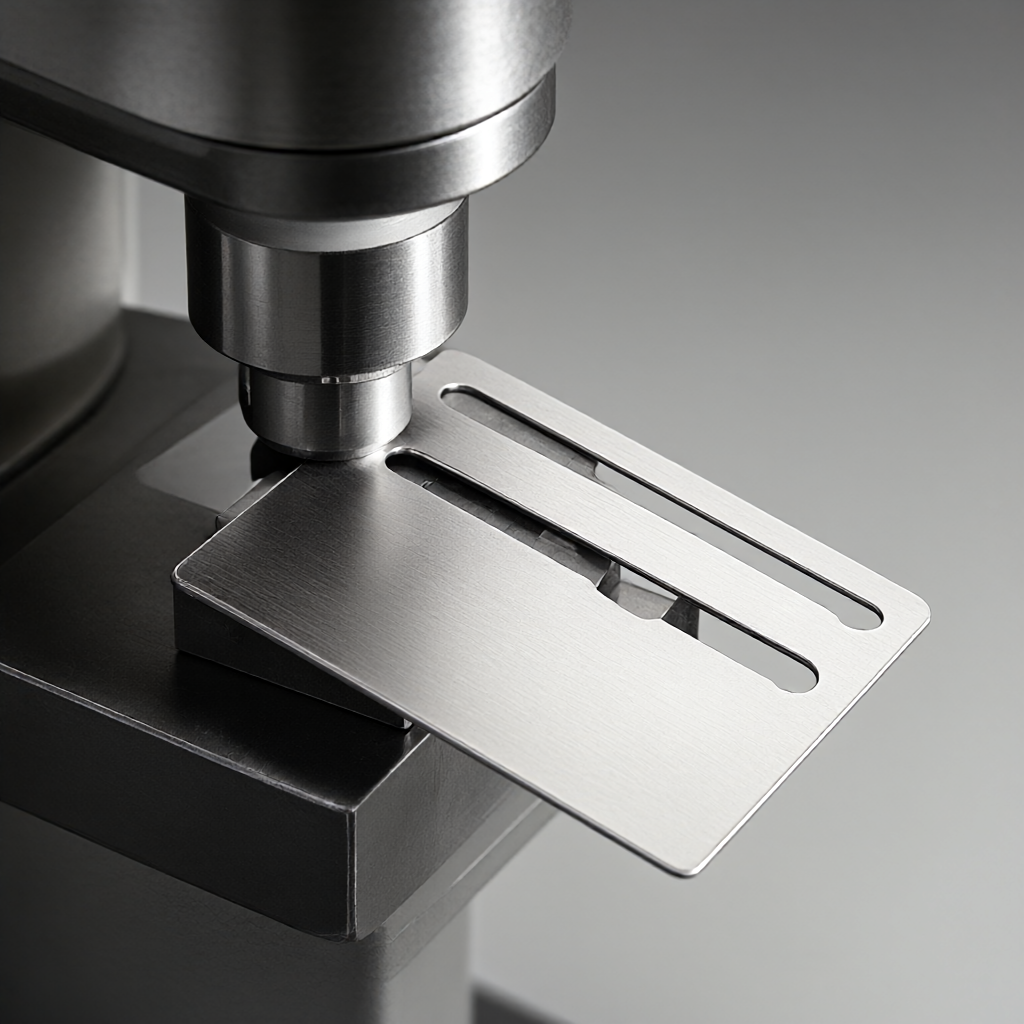
Slim wallet production follows a relatively straightforward manufacturing flow, but the specifics vary significantly depending on the chosen material:
Aluminum wallets begin as sheet stock, which is CNC-milled or stamped into the wallet body. The pieces are then anodized for color and surface hardness, fitted with spring mechanisms or elastic carriers, and assembled. Laser engraving or UV printing adds logos and custom markings.
Carbon fiber card holders start with pre-preg carbon fiber sheets layered over a core material. These are cut to shape, edges are trimmed and polished, and the final unit is assembled with its card retention system. The result is a lightweight, scratch-resistant wallet with a distinctive woven appearance.
Titanium money clip wallets are typically CNC-machined from solid titanium bar or sheet. Titanium requires slower machining cycles than aluminum but produces a premium product with superior strength-to-weight ratio and corrosion resistance.
Across all material types, the standard process includes: material sourcing → precision cutting/machining → surface finishing → mechanism assembly → quality inspection → packaging. Manufacturers with in-house CNC machining and surface finishing capabilities can control tolerances more tightly and respond faster to design revisions than those outsourcing steps.
For buyers investigating business card holder near me options, the same manufacturing disciplines apply — the difference is primarily in scale, customization depth, and compliance requirements for B2B versus small-batch retail sourcing.
Key Specifications for Bulk Slim Wallet Orders
What does “slim” actually mean?
There is no universal standard defining “slim,” but in the EDC wallet industry, a true slim wallet typically measures:
- Thickness: 8mm to 16mm when holding 6 to 10 cards
- Weight: 30g to 80g depending on material
- Capacity: 4 to 12 cards plus folded cash
A wallet claiming to be slim but measuring over 20mm thick with 10+ cards loaded is not meeting the category expectation. When evaluating a minimalist wallet supplier, ask for measured specifications at full capacity, not just the empty-state dimensions.
Material comparison
| Material | Typical Weight | Typical Thickness (10 cards) | Durability | Cost Tier | Best For |
|---|---|---|---|---|---|
| Aluminum | 40–60g | 10–14mm | High (anodized surface) | Mid | Everyday carry, branded promo |
| Carbon Fiber | 30–50g | 8–12mm | Very high (scratch-resistant) | Mid-to-High | Premium EDC, outdoor use |
| Titanium | 50–80g | 12–16mm | Very high (corrosion-resistant) | High | Tactical, luxury positioning |
| Stainless Steel | 70–110g | 14–20mm | Very high | Mid-to-High | Heavy-duty, tactical |
Aluminum slim wallets offer the best value-to-performance ratio for most B2B programs. They are lightweight, accept anodized colors reliably, and machine efficiently at volume. Carbon fiber card holder options command a price premium but deliver exceptional scratch resistance and a distinctive aesthetic that photographs well for e-commerce. Titanium money clip wallets sit at the upper end of the market and appeal to buyers targeting premium retail or executive gifting channels.
Customization options
Most B2B slim wallet orders include at least one customization element:
- Laser engraving — precise logo placement on metal and carbon fiber surfaces; permanent and suitable for small marks or detailed artwork
- Anodizing — aluminum-specific coloring process that hardens the surface; available in standard and custom Pantone-matched shades
- UV printing — full-color graphics on flat metal surfaces; suitable for complex designs but less durable than engraving under heavy abrasion
- Custom packaging — retail boxes, blister packs, or gift boxes with brand-locked branding
- Money clip integration — adding a separate or integrated titanium or steel money clip to a card-holder body
When evaluating a custom metal wallet manufacturer, confirm whether engraving and anodizing are done in-house. Offshore outsourcing of finishing steps adds lead time and reduces your ability to approve samples quickly.
MOQ, lead time, and sample expectations
Typical industry parameters for bulk slim wallet procurement:
- MOQ: 300 to 500 pieces for standard designs; 500 to 1,000+ for fully custom configurations requiring new tooling
- Sample lead time: 5 to 10 business days for ready designs; 15 to 25 days for fully custom prototypes
- Production lead time: 15 to 30 days after sample approval, depending on order volume and customization complexity
- Tooling: Minimal for off-the-shelf designs; new jigs or molds may be required for novel form factors
Buyers should always request physical samples before committing to production. A sample reveals fit and finish details — edge polishing, card retention tension, mechanism smoothness — that specifications alone cannot communicate.
What Standards Apply to Wallet Products?
Wallet products for B2B sale must address material safety, functional performance, and labeling compliance. Key standards and frameworks include:
- ISO 9001 — Quality management system certification that validates a manufacturer’s consistent production processes. This is the baseline expectation for any serious B2B sourcing relationship.
- REACH / RoHS compliance — European regulations governing restricted substances in consumer goods. Wallets containing metals, coatings, or adhesives should be tested to ensure they do not exceed limits on heavy metals and hazardous chemicals. Reputable manufacturers use SGS-tested materials and can provide test reports.
- BSCI — Business Social Compliance Initiative audit covering labor practices, working conditions, and ethical sourcing. Required by many European retail buyers and large promotional product distributors.
- ASTM material standards — For aluminum and titanium wallets, relevant material specifications govern alloy composition, mechanical properties, and surface treatment. See ASTM International for current material standard references.
RFID-blocking wallets have an additional compliance consideration. While the FTC does not regulate RFID-blocking technology directly, claims about RFID protection should be verifiable through third-party testing rather than marketing language. Buyers should request test documentation from any supplier making RFID-blocking claims.
What Should You Consider Before Choosing a Manufacturer?
How important is the “near me” factor?
The search for a slim wallet near me or near me slim wallet manufacturer reflects a natural instinct to reduce risk through proximity. Local sourcing can simplify communication, speed up sample iterations, and enable facility visits. However, in the EDC wallet category, the dynamics differ from traditional retail purchasing.
Why global sourcing often outperforms local for B2B slim wallets:
- Manufacturing concentration: The vast majority of slim wallet production capacity — particularly CNC-machined aluminum and carbon fiber options — resides in specialized manufacturing hubs, primarily in Asia. A “near me” search in North America or Europe will typically return retail pop-up shops, artisan markets, or general promotional product distributors rather than actual wallet manufacturers.
- Cost structure: Minimum order quantities and unit economics favor manufacturers with dedicated tooling and vertical integration. Local job shops without EDC-specific equipment cannot compete on per-unit cost at volume.
- Customization depth: True B2B customization — from alloy selection to anodized color matching to custom packaging design — requires manufacturers with in-house CNC, finishing, and assembly capabilities. These are rare outside dedicated manufacturing regions.
- Sample logistics: With modern express shipping, a 7-day sample turnaround from an overseas factory often arrives faster than a domestic courier from a local supplier.
That said, “near me” sourcing has legitimate niches. If you need one wallet today for an immediate demonstration or trade show, a local promotional products distributor or artisan maker may fill the gap. If you are running a promotional product distribution business and need small restock orders with rapid delivery, a domestic supplier with inventory on hand makes sense. But for private label programs, Amazon FBA inventory, or branded corporate gifting at scale, the economics and capability depth strongly favor established manufacturing partners.
For buyers specifically researching sourcing wallets from nearby manufacturers, understanding this distinction between consumer retail proximity and B2B manufacturing capability is essential.
What about total cost of ownership?
Unit price is only one component of procurement cost. The full picture includes:
- Tooling and setup: One-time costs for custom jigs, molds, or packaging design
- Sample costs: Often refundable against production orders
- Shipping and duties: Freight, customs, and import tariffs vary by origin country and order volume
- Defect rate risk: Lower-quality manufacturers may quote attractive per-unit prices but carry higher rejection rates, leading to replacement costs and delayed launches
- Communication overhead: Time zones, language barriers, and revision cycles add hidden costs that quality manufacturers minimize through structured processes
A $3.50 per-unit quote from a manufacturer with a 5% defect rate and poor communication may cost more in total than a $4.20 per-unit quote from a manufacturer with sub-1% defect rates, fast turnaround, and clear communication protocols. Evaluate based on landed cost and reliability, not sticker price alone.
How the Industry Works — and How We Meet These Standards?
Understanding the procurement landscape helps you ask the right questions of any potential supplier. Here is how the process works and how we approach it at our end.
Slim wallet manufacturing at the B2B level requires manufacturers who can handle multiple material systems — aluminum CNC machining, carbon fiber layup and trimming, titanium precision machining — under one roof. Fragmented supply chains, where cutting, finishing, and assembly happen at different facilities, introduce quality variance and delay. Our 50,000 sq ft in-house factory consolidates CNC machining, laser engraving, UV printing, and anodizing so that design changes and quality checks happen sequentially rather than through third-party coordination.
For custom laser engraved wallet programs, our in-house laser capabilities allow us to prototype and approve engravings within the same day as sample production. This compresses what many buyers experience as a two-week back-and-forth into a single iteration cycle.
Our approach to material specifications follows the same discipline we see across our men’s wallets sourcing guide — every alloy batch, anodized finish, and carbon fiber layup is traceable to a test report. We operate under ISO 9001 certification and maintain BSCI audited facilities, which matters directly for buyers serving European and North American retail channels with compliance requirements.
When buyers come to us — whether they are building an EDC wallet OEM manufacturer line, preparing an Amazon FBA private label launch, or designing a private label wallet factory program for corporate gifts — the starting point is always the same: define the material, the capacity, the customization depth, and the timeline. From there, we provide a sample within 7 days, followed by a detailed quotation covering unit pricing, tooling, shipping, and payment terms. Our MOQ starts at 300 pcs per SKU for full OEM customization (100 pcs trial order available for stock finishes) for standard configurations, which accommodates small brands and test launches without requiring five-figure minimum commitments.
With 13+ years of export experience and shipments to 30+ countries across America, Europe, Australia, and Southeast Asia, we have seen every common sourcing mistake — under-specified tolerances, untested color matches, packaging that fails transit, and communication gaps that delay product launches. Our process is built to catch these before they reach your production run.
If you are ready to move from evaluation to sampling, Get a Free Quote and we will respond with specifications, lead times, and a sample plan tailored to your product requirements.
Expanded Total Cost of Ownership Breakdown for Bulk Slim Wallet Procurement
Unit pricing represents only the visible portion of procurement spend. An accurate total cost of ownership (TCO) model for bulk slim wallets must account for the following line items:
| Cost Component | Typical Range (per unit) | Notes |
|---|---|---|
| Ex-works unit price | $2.50 – $8.50 | Depends on material (aluminum lowest, titanium highest), customization depth, and order volume |
| Laser engraving / UV printing | $0.15 – $0.60 | Single-side logos are cheaper; multi-color UV adds cost |
| Custom packaging | $0.30 – $1.20 per unit | Retail boxes with custom inserts cost more than simple poly bags |
| Tooling / setup (one-time) | $0 – $800 | Minimal for existing designs; new molds or custom anodizing rakes for novel colors |
| Sample costs | $50 – $200 | Often credited back against the production order |
| Freight (air) | $0.40 – $1.20 per unit | 5–7 day transit; used for urgent restocks or small batches |
| Freight (sea) | $0.08 – $0.25 per unit | 30–45 day transit; most cost-effective for orders over 2,000 pcs |
| Import duties (US) | ~3.4% (HTS 4202.12/4202.32) | Varies by origin country and trade agreements |
| Defect/replacement reserve | 1–3% of order value | Budget for minor rework or partial replacement runs |
Price bands quoted in this article are industry ranges published for planning purposes. Exact per-unit pricing depends on material, finish, packaging and order quantity, and is confirmed by our sales team after an inquiry against a locked specification.
Case study example: An Amazon FBA seller in the United States ordered 2,000 aluminum slim wallets with single-side laser engraving and custom retail boxes from a manufacturer in Guangdong. The ex-works price was $3.10 per unit. Adding engraving ($0.25), packaging ($0.55), sea freight ($0.12), and an estimated 2% defect reserve brought the landed cost to approximately $4.15 per unit. Had the buyer chosen a lower-quote supplier at $2.60 ex-works but with a 6% defect rate and no packaging support, the effective landed cost — including replacements and repackaging labor — would have exceeded $4.50 per unit. The higher initial quote delivered better overall value.
A second scenario involves a promotional products distributor in Germany placing a 5,000-piece order of carbon fiber card holders with BSCI-compliant ethical sourcing requirements. The order qualified for sea freight at $0.09 per unit and benefited from the manufacturer’s ISO 9001:2015 quality management system, which kept the defect rate below 0.8%. The combined impact of compliant materials (REACH / RoHS 2015/863/EU), low defect rates, and predictable lead times allowed the distributor to meet tight retail deadlines without emergency air freight — saving an estimated $600 in expedited shipping compared to a non-compliant alternative.
When evaluating quotes, buyers should request a landed-cost breakdown that separates unit pricing, customization fees, tooling, packaging, and shipping. This transparency is a strong indicator of manufacturer maturity and reduces the risk of hidden cost additions later in the procurement cycle.
Near Me Sourcing: Retail Alternatives and Regional Procurement Guidance
The “slim wallet near me” and “near me slim wallet manufacturer” queries reflect genuine buyer intent, but the search results often conflate three distinct purchasing channels that serve very different needs:
Channel 1: Consumer retail and pop-up shops
Local EDC boutiques, outdoor gear stores, and maker-pop-up events sell finished wallets at $25 – $60 per unit retail prices. These are not manufacturing sources — they are end-user retail points. Useful for one-off purchases or product research, but unsuitable for private label, bulk, or custom branding programs.
Channel 2: Domestic promotional product distributors
Many North American and European promotional product companies stock generic aluminum or leather wallets with basic logo application. Order quantities typically range from 50 to 500 pieces, with per-unit costs of $4 – $12 depending on customization. Lead times are measured in days rather than weeks, but customization depth is limited and design flexibility is restricted to pre-existing templates.
Channel 3: Dedicated EDC wallet manufacturers (B2B OEM/ODM)
True B2B manufacturing requires CNC machining capacity, in-house surface finishing, and quality management systems (ISO 9001:2015, BSCI audit readiness). These capabilities are concentrated in specialized manufacturing regions — primarily in China’s Guangdong and Zhejiang provinces — rather than distributed locally in Western markets. Sourcing from these regions delivers the customization depth, competitive per-unit economics, and compliance documentation that B2B buyers require.
Regional sourcing shortcuts for time-sensitive buyers
If proximity is operationally critical, consider these approaches:
- Request domestic warehousing or third-party logistics (3PL) partnerships. Some manufacturers maintain US and EU warehouse inventory for fast replenishment orders, reducing lead time from weeks to days.
- Engage a sourcing agent or quality inspection service in the manufacturer’s region. Companies like SGS, Bureau Veritas, and Intertek provide pre-shipment inspection and factory audit services that replicate the oversight a local visit would provide.
- Visit trade shows such as the Canton Fair (Guangzhou), Source Asia (Hong Kong), or the Outdoor Retailer Show to meet manufacturers in person and evaluate samples face-to-face before committing to production.
- Use virtual factory tours and video audits as a preliminary screening step. Reputable manufacturers will accommodate live video walkthroughs of their CNC machining, anodizing, and assembly lines before you commit to travel.
For further reading on near-me sourcing strategies, see our sourcing wallets from nearby manufacturers guide and our business card holder near me procurement resource.
Procurement Decision Framework and Buyer Checklist
Evaluating a slim wallet manufacturer requires a structured approach. Use the following framework to assess potential suppliers systematically.
Step 1: Verify compliance and quality credentials
- [ ] ISO 9001:2015 certification (quality management system)
- [ ] BSCI audit report (social compliance, required for EU retail)
- [ ] REACH / RoHS 2015/863/EU test reports from SGS or equivalent lab
- [ ] ASTM D4236 compliance for art material labeling (if applicable to marketed claims)
- [ ] FDA-free claims verified (no medical-grade or unsafe material assertions)
Step 2: Evaluate manufacturing capability
- [ ] In-house CNC machining for aluminum and titanium parts
- [ ] In-house laser engraving and UV printing (no outsourcing of finishing)
- [ ] Anodizing line with color-matching capability (Pantone-compatible)
- [ ] Carbon fiber layup and trimming capability
- [ ] Assembly and packaging lines with quality inspection stations
Step 3: Assess sample and production responsiveness
- [ ] Sample lead time ≤ 7 business days for standard designs
- [ ] Production lead time 15–30 days after sample approval
- [ ] Willingness to provide physical samples before production commitment
- [ ] Clear revision process with documented approval workflows
Step 4: Review commercial terms
- [ ] MOQ aligned with your program scale (ideal: 300 pcs per SKU minimum for startup brands)
- [ ] Transparent landed-cost quotation (ex-works, customization, packaging, freight, duties)
- [ ] Tooling costs disclosed upfront with credit policies against production orders
- [ ] Payment terms favorable to buyer (e.g., 30% deposit, 70% against BL copy)
Red flag indicators to avoid
- Manufacturers who cannot provide physical samples before production
- Quoted prices significantly below market average without clear cost justification
- No verifiable quality certifications or test reports on request
- Vague answers about where finishing and assembly occur (offshored versus in-house)
- Refusal to share BSCI or REACH/RoHS documentation
-Pressure to pay 100% upfront before any sampling or contract
- Inability to specify exact alloy grades or material origins
Updated Company Integration Section
Understanding the procurement landscape helps you ask the right questions of any potential supplier. Here is how the process works and how we approach it at our end.
Our approach to material specifications follows the same discipline we see across our men’s wallets sourcing guide — every alloy batch, anodized finish, and carbon fiber layup is traceable to a test report. We operate under ISO 9001:2015 certification and maintain BSCI audited facilities, with all materials meeting REACH / RoHS 2015/863/EU compliance requirements. This matters directly for buyers serving European and North American retail channels with compliance requirements.
When buyers come to us — whether they are building an EDC wallet OEM manufacturer line, preparing an Amazon FBA private label launch, or designing a private label wallet factory program for corporate gifts — the starting point is always the same: define the material, the capacity, the customization depth, and the timeline. From there, we provide a sample within 7 days, followed by a detailed quotation covering unit pricing, tooling, shipping, and payment terms. Our MOQ starts at 300 pcs per SKU for standard configurations, which accommodates small brands and test launches without requiring five-figure minimum commitments.
With 13+ years of export experience and shipments to 200+ brands worldwide across America, Europe, Australia, and Southeast Asia, we have seen every common sourcing mistake — under-specified tolerances, untested color matches, packaging that fails transit, and communication gaps that delay product launches. Our process is built to catch these before they reach your production run.
For more on how we support buyers at every stage, see our sourcing money clips for B2B specifications guide and our billfolds on sale bulk sourcing overview.
Slim Wallet Sourcing For B2B Buyers: Where Can You Verify the Data and Sources?
- ASTM International — www.astm.org
- sourcing money clips for B2B — topedcwallet.com
- business card holder near me — topedcwallet.com
- sourcing wallets from nearby manufacturers — topedcwallet.com
- men’s wallets sourcing guide — topedcwallet.com
- Get a Free Quote — topedcwallet.com
- billfolds on sale — topedcwallet.com
From article to product
Sourcing minimalist-wallets?
Tell us the format, the quantity and the date you need stock. You get material options, MOQ and a landed-cost range back within one business day.
Keep reading
More on wallet manufacturing
Sustainable Packaging for Wallet Shipments
Packaging is where sustainability claims are cheapest to make and easiest to disprove. A…
ReadTake-Back and Recycling Programmes for Wallet Brands
A take-back programme is easy to announce and hard to run. Wallets are the…
ReadNickel Release Rules for Wallet Hardware
Nickel release is the one restriction in a wallet that is decided by the…
Read
About the author
TOPWALLET Editorial Team
TOPWALLET's editorial and engineering desk writes from bench testing at the Shenzhen (Longgang) facility: pull-force and cycle testing, 13.56 MHz shielding measurements, finish trials and factory audits, rather than supplier spec sheets. Every specification in these guides is one we write on a purchase order.
Written on the floor
This article was written by our production and QC team — the people who spec tolerances, run the finishing line and inspect every batch. Where it states a capacity, a pull force or a lead time, it comes from a measurement we made, not a supplier’s catalogue. If a number here disagrees with what your own supplier told you, tell us; several of these articles started as a correction from a buyer.
See how the factory works · Inspection process · Sourcing FAQ
Sourcing minimalist-wallets?
Tell us the format, the quantity and the date you need stock. You get material options, MOQ and a landed-cost range back within one business day.