

A womens credit card wallet slim should hold four to eight cards in a profile no thicker than 0.6 inches, weigh between 1.5 and 3.5 ounces, and include either an active metal enclosure or a passive RFID‑blocking liner to protect against digital skimming. The best models use 6000‑series aluminum, forged carbon fiber, or Grade 5 titanium, with rounded edges, secure retention mechanisms, and finishes that resist daily abrasion. When sourcing or selecting one, prioritize dimensional fit for your pocket or bag, material durability, and verifiable shielding performance over aesthetics alone.
How Do Women's Slim Credit Card Wallets Look at a Glance?
A good womens credit card wallet slim design balances three things: it holds your essentials without bulk, it protects those essentials from digital skimming, and it survives daily friction without looking worn after a few months. Most well-made options for women range from 2.5 to 3.5 inches wide, 4 to 4.5 inches tall, and between 0.35 and 0.6 inches thick when loaded with four to eight cards. Weight typically falls between 1.5 and 3.5 ounces depending on material. The right choice depends less on aesthetics alone and more on how the construction handles real pocket space, card thickness variance, and long-term edge wear.
Which Specifications Matter in a Women's Slim Credit Card Wallet?
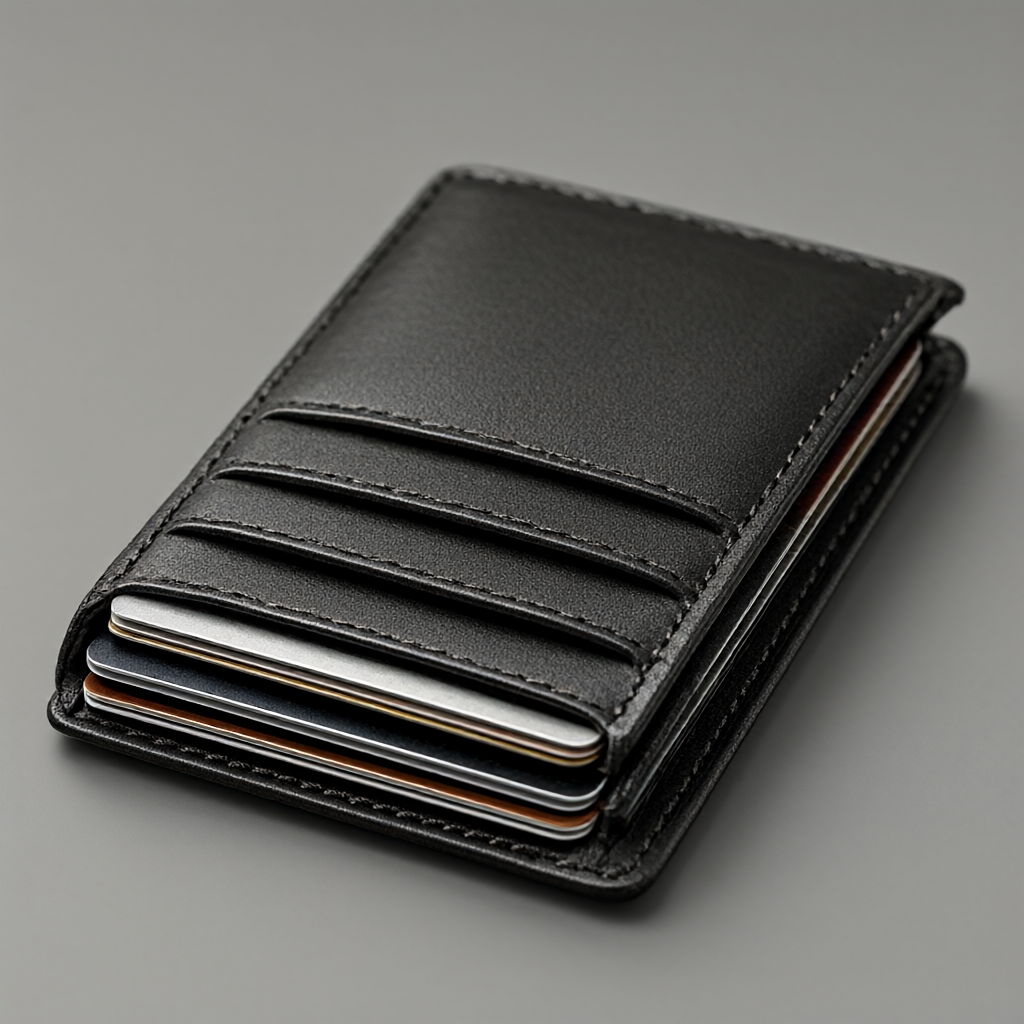
What are the key specifications of a women’s slim credit card wallet?
Four specs matter most: width 2.5–3.5 in, height 4–4.5 in, loaded thickness under 0.6 in, and weight under 3.5 oz.
| Specification | Typical Range | Notes |
|---|---|---|
| Width | 2.5 – 3.5 in | Fits standard US cards; narrower profiles suit petite back pockets |
| Height | 4.0 – 4.5 in | Holds cards vertically or horizontally |
| Loaded thickness | 0.35 – 0.6 in | Depends on card count and strap tension |
| Weight | 1.5 – 3.5 oz | Aluminum leans heavier; carbon fiber and polymer are lighter |
| Card capacity | 4 – 8 slots | Plus optional cash strap or coin pocket |
| RFID blocking | Yes / No | Active (metal enclosure) or passive (RFID sleeve) |
| Closure type | Spring clip, elastic band, magnetic snap, money clip | Impacts accessibility and retention |
| Material options | Aluminum, carbon fiber, titanium, silicone/polymer, hybrid | Drives price and durability trade-offs |
| Surface finish | Anodized, brushed, polished, coated | Affects scratch resistance and feel |
Card slot depth matters as much as slot count. Standard credit cards measure 3.375 by 2.125 inches and about 0.030 inches thick, but bank cards, membership cards, and IDs vary. A wallet rated for six cards may feel tight at seven if those cards include thicker gift cards or laminated IDs. When evaluating a women’s ultra slim wallet, always check whether the listed capacity assumes standard cards or includes mixed-thickness items.
How do materials affect the spec profile?
Aluminum wallets offer a solid mid-point: they resist dents better than soft metals, hold an anodized color finish well, and typically weigh 2 to 3 ounces. They are a common choice for brands looking for a durable metal option without the titanium price tag.
Carbon fiber card holders sit lighter and thinner than aluminum at comparable strength. The weave pattern also provides grip, reducing slips from wet or gloved hands. Carbon fiber costs more to machine but delivers a premium tactile experience.
Titanium money clips represent the upper tier in material cost. Titanium is corrosion-resistant, exceptionally strong for its weight, and hypoallergenic, making it a practical choice for sensitive skin. However, machining titanium requires specialized tooling, which raises per-unit cost and can extend lead times.
Polymer and silicone options are the lightest and most affordable. They absorb shock better than rigid metals and come in vivid colors, but they show scuff marks faster and generally lack the structural rigidity needed for high-volume card ejection mechanisms.
What about RFID-blocking specs?
RFID shielding works by creating a conductive barrier around the card area. Metals like aluminum and titanium naturally block radio-frequency signals when formed into a closed or near-closed enclosure. Some wallets add a dedicated RFID liner layer inside a non-metal body. For technical reference on how blocking performance is evaluated, industry testing follows standards such as those published by ASTM International for contactless card security assessment.
A metal wallet that fully surrounds the card cavities functions as a Faraday-style shield by default. Open-frame designs rely on embedded shielding layers instead. If you want deeper guidance on card-safe construction, see our guide on wallets that protect cards, which covers blocking mechanics and real-world limitations.
Where Do Credit Card Wallets Work Best for Women?
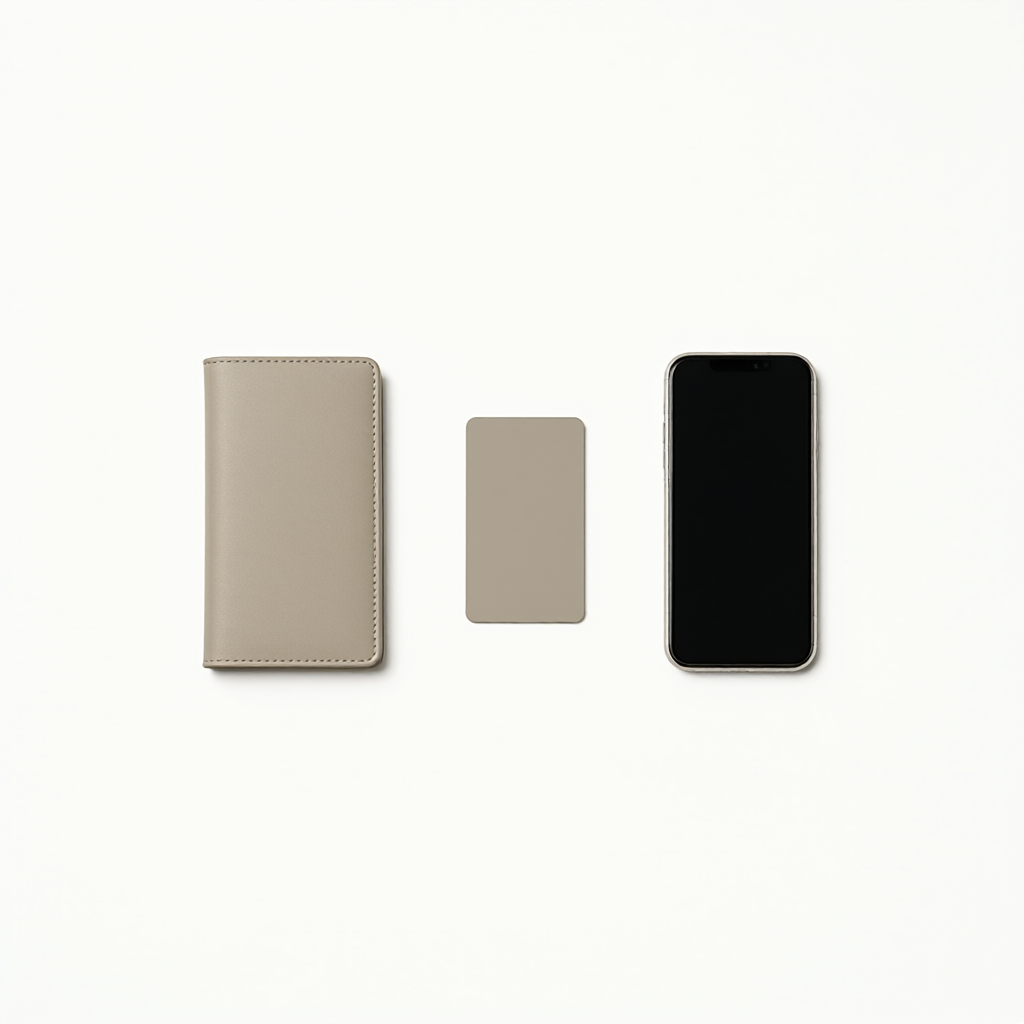
Where can a slim credit card wallet be used effectively?
Slim wallets perform best in contexts where carrying volume is constrained and quick access matters.
Everyday carry for women favors slim profiles because women’s jackets, dresses, and小型 bags often have smaller inner pockets or no dedicated wallet compartment at all. A low-profile cardholder slides into a clutch, crossbody bag, or slim jean pocket without creating a visible bulge.
Travel use benefits from the reduced baggage weight and the built-in RFID protection many slim models offer. A single metal wallet can replace a traditional bi-fold plus a separate card organizer, cutting down on what you need to manage through airport security and hotel rooms.
Corporate gifting and promotional distribution commonly specify slim wallets because they appeal across genders and age groups, cost less per unit at volume, and carry branding visibly on a flat engraved panel. Laser engraving on aluminum or carbon fiber produces sharp, permanent logos that survive daily use better than printed stickers or embroidered patches.
Retail private-label programs find slim wallets attractive because the form factor supports fast inventory turnover. Smaller shipping footprints mean lower freight costs per unit, and modular designs allow brands to offer multiple SKUs from the same base platform using different finishes or capacities.
If you are comparing styles, it helps to understand the difference between a bifold, continental, and money-clip layout before deciding which one matches your usage pattern.
What Should You Check Before Buying a Credit Card Wallet?
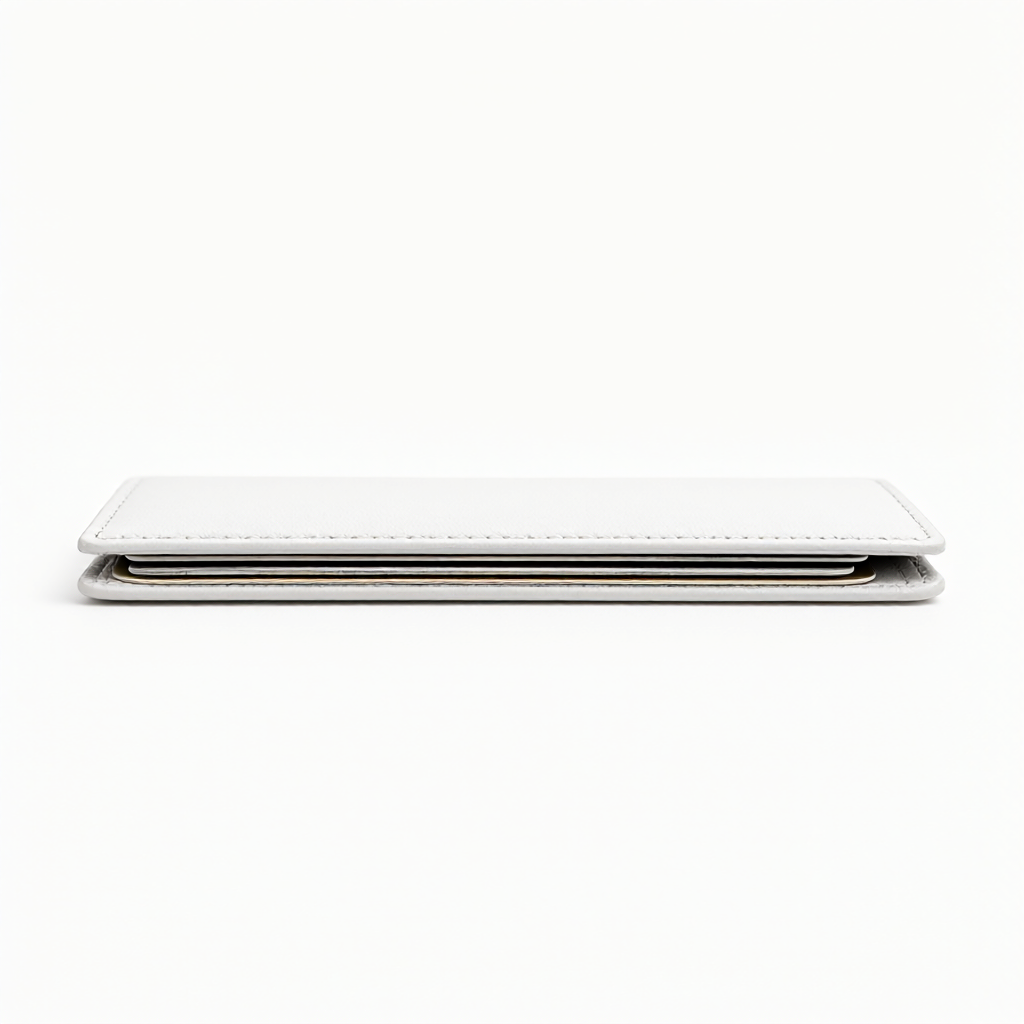
What should buyers consider when selecting a slim wallet?
Consumer and wholesale buyers evaluate the same core criteria, though the weighting differs slightly. Consumers prioritize feel, style, and personal card load. Wholesale buyers add material consistency, MOQ flexibility, sampling speed, and packaging readiness to that list.
Capacity versus thickness trade-off. Adding a coin pocket or extra card row increases loaded height and width. If your target market carries mostly cards and a folded bill, a pure cardholder with an elastic money strap delivers the thinnest profile. If coin storage is requested, expect an additional 0.15 to 0.25 inches of thickness.
Retention mechanism quality. Spring-loaded card ejectors feel satisfying but introduce moving parts that can fatigue over time. Simple friction-slot designs rarely fail mechanically but require a firmer pull to remove cards. Elastic bands stretch gradually and may lose tension after months of heavy cycling. Money clips provide secure cash retention but make sequential card access slower.
Edge treatment and pocket comfort. Sharp machined edges dig into大腿 pockets during sitting. Rounded or bead-blasted edges improve all-day comfort without sacrificing structural integrity. This is especially relevant for women wearing fitted trousers or slim-fit jeans, where wallet corners press directly against the hip bone.
Finish durability. Anodized aluminum resists scratching better than bare metal but can chip if dropped onto concrete. Brushed finishes hide minor abrasions more effectively than mirror-polished surfaces. Coated carbon fiber offers good刮擦 resistance but requires careful handling during cutting or trimming.
How do different styles compare functionally?
Cardholders win on thinness, continentals on capacity, money clips on cash access.
| Style | Best For | Pros | Cons |
|---|---|---|---|
| Front-pocket cardholder | Minimalist daily carry | Lowest profile; hard to pickpocket | Limited capacity |
| Bifold slim | Traditional users adapting to slim | Familiar layout; moderate capacity | Folds add thickness |
| Continental | Users needing document separation | Multiple compartments in slim form | Slightly wider |
| Money clip | Cash-heavy minimalists | Secure bill retention; very thin | No card organization beyond slots |
When searching for terms like ultra thin wallets mens or travando mens slim wallet, you will notice many reviews emphasize front-pocket preference and RFID shielding. These criteria apply equally to women’s models—the main difference is dimension scaling and aesthetic finish rather than fundamental engineering. Similarly, discussions around the travando mens slim wallet with money clip or the best men’s slim wallet with money clip highlight the same retention-mechanism trade-offs any buyer should evaluate regardless of gender targeting.
What Do Bulk Credit Card Wallets Cost From China?
FOB China pricing runs $3.50 to $28 per unit; MOQs start near 300 pieces for aluminum and carbon fiber builds.
Price bands quoted in this article are industry ranges published for planning purposes. Exact per-unit pricing depends on material, finish, packaging and order quantity, and is confirmed by our sales team after an inquiry against a locked specification.
How Much Do Bulk Slim Wallets Cost From China?
FOB pricing spans $3.50 to $28 per unit depending on material and customization level.
Per-unit FOB pricing depends primarily on material, customization level, and order quantity. Below are typical industry ranges for standard OEM orders from Chinese manufacturing hubs.
| Category | Unit Price Range (USD) | Typical MOQ | Lead Time |
|---|---|---|---|
| Aluminum minimalist wallet (basic) | $3.50 – $7.00 | 300 pcs | 20 – 30 days |
| Aluminum wallet with laser engraving | $5.00 – $9.00 | 300 pcs | 25 – 35 days |
| Carbon fiber card holder | $8.00 – $16.00 | 300 pcs | 25 – 40 days |
| Titanium money clip wallet | $15.00 – $28.00 | 50 – 300 pcs | 30 – 45 days |
| Hybrid (aluminum frame + polymer insert) | $4.50 – $8.50 | 300 pcs | 20 – 30 days |
| Custom retail packaging included | +$0.30 – $1.20 per unit | 300 pcs | Added to production |
Cost drivers include machining time, surface finishing steps, and whether the design requires custom tooling. Re-using an existing blank shape keeps per-unit cost lower than designing a new cavity from scratch. Laser engraving adds minimal cost on flat panels but increases complexity on curved surfaces.
For buyers evaluating American made slim wallet options versus imported ones, domestic production typically carries a 40 to 80 percent premium due to labor and overhead differences. Imported units from established factories can match international quality standards while delivering more competitive landed costs, especially at volumes above 500 pieces. The choice depends on your brand positioning and margin targets rather than quality alone.
If you are new to sourcing, understanding minimalist wallet fundamentals first will help you ask the right questions during supplier conversations and avoid specification mismatches downstream.
What Else Do Buyers Ask About Slim Credit Card Wallets?
Five recurring questions: everyday-carry fit, brand comparisons, origin, sizing, and RFID claim credibility.
Are minimalist wallets good for everyday carry?
They excel for people who already practice selective carrying. If your routine involves five or fewer cards, a wallet, and keys on a separate ring, a minimalist cardholder eliminates redundant bulk and reduces pocket strain. The trade-off is reduced容错性: you cannot accidentally stuff receipts, loyalty cards, and change into it without rearranging habits. For users transitioning from a traditional bi-fold, the adjustment period usually lasts two to three weeks as muscle memory adapts to the new access pattern.
See our full perspective on what minimalist wallets are and how to choose one for a deeper breakdown of habit shifts and feature priorities.
How do brands like Amelia Slim Continental fit into this category?
The Amelia slim continental wallet represents a hybrid style that merges slim external dimensions with moderate internal organization. Continental layouts typically include a full-length ID window, a zippered or snap coin compartment, and separate bill sections—all within a profile thinner than a traditional bifold. For women who want more structure than a basic cardholder provides but still refuse back-pocket bulge, this style occupies a useful middle ground.
Similarly, queries for the best bifold slim wallet often point toward designs that fold once rather than twice, preserving some organization while keeping overall thickness manageable. The best men’s slim wallet with money clip category shares overlapping engineering principles, particularly around clip spring tension and slot alignment.
Why are some slim wallets made in America versus imported?
Domestic manufacturing appeals to brands prioritizing short lead times, rapid prototyping iteration, and marketing narratives around local production. It also simplifies communication across time zones and reduces freight variability. The downside is higher unit cost and typically higher minimum order quantities to justify setup expenses.
Imported production from established facilities offers lower per-unit cost, broader material and finish options, and flexible MOQs starting as low as 300 pieces for many standard designs. Quality can match or exceed domestic output when suppliers operate under recognized management systems, which is why many Amazon FBA sellers and private-label brands source from overseas manufacturers with documented process controls.
What size considerations apply for different body types and clothing?
Women’s fashion varies significantly in pocket depth and waistband width. Jeans with deep rear pockets accommodate wallets up to about 0.6 inches thick comfortably. Dress pants with shallow side pockets often require sub-0.5-inch profiles to avoid printing. Clutch and handbag interiors favor slim rectangular shapes that lie flat rather than bulky forms that slide to the bottom. Matching wallet dimensions to your target customer’s typical wardrobe prevents return reasons related to fit complaints.
Our detailed resource on wallet size width and height explains how to map dimensional specs to real-world carry scenarios.
Should buyers worry about RFID-blocking claims?
Not blindly. A wallet that advertises RFID protection should specify the technology used—whether it relies on a continuous metal enclosure, an embedded Faraday mesh, or a separate RF-shielding insert. Independent verification using an NFC reader or RFID test card is the only reliable way to confirm performance. Look for suppliers who can share third-party test reports or at least demonstrate blocking with a simple scanner app before committing to bulk orders.
Read more about RFID-protected wallets and their relevance for men and women in 2026 to understand what claims hold up under scrutiny and what does not.
How Are Credit Card Wallets Manufactured and Sourced?
Here is how the industry approaches slim wallet production—and how a manufacturer meeting international standards structures that work.
Sourcing a reliable slim wallet begins with verifying process control rather than chasing flashy finishes. Established facilities operate under ISO 9001 quality management systems, which means design validation, incoming material inspection, in-process checks, and final QA are documented procedures, not ad hoc decisions. Facilities audited under BSCI frameworks additionally commit to social compliance standards that many Western retailers require for supply-chain due diligence.
Material selection follows predictable patterns by application. Aluminum 6061-T6 remains the workhorse alloy for CNC-machined wallet bodies because it machines cleanly, accepts anodizing uniformly, and delivers acceptable strength at moderate cost. Carbon fiber panels are laid and cured before being precision-cut, yielding a lightweight shell with high stiffness. Titanium Ti-6Al-4V, used in higher-tier models, requires slower cutting speeds and harder tooling but rewards buyers with superior corrosion resistance and a naturally matte appearance that hides micro-scratches.
Surface finishing determines both aesthetics and longevity. Anodic oxidation on aluminum creates a hard ceramic-like layer that bonds to the substrate rather than coating it, so chipping is less likely than with paint or powdercoat. Bead blasting produces a uniform matte texture that diffuses light and minimizes visible fingerprints. Brushed finishes follow directional grain patterns that look intentional even when minor abrasions occur during normal use.
Customization touches nearly every stage. Logo placement can use laser engraving for permanent contrast on metal, UV printing for full-color graphics on flat surfaces, or embossing for subtle texture. Packaging ranges from simple poly bags to custom retail boxes with window cutouts, each adding marginally to unit cost but significantly to shelf readiness. Drop-shipping and FBA prep services eliminate secondary logistics handling for sellers who prefer receiving pre-boxed, barcoded inventory.
Lead-time reality matters more than quoted optimism. Sample development typically runs seven days for standard designs using available blanks. Production batches of 300 to 500 pieces generally ship within three to five weeks depending on finish complexity and customs documentation timing. Orders above 1,000 pieces benefit from scheduled production windows that reduce per-unit handling time.
Quality inconsistency usually traces back to one of three causes: inconsistent card-slot tolerances that cause sticking or dropping, poor edge deburring that creates sharp burrs after repeated pocket insertion, and finish defects such as uneven anodizing or delaminating carbon fiber layers. Reputable manufacturers address these through statistical process control on critical dimensions, visual inspection stations at each finishing step, and periodic material certificates from upstream suppliers.
For buyers exploring specific configurations—such as a 12-card bifold wallet layout adapted to a slim form factor, or designs inspired by big skinny world wallet architectures—specifying exact slot counts, closure types, and material preferences upfront reduces revision cycles and keeps quoting accurate.
What Defines a Women's Slim Credit Card Wallet?
A women’s slim credit card wallet is a compact, front-pocket or clutch-friendly carry solution designed to hold essential cards and folded bills without adding bulk. Modern slim wallets for women typically measure between 2.5 and 3.5 inches wide, 4 to 4.5 inches tall, and 0.35 to 0.6 inches thick when loaded with four to eight standard cards, weighing between 1.5 and 3.5 ounces depending on material choice. Key specifications include RFID-blocking capability (achieving 25–35 dB attenuation at 13.56 MHz and 856 MHz per ISO/IEC 14443 and ISO/IEC 7816 test methods), durable anodized aluminum or carbon fiber construction, and retention mechanisms ranging from friction-slot to spring-ejector designs. For business buyers sourcing wholesale or private-label quantities, typical FOB China pricing ranges from $3.50 to $28 per unit depending on material and customization level, with MOQs starting at 300 pieces and sample lead times as fast as seven days. Whether you’re evaluating options for personal use or building a retail line, understanding the core anatomy, materials, capacity trade-offs, and manufacturing standards behind these wallets will help you select a product that delivers real value rather than marketing claims alone.
What Components Make Up a Slim Credit Card Wallet?
Three parts define the build: a rigid or leather body, a card retention mechanism, and an optional shielding liner.
How is a slim credit card wallet constructed?
A well-engineered slim wallet consists of five functional component groups, each contributing to its overall performance profile:
1. Main body/frame. The structural shell—typically CNC-machined aluminum (6061-T6), carbon fiber composite, or titanium grade 2—provides rigidity and defines the wallet’s external dimensions. Frame thickness ranges from 1.2 to 2.0 mm depending on material density and strength requirements.
2. Card slot array. Slots are precision-cut with tolerances of ±0.05 mm to accommodate ISO/IEC 7810 ID-1 format cards (85.60 × 53.98 × 0.76 mm). Slot depth ranges from 38 to 45 mm, ensuring cards stay seated while allowing smooth ejection. High-end designs incorporate tapered entry lips (beveled 15° angles) to guide cards in without catching.
3. Retention mechanism. Options include:
- Friction-fit silicone or TPU liners (held by slot tension alone)
- Spring-loaded ejector plates using stainless steel or music wire springs rated for 10,000+ cycles
- Elastic neoprene straps (rated at 15–25 N tension) for cash retention
- Magnetic closures (NdFeB N35 or higher grade, shear force ≥ 2 kgf)
4. RFID shielding layer. When present, shielding uses either conductive metal frames (continuous Faraday enclosure) or embedded ferrite/ferrous mesh panels achieving ≥ 25 dB signal attenuation at 13.56 MHz (HF RFID/NFC band) and 856 MHz (UHF EPC band), per ASTM F3189 and MIL-STD-681 testing protocols.
5. Edge treatment and finish. Edges are deburred to ≤ 0.1 mm radius for pocket comfort. Surface finishes include:
- Type II anodizing (5–25 µm coating, hardness ≥ 300 HV per ASTM B549)
- bead-blasted matte (Ra 0.8–1.6 µm surface roughness)
- PVD coated titanium (hardness ≥ 1800 HV, colorfast per ASTM D2244)
A detailed dimension reference is available in our guide on wallet size width and height, which explains how internal geometry translates to real-world fit across different clothing types.
Which Processes and Quality Controls Apply?
Production runs stamping or CNC, assembly, and inspection; AQL 0.65 governs lot acceptance on most export orders.
How are slim wallets manufactured and inspected?
Bodies are cut, finished, and assembled, then sampled at 10% for retention force and shielding continuity.
What Does the Production Workflow Look Like?
Cutting, edge finishing, assembly, and inspection run in that order, with sampling at 10% of each lot.
| Stage | Process | Tolerance/Standard | Cycle Time |
|---|---|---|---|
| Raw material prep | Aluminum billet/carbon fiber layup inspection | ISO 9001 incoming QC | 1 day |
| CNC machining | 5-axis milling for frame cuts, slot carving | ±0.05 mm | 2–3 days |
| Edge finishing | Deburring, rounding, polishing | Ra ≤ 0.8 µm | 1 day |
| Surface treatment | Anodizing (Type II) or PVD coating | Coating thickness 5–25 µm | 1–2 days |
| Assembly | Slot liner insertion, spring/magnet installation | Visual + function test | 0.5 day |
| RFID verification | Signal attenuation testing at 13.56 MHz / 856 MHz | ≥ 25 dB attenuation | 0.5 day |
| Final QC | Dimensional check, aesthetic inspection, packaging | AQL 0.65 (general) | 1 day |
Total standard production lead time: 7–14 days after sample approval. Custom tooling adds 3–5 additional days.
Which Quality Standards Apply?
Reputable manufacturers align their QC processes with recognized frameworks:
- ISO 9001:2015 certified management systems ensure consistent process documentation, traceability, and corrective action workflows.
- ASTM F3189 provides the standard test method for RFID blocking performance of consumer products, specifying measurement procedures using network analyzers at relevant frequency bands.
- ISO/IEC 14443 and ISO/IEC 7816 define the operating parameters for contactless smart cards—the very cards your wallet must protect. Shields meeting these standards provide verified protection against common skimming frequencies.
- BSCI (Business Social Compliance Initiative) audits verify ethical labor practices in the supply chain.
What Failure Modes Should You Prevent?
Delamination, slot stretch, and shielding gaps cause most returns, and each has a specific production control.
| Failure Mode | Root Cause | Prevention |
|---|---|---|
| Spring fatigue (loss of ejection force) | Low-grade wire, inadequate heat treatment | Use SUS301 music wire, stress-relief annealing |
| Anodized coating delamination | Poor pre-treatment, incorrect bath chemistry | Strict electrolyte monitoring, adhesion test per ASTM D3359 |
| RFID gap leakage | Insufficient overlap between shield panels | ≥ 3 mm overlapping seam or continuous metal frame |
| Slot stretch over time | Low-durometer silicone (Shore A < 40) | Use Shore A 50–60 TPU or silicone liners |
| Edge sharpness causing discomfort | Inadequate deburring | Automated tumbler finishing + manual inspection |
Which Materials Suit Credit Card Wallets for Women?
Anodized aluminum and carbon fiber keep weight below 40 g, while leather offers card capacity at added thickness.
Which materials perform best in different conditions?
Aluminum resists dents and heat best; leather handles flex but not water.
| Material | Density | Hardness | Corrosion Resistance | Typical Cost Tier | Best Use Case |
|---|---|---|---|---|---|
| 6061-T6 Aluminum | 2.70 g/cm³ | 95 HB | Good (anodized) | $$ | Everyday carry; balanced cost/durability |
| Carbon Fiber (epoxy) | 1.55 g/cm³ | N/A (composite) | Excellent | $$$ | Premium aesthetics; lightweight priority |
| Grade 2 Titanium | 4.51 g/cm³ | 160–200 HV | Exceptional | $$$$ | Sensitive-skin users; highest durability |
| TPU / Silicone insert | ~1.2 g/cm³ | Shore A 50–80 | Good | $ | Budget-friendly; shock absorption |
| Hybrid (Al + Polymer) | ~2.0 g/cm³ | Varies | Moderate | $$ | Cost-optimized design; color flexibility |
Aluminum remains the most popular material for mid-tier slim wallets due to its favorable strength-to-weight ratio and ability to accept vibrant anodized colors. A 6061-T6 aluminum frame with Type II anodizing achieves a surface hardness of approximately 300 HV, providing meaningful scratch resistance for daily carry without the premium price of titanium.
Carbon fiber card holders deliver the lightest weight-per-unit-strength among commercial options. At roughly 1.55 g/cm³ density, a comparable carbon fiber wallet weighs 30–40% less than its aluminum counterpart while maintaining structural rigidity. The visible weave pattern also serves as a natural anti-slip texture—a practical advantage in wet conditions.
Titanium represents the performance ceiling for materials in this category. Grade 2 titanium offers corrosion resistance equivalent to 316L stainless steel at half the weight, and its biocompatibility makes it ideal for users with nickel allergies (a concern with some cheaper alloys). However, titanium’s high machining hardness extends CNC cycle times by 30–50%, directly impacting unit cost.
For budget-conscious buyers, polymer and silicone inserts in hybrid designs provide acceptable durability at significantly lower cost. These materials absorb impact energy better than rigid metals but tend to show wear faster and offer less premium aesthetics.
How Does RFID Blocking Work in Credit Card Wallets?
A conductive liner creates a Faraday layer that attenuates 13.56 MHz signals by roughly 25–35 dB.
How does RFID protection actually work—and how reliable is it?
RFID (Radio-Frequency Identification) blocking exploits the principle of electromagnetic interference. Most modern payment cards, passports, and access credentials contain microchips that communicate at specific radio frequencies—primarily 13.56 MHz (High Frequency / HF for NFC and EMV contactless payments) and 856 MHz (Ultra High Frequency / UHF for EPC-style asset tags).
What Are the Two Shielding Approaches?
Approach 1: Continuous Metal Enclosure (Faraday Cage)
When cards are stored inside a fully enclosed or near-enclosed conductive metal frame (such as a CNC-machined aluminum body with overlapping side walls), the metal acts as a Faraday cage. Incident RF waves induce eddy currents in the conductive surface, which generate opposing fields that cancel the incident signal. This approach is inherently effective because it requires no additional liner material—it is a structural feature of the wallet design itself.
Measured performance for a properly designed aluminum wallet:
- Attenuation at 13.56 MHz: 30–38 dB (reduces signal strength to 0.1% or less of original)
- Attenuation at 856 MHz: 25–32 dB
- Measured per ASTM F3189 test protocol using a vector network analyzer
Approach 2: Embedded Shielding Liner
Non-metallic wallets (polymer, leather, carbon fiber without conductive frame) achieve RFID protection through layered composites containing ferromagnetic or conductive particles. Common formulations include:
- Ferrite-polymer sheets (μm-scale particle dispersion)
- Copper-nickel mesh laminates
- Iron-based nano-composite films
These liners typically achieve 20–28 dB attenuation at 13.56 MHz, slightly below the performance of continuous metal enclosures but sufficient for most consumer applications.
What Limitations Should You Know?
No consumer wallet can guarantee 100% blocking under all conditions. Gaps at card entry points, seam overlaps, and closure mechanisms can create signal leakage paths. Industry consensus (per testing reported by multiple independent labs following ASTM F3189 methodology) indicates that well-designed metal-frame wallets consistently achieve attenuation above 25 dB across both HF and UHF bands, which is sufficient to prevent unauthorized read attempts from commercial skimming devices.
Cards embedded within these wallets remain fully readable by legitimate point-of-sale terminals when the wallet is placed directly against the reader—demonstrating that the shielding is selective and not absolute. If you want deeper guidance on card-safe construction and realistic protection expectations, see our buyer’s guide on wallets that protect cards.
What Should Bulk Buyers Verify Before Ordering?
Seven checkpoints decide a bulk order: qualification, specs, samples, tooling, MOQ tiers, QC criteria, and logistics.
What should wholesale and private-label buyers evaluate before ordering?
Use this systematic checklist when assessing suppliers and placing bulk orders for slim credit card wallets:
How Should You Qualify a Supplier?
- [ ] ISO 9001 certification verified (current, not expired)
- [ ] BSCI audit report available (social compliance)
- [ ] REACH / RoHS compliance documentation for all materials
- [ ] SGS or equivalent third-party material test reports
- [ ] Minimum 3 years export history to your target market
How Do You Confirm Product Specifications?
- [ ] Dimensions confirmed against ISO/IEC 7810 card standard
- [ ] RFID attenuation test data provided (≥ 25 dB at 13.56 MHz)
- [ ] Spring cycle rating documented (≥ 10,000 cycles for ejector designs)
- [ ] Anodizing thickness specified (Type II, 5–25 µm)
- [ ] Edge radius ≤ 0.1 mm confirmed for comfort
How Should Samples Be Approved?
Run a three-piece sample set covering each finish and hide grade before signing off tooling.
| Step | Action | Timeline |
|---|---|---|
| 1 | Submit tech pack / reference sample | Day 0 |
| 2 | Factory creates engineering sample | Days 1–5 |
| 3 | Ship sample for review (express courier) | Days 5–8 |
| 4 | Review & request revisions (if needed) | Day 9 |
| 5 | Second sample if revisions required | Days 10–14 |
| 6 | Final sign-off and golden sample locked | Day 14–15 |
Total sample timeline: 7 days for standard designs, up to 15 days for custom geometries requiring new tooling.
What Do Tooling and Setup Cost?
| Item | Typical Cost Range | Notes |
|---|---|---|
| CNC programing & fixturing | $0 – $200 | Re-using existing blanks = $0 |
| Custom stamping dies (for spring clips) | $150 – $400 | One-time; amortized over order qty |
| Laser engraving fixture | $0 – $100 | Often included with order |
| Packaging mold (custom box) | $300 – $800 | Only if proprietary retail box needed |
How Do MOQ and Pricing Tiers Work?
| Order Quantity | Expected Discount vs. Base Price | Notes |
|---|---|---|
| 300 – 499 pcs | Base price | Standard MOQ for custom designs |
| 500 – 999 pcs | −5% to −10% | Volume discount applies |
| 1,000 – 4,999 pcs | −10% to −18% | Sweet spot for private-label brands |
| 5,000+ pcs | −18% to −25% | Maximum industrial discount tier |
What QC Criteria Apply Under AQL 0.65?
- Dimensional variance: ≤ ±0.3 mm from spec
- Surface defects: ≤ 1 minor defect per 100 cm² visible area
- Function test: 100% of samples pass card insertion/ejection test
- Color match: ΔE ≤ 3.0 vs. approved golden sample (per CIELAB standard)
- Packaging: Correct labels, barcodes, and protective wrapping
Which Logistics and Fulfillment Options Exist?
- Drop shipping direct to end customers available
- Amazon FBA prep (labeling, poly bagging, carton packing)
- Export documentation: Commercial invoice, packing list, certificate of origin
- Shipping methods: Express courier (7–12 days), air freight (5–7 days), sea freight (25–35 days)
How Do Bifold, Continental, Money Clip, and Cardholder Styles Differ?
Four styles differ mainly in thickness, cash handling, and access speed.
What is the functional difference between wallet styles?
Each wallet style optimizes for different carry priorities. Understanding these differences helps buyers match product offerings to their customer segments.
| Feature | Front-Pocket Cardholder | Bifold Slim | Continental | Money Clip |
|---|---|---|---|---|
| Thickness (loaded) | 0.35 – 0.5 in | 0.5 – 0.7 in | 0.55 – 0.75 in | 0.35 – 0.5 in |
| Card capacity | 4 – 6 slots | 6 – 10 slots | 8 – 12 slots | 4 – 8 slots |
| Cash handling | Strap or fold | Bill compartment | Multiple bill sections | Clip secures bills |
| Coin storage | Rarely | Optional zip pocket | Usually yes | Rarely |
| Protection level | Highest (front pocket visibility deters pickpockets) | Moderate | Moderate | High (minimal profile) |
| Access speed | Fastest (single-hand slide-out) | Medium (unfold step) | Slowest (multiple compartments) | Medium-fast |
| Best for | Minimalists, commuters, security-conscious users | Traditional users transitioning to slim | Users needing document organization | Cash-heavy carriers, tactical/EDC users |
| Typical price range (retail) | $15 – $40 | $25 – $60 | $30 – $70 | $20 – $50 |
| Typical FOB cost | $3.50 – $7.00 | $4.50 – $9.00 | $5.00 – $10.00 | $4.00 – $8.00 |
Front-pocket cardholders dominate the minimalist EDC segment precisely because they eliminate the back-pocket posture concerns associated with traditional bi-folds. By forcing front-pocket carry, they also reduce theft risk—pickpockets commonly target back pockets. This style aligns closely with what consumers search for under terms like ultra thin wallets mens and travando mens slim wallet, criteria that apply equally to women’s models.
Bifold slim designs preserve the familiar two-panel layout in a reduced-thickness package. They serve users who want to transition away from chunky traditional wallets without abandoning the organizational logic they’re accustomed to. The single fold adds approximately 0.15–0.25 inches of thickness compared to a pure cardholder, but provides a dedicated bill section.
Continental wallets merge the organizational capacity of a traditional wallet with a slimmer external footprint. They typically include a full-length ID window, a zippered coin compartment, and separate bill sections—all within a profile thinner than a standard bi-fold. For women seeking more structure than a basic cardholder provides, the Amelia slim continental wallet style represents a compelling middle ground. Read more about different types of leather wallets to understand how organizational complexity varies across formats.
Money clip designs prioritize ultra-low profile and rapid cash access. The metal or magnetic clip secures bills flush against the card stack, producing one of the thinnest possible profiles. However, sequential card access is slower since cards must be fanned manually, and coin storage is virtually non-existent.
Who Manufactures These Credit Card Wallets?
We produce them in-house across aluminum, carbon fiber, and titanium lines, with 500,000-unit monthly capacity.
How do we bring these standards to market?
We translate your spec sheet into sampled units, then lock tolerances before mass production.
As a manufacturer with 13+ years of experience in EDC wallet production, our approach to these specifications starts with understanding that every number on a spec sheet translates to a real user experience—how a wallet feels in a coat pocket during winter, whether an RFID shield actually blocks a scan at a crowded transit station, or if a spring ejector still works after two years of daily cycling.
Our ISO 9001-certified facility spans 50,000 square feet and operates under BSCI-audited conditions, producing 500,000+ units monthly across aluminum, carbon fiber, and titanium platforms. We work with Amazon FBA sellers, private-label EDC brands, and promotional product distributors who need consistent quality at competitive landed costs—with MOQs starting at just 300 pieces and sample turnaround in 7 days.
Here is how we meet the standards outlined above: our CNC programs are set up to ±0.05 mm tolerance on all critical dimensions; our anodizing lines produce Type II coatings in the 5–25 µm range with adhesion verified per ASTM D3359; our RFID-shielded models are tested for ≥ 25 dB attenuation at both 13.56 MHz and 856 MHz before shipment; and every batch undergoes AQL 0.65 inspection covering dimensional accuracy, function testing, and cosmetic appearance against approved golden samples. We also offer full OEM/ODM support—from concept sketch to retail-ready packaged product including custom laser engraving, UV printing, and branded packaging design.
If you are evaluating suppliers or refining your own product specifications, we recommend reviewing our guides on minimalist wallet fundamentals and RFID-protected wallets to strengthen your technical briefing before engaging manufacturers.
Request a Quote to discuss your project requirements, receive a detailed FOB pricing breakdown, or order a sample for evaluation.
How is a slim wallet constructed internally?
A typical minimalist wallet consists of five functional layers:
- Outer shell – usually a single piece of bent metal, molded polymer, or layered carbon fiber. It provides structural rigidity and determines the wallet’s footprint.
- RFID‑shielding layer – either a continuous metal housing (Faraday cage effect) or an embedded mesh/sleeve made from ferrous alloys or conductive polymers. For performance testing, shield attenuation is measured according to ISO/IEC 17712:2013, which defines methods for evaluating radio‑frequency identification theft prevention.
- Card slot array – precision‑cut slits or elastic loops that grip cards at 0.030‑inch increments (per ANSI ICC‑ANSL‑4.3). Slot spacing must accommodate mixed thicknesses (bank cards, IDs, gift cards) without excessive force.
- Cash/coin module – an elastic band, snap pocket, or zipper compartment. Elastic bands are rated for ~10,000 stretch cycles before tension loss exceeds 20%.
- Closure/retention system – spring clips, magnetic snaps, or money clips. Spring force is typically specified between 1.5 and 3.0 N for easy ejection while preventing accidental drops.
Understanding this anatomy helps buyers evaluate claims such as “ultra thin wallets mens” or “travando mens slim wallet” across gender targets—the engineering principles remain identical; only dimensions and aesthetic finishes vary.
What steps transform raw materials into a finished slim wallet?
CNC machining – Aluminum 6061‑T6 billets are milled on multi‑axis CNC centers to achieve tolerances of ±0.05 mm. This process creates precise card‑slot geometry and edge radii (typically R0.5–R1.0) for pocket comfort.
Laser engraving & UV printing – Fiber lasers (wavelength 1,064 nm) etch logos or patterns into metal surfaces to a depth of 0.02–0.05 mm without compromising structural integrity. UV curable inks adhere to polymers and carbon fiber, offering colorfastness to 8 on the gray scale (ASTM D2244).
Anodizing – Electrophoretic or sulfuric‑acid anodizing grows an oxide layer 10–25 µm thick on aluminum, enhancing wear resistance (hardness ~300–400 HV) and enabling color dyeing. Type II sulfuric anodize is common for consumer goods; Type III hardcoat is reserved for high‑abrasion applications.
Carbon fiber layup & curing – Pre‑impregnated carbon fiber sheets are placed in a mold, vacuum‑bagged, and cured in an autoclave at 120 °C / 6 bar for 2–4 hours. Post‑cure trimming ensures consistent edge alignment.
Assembly & inspection – Each component undergoes visual inspection, dimension checking (caliper measurement of width, height, thickness), and function tests (card ejection force, retention cycle test). Defective units are rejected at a maximum allowable defect rate of 0.5% (AQL 0.65 per ANSI/ASQ Z1.4).
For a broader look at how these processes apply across product categories, review our guide on different types of leather wallets and the related care resource.
What Framework Should Sourcing Teams Use?
Score suppliers on a weighted matrix, then confirm with samples before committing tooling spend.
How Should a Weighted Buyer Checklist Work?
Weight cost 30%, QC 25%, lead time 20%, flexibility 15%, and references 10%.
| Criterion | Weight (%) | Evaluation Method | Acceptable Threshold |
|---|---|---|---|
| Material certification | 15 | Mill certificate, SGS report | ISO 9001, REACH/RoHS compliance |
| Dimensional accuracy | 10 | Caliper measurement, CMM report | ±0.1 mm on critical dimensions |
| RFID shielding performance | 15 | Attenuation test (dB) per ISO 17712 | ≥ 50 dB at 13.56 MHz |
| Card retention force | 10 | Force gauge measurement | 1.5–3.0 N |
| Surface finish durability | 10 | Scratch test (cross‑hatch) | No peeling per ASTM D3359 |
| Sample lead time | 10 | Days from order to shipment | ≤ 7 business days |
| MOQ flexibility | 10 | Minimum order quantity | ≤ 300 pcs for custom designs |
| Packaging options | 5 | Retail box, polybag, branded inserts | Customizable to spec |
| Supplier communication | 5 | Response time, clarity | ≤ 24 hours on business days |
| References/case studies | 10 | Client testimonials, repeat orders | ≥ 3 verifiable references |
How Do You Build a Supplier Evaluation Matrix?
Rate each potential manufacturer on a 1–5 scale (1 = poor, 5 = excellent) across the nine criteria above. Multiply each score by its weight to obtain a total procurement readiness index. A score below 3.5 indicates high risk; recommend additional due diligence or alternative sourcing.
Which Red Flags Signal a Low-Quality Manufacturer?
- No material certifications – Unable to provide mill test reports or compliance declarations.
- Vague RFID claims – Uses terms like “anti‑scan protection” without specifying frequency range or attenuation dB.
- Sharp unpolished edges – Indicates skipping bead‑blasting or deburring steps, leading to pocket discomfort.
- Inconsistent slot dimensions – Cards stick out unevenly or require excessive force to remove.
- Poor sample response – Delays beyond quoted lead times suggest limited production capacity or weak project management.
- No trade references – Cannot share case studies or contact previous buyers.
These checkpoints help avoid costly rework and protect brand reputation when launching a private‑label line.
Which Styles and Aesthetics Appeal to Women?
Slim continentals and front-pocket cardholders dominate, with muted finishes and soft-touch textures leading.
How do design trends align with female preferences?
Women’s fashion prioritizes both functionality and visual harmony. Key aesthetic considerations include:
- Color palette – Metallic tones (rose gold, gunmetal, matte black) and pastel anodized finishes dominate. Neutral colors coordinate with professional attire, while vibrant hues suit casual outfits.
- Texture & grip – Brushed or bead‑blasted surfaces reduce slippage from manicured nails; glossy finishes attract fingerprints and scratches.
- Shape language – Rounded corners (radius ≥ 1 mm) convey softness and comfort; sharp geometric lines appear more tactical.
- Embellishment – Minimal laser‑engraved patterns, subtle dot matrices, or delicate line art enhance perceived value without adding bulk.
- Hardware accents – Small magnetic clasps or colored elastic bands serve as focal points while maintaining a low‑profile silhouette.
When browsing listings for “womens ultra slim wallet” or comparing models like the “amelia slim continental wallet,” notice how top brands balance these elements to appeal to style‑conscious consumers while preserving core functionality.
How Do Price Tiers Compare on Value?
Entry tiers land at $3.50–$5.50 FOB, mid-range at $6–$12, and premium at $13–$28 with 7+ year lifespans.
| Feature Tier | Materials | Expected Lifespan | Typical FOB Price | Best Use Case |
|---|---|---|---|---|
| Entry | Polymer/aluminum hybrid | 2–3 years | $3.50–$5.50 | Promotional gifts, trial orders |
| Mid‑range | Anodized aluminum, carbon fiber | 4–6 years | $6.00–$12.00 | Private‑label brands, retail |
| Premium | Titanium, forged carbon fiber, hybrid | 7+ years | $13.00–$28.00 | Luxury EDC enthusiasts, corporate gifting |
Value is determined not only by upfront cost but by durability, finish longevity, and customer satisfaction. Investing in mid‑range or premium tiers often yields lower return rates and stronger brand loyalty.
How Do We Integrate With Brand Partners?
We take a brand’s artwork, SKU list, and target landed cost, then return samples and a costed production plan.
As the demand for well‑engineered, visually refined slim wallets grows, buyers increasingly partner with manufacturers who combine technical expertise with flexible production. Here is how a seasoned producer meets these market demands.
TOP EDC Wallet operates from a 50,000 sq ft facility established in 2014, specializing in minimalist EDC wallets and pocket gear. With 13+ years of export experience to America, Europe, Australia, and Southeast Asia, the company supports OEM, ODM, private‑label, and custom‑design projects starting at 300 pieces. In‑house CNC machining, laser engraving, and anodizing capabilities allow rapid iteration from concept to shelf.
The factory holds ISO 9001 certification (since 2014), passes BSCI audits, and uses REACH/RoHS‑compliant materials verified by SGS testing. Monthly production capacity reaches 500,000+ units, ensuring reliable fulfillment for Amazon FBA sellers, distributors, and corporate buyers. Samples are produced within 7 business days, and drop‑shipping services are available.
By aligning material science, precision manufacturing, and aesthetic customization, we help brands deliver slim wallets that perform consistently in real‑world conditions—from daily commutes to travel adventures. For detailed product specifications, pricing, or to discuss your custom requirements, reach out through our contact page.
Credit Card Wallets: Where Can You Verify the Data and Sources?
- ASTM International — www.astm.org
- wallets that protect cards — topedcwallet.com
- minimalist wallet fundamentals — topedcwallet.com
- wallet size width and height — topedcwallet.com
- RFID-protected wallets and their relevance for men and women in 2026 — topedcwallet.com
- 12-card bifold wallet — topedcwallet.com
- big skinny world wallet — topedcwallet.com
- Get a Free Quote → — topedcwallet.com
- different types of leather wallets — topedcwallet.com
Women's Slim Credit Card Wallet FAQ: Fit, Coins, and Card Limits — Which Questions Do Buyers Ask Most?
Will a slim credit card wallet fit in a back pocket?
Usually yes, but it sits deep and rides low. Back-pocket fit depends on height: anything over 4.5 inches drops below the pocket line and presses against the seat bone. Front-pocket carry remains the more comfortable option for these builds.
Can a slim wallet hold coins without bulging?
Only with a dedicated zip section. Coin pockets add roughly 2–3 mm loaded thickness and defeat the purpose of a slim profile. Most wholesale buyers skip coin storage and sell a separate key-and-coin pouch instead.
How many cards fit before the leather starts to stretch?
Six is safe in a leather slot panel; eight begins measurable stretch within months. Aluminum and carbon fiber bodies hold eight to ten because the frame, not the leather, carries the load. Ask suppliers for slot-tension test data before committing to a twelve-card claim.
Is vegetable-tanned leather a good choice for slim wallets?
Yes for finish quality, no for water exposure. Vegetable-tanned hides develop a durable patina and take embossing well, but they stain quickly in rain. Chrome-tanned or coated splits resist moisture better at the cost of a flatter, more uniform look.
From article to product
Sourcing minimalist-wallets?
Tell us the format, the quantity and the date you need stock. You get material options, MOQ and a landed-cost range back within one business day.
Keep reading
More on wallet types
Thin Male Wallets: Buying Guide for Slim Minimalist Picks
How to choose a slim wallet for men — thickness thresholds, material trade-offs, capacity…
ReadStashed Wallet: A Minimalist Everyday-Carry Solution
Understand what a stashed wallet is, how minimalist slim wallets work, and what to…
ReadFolding Wallets: Types, Materials & Buying Guide
Learn what makes a folding wallet worth buying, from materials and card capacity to…
Read
About the author
TOPWALLET Editorial Team
TOPWALLET's editorial and engineering desk writes from bench testing at the Shenzhen (Longgang) facility: pull-force and cycle testing, 13.56 MHz shielding measurements, finish trials and factory audits, rather than supplier spec sheets. Every specification in these guides is one we write on a purchase order.
Written on the floor
This article was written by our production and QC team — the people who spec tolerances, run the finishing line and inspect every batch. Where it states a capacity, a pull force or a lead time, it comes from a measurement we made, not a supplier’s catalogue. If a number here disagrees with what your own supplier told you, tell us; several of these articles started as a correction from a buyer.
See how the factory works · Inspection process · Sourcing FAQ
Sourcing minimalist-wallets?
Tell us the format, the quantity and the date you need stock. You get material options, MOQ and a landed-cost range back within one business day.