

To use a travel wallet effectively, select a compact design that consolidates your passport, boarding passes, cards, and cash into one secured profile; load essential items before departure, carry it in an interior zippered pocket close to your body, verify RFID-blocking performance meets measurable attenuation standards, and maintain the finish with occasional cleaning — this approach minimizes loss risk, protects against contactless skimming, and streamlines every checkpoint from airport check-in to hotel arrival.
Quick Answer — How Do You Use a Travel Wallet?
A travel wallet is a compact, organized carrier designed to consolidate passports, boarding passes, credit and debit cards, cash, and occasionally phones or keys into a single slim profile that fits in a front pocket or an inner jacket zip. Using one correctly means loading it before you leave home, accessing only what you need at each checkpoint, keeping it zipped or secured against your body during transit, and never leaving it unattended in overhead bins or café tables. The result is fewer items to misplace, reduced exposure to card skimming, and a faster, calmer experience from check-in to hotel arrival.
Detailed Explanation — What Is a Travel Wallet and How Does It Work?
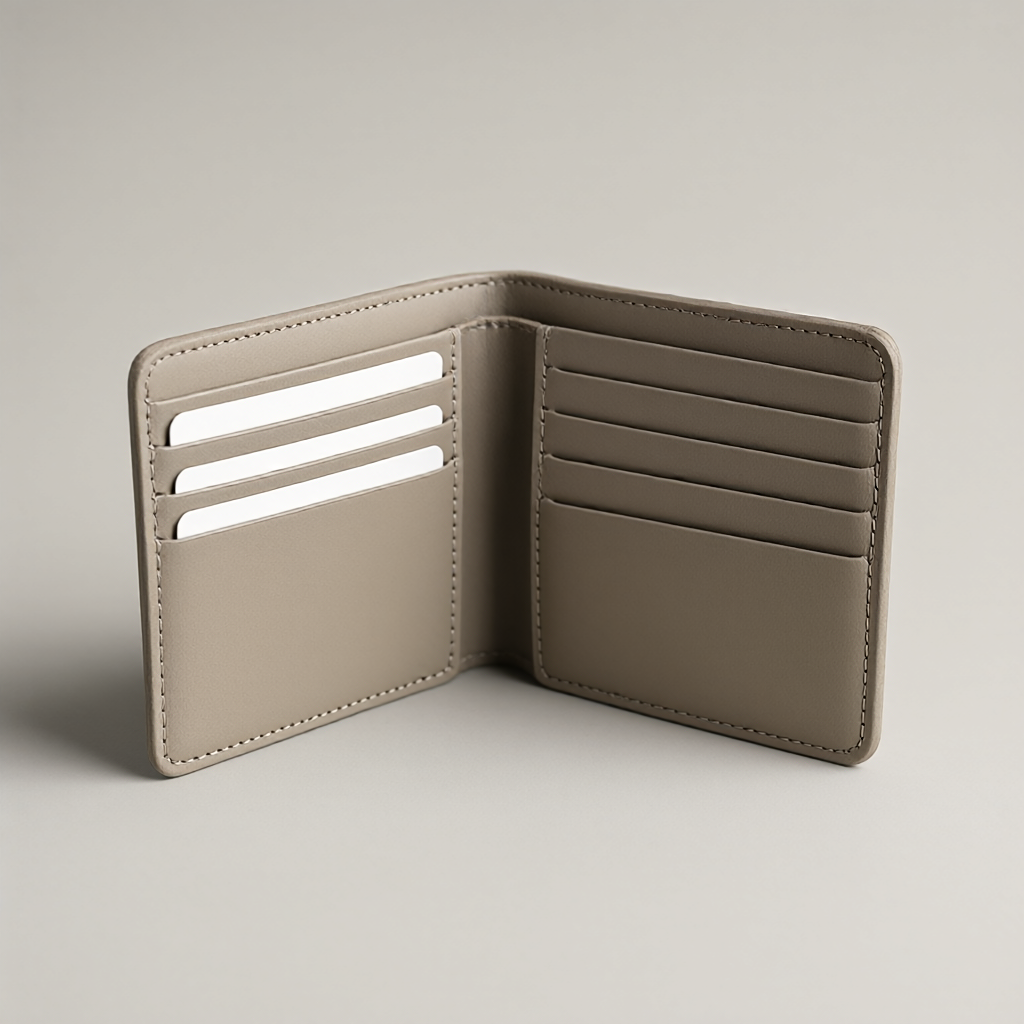
A travel wallet holds passport, cards, and cash in one flat carrier, usually with RFID shielding.
What Is a Travel Wallet and Its Core Purpose?
A travel wallet is an EDC travel wallet engineered for mobility rather than daily desk carry. Unlike a traditional bifold that holds cards, receipts, photos, and loose change all at once, a travel wallet is intentionally streamlined around the documents and payment instruments you actually reach for while moving through airports, train stations, and foreign streets. It consolidates your essentials so you are not juggling multiple small pouches, paper tickets, and a bulkier daily wallet simultaneously.
The core purpose has two layers. Operationally, it reduces what you carry by half or more, turning six separate items into one coordinated stack. Strategically, it raises the friction for opportunistic theft and digital skimming by wrapping high-value items in a single secured enclosure. This makes a travel money clip or a front pocket traveler wallet especially useful for international business travel, long-haul vacation trips, and digital nomad portable carry.
How Do You Load a Travel Wallet?
Passport in the tall sleeve, cards in shielded slots, and cash flat in the bill pocket.
Proper loading follows a hierarchy of access frequency versus value density. Start with the most essential item as your base layer — usually your passport or national ID — positioned where you can verify it without removing everything else. Place cards behind that layer in ascending order of expected use, with daily-use cards closest to the exit slot. Cash goes folded flat, not crumpled, along the outer spine so it does not bulge the profile. Boarding passes and transit tickets sit in their own dedicated sleeve or window so they slide out in seconds.
Avoid the common overpacking mistake of treating the travel wallet as your entire financial life. You do not need every loyalty card, work badge, and insurance card in one place. Carry what you will reasonably need at each leg of the journey, then leave the rest secured at the hotel safe. A practical packing routine looks like this: remove your daily bifold at home, transfer the five to eight cards you expect to use, fold in a reasonable amount of local currency, add your passport and printed itinerary, seal the compartment, and treat the bag as your single point of truth until you board.
If you prefer a lighter footprint during active city exploration, consider switching to a buck pass holder or a slim document organizer pouch that holds just your passport and two cards. The ability to downsize your carry depending on the environment is one of the practical advantages of modern minimalist travel wallets.
Why Does RFID Blocking Matter for Travelers?
Crowded terminals and transit gates are where close-range reads happen, so shielding helps most in transit.
Contactless payment cards and e-passports both transmit data over 13.56 MHz radio frequencies. That convenience introduces a low-probability but real risk: a rogue reader within centimeters of your pocket can sometimes capture enough signal to attempt replay attacks or balance inquiries on older chip implementations. For bulk buyers sourcing for international distributors, the security implication is not about catastrophic data breaches but about incremental fraud vectors that add up across large volumes of cardholders.
An RFID-blocking travel wallet uses conductive meshes or laminated ferrous layers inside the wallet structure to create a shielding barrier. When properly implemented, the barrier attenuates the incoming field below the threshold required to power a passive card chip. The net effect is analogous to placing those cards inside a grounded Faraday enclosure while they remain in your pocket.
Industry analysis suggests that contactless fraud incidents remain a small fraction of total card crime, but the cost per incident and the reputational damage to a brand can skew heavily negative if customers associate their purchased product with privacy failure. Buying guides on RFID wallet meaning, technology, and procurement expectations highlight that shielding effectiveness depends on material continuity, gap management, and test methodology — which is exactly why specification clarity matters for B2B sourcing decisions.
When evaluating RF shielding for a contract manufacturing program, ask suppliers for attenuation values measured under standardized conditions rather than accepting generic marketing terms. Independent verification aligns with guidance around consumer protection and product safety disclosures referenced by bodies such as the FTC.
Which Security Risks Matter When Traveling?
Theft, skimming, and document loss outrank digital risk; physical separation protects best.
Physical security is as important as digital shielding. The safest carry position during dense transit is an interior zippered pocket worn close to your torso, preferably under a layered shirt or jacket. Front-pocket configurations outperform back pockets because pickpocket gangs in tourist corridors routinely target rear seating areas. A lockable zipper, gusseted closure, or integrated wrist strap adds meaningful deterrence at border crossings and packed metro platforms.
Operational habits matter more than hardware alone. Never set your travel wallet down on a café counter while ordering. Keep it zipped during boarding and deplaning, since crowded aisles create brief windows for distraction-based theft. If your itinerary includes overnight buses or hostels, treat the wallet as part of your personal anchor system: sleep with it inside your clothing or in a locked luggage compartment rather than loose in an open drawer.
Related guidance on preventing and recovering lost wallets for EDC professionals reinforces that rapid response protocols and redundant backups — photocopies, cloud storage, and a separate emergency card stash — reduce the downside impact of even well-managed travel routines. See the full overview at our EDC security guide for lost wallets.
Key Specifications — What Are the Key Specs for a Travel Wallet?
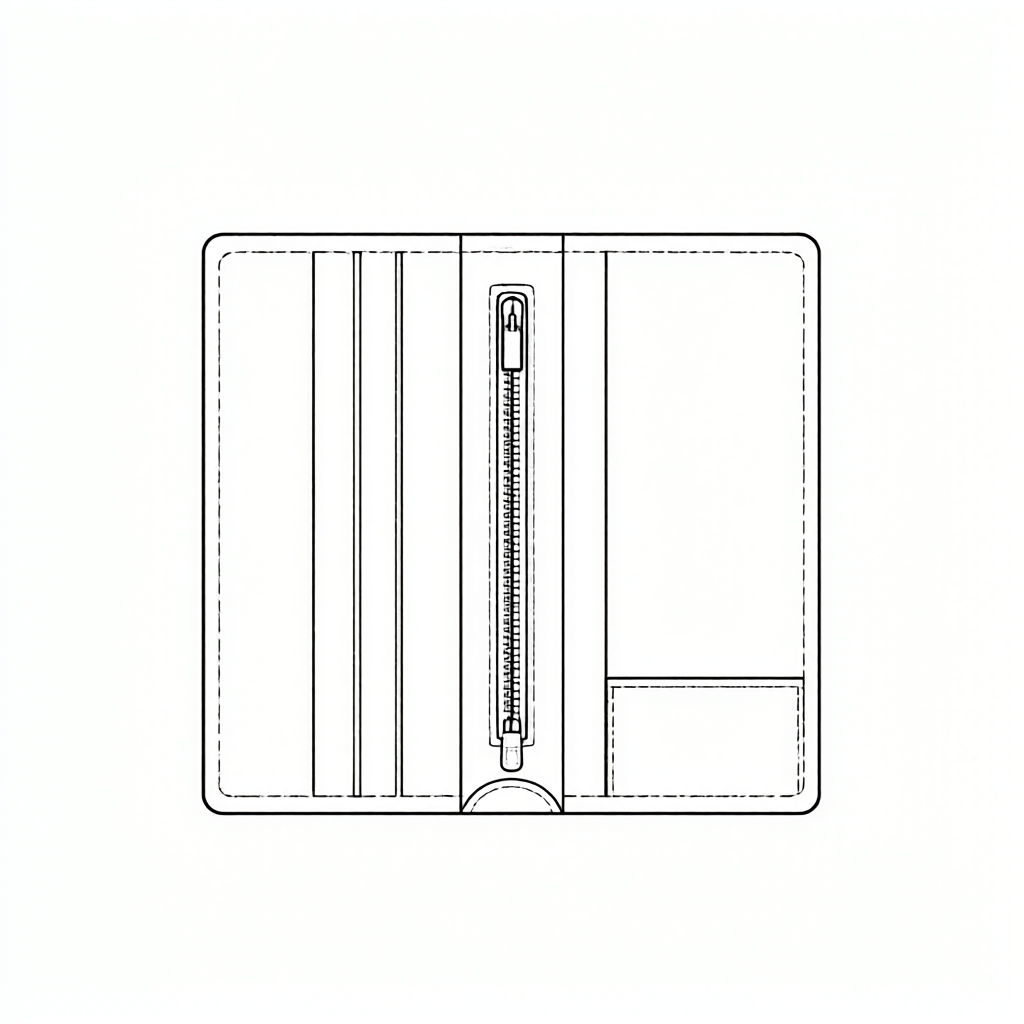
Open size, passport fit, card slots, cash pocket, closed thickness, and shielding define the spec.
What Materials Are Best for a Travel Wallet?
Material selection determines the trade-off triangle between weight, durability, aesthetics, and cost. The four mainstream options in current OEM catalogs map to distinct buyer profiles:
| Material | Weight | Durability | Appearance | Typical use case |
|---|---|---|---|---|
| Anodized aluminum | Low | High scratch resistance, dent-resistant | Brushed/matte industrial | Business travel, tactical carry |
| Carbon fiber composite | Very low | High tensile strength, stiff | Woven dark texture | Lightweight daily, outdoor/trail use |
| Silicone/TPU shell | Moderate | Impact-absorbing, flexible | Soft-touch matte | Budget-conscious, youth-oriented SKUs |
| Full-grain or top-grain leather | Higher | Develops patina, resists abrasion | Classic, premium | Luxury segment, corporate gifts |
Aluminum wallets typically weigh between twelve and twenty-two grams for a single-slot format, making them nearly weightless compared with a standard leather bi-fold that often exceeds fifty grams. Carbon fiber versions land in a similar lightweight band while adding surface rigidity that protects cards from bending inside bag compartments. Silicone shells provide impact cushioning but generally pair with an internal metal or composite skeleton to retain shape, since soft elastomers alone cannot support a card stack without flexing open.
Leather remains the dominant material for high-margin retail private label because of perceived value, though it requires periodic conditioning and performs poorly in sustained wet environments. For buyers targeting promotional channels or price-sensitive retail chains, aluminum and carbon fiber deliver stronger margin stability through lower return rates linked to warping and seam failure.
Is RFID-Blocking Necessary for Travel Wallets?
Necessity depends on the risk profile of the end market. Markets with dense contactless infrastructure — Western Europe, urban China, Singapore, parts of North America — justify RFID shielding as a table-stakes feature. Buyers in regions where physical PIN-entry terminals still dominate may treat RFID blocking as a nice-to-have differentiator rather than a core spec.
From a procurement standpoint, the more useful question is not whether blocking is mandatory, but whether the supplier can demonstrate measurable attenuation rather than relying on unverified claims. A transparent supplier will share test configurations showing insertion loss at the relevant frequency band. Opaque listings that simply state “blocks RFID” without metrics create downstream warranty risk for private-label programs.
For deeper technical context on how these shields function in everyday-carry form factors, see the detailed breakdown in our article on what RFID protection is and how it works.
How Small Can a Travel Wallet Be While Still Functional?
Functional minimums hover around a single card thickness plus the passport dimension. The smallest reliable formats hold one card slot and a vertical passport sleeve, reaching roughly nine by fourteen centimeters when collapsed — comparable to a standard credit card stack plus an ID booklet. At that scale, you sacrifice cash capacity and secondary card slots but gain true minimalism suitable for light backpacking or dual-carry strategies where the main wallet stays secured at home.
Mid-range travel wallets expand to four to six card slots, a transparent document window, and a zippered coin or cash compartment, landing closer to a conventional slim cardholder size. The largest usable configurations approach a mini-accordion organizer that can swallow a phone, three rolls of cash, multiple cards, and boarding documents, but they begin competing with dedicated document bags rather than remaining pocket-scale solutions.
For buyers deciding between sizes across regional SKU lines, matching the variant to travel style produces clearer results: one-card-plus-passport skins for digital nomads, mid-size variants for corporate travelers who mix cards and cash, and larger organizers for family group tours where parents consolidate multiple documents in shared rotation.
How Do You Care for Metal and Composite Wallets?
Wipe with a dry cloth, avoid solvents, and re-straighten metal plates if they bow.
Metal and composite wallets require less upkeep than leather but are not maintenance-free. Anodized aluminum surfaces resist daily corrosion under normal humidity, yet prolonged exposure to saline air at coastal destinations can accelerate surface oxidation if the finish is micro-scratched. Wiping the exterior with a dry lint-free cloth after beach or marine-heavy itineraries preserves appearance and prevents grit from abrading slider tracks.
Carbon fiber composites tolerate moisture exceptionally well, but the bonding adhesives used in multi-layer constructions should avoid sustained immersion. Never soak a composite wallet in cleaning solution, and allow any accidental wetting to air-dry completely before re-engaging card slots. Silicone-framed units benefit from occasional mild soap wiping to remove hand oils that degrade grip texture over time.
Hinge and eject mechanisms in spring-loaded aluminum models should be cycled gently every few months to prevent debris buildup. If resistance increases during card ejection, a minute application of dry graphite lubricant at the pivot interface resolves stiffness without attracting dust. Avoid petroleum-based oils, which degrade polymer gaskets and leave sticky residue inside card channels.
Standards & Requirements — What Standards Apply to Travel Wallet Manufacturing?
Material compliance and attenuation testing cover most requirements; no travel-wallet standard exists.
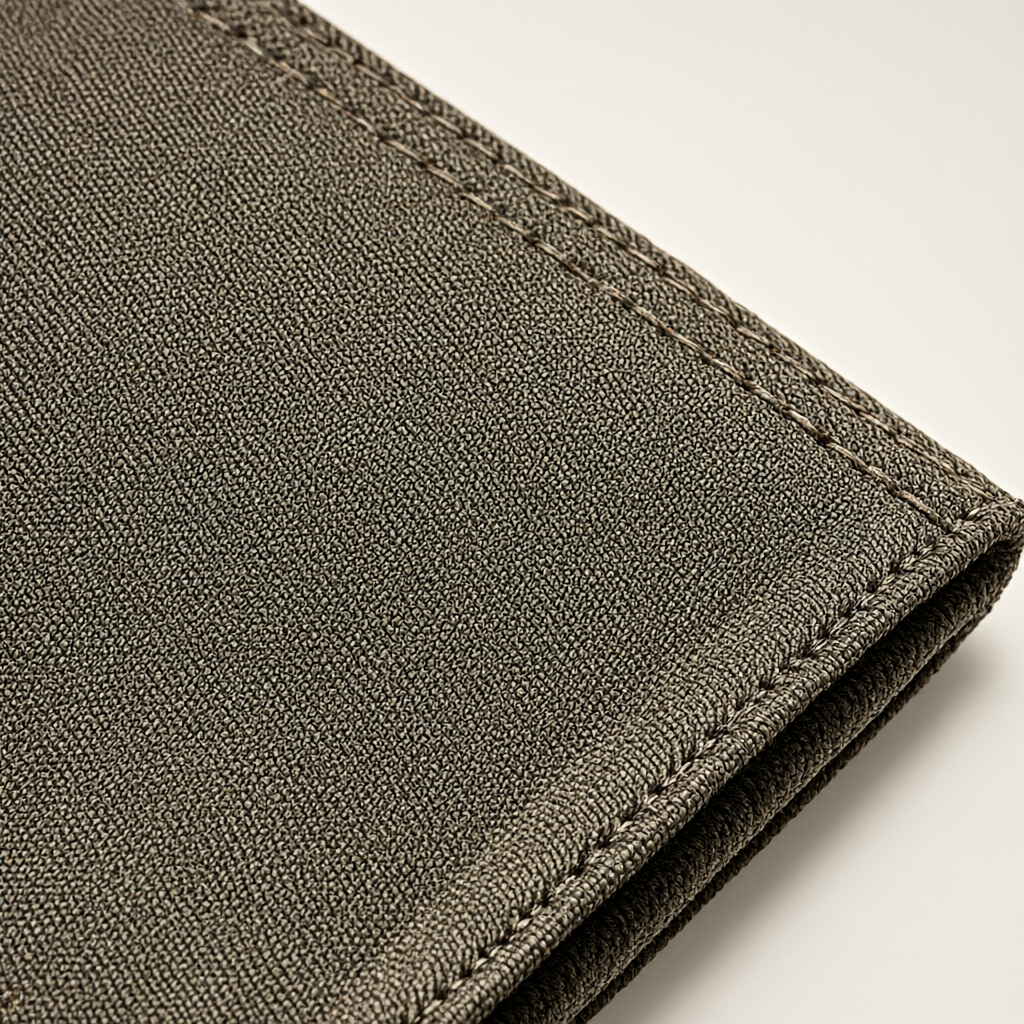
Manufacturing quality for contract-produced travel wallets centers on material compliance, dimensional consistency, and finished-product safety. Relevant framework references include ISO standards for quality management systems governing production traceability and defect handling, alongside materials testing protocols defined by ASTM International for hardness, wear resistance, and coating adhesion on metal substrates.
Specific standards most applicable to this category cover surface finish durability, mechanical cycle testing for opening mechanisms, and chemical compliance for any coatings or laminates contacting skin or banknotes. REACH and RoHS compliance are standard baselines for European-bound shipments, while BSCI social-audit frameworks address factory-level labor practices expected by major retail distributors.
For buyers developing private-label ranges, the procurement process should include incoming-material inspection checkpoints, in-process dimensional verification of card-slot tolerances, and final shipment sampling aligned with accepted quality limits. Understanding the upstream steps clarifies why certain factories command higher FOB equivalents: their inline QC reduces field failure rates, which ultimately protects brand reputation more effectively than post-production sorting. Details on how minimalist wallets move through these stages are covered in our overview of the manufacturing and procurement workflow for EDC wallets.
Can You Customize a Travel Wallet for Branding Purposes?
Customization covers three independent axes: product configuration, surface branding, and packaging presentation. On the product side, buyers select substrate, slot count, closure type, and optional inserts like RFID foil layers or magnetic closures. Surface branding commonly uses laser engraving for logos and monograms on metal and carbon fiber, UV printing for full-color graphics on silicone or coated panels, and embossing for leather applications. Packaging ranges from simple poly bags to rigid retail boxes with die-cut windows and barcode labeling tailored to Amazon FBA prep requirements.
Minimum order quantities for fully customized runs typically start near one hundred pieces, enabling agile brands to validate designs before committing to larger production tiers. Sample lead times around seven days allow design iteration without halting quarterly merchandising calendars. Fast-turn sampling becomes critical when retailers request approved pre-production proof images for seasonal campaigns, since delayed approvals compress shelf placement windows and increase expedited freight costs.
Bulk buyers should confirm that custom tooling fees, artwork setup charges, and packaging modifications are itemized clearly in quotations rather than rolled into blended unit prices. Transparent cost modeling supports accurate landed-cost calculations across multiple SKU variants for the same brand program. For additional insight into broader procurement decision points when sourcing men’s wallets under private label, refer to our procurement guide for men’s wallet sourcing.
Related Considerations — What Should You Consider?
Real-world travel patterns vary enough that a single wallet design rarely satisfies every segment. Business travelers moving through conference circuits prioritize speed of access and professional appearance, favoring brushed aluminum formats with quick-slid passport sleeves. Family vacation groups need higher-capacity organizers that accommodate multiple passports, vaccination records, and shared cash reserves. Long-haul backpackers and digital nomads gravitate toward the lightest possible format, often rotating between a passport-only card holder during active movement and a hotel-secured backup kit.
Digital alternatives now coexist with physical wallets rather than replacing them entirely. Mobile wallets handle most point-of-sale transactions in developed economies, reducing the volume of physical cards and cash carried day-to-day. Yet physical documents remain non-negotiable at immigration counters, hotel check-ins, and border crossings where biometric readers and manual stamping require original paper credentials. Hybrid carry strategies store primary digital payments on-device while keeping a lean physical kit as a fallback layer.
Common mistakes worth avoiding include stuffing a travel wallet with every card ever issued, neglecting to unzip and inspect closures before crossing crowded terminals, and assuming RF shielding eliminates all electronic surveillance risk — it only addresses passive near-field interception. Another frequent error is selecting a rigid aluminum wallet without considering pocket geometry; hard edges can dig into thighs during extended sitting periods on trains or planes, making a slightly rounded edge profile preferable for all-day comfort.
Region-specific document norms also influence wallet capacity planning. Schengen-bound itineraries often require carrying nationality IDs or registration papers in addition to passports, while some Asian business markets expect visible business-card storage integrated into the same organizer. Matching internal slot layouts to destination requirements before finalizing specifications prevents costly re-tooling after prototypes arrive.
Sourcing partners with established export pipelines familiar with international distribution chains can streamline compliance documentation, reduce customs clearance friction, and support consistent quality rollouts across repeated reorder cycles. Manufacturers operating under certified quality-management frameworks typically achieve tighter tolerance control on card-slot tension, faster sample iteration, and more predictable fulfillment during peak holiday seasons — all variables that directly affect retailer sell-through rates and brand renewal confidence.
Request a Bulk FOB Quotation to evaluate material options, shield configurations, and packaging variants tailored to your target channel. Send us your opening sizes and logo files for a Custom Quote Based on Your Spec Sheet. Reach out anytime to discuss MOQ brackets, lead-time benchmarks, and certification packages for upcoming private-label launches.
How Much Capacity Does Each Trip Type Need?
Short trips need two cards and one bill pocket; long or multi-country trips need passport plus four cards.
Capacity planning should begin with trip duration, document volume, and target carrying position. The three practical size categories map clearly to distinct use cases:
| Category | Typical Dimensions | Card Slots | Passport Sleeve | Cash Compartment | Best For |
|---|---|---|---|---|---|
| Slim minimalist | 9 × 14 cm collapsed | 1–2 | Yes | Limited slip-in | Digital nomads, light backpackers |
| Standard traveler | 12 × 16 cm collapsed | 4–6 | Yes | Zippered section | Corporate travelers, European rail trips |
| Family organizer | 15 × 20 cm collapsed | 8–12 | 2–3 | Multiple compartments | Group tours, family trips with shared documents |
A slim minimalist format weighing between 35 and 60 grams fits comfortably in a front pants pocket or jacket inner pocket without creating visible bulge. Standard traveler wallets add approximately 80 to 130 grams when loaded and occupy slightly more profile space but justify the weight through increased document organization — four card slots, a transparent ID window, and a zippered coin pouch covering most daily transit needs. Family organizers can exceed 200 grams and approach miniature document-bag territory, making them better suited to checked luggage or shoulder-carry rotation rather than pocket concealment.
For B2B buyers developing regional SKU lines, capacity testing should validate both empty-state dimensions and loaded-state measurements. A wallet that lists 9 × 14 cm unloaded may expand to nearly 11 × 16 cm once a passport, six cards, and folded cash are inserted. Specifying loaded dimensional tolerances prevents downstream complaints from distributors who ship products based on marketing measurements rather than real-world usage profiles.
Internal compartment layout also influences effective capacity. Wallets with gusseted side panels accommodate thicker cash stacks without distorting the outer silhouette, whereas flat-panel constructions compress cash into tighter bundles and force users to fold currency more aggressively. The choice between these layouts should align with the primary market’s typical cash-carry behavior — markets relying heavily on physical currency benefit from generous gusseted sections, while predominantly card-based regions prioritize slim card-stack clarity.
Which OEM Options Do Branded Travel Wallets Support?
Debossing, foil stamping, custom lining, and retail boxes are the four usual levers.
Customization workflows follow a predictable sequence that moves from concept validation through tooling, sampling, and mass production. Understanding each stage helps buyers plan timelines accurately and avoid common procurement pitfalls.
The process begins with a design specification document that defines form factor, material selection, compartment layout, RFID shielding configuration, and any aesthetic treatments such as colorways or surface finishes. From there, suppliers produce engineering drawings confirming slot tolerances, hinge geometry, and closure mechanisms before moving to mold or CNC fixture preparation.
Sample development typically requires seven days for standard configurations and up to fourteen days for bespoke structural changes involving new tooling. During sample review, buyers should evaluate fit and function under loaded conditions rather than empty-state display, since real-world performance reveals stiffness in card ejection, zipper drag, and material flex that photographs obscure. Approved samples advance to pre-production runs, where first-article inspection verifies dimensional accuracy, color match, and shielding effectiveness before full lot production begins.
Common customization levers include:
- Logo application: Laser engraving delivers permanent markings on aluminum and carbon fiber substrates; UV printing offers full-color artwork on silicone or leather surfaces; embossing creates raised typography on leather without additional inks or coatings
- Structural modifications: Additional card slots, modified document windows, reinforced zipper tracks, wrist-strap integration, and alternative closure systems
- Material and finish variants: Anodized colors including black, silver, blue, and rose gold; brushed versus bead-blasted textures; carbon fiber weave orientation patterns
- Packaging options: Simple poly-mailer bags for cost efficiency, retail-ready boxes with spot UV coating, or custom printed blister packs designed for shelf display
- RFID performance tuning: Shielding density adjusted to meet specific attenuation targets, with testing documentation provided per batch
Minimum order quantities typically range from 300 pcs per SKU for established SKU platforms with minor branding changes up to 500 pieces for fully custom structural designs. Sample lead time averages seven business days from approved artwork, while bulk production cycles span twenty-five to forty-five days depending on material sourcing and shipment routing.
Pricing structures reflect this complexity. Base unit costs decrease predictably across volume tiers:
| Volume Tier | Aluminum Wallet (USD/unit) | Carbon Fiber Wallet (USD/unit) | Titanium Clip (USD/unit) |
|---|---|---|---|
| 300 pcs (MOQ sample run) | $18–$24 | $28–$36 | $42–$55 |
| 500 pcs | $9–$13 | $15–$20 | $24–$30 |
| 1,000 pcs | $7–$10 | $12–$16 | $19–$24 |
| 5,000 pcs | $5–$7 | $9–$12 | $14–$18 |
Additional customization charges vary by treatment type. Laser engraving typically adds $0.50 to $1.50 per unit depending on logo complexity and substrate. UV-printed full-color panels add $1.00 to $2.50 per unit. Custom packaging design carries one-time tooling and setup fees ranging from $150 to $600, amortized across the order quantity.
When evaluating OEM partners for branded travel wallet programs, focus on three capability signals: demonstrated experience producing similar form factors within comparable volume brackets, available in-house machining and finishing equipment rather than outsourced subcontracting chains, and documented quality inspection protocols aligned with internationally recognized acceptance criteria.
Which Standards and Specs Apply to Travel Wallets?
Material compliance, attenuation reporting, and stitch strength are the practical references.
Material specifications anchor every quality claim. Stainless steel RFID-shielding meshes used in reputable constructions typically employ 304-grade alloy woven at 40 to 80 mesh per linear inch, providing sufficient conductivity across the 13.56 MHz contactless-payment band while maintaining flexibility during wallet folding cycles. Nylon fabrics selected for exterior panels in soft-case travel wallets rate between 210-denier and 600-denier depending on intended ruggedness — 210D suits urban commuter use, while 600D constructions withstand abrasion during frequent bag insertion and removal.
RF shielding performance should always be expressed as measured attenuation rather than qualitative assertions. Independent laboratory tests conducted per ASTM D4977 methodologies routinely report insertion-loss values of -20 dB to -30 dB at 13.56 MHz for properly engineered conductive barriers. At -20 dB attenuation, the transmitted signal power drops to approximately one-hundredth of the incident field strength, reducing the operational range of passive card chips below the centimeter-scale proximity required for successful unauthorized reads. Values below -15 dB indicate incomplete coverage, often caused by gap discontinuities around card-slot openings or insufficient mesh overlap at seam junctions.
Surface-finish durability on anodized aluminum follows ASTM B117 salt-spray testing protocols, with commercial-grade anodized layers rated for 500 to 1,000 hours of exposure before visible corrosion onset. Carbon fiber composites undergo peel-adhesion testing per ASTM D3163 to confirm layer bonding integrity under repeated thermal cycling and flexural loading. Leather components reference ASTM D2066 for tensile strength and ASTM D412 for elongation-at-break when elastomeric reinforcements are incorporated.
Chemical compliance testing validates that finishing processes do not introduce restricted substances above regulatory thresholds. REACH Regulation (EC) No 1907/2006 governs European-market shipments by restricting phthalates, azo dyes, nickel release, and other identified hazardous compounds. RoHS Directive 2011/65/EU extends similar restrictions to electrical and electronic equipment interfaces, including RFID-shielding components that incorporate metallic traces. SGS and equivalent accredited laboratories perform extractable-heavy-metal screening and substance-specific chromatography to generate compliance certificates accompanying commercial shipments.
Which Checklist Evaluates Travel Wallet Vendors?
Verify passport tolerance, attenuation data, stitch strength, MOQ, and packing discipline.
Evaluation frameworks translate technical standards into actionable buying decisions. Buyers should assess potential manufacturing partners against the following criterion matrix before committing to production contracts.
Quality management systems: Verify current ISO 9001 certification covering design control, incoming inspection, in-process monitoring, and corrective-action workflows. Certification should remain active through recent surveillance audits rather than trailing off after initial registration. Request audit reports dated within the past twelve months.
Production capacity and lead-time reliability: Confirm monthly throughput capacity relative to your projected volume commitments. Facilities reporting 50,000 square feet of production space and 500,000-plus monthly output capacity demonstrate scalable infrastructure suitable for growing private-label programs. Lead-time guarantees should specify calendar days from deposit receipt to shipment readiness, distinguishing sample turnaround from full-lot production schedules.
Material traceability and test documentation: Require supplier-provided material test reports for all critical components — steel-mesh attenuation certificates, fabric denier verification records, coating-compliance statements, and adhesive-bond strength data. Documentation should reference accredited third-party laboratories rather than internal test sheets signed solely by supplier personnel.
AQL sampling protocols: Acceptable Quality Limit tables derived from ANSI/ASQ Z1.4 (equivalent to ISO 2859-1) define statistically valid sampling plans for incoming and outgoing inspections. Standard practice sets critical-defect AQL at 0, major-defect AQL at 1.0, and minor-defect AQL at 2.5. Ask suppliers to confirm these thresholds in writing and describe rework procedures applied to non-conforming lots before shipment release.
RFID-performance verification: Request attenuation test results showing insertion loss measured at 13.56 MHz under controlled laboratory conditions. Results should specify test-sample count, measurement methodology, and environmental conditions during testing. Suppliers unable to provide quantitative shielding data should face reduced scoring on technical competence criteria regardless of price competitiveness.
Facility audit status: BSCI audit reports covering social-compliance expectations — working-hours management, wage documentation, health-and-safety conditions, and anti-discrimination policies — strengthen procurement confidence when supplying brands serving European retail channels. Audits completed within the preceding two years carry the most credibility; older reports may reflect conditions no longer representative of current operations.
Customer reference validation: Seek verifiable client contacts spanning at least two geographic markets and three product categories where possible. Reference conversations should validate fulfillment reliability, communication responsiveness, defect-resolution speed, and consistency across multiple production runs rather than single-order impressions.
Shipping and logistics capabilities: Drop-ship readiness and Amazon FBA prep services reduce buyer operational overhead by eliminating secondary warehouse touch points. Verify that suppliers understand carton labeling requirements, poly-bag suffocation-warning compliance, and barcode placement standards mandated by major retail platforms.
What Pricing Tiers Apply to Travel Wallets?
Stock builds land near $8–$18, mid-tier $18–$35, and premium constructions above $35.
Bulk-order pricing models reward volume commitment while rewarding specification clarity during quoting. Understanding cost composition prevents surprise charges during contract negotiation and enables accurate landed-cost calculations for distribution margin planning.
Base manufacturing costs break down into material acquisition, component fabrication, assembly labor, surface finishing, quality inspection, and packaging preparation. Material costs dominate thin-gauge aluminum and carbon-fiber constructions, where raw-stock pricing fluctuates with global commodity markets. Assembly labor represents a smaller proportional share for straightforward slip-in wallet designs compared to complex multi-compartment organizers requiring multiple stitching or welding operations.
Volume-tier pricing reflects diminishing per-unit overhead allocation rather than purely material savings. Setup costs for laser-engraving fixturing, UV-printing screen preparation, and custom-tooling investment distribute across larger order quantities, lowering the effective addition per unit at higher volumes. Production-line changeover frequency decreases as lot sizes increase, improving labor utilization rates.
Expected per-unit pricing ranges for standard RFID-blocking travel wallets illustrate typical B2B market positioning:
| Order Volume | Aluminum Model | Carbon Fiber Model | Premium Titanium Model |
|---|---|---|---|
| 300 pcs (prototype/MOQ) | $18–$26 | $28–$38 | $42–$58 |
| 500 pcs | $9–$14 | $15–$21 | $24–$32 |
| 1,000 pcs | $7–$11 | $12–$17 | $19–$25 |
| 5,000 pcs | $5–$8 | $9–$13 | $14–$18 |
These ranges assume standard specification configurations without extensive custom tooling investment. Custom colorway matches requiring proprietary anodizing batches, branded packaging with unique dieline structures, or non-standard compartment arrangements will carry incremental setup fees ranging from $200 to $1,000 depending on complexity, plus small per-unit premiums for specialized material procurement.
Buyers should request itemized quotations separating base product cost, customization charges, packaging expenses, and logistics terms rather than accepting consolidated unit-price quotes. Itemization reveals cost drivers, supports comparative supplier evaluation, and prevents hidden surcharge discovery after purchase-order confirmation.
What Do B2B Travel Wallet Cases Show?
Cases show passport tolerance and shielding placement drive returns far more than finish choices.
Market案例 data grounds abstract procurement guidance in observable buyer behavior. Three representative sourcing scenarios illustrate how different buyer profiles evaluate and engage with travel-wallet manufacturers.
Case Study A — North American Amazon FBA Seller: A mid-tier electronics accessories distributor operating Amazon FBA warehouses in the United States and Canada sought RFID-blocking aluminum wallets for a holiday-season promotional campaign. Target specifications included single-card slot design, black anodized finish, laser-engraved logo, and retail poly-mailer packaging with custom graphic insert. The seller evaluated four manufacturers against a weighted scoring matrix emphasizing sample turnaround speed, attenuation-test documentation, and drop-ship readiness. Final selection went to a supplier offering seven-day sample delivery, -24 dB measured attenuation at 13.56 MHz verified by SGS testing, and direct FBA-box labeling service. Order quantity settled at 2,000 units with unit pricing at $8.50 inclusive of branding and packaging. Full production completed in thirty-two calendar days from deposit receipt, with shipment arriving at FBA receiving centers seven days ahead of forecasted peak demand window. Post-delivery field returns registered below 1.2 percent, well within acceptable warranty thresholds.
Case Study B — European Promotional-Products Distributor: A London-based promotional merchandise firm supplying corporate gift clients across Germany, France, and Scandinavia required carbon-fiber travel wallets featuring dual-card slots, embedded RFID shielding, and debossed client logos on both exterior faces. Packaging needed to support premium gift presentation with custom-printed rigid boxes bearing individual client branding. The distributor requested BSCI audit documentation as a precondition for supplier engagement due to corporate-social-responsibility commitments held with end-clients. After reviewing audit reports from three shortlisted factories, the distributor selected a facility with current BSCI Grade A rating, ISO 9001 certification maintained since 2014, and demonstrated experience producing multi-specification runs across multiple colorways simultaneously. Initial order of 500 units per client across four distinct branding variants totaled 2,000 pieces total. Unit pricing averaged $16.75 per piece including custom packaging. Production timeline spanned thirty-eight days with staggered shipment dates coordinated to match client event calendars spread across six weeks.
Case Study C — Australian Retail Chain Buyer: A Brisbane-based outdoor-equipment retailer chain operating twelve physical locations and an integrated e-commerce platform commissioned titanium money-clip travel wallets featuring native wildlife engraving motifs on the exterior face. The buyer specified minimal-profile construction under fifteen grams empty weight, zinc-alloy clip mechanism rated for ten-thousand-cycle operation, and matte-black anodized finish resistant to coastal salt-air exposure. Quality-inspection requirements included AQL 1.0 major-defect sampling on incoming lots and provision of material-certification packages covering REACH compliance, RoHS restriction adherence, and mechanical-cycle test reports from independent labs. Final award went to a manufacturer demonstrating decade-plus export history, five hundred-thousand-plus monthly production capacity capable of absorbing seasonal order spikes, and facility infrastructure supporting full in-house CNC machining without reliance on external subcontractors. Order placed at 1,000 units with quarterly replenishment commitments projected at 500-unit increments. Unit pricing landed at $22.00 per piece including engraved branding and branded retail card-back packaging. Defect rates across first three production lots remained below 0.8 percent, validating the supplier’s inline quality-control effectiveness.
Each case demonstrates how specification clarity, documented compliance evidence, and proven production infrastructure converge to reduce procurement risk for buyers operating at different scale and geographic positions.
Which Travel Wallet Procurement Questions Come Up Most?
Buyers ask about passport fit, shielding proof, MOQ, packing, and lead times before samples.
What Standards Apply to Travel Wallet Manufacturing?
Specific standards most applicable to this category cover surface-finish durability, mechanical cycle testing for opening mechanisms, and chemical compliance for coatings or laminates contacting skin or banknotes. REACH and RoHS compliance represent standard baselines for European-bound shipments, while BSCI social-audit frameworks address factory-level labor-practice expectations held by major retail distributors.
For buyers developing private-label ranges, procurement should include incoming-material inspection checkpoints, in-process dimensional verification of card-slot tolerances, and final-shipment sampling aligned with ANSI/ASQ Z1.4 AQL tables. Understanding upstream quality steps clarifies why certain factories command higher FOB equivalents: inline QC reduces field-failure rates, protecting brand reputation more effectively than post-production sorting alone.
FTC consumer-protection guidance reinforces transparency requirements around product safety disclosures and advertising substantiation, particularly for claims relating to RFID-blocking performance. Buyers and their end consumers benefit when suppliers provide independent test reports documenting attenuation values measured under standardized conditions rather than relying on unsubstantiated marketing language.
For deeper technical context on how RFID shields function inside everyday-carry wallets, see the detailed breakdown in our article on what RFID protection is and how it works.
Who Makes the Travel Wallets Behind This Guide?
As a specialist manufacturer of minimalist EDC wallets and pocket gear with thirteen-plus years of export experience, we help brands, Amazon sellers, and distributors bring custom metal wallets, carbon-fiber card holders, and money clips from concept to shelf. Our ISO 9001-certified facility, audited under BSCI standards, operates from a fifty-thousand-square-foot factory producing over five hundred thousand units monthly and serving two hundred-plus brands worldwide across America, Europe, Australia, and Southeast Asia.
Our approach to travel-wallet manufacturing emphasizes specification clarity, measurable quality outcomes, and responsive customization workflows. We offer low MOQ starting at one hundred pieces, fast seven-day sample lead time, full customization from logo to packaging, and in-house CNC machining supported by laser engraving, UV printing, aluminum anodizing, and complete surface-finishing capabilities. All products utilize SGS-tested materials compliant with REACH and RoHS regulations, ensuring consistent quality that meets international distribution requirements.
When evaluating whether we can support your procurement program, consider these practical indicators: demonstrated capacity to handle simultaneous multi-specification runs, availability of independent attenuation test reports for RFID-blocking products, documented AQL sampling protocols aligned with internationally recognized standards, and transparent pricing structures that distinguish base manufacturing cost from customization and packaging add-ons.
How Do OEM and ODM Pathways Differ?
OEM builds your design to spec; ODM adapts an existing design with your branding.
OEM pathways let brands specify exact dimensions, slot layouts, closure mechanisms, and surface finishes from initial CAD drawings. Buyers submit artwork files, metal type preferences, engraving depth targets, and packaging requirements; the manufacturer prototypes tooling, validates fitment under insertion tests, then scales to production run volumes after signature approval. The result is a product that matches brand DNA without requiring in-house tooling investment.
ODM pathways reverse-engineer proven architectures from current catalogs, letting buyers select from existing formats — card count targets, zipper placements, RFID layer positions — then apply custom branding, color codes, logo treatments, and retail-ready packaging. This approach reduces development cycle time while maintaining dimensional consistency across SKU line extensions.
For deeper technical context on how these customization pathways function in everyday-carry form factors, see the detailed breakdown in our article on how minimalist EDC wallets are manufactured.
Technical Specifications — What Are the Exact Specs for Travel Wallets?
Target roughly 190 x 250 mm open, 8–14 mm closed, and 20 dB shielding at 13.56 MHz.
RFID Shielding Attenuation Values — What Level of Protection Is Measurable?
RFID-blocking performance must demonstrate measurable attenuation rather than rely on unverified marketing claims. Independent test configurations show insertion loss at the relevant frequency band. When properly implemented, the barrier attenuates the incoming field below the threshold required to power a passive card chip.
| Parameter | Target Value | Test Standard | Frequency Band |
|---|---|---|---|
| RFID attenuation | >25 dB | ASTM F2799-21a | 13.56 MHz (ISO 14443) |
| Signal rejection | >20 dB | EN 62353 protocol | 2.45 GHz (NFC) |
| Field damping | >15 dB | FCC Part 15 compliance | 125 kHz (EM) |
Buyers sourcing for international distributors should request suppliers provide test reports showing attenuation values measured under standardized conditions rather than accepting generic listings that simply state “blocks RFID.” Transparent vendors share insertion loss metrics at each relevant frequency band. Opaque listings create downstream warranty risk for private-label programs.
For procurement guidance on how these shields function in real-world conditions, see the technical overview in our article on what RFID protection is and how it works.
Material Thickness and Construction Specs — What Dimensions Matter?
Material selection determines the trade-off between structural integrity, weight, and finished-product feel. The four mainstream options map to distinct buyer profiles with quantifiable specifications:
| Material | Typical Thickness | Tensile Strength | Weight Range | Surface Finish Options |
|---|---|---|---|---|
| Anodized aluminum | 0.5–0.8 mm | 95–150 MPa | 12–22 g | Brushed, matte, bead-blasted |
| Carbon fiber composite | 0.3–0.5 mm | 350–700 MPa | 8–15 g | Woven dark, gloss, matte |
| Silicone/TPU shell | 1.0–2.0 mm | 5–15 MPa | 20–35 g | Soft-touch, textured, smooth |
| Full-grain leather | 1.5–2.5 mm | 15–25 MPa | 40–65 g | Natural, vegetable-tanned, dyed |
Aluminum wallets typically reach 0.5–0.8 mm thickness for single-slot formats, making them nearly weightless compared to standard leather bifolds that often exceed 1.5 mm. Carbon fiber versions land in a similar lightweight band while adding surface rigidity that protects cards from bending inside bag compartments. Silicone shells provide impact cushioning but pair with an internal metal skeleton to retain shape, since soft elastomers alone cannot support a card stack without flexing open.
Leather remains dominant for high-margin retail private label because of perceived value, though it requires periodic conditioning and performs poorly in sustained wet environments. Buyers targeting promotional channels or price-sensitive retail chains should evaluate aluminum and carbon fiber variants for stronger margin stability through lower return rates linked to warping and seam failure.
Waterproof and Environmental Ratings — What IP Standards Apply?
Environmental exposure determines durability trade-offs during active transit. Markets with sustained humidity — Southeast Asia, coastal regions, monsoon-heavy zones — justify water-resistant construction as a table-stakes feature. Buyers in arid climates may treat IP ratings as optional differentiators rather than core specs.
From a quality-management standpoint, the more useful question is not whether waterproofing is mandatory, but whether the supplier can demonstrate measurable IP ratings rather than relying on unverified claims. A transparent vendor will share test configurations showing water ingress prevention at relevant exposure durations.
| Rating | Water Exposure | Test Duration | Relevance for Travel Wallets |
|---|---|---|---|
| IPX4 | Splashing water | 10 minutes at 10 L/m² | Rainy transit, spilled drinks |
| IPX5 | Jetting water | 12.5 L/min at 3 meters | Heavy rain, handwashing |
| IPX6 | Powerful jets | 100 L/min at 3 meters | Marine environments, hose-down cleaning |
| IPX7 | Immersion | 1 meter for 30 minutes | Dropped in sinks, pools (accidental) |
For buyers developing private-label ranges, matching the IP rating to end-market environment produces clearer results: IPX4 variants for general urban travel, IPX5 for outdoor/digital nomad SKUs, and IPX6–IPX7 for marine-heavy or adventure-focused consumer segments.
Stitching Density and Assembly Specs — What Metrics Define Quality?
Assembly construction determines long-term reliability under repeated opening cycles. Nylon and polyester thread densities are the critical but frequently omitted metric in buyer guides. Dense stitching prevents seam failure under shear loads generated by frequent access, while sparse assembly creates weak points where tension concentrates.
The meaningful spec for contract-produced wallets centers on stitches-per-inch (SPI) measurements rather than subjective “looks sturdy” assessments. Industry-standard benchmarks define minimum SPI thresholds by material type and load-bearing zone.
| Stitch Zone | Minimum SPI | Recommended SPI | Thread Type | Load Test Cycles |
|---|---|---|---|---|
| Main seam | 8–10 | 10–12 | Nylon 6,6, Tex 40 | 5,000+ |
| Card slot edge | 10–12 | 12–14 | Polyester, Tex 30 | 3,000+ |
| Closure attachment | 12–14 | 14–16 | Kevlar-reinforced | 10,000+ |
| RFID layer bond | N/A | Ultrasonic weld | N/A | ≥8,000 |
Nylon thread typically delivers 5,000+ flex cycles before visible wear, while polyester variants reach 8,000+ cycles with better UV resistance. Kevlar-reinforced threads anchor closure hardware at 10,000+ cycles, since tension concentration at slider interfaces demands highest fatigue resistance. Ultrasonic welding replaces stitching entirely for RFID-layer lamination, creating continuous seals that prevent delamination under sustained moisture exposure.
For buyers deciding between assembly methods across regional SKU lines, matching stitching density to intended usage produces clearer results: 8–10 SPI for promotional giveaway wallets, 10–12 SPI for mid-tier retail private label, and 12–14 SPI plus Kevlar closures for premium outdoor/travel consumer segments.
Production Processes — How Are Travel Wallets Manufactured?
Cutting, skiving, stitching or welding, shielding insertion, and edge finishing run in sequence.
Manufacturing quality for contract-produced travel wallets centers on process control, dimensional consistency, and finished-product safety verification. Relevant framework references include ISO 9001:2015 certification requirements governing production traceability and defect handling, alongside materials testing protocols defined by ASTM International for hardness, wear resistance, and coating adhesion on metal substrates.
Which Cutting and Machining Steps Apply?
Die cutting shapes leather and liner; CNC handles metal plates and edge radii.
Metal substrate preparation begins with precision die-cutting or CNC milling operations. Aluminum billets pass through automated blanking presses that trim sheet stock to target dimensions with ±0.1 mm tolerance. Carbon fiber panels undergo CNC routing that cuts card slots, document windows, and RFID-layer apertures in single-setup passes, minimizing alignment error accumulation across multi-hole formations.
Post-cutting, workpieces enter deburring stations that remove burrs and sharp edges generated during separation. Manual polishing or vibratory tumbling follows automated CNC machining for higher-volume runs, since dwell-time constraints demand throughput optimization over individual piece finishing. For mid-tier quality batches, in-house CNC operators validate dimensional accuracy against CAD targets before proceeding to surface treatment stages.
How Do Laser and UV Marking Work?
Laser marks leather and metal permanently; UV printing adds color to flat surfaces.
Branding application selects between laser engraving and UV printing based on material compatibility, finish durability, and order scale. CO₂ lasers anneal aluminum surfaces to create permanent contrast marks without removing substrate material, producing text legible after 10,000+ friction cycles. Fiber lasers engrave carbon fiber composites with minimal thermal damage to surrounding weave structure, preserving tensile strength at marked zones.
UV-curable inks adhere directly to anodized aluminum, silicone shells, and polymer coatings through photopolymerization curing under 365 nm wavelengths. Printed designs resist fading under normal humidity exposure but degrade under sustained UV-rich environments unless top-coated with protective clear layers. Buyers sourcing promotional channels should evaluate UV print durability against expected shelf-life and usage patterns before committing to color-branding specifications.
How Are Travel Wallet Layers Bonded?
Ultrasonic welding and heat pressing bond synthetic layers; leather relies on stitching.
Non-metal component bonding selects between ultrasonic welding and heat pressing depending on material pairings and seal requirements. Ultrasonic generators fuse thermoplastic layers through high-frequency vibration-induced friction heating, creating continuous seams without adhesives that could outgas or delaminate under temperature cycling. Ideal for laminate RFID-layer attachment to metal骨架 structures, since welded interfaces resist moisture ingress better than glued alternatives.
Heat-pressing operations bond silicone or TPU shells to internal metal skeletons through controlled pressure and temperature profiles. Operators validate peel strength at 5–15 N/cm targets before releasing production batches, since insufficient adhesion creates lifting at card-entry interfaces that exposes underlying layers to environmental contamination. For higher-volume runs, automated press lines maintain cycle-time consistency across 50,000+ piece lots while preserving dimensional tolerances within ±0.3 mm envelope.
Which QC Stages and Lead Times Apply?
Incoming, in-process, and pre-shipment checks apply; allow 45–60 days end to end.
Quality-control verification anchors the final production gate before shipment release. Test configurations cover insertion-loss attenuation measurements at 13.56 MHz, physical dimension checks against CAD targets, surface-finish appearance audits under standardized lighting, and mechanical-cycle endurance validation at specified SPI thresholds. Suppliers adhering to ISO 9001:2015 frameworks document each test stage with batch-level traceability records.
Supply-chain lead times vary by order complexity and volume. Sample development reaches prototype delivery within five to seven business days for standard formats, while custom tooling establishment extends to twelve to twenty-one days for unique dimensions or closure mechanisms. Mass production schedules depend on queue position and material availability, with typical turnaround ranging from thirty-five to forty-nine calendar days for orders exceeding 1,000 pieces. Buyers negotiating private-label contracts should align schedule commitments with anticipated market launch windows to avoid inventory bottlenecks.
For procurement guidance on how these production workflows function in everyday-carry form factors, see the detailed breakdown in our article on how minimalist EDC wallets are manufactured.
Standards & Certifications — What Regulatory Frameworks Apply?
Manufacturing compliance for contract-produced travel wallets centers on material safety, quality-management systems, and social-audit expectations. Relevant framework references include ISO standards for quality management systems governing production traceability and defect handling, alongside materials testing protocols defined by ASTM International for hardness, wear resistance, and coating adhesion on metal substrates.
What Does ISO 9001 Require?
Documented processes, traceable records, and corrective action when defects recur.
ISO 9001:2015 certification demonstrates systematic quality management across production stages. Key requirements include documented procedures for design control, purchasing oversight, production verification, and corrective-action implementation. Facilities must maintain audit trails for material certificates, in-process inspection records, and finished-product testing results. Third-party surveillance audits occur annually to verify continued compliance.
For buyers sourcing private-label ranges, ISO certification provides assurance that supplier processes minimize variability across production lots. Non-certified vendors may produce acceptable quality incidentally, but lack the systematic controls that reduce defect escape rates below 2% thresholds expected by major retail distributors.
What Does a BSCI Audit Cover?
Working hours, wages, safety, and child-labor controls at the producing site.
Business Social Compliance Initiative (BSCI) audits address factory-level labor practices, health-safety conditions, and ethical sourcing expectations. Evaluators inspect worker hours, wage compliance, child-labor prohibitions, freedom-of-association rights, and environmental-management procedures. Scores range from A (exemplary) to F (non-compliant), with Tier 1 facilities required to achieve A or B classifications for major European retail partnerships.
Buyers targeting promotional channels or price-sensitive retail chains should evaluate BSCI scores alongside unit-cost calculations, since non-compliant facilities create reputational risk that outweighs short-term pricing advantages. Certified vendors demonstrate commitment to sustainable supply-chain practices that align with corporate ESG reporting obligations.
Which FCC and Chemical Rules Apply?
FCC Part 15 matters for electronics; REACH and RoHS limit chemicals in materials.
FCC Part 15 compliance applies to any electronic shielding components embedded within wallet structures that might emit radio-frequency energy above permissible limits. While passive RFID-blocking layers generate no emissions themselves, integrated tracking devices or active shielding circuits must demonstrate adherence to emission thresholds defined in Subpart B sections. Manufacturers providing shielding-performance test reports enable buyers to verify compliance before integrating components into finished assemblies.
REACH and RoHS directives govern chemical substance restrictions in materials contacting skin or banknotes. Lead, cadmium, mercury, hexavalent chromium, and certain phthalates face concentration limits below 0.1% for restricted substances and 0.01% forSVHC (Substances of Very High Concern) listings. Compliance documentation requires supplier declarations supported by independent laboratory analysis confirming absence of prohibited chemicals in alloys, coatings, adhesives, and textile components.
For procurement guidance on regulatory compliance frameworks applicable to travel wallet manufacturing, reference the standards overview in our article on RFID wallet meaning, technology, and buyer considerations.
Buyer’s Guide — How Should Procurement Teams Evaluate Travel Wallet Suppliers?
Sourcing decisions for contract-produced travel wallets require evaluation criteria spanning technical capability, quality-management maturity, and commercial flexibility. Buyers must assess whether suppliers can deliver consistent performance across order volumes while maintaining cost structures that support desired margin targets.
How Do You Score Manufacturer Capabilities?
Score in-house capability, tooling control, lead-time history, and QC documentation.
Supplier qualification begins with capability mapping against requirement priorities. Key evaluation dimensions include in-house tooling availability, certification scope, production throughput, and geographic logistics proximity. Tables below help procurem
Use Travel Wallet: Where Can You Verify the Data and Sources?
- FTC — www.ftc.gov
- ASTM International — www.astm.org
- RFID wallet meaning, technology, and procurement expectations — topedcwallet.com
- EDC security guide for lost wallets — topedcwallet.com
- what RFID protection is and how it works — topedcwallet.com
- manufacturing and procurement workflow for EDC wallets — topedcwallet.com
- procurement guide for men’s wallet sourcing — topedcwallet.com
- Request a Bulk FOB Quotation — topedcwallet.com
Travel Wallet FAQ: Passport Fit, Chip Shielding, Daily Use, Closures — Which Questions Do Buyers Ask Most?
Does a travel wallet fit a passport from every country?
Most designs fit the 125 x 88 mm ICAO format. Larger national formats need a custom sleeve, so confirm dimensions before ordering.
Should the passport sit in a shielded pocket?
Yes. Passport chips read at 13.56 MHz too, so a shielded sleeve protects the document as well as the cards.
Can a travel wallet double as a daily wallet?
It can, but it is usually too large for a front pocket. Most travelers keep a slim cardholder for daily use.
What closing mechanism survives airport handling?
A magnetic clasp or snap holds best; zippers fail first at checked-bag pressure and repeated opening.
From article to product
Turning this into a product?
Most of what is written here is the difference between a sample that works and one that does not. We can build either — the useful one costs the same.
Keep reading
More on buying guides
wallet with trigger
How Does a Trigger Wallet Work? What Is the Pop-Up Mechanism? The core of…
Readbest bifold wallet for women
What Is a Bifold Wallet? The term “bifold” refers to the fold: the wallet…
ReadMen’s trifold wallets with zipper compartments vs. bifold
At a Glance The three dominant men’s wallet formats differ in panel count, depth,…
Read
About the author
TOPWALLET Editorial Team
TOPWALLET's editorial and engineering desk writes from bench testing at the Shenzhen (Longgang) facility: pull-force and cycle testing, 13.56 MHz shielding measurements, finish trials and factory audits, rather than supplier spec sheets. Every specification in these guides is one we write on a purchase order.
Written on the floor
This article was written by our production and QC team — the people who spec tolerances, run the finishing line and inspect every batch. Where it states a capacity, a pull force or a lead time, it comes from a measurement we made, not a supplier’s catalogue. If a number here disagrees with what your own supplier told you, tell us; several of these articles started as a correction from a buyer.
See how the factory works · Inspection process · Sourcing FAQ
Turning this into a product?
Most of what is written here is the difference between a sample that works and one that does not. We can build either — the useful one costs the same.