

A good travel wallet for B2B resale must combine verified lightweight portability (under 100 g), dependable card-and-cash organization, and independently tested RFID blocking rated to ASTM E2092. From a sourcing perspective, the best travel wallet candidates come from manufacturers who document material grades, hold ISO 9001:2015 certification, offer clear MOQ and lead-time commitments, and provide meaningful private-label customization — from logo placement to tailored packaging — so your product line stands out without sacrificing margin or quality consistency.
Quick Answer — What Makes a Good Travel Wallet for B2B Sourcing?
A good travel wallet balances three measurable outcomes: lightweight portability under 100 grams, reliable organization for 6–12 cards plus folded currency, and verified RFID protection that meets ASTM E2092 standards. From a procurement standpoint, it also means the manufacturer holds ISO 9001 certification, offers transparent material documentation, and can deliver consistent build quality at volumes that fit your margin targets. The difference between a mediocre product and a sellable one usually comes down to precision in edge finishing, spring tension on the card mechanism, and whether RFID blocking is genuinely tested rather than claimed.
Travel Wallets For B2B: How Does It Work in Detail?
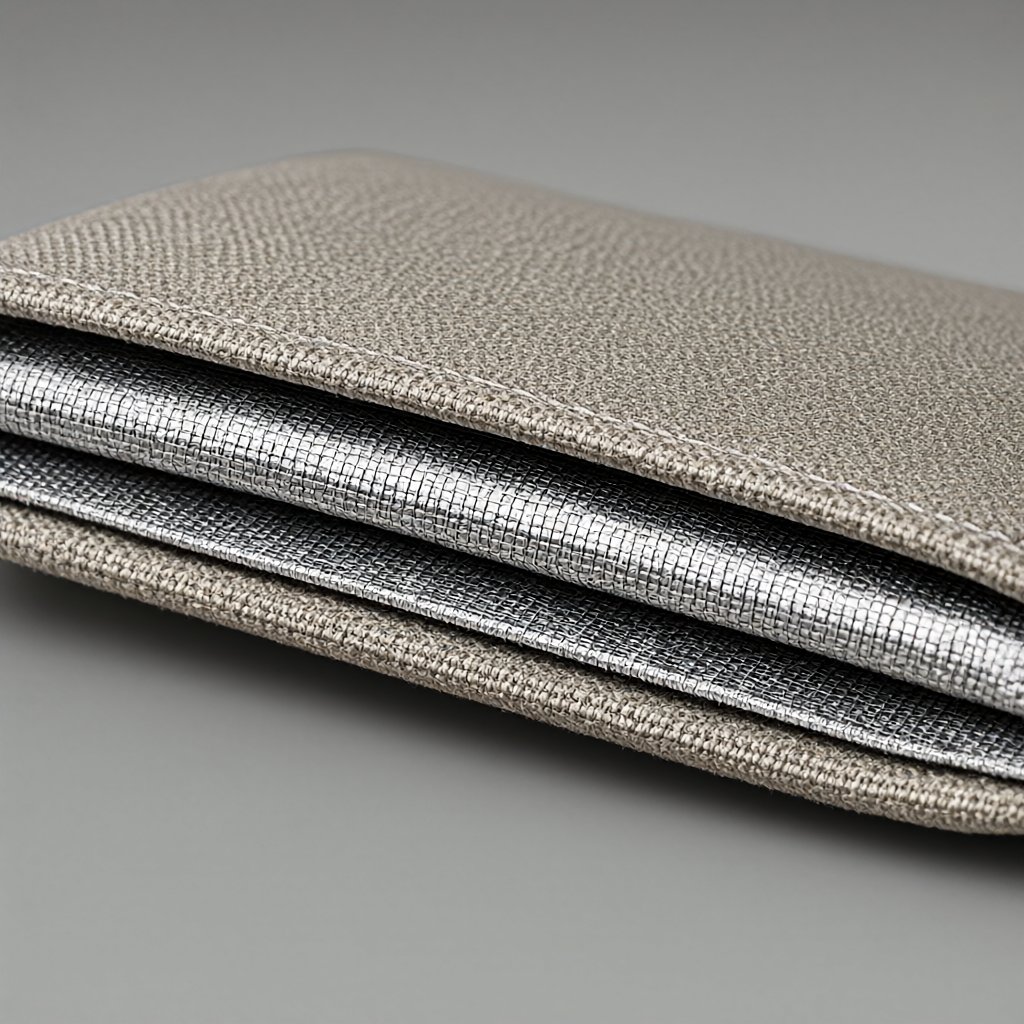
A travel wallet exists at the intersection of everyday carry utility and situational security. Unlike a standard bifold or slim card holder meant for home use, a travel wallet is engineered for movement — it goes into pockets during transit, faces temperature shifts, gets jostled through bags, and needs to protect not just your cash but your payment cards from electronic skimming. Evaluating one requires looking past aesthetics and asking what breaks first in the field.
How do material choices affect travel wallet performance?
Material selection is the single biggest determinant of how a minimalist wallet for travel behaves over months of real-world use. The three most common options — aluminum, titanium, and carbon fiber — each carry distinct trade-offs that directly impact both product performance and unit economics for B2B buyers.
Aluminum wallets are the most cost-effective entry point. Anodized 6063 or 7075 aluminum delivers solid scratch resistance and a lightweight profile (typically 45–75 grams depending on thickness). The trade-off is that aluminum is softer than titanium, meaning it will show micro-abrasions over time, especially if carried alongside keys. For Amazon FBA private label sourcing or promotional product procurement, aluminum hits the sweet spot between durability perception and landed cost. See our best minimal wallets for B2B sourcing guide for deeper material comparison.
Titanium travel wallets occupy the premium tier. Grade 2 or Grade 5 titanium offers superior tensile strength, near-zero weight gain across thousands of cycles, and a natural biocompatible surface that resists corrosion even after exposure to salt air or chlorine. The downside is substantially higher raw-material cost and more demanding CNC machining parameters, which translates to tighter margins unless you’re targeting retail chains willing to command a higher price point. Titanium money clips and slim metal card wallets consistently outperform aluminum in long-term wear testing.
Carbon fiber card holders for travelers combine visual distinction with excellent strength-to-weight ratio. A properly laminated carbon fiber panel typically weighs under 50 grams and resists impact deformation better than both aluminum and titanium at comparable thicknesses. The manufacturing complexity lies in mold design and curing cycles, which is why fewer ODM manufacturers offer true carbon fiber rather than carbon-fiber-look decals applied to aluminum substrates. Real carbon fiber construction commands a premium but delivers a tangible performance gap.
Why does RFID-blocking technology matter for travelers?
RFID-blocking technology uses conductive mesh or sheets embedded within the wallet body to create a Faraday cage effect, attenuating radio-frequency signals in the 13.56 MHz range used by contactless payment cards and e-passports. Without blocking, a skimmer device positioned within arm’s reach can read unshielded chip data during crowded transit or airport queues.
The necessity debate centers on threat realism rather than technical feasibility. According to industry analysis referenced by the Federal Trade Commission, while passive RFID skimming attacks are technically possible, documented consumer fraud incidents remain low compared to other payment card compromise vectors FTC. However, from a procurement and product-positioning perspective, including verified RFID protection is no longer optional for travel-focused SKUs — it is table stakes for brand perception in North American and European markets.
Buyers should insist on independent lab test reports confirming attenuation levels rather than accepting supplier claims. Look for results showing signal reduction above 30 dB at 13.56 MHz. Our RFID-blocking cards procurement guide covers validation methods in detail. A genuine RFID-blocking travel wallet integrates the shielding layer during production, not as an afterthought adhesive strip added post-manufacture.
What determines card and cash capacity for travel use?
Travel-specific wallet capacity differs from daily-carry expectations. A buyer evaluating products for resale should expect a well-designed model to hold:
- 8 to 12 cards without excessive removal force
- Folded bills in a dedicated slip compartment (single or dual pocket)
- A passport slot or exterior sleeve compatible with standard ICAO-compliant passport dimensions (125 × 88 mm) for international buyers
Card retention relies on either spring-loaded metal frames or friction-fit elastic straps. Spring mechanisms offer faster access but require torque-tested hinges that maintain tension over thousands of cycles. Friction systems degrade more predictably and feel less refined but eliminate mechanical failure points. For EDC brand product line expansion, the spring-frame approach tends to receive stronger retailer feedback.
Cash organization should include at least one dedicated bill slot. Wallets that rely solely on card compression to secure folded currency often allow bills to shift or fall during rapid extraction — a frustration that generates return reasons in retail channels.
Key Specifications — What Are the Key Specs to Request?
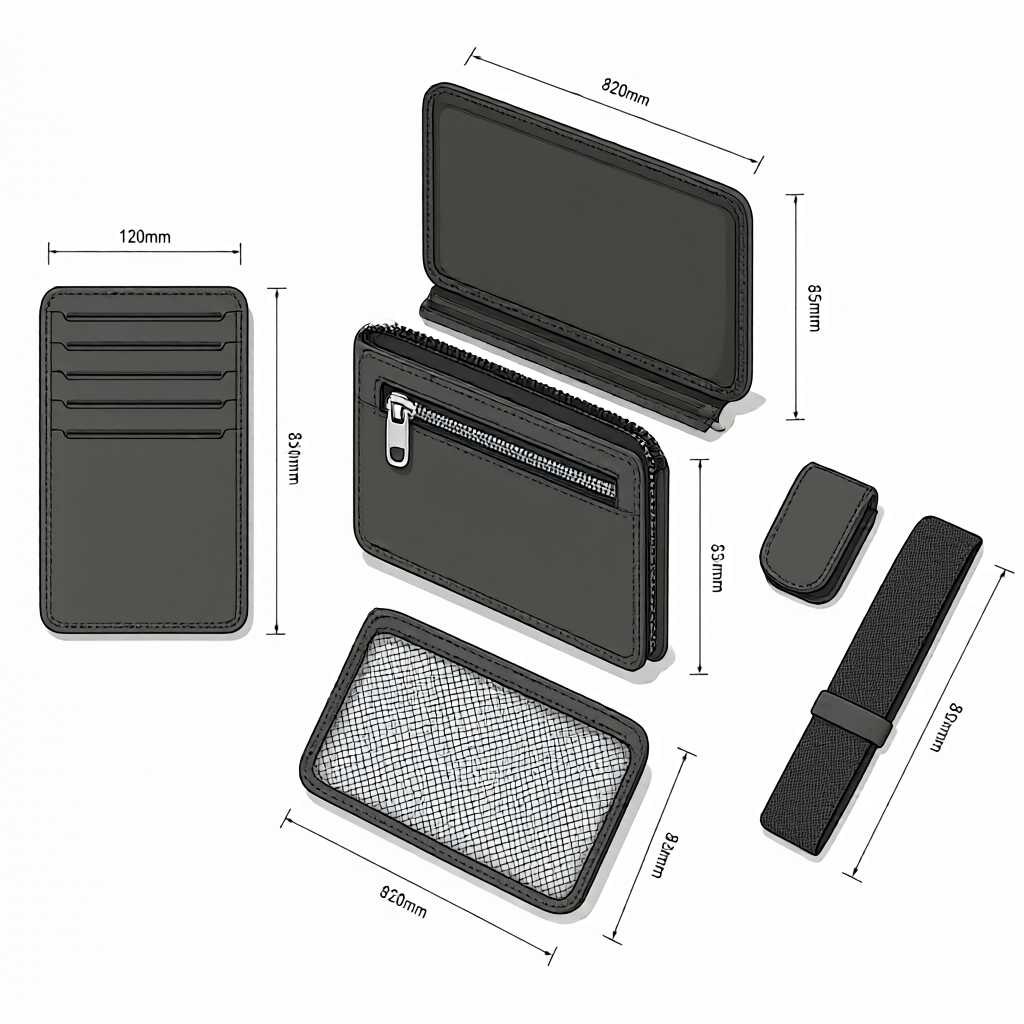
When RFQ-ing travel wallets from manufacturers, requesting the following specification sheet prevents costly mismatches between what you expected and what arrives:
| Specification | Typical Target Range | Why It Matters |
|---|---|---|
| Overall weight | 45–95 g | Impacts shipping costs and perceived portability |
| Thickness (closed) | 6–14 mm | Determines pocket compatibility and carry comfort |
| Card capacity | 8–12 slots | Matches traveler need without bulk inflation |
| RFID attenuation | ≥ 30 dB at 13.56 MHz | Validates blocking claim; ensures compliance with market expectations |
| Material grade | 6063/7075 Al, Gr2/Gr5 Ti, or genuine CF layup | Dictates durability tier and unit cost |
| Surface finish | Anodized, bead-blasted, or polished | Affects scratch visibility and tactile feel |
| Passport slot compatibility | ICAO Doc 9303 standard | Required for EU/UK/US/Japan market alignment |
| Operating temperature range | −20°C to +60°C | Ensures functionality across travel climates |
| Drop tolerance | 1.2 m onto concrete (no structural failure) | Field reliability indicator |
These specs form the baseline against which any quoted sample should be evaluated before committing to tooling or large-volume orders.
Standards & Requirements — What Certifications Apply?
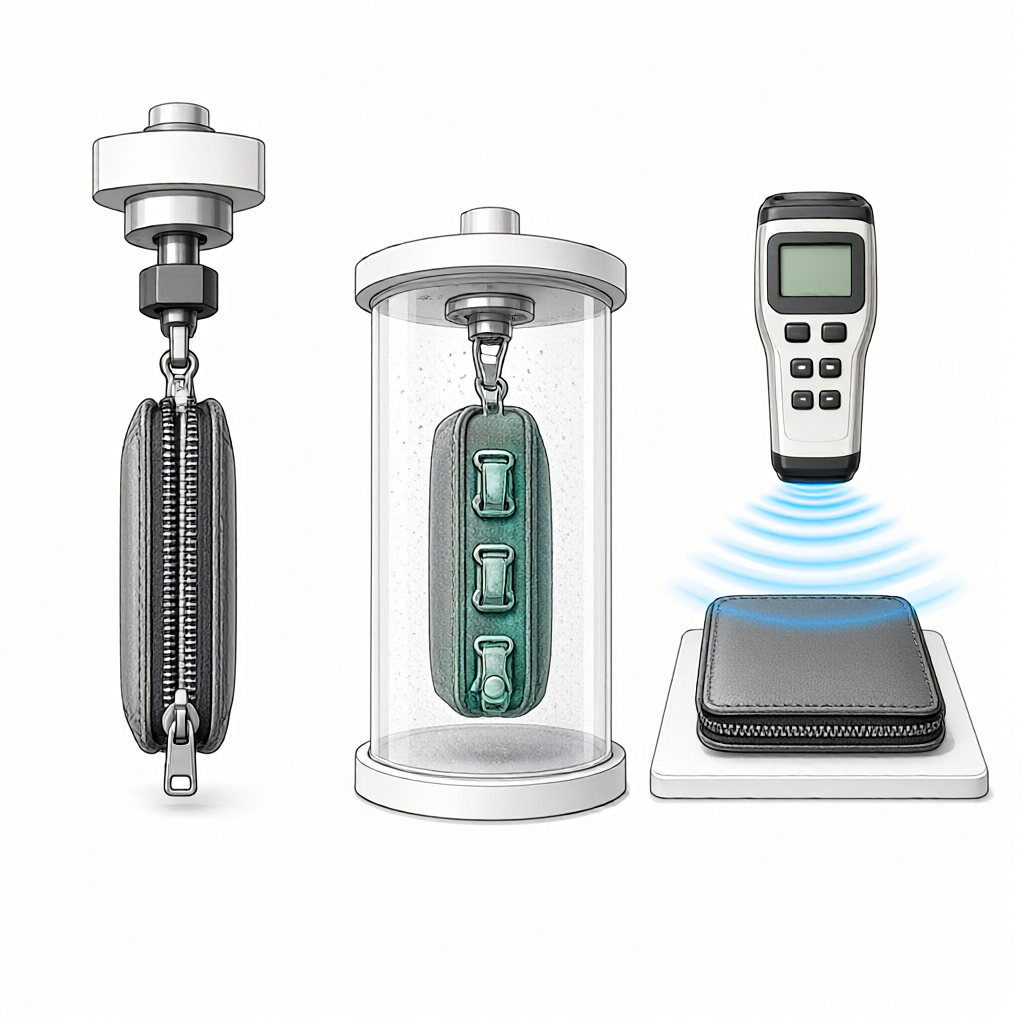
Manufacturer compliance is not merely a checkbox exercise — it is the primary filter separating reliable suppliers from risk. The certifications that matter for travel wallet sourcing break into three categories:
Quality management systems. ISO 9001 certification indicates a facility operates under documented quality control processes covering incoming inspection, in-process checks, and outgoing verification. ISO maintains the global framework that this standard references. For B2B buyers, ISO 9001 audited facilities significantly reduce the probability of lot-to-lot variation, which is critical when scaling from prototype to 10,000-unit shipments.
Social compliance. BSCI (Business Social Compliance Initiative) audit certification demonstrates that the factory meets baseline labor and ethical standards required by European distributors and many North American retailers. If your target channel includes mainstream retail placement or corporate procurement programs, BSCI coverage removes a common gating requirement.
Material safety and restrictions. REACH and RoHS compliance confirm that finished products do not contain restricted substances at levels exceeding EU regulatory thresholds. SGS-tested material reports provide third-party verification rather than self-declared assertions. This becomes especially important when sourcing from new or unfamiliar factories, as alloy composition and coating chemistry can vary between production runs without external oversight.
A responsible manufacturer will supply current certification documents upon request before sample approval. If they cannot produce these within five business days, treat that delay as a screening signal.
Related Considerations — What Should You Evaluate Beyond Specs?
Several factors outside the specification sheet determine whether a sourcing relationship works at scale.
MOQ and lead time realities. Many suppliers advertise aggressive minimum order quantities to capture small-brand inquiries, then enforce rigid pricing floors at higher tiers. Understanding the actual阶梯结构 — the volume breakpoints where per-unit cost shifts — helps you model landed cost accurately. Similarly, sample turnaround versus mass-production lead times often differ dramatically; a 7-day sample promise may extend to 30–45 days for initial production runs, especially when custom packaging is involved.
Customization depth vs. timeline impact. Full OEM development — from concept sketch to final die-cut tooling — typically adds two to four weeks compared to selecting from an existing catalog. Laser engraving, UV printing, and custom packaging decisions made late in the process create schedule risk. Establishing a clear phase-gate communication plan during the quotation stage prevents scope creep from derailing launch timelines.
Aftermarket support and defect rates. Ask prospective manufacturers for their reported defect rate on recent orders and their RMA handling procedure. A factory confident in its output will state a defect rate range and describe corrective action protocols transparently. Warranty terms for structural failures — such as spring mechanism breakage or delamination — should also be clarified upfront, as these terms directly affect your return-rate liability.
Amazon FBA prep and compliance documentation. If your channel is FBA, ensure the manufacturer understands fulfillment center preparation requirements including polybag labeling, barcode placement, and carton packing standards. Manufacturers experienced with Amazon logistics can prevent rejections at inbound receiving.
International passport sizing variations. While ICAO standards exist, some countries issue passports slightly outside nominal dimensions. Buyers targeting Southeast Asian or Middle Eastern distribution should verify that proposed wallet designs accommodate regional passport variants, as mismatched dimensions generate visible product complaints.
For additional context on choosing between different wallet types for your product line, see our EDC wallet procurement guide and our slim wallet buying guide.
Selecting a Reliable Wallet Manufacturer
Evaluating manufacturers goes beyond price comparison. The firms that sustain strong B2B relationships share several operational characteristics. They communicate specifications clearly, respond to RFQs with detailed breakdowns rather than generic callbacks, and provide samples that match quoted tolerances exactly. When assessing capability, look for in-house machining rather than outsourced finishing, as vertical integration reduces variability across component stages. Transparency around lead times, material traceability, and quality checkpoints during production distinguishes serious contract manufacturers from order-brokers.
For brand owners and Amazon sellers evaluating EDC wallet manufacturers, the key differentiator is whether the supplier treats customization as a routine service or an exception requiring executive escalation. A mature OEM/ODM partner should accommodate logo placement, material selection, and packaging configuration within predictable timeframes and cost structures. When you have specific project requirements — opening sizes, target price points, or certification needs — send us your details for a custom quote. We work with EDC brands and distribution buyers to move from concept to compliant product efficiently.
Material Durability Beyond Aluminum, Titanium, and Carbon Fiber
A comprehensive evaluation of a good travel wallet must account for every mainstream material option available on the market, not just the three metals commonly highlighted in promotional content. Understanding how each material performs under real travel conditions — moisture exposure, repeated pocket insertion, temperature swings, and daily abrasion — helps B2B buyers match the right material to their target retail channel and price tier.
Aluminum wallets remain the most cost-effective slim travel solution. Anodized 6063 or 7075 aluminum delivers solid scratch resistance and keeps the overall weight between 45–75 grams, making it ideal for buyers targeting the entry-level and mid-tier retail brackets. The principal limitation is surface softness: aluminum will accumulate micro-abrasions over time, particularly when carried alongside keys or coins. For Amazon FBA sellers and promotional-product distributors, this trade-off is usually acceptable because replacement-rate data stays low and perceived value remains strong at the point of sale.
Titanium travel wallets represent the durable-premium segment. Grade 2 (commercially pure) and Grade 5 (Ti-6Al-4V) titanium deliver tensile strengths significantly above aluminum while resisting corrosion from salt air, chlorine, and sweat — environments common in active-travel and outdoor-EDC use cases. Although the raw-material and CNC-machining costs are substantially higher, titanium wallets consistently outperform aluminum in long-cycle wear testing, which translates into fewer warranty claims and stronger retailer repeat-order rates at the mid-to-high price points ($15–$35 retail).
Carbon fiber card holders occupy a unique position between visual differentiation and mechanical performance. Properly laminated carbon fiber provides an excellent strength-to-weight ratio and resists deformation under impact far better than comparably thin aluminum or titanium sheets. The critical distinction for buyers is whether the supplier uses real woven carbon-fiber laminate or merely applies a carbon-fiber-look decal to an aluminum substrate — only genuine layup construction delivers the stated performance advantage, and it carries a correspondingly higher production cost. See our best minimal wallets for B2B sourcing guide for an in-depth material comparison.
Genuine leather wallets, though traditionally associated with full-size bi-fold designs, have increasingly appeared in slim travel-wallet formats. Full-grain and top-grain leather offer natural warmth, aesthetic patina development over time, and strong consumer appeal in premium gift and lifestyle channels. The trade-offs include higher ongoing maintenance requirements, susceptibility to water staining if unsealed, and slightly greater bulk than metal or carbon-fiber constructions. Leather pairs well with integrated RFID lining for buyers targeting fashion-forward travelers who prioritize aesthetics alongside function.
Nylon and ballistic-fabric wallets serve the ultra-lightweight, weather-resistant niche. High-denier nylon (e.g., 500D–1000D Cordura-style fabric) provides exceptional tear resistance, is inherently water-resistant, and adds negligible weight — often under 30 grams for the carrier itself. These wallets excel in outdoor-adventure and tactical-EDC segments where durability under rough handling matters more than metallic aesthetics. Budget-conscious private-label buyers frequently source nylon carriers with metal or leather accent panels to bridge the gap between ultralight function and premium perception.
| Material | Approx. Weight Range | Durability Profile | Best Retail Bracket | Key Limitation |
|---|---|---|---|---|
| Anodized aluminum | 45–75 g | Moderate; scratches over time | Entry-level ($10–$18) | Surface marring with keys/coins |
| Titanium (Gr2/Gr5) | 55–90 g | High; corrosion and abrasion resistant | Mid/premium ($20–$40) | Higher unit cost |
| Genuine carbon fiber | 40–70 g | Very high; stiff and impact resistant | Premium ($25–$50) | Higher mold/tooling cost |
| Full-grain leather | 60–110 g | High with care; develops patina | Mid/premium ($18–$45) | Water/stain sensitivity |
| Ballistic nylon | 25–55 g | Very high; tear and abrasion resistant | Entry/mid ($8–$20) | Less rigid structure |
For guidance on matching material selection to your target customer profile and distribution channel, consult our best card holder buying guide for B2B sourcing.
Style and Aesthetic Considerations for Travel Wallets
Style drives purchase intention in the travel-wallet category almost as much as functional specification. B2B buyers must understand how finish, color palette, form factor, and surface treatment influence shelf appeal and conversion rate across different retail segments.
Surface finishes determine the tactile and visual impression of a metal travel wallet. Bead-blasted finishes hide minor scratches better than mirror-polished surfaces, making them preferable for high-volume, everyday-use SKUs. Matte anodized coatings in dark tones (gunmetal, black, charcoal) dominate the professional-travel and corporate-gift channels, while vibrant anodized colors (blue, red, green, gold) perform better in youthful and lifestyle-oriented retail environments.
Form-factor variety expands market coverage. Slim card-only organizers suit urban commuters and minimalist carry advocates. Dual-compartment designs with a separate bill sleeve cater to travelers who prefer segregating cards from currency. Wraparound or accordion layouts maximize card capacity within a compact footprint and appeal to frequent-flyer demographics carrying multiple cards and boarding passes.
Color and engraving personalization directly supports private-label differentiation. Laser-engraved logos, monograms, or custom graphics on titanium and aluminum substrates provide permanent, premium-feeling branding that survives years of daily use. This permanence is a significant competitive advantage over printed or screen-applied marks that degrade with wear. Our EDC wallet procurement guide outlines how engraving depth and technique affect long-term brand visibility.
Finish coordination across product lines — matching wallet aesthetics to complementary gear such as keychains, multitools, and pen replacements — strengthens brand cohesion for retailers building a full EDC ecosystem.
Price Tiers and Value Comparison for B2B Buyers
Understanding price tiers enables buyers to align product sourcing with target retail margins and channel strategy. Each tier maps to distinct material choices, feature sets, and expected per-unit profitability.
Entry-level tier ($3–$8 wholesale / $10–$18 retail): Typically constructed from 6063 aluminum with basic anodized finishing, holding 6–10 cards and a single cash slot. RFID protection may be included as a standard or optional add-on. This tier serves promotional-product programs, convenience-store displays, and volume-driven Amazon FBA operations where price sensitivity dominates purchase decisions. Margins are thinner per unit but offset by high sales velocity and lower capital outlay per order.
Mid-tier ($8–$20 wholesale / $20–$40 retail): Incorporates upgraded materials (7075 aluminum, Grade 2 titanium, or genuine carbon fiber panels), refined edge finishing, improved spring-tension mechanisms, and consistent RFID shielding. Custom laser engraving and private-label packaging are commonly available at this level. Mid-tier products represent the strongest margin-to-quality balance for EDC brand owners, specialty retail chains, and corporate-gift buyers seeking perceived premium value without extreme pricing.
Premium tier ($20+ wholesale / $40–$80+ retail): Features multi-material construction (titanium frame with carbon-fiber inserts), precision CNC machining, advanced surface treatments, intricate laser-engraved artwork, and fully bespoke packaging design. Buyers in this bracket target luxury-gift retailers, high-end outdoor outfitters, and premium EDC collector channels. Customization depth is greatest here, and per-unit margins, while absolute-dollar-positive, require careful management of tooling and setup costs against projected sell-through volumes.
| Tier | Wholesale Range | Typical Materials | RFID Standard | Customization Depth | Target Channel |
|---|---|---|---|---|---|
| Entry | $3–$8 | 6063 Al, basic anodize | Optional add-on | Logo engraving only | Promo, FBA volume |
| Mid | $8–$20 | 7075 Al, Gr2 Ti, CF panel | Included | Full branding + packaging | EDC brands, retail chains |
| Premium | $20+ | Multi-material, precision CNC | Included + enhanced | Fully bespoke design | Luxury gifts, collector market |
Volume-based pricing discounts typically begin at 500-piece breakpoints and scale progressively through 1,000, 2,000, and 5,000-piece tiers. Buyers should request tiered pricing tables during RFQ to model landed cost and target margin accurately before committing to production.
How MOQ and Lead Times Affect Sourcing Decisions?
Minimum order quantity (MOQ) and lead-time commitments are operational parameters that directly shape margin structure, cash flow, and inventory risk for B2B travel-wallet buyers. Ignoring these factors during supplier evaluation often results in unexpected cost overruns or missed launch windows.
MOQ economics establish the floor for viable production runs. Suppliers advertising very low MOQs (as few as 50–300 units) often compensate through higher per-unit pricing to cover fixed setup and programming costs spread over fewer pieces. Conversely, suppliers with higher MOQ floors (500–1,000+ units) typically offer meaningfully lower per-unit costs but require larger upfront capital commitment and expose the buyer to greater unsold-inventory risk. The optimal MOQ depends on your verified demand forecast, storage capacity, and cash-flow timeline.
Lead-time variability separates predictable supply chains from problematic ones. Sample turnaround and mass-production lead times rarely match; a quoted 7-day sample promise may extend to 30–45 days for initial production runs, and even longer when custom packaging, secondary finishing operations, or third-party lab testing is involved. Buyers should establish explicit lead-time expectations in writing for each production phase — sampling, pilot run, full production, and shipping — and build buffer time into launch schedules.
Seasonal and demand-driven planning requires advance commitment. Travel-wallet demand peaks ahead of summer vacation seasons and year-end gift-giving periods. Ordering with insufficient lead time risks stockouts during peak-demand windows, while overordering based on optimistic forecasts ties up working capital in slow-moving inventory. Strategic buyers negotiate phased production schedules that align output with confirmed demand signals.
What Customization Options Are Available for Private-Label Buyers?
Private-label differentiation is a primary reason B2B buyers engage OEM/ODM manufacturers rather than sourcing off-the-shelf products. Comprehensive customization capability determines whether a supplier can support a brand’s identity across product, packaging, and compliance dimensions.
Logo and mark application encompasses several techniques, each with distinct cost, durability, and aesthetic outcomes. Laser engraving produces permanent, precise marks on metal and carbon-fiber surfaces and is the preferred method for premium EDC brands. UV printing enables full-color graphics on flat surfaces but may wear faster under heavy abrasion. Embossing or debossing adds subtle three-dimensional branding without ink. Supply-side selection of technique should be guided by brand positioning, anticipated product lifespan, and target retail presentation.
Material and finish selection allows buyers to customize both appearance and performance. Choice of base alloy (6063 vs. 7075 aluminum, Grade 2 vs. Grade 5 titanium), anodized color, bead-blasted or polished texture, and carbon-fiber weave pattern collectively define the product’s tactile and visual character. Buyers working within established brand guidelines should confirm that their supplier maintains consistent color-matching and finish-reproducibility across production lots.
Packaging and unboxing experience increasingly influences purchase satisfaction and social-media visibility. Custom retail boxes, inserted tissue or foam, branded hang tags, QR-code product cards, and multilingual instruction booklets transform a commodity product into a branded experience. Packaging specifications — dimensions, materials, print process, and assembly instructions — should be finalized alongside product design to avoid last-minute logistical complications.
Compliance labeling and documentation vary by destination market. EU-bound products may require CE marking, REACH compliance labels, and multilingual safety information. North American FBA shipments need suffocation-warning labels on polybags, FCC-compatible documentation for any electronic components, and correct country-of-origin markings. A capable OEM partner should guide buyers through these regulatory requirements rather than leaving compliance discovery to the importer.
For comprehensive guidance on evaluating private-label options across wallet types, review our best minimal wallets for B2B sourcing and slim wallets for men guides.
Procurement Decision Framework and Buyer Checklist
A structured evaluation framework prevents ad-hoc purchasing decisions and ensures consistent supplier quality across sourcing rounds. The following checklist addresses every critical dimension B2B buyers should assess before issuing a purchase order for travel wallets.
Supplier qualification: Verify ISO 9001:2015 certification status and request a current certificate copy. Confirm BSCI audit coverage if targeting European or ethical-retail channels. Review SGS or equivalent third-party material test reports for REACH/RoHS compliance. Check export history to your target regions and request reference contacts where possible.
Product validation: Request physical samples representing your exact material, finish, and customization specifications — not catalog stock photos. Test card-insertion and removal force across the full capacity range. Verify RFID attenuation with an independent reader device if possible. Assess edge comfort and pocket-insertion smoothness. Evaluate stitching or lamination quality on any fabric or leather components.
Manufacturing capability assessment: Confirm in-house CNC machining, laser engraving, anodizing, and assembly operations rather than outsourced finishing that introduces variability. Ask about production capacity (monthly output volume) and whether it scales appropriately for your projected order sizes. Inquire about quality-control checkpoints at incoming-inspection, in-process, and outgoing-stages.
Commercial terms clarity: Obtain a detailed quote breaking down per-unit cost at each MOQ breakpoint, tooling/setup fees, sample charges, packaging costs, and shipping terms (FOB, CIF, DDP). Clarify payment terms, reorder procedures, and price-lock duration. Confirm lead times separately for sampling, pilot production, and full-volume runs.
After-sales and liability terms: Establish agreed-upon defect-rate thresholds and corresponding remediation procedures (replacement, credit, or repair). Understand RMA workflow response times. Review warranty coverage for structural failures such as spring-mechanism breakage, delamination, or coating failure. Confirm the supplier’s willingness to cooperate on any future compliance-testing or recall scenarios.
Scoring template for supplier comparison: Rate each prospective supplier on a 1–5 scale across five dimensions — quality-certification readiness (1 point for ISO 9001:2015 alone, 5 points for full ISO plus BSCI plus SGS documentation), product-sample quality upon receipt, MOQ flexibility relative to your needs, lead-time reliability and communication transparency, and customization breadth including packaging and compliance support. Total score of 20 informs final supplier selection objectively rather than by price intuition alone.
Travel Wallets For B2B: Where Can You Verify the Data and Sources?
- FTC — www.ftc.gov
- ISO — www.iso.org
- best minimal wallets for B2B sourcing — topedcwallet.com
- RFID-blocking cards procurement guide — topedcwallet.com
- EDC wallet procurement guide — topedcwallet.com
- slim wallet buying guide — topedcwallet.com
- send us your details for a custom quote — topedcwallet.com
- best card holder buying guide for B2B sourcing — topedcwallet.com
From article to product
Sourcing minimalist-wallets?
Tell us the format, the quantity and the date you need stock. You get material options, MOQ and a landed-cost range back within one business day.
Keep reading
More on wallet types
Thin Male Wallets: Buying Guide for Slim Minimalist Picks
How to choose a slim wallet for men — thickness thresholds, material trade-offs, capacity…
ReadStashed Wallet: A Minimalist Everyday-Carry Solution
Understand what a stashed wallet is, how minimalist slim wallets work, and what to…
ReadFolding Wallets: Types, Materials & Buying Guide
Learn what makes a folding wallet worth buying, from materials and card capacity to…
Read
About the author
TOPWALLET Editorial Team
TOPWALLET's editorial and engineering desk writes from bench testing at the Shenzhen (Longgang) facility: pull-force and cycle testing, 13.56 MHz shielding measurements, finish trials and factory audits, rather than supplier spec sheets. Every specification in these guides is one we write on a purchase order.
Written on the floor
This article was written by our production and QC team — the people who spec tolerances, run the finishing line and inspect every batch. Where it states a capacity, a pull force or a lead time, it comes from a measurement we made, not a supplier’s catalogue. If a number here disagrees with what your own supplier told you, tell us; several of these articles started as a correction from a buyer.
See how the factory works · Inspection process · Sourcing FAQ
Sourcing minimalist-wallets?
Tell us the format, the quantity and the date you need stock. You get material options, MOQ and a landed-cost range back within one business day.