

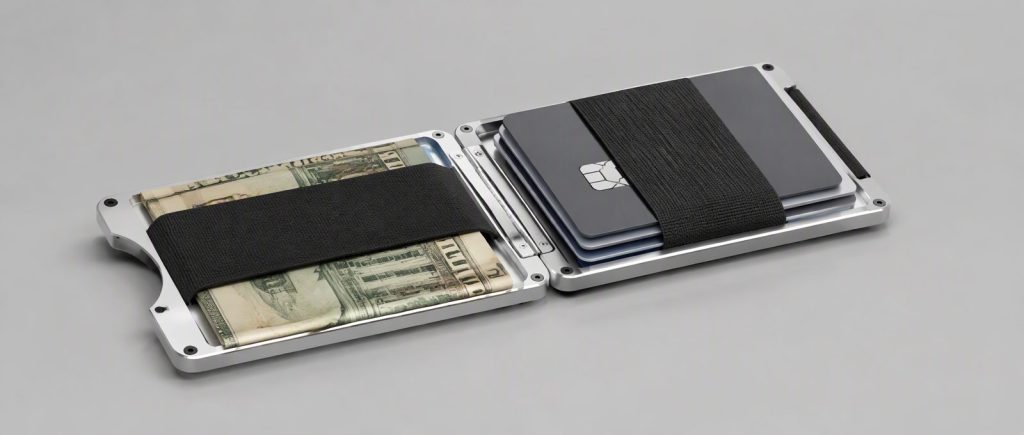
Here’s the short version: the trick to carrying cash in a minimalist wallet is not carrying less — it’s folding it small enough to ride flat inside the card layer. The seven methods below range from a single flat fold to a tight tri-fold, and the right one depends on how many bills you carry, whether you carry coins, and how fast you need to grab cash at the register. If you carry two bills or less, the flat fold is the whole answer. Past that, read on for the method that fits your carry.
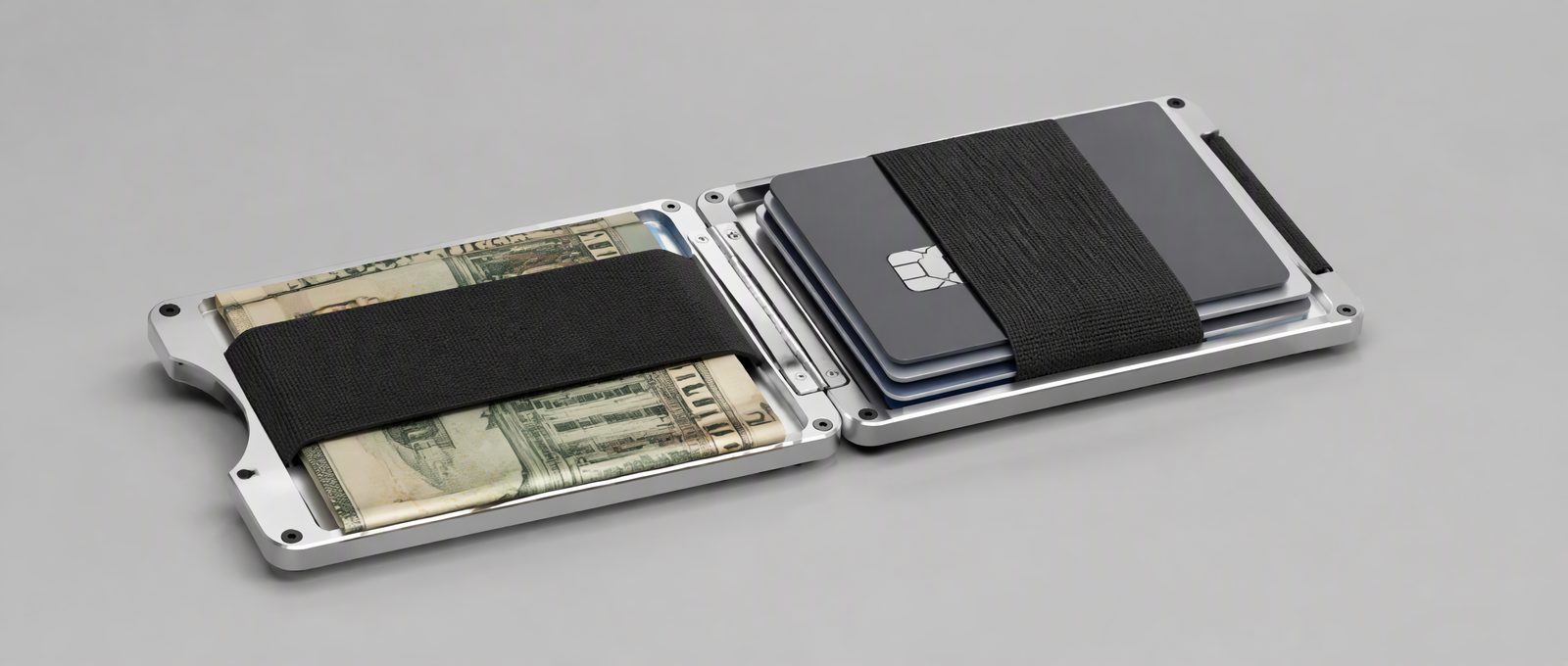
Cash is the reason most people quit minimalist wallets. The wallet handles six cards fine, then someone hands you change and suddenly there’s a bulge where the money sits. We see the same pattern in factory design feedback: buyers love the slim profile until they carry cash, then they reach for a bifold again. The fix isn’t a bigger wallet — it’s a folding system that treats bills like a card layer instead of a stack.
The Seven Folding Methods at a Glance
Before the details, here’s the full comparison. Methods are ordered from thinnest to thickest carried profile:
| Method | Bills handled | Loaded profile | Speed to grab | Best with |
|---|---|---|---|---|
| 1. Flat fold | 1–2 | Thinnest | Fast | Card holder, rear slot |
| 2. Half fold | 2–4 | Very thin | Medium | Internal elastic band |
| 3. Tri-fold | 4–6 | Thin | Medium | Cash strap models |
| 4. Bill roll | 5–8 | Bulkiest | Slow | Never in a slim wallet |
| 5. Clip stack | 2–5 | Thin, rigid | Fastest | Money clip wallets |
| 6. Utility fold | 3–5 | Thin | Medium | ID-slot wallets |
| 7. Sleeve slide | 2–4 | Thinnest | Medium | Wallets with a hidden sleeve |
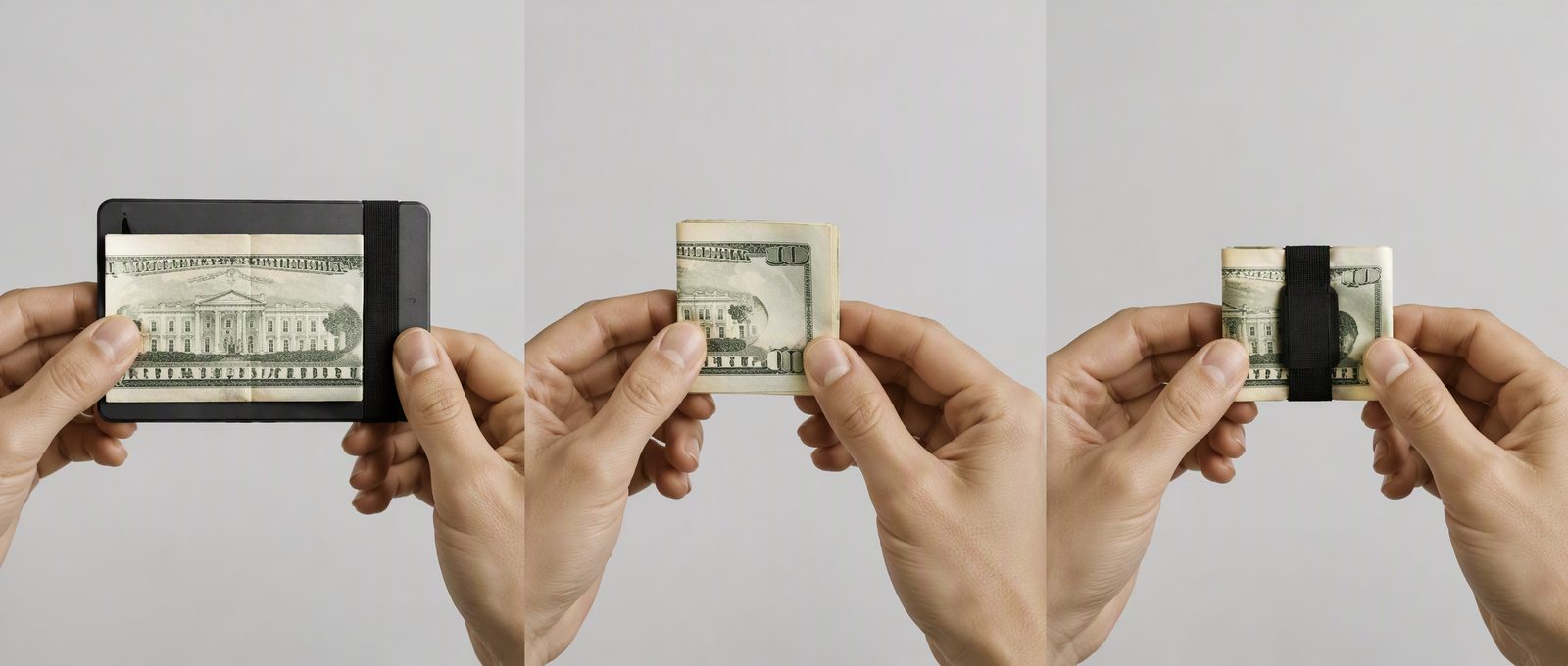
Methods 1, 2, 3, and 7 all treat cash as a flat layer against the wallet shell; methods 4, 5, and 6 add structure or bulk. If your wallet has a dedicated cash feature — a strap, a clip, or a sleeve — use it; if it doesn’t, a flat fold against the back plate is thinner than any strap method.
Method 1: The Flat Fold (1–2 Bills)
Lay the bill flat, fold it once in half lengthwise, then place it against the back of the wallet so it presses flat between the shell and your cards. Two bills stack to roughly the thickness of one card, which is why this method keeps a minimalist wallet genuinely minimal.
Flat fold pairs best with a rigid card holder or a metal wallet with a rear card slot. The bill rides against the shell, cards push against it from the other side, and nothing sticks out of the top — the 8–10 mm loaded profile stays intact.
Method 2: The Half Fold (2–4 Bills)
For two to four bills, stack them and fold once in half. The stack becomes a single firm packet roughly one card thick. Place it behind the cards or in the front slot, depending on which side of the wallet you reach into more often.
Half fold is the standard recommendation for people who carry cash “for emergencies” — three bills, one fold, zero bulge. It also works with internal elastic band designs, where the band holds the folded packet against the back plate. Our guide on money clip wallets guide explains why band designs handle folded cash better than stitched pockets.
Method 3: The Tri-Fold (4–6 Bills)
When you carry a week’s worth of cash, fold the stack in thirds: fold one third in, then fold the remaining third over. This produces a compact square instead of a long folded strip, which fits wallets with a cash strap or a center pocket.
Tri-fold is the max you should carry in a minimalist wallet. Beyond five or six bills, the square stack starts adding real thickness — and at that point the honest answer is to switch format. The break-even math is covered in best money clip wallets: clip or strap designs hold more cash at the same loaded thickness than plain card slots.
Methods 4–7: When Structured Cash Carry Actually Helps
- Method 4: Bill roll (5–8 bills) — roll bills into a tight cylinder. This is the thickest option and belongs in a travel wallet or a jacket pocket, not between your cards.
- Method 5: Clip stack (2–5 bills) — stack bills flat under a money clip. This is the fastest to grab — one motion, no unfolding — and pairs with clip-style minimalist wallets.
- Method 6: Utility fold (3–5, plus one card slot sacrifice) — fold bills in half and tuck them behind your ID or one card you rarely use. The packet rides the card’s shape, keeping the wallet flat at the cost of one slot.
- Method 7: Sleeve slide (2–4 bills) — slide flat, unfolded bills into a hidden sleeve or back pocket. This is the thinnest method of all — unfolded bills are thinner than any fold — but it only works when the wallet has a dedicated sleeve.
None of these change the wallet’s capacity; they change how the cash sits inside it. If your wallet has no cash feature at all, a flat fold or sleeve slide is the thin carry, and switching to a cash-friendly design is a bigger change than any folding trick. The types of wallets explained guide maps which formats actually come with cash features.
Cash Layer Thickness: A Quick Reference
Raw numbers make the choice obvious. These are approximate in-hand measurements at typical carry loads:
| Carry | Thickness added | Notes |
|---|---|---|
| 2 bills, flat fold | ~0.2 mm | Invisible in pocket |
| 4 bills, half fold | ~0.5 mm | Feels like a card |
| 6 bills, tri-fold | ~1.2 mm | Noticeable, still flat |
| 8 bills, rolled | ~8 mm | Kills the slim profile |
| 10 bills, clip stack | ~2 mm | Clip holds tension |
The jump from 6 bills tri-folded to 8 bills rolled is not a small step — it’s a different carry. Stay under six bills folded flat and the wallet stays slim; cross eight and you’re carrying a money roll.
Cash + Minimalist Wallet: The Practical Rules
Three rules cover most carry mistakes:
- Keep bills flat against the shell. A fold that presses against the back plate adds less than a fold that sits in the middle of the card stack.
- Never mix folded bills with cards in the same slot. The bills grip the cards, bulge the slot, and wear the card edges. Give cash its own layer.
- Match the fold to the feature. If the wallet has a strap, tri-fold into it. If it has a clip, stack flat under it. If it has neither, flat fold against the shell — don’t invent a pocket the design doesn’t have.
Most “cash doesn’t fit” complaints come from method-to-feature mismatch, not from the wallet being too small.
The Factory View: How Cash-Friendly Wallets Are Really Built
From our production line: the cash question is engineered, not discovered. When we design a minimalist wallet for a brand, the cash layer is decided at the spec stage — elastic band, clip, sleeve, or no cash feature at all — then verified on finished units under a 4-stage inspection process certified to ISO 9001:2015, with AQL 2.5 sampling. We run roughly 50,000 units a month across 200+ partner brands, and cash-layer geometry is the first thing we check when a sample feels “off.” Samples reach you in about 7 days, full production in about 30 days.
If you’re building a wallet brand, specify the cash feature in the design brief — retrofitting a strap onto a card-only shell costs more in tooling than in design. Our how to choose wallet size and minimalist wallets explained guides cover the format decisions, and if you want a cash-ready profile from the first sample — Ask Our Factory Team for the cash-layer spec sheet we publish to OEM customers.
FAQ
What’s the best way to carry cash in a minimalist wallet?
Fold up to four bills in half and press them flat against the back shell, behind your cards. Two bills or fewer: single flat fold. Four to six bills: tri-fold. The method always beats the wallet — no minimalist wallet needs a bulge.
Does carrying cash make a minimalist wallet bulky?
Not if you stay under six bills folded flat. Two to four bills half-folded add about half a millimeter — a card’s thickness. The bulge starts when you roll bills or stack cash in a slot designed for cards.
Can I carry cash in a metal wallet?
Yes. Rigid shell designs are actually the best flat-fold carriers: bills press flat between the shell and the cards, so the wallet stays its designed thickness. Cash straps and clips on metal wallets work the same way on best money clip wallets-style designs.
Is a money clip better than folding cash?
For speed, yes — a clip lets you grab the whole stack in one motion. For thinness at low volume, no — a flat fold at two bills is thinner than a clip mechanism. Use a clip if you grab cash daily, fold if you carry a small reserve.
How many bills fit in a minimalist wallet without bulging?
About six, tri-folded, on a shell with a strap or sleeve. Beyond that, the thickness jumps and you’re fighting the design. At eight bills the honest move is a money clip or a travel wallet.
Should I keep coins in a minimalist wallet?
No. Coins are the single fastest way to wreck a slim profile, and most minimalist wallets have no coin pocket by design. Keep coins in a pocket or a coin pouch; keep the wallet for cards and folded bills.
What wallet type carries cash best?
Money clip wallets and strap designs carry the most cash at the thinnest profile; card holders carry it only as a flat fold. The types of wallets explained breakdown shows which format has which feature, so choose by your daily carry instead of by look.
Will cash rub against cards and damage card edges?
Folded cash in its own layer won’t. Cash mixed into a card slot will — the friction wears card edges and slides the stack around. Keep cash on the shell side and cards on top, and both stay clean.
Bottom Line
Cash fits in a minimalist wallet — the fold just has to match the feature. Two bills, flat fold. Four bills, half fold. Six bills, tri-fold into a strap. Never roll, never mix cash into a card slot, and pick a wallet whose cash feature matches how you carry. If you’re a brand spec’ing a cash-ready wallet rather than fighting one, Request a Quote for the design, or Get OEM Pricing for production with the cash layer specified from the first sample.
From article to product
Sourcing minimalist-wallets?
Tell us the format, the quantity and the date you need stock. You get material options, MOQ and a landed-cost range back within one business day.
Keep reading
More on wallet care
How to Remove Scratches From a Metal Wallet (2026)
Here’s the short version: scratches are removable only when they sit in the finish…
ReadHow to Slim Down a Bulky Wallet: 15-Minute Reset (2026)
Here’s the short version: empty every card out of your wallet, cut the stack…
ReadHow to Organize Your Wallet Cards in 2026: a Three-Tier Carry System That Stays Thin
Thick wallets are a stacking problem, not a storage problem: most people carry eight…
Read
About the author
Wu, Leon
Leon Wu is the senior product engineer and EDC testing lead at TOPWALLET. He has spent more than a decade on wallet design-for-manufacture, materials and quality control at the company's Dongguan facility, and writes from bench testing, pull-force and 13.56 MHz shielding measurements rather than supplier spec sheets.
Written on the floor
This article was written by our production and QC team — the people who spec tolerances, run the finishing line and inspect every batch. Where it states a capacity, a pull force or a lead time, it comes from a measurement we made, not a supplier’s catalogue. If a number here disagrees with what your own supplier told you, tell us; several of these articles started as a correction from a buyer.
See how the factory works · Inspection process · Sourcing FAQ
Sourcing minimalist-wallets?
Tell us the format, the quantity and the date you need stock. You get material options, MOQ and a landed-cost range back within one business day.