

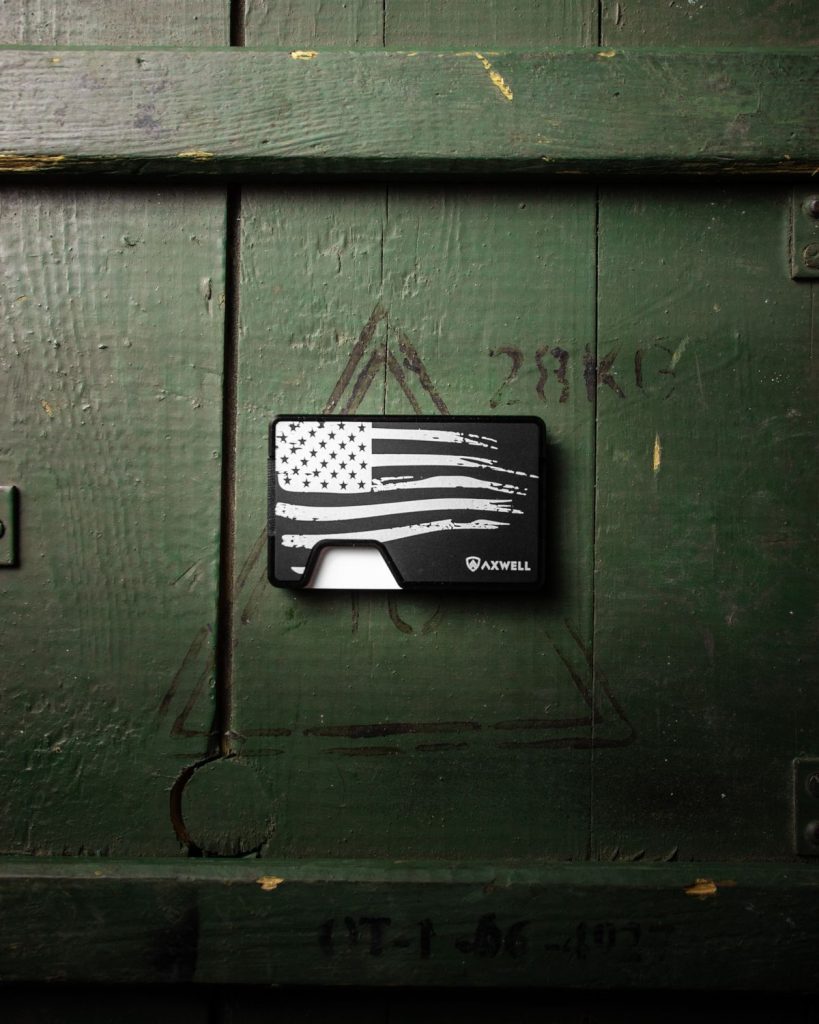
A money clip wallet is a cash-first carry that pairs a metal clip, spring or magnetic, with a slim card holder. Instead of folding banknotes inside like a bifold, the clip grips a stack of bills on the outside, so the most-used item in cash-driven days is the fastest to reach. Money clip wallets thrive wherever cash, tips and market purchases still rule, and among minimalists who want cards and notes in one flat object. If you handle folding money several times a day, this design changes your checkout routine faster than any other category. The aluminum money clip wallet shows how far the concept has matured from a bare steel clip.
What Is a Money Clip Wallet
The category covers two constructions. First, a clip attached to a compact card case, where cards sit in fitted slots on one side and the clip holds bills on the other. Second, a standalone clip used against a separate card wallet, an older two-piece setup. Modern designs fuse both into one machined body so there is nothing to lose.
Clips fall into two mechanical families. Spring-loaded steel clips grip by tension and can last for years, because the moving part is a simple metal strip. Magnetic clips use paired rare-earth magnets that clamp bills between two faces; they hold thick stacks easily, open with one thumb, and have no spring to fatigue.
Because the clip lives on the outside, the wallet structure does the work a pocket flap once did: bills stay flat, cards stay seated, and the whole object stays thin. The mechanism, the fragile part of a wallet, is out in the open where it can be built properly.
Money Clip vs Traditional Bifold
| Factor | Money clip wallet | Traditional bifold |
|---|---|---|
| Cash access | Clip releases the whole stack in one motion | Unfold, open the pocket, separate notes |
| Profile | Stays thin; bills ride on the outside | Thickens with each added card or note |
| Card capacity | A few fitted slots | More pockets and room to grow |
| Bill protection | Notes exposed to the elements | Notes enclosed and guarded |
| Durability focus | Clip tension and magnets | Leather, stitching and seams |
| Learning curve | One small new habit | None |
| Best suited to | Cash-heavy, fast-access carry | All-purpose, capacity-first carry |
The real difference is not capacity but access and profile. A bifold protects money; a money clip wallet prioritizes speed and flatness. If notes leave the wallet several times a day, the clip wins on feel alone; if cash is emergency-only, the bifold’s protection costs nothing.
Materials That Work Best
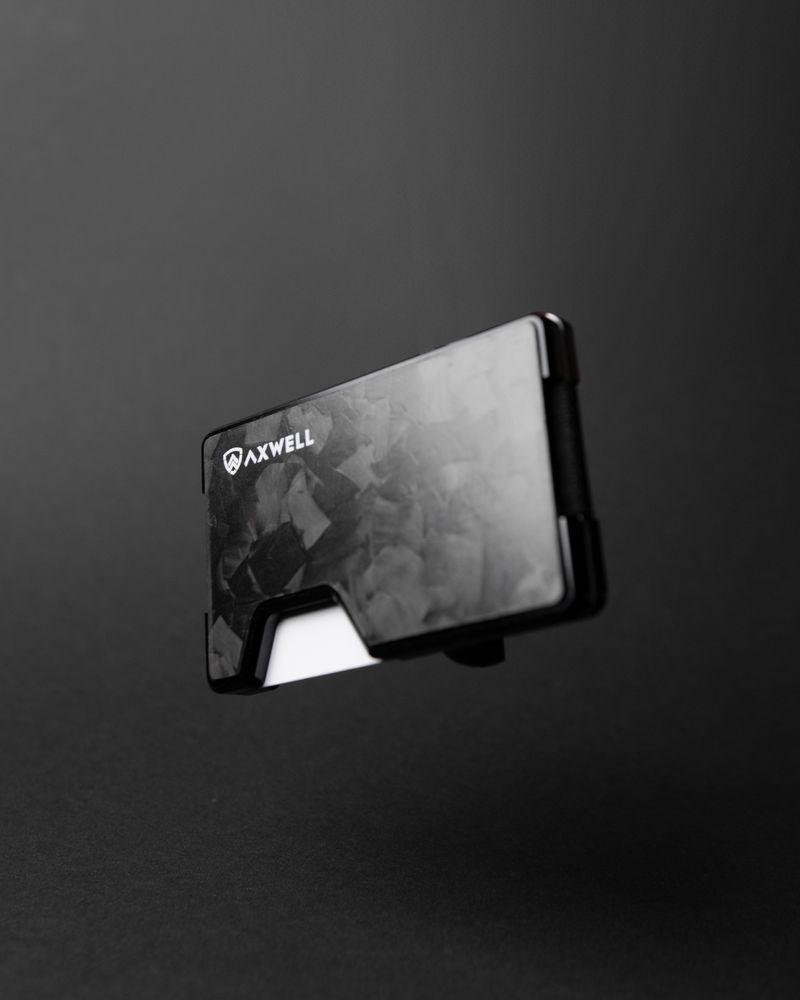
Magnetic clips work best with machined aluminum bodies. The shell holds the magnets captive, channels their pull through the clip face, and keeps the magnet away from the cards. Anodized aluminum gives the clip a hard, low-friction surface, and matching magnet strength to shell thickness is the difference between a confident grip and a frustrating one.
Spring clips favor steel because the moving strip needs spring-back consistency over thousands of cycles. Cheap clips lose tension within a year; serious designs use heat-treated strips rated in years. In both families, the clip mechanism is the true product and the body is the frame around it.
The quality signals are the same across materials: consistent clip strength unit to unit, a smooth surface with no burrs, and a clip that opens without pinching. TOPWALLET machines these shells in-house on more than 120 CNC stations, controls the full 12 to 14 step process including stamping, anodizing and assembly, and checks every unit through four-stage QC with 100% inspection.
Who Should (and Shouldn’t) Use One
Money clip wallets earn their keep for three groups. Cash users who deal in tips, markets and small vendors get the fastest bill access of any wallet. Minimalists carrying a few cards and a clip answer the capacity argument with a shrug, because the wallet is already flat. And anyone paying from the driver’s seat or a queue gets the one-thumb release a fold-wallet cannot match.
Skip them if your week runs on coins, because no clip design solves coin carry well. Skip them if you routinely carry a full deck of cards. And check your note sizes: currencies with large formats need a clip with enough surface area. If you compare how wallet types differ, the money clip is the one that rewards a specific habit rather than general convenience.
Manufacturing Perspective: Why TOPWALLET Builds These
For a contract manufacturer, the money clip wallet is more demanding than it looks. Clip tension must be repeatable unit to unit, magnet strength must match the shell, and anodized finishes must survive years of pocket life. TOPWALLET controls the full 12 to 14 step process in-house, backed by 40+ craftsmen, 60+ engineers and 35+ patents.
The factory runs more than ten production lines at over 150,000 pieces per month from an 18,000 m2, four-story site in Dongguan, exports to more than 80 countries, and holds ISO 9001, ISO 14001, BSCI, REACH, RoHS and FCC compliance. For brands, that means specifying clip type, body material, finish, logo and packaging, with stock samples in 3-5 days, custom samples in 7-15 days, and production in 25-35 days across the wallet collection.
FAQ
Will a magnetic clip damage my cards?
Magnetic stripes are the only real concern. EMV chips and contactless chips are not affected by wallet-strength magnets, but a stripe held directly against a strong magnet for a long period can weaken. Keep stripe-bearing cards on the far side of the shell, and the magnet never touches them.
How much cash can a money clip hold?
That depends on the clip design and the note size. A strong magnetic clip easily holds a week of personal spending, while slim spring clips suit smaller stacks. The practical limit is where notes start slipping out under movement, so test with your own bills and chosen clip tension before relying on it.
Money clip wallet or bifold for a first wallet?
Start from your payment habit. If you touch cash daily, the clip will feel natural within a week. If most purchases are card or phone based, a bifold’s protection and capacity will serve you better. The money clip is a specialization, not a universal upgrade.
Do money clip wallets work for travel?
Yes, across most markets, because cash access at stands, taxis and small vendors is faster than unfolding a wallet. Check two things first: the clip must accommodate the destination’s note format, and the wallet should have enough card slots for travel essentials plus a backup card.
Are spring clips better than magnetic clips?
They trade different strengths. Steel spring clips have no magnets to worry about and keep constant tension, but they are a moving part that can fatigue. Magnetic clips open faster, hold uneven stacks better, and have no spring to wear out. Choose by whether you want zero magnet exposure or fastest possible access.
Can brands customize money clip wallets?
Yes. Clip type, body material, finish, engraving and packaging are standard customization points in ODM programs starting at 3,000 pieces, while stock designs start at 300 pieces. Suppliers like TOPWALLET treat the clip mechanism as the tested core and keep the body geometry stable across customizations.
Related reading
From article to product
Sourcing minimalist-wallets?
Tell us the format, the quantity and the date you need stock. You get material options, MOQ and a landed-cost range back within one business day.
Keep reading
More on wallet types
Wallet Thickness Benchmarks: How Slim Is Slim Enough? (2026)
A slim wallet measures 8–15 mm when loaded with 4–8 cards, depending on card…
ReadFront Pocket Wallets: The Complete Guide to Slim Front Carry
A front pocket wallet is a slim, low-profile wallet designed to ride in the…
ReadMinimalist Wallets Explained: What “Minimalist” Really Means
A minimalist wallet is not simply a small wallet. It is a carry system…
Read
About the author
Wu, Leon
Leon Wu is the senior product engineer and EDC testing lead at TOPWALLET. He has spent more than a decade on wallet design-for-manufacture, materials and quality control at the company's Dongguan facility, and writes from bench testing, pull-force and 13.56 MHz shielding measurements rather than supplier spec sheets.
Written on the floor
This article was written by our production and QC team — the people who spec tolerances, run the finishing line and inspect every batch. Where it states a capacity, a pull force or a lead time, it comes from a measurement we made, not a supplier’s catalogue. If a number here disagrees with what your own supplier told you, tell us; several of these articles started as a correction from a buyer.
See how the factory works · Inspection process · Sourcing FAQ
Sourcing minimalist-wallets?
Tell us the format, the quantity and the date you need stock. You get material options, MOQ and a landed-cost range back within one business day.