

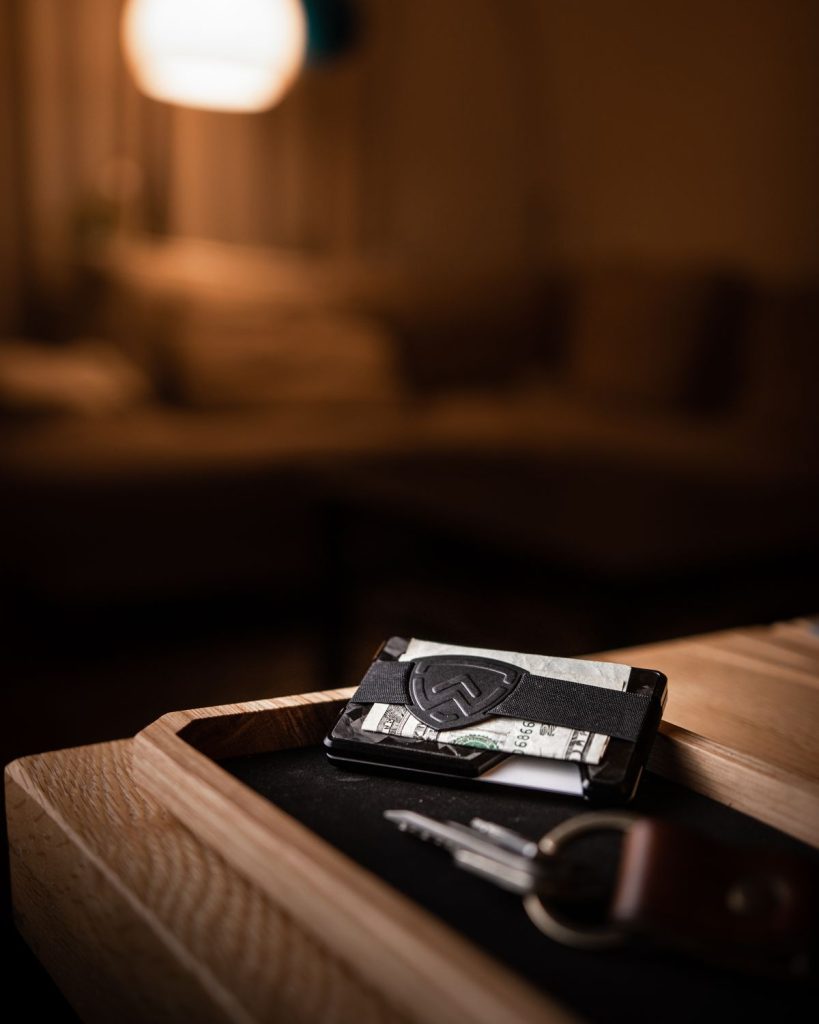
A minimalist wallet is not simply a small wallet. It is a carry system built around the items you use every day: a few cards, an ID, and maybe folded cash, in a profile thin enough to disappear into a front pocket. Where a traditional bifold adds compartments, minimalist design subtracts them on purpose. The result sits flatter, opens faster, and forces a small daily decision about what deserves pocket space. For most people, that tradeoff improves comfort and access more than it limits usability. Start by scanning the minimalist wallet styles on the market, then read on for what separates real designs from pocket-sized boxes.
What Defines a Minimalist Wallet
Three traits separate a minimalist wallet from a merely compact one. The first is a flat profile, kept thin even when full, which is what makes front-pocket carry comfortable. Whether machined from aluminum or stitched in leather, the design holds its shape instead of swelling. A minimalist card holder is a good benchmark: thin when empty, still thin with cards inside.
The second trait is purposeful limits. A minimalist wallet typically:
- carries cards and folded cash, and drops coins, receipts, keys and multi-compartment organizers;
- relies on one or two access motions instead of layered pockets;
- stays rigid enough not to depend on being stuffed to keep its shape.
The third trait is structure as a deliberate choice. Rigid shells in aluminum, carbon fibre or reinforced polymer keep their shape because the frame does the work; soft forms rely on tight construction. Both can be minimalist; what matters is that nothing depends on being overfilled to perform.
Why People Switch to Minimal Carry
The most common reason is comfort. A thick back-pocket wallet presses against the sciatic area when you sit, and many bifold users notice the difference within days of switching. Front-pocket carry removes that pressure entirely and keeps the wallet out of pickpocket reach in crowded transit and events.
Speed is second. A well-designed minimalist wallet opens to the card you need in one motion: no sorting through four compartments at checkout, no blind fumbling in a queue. Commuters and daily payers feel this immediately.
The third reason is broader: everyday-carry culture treats your pockets as a small systems problem. When the wallet, keys and phone all earn their space, the wallet becomes a deliberate choice rather than an inherited habit. That mental shift, more than the hardware, is what switchers describe as the real benefit.
Common Misconceptions
Minimalist wallets are fragile. Thin does not equal weak. A properly machined aluminum shell survives years of pocket life, and manufacturers keep 12 to 14 production steps in-house so tolerances and finishing stay controlled. The material is different from leather, not inferior to it.
Minimalist means giving up cash. Many designs include a money clip or a fold for banknotes; some even make cash the most accessible item, which suits markets, tips and travel. You carry fewer notes, not none.
Minimalist wallets hold too few cards. Most people rotate two to five cards in daily use; the rest lives in a drawer or a digital wallet. A minimalist wallet is sized for that reality. If you understand how wallet types differ, you already know that capacity follows intent.
Minimalist always means expensive. Engineering cost is real, but at factory scale it is small. TOPWALLET offers stock minimalist designs from 300 pieces and ODM programs from 3,000, which is how smaller brands bring premium-feeling wallets to market at accessible prices.
How TOPWALLET Engineers Minimalism
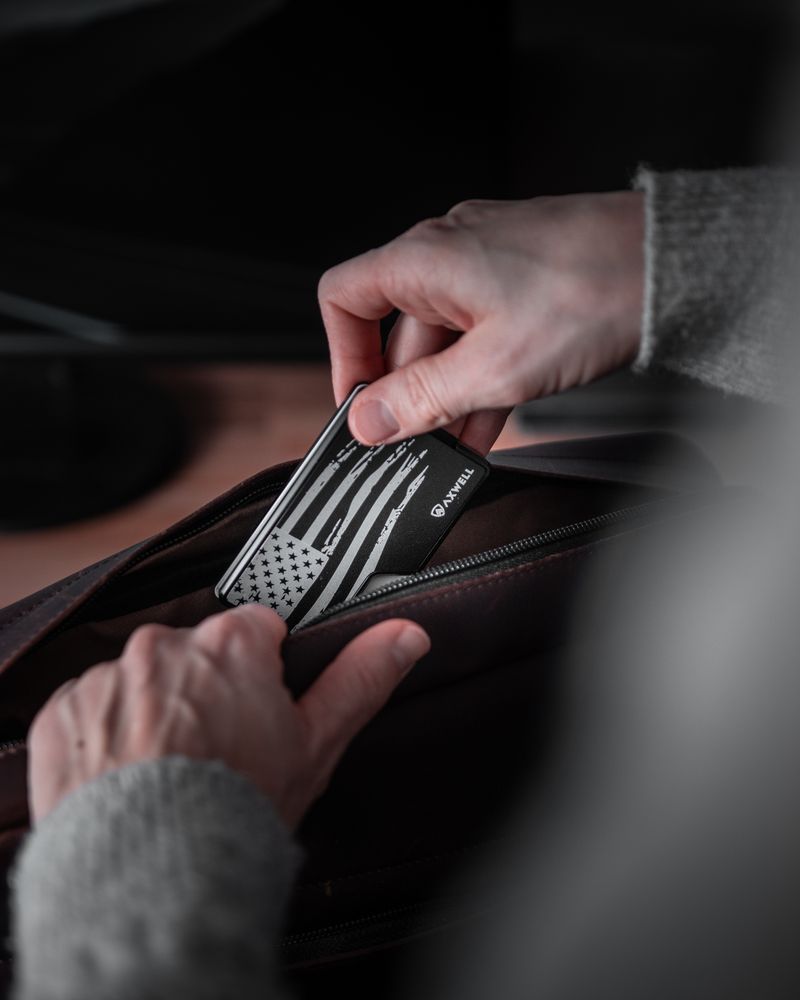
TOPWALLET treats minimalism as an engineering problem rather than a styling exercise. Its 18,000 m2, four-story factory in Dongguan runs more than ten production lines and over 120 CNC workstations, and the 12 to 14 steps that make a wallet, including CNC machining, stamping, anodizing and assembly, are done in-house by more than 40 senior craftsmen.
That vertical integration matters for a category defined by thin walls and tight tolerances. Finishes, edges and spring tension are easier to control when one factory owns every step, and every unit passes four-stage QC with 100% inspection at AQL 0.65 under ISO 9001.
It also makes private label possible. With more than 300 employees, 60+ engineers and 35+ patents, TOPWALLET exports to over 80 countries, producing stock samples in 3-5 days, custom samples in 7-15, and full production in 25-35 days.
Minimalist vs Traditional Carry: Comparison Table
| Aspect | Minimalist wallet | Traditional bifold |
|---|---|---|
| Profile | Thin and flat whether empty or full | Thickens quickly as it fills |
| Capacity | A few cards plus folded cash | Many cards, notes, coins, receipts |
| Access | One or two motions to reach a card | Sorting through several pockets |
| Comfort | Front-pocket friendly, low back-pocket pressure | Can press against the hip when sitting |
| Structure | Rigid shell or tight construction | Soft leather with sewn compartments |
| Cost band | Higher per-item engineering | Lower entry price, wider range |
| Best for | Daily EDC, travel, urban carry | Maximum capacity and formal habits |
The table is a tradeoff, not a verdict. If your week involves a work pass, a card and folded notes, a minimalist wallet covers everything a bifold does with less in your pocket. If you genuinely carry a dozen items, it will refuse to hold them all, and that refusal is the point.
FAQ
Can a minimalist wallet carry cash?
Most do. Look for a money clip, an elastic band or a folding body that accepts banknotes. You carry fewer notes than a bifold, which suits most urban spending patterns. If cash is your primary payment method, choose a wallet with a dedicated clip and test how many folded notes it holds comfortably before committing.
Will a metal minimalist wallet scratch my cards?
A CNC-machined shell with a smooth, anodized interior will not scratch cards in normal use. Cards sit in fitted slots and move against metal or a thin lining. The bigger wear risk is usually loose keys sharing a pocket, not the wallet itself.
How long does an aluminum minimalist wallet last?
With proper anodizing and assembly, an aluminum wallet typically outlasts the cards inside it. The frame does not stretch or warp the way leather can, and the finish resists daily abrasion. Scuffs may appear over years of pocket life, but the structure and closure stay intact.
Is a minimalist wallet good for business travel?
Yes, and it is one of the clearest use cases. A flat wallet moves through airport security quickly, stays out of sight in crowded terminals, and holds a travel set of cards plus folded currency. Choose RFID-shielded versions if you carry contactless cards or access badges on trips.
Can I carry five or more cards in a minimalist wallet?
You can, but the design assumes you will not need to. A few fitted slots plus a center pocket hold five cards and stay flat; beyond that the profile grows and the point of the design disappears. If you rotate cards weekly, keep backups in a bag or drawer instead of the wallet.
Can brands order custom minimalist wallets?
Yes. TOPWALLET offers stock minimalist designs from 300 pieces and custom ODM projects from 3,000 pieces, with stock samples in 3-5 days and custom samples in 7-15 days. Businesses typically customize materials, finishes, logos and packaging while keeping the tested shell geometry.
Related reading
From article to product
Sourcing minimalist-wallets?
Tell us the format, the quantity and the date you need stock. You get material options, MOQ and a landed-cost range back within one business day.
Keep reading
More on wallet types
Wallet Thickness Benchmarks: How Slim Is Slim Enough? (2026)
A slim wallet measures 8–15 mm when loaded with 4–8 cards, depending on card…
ReadFront Pocket Wallets: The Complete Guide to Slim Front Carry
A front pocket wallet is a slim, low-profile wallet designed to ride in the…
ReadMoney Clip Wallets: Design, Pros and Cons
A money clip wallet is a cash-first carry that pairs a metal clip, spring…
Read
About the author
Wu, Leon
Leon Wu is the senior product engineer and EDC testing lead at TOPWALLET. He has spent more than a decade on wallet design-for-manufacture, materials and quality control at the company's Dongguan facility, and writes from bench testing, pull-force and 13.56 MHz shielding measurements rather than supplier spec sheets.
Written on the floor
This article was written by our production and QC team — the people who spec tolerances, run the finishing line and inspect every batch. Where it states a capacity, a pull force or a lead time, it comes from a measurement we made, not a supplier’s catalogue. If a number here disagrees with what your own supplier told you, tell us; several of these articles started as a correction from a buyer.
See how the factory works · Inspection process · Sourcing FAQ
Sourcing minimalist-wallets?
Tell us the format, the quantity and the date you need stock. You get material options, MOQ and a landed-cost range back within one business day.