

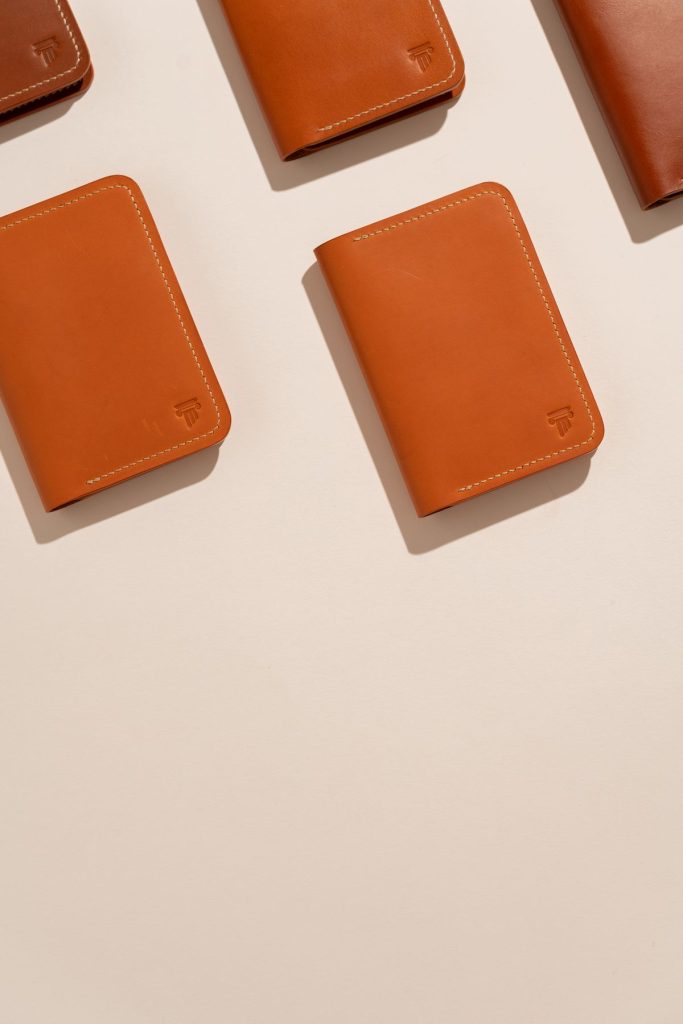
A front pocket wallet is a slim, low-profile wallet designed to ride in the front pocket of jeans or trousers instead of the back pocket. It carries the same daily load as a traditional wallet, cards and some cash, but its dimensions, structure and access system are engineered around front-pocket geometry. Buyers choose the category for three overlapping reasons: comfort when sitting, security in crowded spaces, and quicker access in daily use. The tradeoff is discipline, because a front pocket wallet only works if you carry less. Browse a slim wallet collection and you can see that every serious design in this category fights the same battle: flat when full, fast to open, and invisible in the pocket.
Why Front Pocket Carry
The strongest motivation is physical. A back-pocket wallet sits under your weight when you sit, and long hours of pressure around the hip and lower back are a common complaint among bifold users. Moving the wallet forward removes that pressure and the chronic lopsided feeling of a thick wallet worn all day.
The second is security. Back pockets are visible to pickpockets and the easiest target in crowded transit, markets and events. A front pocket, especially with a hand resting on it, is dramatically harder to reach unnoticed.
The third is speed and fit. Card access happens one-handed without standing, and the slimmer profile does not distort the line of your trousers. Drivers and anyone who sits for long stretches notice the difference within days.
What to Look For in a Front Pocket Wallet
Not every slim wallet works as a front pocket wallet. Judge candidates on these points:
- Profile when full: the wallet must stay thin under a realistic daily load, not just in the box;
- Access system: card slots, quick-draw openings or pop-up mechanisms that genuinely work one-handed;
- Retention: cards stay seated under a spring, a magnet or a tight fit, and do not slide loose when you pull one card out;
- Edge comfort: rounded corners and smooth edges, because the wallet rubs against your thigh all day;
- Optional RFID shielding if you carry contactless cards or transit badges.
Check the wallet loaded, never empty. A wallet that looks thin in the package but bulges with two cards and folded cash has failed the test it was sold on. Our wallet buying guides cover the same checklist for each carry style.
Materials and Construction
Material choices split into three families. Full-grain leather breaks in, conforms to your leg and ages well, but the quality lives in edges and stitches. CNC-machined aluminum or stainless steel stays perfectly flat, shrugs off moisture, and depends on tolerances and anodizing for its feel. Hybrid designs combine softness with structure.
Construction is where manufacturers differ more than materials. TOPWALLET completes 12 to 14 steps in-house, including CNC machining, stamping, surface treatment and assembly, with more than 40 senior craftsmen on the floor. Because one factory owns finishing and assembly, edges, tolerances and spring tension are controlled end to end, and every unit passes four-stage QC with 100% inspection at AQL 0.65. That shows in products like the minimalist front pocket wallet, where the shell does the structural work.
For buyers, how a supplier controls consistency matters more than which material they pick. A well-built leather wallet and a well-built aluminum wallet both serve front-pocket carry; a badly assembled version of either fails in different ways.
How to Break In and Maintain One
Leather versions have a short break-in period. Condition the leather lightly, avoid over-stuffing in the first weeks, and expect the wallet to soften where it bends. Stiffness that remains usually comes from too many cards, so remove the ones you do not touch weekly.
Machined metal wallets need almost nothing: wipe the exterior, keep anodized finishes away from abrasive key contact, and check the closure or spring twice a year. One caution about strong magnets: avoid resting magnetic-stripe cards directly against them for long periods, since rare-earth magnets can weaken a stripe.
Replace the wallet when the structure stops doing its job, meaning torn stitches, a loose clip, or a shell that no longer holds cards firmly. A daily-wear item deserves an annual inspection.
Comparison: Front Pocket vs Back Pocket Wallets
| Factor | Front pocket wallet | Back pocket wallet |
|---|---|---|
| Comfort when sitting | No weight under the hip | Presses against the hip and lower back |
| Theft risk | Harder to reach unnoticed | Visible target in crowded spaces |
| Access speed | One-handed, no standing needed | Reaching behind, often standing up |
| Capacity tolerance | Forgiving to slim loads only | Tolerates a thicker load |
| Fit and style | Low bulge, keeps trousers clean | Bulkier line, wears pockets faster |
| Best use | Urban daily carry, transit, drivers | High-capacity or formal habits |
Neither position is wrong. The two environments reward different geometry: a front pocket wallet is designed to be carried without being felt, while a back pocket position can afford more height and thickness. The design brief should start from the carry position.
FAQ
Do front pocket wallets work in tight jeans?
Yes, if the wallet is dimensioned for the pocket. A shorter, low-profile design sits without folding pressure across the top of the pocket, while taller models push against the seam. Measure against your actual jeans rather than the marketing photos, and prefer rounded corners over sharp-edged shells for tight pockets.
Can I carry cash in a front pocket wallet?
Yes. Card-first designs include a clip or a folding pocket for banknotes, and some models put the clip on the outside so cash is the fastest item to reach. Expect to carry fewer notes than a bifold, which is the natural tradeoff for a slim profile.
Do metal front pocket wallets feel uncomfortable in front pockets?
CNC-machined shells with rounded edges and a smooth anodized finish are effectively unnoticeable in daily wear, even in slim-fit trousers. Discomfort almost always comes from sharp edges or a profile that is thick at your real load, so test with your daily cards before buying.
How many cards fit comfortably?
For most designs, the comfortable range is a few cards plus an ID. The wallet should close flat and the cards should stay seated without bulging edges. Test with your real load, because slot tension varies more between brands than the printed card counts suggest.
Are front pocket wallets good for travel?
Yes, for two reasons. The front carry position reduces pickpocket exposure in crowded transit and markets, and the faster access helps at checkpoints and checkout counters. RFID-shielded versions add protection for contactless cards and transit badges during trips abroad, which is where most people use tap-to-pay most often.
Do they wear out jeans pockets faster?
A smooth, low-profile wallet with rounded corners causes less pocket wear than a bulky square bifold, because it moves less and presses less sharply. Sharp-edged or heavily textured models are the exception, so favor smooth shells and rolled or sealed edges.
Related reading
From article to product
Sourcing minimalist-wallets?
Tell us the format, the quantity and the date you need stock. You get material options, MOQ and a landed-cost range back within one business day.
Keep reading
More on wallet types
Wallet Thickness Benchmarks: How Slim Is Slim Enough? (2026)
A slim wallet measures 8–15 mm when loaded with 4–8 cards, depending on card…
ReadMinimalist Wallets Explained: What “Minimalist” Really Means
A minimalist wallet is not simply a small wallet. It is a carry system…
ReadMoney Clip Wallets: Design, Pros and Cons
A money clip wallet is a cash-first carry that pairs a metal clip, spring…
Read
About the author
Wu, Leon
Leon Wu is the senior product engineer and EDC testing lead at TOPWALLET. He has spent more than a decade on wallet design-for-manufacture, materials and quality control at the company's Dongguan facility, and writes from bench testing, pull-force and 13.56 MHz shielding measurements rather than supplier spec sheets.
Written on the floor
This article was written by our production and QC team — the people who spec tolerances, run the finishing line and inspect every batch. Where it states a capacity, a pull force or a lead time, it comes from a measurement we made, not a supplier’s catalogue. If a number here disagrees with what your own supplier told you, tell us; several of these articles started as a correction from a buyer.
See how the factory works · Inspection process · Sourcing FAQ
Sourcing minimalist-wallets?
Tell us the format, the quantity and the date you need stock. You get material options, MOQ and a landed-cost range back within one business day.