

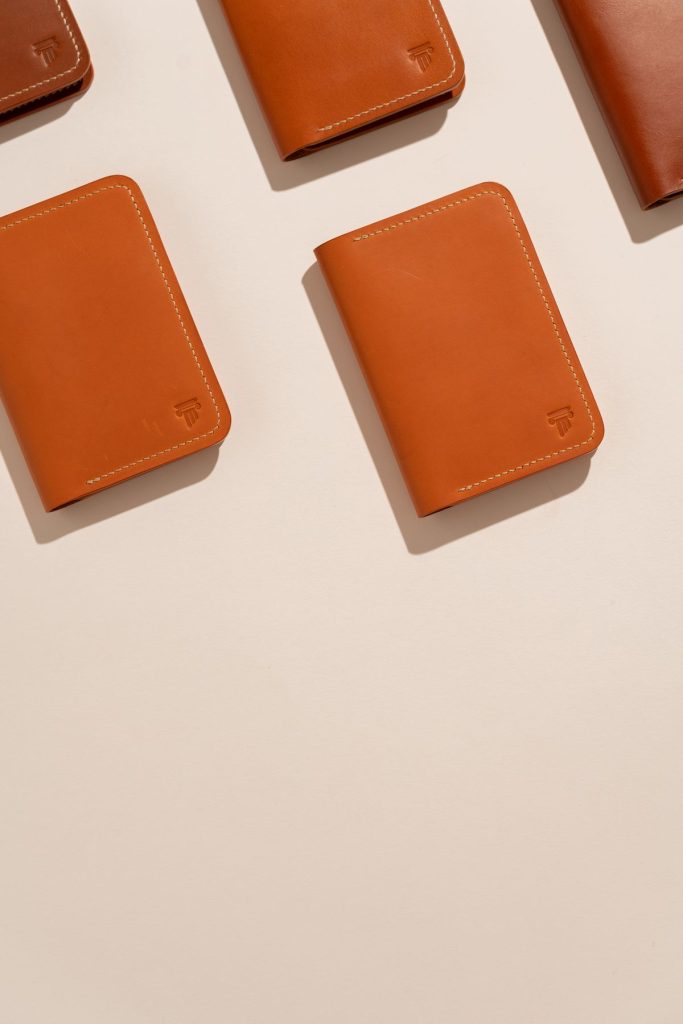
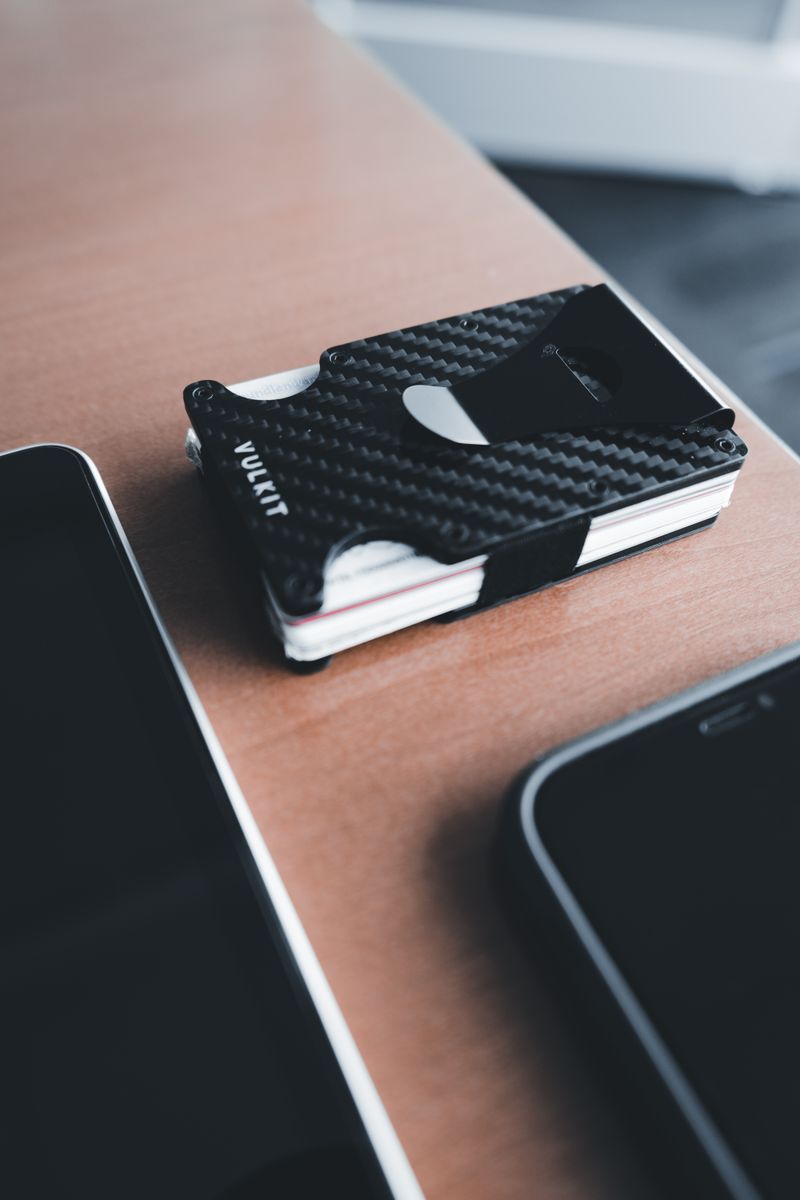
Card holder or wallet? If your phone handles payment and you carry fewer cards than you think, a slim card holder is usually the better carry. If cash, receipts, coins and a full ID set still travel with you, a traditional wallet remains the honest answer. This guide compares card holders and wallets on capacity, comfort, durability and real-world fit, then gives a scenario table so you can decide in about two minutes. It also explains what happens to cards and pockets when either option is overloaded – because that is the reason most people switch back.
The Core Difference: Cash vs Cards
Every design decision in a card holder follows one idea: the carry should disappear in your pocket. Cards sit flat, the body stays rigid, nothing bulges. A traditional wallet assumes more – paper money, coins, receipts, membership cards, maybe a passport sleeve on travel days.
Neither assumption is wrong. They are simply true for different people. The distinction becomes most visible the moment you sit down: a loaded bifold in the back pocket tilts your posture and wears the seat of expensive trousers, while a card holder in the front pocket changes almost nothing.
Card Holder Pros and Cons
Card holders win on the things you feel every hour, not once a year:
- Thinner and lighter, so front-pocket carry becomes comfortable.
- Cards stay in view – no digging through compartments.
- No uneven weight when you sit, which protects posture and trousers.
- A rigid body means cards do not bend or warp in the pocket.
The trade-offs are real too: no cash slot, no coin capacity, no room for folded documents, and a hard capacity ceiling. If your spending is cash-first, a card holder will frustrate you daily.
Traditional Wallet Pros and Cons
A traditional wallet is a mobile office. It carries cash, cards, receipts, business cards and the occasional stamp card, and most people can operate it without looking. After a few months the leather molds to your exact habit.
The costs are equally familiar: it is thick enough to tilt your seat, it finds the back pocket by default, and the front-pocket fit is tight with modern trousers. It also moves slowly – counting change, sorting receipts – which is wasted motion when your phone and cards are enough for most days.
Who Each One Suits
| Scenario | Better carry | Why |
|---|---|---|
| City commuting, phone payment plus 3-5 cards | Card holder | Nothing to carry beyond cards; thin wins every day. |
| Market trips and cash-heavy travel | Traditional wallet | Coins, notes and folded receipts need compartments. |
| Business trips with documents and ID | Traditional wallet | Passport, boarding pass and paper receipts need volume. |
| Minimalist / EDC carry | Card holder | Reducing pocket weight is the entire point. |
| Errand days with kids and mixed carry | Traditional wallet | Life generates paper; a card holder cannot absorb it. |
Sizing and Capacity Reality
Card capacity is the most optimistic number in the category. A holder with a large-sounding slot count still tightens once cards are embossed, warped or already worn – raised numbers eat interior space that printed cards do not. Overloading does real damage: cards in the middle flex under pressure, embossing digs into neighboring card faces, and the slots stretch permanently.
This is also where machining quality shows. TOPWALLET finishes slot walls in-house across 12-14 production steps on 120+ CNC stations, so edges stay smooth and grip stays consistent. Cheap holders scratch cards within weeks; a well-built one still slides cards freely after years.
Can You Combine Both?
Many people run a card holder as the daily carry and keep a traditional wallet for travel, markets and document days. That is not indecision – it is honest about two different jobs. A second, cheaper trick is the cash-sleeve holder: a card case with one shallow pocket for folded notes when the market trip is not worth a full wallet.
For more head-to-head carry comparisons, see the comparison archive, or browse carbon fiber card holders and the wider minimalist wallet collection if thin carry is your direction.
FAQ
Is a card holder better than a wallet?
Only if cards dominate your carry. Card holders are lighter, thinner and front-pocket friendly, but they cannot hold cash, coins or documents. If you pay by phone and carry fewer than a handful of cards, a card holder is better. If paper money is still part of your week, keep a wallet.
Can a card holder hold cash?
Most cannot, and the ones that can usually hold one or two folded notes at best. A card case with a money clip or a slim sleeve is the realistic middle ground. If your cash volume runs higher than folded notes, a card holder is the wrong tool regardless of brand.
Do card holders damage credit cards?
A well-finished holder should not touch card faces at all. Damage comes from poor machining – rough slot edges – and from overloading, which makes cards rub against each other. Check that cards slide without resistance and that embossed numbers do not press into neighboring faces.
How many cards fit in a card holder?
Real-world capacity is usually two-thirds of the published slot count, because embossed cards, worn cards and extra thickness reduce space. Fill it three-quarters and test: if cards bind or the body bulges, remove one. A rigid holder that stays flat protects the cards better than a stretched one.
Is a card case the same as a card holder?
In practice the terms are used interchangeably, but they differ in intent. A card holder is the flat, rigid daily carry. A card case usually means a softer, stitched structure with an outer pocket, closer to a mini wallet. When comparing specs, compare the actual structure you will carry, not the label.
Which is better for the back pocket?
Neither is ideal – a thick wallet in the back pocket tilts your hips and is easy to pickpocket. Card holders are comfortable enough because they are flat, but the standard advice still applies: front pocket for security, back pocket only for a short walk.
Related reading
From article to product
Still deciding between the two?
Send us the use case rather than the product name. Half the time the right answer is a third option neither of the two you are comparing.
Keep reading
More on wallet comparisons
Evaluating Good Wallet Brands for Bulk Procurement
Compare wallet brands and manufacturers for B2B sourcing — materials, certifications, MOQ, lead times,…
ReadWristlet Wallet vs Pink Wristlet: B2B Comparison Guide 2026
Compare minimalist metal wristlet wallets against fashion pink wristlets. Understand materials, capacity, MOQ, and…
ReadBest Leather Wallets for Men: B2B Sourcing Guide
What makes the best leather wallets for men? Compare leather grades, construction quality, RFID…
Read
About the author
Wu, Leon
Leon Wu is the senior product engineer and EDC testing lead at TOPWALLET. He has spent more than a decade on wallet design-for-manufacture, materials and quality control at the company's Dongguan facility, and writes from bench testing, pull-force and 13.56 MHz shielding measurements rather than supplier spec sheets.
Written on the floor
This article was written by our production and QC team — the people who spec tolerances, run the finishing line and inspect every batch. Where it states a capacity, a pull force or a lead time, it comes from a measurement we made, not a supplier’s catalogue. If a number here disagrees with what your own supplier told you, tell us; several of these articles started as a correction from a buyer.
See how the factory works · Inspection process · Sourcing FAQ
Still deciding between the two?
Send us the use case rather than the product name. Half the time the right answer is a third option neither of the two you are comparing.