
Wallet Care · 8 min read
How to Organize Your Wallet Cards in 2026: a Three-Tier Carry System That Stays Thin

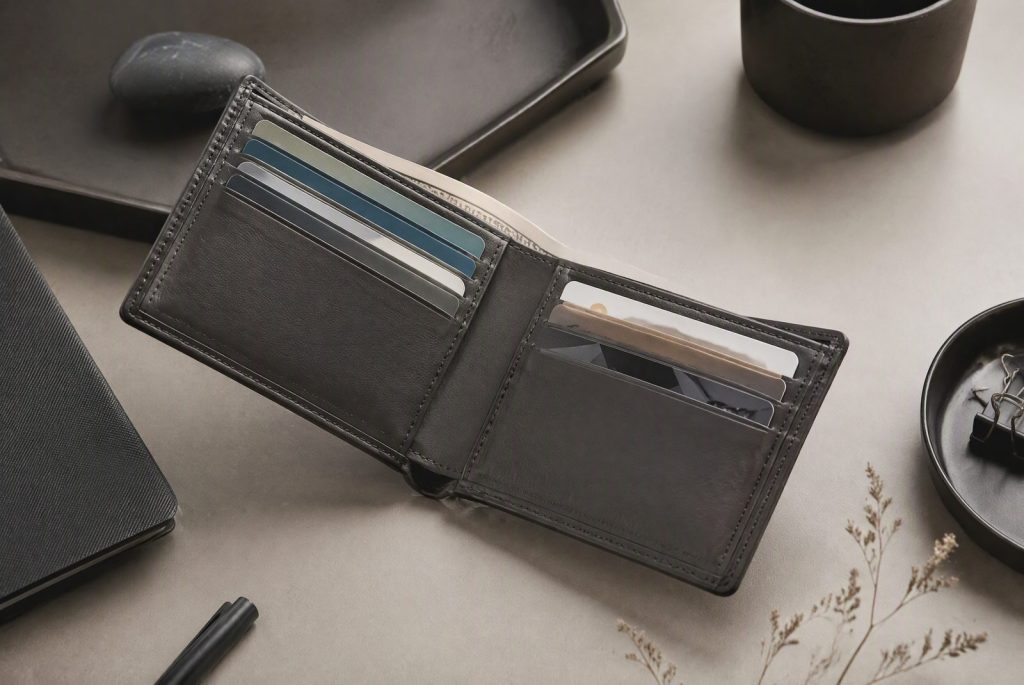
Thick wallets are a stacking problem, not a storage problem: most people carry eight to twelve cards when four to six cover a normal week. This guide gives you a three-tier system — Daily, Occasional, and Backup — with a fixed slot order and a quarterly pruning routine that keeps a wallet thin without cutting access. Count limits and frequency windows are estimates, since they follow your habits; TOPWALLET's manufacturing numbers are the only hard figures here [2][5]. Apply it once, and every card you carry earns its slot.
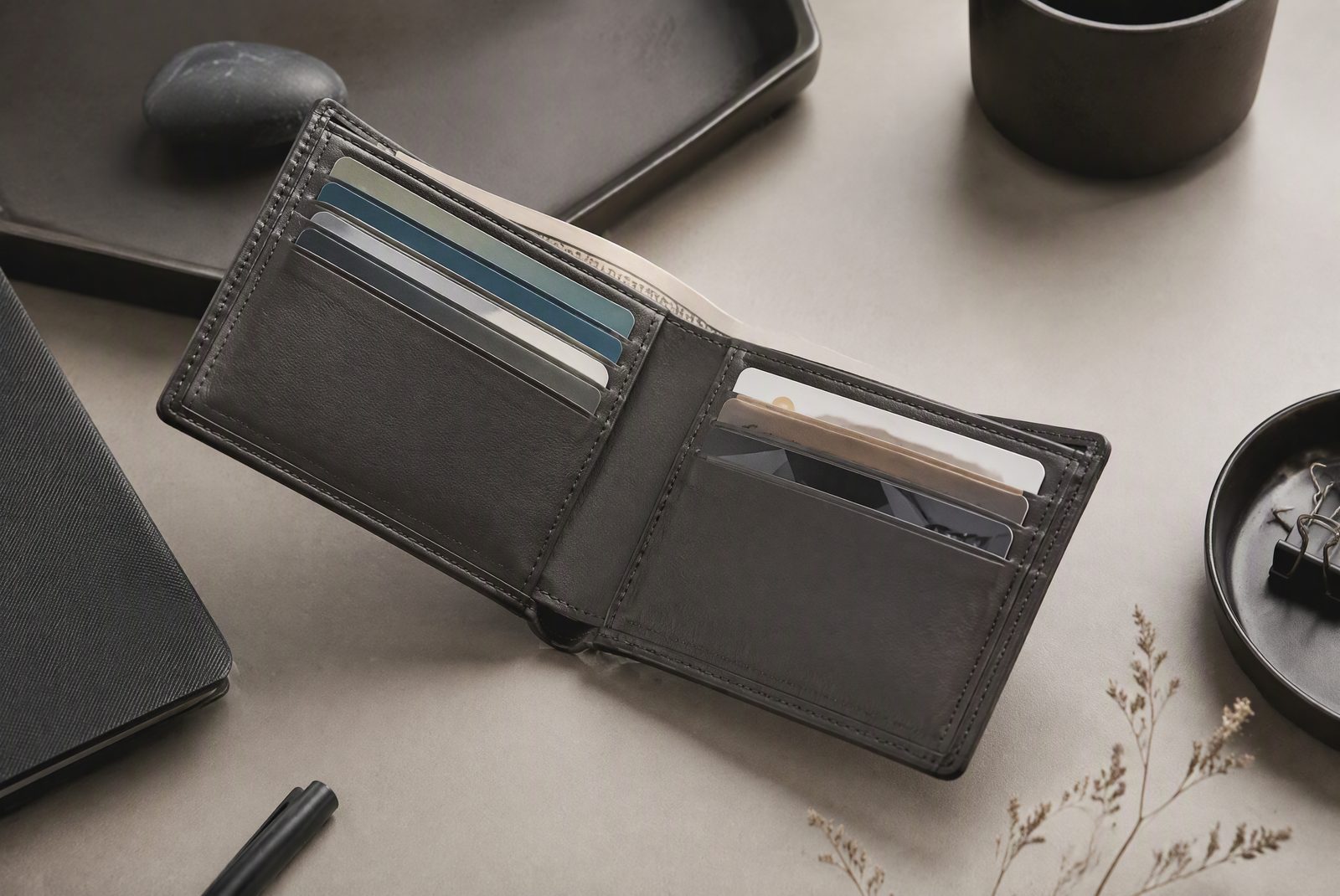
Quick Comparison: the Three Tiers of Wallet Cards
| Tier | How often you use it | Where it lives | Suggested count (estimate) | Examples |
|---|---|---|---|---|
| Daily | Every day, sometimes several times a day | The main slots you reach first | 3–5 | Debit card, primary credit card, driver's license, transit card, work badge |
| Occasional | 1–3 times a week (per our protocol) | Inner side pockets or a separate card sleeve | 2–4 | Secondary credit card, loyalty and membership cards, store discount cards |
| Backup | Less than once a month | A drawer or tray at home, not the wallet | 0–2 | Gift cards, insurance card, old IDs, rarely scanned membership cards |
The counts are planning estimates, not rules; what matters is the boundary between tiers, not the total.
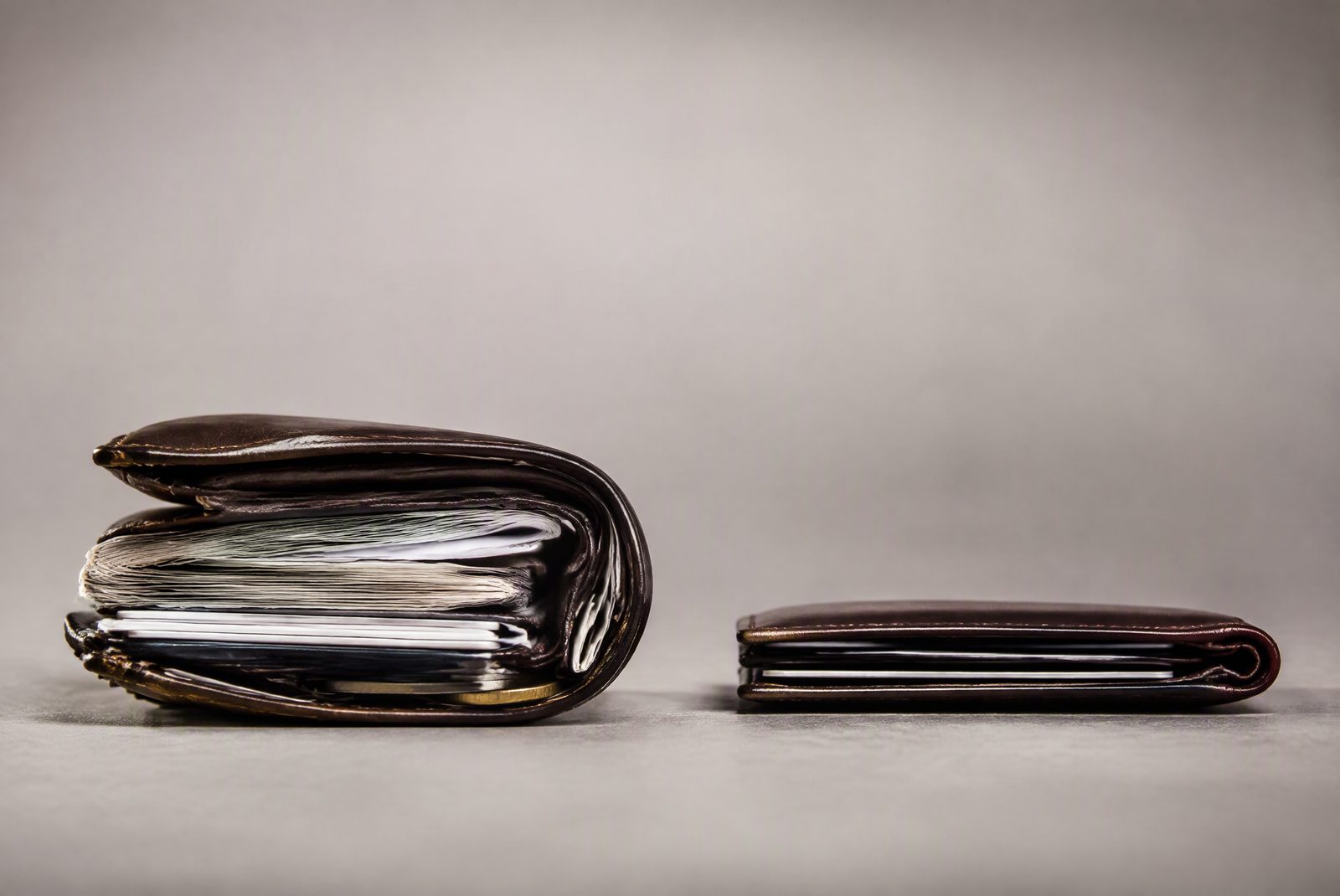
Why Wallets Get Thick: the Card-Stacking Problem
Wallets thicken one card at a time, for reasons unrelated to the wallet: the "just in case" habit (carrying everything so nothing is ever forgotten), no removal routine (cards enter and never leave), and card-slot pressure — adding 3–4 extra cards adds roughly 2–3 mm of thickness (estimate, depends on material, stitching, and slot tightness, per our protocol).
Thickness is not just cosmetic. A stretched wallet creases permanently, card edges rub, and magnetic stripes wear faster. From a manufacturing standpoint, most minimalist designs are built around a 4–6 card load; overstuffing fights the structure the factory engineered [4]. The fix is not a bigger wallet — it is fewer cards with a reason to be carried.
a Three-Tier Carry System That Survives Real Weeks
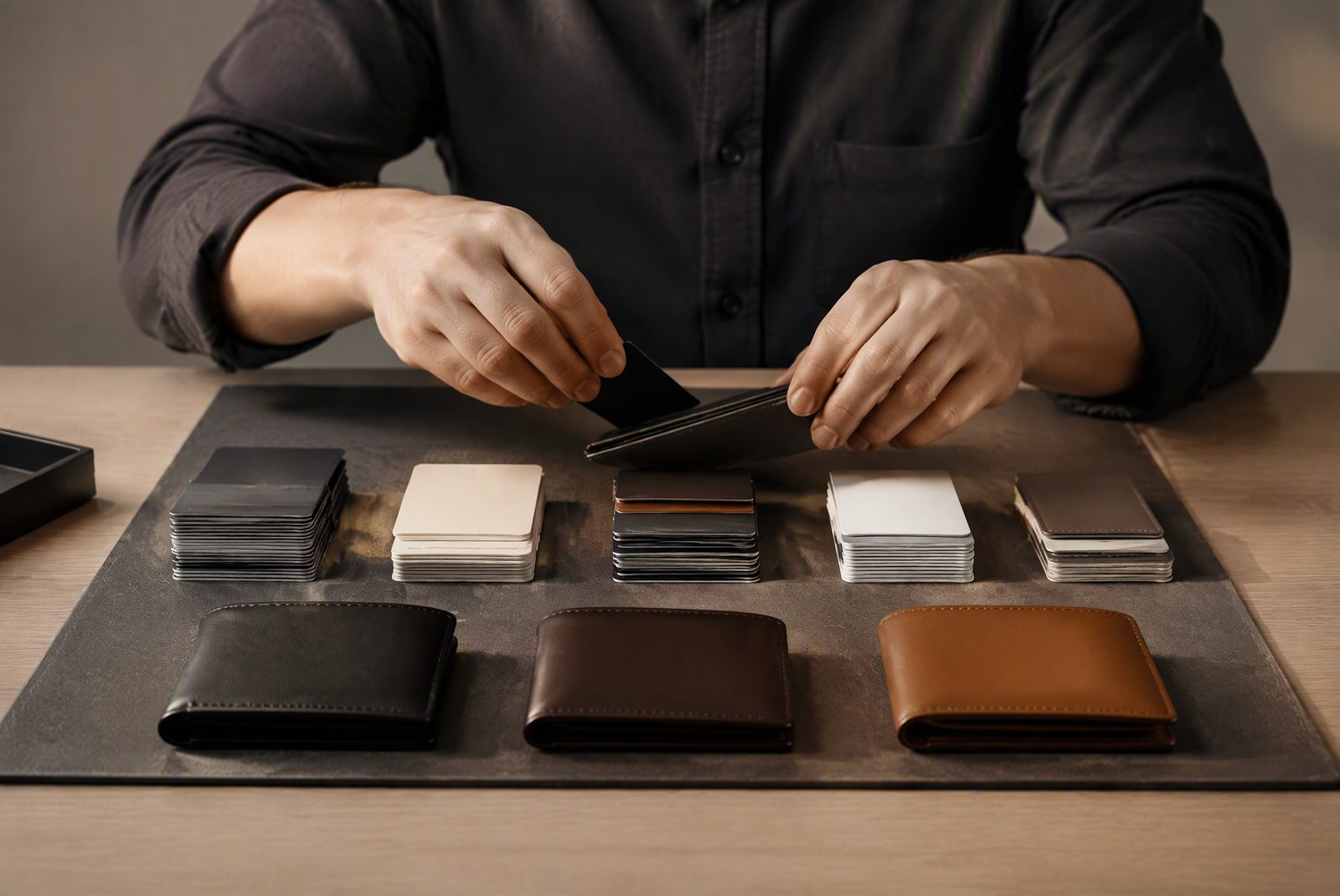
Sort every card you own into three tiers. Do it once with the wallet open and a pile of cards on the table, then repeat the sort monthly until it becomes automatic.
Tier 1 — Daily: Only Cards You Touch Every Day
The Daily tier is the only one that lives in a pocket or a minimalist wallet. Start with this checklist and cut anything that fails it:
- Primary debit or credit card
- Driver's license or government ID
- Transit pass or work access card
- One backup card on a different payment network (only if you actually rotate to it)
A reasonable Daily load is 3–5 cards (estimate). If the pile grows past five, something in it belongs to Tier 2.
Tier 2 — Occasional: Weekly-Use Cards, One Layer Deeper
Occasional cards are used a few times a week but not every day. They move to inner slots or a slim card sleeve that does not add thickness to the main panel:
- Secondary or corporate credit card you use when traveling or expensing
- Loyalty and membership cards you actually scan, not ones you "might" scan
- Store discount cards, if you visit that store at least twice a month
Rule of thumb: if a card was not used in the last seven days, it stops being Occasional.
Tier 3 — Backup: If You Have Not Used It in 30 Days, It Comes Out
Backup cards leave the wallet entirely. Park them in a drawer, a tray, or an RFID card holder at home:
- Gift cards with balances you plan to spend — digitize the ones your phone wallet supports first
- Health insurance and pharmacy cards — most live in a phone wallet already (estimate: most major US insurers' apps offer digital cards)
- Old IDs, retired memberships, and store cards not scanned in a year
The 30-day cutoff is a working estimate you can tune; the direction is what matters — anything unused for a month does not ride daily.
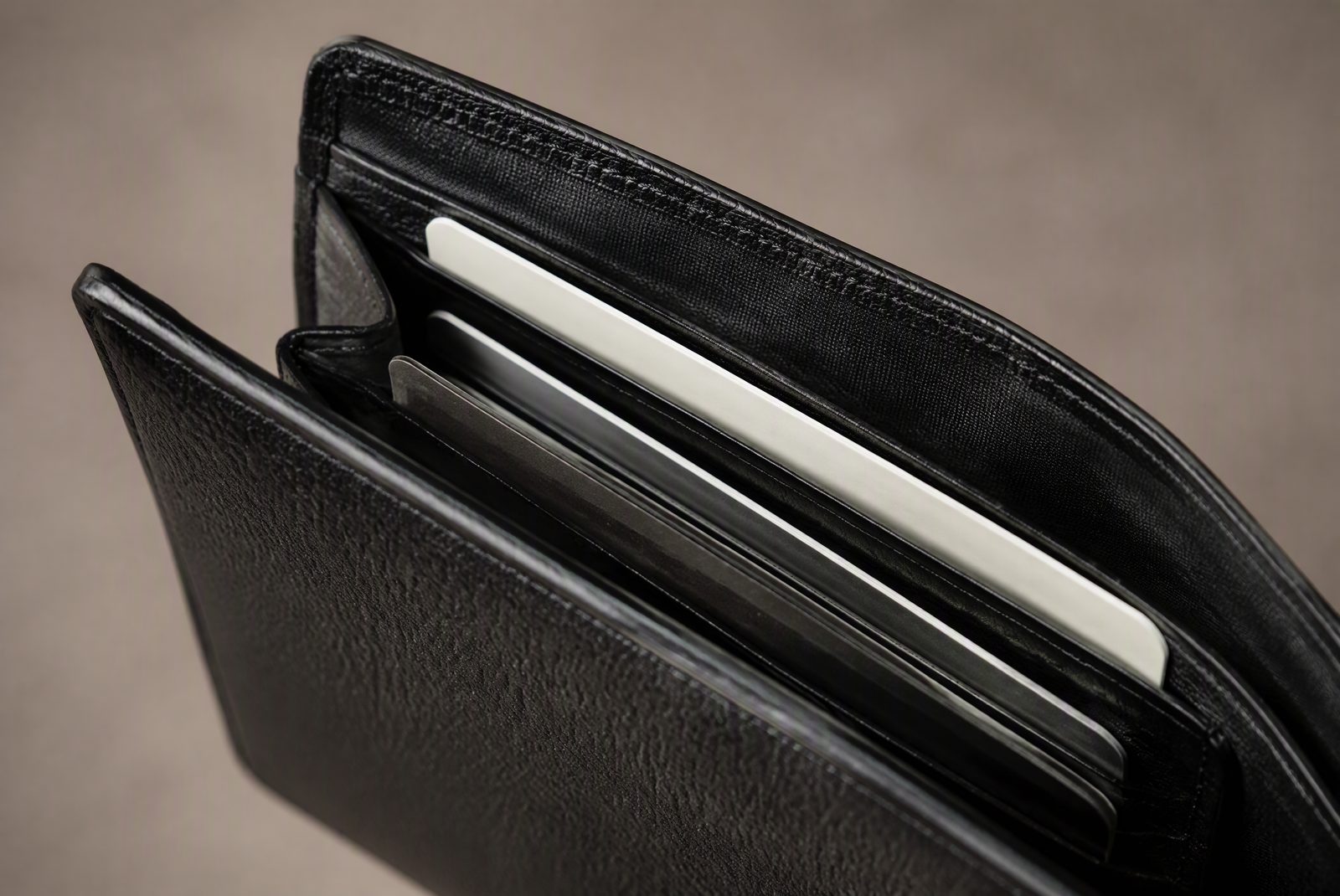
Slot Order: Arrange by Frequency, Then by Motion
Once the pile is sorted, placement matters as much as count. Slot order is frequency-first: the most-pulled card sits where your hand lands first, others one layer behind.
A high-throughput layout that works across most bi-fold and minimalist wallets:
| Slot position | What goes there | Why |
|---|---|---|
| Outer quick-access slot | Primary payment card | One-motion tap or pull at checkout |
| Second slot | Driver's license | Needed at gates, counters, and check-ins |
| Inner panel, upper | Secondary credit card | Absorbed into the wallet body, no added bulk |
| Inner panel, lower | Transit or work access | Frequent but predictable timing |
| Side or hidden slots | Occasional tier | Reached only when actually needed |
Two habits keep it stable: keep the tap card in the outer slot so contactless reads work without digging — some RFID-blocking wallets require removing the card first, so check the spec if tap-to-pay is your main method [3] — and distribute cards evenly between panels, since lopsided loads bend stitching and distort the profile (estimate based on typical construction tolerances).
Card-Pruning Discipline: When a Card Leaves the Wallet
Pruning is the half of organization that keeps it working. Schedule it like a routine, not an emergency:
- Frequency. Every 90 days (estimate, per our protocol); pair it with a calendar reminder.
- Removal criteria. Drop anything not used in 30 days (per our protocol), duplicating an existing card, available in a phone wallet or retailer app, or expired.
- Digital replacements. Most loyalty, gift, and insurance cards have app or phone-wallet versions (verify availability for your specific cards).
The three-tier sort is the same motion every time — empty, sort, reinsert by slot order — and a 15-minute review returns an overstuffed wallet to a Daily load.
Companion Storage: RFID Sleeves and the Logic of Picking a Slim Wallet
After pruning, the leftover cards need a home that matches how often you reach for them:
- RFID sleeves and holders. Backup cards at home are where a sleeve earns its keep; for daily carry, a shielding layer reduces exposure to close-range readers of contactless cards and IDs (read range is short — typically a few inches up to a couple of feet depending on reader power, estimate) [3].
- Slim-wallet logic. Count the Daily tier first, then pick a wallet with that many slots — not more. Full-grain leather softens with wear; aluminum and metal-panel designs keep a fixed, thinner profile [3]. A 2–6 slot wallet stays thin because the construction assumes that load [4].
Pick the wallet after you finalize the Daily count, or you will end up filling empty slots.
How TOPWALLET Helps You Carry Thin
TOPWALLET builds the everyday-carry side of this system. The minimalist collection is designed around 2–6 card slots, in full-grain leather or aircraft-grade aluminum, with RFID-blocking options where contactless security matters [3][4]. That matches the 3–5 card Daily load above without leftover capacity to fill.
For buyers, the same discipline applies at factory level. TOPWALLET brings 15 years of manufacturing experience and 200+ brand partners [1], at a monthly capacity of 50,000 units with flexible MOQ [2]. For custom slot layouts, brand engraving, or private-label runs, the OEM flow runs 7-day sampling and 30-day production, with ISO 9001:2015 and four-stage QC at AQL 2.5 keeping batch quality consistent [5].
FAQ
How many cards should I keep in my wallet?
A working range is 4–6 cards (estimate): 3–5 Daily plus optionally one or two Occasional in inner slots. Past six, thickness climbs fast and the wallet stops fitting comfortably.
Do extra cards damage each other?
Yes, gradually: stacked cards rub at the edges and magnetic stripes wear faster under constant pressure. EMV chip cards handle this better; fewer cards remain the cheapest protection.
Is an RFID-blocking wallet necessary?
It is cheap insurance, not a guarantee. Powered readers can read contactless cards and IDs at close range — typically a few inches to a couple of feet (estimate) — and a shielding layer reduces that exposure [3].
How do I stop cards from bending?
Don't sit on a back-pocket wallet, keep the load at 4–6, and choose a firm structure — stitched leather or a rigid metal frame beats a soft pouch [4].
How often should I clean out my wallet?
Every 90 days (estimate, per our protocol) works; a seasonal reminder is enough, and the full sort takes about 15 minutes once the three tiers are defined.
Can I digitize memberships instead of carrying them?
Most loyalty, gift, and insurance cards now offer app or phone-wallet versions. Keep the physical card only for programs without a digital option — that is exactly what the Backup tier is for.
Where to Buy
Prefer a slimmer loadout? The Minimalist Wallets line pairs the three-tier system with 2–6 slot builds in full-grain leather or aircraft-grade aluminum, RFID-ready [3][4]. Subscribe for weekly carry tips and match the wallet to your card count before you buy.
For wholesale, OEM, or private-label quantities: REQUEST A QUOTE
Sources
- TOPWALLET — Company background: 15 years of manufacturing experience, 200+ brand partners. https://topedcwallet.com/about/
- TOPWALLET — Production capacity: 50,000 units per month, flexible MOQ. https://topedcwallet.com/wholesale-wallets/
- TOPWALLET — Material options: full-grain leather, aircraft-grade aluminum, RFID-blocking materials. https://topedcwallet.com/materials/
- TOPWALLET — Minimalist wallet collection: 2–6 card slots, thin construction. https://topedcwallet.com/minimalist-wallets/
- TOPWALLET — Manufacturing and quality: ISO 9001:2015, AQL 2.5, four-stage QC, 7-day sampling, 30-day production. https://topedcwallet.com/faq/
From article to product
Sourcing minimalist-wallets?
Tell us the format, the quantity and the date you need stock. You get material options, MOQ and a landed-cost range back within one business day.
Keep reading
More on wallet care
How to Carry Cash in a Minimalist Wallet: 7 Folding Methods (2026)
Here’s the short version: the trick to carrying cash in a minimalist wallet is…
ReadHow to Remove Scratches From a Metal Wallet (2026)
Here’s the short version: scratches are removable only when they sit in the finish…
ReadHow to Slim Down a Bulky Wallet: 15-Minute Reset (2026)
Here’s the short version: empty every card out of your wallet, cut the stack…
Read
About the author
Wu, Leon
Leon Wu is the senior product engineer and EDC testing lead at TOPWALLET. He has spent more than a decade on wallet design-for-manufacture, materials and quality control at the company's Dongguan facility, and writes from bench testing, pull-force and 13.56 MHz shielding measurements rather than supplier spec sheets.
Written on the floor
This article was written by our production and QC team — the people who spec tolerances, run the finishing line and inspect every batch. Where it states a capacity, a pull force or a lead time, it comes from a measurement we made, not a supplier’s catalogue. If a number here disagrees with what your own supplier told you, tell us; several of these articles started as a correction from a buyer.
See how the factory works · Inspection process · Sourcing FAQ
Sourcing minimalist-wallets?
Tell us the format, the quantity and the date you need stock. You get material options, MOQ and a landed-cost range back within one business day.