

Quick Answer — What Makes a Small Wallet Ideal for Women?
The best small wallet for women balances three things: compact capacity (enough for 4–10 cards and some cash without bulk), durable materials (typically aluminum, carbon fiber, or full-grain leather), and thoughtful organization (RFID-blocking layers, a money clip or slip pocket, and easy-access card slots). For 2026, minimalist metal wallets and slim card holders dominate the women’s compact segment because they sit flat in pockets and small bags, resist wear, and offer built-in security features that leather wallets of similar size often lack.
For B2B buyers — brand owners, Amazon FBA sellers, and distributors — the right choice depends on whether your line prioritizes fashion, function, or both. Leather skews toward aesthetic-driven buyers; aluminum and carbon fiber appeal to utility-focused consumers. Titanium sits at the premium end and commands higher margins but also higher unit costs.
Detailed Explanation — Key Features That Define a Great Small Wallet
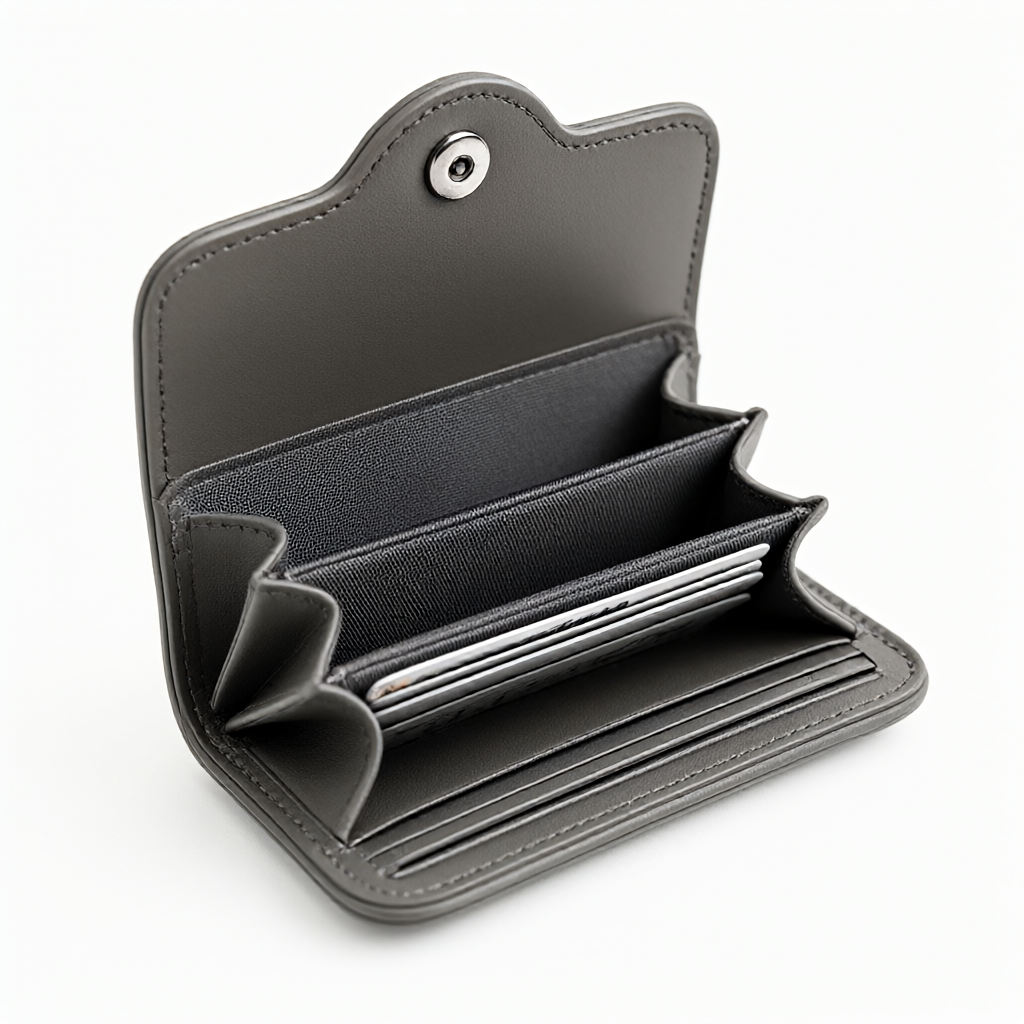
Card Capacity and Organization
A women’s small wallet should carry the essentials without forcing the user to compress a full-sized wallet into a pocket. The sweet spot is 6–10 card slots, with at least one dedicated to an ID window or frequently used card. Cash handling varies by style: a money clip keeps notes flat and secure but limits capacity to roughly $50–$100 in folded bills; a slip pocket holds more but adds slight bulk. Hybrid designs — a few card slots plus a small cash strap — tend to perform best across diverse use cases.
See our best card holder buying guide for B2B sourcing for deeper coverage on slot layouts and retention mechanisms.
Material Trade-offs
Each material tells a different story about the product’s intended user:
- Aluminum (typically 6000-series or 7075): Lightweight, scratch-resistant when anodized, and inherently modern in appearance. It does not warm to cold temperatures the way titanium does. Surface finishing options like bead blasting, polishing, and color anodizing give designers wide visual latitude.
- Carbon fiber: Extremely light and rigid with a distinctive woven texture. It resists scratches better than bare aluminum but is more expensive to machine and finish. Carbon fiber also carries strong visual differentiation on retail shelves.
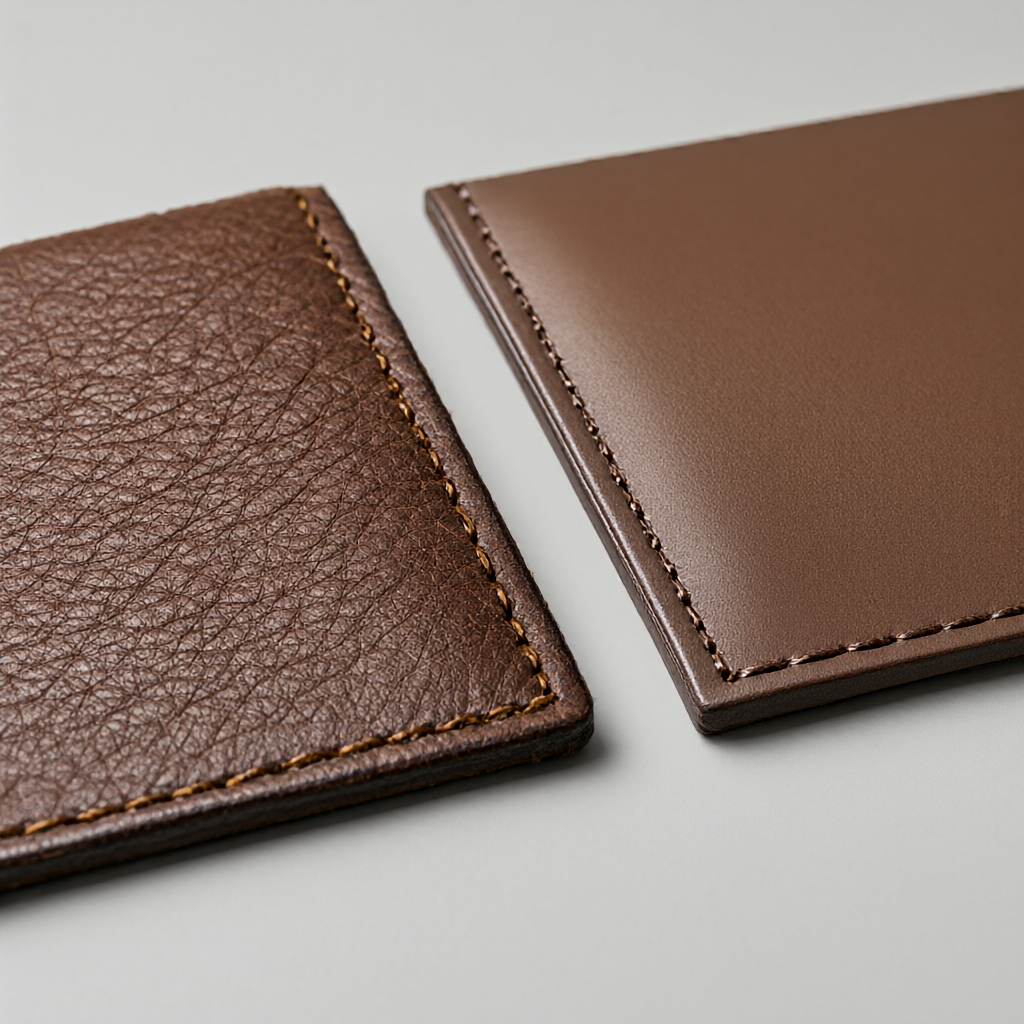
- Leather: Offers warmth and traditional appeal. Full-grain leather develops a patina over time, which some buyers value. However, leather wallets of comparable size are generally heavier than their metal counterparts and require conditioning to maintain appearance.
- Titanium: The premium choice — stronger than aluminum, lighter than steel, and highly corrosion-resistant. It commands a higher price point and appeals to buyers seeking a luxury-tier EDC product.
RFID Protection
RFID-blocking small wallets for women are now standard rather than optional in many markets. The technology works by embedding a thin metallic mesh or foil layer (usually iron-nickel alloy) between the wallet’s outer shell and inner card pockets. This layer creates a Faraday cage that blocks radio-frequency signals in the 13.56 MHz range — the frequency used by most contactless payment cards and passports.
Whether RFID protection is necessary depends on your market. In the United States and Europe, consumer awareness of card-skimming risks is high, and retailers often expect it as a baseline feature. The FTC advises consumers to consider RFID-blocking products as a practical layer of defense against unauthorized scanner attacks. For markets where contactless payment adoption is rapid, omitting RFID protection can become a competitive disadvantage.
Style Categories
- Minimalist metal wallets: One-piece or articulated aluminum/carbon fiber bodies with spring-loaded or friction-held card stacks. Often include a money clip. Popular with younger, style-conscious buyers.
- Slim card holders: Essentially a card sleeve with optional cash strap. Ultra-compact, often under 60 g. Best for users who carry very few cards.
- Bifold mini wallets: Folded construction in a smaller footprint than a standard bifold. Retains some traditional wallet structure but in a reduced scale.
- Money clip wallets: Metal body with an integrated clip mechanism. Minimal cash capacity but maximizes card accessibility and thinness.
Key Specifications — Materials, Capacity, and Weight Benchmarks
What are the key specs for a women’s small wallet?
| Specification | Typical Range | Notes |
|---|---|---|
| Card slots | 4–12 | 6–10 is the functional sweet spot |
| Total weight | 40–100 g | Under 70 g is considered truly ultra-slim |
| Width | 65–85 mm | Must fit standard credit card dimensions |
| Height | 95–115 mm | Compact but long enough for folded bills |
| Thickness (closed) | 8–18 mm | Depends on card count and mechanism |
| RFID blocking | Yes/No | Standard on most aluminum and carbon fiber models |
| Material options | Aluminum, carbon fiber, leather, titanium | Drives price tier and aesthetic positioning |
Weight is a critical differentiator. A women’s wallet exceeding 100 g begins to feel noticeably heavier than a smartphone in a pocket, which undermines the “minimalist” claim. Products under 60 g are marketable as ultra-lightweight and often command attention in comparative reviews.
When evaluating a slim women’s wallet guide for your sourcing needs, prioritize specs that align with your target price tier. Entry-level aluminum wallets typically land between $3–$8 FOB at volume; carbon fiber models sit in the $6–$15 range; titanium variants can exceed $20 FOB depending on complexity.
Review our best slim wallets for men guide for cross-gender comparison frameworks that apply equally to women’s lines.
Standards & Requirements — Quality Markers Buyers Should Verify
What standards apply to small wallets for women?
Several quality markers separate a well-engineered product from one that fails within months:
Anodizing quality (aluminum): The anodized layer should be uniform in color and thickness (typically 10–25 microns for decorative anodizing). Check for consistent adhesion — proper anodizing will not chip or flake under normal flexing. Look for suppliers who test to ASTM B136 or equivalent salt-spray standards to verify corrosion resistance.
CNC machining tolerances: Edges should be deburred and polished. Sharp corners catch on fabric and cause premature wear. Fine edge treatment and chamfering are visible quality signals that consumers notice immediately.
Spring and mechanism durability: Articulated wallets use tension springs or friction fits to hold cards. A quality mechanism should retain cards through 1,000+ insertion cycles without losing tension. Reputable manufacturers cycle-test prototypes before committing to production.
Material certifications: For markets with chemical safety requirements, ensure materials comply with REACH and RoHS regulations. Leather should be chromium-V free if marketed as eco-friendly. Metal alloys should be SGS-tested for heavy metal content.
Quality management systems: Factories operating under ISO 9001 certification follow documented procedures for incoming inspection, in-process checks, and final verification. This reduces defect rates and improves consistency across production runs. BSCI audits further indicate social compliance in the supply chain, which matters for retail buyers in Europe and North America.
See our best minimalist wallets for B2B sourcing for additional quality evaluation criteria.
Related Considerations — Sourcing and Procurement for B2B Buyers
What should you consider when sourcing compact wallets?
MOQ and cost structure: Minimum order quantities for custom wallets typically range from 300 to 500 pieces depending on the manufacturer and complexity. Lower MOQs suit test launches and small-batch brands; higher volumes unlock better per-unit pricing. Customization — laser engraving, color anodizing, custom packaging — adds cost proportional to setup time and material waste.
Lead time expectations: Sample development usually takes 5–10 business days. Mass production for a standard 500-piece order commonly runs 25–35 days after sample approval. Expedited timelines are sometimes available at a premium.
Customization scope: Buyers should evaluate whether a supplier can handle the full customization pipeline — from logo laser engraving and UV printing to retail box design and FBA-compliant labeling. End-to-end capability reduces coordination overhead and quality risk.
Certification requirements: Different markets have different compliance needs. The EU requires REACH and RoHS documentation for consumer goods. The US has no federal RFID-blocking certification mandate, but major retailers often require third-party test reports. Verify that your supplier provides documentation upon request.
Packaging and branding: Retail-ready packaging adds shelf appeal and protects the product during shipping. Custom retail boxes, hang tags, and include cards with care instructions elevate perceived value. For Amazon FBA sellers, ensure packaging meets FBA labeling and dimension requirements.
Choosing a Manufacturer — What to Look For in an EDC Wallet Supplier
How do we meet these sourcing standards?
As a manufacturer specializing in minimalist EDC wallets, our approach to this category follows the same principles buyers evaluate: material integrity, precision engineering, and clear specification communication. Here is how we operate within those parameters.
Our facility runs in-house CNC machining for aluminum and titanium wallets, which means we control tolerances and surface finish from raw material to final product. We offer carbon fiber card holders and titanium money clips across multiple design configurations, with customization spanning logo laser engraving, anodized color finishes, and bespoke retail packaging. For brands testing a new women’s line, our MOQ starts at 300 pcs per SKU for full OEM customization (100 pcs trial order available for stock finishes), and sample lead time is typically 7 business days. We hold ISO 9001 certification and operate an BSCI audited facility, with all materials REACH and RoHS compliant and SGS-tested.
Our export network spans 200+ brands across America, Europe, Australia, and Southeast Asia — including EDC brand owners, Amazon FBA sellers, promotional product distributors, and retail chains. If you are evaluating suppliers for a compact women’s wallet line, reach out with your target specs and volume, and we can provide material samples and a detailed quotation.
For a deeper look at how we approach private-label minimalist wallet programs, see our best wallet for B2B buyers procurement guide.
Best Small Wallets For Women: Where Can You Verify the Data and Sources?
- FTC advises consumers to consider RFID-blocking products — www.ftc.gov
- best card holder buying guide for B2B sourcing — topedcwallet.com
- best slim wallets for men — topedcwallet.com
- best minimalist wallets for B2B sourcing — topedcwallet.com
- reach out with your target specs and volume — topedcwallet.com
- best wallet for B2B buyers procurement guide — topedcwallet.com
From article to product
Sourcing minimalist-wallets?
Tell us the format, the quantity and the date you need stock. You get material options, MOQ and a landed-cost range back within one business day.
Keep reading
More on wallet types
Thin Male Wallets: Buying Guide for Slim Minimalist Picks
How to choose a slim wallet for men — thickness thresholds, material trade-offs, capacity…
ReadStashed Wallet: A Minimalist Everyday-Carry Solution
Understand what a stashed wallet is, how minimalist slim wallets work, and what to…
ReadFolding Wallets: Types, Materials & Buying Guide
Learn what makes a folding wallet worth buying, from materials and card capacity to…
Read
About the author
TOPWALLET Editorial Team
TOPWALLET's editorial and engineering desk writes from bench testing at the Shenzhen (Longgang) facility: pull-force and cycle testing, 13.56 MHz shielding measurements, finish trials and factory audits, rather than supplier spec sheets. Every specification in these guides is one we write on a purchase order.
Written on the floor
This article was written by our production and QC team — the people who spec tolerances, run the finishing line and inspect every batch. Where it states a capacity, a pull force or a lead time, it comes from a measurement we made, not a supplier’s catalogue. If a number here disagrees with what your own supplier told you, tell us; several of these articles started as a correction from a buyer.
See how the factory works · Inspection process · Sourcing FAQ
Sourcing minimalist-wallets?
Tell us the format, the quantity and the date you need stock. You get material options, MOQ and a landed-cost range back within one business day.