

Luxury Wallets For Women: What Is the Quick Answer?
What are luxury wallets for women? They are premium personal accessories positioned above mass-market options, defined by high-grade materials (aluminum, titanium, carbon fiber, bonded leather), refined surface finishes, slim ergonomic profiles, brand-differentiating customization, and certified quality controls. For a B2B buyer, sourcing luxury women’s wallets means specifying these parameters upfront — not assuming any metal or composite wallet automatically qualifies as “luxury.” The category spans minimalist card holders, slim money clip wallets, and compact bifold designs built for everyday carry (EDC) rather than traditional bulky leather bi-folds.
Luxury Wallets For Women: How Does It Work in Detail?
What defines a luxury wallet versus a standard wallet?
A luxury wallet sits at the higher end of the everyday-carry spectrum. It is not defined by logo placement alone; it is distinguished by a combination of material quality, manufacturing precision, aesthetic intent, and finishing detail. In practice, the difference shows up in three measurable areas:
- Material grade. Standard wallets often use lower-density alloys, basic polycarbonate, or synthetic leathers with thin coatings. Luxury-tier wallets for women typically use anodized aluminum (6000-series), Grade 5 titanium, wet-laid carbon fiber, or bonded leather with reinforced cores. These materials deliver superior scratch resistance, structural rigidity, and a tactile feel that signals intentional design.
- Manufacturing tolerance. A luxury product comes from CNC-machined or precision-stamped tooling with tight dimensional control — usually within ±0.1 mm for critical surfaces. This is what separates a consistently smooth-edged card holder from one with burrs, uneven gaps, or visible seam lines. For a deeper look at how these tolerances affect the final product, see the Men’s Minimalist Wallets — Materials, Specs & Sourcing guide, which covers the same manufacturing principles applied to the broader wallet market.
- Finish and branding. Luxury finishes include PVD coating, micro-bead blasting, brushed or mirror anodizing, laser engraving, and UV printing. These are not afterthoughts — they are spec’d into the design from the start and executed during production rather than added post-factory. The result is a product that feels cohesive in every layer, from the edge radius to the logo treatment.
Which materials are best suited for premium women’s wallets?
Each material brings a different set of trade-offs. The choice depends on target price point, aesthetic direction, and intended usage scenario.
| Material | Weight | Durability | Aesthetic Range | Cost Level |
|---|---|---|---|---|
| Anodized Aluminum (6000-series) | Very light (~25–40 g) | High (scratch-resistant) | Wide color palette via anodizing | Mid-range |
| Grade 5 Titanium | Light (~30–50 g) | Very high (corrosion-resistant) | Natural metallic / limited color options | Higher |
| Carbon Fiber (wet-laid) | Very light (~20–35 g) | High (stiff, impact-resistant) | Distinctive woven pattern; tintable | Mid-to-high |
| Bonded Leather | Moderate (~35–55 g) | Moderate (surface can wear) | Classic leather appearance; full custom colors | Lower-mid |
Aluminum remains the most popular choice for women’s luxury card holders and slim wallets because it offers the broadest color flexibility at a competitive price point. Titanium appeals to buyers who want corrosion resistance and a premium heft without the weight penalty of steel. Carbon fiber delivers a distinctive visual signature — particularly effective for brands targeting design-forward or outdoor-oriented audiences. Bonded leather works well for brands whose identity leans classic rather than technical, though the finished durability is inherently lower than hard-material alternatives.
For a complete overview of the sourcing landscape, consult the EDC Wallets: What They Are and How to Source Them guide, which covers material selection, production processes, and supplier evaluation frameworks.
Design and aesthetic considerations specific to the women’s segment
Women’s wallets occupy a distinct niche within the minimalist wallet space. The design priorities differ from men’s offerings in several practical ways:
- Scale and proportion. Women’s minimalist wallets tend to run slightly narrower (approx. 65–75 mm width) to fit smaller clutch bags, crossbody styles, and handbags with tighter compartments. They also prioritize slim depth over extreme capacity.
- Color and finish selection. Matte black, rose gold, champagne gold, and deep navy anodizing are consistently strong performers in the women’s segment. Metallic finishes should pair well with common hardware tones found in handbags and purse zippers.
- Surface texture. A soft-touch bead-blasted finish reads as more luxurious than a raw brushed surface for this segment. Similarly, rounded edge radii (typically R0.5–R1.0 mm) feel more refined than sharp, machined edges.
- Customization appeal. Laser-engraved patterns, monogram initials, or branded motifs add perceived value without increasing unit cost significantly. These differentiate private-label offerings in crowded marketplaces.
Understanding these nuances helps buyers avoid a common mistake: simply downscaling a men’s design and calling it a women’s version. A well-specified women’s luxury wallet requires intentional design decisions from the outset — not just smaller dimensions.
Functional specs: capacity, thickness, weight, and RFID protection
How thick and heavy should a luxury minimalist wallet be?
For the women’s luxury segment, the target specifications generally fall within these ranges:
- Thickness: 6–10 mm (closed). Anything above 12 mm begins to compromise pocket carry comfort, especially in smaller bags.
- Weight: 25–50 g. This is light enough for all-day carry without creating bag drag but substantial enough to convey quality.
- Card capacity: 4–8 cards in the main slot, with room for folded bills behind or alongside. Slim women’s versions often cap at 6 cards to maintain the narrow profile.
- Phone integration: Some designs incorporate a rear pocket sized for compact smartphones (iPhone SE to iPhone 14 Pro Max range), though this increases thickness and weight noticeably. Buyers should confirm target phone compatibility with end consumers before committing to this feature.
Does RFID protection add real value in a luxury wallet?
Yes — but conditionally. RFID-blocking technology is relevant for wallets carrying bank cards, transit passes, and ID documents. It works by embedding a conductive mesh (typically nickel-copper alloy) or using RF-absorbing materials within the wallet structure.
However, the actual threat landscape has narrowed. Many modern contactless payment systems now require transaction amounts above a low threshold (often $25–$50 depending on region) for unauthorized reads to succeed. Still, consumer awareness of RFID skimming persists, and RFID protection functions as a credible differentiator in retail conversations — particularly in markets like North America and Europe where consumer protection expectations are higher. From a procurement standpoint, it adds minimal cost to the bill of materials but meaningful perceived value. For background on RFID wallet technology and sourcing considerations, review the What Is an RFID Wallet? B2B Sourcing Guide.
Luxury Wallets For Women: Which Specifications Matter Most?
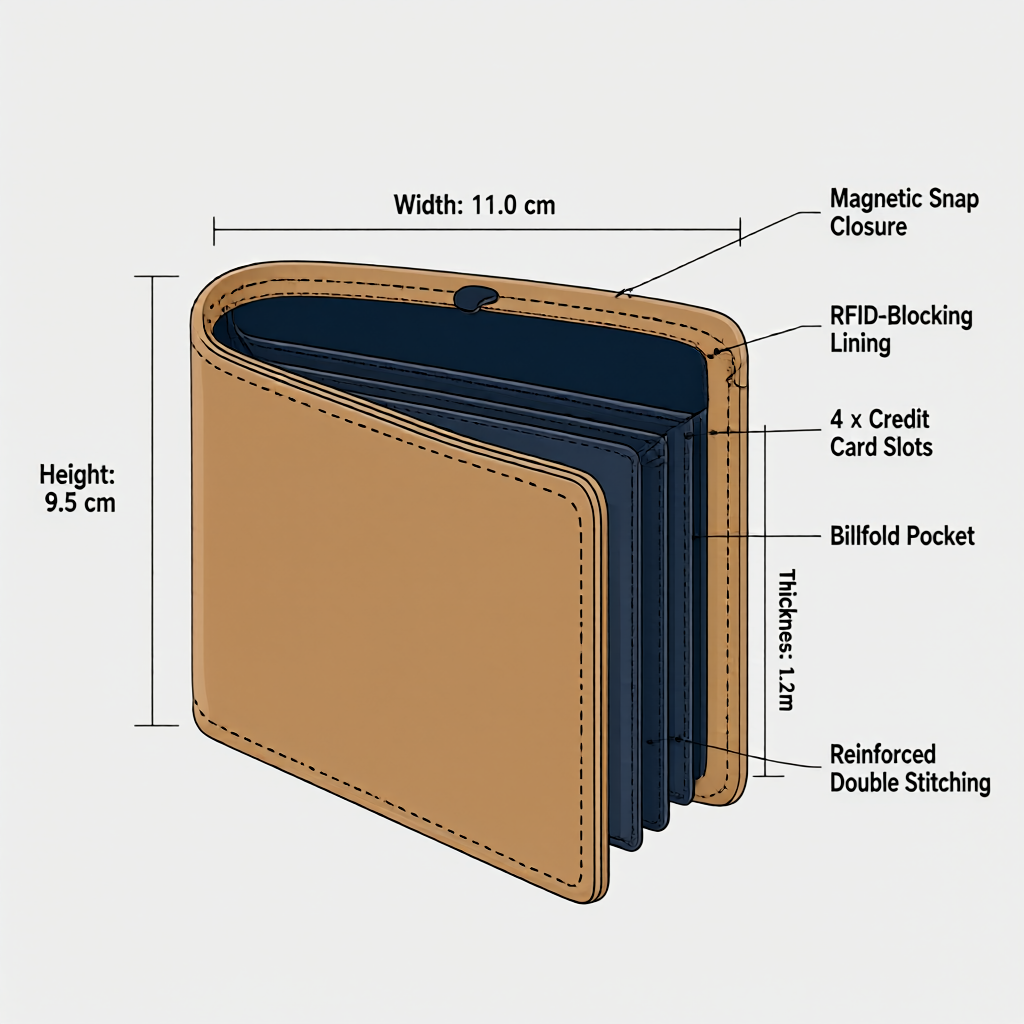
What are the key specs for luxury women’s metal wallets?
| Specification | Typical Range | Notes |
|---|---|---|
| Width | 65–80 mm | Narrower variants for petite handbags |
| Height | 100–115 mm | Full-height or half-height options |
| Thickness (closed) | 6–10 mm | 6–8 mm preferred for ultra-slim positioning |
| Weight | 25–50 g | Includes spring mechanism if applicable |
| Card slots | 4–8 | Fixed or adjustable spring mechanism |
| Bill compartment | Yes / No | Rear slip or clamshell fold |
| RFID shielding | Standard / Optional | Conductive mesh layer integration |
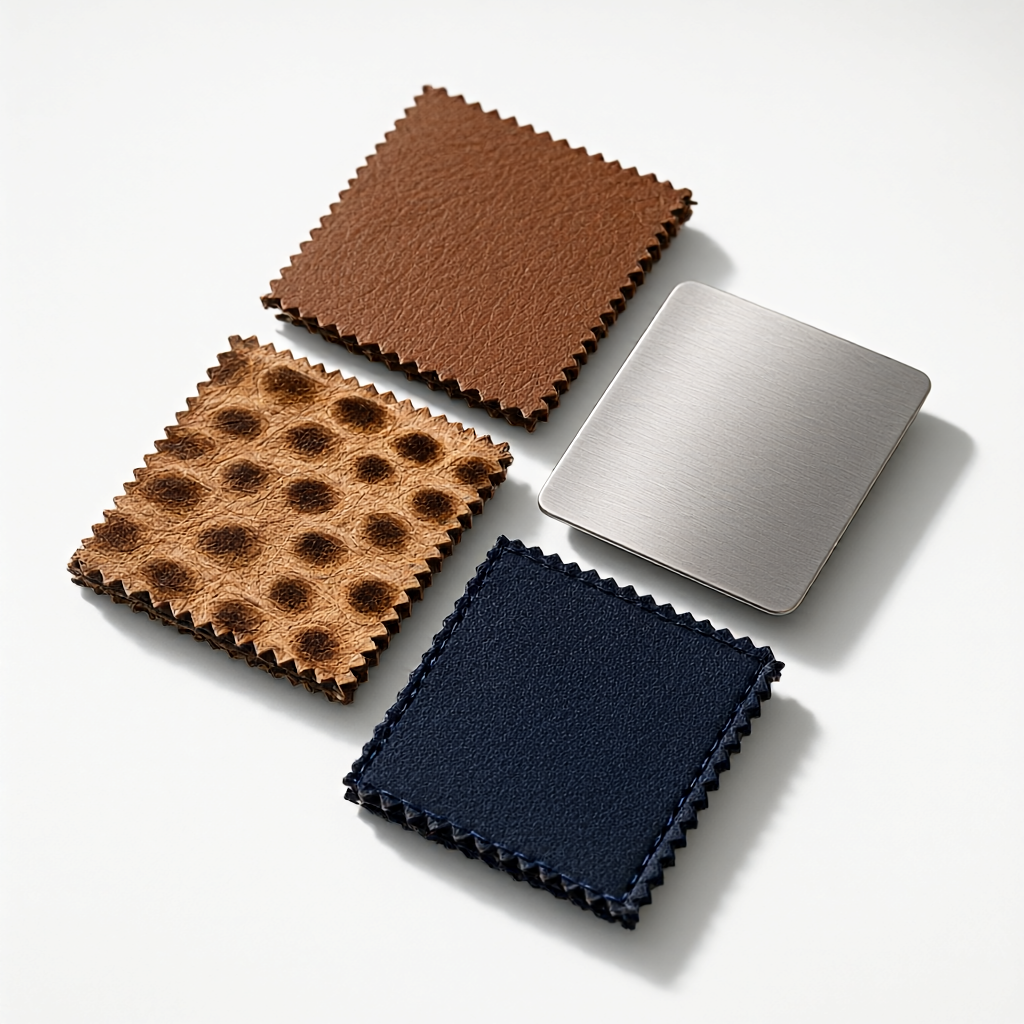
| Surface finish | Anodized, PVD, bead-blasted, brushed | Determines aesthetic and durability |
| Logo application | Laser engraving, UV print, emboss | Adds customization cost |
| Packaging | Retail box, blind pack, gift box | Varies by channel (Amazon FBA vs. retail) |
These specifications represent starting points. Actual dimensions should be validated against the target retail price point and the end consumer’s expected contents — a “what fits inside” test during prototyping prevents costly redesigns later.
For additional context on card holder dimensions and capacity planning, see the What Is a Card Holder? B2B Sourcing Guide for Buyers.
Luxury Wallets For Women: Which Standards and Certifications Apply?
What certification standards should a buyer require?
Luxury-tier wallets should meet recognized quality and safety standards. The following are relevant benchmarks for B2B procurement:
- ISO 9001 — Quality management system certification for the manufacturer. Ensures documented processes for design, production, inspection, and continuous improvement. A facility operating under ISO 9001 demonstrates commitment to repeatable quality rather than ad-hoc craftsmanship.
- RoHS (Restriction of Hazardous Substances) — Compliant with restrictions on lead, mercury, cadmium, hexavalent chromium, and certain flame retardants in electronic-adjacent products. Relevant for wallets incorporating RFID shielding layers or magnetic closures. Compliance with REACH registration obligations further ensures restricted substance screening for the European market.
- SGS-tested materials — Third-party material verification for plating adhesion, anodize layer thickness, and heavy metal content. Request test reports as part of supplier qualification.
While these standards do not guarantee a “luxury” outcome, they provide baseline assurance that the product is safe for consumer use and manufactured under controlled conditions. Additional standards referenced by international testing organizations such as ASTM International may apply when evaluating specific material performance claims.
Beyond certifications, buyers should request:
- Dimensional inspection reports on first-article samples
- Material certificates for aluminum/titanium grades used
- Finish adhesion and scratch-resistance test results
- Drop-test and cycle-test data for spring mechanisms
Related Considerations
What should you consider regarding MOQ, sample lead times, and tooling costs?
Procurement logistics significantly impact project feasibility, especially for emerging brands and Amazon FBA sellers entering the women’s luxury wallet space.
MOQ (Minimum Order Quantity). Industry-standard MOQs for custom metal wallets range from 300 to 500 pieces per design, depending on the complexity of the part and whether new tooling is required. Lower MOQs are achievable with existing platform stock modified via laser engraving or surface finishing — a practical path for brands testing demand before committing to large runs.
Sample lead time. A working prototype or pre-production sample typically takes 7–14 days from confirmed artwork and specification approval. This includes CNC setup, first-article inspection, and finish application. Rush sampling is often available at additional cost.
Tooling costs. New CNC programs or custom stamping dies represent one-time investment. Simple designs using existing profiles may require no new tooling at all. Budget approximately $300–$1,500 for custom tooling depending on complexity, and factor this into per-unit cost calculations over the projected order volume.
See the Wallets for Women: B2B Sourcing Guide for additional direction on sizing, packaging, and channel-specific requirements for the women’s segment.
How to evaluate a supplier for luxury-tier production?
Not all manufacturers produce at the same level, even within the same category. Here is a practical framework for evaluating suppliers:
- Manufacturing capability audit. Confirm in-house CNC machining, anodizing, and laser engraving. Suppliers that outsource every finishing step introduce coordination risk and reduce quality visibility.
- Quality documentation. Request ISO certificates, RoHS compliance evidence, and recent SGS test reports. Vague claims of “premium quality” without documentation are insufficient for luxury-tier procurement.
- Sample quality assessment. Evaluate prototype samples for edge finish consistency, surface uniformity, spring mechanism smoothness, and logo clarity. Poor samples predict poor production output.
- Capacity and lead time track record. Verify the facility can handle your projected volume without compromising lead times. A supplier promising fast delivery but lacking capacity will become a bottleneck.
- Design collaboration ability. Luxury differentiation comes from design details — edge radii, finish combinations, ergonomic curves. Choose a supplier willing to iterate with you rather than pushing existing catalog designs unchanged.
- Reference checks. Ask for client references in your target market or channel, particularly other private-label brands or Amazon sellers.
Differentiation strategies for B2B buyers entering the women’s luxury wallet market
The women’s wallet category is competitive but not saturated at the premium tier. Several differentiation strategies yield the strongest returns:
- Finish innovation. Combine contrasting textures — e.g., bead-blasted body with polished edge lips, or matte titanium with rose-gold PVD accents. Visual contrast communicates luxury more effectively than any single finish alone.
- Integrated organization. Move beyond simple card slots. Add dedicated phone pockets, coin compartments, or detachable key clips that expand utility without adding bulk.
- Branded unboxing experience. Premium packaging — rigid boxes with magnetic closures, tissue wrapping, brand story inserts — elevates perceived value and supports social-sharing moments among end consumers.
- Sustainability positioning. Carbon fiber and aluminum are recyclable materials with long product lifecycles. Buyers can leverage this in marketing copy, particularly for eco-conscious segments.
- Gift-ready SKUs. Corporate gifting and seasonal promotional campaigns drive significant volume for women’s wallets. Offer customizable engraving, branded packaging, and tiered pricing for bulk orders.
Supplier Evaluation Checklist
When reviewing potential partners, score each against these criteria:
| Evaluation Criterion | Pass / Improve / Reject |
|---|---|
| ISO 9001 certification current and valid | |
| RoHS / REACH compliant materials provided | |
| In-house CNC and anodizing capability | |
| Sample lead time ≤ 14 days | |
| MOQ ≤ 300 pcs for custom design | |
| Ability to execute multi-step finishes | |
| Design iteration support and DFM feedback | |
| Documented QC process with inspection reports | |
| Capacity for your projected annual volume | |
| Reference clients in similar channels |
Most qualified suppliers will pass six or more of these criteria. Prioritize certification, capability, and sample quality over price — the cheapest option rarely produces consistent luxury-tier output.
For additional context on minimalist wallet specifications and procurement best practices, see the What Is a Minimalist Wallet? B2B Buyer’s Guide 2026 resource.
How We Approach Luxury Women’s Wallet Production?
As a manufacturer specializing in minimalist EDC wallets and pocket gear, we approach luxury-tier production through a disciplined specification-driven process. Our workflow begins with understanding the target aesthetic and functional requirements — not pushing existing catalog designs onto new buyers.
Our in-house CNC machining allows us to maintain tight dimensional control throughout production, while our anodizing and finishing capabilities ensure consistent color and texture across batches. We offer low MOQ commitments starts at 300 pcs per SKU, which enables emerging brands and Amazon sellers to validate demand before scaling. Sample turnaround runs approximately seven days from approved artwork, and we provide full DFM consultation during the design phase to prevent costly modifications downstream.
Every facility operates under ISO 9001 quality management protocols and BSCI social compliance standards, with materials tested to REACH and RoHS requirements. We serve brands across North America, Europe, Australia, and Southeast Asia — ranging from private-label retailers and corporate gifting buyers to established EDC labels expanding into the women’s segment. If you are evaluating manufacturing partners for a luxury women’s wallet line, Contact Us to discuss your specification requirements and receive a detailed quotation tailored to your volume and timeline.
Luxury wallets for women are premium personal accessories engineered beyond aesthetic appeal—they combine high-grade metals or composite materials, precise CNC tolerances, certified finishes, and optional RFID protection into slim, ergonomically shaped designs. For B2B buyers sourcing private-label or OEM orders, true luxury is defined by verifiable specifications: material grade (e.g., 6000-series aluminum, Grade 5 titanium), surface-finish process (anodizing, PVD, bead blasting), tested RFID attenuation (≥25 dB at 13.56 MHz), measurable cost-per-unit tiers, and clear supplier certification (ISO 9001, RoHS, REACH). Understanding MOQs, sample lead times, tooling investment, style variants, and brand-differentiation tactics is essential to building a profitable luxury-wallet line that meets consumer expectations and retail compliance requirements.
Manufacturing Processes Behind Luxury Finishes
Luxury wallet quality is largely determined by the manufacturing processes applied to raw materials. Understanding these processes allows buyers to set accurate specifications, evaluate samples against real benchmarks, and avoid suppliers who rely solely on cosmetic post-processing rather than precision engineering.
CNC Machining & Precision Forming
Computer-numerical-control (CNC) machining is the backbone of premium metal wallets. Billets of 6000-series aluminum or Grade 5 titanium are milled to within ±0.08 mm dimensional tolerance on critical surfaces such as card-slot edges, hinge points, and exterior faces. This precision eliminates the micro-burrs and uneven gaps characteristic of low-cost stamped alternatives. Buyers should request first-article inspection reports that document:
- Surface flatness (ideally ≤0.15 mm across the main body)
- Edge-radius consistency (R0.5–R1.0 mm preferred for comfort)
- Slot-width tolerance (±0.05 mm to ensure cards slide smoothly without catching)
CNC machining also enables complex geometries—contoured edges, integrated money clips, and slim profile architectures—that stamping cannot achieve economically.
Anodizing & Surface Treatment Standards
Anodizing creates a durable, corrosion-resistant oxide layer on aluminum wallets. For luxury-tier products, Type III hard-coat anodizing is often specified because it produces a thicker, harder surface (≥25 µm) compared to standard decorative anodizing (~10–15 µm). Key quality indicators include:
- Salt-spray resistance: Measured per ISO 9227; luxury aluminum wallets should pass ≥500 hours of neutral salt-spray testing without blistering or discoloration.
- Coating adhesion: Cross-hatch tape tests (per ASTM D3359) rated 4B or higher confirm the anodized layer will not peel during normal use.
- Color consistency: Batch-to-batch color variation should remain within ΔE ≤2.0 (measured by spectrophotometer) to maintain brand uniformity across large production runs.
PVD (Physical Vapor Deposition) coating provides an alternative for titanium and steel wallets, delivering colors such as rose gold, champagne, and black ion-plating with excellent wear resistance and no environmental heavy-metal concerns.
Laser Engraving & Marking Quality
Laser engraving—typically via fiber-laser systems—adds permanent branding, serial numbers, or decorative patterns. At the luxury tier, engraving depth should average 15–40 µm: deep enough to resist wear from daily friction but shallow enough to maintain a flush tactile feel. Buyers evaluating laser-engraved samples should inspect:
- Edge crispness (no melting or recast layers around engraved areas)
- Contrast consistency across different finish colors (e.g., dark engraving on anodized black vs. champagne surfaces)
- Registration accuracy when multiple engraved elements must align precisely
Quality Acceptance / Rejection Criteria for Incoming Samples
| Defect Category | Acceptance Threshold | Rejection Trigger |
|---|---|---|
| Dimensional deviation | Within ±0.10 mm of spec | >±0.15 mm |
| Surface scratches (visible) | None after light-inspection wipe | Any scratch visible under 300 lux lighting |
| Anodize color ΔE vs. approved sample | ≤2.0 | >3.0 |
| Laser engrave contrast | Matches golden-sample reference | Faded, over-etched, or misaligned |
| Spring/closure mechanism cycles | ≥5,000 cycles without fatigue | Failure or noticeable loosening <3,000 cycles |
| RFID attenuation | ≥25 dB at 13.56 MHz | <20 dB or inconsistent blocking across samples |
Style Categories: Clutch, Cardholder, Zipped, and Fold-Over Wallets
Women’s luxury wallets span several distinct form factors. Matching the right style to the target consumer segment is a key procurement decision:
- Cardholder wallets. Slim, card-only designs (4–8 slots, zero bill compartment) popular among consumers who carry minimal cash. Dominant in the EDC and tech-forward demographic. Typically priced at the lower-mid luxury tier due to simpler construction.
- Fold-over (bifold/slim bi-fold) wallets. Combines a card section with a folded bill compartment. Appeals to consumers seeking capacity without traditional bifold bulk. Requires careful spring-mechanism engineering to prevent bulging.
- Zipped coin/cards wallets (mini-clutch style). Incorporates a zippered compartment for coins, receipts, or additional cards. Adds manufacturing complexity (zipper insertion, gusset formation) but commands a higher retail price point. Preferred by professional and travel-oriented segments.
- Money clip + card combo wallets. Integrates a precision-machined titanium or stainless-steel money clip alongside card slots. Popular in the tactical/EDC crossover segment; requires secure clip-tension calibration.
Each style presents unique sourcing challenges—for example, zipped variants require zipper suppliers meeting durability standards (ASTM D5773 cycle rating), while fold-over designs demand robust hidden-magnet or spring-closure validation.
See the What Is a Minimalist Wallet? B2B Buyer’s Guide 2026 for expanded style taxonomy and specification comparison.
Price Tiers and Value Assessment by Material
Cost-per-unit ranges vary significantly across material tiers and customization levels. Use the following benchmarks as a starting framework for budgeting:
| Material Tier | Estimated Unit Cost (MOQ 300 pcs) | Target Retail Positioning | Key Differentiators |
|---|---|---|---|
| Entry-luxury (6000-series Al, basic anodize) | $3.50 – $6.50 | $25 – $45 retail | Solid QC, reliable anodize color |
| Mid-luxury (6000-series Al, hard-coat anodize + PVD accents) | $6.50 – $12.00 | $45 – $85 retail | Enhanced scratch resistance, refined edge radii |
| Premium (Grade 5 Ti, wire-EDM cutting, custom engravings) | $12.00 – $22.00 | $85 – $160 retail | Corrosion-proof, lightweight strength, bespoke branding |
| Ultra-premium (Carbon fiber composite + Ti hardware, hand-finished) | $22.00 – $40.00+ | $160+ retail | Exotic material mix, artisan-level surface detail |
Value assessment tip: The most cost-effective luxury positioning often sits in the mid-luxury aluminum tier, where hard-coat anodizing and precision CNC deliver perceived quality接近 titanium prices at roughly half the unit cost. Carbon fiber adds aesthetic distinction primarily for brands targeting fashion-conscious or outdoor-oriented consumers.
Note that Amazon FBA prep, custom retail packaging, and bar-code labeling typically add $0.50–$1.50 per unit depending on complexity.
RFID Shield Effectiveness: Decibel Ratings and Frequency Ranges
RFID-blocking wallets operate by attenuating radio-frequency signals used by contactless payment cards and e-passports. Understanding real performance metrics helps buyers distinguish genuinely effective shielding from marketing claims.
Operating frequencies to address:
- 13.56 MHz — Used by NFC-enabled credit/debit cards, transit passes, and hotel room keys. This is the most common contactless frequency globally.
- 125 kHz — Legacy proximity cards still found in some access-control systems. Less common for payment but relevant for corporate-id scenarios.
- 860–960 MHz — UHF RFID (largely logistics/packaging tags); rarely a consumer concern for wallets.
Performance benchmarks for qualified wallets:
- Effective shielding provides ≥25 dB attenuation at 13.56 MHz (reducing signal power to approximately 3% of original strength).
- At 125 kHz, equivalent shielding drops to roughly 15–20 dB, which remains sufficient to block most legacy prox-card reads.
- Consistent coverage must extend across the entire wallet face—not just spot-treated zones—to prevent signal leakage through gaps between card slots.
Buyers should request independent lab test reports specifying the exact measurement method (typically per ISO/IEC 18000-3 or ISO 14443 test procedures) and the achieved dB reduction at 13.56 MHz. Reputable suppliers demonstrate shielding consistency across at least 10 serialized samples drawn from the same production lot.
Authentication and Longevity Factors
Luxury buyers and their end consumers increasingly demand verifiable quality markers. Authenticity cues fall into three categories:
- Material proof: Mill certificates for aluminum/titanium grades (e.g., AMS-QQ-A-250 for aluminum anodizing, ASTMB348 for Grade 5 Ti). Request these certificates with every production lot.
- Finish warranty indicators: Hard-coat anodized surfaces should resist 3H pencil hardness (per ASTM D3363). PVD coatings should withstand ≥500 hours of salt-spray testing (ISO 9227) without degradation.
- Mechanism longevity: Spring-loaded card holders and magnetic closures should endure ≥5,000 open/close cycles without loss of tension—a benchmark aligned with ASTM D5773 flexible-material cycle testing principles adapted for small mechanical components.
A practical longevity claim backed by verified testing strengthens brand positioning far more than unqualified “premium” or “luxury” descriptors. For a broader overview of material lifecycles and sourcing reliability, see the Men’s Minimalist Wallets — Materials, Specs & Sourcing guide.
Sustainable and Ethical Manufacturing Metrics
Modern B2B buyers—especially those serving European and North American retail channels—increasingly require sustainability documentation. Relevant ESG-adjacent factors for wallet manufacturing include:
- Recycled-material content: Some aluminumWallet suppliers now offer billets containing ≥30% post-consumer recycled aluminum, reducing primary smelting energy consumption by approximately 90% versus virgin ingot production.
- Factory-audit standards: SMETA (Sedex Members Ethical Trade Audit) and SA8000 certification indicate responsible labor practices. While not universal in the EDC-wallet sector, requesting a SMEDAudit report provides meaningful social-compliance assurance for retail channel partners.
- Waste-reduction programs: CNC machining generates metal swarf that can be sold for recycling; selecting suppliers with documented scrap-recycling rates (≥85% material recovery) reduces both cost and environmental impact.
- Energy-efficient finishing: Water-based, trivalent-chrome anodizing baths comply with evolving REACH restrictions on hexavalent chromium and reduce hazardous waste disposal obligations.
Suppliers that proactively provide ESG summaries alongside ISO certifications signal mature quality-management infrastructure and reduce buyer compliance risk for regulated import markets.
Buyer Procurement Checklist: Material Matrix, Supplier Scorecard, and Defect Criteria
Use this consolidated checklist when evaluating potential manufacturers for luxury women’s wallets:
Material Selection Quick-Matrix
| Priority Factor | Aluminum (Anodized) | Titanium (Grade 5) | Carbon Fiber | Bonded Leather |
|---|---|---|---|---|
| Best for: Fashion-forward branding | ✓✓✓ | ✓✓ | ✓✓ | ✓✓✓ |
| Best for: Extreme durability / outdoor use | ✓✓ | ✓✓✓ | ✓✓ | ✗ |
| Lowest unit cost at volume | ✓✓✓ | ✓ | ✓✓ | ✓✓✓ |
| Hardest surface (scratch resistance) | ✓✓ | ✓✓✓ | ✓✓ | ✗ |
| Color flexibility (PVD/anodize palette) | ✓✓✓ | ✓✓ | ✓ | N/A |
| Lightweight (under 30 g possible) | ✓✓✓ | ✓✓ | ✓✓✓ | ✗ |
| RFID-shielding compatibility | ✓✓✓ | ✓✓ | ✓ | ✗ |
Supplier Evaluation Scorecard (Weighted)
| Criterion | Weight | Rating (1–5) | Weighted Score |
|---|---|---|---|
| In-house CNC + anodizing + laser capability | 20% | ___ | ___ |
| ISO 9001 / BSCI / REACH documentation | 15% | ___ | ___ |
| Sample lead time (≤7 days ideal) | 15% | ___ | ___ |
| MOQ flexibility (≤200 pcs acceptable) | 10% | ___ | ___ |
| Test-report quality (SGS, salt-spray, RFID) | 15% | ___ | ___ |
| Design collaboration willingness | 15% | ___ | ___ |
| Reference checks / client portfolio | 10% | ___ | ___ |
| Cost competitiveness within tier | 10% | ___ | ___ |
| Total | 100% | ___ / 5.0 |
Target a weighted score of ≥3.5/5.0 before placing a production order. Any supplier scoring below 2.0 on documentation or capability warrants renegotiation or exclusion.
See the EDC Wallets: What They Are and How to Source Them guide for an extended supplier-qualification workflow.
B2B Case Study: Titanium Wallet Procurement for a European Private-Label Brand
A mid-size European private-label brand specializing in outdoor-oriented EDC gear partnered with a specialized manufacturer to develop a Grade 5 titanium women’s slim wallet. Key project parameters:
- Specification: 72 mm × 102 mm × 7 mm, 38 g, 6-card capacity, 13.56 MHz RFID shielding layer, hard-coat anodized finish in champagne gold.
- Tolerance requirement: ±0.08 mm on all critical card-slot dimensions.
- Order volume: 500 pcs initial run; reorder at 1,000 pc increments.
- Tooling investment: $620 for custom CNC program setup; no new stamping dies required.
- Sample timeline: 6 working days from artwork approval to delivered pre-production sample.
- Quality outcome: First-article inspection passed all dimensional checks; RFID attenuation measured at 28.4 dB at 13.56 MHz (exceeding the 25 dB spec threshold); salt-spray test result: 600 hours with zero blistering.
- Defect rate: 1.2% across the initial 500-piece lot (target ≤2.0%), attributed primarily to minor anodize-color variation corrected in the re-run.
- End-market result: The brand reported a 34% reduction in return-rate complaints compared to their previous aluminum-supplier contract, attributing the improvement to tighter dimensional control and more consistent finish quality.
This case illustrates how rigorous specification-setting, transparent supplier communication, and verification-driven sampling collectively reduce post-production defects—even when initial tooling costs appear modest. For related insights on production planning and vendor coordination, explore the What Is a Minimalist Wallet? B2B Buyer’s Guide 2026.
Partnering With a Manufacturer That Understands Luxury-Wallet Specifications
As a manufacturer, our approach to this is grounded in verifiable process control rather than marketing language. Since establishing our facility in 2014, we have focused on precision CNC machining, consistent anodizing and PVD finishing, and rigorous in-process inspection so that each wallet meets the dimensional and aesthetic tolerances that define luxury-tier products. Our in-house capabilities span milling, surface treatment, laser engraving, and assembly—meaning we maintain direct visibility over every critical step instead of outsourcing to third-party Finishers whose quality may fluctuate batch to batch. We hold ISO 9001 certification, conduct BSCI facility audits, and ensure all materials meet REACH and RoHS compliance requirements; SGS test reports for plating adhesion, anodize thickness, and heavy-metal content are available upon request.
Our typical production framework reflects industry-standard timelines: samples are ready within 7 days of approved artwork, low-volume orders start at an MOQ starts at 300 pcs per SKU for full OEM customization (100 pcs trial order available for stock finishes), and full-scale runs support monthly capacities exceeding 500,000 units across our 50,000 sq ft manufacturing facility. We serve private-label brands, Amazon FBA sellers, and global distributors across North America, Europe, Australia, and Southeast Asia—helping each client translate design intent into repeatable, spec-compliant production.
If you are developing a women’s luxury wallet line and want to review material options, finish palettes, or prototype timelines tailored to your target price point, reach out to our team to discuss your specifications.
Luxury Wallets For Women: Where Can You Verify the Data and Sources?
- ASTM International — www.astm.org
- Men’s Minimalist Wallets — Materials, Specs & Sourcing — topedcwallet.com
- EDC Wallets: What They Are and How to Source Them — topedcwallet.com
- What Is an RFID Wallet? B2B Sourcing Guide — topedcwallet.com
- What Is a Card Holder? B2B Sourcing Guide for Buyers — topedcwallet.com
- REACH — echa.europa.eu
- Wallets for Women: B2B Sourcing Guide — topedcwallet.com
- What Is a Minimalist Wallet? B2B Buyer’s Guide 2026 — topedcwallet.com
- Contact Us — topedcwallet.com
Frequently Asked Questions
How thick and heavy should a luxury minimalist wallet be?
For the women's luxury segment, the target specifications generally fall within these ranges:Thickness: 6–10 mm (closed). Anything above 12 mm begins to compromise pocket carry comfort, especially in smaller bags.Weight: 25–50 g. This is light enough for all-day carry without creating bag drag but substantial enough to convey quality.Card capacity: 4–8 cards in the main slot, with room for folded bills behind or alongside. Slim women's versions often cap at 6 cards to maintain the narrow profile.Phone integration: Some designs incorporate a rear pocket sized for compact smartphones (iPhone SE to iPhone 14 Pro Max range), though this increases thickness and weight noticeably. Buyers should confirm target phone compatibility with end consumers before committing to this feature.
Does RFID protection add real value in a luxury wallet?
Yes — but conditionally. RFID-blocking technology is relevant for wallets carrying bank cards, transit passes, and ID documents. It works by embedding a conductive mesh (typically nickel-copper alloy) or using RF-absorbing materials within the wallet structure.However, the actual threat landscape has narrowed. Many modern contactless payment systems now require transaction amounts above a low threshold (often $25–$50 depending on region) for unauthorized reads to succeed. Still, consumer awareness of RFID skimming persists, and RFID protection functions as a credible differentiator in retail conversations — particularly in markets like North America and Europe where consumer protection expectations are higher. From a procurement standpoint, it adds minimal cost to the bill of materials but meaningful perceived value. For background on RFID wallet technology and sourcing considerations, r
What are the key specs for luxury women's metal wallets?
SpecificationTypical RangeNotes Width65–80 mmNarrower variants for petite handbags Height100–115 mmFull-height or half-height options Thickness (closed)6–10 mm6–8 mm preferred for ultra-slim positioning Weight25–50 gIncludes spring mechanism if applicable Card slots4–8Fixed or adjustable spring mechanism Bill compartmentYes / NoRear slip or clamshell fold RFID shieldingStandard / OptionalConductive mesh layer integration Surface finishAnodized, PVD, bead-blasted, brushedDetermines aesthetic and durability Logo applicationLaser engraving, UV print, embossAdds customization cost PackagingRetail box, blind pack, gift boxVaries by channel (Amazon FBA vs. retail) These specifications represent starting points. Actual dimensions should be validated against the target retail price point and the end consumer's expected contents — a "what fits inside" test during prototyping prevents costly redes
What should you consider regarding MOQ, sample lead times, and tooling costs?
Procurement logistics significantly impact project feasibility, especially for emerging brands and Amazon FBA sellers entering the women's luxury wallet space.MOQ (Minimum Order Quantity). Industry-standard MOQs for custom metal wallets range from 300 to 500 pieces per design, depending on the complexity of the part and whether new tooling is required. Lower MOQs are achievable with existing platform stock modified via laser engraving or surface finishing — a practical path for brands testing demand before committing to large runs.Sample lead time. A working prototype or pre-production sample typically takes 7–14 days from confirmed artwork and specification approval. This includes CNC setup, first-article inspection, and finish application. Rush sampling is often available at additional cost.Tooling costs. New CNC programs or custom stamping dies represent one-time investment. Simple de
From article to product
Sourcing minimalist-wallets?
Tell us the format, the quantity and the date you need stock. You get material options, MOQ and a landed-cost range back within one business day.
Keep reading
More on wallet manufacturing
Sustainable Packaging for Wallet Shipments
Packaging is where sustainability claims are cheapest to make and easiest to disprove. A…
ReadTake-Back and Recycling Programmes for Wallet Brands
A take-back programme is easy to announce and hard to run. Wallets are the…
ReadNickel Release Rules for Wallet Hardware
Nickel release is the one restriction in a wallet that is decided by the…
Read
About the author
TOPWALLET Editorial Team
TOPWALLET's editorial and engineering desk writes from bench testing at the Shenzhen (Longgang) facility: pull-force and cycle testing, 13.56 MHz shielding measurements, finish trials and factory audits, rather than supplier spec sheets. Every specification in these guides is one we write on a purchase order.
Written on the floor
This article was written by our production and QC team — the people who spec tolerances, run the finishing line and inspect every batch. Where it states a capacity, a pull force or a lead time, it comes from a measurement we made, not a supplier’s catalogue. If a number here disagrees with what your own supplier told you, tell us; several of these articles started as a correction from a buyer.
See how the factory works · Inspection process · Sourcing FAQ
Sourcing minimalist-wallets?
Tell us the format, the quantity and the date you need stock. You get material options, MOQ and a landed-cost range back within one business day.