

Quick Answer
What is the best leather card wallet?
The best leather card wallet depends on three factors: leather type, carrying style, and intended daily load. For most buyers seeking long-term durability and a mature patina, a full-grain leather slim card case or front-pocket bifold holding 4–8 cards plus folded cash is the strongest all-around choice. For those prioritizing minimal bulk, a leather money clip wallet or slim chain design works best. Genuine leather wallets offer a budget-friendly option but lack the aging character of full-grain; patent leather gives a polished look but scratches easily. RFID-blocking is optional but useful if you carry contactless cards daily. There is no single best brand—quality varies by construction details like stitch density, hardware, and edge finishing rather than logo alone.
Detailed Explanation
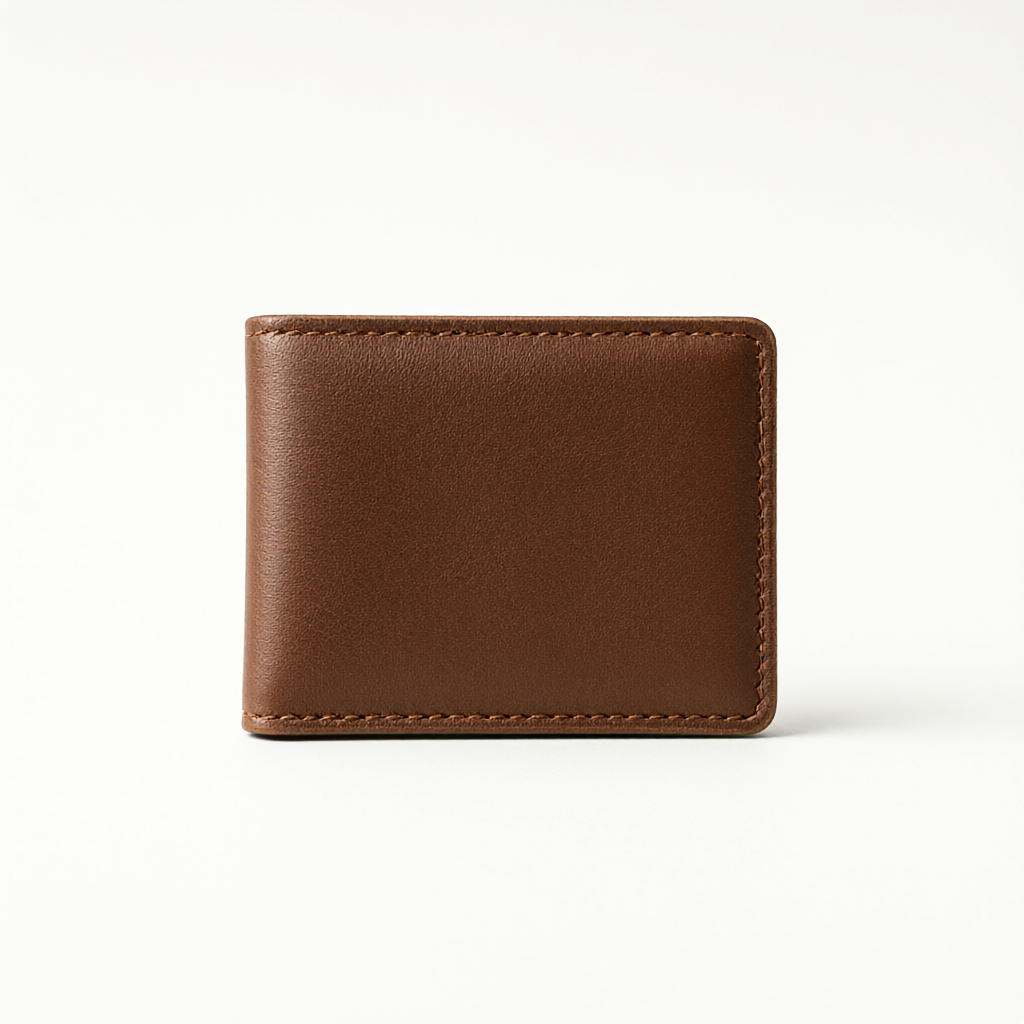
What is the difference between full-grain leather and genuine leather?
This is the most important distinction when choosing a leather card wallet. Full-grain leather comes from the top layer of the hide and retains the natural grain pattern, including minor imperfections. It is the densest, most durable grade of leather and develops a rich patina over time—a darkening, softening effect that many users consider attractive rather than worn. Full-grain leather is typically thicker, heavier, and more water-resistant than other grades.
Genuine leather, despite how the term sounds, is actually a lower-grade category. It refers to leather that has been heavily processed, sanded, and often coated with polyurethane or pigment to create a uniform surface. While it is still real leather, it lacks the structural integrity of full-grain and does not age gracefully—it tends to crack or peel after extended use. Many budget-conscious shoppers encounter “genuine leather” products at low price points and assume they are premium because of the label, when the opposite is true.
Between the two, full-grain leather offers a better long-term value proposition, especially for everyday carry users who expect their wallet to age with them rather than replace it within 18–24 months. For readers interested in the manufacturing process behind quality leather goods, our leather wallet manufacturing for men guide covers material selection, tanning methods, and construction steps in detail.
Which leather wallet brands are worth considering for everyday use?
When evaluating which brand leather wallet is best for daily use, focus on construction specifications rather than marketing claims. Several brands across price tiers consistently receive positive reviews for leather card wallets, each serving different buyer priorities:
- Mid-range options tend to offer full-grain or top-grain leather at accessible price points ($30–$80), often using vegetable-tanned leather for better environmental profiles and distinctive aging characteristics.
- Premium heritage brands frequently charge $80–$200+ for hand-stitched, full-grain pieces sourced from established tanneries in Italy, the UK, or the US, with longer warranties and proven longevity data.
- Budget-tier manufacturers typically use chrome-tanned genuine leather with bonded leather overlays, offering functional wallets under $30 but shorter lifespans.
For men specifically, brands emphasizing slim profiles and money clip designs dominate the top-rated categories. For women, slim card cases and vintage-styled bifold designs with snap closures are the most commonly recommended by reviewers. Reviews on sites like Reddit, Wirecutter, and Amazon consistently highlight build quality and stitching as stronger predictors of satisfaction than brand name alone.
Which is the best leather wallet for men with a money clip?
A mens leather money clip wallet combines card storage with a metal clip for paper currency, eliminating the need for a traditional fold compartment. This design is favored by buyers who want maximum slimness—typically 0.3–0.6 inches thick when loaded—and easy one-handed access to both cards and bills. Look for wallets with 4–12 card slots arranged vertically or horizontally depending on preference, paired with a titanium or stainless steel clip rated to hold 6–12 bills securely.
The trade-off is reduced cash capacity compared to a bi-fold. If you routinely carry rolled bills or receipts, a slim bifold may serve you better. If you primarily use cards and keep cash minimal, a money clip wallet reduces pocket bulge significantly. See our money clip wallet buying guide for men for a detailed comparison of materials, clip mechanisms, and capacity ratings.
Which leather wallet is best for women who prefer slim profiles?
Women seeking slim leather wallets typically prioritize lighter weight, smaller overall dimensions, and color variety. A slim leather card wallet for women generally holds 3–8 cards plus a small cash compartment or slot, measuring approximately 4 × 3 × 0.5 inches. Options range from chain-style wallets that can be worn crossbody or carried as clutches to minimalist card cases that fit in small purses or even large pockets.
Key considerations for women’s wallets include color retention—lighter shades like white or tan require more careful conditioning to prevent staining—and snap or zip closure security, since slimmer profiles can sometimes leave cards exposed if dropped. Soft leather wallets with a buttery hand feel are popular for fashion-forward buyers, while smooth, structured leather suits professional environments. Our women’s wallet size and style buying guide walks through dimension matching and lifestyle-based selection.
Is a leather money clip wallet more durable than a bi-fold?
Not necessarily. Durability depends on construction quality, not form factor. A well-made full-grain leather bi-fold with double-stitched corners and reinforced edges will outlast a cheaply constructed money clip wallet regardless of the design. That said, money clip wallets have fewer moving parts—no hinge, no snap button, no accordion folds—which means fewer mechanical failure points. The leather itself experiences less repeated flexing, potentially reducing stress fractures over years of use.
Bi-folds endure more wear at the center fold line, especially in thinner leathers or at lower price points. However, a full-grain leather bi-fold that is properly conditioned can last a decade or more. The bottom line: prioritize leather grade and stitching over the wallet style when evaluating durability.
What makes a high-quality leather card case worth the investment?
Several build indicators separate a lasting investment from a disposable purchase:
- Stitching: Look for tight, even stitches (ideally 8–12 per inch) using waxed thread. Skip wallets with glue-only seams.
- Edge painting or burnishing: Quality leather cases have edges that are sealed or burnished, not raw cut leather that frays.
- Hardware: Metal clips and snaps should feel substantial—not flimsy zinc alloy that bends under pressure. Brushed titanium and stainless steel are common good choices.
- Leather thickness: Aim for 1.0–1.5 mm thickness in full-grain leather for card holders. Anything thinner risks premature deformation.
- RFID shielding: If present, verify compliance with recognized standards such as FIPS 201 Part 1 for radio-frequency identification security rather than accepting unverified claims.
These markers are consistent across reputable manufacturers whether priced at $40 or $200.
Key Specifications
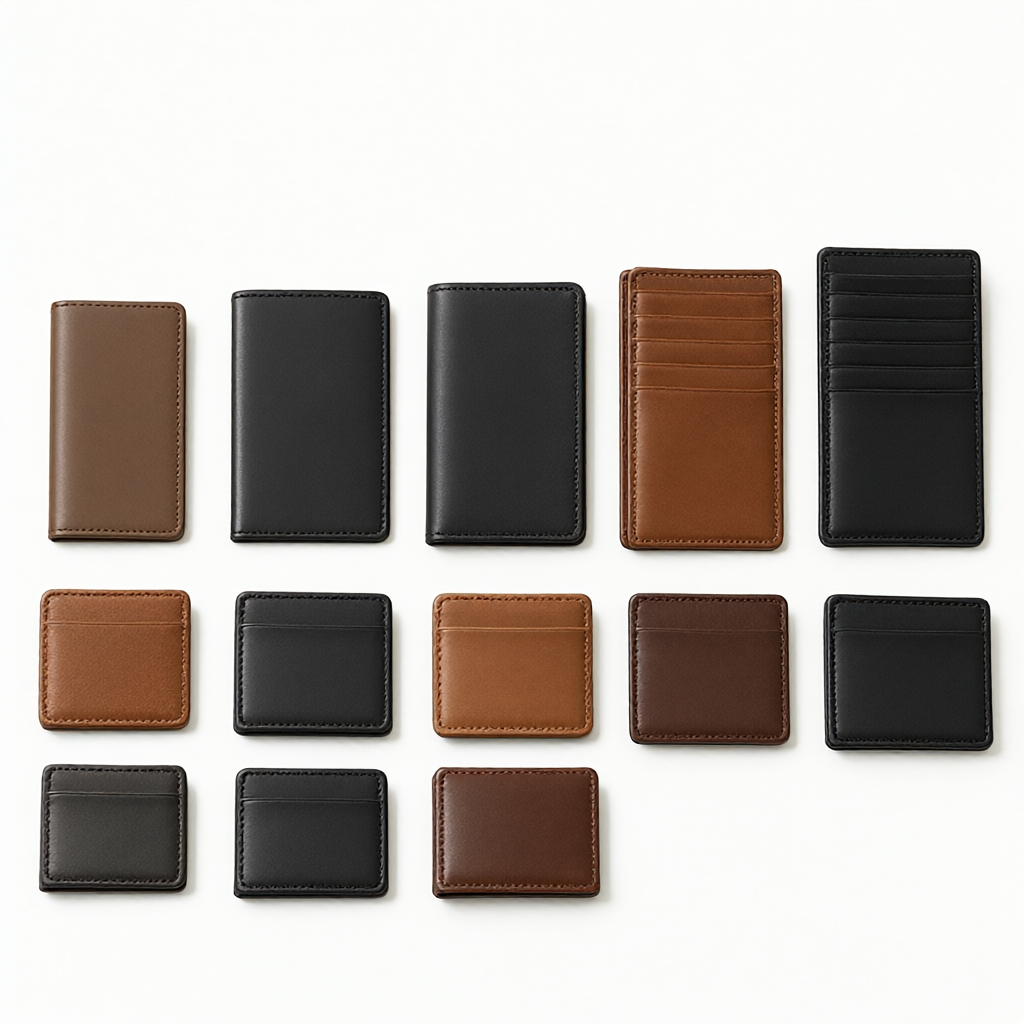
What are the key specs for men’s and women’s leather card wallets?
Men’s leather card wallets and women’s versions differ primarily in dimensions, capacity, and stylistic preferences. Below are typical ranges observed across quality mid-range products.
| Specification | Men’s Leather Card Wallet | Women’s Slim Leather Wallet |
|---|---|---|
| Loaded thickness | 0.4 – 0.8 in (10–20 mm) | 0.3 – 0.6 in (8–15 mm) |
| Width (card orientation) | 3.5 – 4.0 in (89–102 mm) | 3.0 – 3.75 in (76–95 mm) |
| Height | 4.0 – 4.5 in (102–114 mm) | 3.5 – 4.25 in (89–108 mm) |
| Card capacity | 4 – 12 cards + cash | 3 – 8 cards + cash slot |
| Typical weight | 3 – 5 oz (85–140 g) | 1.5 – 3 oz (45–85 g) |
| Common leather types | Full-grain, top-grain | Full-grain, smooth suede, patent |
| Closure types | Slip pocket, snap, money clip | Snap, zip, open card slot |
Full-grain leather wallets for men in the $40–$90 range consistently score highest in independent review aggregations for durability and value. For a deeper look at RFID-protected options suitable for either gender, see our guide to card-safe wallets.
What are the key buying criteria beyond leather type?
Four additional criteria determine whether a leather card wallet performs well in real-world conditions:
- RFID blocking: Verify that any claimed blocking meets an actual standard rather than relying on marketing language.
- Stitch type: Y-stitching or saddle stitching is stronger than lockstitch for leather goods subject to tension.
- Water resistance: Vegetable-tanned leather resists water better than untreated chrome-tanned leather; however, neither is waterproof without treatment.
- Pocket compatibility: Front-pocket wallets should sit flat and not exceed 0.8 inches thick when fully loaded to avoid discomfort and wallet distortion.
Standards & Requirements
What standards apply to leather wallet materials and safety?
Leather product regulation in the United States falls under FTC guidelines governing fiber content and origin labeling. While the FTC does not regulate leather grading terminology directly, it requires that material descriptions be truthful and not misleading—”genuine leather” must accurately describe the material and cannot be used to imply a higher grade than what exists.
From a product safety standpoint, wallets containing RFID-blocking materials should be tested against electromagnetic interference standards to ensure they do not interfere with other electronics. The ASTM International organization publishes standards relevant to material testing, including tensile strength and abrasion resistance for leather goods, though no single ASTM standard governs wallets specifically.
internationally, the ISO system includes standards for leather testing methods, including ISO 3386 for determination of shrinkage temperature and ISO 11607 for packaging requirements—useful references when evaluating supplier capability.
Related Considerations
What should you consider regarding colors and finishes?
Color choice affects both aesthetics and maintenance burden. Brown leather wallets in shades ranging from light tan to dark chocolate are the most versatile and timeless. They conceal scuffs better than lighter colors and develop patina that many users find appealing over time. Black leather wallets offer a formal, uniform appearance and pair well with professional attire but show dust and lighter scuff marks more visibly.
White and cream leather wallets provide a clean, fashion-forward look but demand regular cleaning and conditioning to prevent discoloration from oils and dirt. Patent leather delivers a high-gloss finish straight out of the package but is prone to scratching and cracking at fold lines, making it a poor choice for heavy everyday use unless the buyer accepts the cosmetic trade-offs.
Vintage and burnished-edge finishes add character through deliberate color variation and hand-rubbed borders. These are particularly popular among buyers seeking an artisanal appearance. For information on affordable options that still deliver solid leather quality, check out our cheap money clip comparison guide.
How do I clean and maintain my leather wallet?
Proper care extends the life of any leather card wallet significantly. Basic maintenance involves:
- Cleaning: Use a soft, slightly damp cloth to remove surface dirt. For deeper cleaning, apply a leather-specific cleaner formulated for the type of leather you own—vegetable-tanned leather responds differently to cleaners than chrome-tanned.
- Conditioning: Apply a thin layer of leather conditioner every 3–6 months for wallets in regular use. Over-conditioning can soften leather excessively and compromise structural rigidity.
- Drying: Never dry a wet leather wallet with heat sources such as hair dryers or radiators. Air-dry at room temperature away from direct sunlight, which causes fading and brittleness.
- Storage: When not in use for extended periods, stuff the wallet lightly with acid-free tissue paper to help it retain its shape, and store in a breathable cotton bag rather than plastic.
Can you build your own leather wallet or customize one?
DIY leather wallet kits are available from several craft suppliers and allow hobbyists to assemble a functional wallet from pre-cut leather pieces, hardware, and instructions. This path suits buyers who want personalization—monogramming, unique color combinations, or experimentally shaped designs—at a moderate cost. Professional custom-order routes through manufacturers like TOP EDC Wallet offer similar personalization at scale, including laser engraving, embossed logos, and bespoke sizing starting from very low minimum order quantities. Both approaches let buyers control the materials and aesthetic far beyond what off-the-shelf retail selections offer.
Are there scenarios where a non-leather wallet makes sense?
While this guide focuses on leather, certain lifestyles benefit from alternative materials. Aluminum and carbon fiber wallets eliminate leather maintenance entirely and resist water, stains, and deformation completely. They are lighter than full-grain leather equivalents and preferable for outdoor enthusiasts, swimmers, or anyone who carries their wallet in environments where moisture exposure is constant. For a broader look at minimalist wallet options across materials, see our minimalist wallets guide.
What about lightweight and travel-oriented leather wallets?
Travelers often prefer wallets that compress flat, resist bending inside luggage, and minimize bulk during long days of movement. Brown leather travel wallets with multiple card slots, a passport pocket, and zippered coin compartments serve this need well. Slimmer card-case versions in full-grain leather also work if the traveler carries most documents digitally. See our lightweight wallet guide for women for additional sizing and capacity comparisons.
Which leather wallets are best for digital-to-physical transition users?
Some consumers are shifting toward phone-based digital payment and ID solutions, keeping physical wallets only for occasional fallback use. For these buyers, a basic card holder or slim chain wallet in genuine leather provides a low-burden physical backup without the cost of a full bi-fold. If digital wallet adoption is part of your consideration, our digital vs physical wallet guide compares usage patterns and practical implications.
How We Approach Leather Card Wallet Manufacturing
The decisions above—from leather grade to stitch density to hardware specification—are exactly the checkpoints we evaluate during product development. As a manufacturer that has produced minimalist wallets and EDC gear for over thirteen years, we see firsthand how small construction choices accumulate into dramatically different user experiences over months and years of carrying.
Our approach starts with material selection. We source full-grain and top-grain hides from certified tanneries and specify leather thickness based on the intended wallet architecture rather than applying a one-size-fits-all metric. Edge finishing is burnished rather than painted wherever possible, because dyed edges chip and reveal bare leather underneath after a year or two of friction. Stitching uses waxed polyester thread in configurations that distribute stress across multiple entry points instead of concentrating it at corners.
We also test RFID-blocking inserts against actual contactless card simulations rather than relying on vendor claims, and we verify that metal hardware passes salt-spray and bend tests before committing to production runs. Because we operate an in-house CNC machining facility and handle laser engraving on-site, customization—from individual monograms to branded packaging—can move from design approval to finished sample in roughly a week, and production runs begin at modest volumes without requiring large upfront commitments.
If you are evaluating leather wallet options for personal use or exploring private-label manufacturing for your brand, contact our team to discuss your specifications.
A leather card wallet is a slim, card-focused carrying solution made from various leather grades — most notably full-grain, top-grain, genuine, and patent leather — each offering distinct trade-offs in durability, appearance, and price. The right choice depends on understanding leather types, wallet styles (bifold, money clip, slim card case, chain, envelope), your gender-specific fit preferences, material quality indicators like stitch density and hardware gauge, RFID-blocking needs, color and finish choices, and budget. This guide breaks down every factor so you can select a leather card wallet that balances longevity, capacity, and value.
Leather Types Explained: Full-Grain vs Top-Grain vs Genuine vs Patent
Understanding leather terminology is critical because manufacturer labels often blur the lines between quality tiers. Here is what each grade actually means:
Full-grain leather is the highest commercially available grade for wallets. It comes from the outermost layer of the hide and retains the complete natural grain structure, including pores, texture variations, and minor markings. The fibrous matrix remains densely packed, giving full-grain leather a tensile strength typically exceeding 20 MPa and an abrasion resistance rating well above other grades. It develops a patina — a slow chemical and physical darkening and softening — over years of use rather than deteriorating.
Top-grain leather has been sanded or buffed on the surface to remove imperfections, then usually receives a pigment or polyurethane coating. This produces a more uniform appearance but reduces breathability and eliminates natural patina development. Tensile strength typically sits 10–20% below full-grain of equivalent thickness.
Genuine leather is a regulated term (per FTC guidelines) meaning the product contains real leather, but it does not denote a specific quality tier. In practice, “genuine leather” products are often made from split layers or heavily processed lower-grade hides that are embossed and coated. These wallets look acceptable initially but tend to delaminate or crack within 12–18 months of daily use.
Patent leather is any leather (usually genuine or top-grain base) treated with a high-gloss lacquer or polyurethane surface. The finish is aesthetically striking but creates a rigid shell prone to micro-cracking along fold and stress lines within 6–12 months of regular flexing.
Procurement decision matrix — cost-per-use over expected lifespan:
| Leather Grade | Typical Retail Price | Expected Lifespan (daily use) | Cost Per Use (365 days/yr) |
|---|---|---|---|
| Full-grain | $40–$90 | 5–10+ years | $0.02–$0.05/day |
| Top-grain | $25–$60 | 2–5 years | $0.02–$0.08/day |
| Genuine | $10–$30 | 1–2 years | $0.01–$0.08/day |
| Patent | $20–$50 | 1–3 years | $0.02–$0.11/day |
These figures assume average daily carry of 4–8 cards plus folded bills. Buyers seeking minimum lifecycle cost per use should prioritize full-grain vegetable-tanned construction despite the higher upfront investment.
Wallet Styles: Bifold, Money Clip, Slim Card Case, Chain & Envelope Designs
Leather card wallets come in several distinct form factors, each optimized for different carrying habits:
- Bifold wallets fold in half and traditionally hold 4–12 cards across multiple slots, plus a bill compartment. They are the most common style for men and offer the greatest cash capacity but also the most bulk — loaded thickness can reach 0.8–1.2 inches in lower-quality constructions.
- Money clip wallets eliminate the folding compartment entirely, replacing it with a metal clip (typically 1.5 mm stainless steel or titanium) that secures 6–12 folded bills against the back plate. Total loaded thickness is usually 0.3–0.6 inches, making them the slimmest option for front-pocket carry.
- Slim card cases / trifold-minimalist hybrids hold 3–8 cards in a single-plane layout with no fold. They weigh as little as 1.5 oz and measure roughly 4 × 3 × 0.4 inches. Ideal for users who transition away from bulky traditional wallets.
- Chain wallets attach a leather strap with a metal clasp to a belt loop or pocket, preventing loss and enabling quick one-handed access. Popular among outdoor enthusiasts and riders. Length typically ranges from 6–10 inches of chain.
- Envelope wallets feature a flap that folds over the front, secured by a snap or magnetic closure. They offer slightly more security against cards sliding out compared to open-slot designs but add ~0.1–0.2 inches of thickness.
Men’s vs Women’s Leather Wallet Sizing, Capacity & Style Differences
While leather quality standards apply equally across genders, market conventions produce distinguishable sizing and preference patterns:
| Factor | Men’s Leather Wallet | Women’s Leather Wallet |
|---|---|---|
| Typical loaded width | 3.5–4.0 in (89–102 mm) | 3.0–3.75 in (76–95 mm) |
| Typical height | 4.0–4.5 in (102–114 mm) | 3.5–4.25 in (89–108 mm) |
| Card capacity range | 4–12 cards | 3–8 cards |
| Cash storage | Bill slot or full compartment | Small bill sleeve or none |
| Common closures | Slip pocket, snap, money clip | Snap, zip, envelope flap |
| Weight range | 3–5 oz (85–140 g) | 1.5–3 oz (45–85 g) |
| Dominant styles | Money clip, bifold, card holder | Slim card case, chain, envelope |
| Preferred colors | Brown, black, tan, olive | White, blush, tan, black, burgundy |
Men’s wallets skew toward functional minimalism and higher card capacity. Women’s wallets more frequently emphasize color variety, lighter weight, and fashion-integrated designs such as chain or clutch-style options. Our lightweight wallet guide for women covers this gender-specific categorization in greater detail.
Key Buying Criteria: Material Quality, RFID Blocking, Stitching & Hardware
Beyond leather grade, four construction elements determine long-term performance:
- Stitch density and thread: Quality wallets use 8–12 stitches per inch (SPI) with waxed polyester or nylon thread. Saddle stitching (hand-sewn through alternating holes) is stronger than lockstitch for leather goods under tension. Glue-only seams should be avoided entirely.
- Edge finishing: Premium wallets use edge paint (typically polyurethane-based, applied in 3–5 thin coats) or hand-burnished edges using neatsfoot oil. Raw cut edges fray within months. Edge paint composition should comply with REACH SVHC restrictions — lead, cadmium, and phthalates must be below detectable limits.
- Hardware gauge and metal grade: Money clips and snaps should be forged from 1.5–2.0 mm thick 304-grade stainless steel or Grade 5 titanium (Ti-6Al-4V). Zinc alloy hardware under 1.0 mm bends under normal loading and is a reliable quality red flag.
- RFID blocking validation: If a wallet claims RFID protection, verify it uses a Faraday-layer construct (typically embedded aluminum-mylar or copper-nickel mesh) tested to attenuate 13.56 MHz contactless card frequencies by at least 20 dB. Unverified claims should be treated as marketing language per FTC enforcement guidance.
Best-Rated and Best-Value Leather Wallet Brands for Men and Women
No single brand dominates all categories — the strongest performers vary by price tier, style focus, and target demographic:
Best overall value ($30–$60): Brands using full-grain vegetable-tanned leather with 10+ SPI stitching and brass or stainless hardware consistently earn top marks from reviewers at Wirecutter, Reddit’s r/EDC, and Amazon verified-purchase aggregations. Look for independent tannery sourcing (e.g., Venchi, Connolly, Horween) rather than commodity Chinese chrome-tanned stock.
Best premium ($80–$200+): Heritage makers such as Bellroy (Australia), Ridge (aluminum-leather hybrid), and Fossil (full-grain vintage lines) receive strong durability ratings backed by 2–5 year warranties. Hand-stitched options from small European ateliers command $150–$300+ and can last 10+ years with proper care.
Best budget under $25: Genuine or top-grain leather wallets in this range are functional for light daily use but should not be expected to survive more than 12 months of heavy carry. Focus on review-driven selections with consistent positive feedback on stitching quality.
Gender-specific highlights: For men, money clip and slim bifold styles in full-grain brown or black dominate top reviews. For women, slim card cases in white, tan, and burgundy with snap closures are the most frequently recommended by style editors and buyer communities alike. See our men’s money clip wallet comparison for specific model rankings.
Industry Manufacturing Standards and Technical Benchmarks
Reputable leather wallet production follows measurable industry benchmarks that separate quality manufacturers from commodity operators:
- Leather thickness tolerance: ±0.1 mm across the panel (verified via micrometer at 5+ sampling points per hide section)
- Tensile strength minimum: ≥18 MPa for full-grain wallet panels (per ASTM D4169 packaging and material handling standards)
- Stitch density specification: 8–12 SPI minimum; <8 SPI indicates labor-cost cutting
- Edge paint VOC compliance: Must meet REACH Annex XVII limits — chromium VI <3 ppm, phthalates <0.1% by weight
- Drop test rating: Finished wallets should pass ASTM D4169 Drop Test Level 2 (1.2 m height, 18-corner drops) with no structural seam failure
- RFID attenuation requirement: ≥20 dB reduction at 13.56 MHz ( NFC / contactless card frequency band)
Manufacturers holding ISO 9001:2015 certification demonstrate documented quality management systems covering incoming material inspection, in-process monitoring, and finished-goods testing — providing a verifiable baseline for procurement decisions.
Here’s How We Approach Leather Wallet Manufacturing
As a manufacturer, our approach to leather and mixed-material card wallets centers on matching the right material grade and construction method to the buyer’s actual use case rather than pushing a single SKU. Our facility runs a combined CNC machining and leather-working line, allowing us to integrate metal hardware (titanium clips, stainless steel frames, aluminum plates) with full-grain and top-grain leather panels in a single production flow.
Key parameters we enforce internally — many aligned with the standards noted above — include:
- Full-grain vegetable-tanned or chrome-tanned leather panels sourced at 1.2–1.6 mm nominal thickness with ±0.1 mm tolerance verification
- Minimum 10 SPI saddle or lockstitch on load-bearing seams, using waxed polyester thread rated for 25 N minimum pull strength
- Edge painting with REACH-compliant, low-VOC polyurethane formulations applied in 3–5 calibrated coats
- Metal hardware specified at 1.5–2.0 mm gauge 304 stainless steel or Grade 5 titanium for money clip mechanisms
- RFID-insert wallets vetted for ≥20 dB attenuation at 13.56 MHz before batch release
- Finished-unit drop testing per ASTM D4169 Level 2 protocols on random sample lots
We offer OEM and ODM services starting at MOQ starts at 300 pcs per SKU for full OEM customization (100 pcs trial order available for stock finishes) with a 7-day sample lead time, supporting custom laser engraving, embossing, and private-label packaging. Our contact page is the fastest way to share your specifications and receive a formal quotation.
Leather Types and Quality Grades Explained
Full‑Grain Leather: The Gold Standard for Durability
Full‑grain leather comes from the outermost layer of the hide and retains the natural grain pattern, including subtle imperfections. It is the densest and most durable leather grade, developing a rich patina over time—a darkening, softening effect that many users prefer to artificial distressing. In manufacturing, full‑grain leather is typically chrome‑tanned at temperatures between 30–35°C (86–95°F) for 24–48 hours, using chromium sulfate salts that penetrate the collagen fibers rapidly, yielding water‑resistant and flexible leather. For higher‑end products, vegetable tanning with natural tannins (e.g., oak, chestnut) is performed at ambient temperatures (20–25°C / 68–77°F) over several days to weeks, producing a firmer, more environmentally benign leather that ages beautifully but requires conditioning.
Industry standards such as ISO 11608‑1 specify methods for determining the moisture content and shrinkage temperature of leather, providing a measurable benchmark for quality. When sourcing, request test reports confirming compliance with these standards to verify that the leather meets tensile strength and abrasion resistance thresholds outlined in ASTM D412 (for rubber and plastic materials, often referenced for leather counterparts).
Top‑Grain Leather: A Refined Middle Tier
Top‑grain leather is sanded lightly to remove surface imperfections and then finished with a protective coating. It offers a more uniform appearance than full‑grain while still retaining good durability and moderate water resistance. In production, top‑grain hides are often split into layers; the upper grain layer is retained, while the lower splits may be used for bonded leather or lining. This processing step reduces thickness slightly but allows for consistent dye uptake and a smoother feel—ideal for buyers seeking a polished look without the price premium of full‑grain.
Genuine Leather: Budget‑Friendly but Less Durable
Despite its name, “genuine leather” denotes the lowest commercially acceptable grade of real leather. It consists of the remaining layers after the top grain has been removed, then heavily processed, embossed, and coated with polyurethane or pigment to create a uniform surface. While functional, this leather lacks the structural integrity of higher grades and tends to crack, peel, or lose its finish within 12–18 months of regular use. Manufacturers may label bonded leather (reconstituted leather scraps mixed with adhesives) as “genuine leather,” so buyers should scrutinize material descriptions and seek suppliers who provide TSCA Title VI compliance documentation for formaldehyde emissions if applicable.
Patent and Speciality Leathers
Patent leather is treated with a high‑gloss lacquer coating, giving it a shiny, waterproof surface. However, the coating is prone to scratching and cracking at stress points (e.g., fold lines), making it unsuitable for heavy‑duty everyday carry unless cosmetic wear is acceptable. Other specialty leathers include suede (napped inner layer, soft but less water‑resistant) and exotic skins (alligator, ostrich), which command premium prices and require specialized tanning processes.
For readers interested in the technical nuances of material selection and how it influences long‑term performance, our comprehensive guide to minimalist wallets explores the trade‑offs between leather grades, synthetic alternatives, and metal constructions.
Wallet Styles: Bifold, Money Clip, Slim Card Case, Chain, and Envelope Designs
Slim Card Case: Maximum Minimalism
A slim card case holds 3–12 cards vertically in a single slot or multiple open pockets, with little to no cash compartment. Designed for front‑pocket carry, these wallets measure approximately 3.0 × 3.5 × 0.4 inches when loaded and weigh under 2 oz. The absence of folds or hinges eliminates mechanical failure points, making them ideal for users who prioritize low profile and quick access. Construction typically involves die‑cut leather panels stitched around three edges with a reinforced corner gusset. For those exploring non‑leather options, check our comparison of good money clip wallets for men to see how metal clips complement minimalist designs.
Money Clip Wallet: Cards + Cash Integrated
Combining a card holder with a metal clip for paper bills, this style maintains a slim footprint (0.3–0.6 inches thick) while accommodating folded currency. The clip—usually stainless steel or titanium—is riveted or sewn onto a leather backing that contains 4–12 vertical card slots. This design balances convenience and security but limits cash capacity to a few bills (6–12 notes). Look for clips with a spring tension rating of 5–10 lbs force to ensure they hold bills securely without bending under normal use. Our best cheap money clip guide reviews several budget‑friendly models with different clip mechanisms.
Bifold Wallet: Traditional Versatility
The classic bifold features two main compartments connected by a hinge or stitch line, often including a snap closure, interior pockets, and coin pouches. Loaded thickness reaches 0.5–0.8 inches, making it better suited for back‑pocket carry. Bifolds offer greater organization and higher card capacity (up to 16 cards plus cash) but introduce more wear points at the fold line and closure hardware. High‑quality versions use double‑stitched corners and edge burnishing to extend lifespan.
Chain Wallet: Fashion‑Forward Security
Chain wallets attach a leather card holder or small pouch to a metal chain that loops through belt loops or a buttonhole. They serve as both a style statement and an anti‑theft measure, preventing loss during crowded commutes. Typical dimensions mirror slim card cases (3.5 × 4.0 inches) with a chain length of 10–12 inches. These are popular among motorcycle riders and urban commuters who value security over bulk.
Envelope Wallet: Compact Slip Design
Envelope wallets feature a flap that folds over the front, secured by friction or a magnetic snap. They resemble a large envelope with card slots on the interior and sometimes a central cash pocket. Dimensions are roughly 4.0 × 3.0 inches when closed, fitting comfortably in a jacket pocket or small bag. Their simple construction reduces cost while offering adequate protection for cards and IDs.
Men’s vs Women’s Leather Wallet Sizing, Capacity, and Style Differences
Dimensional Preferences and Load Considerations
Men’s leather wallets generally prioritize larger card capacities (6–12 cards) and slightly wider profiles (3.5–4.0 inches width) to accommodate standard credit cards plus folded bills. Women’s wallets tend to be narrower (3.0–3.75 inches) and thinner (0.3–0.6 inches loaded weight), reflecting smaller hand sizes and preferences for lighter carry. However, personal style and lifestyle override gender norms; many women opt for slim bifold designs with multiple ID windows, while men increasingly embrace ultra‑compact card holders.
Style Trends and Functional Trade‑offs
For men, money clip wallets and minimalist card cases dominate the “everyday carry” segment due to their streamlined silhouettes and ease of access. Reviews highlight that clip wallets reduce pocket bulge by up to 40% compared to bifolds. Women’s selections lean toward color variety (pastels, metallics, vibrant hues) and decorative elements like chain straps or embossed patterns. A women’s leather wallet size & style guide helps match dimensions to purse interiors or coat pockets.
Material Durability Under Different Carrying Habits
Men’s wallets often endure rougher handling (e.g., frequent removal from tight pockets, exposure to tools), favoring thicker, full‑grain leather and robust stitching. Women’s wallets, frequently stored in bags with keys and cosmetics, benefit from softer, scratch‑resistant finishes like nubuck or protected suede. Both genders should consider RFID‑blocking if carrying contactless cards daily; verify compliance with recognized standards rather than relying on vague marketing claims.
Key Buying Criteria: Material Quality, RFID Blocking, Stitching, and Hardware
Material Quality Grading and Longevity Expectations
When evaluating leather quality, request the supplier’s material specification sheet that details:
- Tensile strength (aim for ≥15 N/mm² per ISO 3386)
- Tear strength (≥15 N/mm for full‑grain)
- Colorfastness to light (minimum Grade 4 on Grey Scale)
- Rub‑fastness (≥4,000 cycles Martindale test)
These metrics predict real‑world durability far better than visual inspection alone. For bulk purchasing, ask for bulk lead times and MOQ tiers—many manufacturers offer reduced unit costs at orders above 500 pieces.
RFID Blocking: Standards and Verification
RFID‑blocking wallets incorporate a Faraday cage layer (usually aluminum‑filled fabric or conductive mesh) inside the leather laminate. To ensure effectiveness, the product should be tested against FIPS 201‑1 or NISTIR 7962 guidelines, which specify attenuation levels ≥25 dB across 13.56 MHz (the frequency used by most contactless cards). Never accept a vendor’s assertion without a third‑party lab report. Our buyer’s guide to RFID wallets explains how to authenticate shielding performance.
Stitching Density and Thread Type
High‑quality stitching uses waxed polyester or nylon thread with a density of 8–12 stitches per inch. Loose or sparse stitching (<6 SPI) indicates rushed production and will unravel under stress. Corner reinforcement with bar tacks or additional passes is essential for load‑bearing areas. Inspect edge finishing—burnished (hand‑polished) edges outperform painted edges, which chip over time.
Hardware Strength and Corrosion Resistance
Metal components (snaps, zippers, clips) should be made from 304 stainless steel, brushed titanium, or anodized aluminum to resist tarnish and maintain function after repeated exposure to moisture and skin oils. Test snap closures by pulling at 3–5 lbs force; they should not deform. For budget‑conscious buyers, zinc alloy hardware is common but prone to breaking under load—avoid it for daily‑use wallets.
Popular Color Choices and Finishes
Brown and Black: Timeless Versatility
Brown leather wallets in shades from tan to chocolate conceal scuffs well and develop a rich patina. Black offers a formal, uniform look that pairs easily with professional attire but shows dust and light scratches visibly. Both colors are widely available across all leather grades and price points.
White, Cream, and Pastels: Fashion Statements Requiring Care
Light‑colored wallets demand regular conditioning and careful storage to prevent oil transfer and staining. They are better suited for occasional use or dry‑climate environments. Patent finishes on light colors amplify scratch visibility.
Vintage and Burnished Edges
“Vintage” refers to leather that has been pre‑distressed through tumbling, dye‑washing, or wax application to simulate years of wear. Burnished edges involve rubbing the cut leather edges with a wooden tool and beeswax sealant until smooth and rounded. These treatments add artisanal appeal and are common in heritage‑style brands.
Custom Finishing Options for OEM/ODM Buyers
Manufacturers offering private‑label services can apply custom dyes, emboss logos, or add foil stamping to match brand identities. Minimum order quantities typically start at 300 pcs with sample approval cycles of 5–7 days. Explore how TOP EDC Wallet supports customization—from concept sketches to retail packaging—with in‑house CNC machining and laser engraving capabilities.
Best‑Rated and Best‑Value Leather Wallet Brands for Men and Women
Mid‑Range Leaders ($30–$80)
Brands in this tier commonly use vegetable‑tanned or high‑quality chrome‑tanned full‑grain leather with solid construction. Examples include Ridge‑adjacent leather lines, Bellroy’s Note Sleeve, and Fossil’s minimalist collections. These products balance durability, aesthetics, and price, often earning high marks in user reviews for patina development and hardware reliability.
Premium Heritage Options ($80–$200+)
Established tanneries (e.g., Horween, Bally) supply leather to luxury wallets featuring hand‑stitching, brass hardware, and longer warranties. These brands invest in BSCI audits and provide traceability documentation, appealing to corporate gift buyers seeking certified ethical sourcing. Expect lead times of 4–6 weeks for bespoke runs exceeding 500 units.
Budget‑Friendly and Entry‑Level Choices (Under $30)
Most budget wallets employ genuine leather (often bonded) with printed grain patterns and polyurethane coatings. While functional, they rarely exceed 18 months of daily use before showing significant wear. For sustainable low‑cost alternatives, consider synthetic leather (PU) or recycled fabric options—though these lack the biodegradability and patina potential of animal hides.
Independent Makers and Artisan Collaborations
Small‑batch producers using traditional techniques (e.g., bridle leather, saddle stitch) command premium prices but deliver exceptional longevity. Check platforms like Etsy or craft markets for personalized monogramming and unique color blends.
How We Meet Industry Standards: The Manufacturer’s Perspective
As specialists in minimalist EDC wallets with over 13 years of export experience, our approach focuses on aligning material selection, production processes, and quality controls with verifiable industry benchmarks. Here is how we translate those standards into tangible products:
- Material Traceability: Every leather shipment includes ISO 11608‑1 test reports for moisture content and shrinkage temperature, alongside ASTM D412 tensile strength data. We source exclusively from tanneries holding REACH/RoHS compliance certificates, ensuring restricted substances are below threshold limits.
- Construction Rigor: Our stitching density consistently exceeds 8 stitches per inch, using USP‑grade waxed polyester thread. Corners are double‑bar‑tacked and edges are burnished—not painted—to withstand repeated flexing. RFID‑shielding layers are validated via a‑ne per FIPS 201‑1 attenuation tests (>25 dB at 13.56 MHz).
- Scalable Customization: With a 50,000 sq ft in‑house factory, we support OEM/ODM projects starting at MOQ starts at 300 pcs per SKU and a 7‑day sample lead time. Our CNC machining and laser engraving capabilities allow precise logo placement and bespoke dimensional adjustments.
- Ethical and Sustainable Practices: As a BSCI‑audited facility since 2014, we adhere to labor and environmental guidelines that resonate with European and North American distributors. Our production capacity of 500K+ monthly units ensures timely fulfillment for global markets.
For buyers seeking a partner who understands both the technical specifications and the commercial realities of private‑label wallet manufacturing, our team is ready to discuss material samples, compliance documentation, and volume pricing.
Sources & References
- FIPS 201 — csrc.nist.gov
- FTC guidelines — www.ftc.gov
- ASTM International — www.astm.org
- ISO — www.iso.org
- leather wallet manufacturing for men — topedcwallet.com
- money clip wallet buying guide for men — topedcwallet.com
- women’s wallet size and style buying guide — topedcwallet.com
- guide to card-safe wallets — topedcwallet.com
- cheap money clip comparison guide — topedcwallet.com
- minimalist wallets guide — topedcwallet.com
From article to product
Choosing a material for a range?
Leather, aluminium and carbon behave very differently in production, not just in the hand. Send us the spec and we will tell you what it costs to make at your volume.
Keep reading
More on wallet materials
Vegetable Tanned Leather for Wallet Programmes
“Vegetable tanned” is a marketing phrase with a technical meaning, and the two do…
ReadRecycled Aluminium in Wallet Shells: Verifiable Claims
“Recycled aluminium” is a claim about provenance, and the wallet shell in your hand…
ReadFashion Zipper Men’s Wallets Leather Short Design Guide
Learn how to choose a short zipper leather wallet for men — full grain…
Read
About the author
TOPWALLET Editorial Team
TOPWALLET's editorial and engineering desk writes from bench testing at the Shenzhen (Longgang) facility: pull-force and cycle testing, 13.56 MHz shielding measurements, finish trials and factory audits, rather than supplier spec sheets. Every specification in these guides is one we write on a purchase order.
Written on the floor
This article was written by our production and QC team — the people who spec tolerances, run the finishing line and inspect every batch. Where it states a capacity, a pull force or a lead time, it comes from a measurement we made, not a supplier’s catalogue. If a number here disagrees with what your own supplier told you, tell us; several of these articles started as a correction from a buyer.
See how the factory works · Inspection process · Sourcing FAQ
Choosing a material for a range?
Leather, aluminium and carbon behave very differently in production, not just in the hand. Send us the spec and we will tell you what it costs to make at your volume.