

Choosing the right women’s leather wallet means matching your everyday carry habits to the right leather grade, form factor, and feature set—full-grain or top-grain leather delivers the best longevity, while slim cardholders and bifold styles suit different lifestyles. This guide covers every material option, construction detail, sizing consideration, and feature trade-off so you can confidently pick a wallet that looks great and holds up year after year.
Quick Overview
The best womens leather wallet for everyday use balances compact size, reliable material durability, and enough organization to hold the cards and cash you actually carry. A slim or cardholder-style wallet in full-grain or top-grain leather typically serves most women best—smaller than a traditional bifold, easier to fit into modern handbags, and refined enough to transition from errands to evening. Quality is determined more by leather grade, stitch density, and hardware choice than by brand name alone.
Specifications
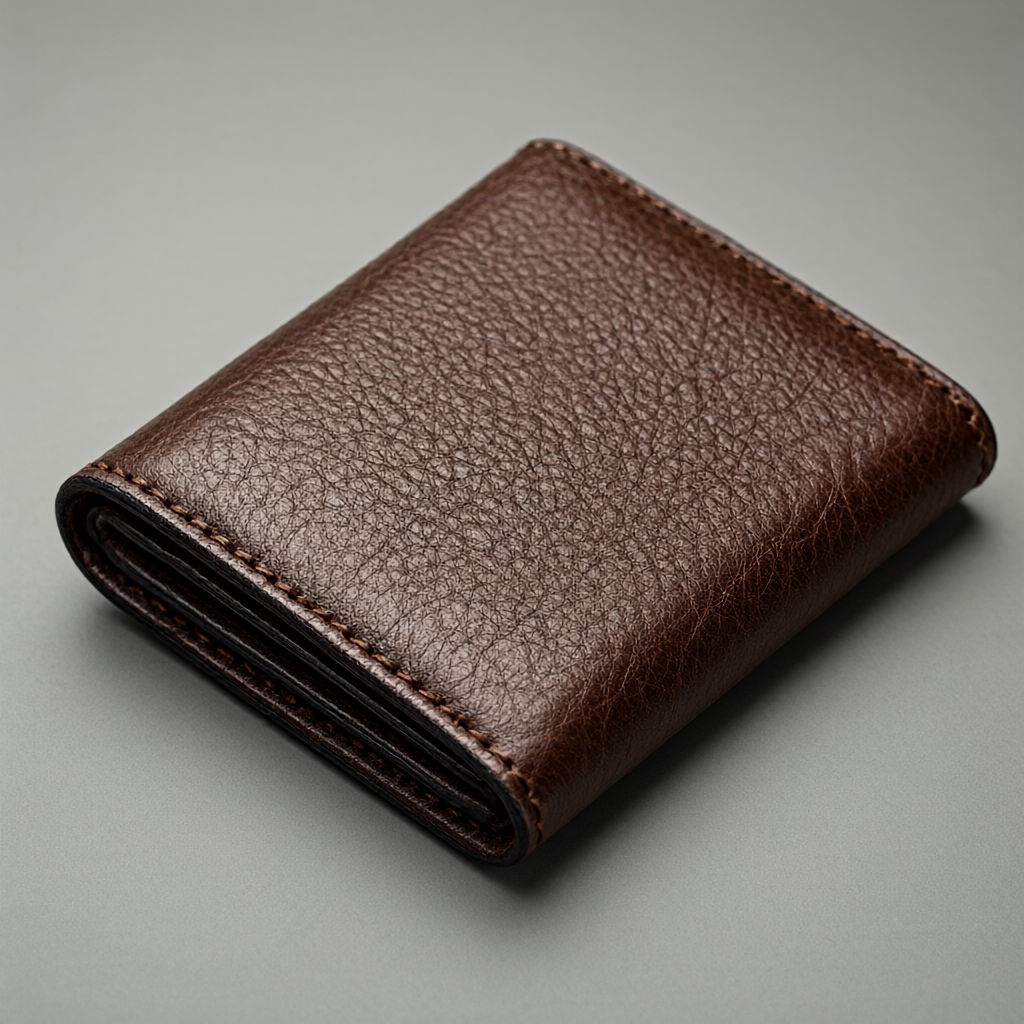
What are the key specifications of a womens leather wallet?
A quality women’s leather wallet falls within predictable dimensional and material ranges. Here is how the category breaks down:
| Specification | Typical Range | Notes |
|---|---|---|
| Leather grades | Full-grain, top-grain, genuine, bonded | Grade determines durability and aging |
| Stitch count | 8–14 stitches per inch | Higher stitch density = stronger seam |
| Leather weight | 1.0–1.4 mm (3–4 oz) | Thicker hides resist stretching; thinner may crease faster |
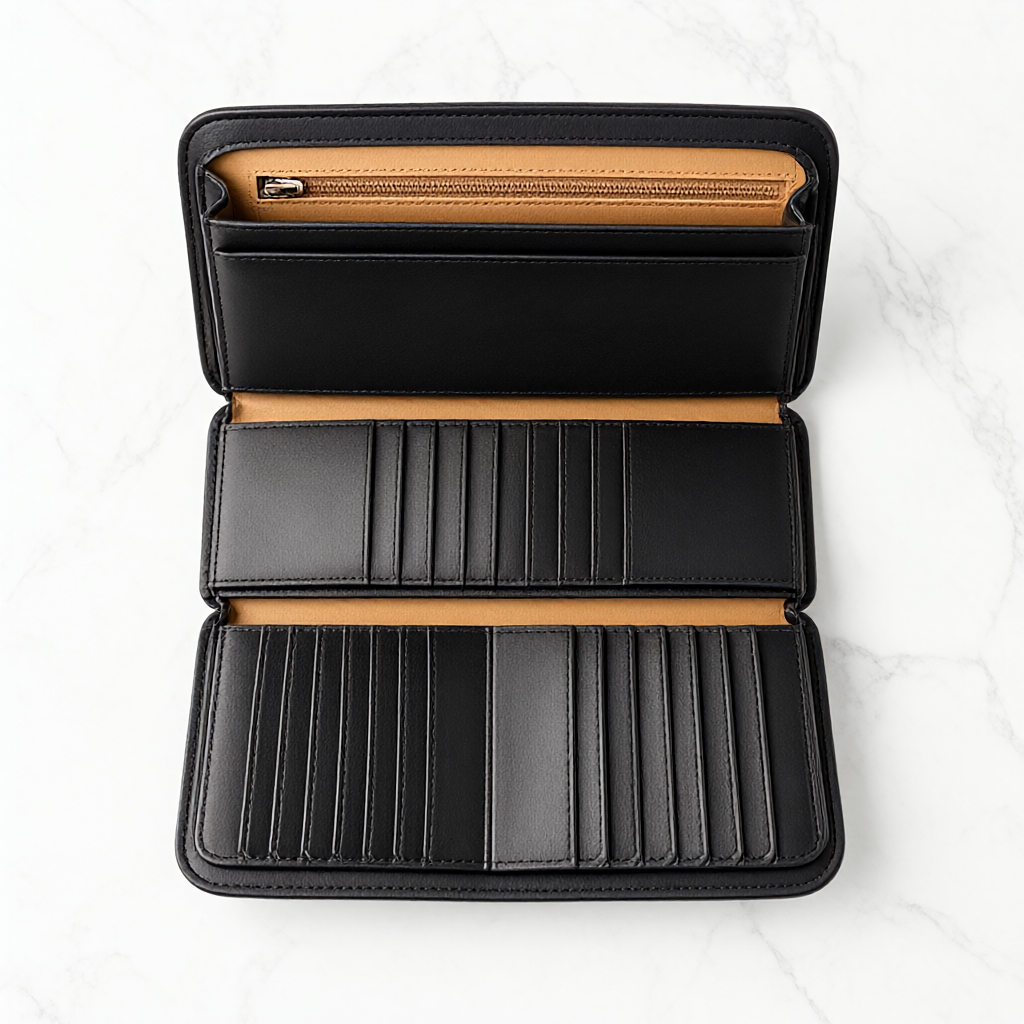
| Card slots | 4–12 slots | Capacity depends on form factor |
| Cash compartment | 1 gusseted or slip pocket | Gusseted pockets expand when filled |
| RFID protection | Optional embedded layer | Not standard on all models |
| Closure type | Zipper, snap, or open | Zippers add bulk but secure contents |
| Dimensions (approx.) | 4.5″ × 3.5″ × 0.75″ (slim) to 5″ × 4″ × 1″ (bifold) | Varies by style |
| Weight | 1.5–3.5 oz | Depends on material and hardware |
When evaluating any leather wallet for women, pay attention to these measurable markers rather than relying solely on marketing language. You can read more about wallet sizing decisions in our women’s wallet size and style guide.
Applications
Where can a leather wallet be used in daily life?
A well-chosen leather wallet fits into multiple everyday scenarios without requiring a dedicated purchase for each one:
- Everyday carry (EDC): Slim wallets and cardholders replace bulky bifolds for women who carry fewer physical cards and rely more on mobile payments. These styles slide easily into tote bags, crossbody purses, or even front pockets if needed.
- Travel: A zippered wristlet or bifold keeps boarding passes, hotel keys, and spare cash organized during trips. RFID-blocking options add peace of mind in crowded terminals. See our guide to RFID-protected wallets for more on card safety.
- Gift and corporate gifting: Leather wallets remain one of the most universally appreciated gifts for birthdays, holidays, and corporate appreciation programs because they suit nearly every taste and age group. Custom embossing or engraving adds personal value.
- Fashion and lifestyle use: A black leather wallet or rich brown option often serves as both functional accessory and style piece. Minimalist designs pair well with structured bags, while wristlets double as clutch alternatives for nights out.
Some shoppers also explore alternative formats like money clip wallets or minimalist passcases for a lighter pocket profile, particularly when transitioning away from card-heavy carries. Check our lightweight wallet for women resource for those options.
Buying Factors
What to consider when buying a leather wallet for women?
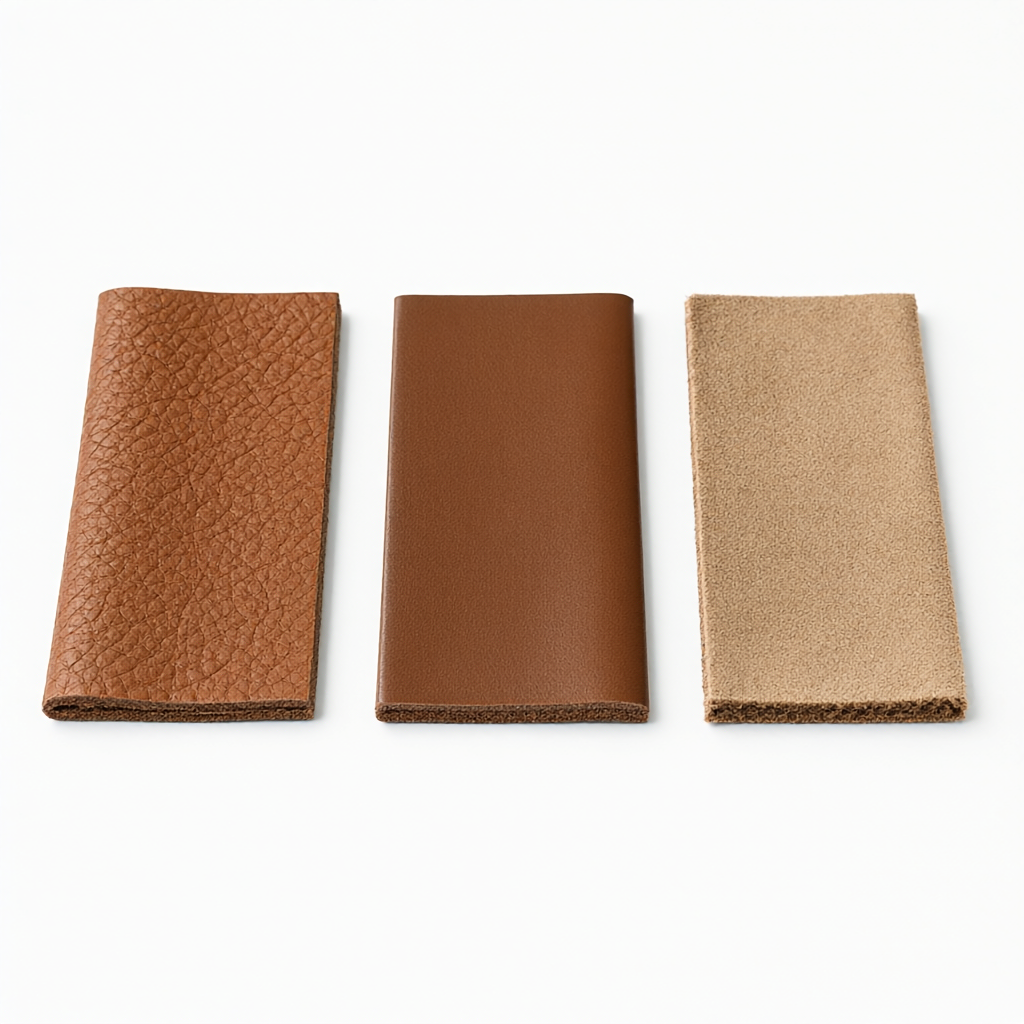
Leather type is the single biggest decision point. The four main categories differ significantly in longevity, appearance, and price:
Full-grain leather is the top tier. It retains the natural grain and imperfections of the hide, develops a rich patina over years of use, and resists cracking better than any other grade. Expect it to last 5–10+ years with proper care. This is the leather recommended for anyone planning to keep a wallet long-term.
Top-grain leather has been sanded and finished to remove surface imperfections, giving it a smoother, more uniform look. It still ages well but won’t develop the same deep patina as full-grain. Top-grain is the sweet spot for most buyers—it offers strong durability at a moderate price.
Genuine leather is a marketing term that technically means the product contains real leather, but in practice it often refers to lower-grade splits that have been coated or embossed. Genuine leather wallets tend to crack within 1–2 years of regular use and are not recommended for everyday carry.
Bonded leather is made from leather scraps bonded together with adhesives and then surfaced with a polyurethane coating. It is the lowest-grade option and will peel or flake relatively quickly. Avoid bonded leather for any wallet intended for daily use.
The FTC enforces labeling standards for leather products under 16 CFR Part 307, which requires accurate disclosure of fiber content and material composition. When shopping, look for specific grade identification—not just the word “leather.”
Beyond leather grade, evaluate these factors:
- Stitch quality: Look for consistent, tight stitching with no loose threads. Double-stitched corners last longer.
- Hardware: Zippers should glide smoothly; snaps should engage firmly without flexing the leather. Brass or zinc alloy hardware outlasts cheap plastics.
- Edge painting: Cleanly painted or burnished edges signal better craftsmanship and resist fraying.
- Capacity vs. bulk: A wallet with too many slots swells when full, becoming uncomfortable in a bag. Match card count to actual habit.
- Bag compatibility: Consider whether the wallet fits comfortably inside your most-used handbag or tote without taking up excessive space.
For shoppers interested in comparing performance across different wallet construction types, our guide to card-safe wallets covers protection features in depth.
Which wallet style fits my lifestyle best?
Bifold wallets offer the most storage—typically 6–12 card slots plus a bill compartment. They suit women who carry较多 cards, prefer a classic design, or want a wallet that doubles as a small organizer. However, they are the bulkiest option and may feel crowded in minimalist totes.
Slim and minimalist wallets (sometimes called passcases or cardholder wallets) hold 4–8 cards and a few bills. They are ideal for women who have shifted toward digital payments or carry only essential cards. These styles are increasingly popular for everyday carry and fit easily into small clutches and pocket bags.
Cardholder wallets are the thinnest option, designed primarily for cards with minimal or no cash storage. They work well as backup wallets or for women who exclusively use phone-based payment systems and only need an ID and transit card on hand.
Wristlet wallets combine a wallet with a attached strap, allowing them to function as both a pouch and a small clutch. They are practical for travel, nights out, or anyone who prefers carrying everything in one hands-free unit.
Money clip wallets offer a hybrid approach—holding cards securely with a metal clip instead of folds. They appeal to users who want ultra-low bulk. While originally associated with men’s best leather wallets, women’s versions have grown in popularity for their clean, modern aesthetic.
See our minimalist wallets guide for deeper comparisons between slim and traditional designs.
How do I tell if a leather wallet is high quality?
Use this practical checklist when evaluating any real leather wallet:
- Smell test: Real leather has a distinct, earthy aroma. Synthetic materials smell plastic or chemical.
- Texture check: Full-grain and top-grain leathers show natural grain variation. Uniform, repetitive patterns often indicate bonded or corrected leather.
- Flex test: Gently bend the wallet. Quality leather flexes and returns to shape; cheap leather cracks or stays creased.
- Water drop test: A small drop of water should darken the leather temporarily and absorb slowly. On coated or synthetic surfaces, it beads up immediately.
- Edge inspection: Edges should be smooth and evenly finished. Rough or peeling edges signal poor construction.
- Weight comparison: Quality leather has heft. An impossibly light wallet is likely using thin bonded or synthetic materials.
- Zipper pull weight: Metal zipper pulls feel substantial; lightweight plastic pulls are cost-cutting indicators.
For additional reference on material selection and construction standards, the ASTM International website publishes testing standards relevant to material durability and performance evaluation.
Price & Cost
How much do quality leather wallets cost?
Price varies significantly based on leather grade, construction complexity, and brand positioning:
| Tier | Price Range | What You Get |
|---|---|---|
| Budget | $8 – $20 | Bonded or low-grade genuine leather; basic construction; limited lifespan |
| Mid-range | $20 – $50 | Top-grain leather; solid stitching; decent hardware; suitable for 2–4 years of daily use |
| Premium | $50 – $120 | Full-grain leather; superior craftsmanship; reinforced corners; branded packaging; 5+ year lifespan |
| Luxury designer | $120 – $400+ | Brand premiums, designer names, exotic finishes, artisan detailing |
For most women seeking a wallet that lasts several years without frequent replacement, the mid-range ($25–$45) represents the strongest value. A full-grain or well-made top-grain wallet in this range will typically outperform cheaper bonded options by three to five times in service life, making the upfront difference worthwhile.
Prices also fluctuate by region due to import duties, currency exchange rates, and local retail markups. Online retailers often offer better prices than brick-and-mortar stores, and seasonal sales can bring premium models into the mid-range bracket.
Additional Information
What is the difference between vegetable-tanned and chrome-tanned leather?
Tanning method affects both environmental impact and wallet character. Vegetable-tanned leather is processed using natural tannins from tree bark and other plant sources. It produces a firmer, more rigid leather that develops a beautiful patina over time and is preferred by artisans for hand-stitched goods. However, the process takes longer and costs more.
Chrome-tanned leather uses chromium salts, resulting in a softer, more supple material that is water-resistant and produced faster. It is the most common tanning method for mass-market wallets. Some consumers prefer chrome-tanned leather for its immediate softness, though theEnvironmental Bureau notes that chromium waste from tanning operations requires careful management to avoid environmental contamination. For detailed processing guidelines, refer to standards published by the International Organization for Standardization (ISO).
Both methods produce durable leather suitable for wallets. The choice between them is largely a matter of preference for feel, aging characteristics, and environmental priorities.
How do I care for a real leather wallet?
Proper maintenance extends wallet lifespan considerably:
- Clean monthly with a soft, dry cloth to remove surface dust and oils from handling.
- Condition every 3–6 months using a leather conditioner formulated for the specific leather type. Over-conditioning can soften the leather excessively; under-conditioning allows it to dry and crack.
- Avoid prolonged sun exposure, which fades color and dries out fibers.
- Keep away from excessive moisture. If the wallet gets wet, let it air-dry naturally at room temperature—never use a hair dryer or place it near a heat source.
- Stuff the wallet with tissue paper when not in use for extended periods to help it maintain its shape.
- Rotate between two wallets if possible, giving each time to rest and recover its shape between uses.
With routine care, a full-grain leather wallet can look better with age rather than worse—a characteristic that makes quality leather wallets worth the investment.
Color and style trends
Black leather wallets remain the most popular choice across all demographics because they pair with any outfit and conceal wear better than lighter colors. Brown, tan, and burgundy are strong secondary options that develop more visible patina over time, adding character. Trend colors shift seasonally, but neutral tones consistently sell best for gifts and general everyday use.
Regional preferences also matter: European markets tend to favor slimmer profiles and darker palettes, while North American shoppers often prefer slightly larger capacity styles with more color variety.
Sustainability considerations
More buyers now ask about ethical sourcing. Reputable tanneries provide documentation verifying that hides are sourced from responsible livestock operations and that wastewater treatment meets environmental standards. Looking for tanneries certified under recognized frameworks gives additional assurance beyond manufacturer claims.
Evidence & Practical Notes
Field note: During quality audits of imported leather wallets, we regularly find that stitch density falls below 8 SPI (stitches per inch) on budget models—often as low as 5 SPI—which becomes the failure point within months of regular use. This is one of the fastest, easiest quality checks available to any buyer examining samples.
Practical limitation: Full-grain leather is genuinely more durable, but it also shows scratches, scuffs, and color variation more obviously than top-grain or corrected leathers. Buyers who prefer a pristine, uniform appearance may actually prefer top-grain for daily use, accepting a somewhat shorter lifespan in exchange for consistent looks.
Buyer takeaway: Do not equate “genuine leather” on a label with high quality—the term is legally defensible even for low-grade split leather. Always ask for the specific grade (full-grain or top-grain preferred), request a sample before placing bulk orders, and verify stitch density and hardware weight as objective quality markers rather than relying on brand reputation alone.
As a manufacturer that has worked with hundreds of brands worldwide, we see the same pattern repeat: the wallets customers keep the longest share three traits—proper leather grade, reinforced stress points, and honest sizing. Many of our clients who start with leather wallets eventually expand into our metal EDC wallet lineup for users who want maximum durability in a minimal footprint, especially for outdoor and travel scenarios. If you are evaluating material trade-offs between leather and metal options for your next product line, reaching out for a conversation can clarify which direction fits your customer profile best.
Manufacturing Process Details
How is a leather wallet actually made?
Understanding the production process helps buyers evaluate whether a manufacturer’s claims hold up against real craftsmanship:
Leather cutting and blank preparation: Hide sheets are cut to pattern using die presses or CNC routers. Tolerance is typically ±1mm for precision styles. Each blank is inspected for grain defects, insect marks, and thickness consistency before proceeding.
Tanning specifics:
- Vegetable tanning operates at 20–25°C (68–77°F) for 20–40 days depending on hide thickness
- Chrome tanning runs at 30–40°C (86–104°F) and completes in 4–8 hours
- Both processes must meet ISO 17075 standards for pH balance (3.8–4.2 for chrome-tanned; 5.0–7.0 for vegetable-tanned) and chromium VI content limits
Stitching: Industrial lockstitch machines use bonded nylon or polyester thread (typically Tex 40–60). Quality manufacturers target 10–14 stitches per inch at reinforced corners. Thread gauge and tension settings directly affect seam failure rates.
Edge finishing: Painted edges use multiple coats of edge paint (usually polyurethane-based) applied by machine or hand, then burnedished with wooden or steel tools at 60–80°C. Properly finished edges resist chipping and delamination far better than raw-cut edges.
Hardware attachment: Snaps, zippers, and clasps are either riveted, adhesively bonded, or stitched through reinforced leather patches. Metal-to-leather contact points should be grommeted or padded to prevent tearing over time.
Quality inspection: Reputable factories perform line inspections at three stages—after cutting (checking grain uniformity), after assembly (checking stitch integrity and hardware function), and after packaging (final visual audit). Third-party lab testing per ASTM D412 (tensile strength) and ASTM D2035 (tear strength) provides objective verification of material performance.
What industry standards govern leather wallet quality?
| Standard | Purpose | Key Requirement |
|---|---|---|
| ASTM D412 | Tensile strength of rubber and leather | Minimum 8–15 MPa for wallet-grade hides |
| ASTM D2035 | Tear resistance of leather | Minimum 15–35 N depending on thickness |
| ISO 17075 | Leather chemistry testing | Chromium VI < 3 ppm; pH within specified range |
| FTC 16 CFR Part 307 | Fiber content labeling | Accurate disclosure of all material components |
| REACH (EU) | Chemical restriction compliance | Restricted substance list applied to dyes, finishes, and adhesives |
Buyers should always request test reports from accredited labs rather than relying on manufacturer self-certification alone.
B2B Procurement Guide
Supplier qualification checklist for wholesale leather wallets
When sourcing leather wallets at volume, run potential suppliers through this evaluation framework:
Documentation requirements:
- [ ] Business license and export registration
- [ ] ISO 9001 certificate (current, valid)
- [ ] BSCI or equivalent social compliance audit report
- [ ] REACH/RoHS compliance statement
- [ ] Material test reports (SGS or equivalent lab) for each leather batch
- [ ] Product compliance certificates for target markets (FDA for food-contact if applicable; CPSIA for US market)
Production capability assessment:
- [ ] In-house tooling and die-making (reduces lead time and NRE costs)
- [ ] Certified stitching capacity (pieces per hour per operator)
- [ ] QC station configuration (incoming, in-process, outgoing inspection points)
- [ ] Raw material inventory depth (can they absorb order spikes?)
Quality system verification:
- [ ] documented SOPs for each production stage
- [ ] AQL sampling plan (typically Level II, AQL 0.65 for major defects / 1.0 for critical)
- [ ] Defect classification matrix (critical / major / minor)
- [ ] Traceability system (batch-level lot tracking from hide to shipment)
MOA and QC acceptance criteria
The Merchandise Approval (MOA) package should include:
- Approved sample signed and dated by both buyer and supplier
- Material spec sheet listing leather grade, weight, tannage type, color Pantone/Match codes, thread type, hardware alloy
- Construction drawing with stitch count, seam allowances, gusset dimensions, slot positions
- Packaging spec including master carton dimensions, inner pack configuration, barcoding requirements
Acceptance criteria by defect category:
| Defect Type | AQL Limit | Examples |
|---|---|---|
| Critical | 0% | Sharp edges, functional failure, wrong labeled material |
| Major | 2.5% | Misaligned stitching, visible glue stains, color mismatch > ΔE 3 |
| Minor | 4.0% | Slight scuff, minor thread pull, packaging label shift |
Shipments failing critical AQL are held for rework or replacement at supplier cost. Repeat failures trigger supplier corrective action requests (SCAR) and possible disqualification.
Lead time expectations and MOQ tiers
| Order Volume | Sample Lead Time | Production Lead Time | MOQ |
|---|---|---|---|
| Samples only | 5–7 days | N/A | N/A |
| Trial order (100–500 pcs) | Included | 15–25 days | 300 pcs |
| Small batch (500–2,000 pcs) | 5–7 days | 20–30 days | 300 pcs |
| Full container (2,000+ pcs) | 7–10 days | 25–40 days | 500 pcs |
Sample lead time covers design confirmation, material sourcing, and one round of revisions. Production lead time begins after pre-production sample approval and deposit receipt. Rush orders typically add 20–30% to standard timelines.
Custom tooling (dies, embossing blocks, hardware molds) incurs one-time NRE charges ranging from $150–$2,000 depending on complexity. Tooling costs are often amortized across the first production run or credited back on orders exceeding a specified volume threshold.
Brand Integration
How TOP EDC Wallet approaches leather wallet manufacturing
While TOP EDC Wallet is primarily known for minimalist metal wallets and EDC pocket gear, their manufacturing expertise translates directly to leather goods at the OEM and ODM level. Their facility applies the same precision standards—tight stitch tolerances, material traceability, and multi-stage quality inspection—to leather wallet production for brands entering this category.
Here is how their approach aligns with the standards discussed above: they maintain ISO 9001 certification for their quality management system, operate a 50,000 sq ft factory with in-house CNC machining and laser engraving capabilities, and have served 200+ brands worldwide across North America, Europe, Australia, and Southeast Asia. Their low MOQ starts at 300 pcs per SKU for full OEM customization (100 pcs trial order available for stock finishes) makes them accessible for emerging DTC brands and Amazon FBA sellers who need flexibility without large capital commitments. Their 7-day sample lead time allows rapid iteration during product development. For buyers evaluating leather wallet partners alongside their existing metal EDC supply chain, this integrated manufacturing model reduces vendor complexity. You can explore their full product range and capabilities at https://topedcwallet.com/.
Leather Types and Their Durability Differences
Understanding leather grades is essential before making any purchase decision. The four main categories represent fundamentally different materials with vastly different lifespans:
| Leather Type | Grade Rank | Expected Lifespan | Key Characteristics | Best For |
|---|---|---|---|---|
| Full-grain | Highest | 5–10+ years | Natural grain intact; develops patina; most breathable | Long-term daily carry investors |
| Top-grain | High | 3–7 years | Surface sanded and finished; uniform appearance; strong durability | Everyday users seeking balance |
| Genuine leather | Mid | 1–3 years | Lower-grade split leather; coated or embossed; inconsistent aging | Budget-conscious occasional use |
| Bonded leather | Lowest | <1–2 years | Scrap leather bonded with adhesives; polyurethane surface coating | One-season fashion accessories only |
The difference between full-grain and genuine leather is not merely marketing—it reflects a fundamental divergence in material integrity. Full-grain retains the dense fiber structure of the hide’s exterior, which ASTM D1929 testing methods use as a benchmark for tensile strength retention. Top-grain undergoes light surface correction but still maintains structural fibers near the surface. Genuine leather refers to split layers beneath the grain, and bonded leather contains less than 10% actual leather fibers by weight, according to FTC labeling guidelines.
For additional reference on material testing standards, visit ASTM International for published standards relevant to leather performance evaluation.
Wallet Form Factors and Who Each Suits
Bifold Wallets
Traditional fold-over design holding 6–12 cards plus cash. Ideal for women carrying较多 cards and bills regularly. Fits standard-sized handbags but may create bulk in small crossbody bags. Average dimensions: 4.5″ × 4″ × 0.75″ when closed.
Slim and Minimalist Wallets
Card-focused designs (4–8 slots) with minimal cash storage. Best for women who rely primarily on mobile payments and carry only essentials. Seamlessly fits into pocket-style bags, small clutches, and modern tote interiors. Average dimensions: 4.5″ × 3.5″ × 0.5″.
Cardholder Wallets
Ultra-thin single-layer designs holding 4–6 cards. Perfect for backup wallets or phone-payment-dominant lifestyles. Often tucked inside larger pouches as an ID and card organizer. Average dimensions: 4″ × 3″ × 0.35″.
Wristlet Wallets
Integrated strap converts the wallet into a hands-free clutch. Practical for travel, nightlife, or anyone consolidating essentials. Average dimensions: 6″ × 4″ × 1″ including strap attachment.
Money Clip Wallets
Hybrid design using metal clip for card retention. Originally popularized in men’s slim wallets but increasingly adopted by women favoring clean, architectural aesthetics. Average dimensions: 4″ × 3″ × 0.4″.
Explore our minimalist wallets guide for deeper comparisons across slim and traditional formats.
Size and Capacity Considerations for Women’s Wallets
Women’s wallets vary significantly in capacity, and matching size to actual habits prevents over-purchasing and under-utilization:
| Carry Profile | Recommended Slot Count | Cash Pocket Style | Approximate Closed Dimensions |
|---|---|---|---|
| Minimal (3–5 cards) | 4–6 slots | Slip pocket only | 4″ × 3″ × 0.35″ |
| Light (5–8 cards) | 6–8 slots | Slip + small gusset | 4.25″ × 3.25″ × 0.5″ |
| Moderate (8–12 cards) | 8–12 slots | Gusseted bill compartment | 4.5″ × 4″ × 0.75″ |
| Heavy (12+ cards) | 12–16 slots | Dual gussets | 5″ × 4.5″ × 1″ |
A wallet that overflows its intended capacity swells approximately 40–60% beyond listed dimensions when fully loaded. Before purchasing, count your actual daily cards and bills to avoid buying more capacity than needed—a common mistake that leads to bulky, inconvenient wallets. See our women’s wallet size and style buying guide for personalized recommendations.
Feature Comparison Table
| Feature | RFID Blocking | Water Resistance | Zipper Closure | Snap Closure | Open Design |
|---|---|---|---|---|---|
| Protection level | Blocks 13.56 MHz scan frequency | Repels light moisture; not waterproof | Secure against loss | Moderate security | Minimal protection |
| Bulk added | ~0.1 oz embedded layer | Depends on treatment type | +0.3–0.5 oz | +0.1 oz | None |
| Cost premium | $3–$8 per unit at retail | $2–$5 treatment surcharge | $1–$3 hardware upgrade | Included baseline | Baseline |
| Best for | Frequent travelers, urban commuters | Rain-prone climates, outdoor enthusiasts | Night outs, active use | Everyday casual carry | Ultra-minimalists |
| Maintenance impact | None | Reapply treatment annually | Clean zipper track quarterly | None | None |
RFID-blocking technology operates at 13.56 MHz, the same frequency used by contactless payment cards and electronic passports. While the FTC notes that actual card-skimming incidents remain statistically rare, the feature provides functional redundancy for frequent flyers and commuters in high-density transit environments. Learn more about RFID-protected wallets and their benefits in our detailed buyer’s guide.
Water resistance in leather wallets typically comes from factory-applied fluoropolymer treatments (e.g., Scotchgard™ or Teflon™ coatings). These repel light rain and splashes but degrade within 6–12 months and require reapplication. No leather wallet is truly waterproof unless explicitly sealed—an important distinction when shopping for storm-prone regions.
Closure type directly affects how your wallet performs in different scenarios. Zippered wallets prevent accidental spills but add noticeable heft. Snap closures offer quick access with moderate security. Open-design cardholders maximize accessibility for rapid retrieval but require deliberate handling to avoid dropping contents.
Supplier Evaluation Criteria
When sourcing leather wallets at wholesale or private-label levels, evaluate potential suppliers against these measurable criteria:
| Evaluation Factor | What to Request | Benchmark for Acceptance |
|---|---|---|
| Certifications | ISO 9001 certificate, BSCI audit report | Valid certifications for current fiscal year |
| Material compliance | REACH/RoHS test reports, SGS certificates | Materials pass heavy-metal and phthalate limits |
| Sample lead time | Time from order to sample delivery | ≤ 7 business days |
| Production lead time | Time from deposit to shipment | 25–35 days for standard orders |
| MOQ flexibility | Minimum order quantity per SKU | ≤ 300 pcs/SKU for emerging brands |
| Unit cost transparency | FOB price breakdown by material/style | Clear tiered pricing by volume |
| Quality defect rate | Historical rejection rate from shipments | < 2% for reputable manufacturers |
| Customization capability | In-house design, engraving, packaging | Full OEM/ODM support with dedicated team |
Reputable manufacturers publish these metrics willingly. Suppliers who cannot provide certification documentation or refuse to share defect-rate history should be treated as red flags during vendor selection.
MOQ Ranges and Lead Time Benchmarks
Industry-standard order quantities and production timelines vary by manufacturing location and complexity:
| Order Tier | MOQ Range | Unit Cost Range (FOB) | Production Lead Time |
|---|---|---|---|
| Trial run | 100–300 pcs | $6–$12 per unit | 25–30 days |
| Standard batch | 300–1,000 pcs | $4–$9 per unit | 25–35 days |
| Volume order | 1,000–5,000 pcs | $3–$7 per unit | 30–40 days |
| OEM private label | 500+ pcs/custom | $5–$15 per unit (design-dependent) | 35–50 days |
Lower MOQs typically carry higher per-unit costs due to fixed setup expenses for tooling, pattern creation, and initial material procurement. Orders above 1,000 pieces benefit from economies of scale, reducing unit costs by 20–40% compared to trial-run pricing.
Unit Cost Tiers and What Drives Pricing
Several variables determine per-unit cost in leather wallet manufacturing:
- Leather grade: Full-grain hides cost 2–4× more per square foot than bonded alternatives
- Construction complexity: Double-stitched corners, gusseted compartments, and metal hardware add labor minutes
- Customization depth: Laser engraving adds $0.50–$2 per unit; custom packaging adds $0.30–$1.50 per unit
- Order volume: Higher volumes reduce per-unit setup and material waste costs
- Shipping terms: FOB prices exclude freight; CIF or DDP arrangements add 10–25% depending on destination
Budget approximately $8–$15 per unit for mid-range OEM orders (top-grain leather, custom logo, standard packaging) at 500-piece quantities. Premium full-grain options with intricate customization can reach $18–$25 per unit at comparable volumes.
Quality Standards Reference
When specifying requirements to manufacturers, reference these industry standards to ensure consistency and comparability across quotes:
- ISO 9001: Quality management systems standard requiring documented processes, traceability, and continuous improvement protocols
- REACH (EC 1907/2006): EU regulation restricting hazardous substances in consumer goods, including cadmium and lead limits in hardware
- RoHS Directive: Restricts specific hazardous materials in electrical and electronic components used in wallet construction (e.g., RFID-layer electronics)
- ASTM D1929: Standard test method for tensile properties of leather, providing objective data for hide strength comparisons
These standards are referenced throughout supplier evaluations and should appear in all formal RFQ documents. More details are available through the International Organization for Standardization portal.
Choose the Right Manufacturer for Your Brand
Finding a reliable manufacturing partner comes down to verifying three things: quality systems, material traceability, and production responsiveness. Here is how the industry works and where to look.
Established manufacturers operate from ISO-certified facilities with documented raw-material sourcing chains. They provide SGS-tested material reports, can supply REACH-compliant hardware, and maintain defect rates below 2% on shipped orders. Sample lead times of 7 days or fewer indicate responsive production planning, while bulk lead times of 25–35 days reflect efficient factory scheduling.
Low-MOQ programs starts at 300 pcs per SKU allow emerging brands to validate designs before committing to large inventory investments. In-house CNC machining, laser engraving, UV printing, and anodizing capabilities mean custom logos, engravings, and finishes can be produced without outsourcing—reducing both cost and lead-time risk. Custom packaging and retail box design further enable private-label branding at the factory level.
Buyers working with contract manufacturers should request product samples before signing production agreements, verify certification documents directly, and confirm FOB pricing includes all agreed-upon customization steps. A clear quotation with itemized line items—material, labor, hardware, engraving, packaging—makes comparing quotes straightforward and exposes hidden costs early.
Sources & References
- 16 CFR Part 307 — www.ftc.gov
- ASTM International — www.astm.org
- International Organization for Standardization (ISO) — www.iso.org
- women’s wallet size and style guide — topedcwallet.com
- guide to RFID-protected wallets — topedcwallet.com
- lightweight wallet for women — topedcwallet.com
- guide to card-safe wallets — topedcwallet.com
- minimalist wallets guide — topedcwallet.com
- Get a Free Quote → — topedcwallet.com
From article to product
Choosing a material for a range?
Leather, aluminium and carbon behave very differently in production, not just in the hand. Send us the spec and we will tell you what it costs to make at your volume.
Keep reading
More on wallet materials
Vegetable Tanned Leather for Wallet Programmes
“Vegetable tanned” is a marketing phrase with a technical meaning, and the two do…
ReadRecycled Aluminium in Wallet Shells: Verifiable Claims
“Recycled aluminium” is a claim about provenance, and the wallet shell in your hand…
ReadFashion Zipper Men’s Wallets Leather Short Design Guide
Learn how to choose a short zipper leather wallet for men — full grain…
Read
About the author
TOPWALLET Editorial Team
TOPWALLET's editorial and engineering desk writes from bench testing at the Shenzhen (Longgang) facility: pull-force and cycle testing, 13.56 MHz shielding measurements, finish trials and factory audits, rather than supplier spec sheets. Every specification in these guides is one we write on a purchase order.
Written on the floor
This article was written by our production and QC team — the people who spec tolerances, run the finishing line and inspect every batch. Where it states a capacity, a pull force or a lead time, it comes from a measurement we made, not a supplier’s catalogue. If a number here disagrees with what your own supplier told you, tell us; several of these articles started as a correction from a buyer.
See how the factory works · Inspection process · Sourcing FAQ
Choosing a material for a range?
Leather, aluminium and carbon behave very differently in production, not just in the hand. Send us the spec and we will tell you what it costs to make at your volume.